アディゼロ エヴォ SL ウーブンは、「街も走れる」ランニングシューズの決定版!──GQエディターのベストバイ
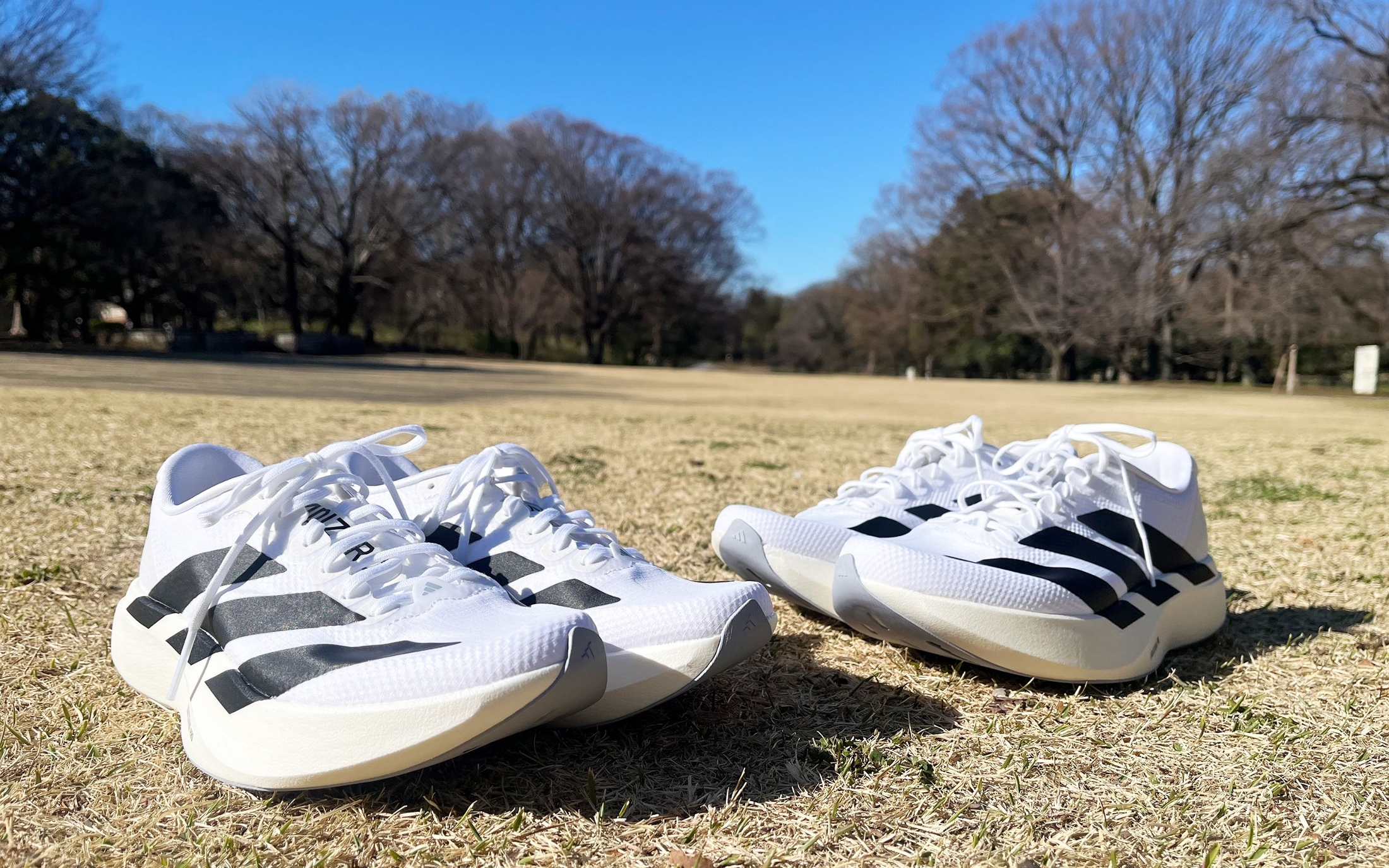
アディゼロ エヴォ SL ウーブンでGQエディターが試走。モノトーンコーデのトレンドがつづくランニング界隈で人気のホワイト×ブラックを、通勤ランも含めて日常使いしてみた。
最近、通勤ランをはじめた。世田谷区の砧公園に近い自宅から渋谷区にある編集部までは片道約10km。月に2、3回ほど、帰路で通勤ランにチャレンジしている。筆者は元旦をのぞく364日、毎朝8kmを日課としているのだが、年間約3000kmのランライフにちょっと変化が欲しかったのが理由である。 問題はシューズ選び。MacBook Airを収納したリュックで走るため、仕事以外の荷物は最小限。シューズの履き替えは想定していない。となると、朝の通勤からデスクワーク、帰路のランまでを一足でこなせるユーティリティ性が求められることになる。 レーシングシューズは除外するとして、ジョグ用でもテンポアップ用でも、どのシューズでも走るぶんには問題はない。ただし、朝の通勤、日中のデスクワークや打合せ、来客までをこなすとなると、派手なカラーの、走る気全開系シューズは言うまでもなく回避したいところだ。 自分のファッションの傾向から考えても、ホワイト、ネイビー、グレーのシンプルなカラーを基本路線としたい。そしてMacBook Air入りのリュックを背負った状態での約4分45秒/kmのランをこなせるものが好ましい。 たとえばNIKEのペガサス プラス。そのホワイト×ブラックを所有しているのだが、これはテンポアップシューズとしては十分に優れている。デザインもミニマルだ。だが通勤ランを条件に含むとなると話は変わってくる。街履き、編集部でのワークタイムを考えると、ボリューム感、ファッション性が物足りなく感じてしまうのだ。 どうもランニングシューズは普段のファッション感覚であれば絶対に選ばない、履かないようなカラー、デザインのものが圧倒的に多い。ゴルフシーンでも同じ悩みを抱えることになるのだが、ビッグロゴや奇妙な斜めのラインのウェアなんて着ないでしょうが。なぜ普段の感覚でランニングシューズを選べないのか。イエロー、ピンク、パープル、ライムグリーンなどの差し色さえなければいいのに、と思うことも少なくない。もう一度、差してどうするっ。 話は逸れるが、ランニング界隈のファッションは、モノトーンコーデがトレンドだ。たしかに、Z世代を象徴するカラーはブラックなのだろう。全身ブラックのお揃いのウェアにホワイトのシューズで統一した東京やソウルのランニングチームをSNSで見かける機会も増えてきている。 一方で、ネイビーやグレーは“おぢカラー”らしい。筆者が無意識に手に取るのは、いつもネイビーかグレー。ニット帽も、ニットベストも、フーディも、スウェットも、ニューバランスのシューズも、ネイビーかグレーを選んでおけば安心、の世代だ。「ネイビーやグレーこそ、王道」と男性ファッション誌にならって生きてきた、それを信じてきた筆者世代には辛過ぎる現実だ。
そんなとき、“おぢカラー”に沈黙する筆者が目にしたのが、「ランニングからライフスタイルシーンまでシームレスに履ける」という「アディゼロ エヴォ SL ウーブン(ADIZERO EVO SL WOVEN)」のコンセプト。どのシューズメーカーでもよく見かけるコピーではあるのだが、アディダスのそれはちょっと違う気がした。ブランドを象徴するブラックとホワイトのバイカラーを広告ビジュアルに使用しているではないか。適度なボリューム感、シンプルなデザインもいい。グレー、ネイビー原理主義の筆者世代ランナーにも受け入れられそうなコンセプトであり、カラーだ。 本来であれば悪目立ちしそうなアッパーからミッドソールまで連なるスリーラインのビッグロゴは、前モデルの「エヴォ SL」で見慣れていたからなのか、不思議と違和感がない。「アディゼロ エヴォ SL ウーブン」は、ネイビーやグレーが多い筆者のファッションとの相性も良さそうだ。 それに、ホワイトベースにブラックラインの組み合わせは、ランナーと思われる来日観光客の着用率が異常に高い(ような気がする)。東京マラソンで知り合った韓国人ランナーも含めて、みんな街履きとして“白黒ウーブン”をチョイスしているではないか。ランニングカルチャーがZ世代に浸透している韓国、BTSのジョングクを取材するために訪問したソウルでも、白黒ウーブンを多数目撃している。もちろん、蛍光イエローやトリコロールなどカラーバリエーションはあるのだが、あくまでもメインはホワイトとブラックのバイカラー。これは、白黒ウーブンに照準をしぼっていく際の大きなアドバンテージになった。 街履きにも触れておこう。今回、白黒ウーブンでペアルックにチャレンジしてみた。ウォーキングを兼ねて妻と向かったのは、二子玉川の「カフェ リゼッタ」。白い壁と木の温もりが調和した、フランスの片田舎を思わせるアンティークの椅子、テーブルが印象的なカフェだ。名物はクラシカルなプリン・ア・ラ・モードである。シューズ選びの失敗は、このカフェでは断じて許されない。あのカラーの、あのシューズで現れたなら、雰囲気台なしである。そんななか控えめな白黒ウーブンは、涼しげな顔で馴染んでいる。少なくとも、“走ってきました感”は皆無。ペアであっても悪目立ちはしなかった(はずだ)。 これをウォーキングシューズとして使うのはなかなか贅沢ではあるが、「まず驚くのは軽さ。歩きやすいというか、むしろ勝手に進んでいくような感覚でまったく疲れない。本格派ランニングシューズと気づかれないのでは?」というパートナーのコメントも添えておこう。
さて、「アディゼロ エヴォ SL ウーブン」は軽量なトレーニングシューズ「アディゼロ エヴォ SL」をベースに、アッパーを伸縮性の高いウーブン素材にアップデートして、フィット感とサポート性を追求したモデルだ。 3月20日に情報解禁されたアディダスの「サッカー日本代表 アウェイ ユニフォーム」を着用して、砧公園から国立競技場まで、4分38秒/kmで約10.5kmのペース走。 もちろん、ランニングシューズとしての実力は折り紙付き。前モデルで試走を繰り返した経験があるためキャラクターは概ね把握していたが、ギュッと包み込むような新作のフィット感はかなり好みだ。履いた瞬間にわかる。これが先代との大きな違いで、新開発のウーブンアッパー素材が、足のブレを抑えて安定した走りをサポートしているようだ。 そこそこのスピードで攻めてみると、反発がしっかり返ってくるのがわかる。スピードに乗るほどに気持ちよく走ることができるランニングシューズであり、ベースシューズというよりもレースシューズに近い印象を受けた。「トレーニング用」と事前に説明を受けていたが、レースでも使いたいと思えるポテンシャルである。 頼もしく感じたのが、前足部先端の「コンチネンタルラバー」。このラバーは優れたグリップ力と、スリップによるエネルギーロスを軽減するのが特徴で、街中を走る際には前モデルの「アディゼロ エヴォ SL」にはなかったレベルのグリップ力を証明してみせた。 ある日の通勤ランでは、渋谷のオフィスを18時に出発。国道246を池尻大橋に向かうと、神泉付近からつづく長い下り坂では柔らかさとフィット感を確認できた。必要以上に沈み込まない。帰宅ラッシュでそれなりに混雑する三軒茶屋駅付近では、人混みをすり抜ける際の方向転換や急なストップ&ゴーにも俊敏に反応。グラつかない。なかなかのアジリティである。 クライマックスとなる駒沢公園に入ると、いよいよ本領発揮。白黒ウーブンは、MacBook Air入りのリュックを背負った状態でのスピード練習(4分45秒/km)を軽やかにクリアしてみせた。筆者の練習、マラソン本番における指針となるペース「4分10〜15秒/km」での日々の早朝練習も軽々とこなしてくれたことも記しておこう。意識しなくても5秒ほど速く走れているような感覚だ。「これでフルマラソンに出場したら?」と期待させるだけのポテンシャルである。 「アディゼロ エヴォ SL ウーブン」は、軽いジョグからフルマラソンまで幅広く対応できて、しかもワークタイムも、通勤ランも、街履きもこなせる、万能ランニングシューズと言い切って良さそうだ。「ランニングからライフスタイルシーンまでシームレスに履ける」というアディダスが掲げるコンセプトに偽りなし、という評価で締めくくりたい。 文と編集・神谷 晃 AKIRA KAMIYA(GQ) 写真・梅津有希子、GQ JAPAN
最近、通勤ランをはじめた。世田谷区の砧公園に近い自宅から渋谷区にある編集部までは片道約10km。月に2、3回ほど、帰路で通勤ランにチャレンジしている。筆者は元旦をのぞく364日、毎朝8kmを日課としているのだが、年間約3000kmのランライフにちょっと変化が欲しかったのが理由である。 問題はシューズ選び。MacBook Airを収納したリュックで走るため、仕事以外の荷物は最小限。シューズの履き替えは想定していない。となると、朝の通勤からデスクワーク、帰路のランまでを一足でこなせるユーティリティ性が求められることになる。 レーシングシューズは除外するとして、ジョグ用でもテンポアップ用でも、どのシューズでも走るぶんには問題はない。ただし、朝の通勤、日中のデスクワークや打合せ、来客までをこなすとなると、派手なカラーの、走る気全開系シューズは言うまでもなく回避したいところだ。 自分のファッションの傾向から考えても、ホワイト、ネイビー、グレーのシンプルなカラーを基本路線としたい。そしてMacBook Air入りのリュックを背負った状態での約4分45秒/kmのランをこなせるものが好ましい。 たとえばNIKEのペガサス プラス。そのホワイト×ブラックを所有しているのだが、これはテンポアップシューズとしては十分に優れている。デザインもミニマルだ。だが通勤ランを条件に含むとなると話は変わってくる。街履き、編集部でのワークタイムを考えると、ボリューム感、ファッション性が物足りなく感じてしまうのだ。 どうもランニングシューズは普段のファッション感覚であれば絶対に選ばない、履かないようなカラー、デザインのものが圧倒的に多い。ゴルフシーンでも同じ悩みを抱えることになるのだが、ビッグロゴや奇妙な斜めのラインのウェアなんて着ないでしょうが。なぜ普段の感覚でランニングシューズを選べないのか。イエロー、ピンク、パープル、ライムグリーンなどの差し色さえなければいいのに、と思うことも少なくない。もう一度、差してどうするっ。 話は逸れるが、ランニング界隈のファッションは、モノトーンコーデがトレンドだ。たしかに、Z世代を象徴するカラーはブラックなのだろう。全身ブラックのお揃いのウェアにホワイトのシューズで統一した東京やソウルのランニングチームをSNSで見かける機会も増えてきている。 一方で、ネイビーやグレーは“おぢカラー”らしい。筆者が無意識に手に取るのは、いつもネイビーかグレー。ニット帽も、ニットベストも、フーディも、スウェットも、ニューバランスのシューズも、ネイビーかグレーを選んでおけば安心、の世代だ。「ネイビーやグレーこそ、王道」と男性ファッション誌にならって生きてきた、それを信じてきた筆者世代には辛過ぎる現実だ。
そんなとき、“おぢカラー”に沈黙する筆者が目にしたのが、「ランニングからライフスタイルシーンまでシームレスに履ける」という「アディゼロ エヴォ SL ウーブン(ADIZERO EVO SL WOVEN)」のコンセプト。どのシューズメーカーでもよく見かけるコピーではあるのだが、アディダスのそれはちょっと違う気がした。ブランドを象徴するブラックとホワイトのバイカラーを広告ビジュアルに使用しているではないか。適度なボリューム感、シンプルなデザインもいい。グレー、ネイビー原理主義の筆者世代ランナーにも受け入れられそうなコンセプトであり、カラーだ。 本来であれば悪目立ちしそうなアッパーからミッドソールまで連なるスリーラインのビッグロゴは、前モデルの「エヴォ SL」で見慣れていたからなのか、不思議と違和感がない。「アディゼロ エヴォ SL ウーブン」は、ネイビーやグレーが多い筆者のファッションとの相性も良さそうだ。 それに、ホワイトベースにブラックラインの組み合わせは、ランナーと思われる来日観光客の着用率が異常に高い(ような気がする)。東京マラソンで知り合った韓国人ランナーも含めて、みんな街履きとして“白黒ウーブン”をチョイスしているではないか。ランニングカルチャーがZ世代に浸透している韓国、BTSのジョングクを取材するために訪問したソウルでも、白黒ウーブンを多数目撃している。もちろん、蛍光イエローやトリコロールなどカラーバリエーションはあるのだが、あくまでもメインはホワイトとブラックのバイカラー。これは、白黒ウーブンに照準をしぼっていく際の大きなアドバンテージになった。 街履きにも触れておこう。今回、白黒ウーブンでペアルックにチャレンジしてみた。ウォーキングを兼ねて妻と向かったのは、二子玉川の「カフェ リゼッタ」。白い壁と木の温もりが調和した、フランスの片田舎を思わせるアンティークの椅子、テーブルが印象的なカフェだ。名物はクラシカルなプリン・ア・ラ・モードである。シューズ選びの失敗は、このカフェでは断じて許されない。あのカラーの、あのシューズで現れたなら、雰囲気台なしである。そんななか控えめな白黒ウーブンは、涼しげな顔で馴染んでいる。少なくとも、“走ってきました感”は皆無。ペアであっても悪目立ちはしなかった(はずだ)。 これをウォーキングシューズとして使うのはなかなか贅沢ではあるが、「まず驚くのは軽さ。歩きやすいというか、むしろ勝手に進んでいくような感覚でまったく疲れない。本格派ランニングシューズと気づかれないのでは?」というパートナーのコメントも添えておこう。
さて、「アディゼロ エヴォ SL ウーブン」は軽量なトレーニングシューズ「アディゼロ エヴォ SL」をベースに、アッパーを伸縮性の高いウーブン素材にアップデートして、フィット感とサポート性を追求したモデルだ。 3月20日に情報解禁されたアディダスの「サッカー日本代表 アウェイ ユニフォーム」を着用して、砧公園から国立競技場まで、4分38秒/kmで約10.5kmのペース走。 もちろん、ランニングシューズとしての実力は折り紙付き。前モデルで試走を繰り返した経験があるためキャラクターは概ね把握していたが、ギュッと包み込むような新作のフィット感はかなり好みだ。履いた瞬間にわかる。これが先代との大きな違いで、新開発のウーブンアッパー素材が、足のブレを抑えて安定した走りをサポートしているようだ。 そこそこのスピードで攻めてみると、反発がしっかり返ってくるのがわかる。スピードに乗るほどに気持ちよく走ることができるランニングシューズであり、ベースシューズというよりもレースシューズに近い印象を受けた。「トレーニング用」と事前に説明を受けていたが、レースでも使いたいと思えるポテンシャルである。 頼もしく感じたのが、前足部先端の「コンチネンタルラバー」。このラバーは優れたグリップ力と、スリップによるエネルギーロスを軽減するのが特徴で、街中を走る際には前モデルの「アディゼロ エヴォ SL」にはなかったレベルのグリップ力を証明してみせた。 ある日の通勤ランでは、渋谷のオフィスを18時に出発。国道246を池尻大橋に向かうと、神泉付近からつづく長い下り坂では柔らかさとフィット感を確認できた。必要以上に沈み込まない。帰宅ラッシュでそれなりに混雑する三軒茶屋駅付近では、人混みをすり抜ける際の方向転換や急なストップ&ゴーにも俊敏に反応。グラつかない。なかなかのアジリティである。 クライマックスとなる駒沢公園に入ると、いよいよ本領発揮。白黒ウーブンは、MacBook Air入りのリュックを背負った状態でのスピード練習(4分45秒/km)を軽やかにクリアしてみせた。筆者の練習、マラソン本番における指針となるペース「4分10〜15秒/km」での日々の早朝練習も軽々とこなしてくれたことも記しておこう。意識しなくても5秒ほど速く走れているような感覚だ。「これでフルマラソンに出場したら?」と期待させるだけのポテンシャルである。 「アディゼロ エヴォ SL ウーブン」は、軽いジョグからフルマラソンまで幅広く対応できて、しかもワークタイムも、通勤ランも、街履きもこなせる、万能ランニングシューズと言い切って良さそうだ。「ランニングからライフスタイルシーンまでシームレスに履ける」というアディダスが掲げるコンセプトに偽りなし、という評価で締めくくりたい。 文と編集・神谷 晃 AKIRA KAMIYA(GQ) 写真・梅津有希子、GQ JAPAN
Vocabulary
General
Proper noun
JLPT N2
JLPT N1
| # | 言葉 | 意味 |
|---|---|---|
| 8 | 通勤 | つうきん (通勤) : commuting to work |
| 7 | 筆者 | ひっしゃ (筆者) : writer; author |
| 6 | 履く | はく (履く) : 1. to put on (lower-body clothing, e.g. pants, skirt, footwear); to wear 2. to affix (a sword to one's hip) |
| 6 | 白黒 | しろくろ (白黒) : 1. black and white; monochrome 2. good and evil; right and wrong; guilt and innocence |
| 5 | 秒 | びょう (秒) : 1. second (unit of time) 2. arc second |
| 4 | 街 | がい (街) : ... street; ... quarter; ... district |
| 4 | 感覚 | かんかく (感覚) : sense; sensation; feeling; intuition |
| 3 | 世代 | せだい (世代) : generation; the world; the age |
| 3 | 際 | きわ (際) : 1. edge; brink; verge; side 2. time; moment of |
| 2 | 試走 | しそう (試走) : test drive; trial run |
| 2 | 界隈 | かいわい (界隈) : neighborhood; neighbourhood; vicinity |
| 2 | 含める | ふくめる (含める) : 1. to include (in a group or scope) 2. to instruct; to make one understand |
| 2 | 砧公園 | きぬたこうえん (砧公園) : Kinuta Park (place) |
| 2 | 編集部 | へんしゅうぶ (編集部) : editorial department |
| 2 | 帰路 | きろ (帰路) : one's way back; one's way home |
| 2 | 選び | えらび (選び) : choosing; selecting; deciding (on) |
| 2 | 入り | いり (入り) : 1. entering 2. setting (of the Sun) |
| 2 | 背負う | せおう (背負う) : 1. to carry on one's back 2. to be burdened with; to take responsibility for |
| 2 | 状態 | じょうたい (状態) : state; condition; situation; appearance; circumstances |
| 2 | 優れる | すぐれる (優れる) : to surpass; to outstrip; to excel |
| 2 | 感ずる | かんずる (感ずる) : to feel; to sense |
| 2 | 普段 | ふだん (普段) : 1. usual; normal; everyday; habitual; ordinary 2. usually; normally; generally; habitually; always |
| 2 | 選ぶ | えらぶ (選ぶ) : to choose; to select |
| 2 | 象徴 | しょうちょう (象徴) : (abstract) symbol; emblem; representation |
| 2 | 東京 | とうきょう (東京) : Tokyo |
| 2 | 見かける | みかける (見かける) : to (happen to) see; to notice; to catch sight of |
| 2 | ぢ | じ (痔) : hemorrhoids; piles |
| 2 | 目立つ | めだつ (目立つ) : to be conspicuous; to stand out |
| 2 | 素材 | そざい (素材) : 1. ingredient; (raw) material; resource 2. unprocessed timber; raw timber |
| 2 | 付近 | ふきん (付近) : 1. neighborhood; vicinity; environs; district 2. approaching |
| 1 | 人気 | にんき (人気) : 1. popularity; public favor 2. condition (e.g. market); tone; character; nature |
| 1 | 日常 | にちじょう (日常) : everyday; daily; ordinary; usual; routine; regular |
| 1 | 世田谷区 | せたがやく (世田谷区) : Setagayaku (place) |
| 1 | 自宅 | じたく (自宅) : one's home; one's house |
| 1 | 渋谷区 | しぶやく (渋谷区) : Shibuya Ward (place) |
| 1 | 片道 | かたみち (片道) : 1. one-way (trip) 2. one-way ticket |
| 1 | 元旦 | がんたん (元旦) : 1. New Year's Day 2. New Year's morning; morning of New Year's Day |
| 1 | のぞく | のぞく (除く) : 1. to remove; to eliminate; to eradicate 2. to exclude; to except |
| 1 | 日課 | にっか (日課) : daily routine; daily work; daily lesson |
| 1 | 年間 | ねんかん (年間) : 1. (period of) a year 2. during an era |
| 1 | 変化 | へんか (変化) : 1. change; variation; alteration; mutation; transition; transformation; transfiguration; metamorphosis 2. variety; diversity |
| 1 | 収納 | しゅうのう (収納) : 1. storage; putting or stowing away 2. receipt (of funds, payment, etc.) |
| 1 | 最小限 | さいしょうげん (最小限) : minimum; lowest; minimal; least |
| 1 | 想定 | そうてい (想定) : hypothesis; supposition; assumption |
| 1 | 一足 | いっそく (一足) : a pair (of shoes or socks) |
| 1 | 求める | もとめる (求める) : 1. to want; to wish for 2. to request; to demand; to require; to ask for |
| 1 | 除外 | じょがい (除外) : exception; exclusion |
| 1 | ぶん | ぶん (分) : 1. part; portion; share 2. amount; worth (as in "two days' worth"); enough (for) |
| 1 | ただし | ただし (但し) : but; however; provided that |
| 1 | 日中 | にっちゅう (日中) : 1. daytime; during the day 2. Japan and China |
| 1 | 打合せ | うちあわせ (打ち合わせ) : 1. advance arrangements; preparatory meeting; briefing session 2. overlap (of a coat, etc.) |
| 1 | 来客 | らいきゃく (来客) : visitor; caller |
| 1 | 派手 | はで (派手) : showy; loud; gay; flashy; gaudy |
| 1 | 全開 | ぜんかい (全開) : 1. opening fully 2. full throttle; full power |
| 1 | 系 | けい (系) : 1. system; lineage; group 2. corollary |
| 1 | 回避 | かいひ (回避) : evasion; avoidance |
| 1 | 傾向 | けいこう (傾向) : tendency; trend; inclination |
| 1 | 考える | かんがえる (考える) : 1. to think (about, of); to think over; to ponder; to contemplate; to reflect (on); to meditate (on) 2. to consider; to bear in mind; to allow for; to take into consideration |
| 1 | 基本 | きほん (基本) : basics; fundamentals; basis; foundation |
| 1 | 路線 | ろせん (路線) : 1. route (bus, train, air, etc.); line 2. line (taken by a group, organization, etc.); policy; course |
| 1 | 好ましい | このましい (好ましい) : nice; likeable; desirable |
| 1 | 所有 | しょゆう (所有) : one's possessions; ownership |
| 1 | 条件 | じょうけん (条件) : condition; term; requirement; qualification; prerequisite |
| 1 | 含む | ふくむ (含む) : 1. to contain; to comprise; to have; to hold; to include; to embrace 2. to hold in the mouth |
| 1 | 変わる | かわる (変わる) : 1. to change; to be transformed; to be altered; to vary 2. to move to |
| 1 | 足りる | たりる (足りる) : 1. to be sufficient; to be enough 2. to be worth doing; to be worthy of; to deserve |
| 1 | 絶対 | ぜったい (絶対) : 1. definitely; absolutely; unconditionally 2. absolute; unconditional; unmistakable |
| 1 | 圧倒的 | あっとうてき (圧倒的) : overwhelming |
| 1 | 悩み | なやみ (悩み) : trouble; troubles; worry; distress; sorrows; anguish; agony; problem |
| 1 | 抱える | かかえる (抱える) : 1. to hold or carry under or in the arms 2. to have (esp. problems, debts, etc.) |
| 1 | 奇妙 | きみょう (奇妙) : strange; odd; peculiar; queer; curious |
| 1 | 斜め | ななめ (斜め) : 1. slanting; tilted; sloping; diagonal; oblique 2. distorted (feeling); slanted (e.g. view of the world); bad (mood); amiss; awry |
| 1 | なんて | なんて (何て) : 1. how ...!; what ...! 2. what?; what's that? |
| 1 | さえ | さえ : 1. even 2. (if) only; just; as long as |
| 1 | 差す | さす (差す) : 1. to shine 2. to be visible |
| 1 | 逸れる | それる (逸れる) : 1. to turn away; to bear off; to veer away; to swerve from; to miss (e.g. a target) 2. to deviate (e.g. of a conversation); to digress; to go astray; to wander |
| 1 | 全身 | ぜんしん (全身) : 1. whole (body); full-length (e.g. portrait) 2. systemic |
| 1 | お揃い | おそろい (お揃い) : 1. being together; going together 2. matching (clothing); going together |
| 1 | 統一 | とういつ (統一) : unity; consolidation; uniformity; unification; compatible |
| 1 | 増える | ふえる (増える) : to increase; to multiply |
| 1 | 無意識 | むいしき (無意識) : 1. unconsciousness 2. unconscious; involuntary; automatic; mechanical; unintentional; spontaneous |
| 1 | ニット帽 | ニットぼう (ニット帽) : knitted hat; woollen hat |
| 1 | こそ | こそ : 1. it is ... that ...; precisely; in particular; definitely; for sure; only (when, after, because, etc.) 2. although; while; it is the case that ... but |
| 1 | 王道 | おうどう (王道) : 1. righteous government; just rule; kingship; rule of right; noble path 2. easy method; simple approach; short-cut; royal road |
| 1 | ファッション誌 | ファッションし (ファッション誌) : fashion magazine |
| 1 | ならう | ならう (習う) : to take lessons in; to be taught; to learn (from a teacher); to study (under a teacher); to get training in |
| 1 | 生きる | いきる (生きる) : 1. to live; to exist 2. to make a living; to subsist |
| 1 | 信ずる | しんずる (信ずる) : to believe; to believe in; to place trust in; to confide in; to have faith in |
| 1 | 辛 | かのと (辛) : 8th in rank; eighth sign of the Chinese calendar |
| 1 | 現実 | げんじつ (現実) : reality; actuality; hard fact |
| 1 | 沈黙 | ちんもく (沈黙) : 1. silence; being silent; quiet; hush 2. reticence; inaction |
| 1 | 広告 | こうこく (広告) : 1. advertisement; advertising 2. announcement; notice |
| 1 | 使用 | しよう (使用) : use; application; employment; utilization; utilisation |
| 1 | 適度 | てきど (適度) : moderate (degree); proper (amount); temperate; suitable |
| 1 | 原理主義 | げんりしゅぎ (原理主義) : fundamentalism |
| 1 | 受け入れる | うけいれる (受け入れる) : to accept; to receive; to agree |
| 1 | 本来 | ほんらい (本来) : 1. originally; primarily 2. essentially; intrinsically; naturally; by nature; in (and of) itself |
| 1 | 連なる | つらなる (連なる) : 1. to extend; to stretch out; to stand in a row 2. to attend; to participate in |
| 1 | 不思議 | ふしぎ (不思議) : 1. wonderful; marvelous; strange; incredible; amazing; curious; miraculous; mysterious 2. strangely enough; oddly enough; for some reason; curiously |
| 1 | 違和感 | いわかん (違和感) : 1. uncomfortable feeling; feeling out of place; sense of discomfort 2. malaise; physical unease |
| 1 | 相性 | あいしょう (相性) : affinity; compatibility; chemistry (between people) |
| 1 | 組み合わせ | くみあわせ (組み合わせ) : 1. combination; assortment; set 2. matching (in a contest); pairing |
| 1 | 来日 | らいにち (来日) : arrival in Japan; coming to Japan; visit to Japan |
| 1 | 観光客 | かんこうきゃく (観光客) : tourist |
| 1 | 異常 | いじょう (異常) : strangeness; abnormality; disorder |
| 1 | 知り合う | しりあう (知り合う) : to get to know each other; to make acquaintance |
| 1 | 韓国人 | かんこくじん (韓国人) : South Korean person |
| 1 | 浸透 | しんとう (浸透) : 1. penetration (e.g. market); pervasion (e.g. thought, ideology) 2. permeation; soaking; osmosis |
| 1 | 韓国 | かんこく (韓国) : 1. South Korea; Republic of Korea 2. Korean Empire (1897-1910) |
| 1 | 取材 | しゅざい (取材) : 1. news coverage; collecting data (e.g. for an article); covering (something for media) 2. interview |
| 1 | 訪問 | ほうもん (訪問) : call; visit |
| 1 | 多数 | たすう (多数) : 1. large number (of); many 2. majority |
| 1 | 目撃 | もくげき (目撃) : witnessing; observing; sighting |
| 1 | 蛍光 | けいこう (蛍光) : fluorescence |
| 1 | あくまで | あくまで (飽くまで) : 1. to the end; to the bitter end; to the last; stubbornly; persistently; consistently; to the utmost 2. after all; it must be remembered; only; purely; simply |
| 1 | 照準 | しょうじゅん (照準) : sight (e.g. of a gun); aim; alignment |
| 1 | しぼる | しぼる (絞る) : 1. to wring (towel, rag); to squeeze 2. to squeeze (fruit to extract juice); to press; to extract; to milk; to express milk |
| 1 | 触れる | ふれる (触れる) : 1. to touch; to feel 2. to touch (with) |
| 1 | 兼ねる | かねる (兼ねる) : 1. to be unable to; to find difficult (unpleasant, awkward, painful) to do 2. to serve two or more functions or roles simultaneously; to contain (or combine) two or more features |
| 1 | 向かう | むかう (向かう) : 1. to face 2. to go towards; to head towards |
| 1 | 二子玉川 | ふたごたまがわ (二子玉川) : Futagotamagawa (place) |
| 1 | 温もり | ぬくもり (温もり) : warmth |
| 1 | 調和 | ちょうわ (調和) : harmony; accord; reconciliation; agreement |
| 1 | 片田舎 | かたいなか (片田舎) : back country; remote countryside |
| 1 | 椅子 | いす (椅子) : 1. chair; stool 2. post; office; position |
| 1 | 印象的 | いんしょうてき (印象的) : impressive; striking; memorable; impactful |
| 1 | 名物 | めいぶつ (名物) : famous product; special product; speciality; specialty |
| 1 | 断ずる | だんずる (断ずる) : 1. to decide; to determine 2. to judge |
| 1 | 許す | ゆるす (許す) : 1. to permit; to allow; to approve; to consent to 2. to forgive; to pardon; to excuse; to tolerate |
| 1 | 現れる | あらわれる (現れる) : 1. to appear; to come in sight; to become visible; to come out; to embody; to materialize; to materialise 2. to be expressed (e.g. emotions); to become apparent (e.g. trends, effects) |
| 1 | 雰囲気 | ふんいき (雰囲気) : 1. atmosphere; mood; ambience; ambiance; aura; feel 2. a certain air; presence; special aura; something (about someone) |
| 1 | 台なし | だいなし (台無し) : mess; spoiled; spoilt; (come to) nothing; ruin |
| 1 | 控えめ | ひかえめ (控えめ) : moderate; reserved; conservative; humble; mild-mannered; self-effacing; unassuming; well-behaved; low-key; temperate; in small quantities |
| 1 | げ | げ (気) : seeming; giving the appearance of; giving one the feeling of |
| 1 | 馴染む | なじむ (馴染む) : to become familiar with; to fit in; to adapt oneself; to get used to; to grow accustomed to |
| 1 | 走る | はしる (走る) : 1. to run 2. to run (of a vehicle); to drive; to travel; to move; to sail |
| 1 | 皆無 | かいむ (皆無) : nonexistent; nil; none; nothing (at all); bugger-all |
| 1 | 贅沢 | ぜいたく (贅沢) : 1. luxury; extravagance 2. to live in luxury; to indulge oneself |
| 1 | 軽 | けい (軽) : 1. light (e.g. aircraft, truck) 2. light motor vehicle (up to 660cc and 64bhp); kei car |
| 1 | 歩く | あるく (歩く) : to walk |
| 1 | むしろ | むしろ (寧ろ) : rather; better; instead; if anything |
| 1 | 勝手に | かってに (勝手に) : arbitrarily; of its own accord; voluntarily; wilfully; willfully; as one pleases |
| 1 | 進む | すすむ (進む) : 1. to advance; to go forward 2. to precede; to go ahead (of) |
| 1 | まったく | まったく (全く) : 1. really; truly; entirely; completely; wholly; perfectly 2. indeed |
| 1 | 疲れる | つかれる (疲れる) : 1. to get tired; to tire; to get fatigued; to become exhausted; to grow weary 2. to become worn out (of a well-used object) |
| 1 | 本格 | ほんかく (本格) : 1. original method or procedure 2. serious; orthodox; classical; genuine |
| 1 | 派 | は (派) : 1. clique; group; coterie 2. (political) faction; wing; party; camp |
| 1 | 気づく | きづく (気づく) : to notice; to recognize; to recognise; to become aware of; to perceive; to realize; to realise |
| 1 | 添える | そえる (添える) : 1. to garnish; to accompany (as a card does a gift) 2. to add to as support; to prop up |
| 1 | さて | さて (偖) : well; now; then |
| 1 | 軽量 | けいりょう (軽量) : light weight |
| 1 | 伸縮性 | しんしゅくせい (伸縮性) : elasticity |
| 1 | 追求 | ついきゅう (追求) : pursuit (of a goal, ideal, etc.); search; chase; seeking after |
| 1 | 情報 | じょうほう (情報) : 1. information; news; intelligence; advices 2. information; data contained in characters, signals, code, etc. |
| 1 | 解禁 | かいきん (解禁) : 1. lifting a ban; raising an embargo; opening a season (hunting, fishing, etc.) 2. publishing contents; revealing information |
| 1 | 着用 | ちゃくよう (着用) : wearing (e.g. uniform, seat belt); having on |
| 1 | 国立競技場 | こくりつきょうぎじょう (国立競技場) : Kokuritsukyougijou (place) |
| 1 | 実力 | じつりょく (実力) : 1. (real) ability; true strength; merit; efficiency; competency 2. arms; force |
| 1 | 折り紙付き | おりがみつき (折り紙付き) : guaranteed; authentic; certified |
| 1 | 繰り返す | くりかえす (繰り返す) : to repeat; to do something over again |
| 1 | 概ね | おおむね (概ね) : 1. in general; generally; mostly; roughly; largely; mainly; on the whole; by and large 2. gist; point; main idea |
| 1 | 把握 | はあく (把握) : grasp; catch; understanding |
| 1 | 包み込む | つつみこむ (包み込む) : to wrap up |
| 1 | 新作 | しんさく (新作) : new work; new production |
| 1 | かなり | かなり (可也) : considerably; fairly; quite |
| 1 | 好み | このみ (好み) : liking; taste; choice |
| 1 | 瞬間 | しゅんかん (瞬間) : moment; second; instant |
| 1 | 先代 | せんだい (先代) : 1. previous generation (e.g. one's parents); family predecessor 2. predecessor |
| 1 | 違い | ちがい (違い) : 1. difference; distinction; discrepancy 2. mistake; error |
| 1 | 新開発 | しんかいはつ (新開発) : new development; new discovery |
| 1 | 抑える | おさえる (抑える) : 1. to keep within limits (e.g. spending); to restrain (e.g. emotions); to control; to curb; to hold in check 2. to hold back (e.g. an enemy); to check; to curb; to contain; to quell; to subdue; to suppress; to repress |
| 1 | 安定 | あんてい (安定) : stability; steadiness; equilibrium |
| 1 | 走り | はしり (走り) : 1. running 2. gliding |
| 1 | そこそこ | そこそこ : 1. reasonably; fairly; all right; moderate 2. hurriedly; in a rush; having barely finished |
| 1 | 攻める | せめる (攻める) : to attack; to assault; to assail |
| 1 | 反発 | はんぱつ (反発) : 1. opposition; rebellion; revolt; resistance; backlash; refusal 2. rebounding; recoiling; repulsion |
| 1 | 返る | かえる (返る) : 1. to return; to come back; to go back 2. to turn over |
| 1 | 印象 | いんしょう (印象) : impression |
| 1 | 事前 | じぜん (事前) : prior; beforehand; in advance; before the fact; ex ante |
| 1 | 思える | おもえる (思える) : to seem; to appear likely |
| 1 | 足部 | そくぶ (足部) : foot region |
| 1 | 先端 | せんたん (先端) : 1. pointed end; tip; point; cusp (of a leaf, crescent moon, etc.); apex (of a curve) 2. forefront; vanguard; spearhead; leading edge |
| 1 | 軽減 | けいげん (軽減) : abatement; reduction |
| 1 | 特徴 | とくちょう (特徴) : feature; trait; characteristic; peculiarity; distinction |
| 1 | 街中 | まちなか (町中) : downtown |
| 1 | 証明 | しょうめい (証明) : proof; testimony; demonstration; verification; certification |
| 1 | 渋谷 | しだや (渋谷) : Shidaya (surname) |
| 1 | 国道 | こくどう (国道) : national highway |
| 1 | 池尻大橋 | いけじりおおはし (池尻大橋) : Ikejirioohashi (unclass) |
| 1 | 神泉 | かみいずみ (神泉) : Kamiizumi (place) |
| 1 | 下り坂 | くだりざか (下り坂) : 1. downhill; downward slope; descent 2. decline; waning; ebb; (going) downhill |
| 1 | 柔らか | やわらか (柔らか) : soft; tender; limp; subdued (colour or light) (color); gentle; meek |
| 1 | 確認 | かくにん (確認) : confirmation; verification; validation; review; check; affirmation; identification |
| 1 | 沈み込む | しずみこむ (沈み込む) : 1. to sink (into) 2. to get depressed |
| 1 | 帰宅 | きたく (帰宅) : returning home |
| 1 | なり | なり (也) : 1. to be 2. to be (location) |
| 1 | 混雑 | こんざつ (混雑) : 1. congestion; crush; crowding; jam 2. confusion; disorder |
| 1 | 三軒茶屋駅 | さんげんぢゃやえき (三軒茶屋駅) : Sangenjaya Station (station) |
| 1 | 人混み | ひとごみ (人ごみ) : crowd of people |
| 1 | すり抜ける | すりぬける (すり抜ける) : to slip through; to make one's way through quickly |
| 1 | 方向転換 | ほうこうてんかん (方向転換) : change of course |
| 1 | 俊敏 | しゅんびん (俊敏) : quick-witted and agile; keen and nimble |
| 1 | 反応 | はんのう (反応) : reaction; response |
| 1 | グラつく | ぐらつく : 1. to be unsteady; to reel; to shake 2. to waver; to be unsettled (feelings, thoughts, etc.) |
| 1 | 駒沢公園 | こまざわこうえん (駒沢公園) : Komazawa Park (place) |
| 1 | いよいよ | いよいよ (愈) : 1. more and more; all the more; increasingly 2. at last; finally; beyond doubt |
| 1 | 本領 | ほんりょう (本領) : 1. characteristic quality; special character; one's real ability; one's specialty 2. one's function; one's duty |
| 1 | 発揮 | はっき (発揮) : show (of power, ability, etc.); exhibition; demonstration; display; manifestation |
| 1 | 軽やか | かろやか (軽やか) : light; easy; non-serious; minor |
| 1 | 本番 | ほんばん (本番) : 1. performance; take; going before an audience or on-air 2. game; season; crucial moment |
| 1 | 指針 | ししん (指針) : 1. needle (compass, gauge, etc.); hand (clock); indicator; pointer; index 2. guiding principle; guideline; guide |
| 1 | 日々 | ひび (日々) : every day; daily; day after day; days (e.g. good old days) |
| 1 | 早朝 | そうちょう (早朝) : early morning |
| 1 | 軽々 | かるがる (軽々) : lightly; easily; carelessly |
| 1 | 記す | しるす (記す) : 1. to write down; to note; to jot down 2. to remember |
| 1 | 意識 | いしき (意識) : 1. consciousness 2. becoming aware (of); awareness; sense |
| 1 | 速く | はやく (早く) : 1. early; soon 2. quickly; swiftly; rapidly; fast |
| 1 | 出場 | しゅつじょう (出場) : 1. (stage) appearance; performance 2. participation (e.g. in a tournament) |
| 1 | 期待 | きたい (期待) : 1. expectation; anticipation; hope 2. promising; rising; up-and-coming |
| 1 | 対応 | たいおう (対応) : 1. correspondence (to); equivalence 2. suitability; coordination; matching; being appropriate (for) |
| 1 | しかも | しかも (然も) : 1. moreover; furthermore 2. nevertheless; and yet |
| 1 | 万能 | ばんのう (万能) : 1. all-purpose; utility; universal 2. all-powerful; almighty; omnipotent; all-round (e.g. athlete) |
| 1 | 言い切る | いいきる (言い切る) : 1. to declare; to assert; to state definitively 2. to finish saying; to say it all; to finish one's sentence |
| 1 | 掲げる | かかげる (掲げる) : 1. to put up (a notice, sign, etc.); to hang out (e.g. a banner); to fly (e.g. a flag); to hoist; to raise; to display 2. to hold up high; to raise overhead |
| 1 | 偽る | いつわる (偽る) : 1. to lie; to cheat; to pretend; to feign; to falsify 2. to trick; to deceive |
| 1 | なし | なし (無し) : 1. without 2. unacceptable; not alright; unsatisfactory |
| 1 | 評価 | ひょうか (評価) : 1. valuation; appraisal; evaluation; assessment; estimation; rating; judging 2. appreciation; recognition; acknowledgement; rating highly; praising |
| 1 | 締めくくる | しめくくる (締めくくる) : 1. to bring to a finish 2. to bind firmly |
| 1 | 編集 | へんしゅう (編集) : editing; compilation |
| 1 | 神谷 | かしや (神谷) : Kashiya (surname) |
| 1 | 梅津 | うのづ (梅津) : Unozu (surname) |
| 1 | 有希子 | あきこ (有希子) : Akiko (fem) |