NTT、人の動作はなぜ"ばらつく"のか 脳の仕組みを世界初解明
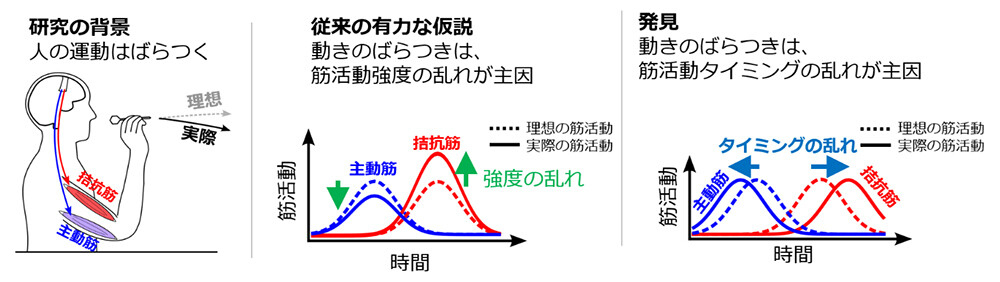
NTTは、世界で初めて、人の動作に生じる「ばらつき」と密接に関連する要因が、脳から筋へ送られる筋活動の“タイミングの乱れ”であることを解明した。
人が体を動かす際には、脳から筋へと指令が送られ、筋活動が生じることで運動が実現する。しかし、ダーツやゴルフなどで本人は同じ動きをしようと思っていても、運動には必ず一定の「ばらつき」が生じ、思い通りに体を動かせない要因となっている。
運動のばらつきが生まれるしくみは、従来“筋活動強度の乱れ”がその主因と考えられてきた。しかし今回の研究では、到達運動・周期運動・円運動を対象とした様々な腕運動において、動作のばらつきと筋活動の関係を検証した結果、ばらつきと密接に関連する要因は、“筋活動強度の乱れ”ではなく、“筋活動タイミングの乱れ”であることを発見した。
今回の成果は、従来の脳運動制御理論を刷新し、「動きのばらつき」に関連する幅広い現象の脳科学的理解に新たな視点を提供するものになるという。
筋活動強度とは、脳から筋へ送られる指令の「強さ」のこと。従来はこの強さの変動によって動きのばらつきが発生していると考えられていた。しかし近年ではこの仮説に反する事例も報告されており、ばらつきの主因は解明されていなかった。
そこでNTTは、脳から筋へ送られる指令の「タイミング」に着目。実験では被験者に腕の運動を行なわせ、筋電図で筋肉の活動や運動の位置、力のばらつきを計測して分析した。その結果、筋活動の強度のばらつきは運動のばらつきと関連は見られず、筋活動のタイミングのばらつきと強く関連することを示した。
人の運動は1つの動作でも複数の筋肉が協調して動くが、脳はそれぞれの筋肉に対して「いつ動かすか(タイミング)」「どのくらい動かすか(強度)」の信号を送っている。このうち、動作のばらつきに関連するのはタイミングに相当する指令であることが明らかになった。このため、筋肉への指令にズレがあると、前回と完全に同じ動作をすることが難しくなる。
今後は、行動実験に脳活動計測や理論研究を組み合わせ、筋活動タイミングを制御する脳部位や神経表現を明らかにし、運動スキル学習、疾患による運動失調、加齢変化など、「動きのばらつき」に関連する幅広い現象の脳科学的理解を推進する。また、得られた知見を、スポーツや医療など幅広い領域へ展開することも視野に入れ、スポーツでは運動ばらつきから個人のスキル特性を可視化してスキル向上をめざすトレーニング法の提案につなげる。医療・リハビリテーションでは、運動機能に障がいを持つ患者の運動失調度を適切に評価する新たな指標や、その障がいの改善を促す手法の確立が期待されるという。
NTTは、世界で初めて、人の動作に生じる「ばらつき」と密接に関連する要因が、脳から筋へ送られる筋活動の“タイミングの乱れ”であることを解明した。 人が体を動かす際には、脳から筋へと指令が送られ、筋活動が生じることで運動が実現する。しかし、ダーツやゴルフなどで本人は同じ動きをしようと思っていても、運動には必ず一定の「ばらつき」が生じ、思い通りに体を動かせない要因となっている。 運動のばらつきが生まれるしくみは、従来“筋活動強度の乱れ”がその主因と考えられてきた。しかし今回の研究では、到達運動・周期運動・円運動を対象とした様々な腕運動において、動作のばらつきと筋活動の関係を検証した結果、ばらつきと密接に関連する要因は、“筋活動強度の乱れ”ではなく、“筋活動タイミングの乱れ”であることを発見した。 今回の成果は、従来の脳運動制御理論を刷新し、「動きのばらつき」に関連する幅広い現象の脳科学的理解に新たな視点を提供するものになるという。 筋活動強度とは、脳から筋へ送られる指令の「強さ」のこと。従来はこの強さの変動によって動きのばらつきが発生していると考えられていた。しかし近年ではこの仮説に反する事例も報告されており、ばらつきの主因は解明されていなかった。 そこでNTTは、脳から筋へ送られる指令の「タイミング」に着目。実験では被験者に腕の運動を行なわせ、筋電図で筋肉の活動や運動の位置、力のばらつきを計測して分析した。その結果、筋活動の強度のばらつきは運動のばらつきと関連は見られず、筋活動のタイミングのばらつきと強く関連することを示した。 人の運動は1つの動作でも複数の筋肉が協調して動くが、脳はそれぞれの筋肉に対して「いつ動かすか(タイミング)」「どのくらい動かすか(強度)」の信号を送っている。このうち、動作のばらつきに関連するのはタイミングに相当する指令であることが明らかになった。このため、筋肉への指令にズレがあると、前回と完全に同じ動作をすることが難しくなる。 今後は、行動実験に脳活動計測や理論研究を組み合わせ、筋活動タイミングを制御する脳部位や神経表現を明らかにし、運動スキル学習、疾患による運動失調、加齢変化など、「動きのばらつき」に関連する幅広い現象の脳科学的理解を推進する。また、得られた知見を、スポーツや医療など幅広い領域へ展開することも視野に入れ、スポーツでは運動ばらつきから個人のスキル特性を可視化してスキル向上をめざすトレーニング法の提案につなげる。医療・リハビリテーションでは、運動機能に障がいを持つ患者の運動失調度を適切に評価する新たな指標や、その障がいの改善を促す手法の確立が期待されるという。
NTTは、世界で初めて、人の動作に生じる「ばらつき」と密接に関連する要因が、脳から筋へ送られる筋活動の“タイミングの乱れ”であることを解明した。 人が体を動かす際には、脳から筋へと指令が送られ、筋活動が生じることで運動が実現する。しかし、ダーツやゴルフなどで本人は同じ動きをしようと思っていても、運動には必ず一定の「ばらつき」が生じ、思い通りに体を動かせない要因となっている。 運動のばらつきが生まれるしくみは、従来“筋活動強度の乱れ”がその主因と考えられてきた。しかし今回の研究では、到達運動・周期運動・円運動を対象とした様々な腕運動において、動作のばらつきと筋活動の関係を検証した結果、ばらつきと密接に関連する要因は、“筋活動強度の乱れ”ではなく、“筋活動タイミングの乱れ”であることを発見した。 今回の成果は、従来の脳運動制御理論を刷新し、「動きのばらつき」に関連する幅広い現象の脳科学的理解に新たな視点を提供するものになるという。 筋活動強度とは、脳から筋へ送られる指令の「強さ」のこと。従来はこの強さの変動によって動きのばらつきが発生していると考えられていた。しかし近年ではこの仮説に反する事例も報告されており、ばらつきの主因は解明されていなかった。 そこでNTTは、脳から筋へ送られる指令の「タイミング」に着目。実験では被験者に腕の運動を行なわせ、筋電図で筋肉の活動や運動の位置、力のばらつきを計測して分析した。その結果、筋活動の強度のばらつきは運動のばらつきと関連は見られず、筋活動のタイミングのばらつきと強く関連することを示した。 人の運動は1つの動作でも複数の筋肉が協調して動くが、脳はそれぞれの筋肉に対して「いつ動かすか(タイミング)」「どのくらい動かすか(強度)」の信号を送っている。このうち、動作のばらつきに関連するのはタイミングに相当する指令であることが明らかになった。このため、筋肉への指令にズレがあると、前回と完全に同じ動作をすることが難しくなる。 今後は、行動実験に脳活動計測や理論研究を組み合わせ、筋活動タイミングを制御する脳部位や神経表現を明らかにし、運動スキル学習、疾患による運動失調、加齢変化など、「動きのばらつき」に関連する幅広い現象の脳科学的理解を推進する。また、得られた知見を、スポーツや医療など幅広い領域へ展開することも視野に入れ、スポーツでは運動ばらつきから個人のスキル特性を可視化してスキル向上をめざすトレーニング法の提案につなげる。医療・リハビリテーションでは、運動機能に障がいを持つ患者の運動失調度を適切に評価する新たな指標や、その障がいの改善を促す手法の確立が期待されるという。
Vocabulary
General
Proper noun
JLPT N2
JLPT N1
| # | 言葉 | 意味 |
|---|---|---|
| 30 | ばらつき | ばらつき : scattering (e.g. in statistics); scatter; dispersion; variation |
| 28 | 筋 | すじ (筋) : 1. muscle; tendon; sinew 2. vein; artery |
| 24 | 活動 | かつどう (活動) : 1. activity (of a person, organization, animal, volcano, etc.); action 2. movie (esp. during the silent movie period) |
| 20 | 脳 | のう (脳) : 1. brain 2. brains; mind |
| 14 | 関連 | かんれん (関連) : relation; connection; relevance |
| 10 | 動作 | どうさ (動作) : action; movements; motions; bearing; behaviour; behavior; execution; actuation; operation; manners |
| 10 | 送る | おくる (送る) : 1. to send (a thing); to dispatch; to despatch; to transmit 2. to take or escort (a person somewhere); to see off (a person) |
| 10 | 指令 | しれい (指令) : orders; instructions; directive; command |
| 10 | 強度 | きょうど (強度) : 1. strength; intensity 2. strong (e.g. glasses); powerful (e.g. lens); intense (e.g. fear); extreme |
| 8 | 乱れ | みだれ (乱れ) : disorder; disturbance; unrest |
| 8 | 動き | うごき (動き) : 1. movement; move; motion 2. trend; development; change; fluctuation |
| 8 | 筋肉 | きんにく (筋肉) : muscle |
| 6 | 要因 | よういん (要因) : main cause; primary factor |
| 6 | 動かす | うごかす (動かす) : 1. to move; to shift; to stir; to budge; to change position 2. to inspire; to rouse; to move (e.g. feeling); to influence |
| 6 | 従来 | じゅうらい (従来) : 1. up to now; so far 2. traditional; conventional; usual; existing |
| 6 | 幅広い | はばひろい (幅広い) : extensive; wide; broad |
| 4 | 生じる | しょうじる (生じる) : 1. to produce; to yield; to cause 2. to result from; to arise; to be generated |
| 4 | 密接 | みっせつ (密接) : 1. close (relationship, connection, etc.); intimate; near 2. close (together) |
| 4 | 解明 | かいめい (解明) : elucidation; explication; explaining; unravelling; clarification; understanding |
| 4 | 主因 | しゅいん (主因) : primary cause; main factor |
| 4 | 考える | かんがえる (考える) : 1. to think (about, of); to think over; to ponder; to contemplate; to reflect (on); to meditate (on) 2. to consider; to bear in mind; to allow for; to take into consideration |
| 4 | 結果 | けっか (結果) : 1. result; consequence; outcome; effect 2. coming to fruition; bearing fruit |
| 4 | 制御 | せいぎょ (制御) : 1. control (of a machine, device, etc.) 2. control (over an opponent, one's emotions, etc.); governing; management; suppression; keeping in check |
| 4 | 理論 | りろん (理論) : theory |
| 4 | 現象 | げんしょう (現象) : phenomenon |
| 4 | 科学的 | かがくてき (科学的) : scientific |
| 4 | 理解 | りかい (理解) : understanding; comprehension; appreciation; sympathy |
| 4 | 新た | あらた (新た) : new; fresh; novel |
| 4 | 強さ | つよさ (強さ) : strength; power |
| 4 | 実験 | じっけん (実験) : experiment |
| 4 | 計測 | けいそく (計測) : measuring; measurement |
| 4 | 明らか | あきらか (明らか) : 1. clear; obvious; evident; plain; definite 2. bright; light |
| 4 | 失調 | しっちょう (失調) : 1. lack of harmony; lack of balance; lack of coordination; malfunction 2. ataxia |
| 4 | 医療 | いりょう (医療) : medical care; medical treatment |
| 4 | 障がい | しょうがい (障害) : 1. obstacle; impediment; hindrance; difficulty; barrier 2. handicap; impairment; disability; disorder; malfunction |
| 2 | 世界で初めて | せかいではじめて (世界で初めて) : world's first; world-first |
| 2 | 際 | きわ (際) : 1. edge; brink; verge; side 2. time; moment of |
| 2 | 実現 | じつげん (実現) : implementation (e.g. of a system); materialization; materialisation; realization; realisation; actualization; actualisation |
| 2 | 本人 | ほんにん (本人) : the person in question; the person themselves; said person |
| 2 | 一定 | いってい (一定) : fixed; settled; constant; definite; uniform; regularized; regularised; defined; standardized; standardised; certain; prescribed |
| 2 | 生ずる | しょうずる (生ずる) : 1. to produce; to yield; to cause 2. to result from; to arise; to be generated |
| 2 | 思い | おもい (思い) : 1. thought 2. imagination; mind; heart |
| 2 | 通り | とおり (通り) : 1. avenue; street; way; road 2. coming and going; street traffic |
| 2 | 動く | うごく (動く) : 1. to move; to stir; to shift; to shake; to swing 2. to operate; to run; to go; to work |
| 2 | しくみ | しくみ (仕組み) : 1. structure; construction; arrangement; contrivance; mechanism; workings 2. plan; plot; contrivance |
| 2 | 到達 | とうたつ (到達) : reaching; attaining; arrival |
| 2 | 周期 | しゅうき (周期) : cycle; period |
| 2 | 円運動 | えんうんどう (円運動) : circular motion |
| 2 | 対象 | たいしょう (対象) : target; object (of worship, study, etc.); subject (of taxation, etc.) |
| 2 | 様々 | さまざま (様々) : various; varied; diverse; all sorts of |
| 2 | 検証 | けんしょう (検証) : verification; inspection |
| 2 | 発見 | はっけん (発見) : discovery; detection; finding |
| 2 | 成果 | せいか (成果) : (good) result; outcome; fruits (of one's labors); product; accomplishment |
| 2 | 刷新 | さっしん (刷新) : reform; renovation |
| 2 | 視点 | してん (視点) : opinion; point of view; visual point |
| 2 | 提供 | ていきょう (提供) : 1. offer; tender; providing; supplying; making available; donating (blood, organs, etc.) 2. sponsoring (a TV program) |
| 2 | 変動 | へんどう (変動) : change; fluctuation |
| 2 | 発生 | はっせい (発生) : 1. outbreak; spring forth; occurrence; incidence 2. generation (e.g. of power or heat); genesis; origin |
| 2 | 近年 | きんねん (近年) : recent years |
| 2 | 仮説 | かせつ (仮説) : hypothesis; supposition; assumption; tentative theory |
| 2 | 反する | はんする (反する) : 1. to be contrary to; to be inconsistent with; to contradict 2. to act contrary to (rules or guidelines); to violate; to transgress |
| 2 | 事例 | じれい (事例) : example; precedent; case |
| 2 | 報告 | ほうこく (報告) : report; information |
| 2 | 着目 | ちゃくもく (着目) : attention; giving one's attention; focusing |
| 2 | 被験者 | ひけんしゃ (被験者) : 1. subject (of a medical experiment, etc.); test subject; trial subject; testee 2. examinee (of a full-body scan, etc.) |
| 2 | 行なう | おこなう (行う) : to perform; to do; to conduct oneself; to carry out |
| 2 | 筋電図 | きんでんず (筋電図) : electromyogram; EMG |
| 2 | 位置 | いち (位置) : place; situation; position; location |
| 2 | 分析 | ぶんせき (分析) : analysis |
| 2 | 示す | しめす (示す) : 1. to (take out and) show; to demonstrate; to tell; to exemplify; to make apparent 2. to point out (finger, clock hand, needle, etc.) |
| 2 | 複数 | ふくすう (複数) : plural; multiple; several |
| 2 | 協調 | きょうちょう (協調) : cooperation; conciliation; harmony; coordination |
| 2 | 信号 | しんごう (信号) : 1. signal; signalling; signaling 2. traffic light; traffic signal |
| 2 | 相当 | そうとう (相当) : 1. corresponding to (in meaning, function, etc.); being equivalent to 2. appropriate; suitable; befitting; proportionate |
| 2 | 前回 | ぜんかい (前回) : previous time; last time; previous installment; previous instalment; previous session |
| 2 | 完全 | かんぜん (完全) : perfect; complete |
| 2 | 今後 | こんご (今後) : from now on; hereafter |
| 2 | 行動 | こうどう (行動) : action; conduct; behaviour; behavior; mobilization; mobilisation |
| 2 | 組み合わせる | くみあわせる (組み合わせる) : to join together; to combine; to join up |
| 2 | 部位 | ぶい (部位) : part (esp. of the body); region; site; cut (of meat) |
| 2 | 神経 | しんけい (神経) : 1. nerve 2. nerves; sensitivity |
| 2 | 表現 | ひょうげん (表現) : 1. expression; presentation 2. representation; notation |
| 2 | 運動 | うんどう (運動) : 1. exercise; physical training; work-out 2. appeal; campaign; drive; crusade; movement; lobbying |
| 2 | 学習 | がくしゅう (学習) : study; learning; tutorial |
| 2 | 疾患 | しっかん (疾患) : disease; ailment; illness |
| 2 | 加齢 | かれい (加齢) : aging; ageing; adding to one's years |
| 2 | 変化 | へんか (変化) : 1. change; variation; alteration; mutation; transition; transformation; transfiguration; metamorphosis 2. variety; diversity |
| 2 | 推進 | すいしん (推進) : 1. propulsion; drive 2. promotion (e.g. of a government policy); furtherance; implementation |
| 2 | 知見 | ちけん (知見) : expertise; experience; knowledge |
| 2 | 領域 | りょういき (領域) : area; domain; territory; field; range; region; regime |
| 2 | 展開 | てんかい (展開) : 1. development; evolution; progression; unfolding; (plot) twist 2. expansion; spreading out; extending; deployment; building up |
| 2 | 視野 | しや (視野) : 1. field of vision; view 2. one's outlook (e.g. on life); one's horizons |
| 2 | 入れる | いれる (入れる) : 1. to put in; to let in; to take in; to bring in; to insert; to install (e.g. software); to set (a jewel, etc.); to ink in (e.g. tattoo) 2. to admit; to accept; to employ; to hire |
| 2 | 個人 | こじん (個人) : individual; private person; personal; private |
| 2 | 特性 | とくせい (特性) : special characteristic; special quality; trait; idiosyncrasy; peculiarity |
| 2 | 可視化 | かしか (可視化) : 1. visualization (data, results, etc.); visualisation 2. making something visible (that was previously unseen) |
| 2 | 向上 | こうじょう (向上) : elevation; rise; improvement; advancement; progress |
| 2 | めざす | めざす (目指す) : 1. to aim at (for, to do, to become); to try for; to have an eye on 2. to go toward; to head for |
| 2 | 法 | ほう (法) : 1. law; act; principle 2. method |
| 2 | 提案 | ていあん (提案) : proposal; proposition; suggestion |
| 2 | つなげる | つなげる (繋げる) : 1. to connect 2. to tie; to fasten |
| 2 | 機能 | きのう (機能) : function; facility; faculty; feature |
| 2 | 患者 | かんじゃ (患者) : patient |
| 2 | 適切 | てきせつ (適切) : appropriate; suitable; fitting; apt; proper; right; pertinent; relevant |
| 2 | 評価 | ひょうか (評価) : 1. valuation; appraisal; evaluation; assessment; estimation; rating; judging 2. appreciation; recognition; acknowledgement; rating highly; praising |
| 2 | 指標 | しひょう (指標) : index; indices; indicator |
| 2 | 改善 | かいぜん (改善) : 1. betterment; improvement 2. kaizen (Japanese business philosophy of continuous improvement) |
| 2 | 促す | うながす (促す) : 1. to urge; to encourage; to press; to prompt; to draw (attention to) 2. to stimulate (e.g. growth); to hasten (e.g. development); to quicken; to accelerate; to promote |
| 2 | 手法 | しゅほう (手法) : technique; method |
| 2 | 確立 | かくりつ (確立) : establishment; settlement |
| 2 | 期待 | きたい (期待) : 1. expectation; anticipation; hope 2. promising; rising; up-and-coming |