アメリカとイラン 停戦合意後にホルムズ海峡を通過した船舶は3隻のみ 船の位置情報の分析で判明
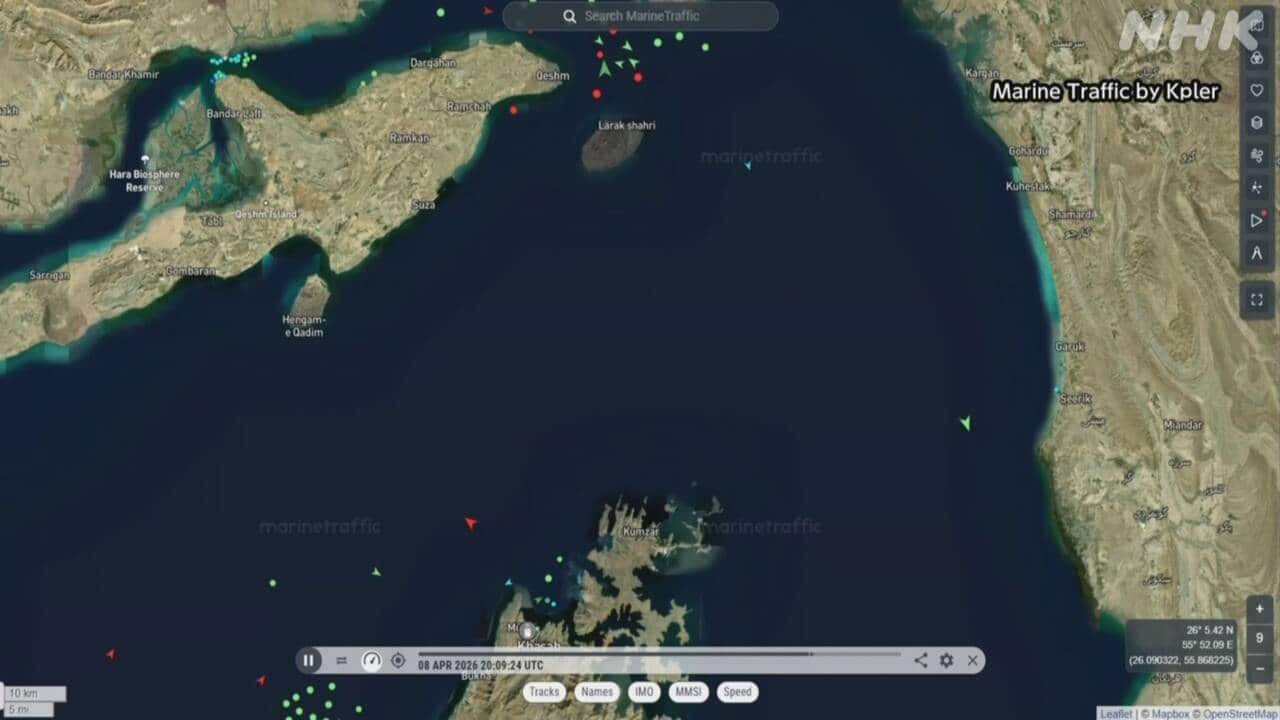
アメリカとイランが2週間にわたる停戦で合意したあと、ホルムズ海峡を通過した船舶は9日朝までの24時間で、確認できただけでも3隻のみだったことが船の位置情報の分析でわかりました。ペルシャ湾内にはまだおよそ1000隻の船舶がとどまっていて、海上交通の正常化には時間がかかりそうです。
船の位置情報を公開している「マリントラフィック」のデータをNHKが集計したところ、日本時間の8日、アメリカとイランの停戦合意が表明されたあと、9日午前9時までの24時間にホルムズ海峡を通過してペルシャ湾を出た船は位置情報が確認できただけで3隻のみでした。
これらの船はいずれも貨物船で、目的地はそれぞれオマーン、ブラジルの港で、もう1隻は表示されていません。
このうちの2隻はイラン側が安全な航行ができると主張しているイランのララク島の北側を航行していました。
一方、ペルシャ湾内にいた石油製品を運ぶタンカー1隻がホルムズ海峡に向かったものの、海峡にさしかかったところで向きを変えてとどまっていて、9日朝までに通過できていません。
イスラエルがレバノンへの攻撃を続けていることを受けて、イランの体制寄りのメディア、ファルス通信は8日、原油タンカーの通航が停止されたと伝えました。
マリントラフィックを運営する「ケプラー」の調査によりますとホルムズ海峡を通ってペルシャ湾を出た船の数は▽今月4日には3隻、▽5日には6隻、▽7日には1隻で、ホルムズ海峡が事実上封鎖されてから状況は大きく変わっていないものとみられます。
データでみるとペルシャ湾内には9日午前9時の時点で、イラン船籍の船を除いて▽原油タンカーが104隻、▽LPG=液化石油ガスの運搬船が36隻、▽LNG=液化天然ガスの運搬船が14隻などあわせておよそ1000隻のタンカーや貨物船などが停泊しています。
ほとんどの船が停戦合意が表明されたあともホルムズ海峡に向かう動きはなく、海上交通の正常化には時間がかかりそうです。
東京大学大学院の渡邉英徳教授は、船の位置情報を公開している「マリントラフィック」のデータを使ってホルムズ海峡付近を航行するタンカーや貨物船の状況を分析しています。
渡邉教授は、アメリカとイランが2週間にわたる停戦で合意したあと、9日朝までの状況について「確認できた範囲では、わずか3隻の貨物船がホルムズ海峡を通過しただけで、ほかの船は変わらずペルシャ湾にとどまる状態が続いている。ルートは、これまでも多くの船が通過していたイラン側が指定した安全回廊、海峡の北部にある2つのイランの島の間を通っている」として、停戦合意の前と大きな変化はないという見方を示しました。
また、イランの体制寄りのメディア、ファルス通信が原油タンカーの通航が停止されたと伝えた後の状況については「海峡に向けて走っていたタンカーが引き返しているのが確認できた。確認できただけで2隻で、おそらくイランが指定した安全回廊に向けて進んでいたはずの船が引き返しているという様子が観測できている」ということです。
一方で、その後、インドに向かうタンカー1隻が安全回廊を航行して、ホルムズ海峡を通過したとみられるということです。
今後については「トップダウンで海峡の封鎖をとくといっても、国どうしでニュアンスに差があったり、現場で運用する立場からすると、どうやって船舶を選別するのか、どのようなルールにするのか、まったく固まっていない中で、イスラエルは相変わらず空爆を続けていて、不安材料ばかりなので、そう簡単には再開できないと思う。ビジネスの論理だけではやっぱり動けないので、国どうしで安定化を図らないと、やはり難しいと思う」と正常化には時間がかかるという見通しを示しました。
渡邉教授によりますと、9日夕方、1隻の貨物船が、イランが新たに設定した「安全回廊」を航行し、ホルムズ海峡を通過したとみられるということです。
イランの地元メディアは9日、革命防衛隊の海軍が、ホルムズ海峡を通過する際の航路図を発表し、すべての船舶は従うよう求めたと報じていて、航路図では、ホルムズ海峡から出る際は、ララク島の南側を通過し、オマーン湾へ向かうルートが示されています。
貨物船はララク島の南側を通過しオマーン湾に出たということで、渡邉教授はこのルートでの航行が確認されたのはホルムズ海峡が事実上封鎖されて以降、初めてだとしています。
船の位置情報を公開している「マリントラフィック」のデータをNHKが集計したところ、日本時間の8日、アメリカとイランの停戦合意が表明されたあと、9日午前9時までの24時間にホルムズ海峡を通過してペルシャ湾を出た船は位置情報が確認できただけで3隻のみでした。
これらの船はいずれも貨物船で、目的地はそれぞれオマーン、ブラジルの港で、もう1隻は表示されていません。
このうちの2隻はイラン側が安全な航行ができると主張しているイランのララク島の北側を航行していました。
一方、ペルシャ湾内にいた石油製品を運ぶタンカー1隻がホルムズ海峡に向かったものの、海峡にさしかかったところで向きを変えてとどまっていて、9日朝までに通過できていません。
イスラエルがレバノンへの攻撃を続けていることを受けて、イランの体制寄りのメディア、ファルス通信は8日、原油タンカーの通航が停止されたと伝えました。
マリントラフィックを運営する「ケプラー」の調査によりますとホルムズ海峡を通ってペルシャ湾を出た船の数は▽今月4日には3隻、▽5日には6隻、▽7日には1隻で、ホルムズ海峡が事実上封鎖されてから状況は大きく変わっていないものとみられます。
データでみるとペルシャ湾内には9日午前9時の時点で、イラン船籍の船を除いて▽原油タンカーが104隻、▽LPG=液化石油ガスの運搬船が36隻、▽LNG=液化天然ガスの運搬船が14隻などあわせておよそ1000隻のタンカーや貨物船などが停泊しています。
ほとんどの船が停戦合意が表明されたあともホルムズ海峡に向かう動きはなく、海上交通の正常化には時間がかかりそうです。
東京大学大学院の渡邉英徳教授は、船の位置情報を公開している「マリントラフィック」のデータを使ってホルムズ海峡付近を航行するタンカーや貨物船の状況を分析しています。
渡邉教授は、アメリカとイランが2週間にわたる停戦で合意したあと、9日朝までの状況について「確認できた範囲では、わずか3隻の貨物船がホルムズ海峡を通過しただけで、ほかの船は変わらずペルシャ湾にとどまる状態が続いている。ルートは、これまでも多くの船が通過していたイラン側が指定した安全回廊、海峡の北部にある2つのイランの島の間を通っている」として、停戦合意の前と大きな変化はないという見方を示しました。
また、イランの体制寄りのメディア、ファルス通信が原油タンカーの通航が停止されたと伝えた後の状況については「海峡に向けて走っていたタンカーが引き返しているのが確認できた。確認できただけで2隻で、おそらくイランが指定した安全回廊に向けて進んでいたはずの船が引き返しているという様子が観測できている」ということです。
一方で、その後、インドに向かうタンカー1隻が安全回廊を航行して、ホルムズ海峡を通過したとみられるということです。
今後については「トップダウンで海峡の封鎖をとくといっても、国どうしでニュアンスに差があったり、現場で運用する立場からすると、どうやって船舶を選別するのか、どのようなルールにするのか、まったく固まっていない中で、イスラエルは相変わらず空爆を続けていて、不安材料ばかりなので、そう簡単には再開できないと思う。ビジネスの論理だけではやっぱり動けないので、国どうしで安定化を図らないと、やはり難しいと思う」と正常化には時間がかかるという見通しを示しました。
渡邉教授によりますと、9日夕方、1隻の貨物船が、イランが新たに設定した「安全回廊」を航行し、ホルムズ海峡を通過したとみられるということです。
イランの地元メディアは9日、革命防衛隊の海軍が、ホルムズ海峡を通過する際の航路図を発表し、すべての船舶は従うよう求めたと報じていて、航路図では、ホルムズ海峡から出る際は、ララク島の南側を通過し、オマーン湾へ向かうルートが示されています。
貨物船はララク島の南側を通過しオマーン湾に出たということで、渡邉教授はこのルートでの航行が確認されたのはホルムズ海峡が事実上封鎖されて以降、初めてだとしています。
Vocabulary
General
Proper noun
JLPT N2
JLPT N1
| # | 言葉 | 意味 |
|---|---|---|
| 17 | 隻 | せき (隻) : 1. counter for ships (large boats) 2. counter for half of a pair (e.g. half of a folding screen) |
| 13 | ホルムズ海峡 | ホルムズかいきょう (ホルムズ海峡) : Strait of Hormuz (place) |
| 11 | 船 | ふね (船) : 1. ship; boat; watercraft; vessel; seaplane 2. tank; tub; vat; trough |
| 10 | 通過 | つうか (通過) : 1. passing through (a tunnel, station, town, etc.); passing by (e.g. of a typhoon); transit 2. passage (of a bill, e.g. through parliament); carriage |
| 6 | 確認 | かくにん (確認) : confirmation; verification; validation; review; check; affirmation; identification |
| 6 | ペルシャ湾 | ペルシャわん (ペルシャ湾) : Persian Gulf (place) |
| 6 | 貨物船 | かもつせん (貨物船) : freighter (vessel); cargo ship |
| 6 | 航行 | こうこう (航行) : cruise; navigation; sailing |
| 4 | 船舶 | せんぱく (船舶) : vessel; ship; shipping; seacraft |
| 4 | 位置情報 | いちじょうほう (位置情報) : location information (as used by location-based services, e.g. GPS position) |
| 4 | 海峡 | かいきょう (海峡) : channel (e.g. between two land masses); strait |
| 4 | 状況 | じょうきょう (状況) : state of affairs (around you); situation; circumstances |
| 4 | 渡邉 | たなべ (渡邉) : Tanabe (surname) |
| 4 | 教授 | きょうじゅ (教授) : 1. professor 2. teaching; instruction |
| 4 | 回廊 | かいろう (回廊) : corridor; gallery; hallway; cloister (i.e. covered walk typically circling a building or garden, esp. in a palace or place of worship) |
| 3 | とどまる | とどまる (止まる) : 1. to remain; to abide; to stay (in the one place) 2. to be limited to; to be confined to; to only account for |
| 3 | 正常化 | せいじょうか (正常化) : normalization; normalisation |
| 3 | 停戦合意 | ていせんごうい (停戦合意) : cease-fire agreement |
| 3 | 原油 | げんゆ (原油) : crude oil |
| 3 | 封鎖 | ふうさ (封鎖) : 1. blockade; lockdown; sealing off (an area) 2. freezing (funds) |
| 3 | 示す | しめす (示す) : 1. to (take out and) show; to demonstrate; to tell; to exemplify; to make apparent 2. to point out (finger, clock hand, needle, etc.) |
| 2 | 停戦 | ていせん (停戦) : armistice; ceasefire |
| 2 | 合意 | ごうい (合意) : (coming to an) agreement; consent; mutual understanding; accord; consensus |
| 2 | のみ | のみ : only; nothing but |
| 2 | 分析 | ぶんせき (分析) : analysis |
| 2 | 海上交通 | かいじょうこうつう (海上交通) : marine traffic; sea traffic |
| 2 | 公開 | こうかい (公開) : opening to the public; making available to the public; putting on display; exhibiting; showing (play, movie, etc.); holding (interview, etc.); open; public |
| 2 | 表明 | ひょうめい (表明) : declaration; indication; representation; manifestation; demonstration; expression; announcement; assertion |
| 2 | 体制 | たいせい (体制) : order; system; structure; set-up; organization; organisation |
| 2 | 寄り | より (寄り) : 1. pushing back one's opponent while locked in close quarters 2. having a tendency towards; being close to |
| 2 | 通信 | つうしん (通信) : correspondence; communication; transmission; news; signal; telecommunications |
| 2 | 通航 | つうこう (通航) : navigation; sailing |
| 2 | 停止 | ていし (停止) : 1. stoppage; coming to a stop; halt; standstill 2. ceasing (movement, activity, etc.); suspension (of operations); interruption (e.g. of electricity supply); cutting off |
| 2 | 伝える | つたえる (伝える) : to convey; to report; to transmit; to communicate; to tell; to impart; to propagate; to teach; to bequeath |
| 2 | 通る | とおる (通る) : 1. to go by; to go past; to go along; to travel along; to pass through; to use (a road); to take (a route); to go via; to go by way of 2. to run (between; of a rail service, bus route, etc.); to operate (between); to connect |
| 2 | 事実上 | じじつじょう (事実上) : as a matter of fact; actually; effectively; in reality; in effect |
| 2 | 変わる | かわる (変わる) : 1. to change; to be transformed; to be altered; to vary 2. to move to |
| 2 | 運搬船 | うんぱんせん (運搬船) : freighter; cargo ship; carrier |
| 2 | 指定 | してい (指定) : designation; specification; assignment; appointment; pointing at |
| 2 | 引き返す | ひきかえす (引き返す) : to turn back; to go back; to come back; to return; to retrace one's steps |
| 2 | どうし | どうし (動詞) : verb |
| 2 | 際 | きわ (際) : 1. edge; brink; verge; side 2. time; moment of |
| 2 | 航路 | こうろ (航路) : (air or sea) route; course; line; run |
| 2 | 南側 | みなみがわ (南側) : south side |
| 2 | オマーン湾 | オマーンわん (オマーン湾) : Gulf of Oman (place) |
| 1 | わかる | わかる (分かる) : 1. to understand; to comprehend; to grasp; to see; to get; to follow 2. to become clear; to be known; to be discovered; to be realized; to be realised; to be found out |
| 1 | 集計 | しゅうけい (集計) : totalization; totalisation; aggregation; tally (e.g. of votes); adding up; summing up |
| 1 | いずれ | いずれ (何れ) : 1. where; which; who 2. anyway; anyhow; at any rate |
| 1 | 目的地 | もくてきち (目的地) : place of destination |
| 1 | 表示 | ひょうじ (表示) : 1. indication; expression; showing; manifestation; demonstration 2. display; displaying |
| 1 | 主張 | しゅちょう (主張) : claim; insistence; assertion; advocacy; emphasis; contention; opinion; tenet |
| 1 | 北側 | きたがわ (北側) : north side; north bank |
| 1 | 石油製品 | せきゆせいひん (石油製品) : petroleum products; petrochemical products |
| 1 | 向かう | むかう (向かう) : 1. to face 2. to go towards; to head towards |
| 1 | さしかかる | さしかかる (差し掛かる) : 1. to come near; to approach 2. to be on the verge of; to be about to |
| 1 | 向き | むき (向き) : 1. direction; orientation; aspect; exposure 2. suited to; suitable for; designed for |
| 1 | 変える | かえる (変える) : 1. to change; to alter; to transform; to convert; to turn; to vary 2. to reform; to revise; to amend |
| 1 | 攻撃 | こうげき (攻撃) : 1. attack; assault; raid; onslaught; offensive 2. criticism; censure; denunciation; condemnation |
| 1 | 運営 | うんえい (運営) : management; administration; operation |
| 1 | 調査 | ちょうさ (調査) : investigation; examination; inquiry; enquiry; survey |
| 1 | 数 | しばしば (屡々) : often; again and again; frequently; repeatedly |
| 1 | 大きく | おおきく (大きく) : in a big way; on a grand scale |
| 1 | 時点 | じてん (時点) : point in time; occasion |
| 1 | 船籍 | せんせき (船籍) : ship's nationality; ship's country of registration |
| 1 | 除く | のぞく (除く) : 1. to remove; to eliminate; to eradicate 2. to exclude; to except |
| 1 | 液化石油ガス | えきかせきゆガス (液化石油ガス) : liquefied petroleum gas; LPG |
| 1 | 液化天然ガス | えきかてんねんガス (液化天然ガス) : liquefied natural gas; LNG |
| 1 | あわせる | あわせる (会わせる) : 1. to make (someone) to meet; to let (someone) meet 2. to expose to; to subject to |
| 1 | 停泊 | ていはく (停泊) : anchorage; anchoring; mooring |
| 1 | 動き | うごき (動き) : 1. movement; move; motion 2. trend; development; change; fluctuation |
| 1 | 東京大学 | とうきょうだいがく (東京大学) : Tokyo University (organization) |
| 1 | 大学院 | だいがくいん (大学院) : graduate school |
| 1 | 英徳 | えいとく (英徳) : Eitoku (unclass) |
| 1 | 付近 | ふきん (付近) : 1. neighborhood; vicinity; environs; district 2. approaching |
| 1 | 範囲 | はんい (範囲) : extent; scope; sphere; range; span |
| 1 | わずか | わずか (僅か) : 1. (a) little; (a) few; slight; small (amount); trifling; meagre; meager 2. only; just; merely |
| 1 | 状態 | じょうたい (状態) : state; condition; situation; appearance; circumstances |
| 1 | 北部 | ほくぶ (北部) : northern part; the north (of a region) |
| 1 | 変化 | へんか (変化) : 1. change; variation; alteration; mutation; transition; transformation; transfiguration; metamorphosis 2. variety; diversity |
| 1 | 見方 | みかた (見方) : 1. viewpoint; point of view 2. way of understanding; way of appreciating; how to look at something (e.g. noh, train schedule) |
| 1 | 走る | はしる (走る) : 1. to run 2. to run (of a vehicle); to drive; to travel; to move; to sail |
| 1 | おそらく | おそらく (恐らく) : perhaps; likely; probably; I dare say |
| 1 | 進む | すすむ (進む) : 1. to advance; to go forward 2. to precede; to go ahead (of) |
| 1 | 様子 | ようす (様子) : 1. state; state of affairs; situation; circumstances 2. appearance; look; aspect |
| 1 | 観測 | かんそく (観測) : observation; survey; measurement |
| 1 | 今後 | こんご (今後) : from now on; hereafter |
| 1 | とくと | とくと (篤と) : carefully; thoroughly; fully; deliberately |
| 1 | 差 | さ (差) : 1. difference; variation 2. difference |
| 1 | 現場 | げんば (現場) : 1. actual spot; scene; scene of the crime; site; location; setting 2. shop floor; factory floor; (on) site |
| 1 | 運用 | うんよう (運用) : 1. making use of; application; practical use; effective management (e.g. of funds) 2. operation; handling; steering (esp. a boat) |
| 1 | 立場 | たちば (立場) : 1. position; situation 2. viewpoint; standpoint; point of view |
| 1 | 選別 | せんべつ (選別) : selection; classification; sorting; screening; triage |
| 1 | まったく | まったく (全く) : 1. really; truly; entirely; completely; wholly; perfectly 2. indeed |
| 1 | 固まる | かたまる (固まる) : 1. to harden; to solidify 2. to become firm; to become certain |
| 1 | 相変わらず | あいかわらず (相変わらず) : as usual; as always; as before; as ever; still |
| 1 | 空爆 | くうばく (空爆) : aerial bombing |
| 1 | 不安材料 | ふあんざいりょう (不安材料) : cause for concern; reasons for uneasiness |
| 1 | 再開 | さいかい (再開) : reopening; resumption; restarting |
| 1 | 論理 | ろんり (論理) : 1. logic 2. logical |
| 1 | 安定化 | あんていか (安定化) : stabilization; stabilisation |
| 1 | 図る | はかる (図る) : 1. to plan; to attempt; to devise 2. to plot; to conspire; to scheme |
| 1 | 見通し | みとおし (見通し) : 1. unobstructed view; perspective; visibility; vista 2. forecast; outlook; prospect; prediction |
| 1 | 新た | あらた (新た) : new; fresh; novel |
| 1 | 設定 | せってい (設定) : 1. establishment; creation; posing (a problem); setting (movie, novel, etc.); scene 2. options setting; preference settings; configuration; setup |
| 1 | 革命 | かくめい (革命) : 1. revolution 2. 58th year of the sexagenary cycle (in Onmyōdō) |
| 1 | 海軍 | かいぐん (海軍) : navy |
| 1 | 発表 | はっぴょう (発表) : announcement; publication; presenting; statement; communique; making known; breaking (news story); expressing (one's opinion); releasing; unveiling |
| 1 | 従う | したがう (従う) : 1. to obey (an order, law, etc.); to abide by (a rule, custom, etc.); to follow; to observe; to conform to; to yield to 2. to follow (a person); to accompany; to go with |
| 1 | 求める | もとめる (求める) : 1. to want; to wish for 2. to request; to demand; to require; to ask for |
| 1 | 報ずる | ほうずる (報ずる) : to inform; to report |
| 1 | 以降 | いこう (以降) : on and after; as from; hereafter; thereafter; since |