JR東、荷物専用新幹線の運行を開始 1編成で17トンを輸送
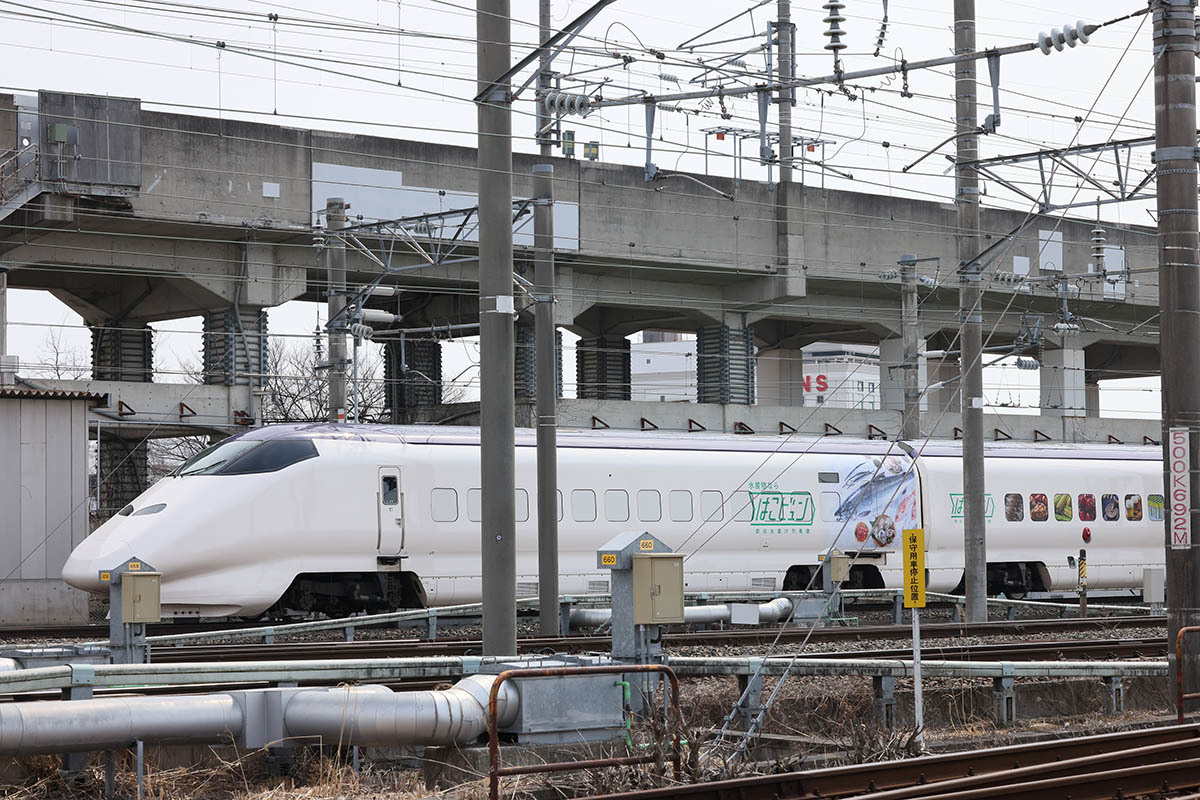
JR東日本は、国内初となる荷物専用新幹線の運行を3月23日に開始した。トラックドライバー不足など物流業界が抱える課題解決への貢献を図る。
JR東日本は、新幹線・在来線特急列車等を活用した列車荷物輸送サービス「はこビュン」を展開しており、鮮魚や農産品等の地産品、精密機械部品や医療用品、引越家財などの輸送に利用されている。
25年4月からは臨時列車の一部客室を使用した大口輸送サービスを開始し、毎週金曜日に最大200箱程度の輸送を可能としたが、より多量の荷物を高頻度で輸送してほしいというニーズに応えるため、E3系新幹線1編成の全号車を荷物専用車両として改造。最大17.4トン、1,000箱程度の積載量とした。
荷物搭載スペースを確保するため、客室内の座席を全て撤去し、荷物をカゴ台車に載せたまま車内に搭載するために床面をフラット化した上で鉄板を敷き、滑り止め加工をしている。
輸送区間は盛岡新幹線車両センターから東京新幹線車両センターで、運行日は平日の定期運行。輸送形態は荷物専用新幹線(1編成7両)で、旅客輸送が1~10号車、荷物輸送が11~17号車。
物流においてトラック運送業界ではトラックドライバー不足に直面しており、かつドライバーの半数が40~54歳、若年層は10%台と次世代の人手不足も進行している。2030年度には約34%(約9億トン相当)の輸送力不足も見込まれるという。特に地方部では、日用品の流通、地域産品の販路縮小などが課題となる。
こういった課題に対して輸送インフラの転換が必要との考えから、JR東日本は「はこビュン」を開始。さらに、多量の荷物を高頻度で輸送できる荷物専用新幹線の運行を開始した。車内電源を活用した冷温管理機器(業務用クーラーボックス等)による冷蔵品の輸送などにも対応し、地方物産物の輸送も含め、東北から日本全国への物流手段の拡大に繋げる。
JR東日本は、国内初となる荷物専用新幹線の運行を3月23日に開始した。トラックドライバー不足など物流業界が抱える課題解決への貢献を図る。 JR東日本は、新幹線・在来線特急列車等を活用した列車荷物輸送サービス「はこビュン」を展開しており、鮮魚や農産品等の地産品、精密機械部品や医療用品、引越家財などの輸送に利用されている。 25年4月からは臨時列車の一部客室を使用した大口輸送サービスを開始し、毎週金曜日に最大200箱程度の輸送を可能としたが、より多量の荷物を高頻度で輸送してほしいというニーズに応えるため、E3系新幹線1編成の全号車を荷物専用車両として改造。最大17.4トン、1,000箱程度の積載量とした。 荷物搭載スペースを確保するため、客室内の座席を全て撤去し、荷物をカゴ台車に載せたまま車内に搭載するために床面をフラット化した上で鉄板を敷き、滑り止め加工をしている。 輸送区間は盛岡新幹線車両センターから東京新幹線車両センターで、運行日は平日の定期運行。輸送形態は荷物専用新幹線(1編成7両)で、旅客輸送が1~10号車、荷物輸送が11~17号車。 物流においてトラック運送業界ではトラックドライバー不足に直面しており、かつドライバーの半数が40~54歳、若年層は10%台と次世代の人手不足も進行している。2030年度には約34%(約9億トン相当)の輸送力不足も見込まれるという。特に地方部では、日用品の流通、地域産品の販路縮小などが課題となる。 こういった課題に対して輸送インフラの転換が必要との考えから、JR東日本は「はこビュン」を開始。さらに、多量の荷物を高頻度で輸送できる荷物専用新幹線の運行を開始した。車内電源を活用した冷温管理機器(業務用クーラーボックス等)による冷蔵品の輸送などにも対応し、地方物産物の輸送も含め、東北から日本全国への物流手段の拡大に繋げる。
JR東日本は、国内初となる荷物専用新幹線の運行を3月23日に開始した。トラックドライバー不足など物流業界が抱える課題解決への貢献を図る。 JR東日本は、新幹線・在来線特急列車等を活用した列車荷物輸送サービス「はこビュン」を展開しており、鮮魚や農産品等の地産品、精密機械部品や医療用品、引越家財などの輸送に利用されている。 25年4月からは臨時列車の一部客室を使用した大口輸送サービスを開始し、毎週金曜日に最大200箱程度の輸送を可能としたが、より多量の荷物を高頻度で輸送してほしいというニーズに応えるため、E3系新幹線1編成の全号車を荷物専用車両として改造。最大17.4トン、1,000箱程度の積載量とした。 荷物搭載スペースを確保するため、客室内の座席を全て撤去し、荷物をカゴ台車に載せたまま車内に搭載するために床面をフラット化した上で鉄板を敷き、滑り止め加工をしている。 輸送区間は盛岡新幹線車両センターから東京新幹線車両センターで、運行日は平日の定期運行。輸送形態は荷物専用新幹線(1編成7両)で、旅客輸送が1~10号車、荷物輸送が11~17号車。 物流においてトラック運送業界ではトラックドライバー不足に直面しており、かつドライバーの半数が40~54歳、若年層は10%台と次世代の人手不足も進行している。2030年度には約34%(約9億トン相当)の輸送力不足も見込まれるという。特に地方部では、日用品の流通、地域産品の販路縮小などが課題となる。 こういった課題に対して輸送インフラの転換が必要との考えから、JR東日本は「はこビュン」を開始。さらに、多量の荷物を高頻度で輸送できる荷物専用新幹線の運行を開始した。車内電源を活用した冷温管理機器(業務用クーラーボックス等)による冷蔵品の輸送などにも対応し、地方物産物の輸送も含め、東北から日本全国への物流手段の拡大に繋げる。
Vocabulary
General
Proper noun
JLPT N2
JLPT N1
| # | 言葉 | 意味 |
|---|---|---|
| 24 | 輸送 | ゆそう (輸送) : transport; transportation |
| 14 | 新幹線 | しんかんせん (新幹線) : Shinkansen; bullet train |
| 8 | 専用 | せんよう (専用) : 1. (one's) exclusive use; private use; personal use 2. dedicated use; use for a particular purpose |
| 8 | 運行 | うんこう (運行) : 1. service (bus, train); operation 2. motion; revolution; movement |
| 8 | 開始 | かいし (開始) : start; commencement; beginning; initiation |
| 6 | JR | ジェイアール (JR) : Japan Railways; JR |
| 6 | 東日本 | ひがしにほん (東日本) : eastern Japan; Japan east of the Itoigawa-Shizuoka Tectonic Line, i.e. east of the Chūbu region |
| 6 | 不足 | ふそく (不足) : 1. insufficiency; deficiency; shortage; lack; scarcity; deficit 2. dissatisfaction; discontent; complaint |
| 6 | 物流 | ぶつりゅう (物流) : physical distribution; distribution of goods; logistics |
| 6 | 等 | など (等) : 1. et cetera; etc.; and the like; and so forth 2. or something |
| 6 | 車両 | しゃりょう (車両) : rolling stock; railroad cars; wheeled vehicles |
| 4 | 活用 | かつよう (活用) : 1. practical use; application 2. conjugation; inflection |
| 4 | 客室 | きゃくしつ (客室) : 1. guest room (at a hotel); guest cabin (on a boat); passenger cabin (on a plane) 2. drawing room |
| 4 | 最大 | さいだい (最大) : biggest; greatest; largest; maximum |
| 4 | 程度 | ていど (程度) : degree; amount; grade; standard; of the order of (following a number); about; approximately |
| 4 | 多量 | たりょう (多量) : large quantity; large amount |
| 4 | 頻度 | ひんど (頻度) : frequency (of occurrence) |
| 4 | 編成 | へんせい (編成) : composition; formation; organization; organisation; compilation |
| 4 | 搭載 | とうさい (搭載) : 1. loading (on board); equipping 2. equipped (with); built-in |
| 4 | 車内 | しゃない (車内) : inside a car (train, bus, etc.) |
| 4 | 号 | ごう (号) : 1. number; edition; make; model; issue; part of that group 2. sobriquet; pen-name |
| 4 | 地方 | ちほう (地方) : 1. district; region; area; locality 2. the country; countryside; the provinces; rural area |
| 4 | 課題 | かだい (課題) : 1. subject; theme; issue; matter 2. homework; assignment |
| 2 | 国内 | こくない (国内) : internal; domestic |
| 2 | 初 | はつ (初) : first; new |
| 2 | 抱える | かかえる (抱える) : 1. to hold or carry under or in the arms 2. to have (esp. problems, debts, etc.) |
| 2 | 貢献 | こうけん (貢献) : contribution (furthering a goal or cause); services (to a cause) |
| 2 | 図る | はかる (図る) : 1. to plan; to attempt; to devise 2. to plot; to conspire; to scheme |
| 2 | 在来 | ざいらい (在来) : pre-existing; already there; conventional |
| 2 | 特急列車 | とっきゅうれっしゃ (特急列車) : limited express train |
| 2 | 列車 | れっしゃ (列車) : train; railway train |
| 2 | 展開 | てんかい (展開) : 1. development; evolution; progression; unfolding; (plot) twist 2. expansion; spreading out; extending; deployment; building up |
| 2 | 鮮魚 | せんぎょ (鮮魚) : fresh fish |
| 2 | 農産 | のうさん (農産) : agricultural products |
| 2 | 精密機械 | せいみつきかい (精密機械) : precision instrument or machine |
| 2 | 部品 | ぶひん (部品) : parts; accessories; components |
| 2 | 医療 | いりょう (医療) : medical care; medical treatment |
| 2 | 用品 | ようひん (用品) : articles; supplies; parts |
| 2 | 引越 | ひっこし (引っ越し) : moving (dwelling, office, etc.); changing residence |
| 2 | 家財 | かざい (家財) : 1. household belongings; household goods 2. family fortune; family assets |
| 2 | 臨時列車 | りんじれっしゃ (臨時列車) : special train; extra train |
| 2 | 一部 | いちぶ (一部) : 1. one part; one portion; one section; some 2. one copy (e.g. of a document) |
| 2 | 使用 | しよう (使用) : use; application; employment; utilization; utilisation |
| 2 | 大口 | おおぐち (大口) : 1. big mouth; mouth opened wide 2. boastful speech; tall talk; bragging; boasting |
| 2 | 可能 | かのう (可能) : possible; potential; practicable; feasible |
| 2 | 応える | こたえる (応える) : 1. to respond; to answer; to meet (e.g. demands, expectations) 2. to affect; to take a toll; to strike home; to have an effect on; to be hard on someone (e.g. heat, cold, work, illness, etc.); to be a strain |
| 2 | 系 | けい (系) : 1. system; lineage; group 2. corollary |
| 2 | 改造 | かいぞう (改造) : 1. remodeling; remodelling; restructuring; reconstruction; reshuffling (e.g. cabinet) 2. modding |
| 2 | 積載量 | せきさいりょう (積載量) : loading capacity |
| 2 | 確保 | かくほ (確保) : 1. securing; obtaining; ensuring; guarantee; maintaining 2. belay; belaying |
| 2 | 座席 | ざせき (座席) : seat |
| 2 | 全て | すべて (全て) : 1. everything; all; the whole 2. entirely; completely; wholly; all |
| 2 | 撤去 | てっきょ (撤去) : 1. withdrawal; revocation; repeal 2. demolition; removal |
| 2 | 台車 | だいしゃ (台車) : 1. platform truck; hand truck; trolley; dolly; cart 2. (railway) truck; bogie; flatcar; wagon; waggon |
| 2 | 載せる | のせる (乗せる) : 1. to place on (something) 2. to give (someone) a ride; to give a lift; to pick up; to help on board |
| 2 | まま | うば (乳母) : wet nurse; nursing mother |
| 2 | 床面 | ゆかめん (床面) : floor; floor surface |
| 2 | 鉄板 | てっぱん (鉄板) : 1. iron plate; steel plane 2. sure thing; certain winner |
| 2 | 敷く | しく (敷く) : 1. to spread out; to lay out 2. to take a position |
| 2 | 滑り止め | すべりどめ (滑り止め) : 1. non-slip device (material, tread, etc.); non-skid; anti-slip; anti-skid 2. back-up option (esp. with regard to university admissions); back-up choice; insurance choice; contingency option |
| 2 | 加工 | かこう (加工) : manufacturing; processing; treatment; machining |
| 2 | 区間 | くかん (区間) : 1. section (of track, etc.); segment; dimension 2. interval |
| 2 | 盛岡 | もりおか (盛岡) : Morioka (city in Iwate) |
| 2 | 東京 | とうきょう (東京) : Tokyo |
| 2 | 平日 | へいじつ (平日) : 1. weekday; ordinary days (i.e. non-holiday) 2. kanji radical 73 |
| 2 | 定期 | ていき (定期) : 1. fixed period; fixed term 2. regular; periodic; periodical |
| 2 | 形態 | けいたい (形態) : form; shape; figure |
| 2 | 両 | りょう (両) : 1. both (hands, parents, sides, etc.) 2. counter for carriages (e.g. in a train); counter for vehicles |
| 2 | 運送業 | うんそうぎょう (運送業) : forwarding or transportation industry |
| 2 | 直面 | ちょくめん (直面) : 1. confrontation 2. to face; to confront; to encounter |
| 2 | 半数 | はんすう (半数) : 1. half the number 2. haploid |
| 2 | 若年層 | じゃくねんそう (若年層) : the young |
| 2 | 次世代 | じせだい (次世代) : next generation; future generation |
| 2 | 人手不足 | ひとでぶそく (人手不足) : labour shortage; labor shortage; shortage of workers; shortage of hands |
| 2 | 進行 | しんこう (進行) : 1. moving forward (e.g. vehicle); onward movement 2. advance (work, procedure, etc.); advancement; progress |
| 2 | 年度 | ねんど (年度) : 1. fiscal year (usu. April 1 to March 31 in Japan); financial year 2. academic year; school year |
| 2 | 相当 | そうとう (相当) : 1. corresponding to (in meaning, function, etc.); being equivalent to 2. appropriate; suitable; befitting; proportionate |
| 2 | 輸送力 | ゆそうりょく (輸送力) : carrying power; transportation (carrying) capacity |
| 2 | 見込む | みこむ (見込む) : 1. to anticipate; to expect; to estimate; to count on; to allow for; to take into account 2. to place confidence in; to put trust in; to trust |
| 2 | 日用品 | にちようひん (日用品) : daily necessities |
| 2 | 流通 | りゅうつう (流通) : 1. circulation (money, goods, etc.); distribution 2. circulation (air, water, etc.); ventilation; flow |
| 2 | 地域 | ちいき (地域) : area; region |
| 2 | 産品 | さんぴん (産品) : products |
| 2 | 販路 | はんろ (販路) : market (for goods, services, etc.); outlet (for selling); opening |
| 2 | 縮小 | しゅくしょう (縮小) : reduction; curtailment |
| 2 | 転換 | てんかん (転換) : conversion; diversion; changeover; commutation; switchover |
| 2 | 考え | かんがえ (考え) : 1. thinking; thought; view; opinion; concept 2. idea; notion; imagination |
| 2 | 電源 | でんげん (電源) : 1. source of electricity; electrical power 2. power (button on TV, etc.) |
| 2 | 冷温 | れいおん (冷温) : 1. cold and warm 2. low temperature |
| 2 | 管理 | かんり (管理) : control; management (e.g. of a business) |
| 2 | 機器 | きき (機器) : device; equipment; machinery; apparatus |
| 2 | 業務用 | ぎょうむよう (業務用) : business use; business purposes |
| 2 | 冷蔵 | れいぞう (冷蔵) : cold storage; refrigeration |
| 2 | 対応 | たいおう (対応) : 1. correspondence (to); equivalence 2. suitability; coordination; matching; being appropriate (for) |
| 2 | 物産 | ぶっさん (物産) : product |
| 2 | 含める | ふくめる (含める) : 1. to include (in a group or scope) 2. to instruct; to make one understand |
| 2 | 東北 | とうほく (東北) : 1. north-east 2. Tōhoku (northernmost six prefectures of Honshu); Tohoku |
| 2 | 日本全国 | にほんぜんこく (日本全国) : all over Japan; throughout Japan |
| 2 | 手段 | しゅだん (手段) : means; way; measure |
| 2 | 拡大 | かくだい (拡大) : magnification; enlargement; expansion; amplification |
| 2 | 繋げる | つなげる (繋げる) : 1. to connect 2. to tie; to fasten |