NTTドコモ 3Gサービス 3月末で終了 機種や契約の変更を呼びかけ【Q&Aも】
NTTドコモは、3月末で、主に「ガラケー」と呼ばれる携帯電話で使われている3Gのサービスを終了します。3Gの契約者はまだ30万人ほどいるということで、会社では3月中に機種や契約を変更するよう呼びかけています。
NTTドコモは、2001年に導入した携帯電話の通信規格、3Gのサービスを3月末で終了します。
4月1日以降、3Gのみに対応した機種は自動的に解約となり、緊急通報を含めた電話やメールなどは利用できなくなります。
KDDIは2022年に、ソフトバンクは2024年に、サービスを終了していて、これですべての携帯会社が3Gのサービスをやめることになります。
日本では、世界に先駆けて3Gのサービスが始まり、主に「ガラケー」と呼ばれる携帯電話で高速のデータ通信を活用し写真や動画が送れるようになりました。
しかし、2010年により高速にデータ通信ができる4Gが、2020年には5Gのサービスが始まり、「ガラケー」から「スマートフォン」に利用が移っていくと、3Gの契約者数は徐々に減っていきました。
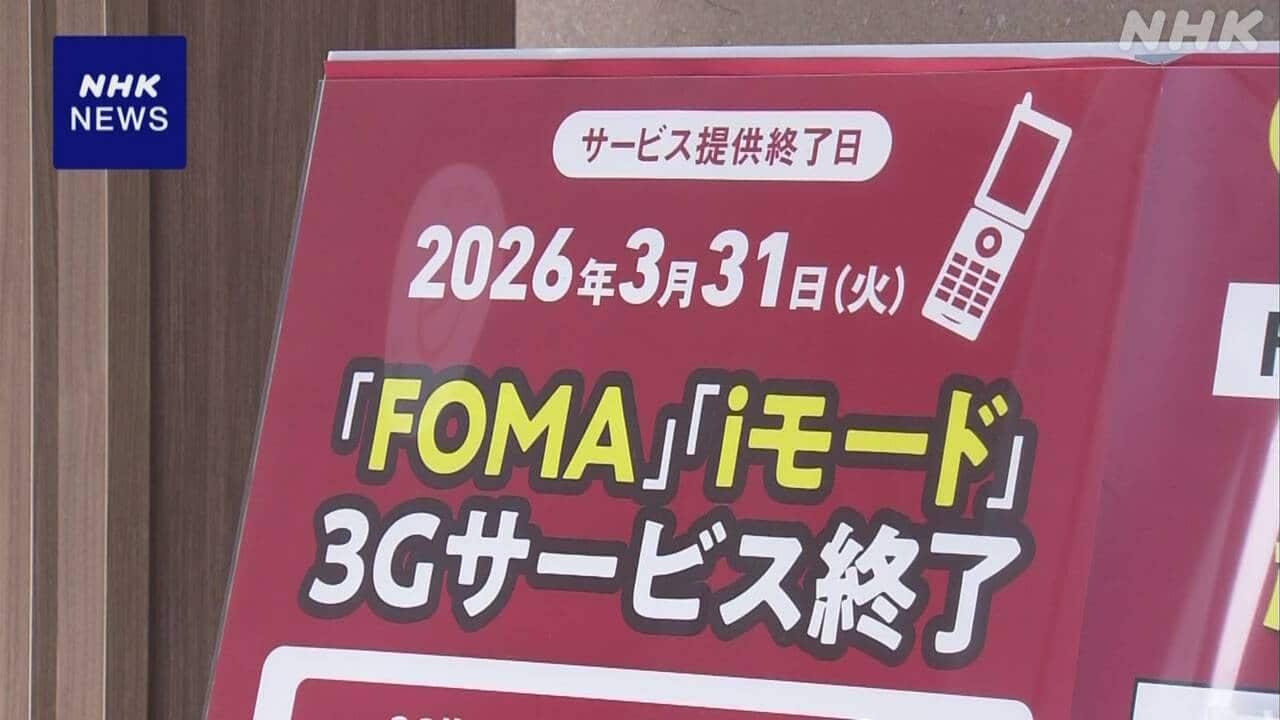
ドコモによりますと、まだ3Gのサービスを利用している人は、3月23日の時点でおよそ30万人いるということで、会社ではチラシを配ったり店頭にポスターを貼ったりして、3月中に機種や契約を変更するよう呼びかけています。
Q. NTTドコモが3月末に3Gのサービスを終了するということですが、そもそも3Gってどういう意味ですか。
A. 3Gとは、2001年から始まった携帯電話の3世代目の通信規格のことです。「世代」を意味する「Generation」の頭文字をとって3Gと呼ばれています。それまでの通信規格「2G」では通話や文字だけのメールしかできませんでしたが、「3G」の登場によって高速のデータ通信が可能になり、画像や動画の送受信ができるようになったほか、「ワンセグ」と呼ばれるテレビ放送も受信できるようになりました。3Gの普及とともに携帯電話の利用は一気に拡大し、2012年には契約数が国内人口とほぼ同じ1億2000万件余りに増えました。3Gは「携帯電話1人1台」の時代をもたらした通信規格といえます。
A. ドコモは、3Gに続く通信規格、4Gや5Gの普及で、利用者が減少したためだと説明しています。会社によりますと、3Gの契約数は、2011年のおよそ5700万件をピークに、年々減少しています。その一方で、サービスを続けるには、専用の基地局を維持する必要があり、保守や点検にかかるコストが重荷となっていました。こうしたことから、KDDIは2022年に、ソフトバンクも2024年に3Gから撤退していて、ドコモの終了によって、四半世紀にわたって続いた3Gのサービスが終了することになります。
A. 3Gは携帯電話だけでなく、さまざまな通信にも利用されてきました。例えば、自動販売機やコインパーキングのキャッシュレス決済、エレベーターに設置されている遠隔監視用のカメラなどです。こうした産業向けの契約は、2025年12月の時点でおよそ293万件に上るということです。このためドコモでは、ユーザー側の企業に新しい機器に交換するよう呼びかけ、大手飲料メーカーや駐車場の運営会社などは機器を切り替えるなどの対応を進めています。
Q. 携帯電話についてはおよそ30万件の契約が残っているということですが、各社はどんな動きを見せていますか。
A. ドコモの利用者を取り込もうと、KDDIやソフトバンクは、高齢者でも操作が簡単な機種を大幅に値引きしたり、割安な料金プランを用意したりするキャンペーンを展開しています。各社からすると、3Gの契約を続けてきたシニア世代は、長期の契約が見込める優良な顧客ということで、獲得に向けた競争が激しくなっています。
Q. ただ利用者目線で言うと、ガラケータイプの機種をずっと使ってきた高齢者の間では、新しい機種に変えることに抵抗もあるのではないですか。
A. NTTドコモのモバイル社会研究所では、去年、関東地方の高齢者を対象にスマホの所有率を調べました。それによりますと、60代後半で93%、70代前半で88%、70代後半で81%となり、それぞれ10年前の調査と比べると、60代後半で70ポイント、70代前半で74ポイント、70代後半で68ポイント増加しています。このデータから、高齢者の間でもスマホの利用が一定程度浸透してきたことがうかがえます。ただ、実際に高齢者に話を聞くと、「スマホは持っているが、使いこなせていない」という声も多く聞かれます。それだけに、高齢者の不安を取り除くようなサポートも必要だと感じました。
Q. 自分の携帯電話が3Gかどうかわからないという人もいると思います。どんなことに注意すればよいですか。
A. 3Gのみに対応した機種は、「ガラケー」と呼ばれるプッシュボタン式で折りたたみのタイプのものが多いほか、一部の古いタイプのスマホも含まれるということです。使えなくなる機種の見分け方として、携帯の本体にiモードのマークである「i」が記載されている機種、携帯に差し込む充電器のプラグが黒くて四角いタイプの機種などが対象になります。3Gの携帯電話をそのまま使い続けた場合、4月1日以降、自動的に契約を解約され、緊急通報を含めた電話やメールができなくなります。4月1日になって急に携帯が使えないという事態を防ぐためにも、ご自身はもちろん、家族や知り合いの中に古い機種を使っている人がいないか、もう一度確かめてもらいたいと思います。また高齢者の中には、1人で販売店を訪れ機種変更の手続きをすることに抵抗がある人もいるということで、ドコモでは家族などが付き添うことも検討してほしいと呼びかけています。
3Gのみに対応した機種を使っている人の多くは高齢者だということで、NTTドコモでは契約者本人やその家族などに3月中に機種や契約を変更するよう呼びかけています。
会社では、東京と大阪、それに福岡にコールセンターを設置し、3月中旬まであわせて150人規模の体制で、契約者一人ひとりに直接電話をかけてきました。
このうち都内のコールセンターでは、スマートフォンへの移行に不安を感じている高齢者などに対し、使いやすい機種や割安な料金プランなどを紹介し、電話で契約変更の手続きを進めていました。
会社によりますと、契約者の中には高齢者施設に入所するなどして携帯電話を使わなくなっていることから、契約の変更を希望しない人も多いということです。
こうしたことから、会社ではおよそ30万件ある3Gの契約のうち、およそ27万件が4月1日に自動的に解約されるとみています。
NTTドコモマーケティング推進部の小疇伸課長は「知らない間に携帯電話が使えなくなっていることがないよう、契約者本人や家族にも連絡しています。不安なく4Gや5Gに移行できるよう万全にサポートしていきたい」と話していました。
3Gのサービス終了に伴い、スマートフォンの操作に慣れない高齢者向けに、4Gに対応したガラケータイプの機種を販売する企業も出ています。
韓国の携帯電話メーカー「アルト」は、プッシュボタンで操作し本体を折りたたむタイプの機種を日本向けに改良し、2月から販売しています。
メインの画面はタッチによる操作も可能で、機能を絞ることで大手メーカーのスマホに比べて割安な価格を実現したということです。
この機種は一部の家電量販店などで販売していて、売り場にいた80代の男性は「スマホは使い方が難しいので、こういう携帯電話がいいですね」と話していました。
この会社の日本法人の金希哲COOは「高齢化が進んでいる日本はシニア層も多いので、まずは日本の市場に定着できるように頑張りたい」と話していました。
また、神奈川県に本社があり、富士通の携帯電話事業を前身とする「FCNT」は、新たに開発したガラケータイプの機種を2025年から販売しています。
ボタンを一度押すだけで登録した相手に電話をかけられるほか、迷惑電話対策として、登録されていない番号から着信があった場合、通話内容を録音できる機能などを備えています。
民間の調査会社「MM総研」によりますと、去年1年間に出荷された携帯電話の9割余りがスマホだった一方、ガラケータイプの機種も85万台余り出荷されているということです。
このため各社は、ガラケータイプの機種の需要は今後も一定程度見込めるとして、4Gや5Gに対応した機種の開発や販売を続けていくことにしています。
NTTドコモは、2001年に導入した携帯電話の通信規格、3Gのサービスを3月末で終了します。
4月1日以降、3Gのみに対応した機種は自動的に解約となり、緊急通報を含めた電話やメールなどは利用できなくなります。
KDDIは2022年に、ソフトバンクは2024年に、サービスを終了していて、これですべての携帯会社が3Gのサービスをやめることになります。
日本では、世界に先駆けて3Gのサービスが始まり、主に「ガラケー」と呼ばれる携帯電話で高速のデータ通信を活用し写真や動画が送れるようになりました。
しかし、2010年により高速にデータ通信ができる4Gが、2020年には5Gのサービスが始まり、「ガラケー」から「スマートフォン」に利用が移っていくと、3Gの契約者数は徐々に減っていきました。
ドコモによりますと、まだ3Gのサービスを利用している人は、3月23日の時点でおよそ30万人いるということで、会社ではチラシを配ったり店頭にポスターを貼ったりして、3月中に機種や契約を変更するよう呼びかけています。
Q. NTTドコモが3月末に3Gのサービスを終了するということですが、そもそも3Gってどういう意味ですか。
A. 3Gとは、2001年から始まった携帯電話の3世代目の通信規格のことです。「世代」を意味する「Generation」の頭文字をとって3Gと呼ばれています。それまでの通信規格「2G」では通話や文字だけのメールしかできませんでしたが、「3G」の登場によって高速のデータ通信が可能になり、画像や動画の送受信ができるようになったほか、「ワンセグ」と呼ばれるテレビ放送も受信できるようになりました。3Gの普及とともに携帯電話の利用は一気に拡大し、2012年には契約数が国内人口とほぼ同じ1億2000万件余りに増えました。3Gは「携帯電話1人1台」の時代をもたらした通信規格といえます。
A. ドコモは、3Gに続く通信規格、4Gや5Gの普及で、利用者が減少したためだと説明しています。会社によりますと、3Gの契約数は、2011年のおよそ5700万件をピークに、年々減少しています。その一方で、サービスを続けるには、専用の基地局を維持する必要があり、保守や点検にかかるコストが重荷となっていました。こうしたことから、KDDIは2022年に、ソフトバンクも2024年に3Gから撤退していて、ドコモの終了によって、四半世紀にわたって続いた3Gのサービスが終了することになります。
A. 3Gは携帯電話だけでなく、さまざまな通信にも利用されてきました。例えば、自動販売機やコインパーキングのキャッシュレス決済、エレベーターに設置されている遠隔監視用のカメラなどです。こうした産業向けの契約は、2025年12月の時点でおよそ293万件に上るということです。このためドコモでは、ユーザー側の企業に新しい機器に交換するよう呼びかけ、大手飲料メーカーや駐車場の運営会社などは機器を切り替えるなどの対応を進めています。
Q. 携帯電話についてはおよそ30万件の契約が残っているということですが、各社はどんな動きを見せていますか。
A. ドコモの利用者を取り込もうと、KDDIやソフトバンクは、高齢者でも操作が簡単な機種を大幅に値引きしたり、割安な料金プランを用意したりするキャンペーンを展開しています。各社からすると、3Gの契約を続けてきたシニア世代は、長期の契約が見込める優良な顧客ということで、獲得に向けた競争が激しくなっています。
Q. ただ利用者目線で言うと、ガラケータイプの機種をずっと使ってきた高齢者の間では、新しい機種に変えることに抵抗もあるのではないですか。
A. NTTドコモのモバイル社会研究所では、去年、関東地方の高齢者を対象にスマホの所有率を調べました。それによりますと、60代後半で93%、70代前半で88%、70代後半で81%となり、それぞれ10年前の調査と比べると、60代後半で70ポイント、70代前半で74ポイント、70代後半で68ポイント増加しています。このデータから、高齢者の間でもスマホの利用が一定程度浸透してきたことがうかがえます。ただ、実際に高齢者に話を聞くと、「スマホは持っているが、使いこなせていない」という声も多く聞かれます。それだけに、高齢者の不安を取り除くようなサポートも必要だと感じました。
Q. 自分の携帯電話が3Gかどうかわからないという人もいると思います。どんなことに注意すればよいですか。
A. 3Gのみに対応した機種は、「ガラケー」と呼ばれるプッシュボタン式で折りたたみのタイプのものが多いほか、一部の古いタイプのスマホも含まれるということです。使えなくなる機種の見分け方として、携帯の本体にiモードのマークである「i」が記載されている機種、携帯に差し込む充電器のプラグが黒くて四角いタイプの機種などが対象になります。3Gの携帯電話をそのまま使い続けた場合、4月1日以降、自動的に契約を解約され、緊急通報を含めた電話やメールができなくなります。4月1日になって急に携帯が使えないという事態を防ぐためにも、ご自身はもちろん、家族や知り合いの中に古い機種を使っている人がいないか、もう一度確かめてもらいたいと思います。また高齢者の中には、1人で販売店を訪れ機種変更の手続きをすることに抵抗がある人もいるということで、ドコモでは家族などが付き添うことも検討してほしいと呼びかけています。
3Gのみに対応した機種を使っている人の多くは高齢者だということで、NTTドコモでは契約者本人やその家族などに3月中に機種や契約を変更するよう呼びかけています。
会社では、東京と大阪、それに福岡にコールセンターを設置し、3月中旬まであわせて150人規模の体制で、契約者一人ひとりに直接電話をかけてきました。
このうち都内のコールセンターでは、スマートフォンへの移行に不安を感じている高齢者などに対し、使いやすい機種や割安な料金プランなどを紹介し、電話で契約変更の手続きを進めていました。
会社によりますと、契約者の中には高齢者施設に入所するなどして携帯電話を使わなくなっていることから、契約の変更を希望しない人も多いということです。
こうしたことから、会社ではおよそ30万件ある3Gの契約のうち、およそ27万件が4月1日に自動的に解約されるとみています。
NTTドコモマーケティング推進部の小疇伸課長は「知らない間に携帯電話が使えなくなっていることがないよう、契約者本人や家族にも連絡しています。不安なく4Gや5Gに移行できるよう万全にサポートしていきたい」と話していました。
3Gのサービス終了に伴い、スマートフォンの操作に慣れない高齢者向けに、4Gに対応したガラケータイプの機種を販売する企業も出ています。
韓国の携帯電話メーカー「アルト」は、プッシュボタンで操作し本体を折りたたむタイプの機種を日本向けに改良し、2月から販売しています。
メインの画面はタッチによる操作も可能で、機能を絞ることで大手メーカーのスマホに比べて割安な価格を実現したということです。
この機種は一部の家電量販店などで販売していて、売り場にいた80代の男性は「スマホは使い方が難しいので、こういう携帯電話がいいですね」と話していました。
この会社の日本法人の金希哲COOは「高齢化が進んでいる日本はシニア層も多いので、まずは日本の市場に定着できるように頑張りたい」と話していました。
また、神奈川県に本社があり、富士通の携帯電話事業を前身とする「FCNT」は、新たに開発したガラケータイプの機種を2025年から販売しています。
ボタンを一度押すだけで登録した相手に電話をかけられるほか、迷惑電話対策として、登録されていない番号から着信があった場合、通話内容を録音できる機能などを備えています。
民間の調査会社「MM総研」によりますと、去年1年間に出荷された携帯電話の9割余りがスマホだった一方、ガラケータイプの機種も85万台余り出荷されているということです。
このため各社は、ガラケータイプの機種の需要は今後も一定程度見込めるとして、4Gや5Gに対応した機種の開発や販売を続けていくことにしています。
Vocabulary
General
Proper noun
JLPT N2
JLPT N1
| # | 言葉 | 意味 |
|---|---|---|
| 21 | 機種 | きしゅ (機種) : type of equipment; model |
| 16 | 携帯電話 | けいたいでんわ (携帯電話) : mobile telephone; cellular telephone |
| 13 | 契約 | けいやく (契約) : contract; compact; agreement |
| 10 | 高齢者 | こうれいしゃ (高齢者) : old person; old people |
| 6 | NTT | にっぽんでんしんでんわかぶしきがいしゃ (日本電信電話株式会社) : Nippon Telegraph and Telephone Corporation; NTT (company) |
| 6 | 終了 | しゅうりょう (終了) : end; close; termination |
| 6 | 契約者 | けいやくしゃ (契約者) : party to a contract; subscriber; policy owner (insurance) |
| 6 | 通信 | つうしん (通信) : correspondence; communication; transmission; news; signal; telecommunications |
| 6 | 対応 | たいおう (対応) : 1. correspondence (to); equivalence 2. suitability; coordination; matching; being appropriate (for) |
| 6 | 件 | くだん (件) : 1. the aforementioned; the said; (man, incident, etc.) in question; the above-mentioned; the aforesaid 2. the usual |
| 5 | 呼ぶ | よぶ (呼ぶ) : 1. to call out (to); to call; to invoke 2. to summon (a doctor, etc.) |
| 5 | 変更 | へんこう (変更) : change; modification; alteration; revision; amendment |
| 5 | 呼びかける | よびかける (呼びかける) : 1. to call out to; to hail; to address 2. to appeal |
| 5 | 規格 | きかく (規格) : standard; norm |
| 5 | 販売 | はんばい (販売) : sales; selling; marketing |
| 4 | 携帯 | けいたい (携帯) : 1. carrying (on one's person or in the hand) 2. mobile phone; cell phone |
| 4 | 操作 | そうさ (操作) : 1. operation; management; handling 2. manipulating (to one's benefit); manipulation; influencing |
| 4 | 後半 | こうはん (後半) : second half; latter half |
| 3 | 末 | うら (末) : top end; tip |
| 3 | のみ | のみ : only; nothing but |
| 3 | 自動的 | じどうてき (自動的) : automatic |
| 3 | 解約 | かいやく (解約) : cancellation of a contract |
| 3 | 始まる | はじまる (始まる) : 1. to begin; to start; to commence 2. to happen (again); to begin (anew) |
| 3 | 高速 | こうそく (高速) : 1. high-speed; rapid; express 2. highway; freeway; expressway; motorway |
| 3 | データ通信 | データつうしん (データ通信) : data communication |
| 3 | 数 | しばしば (屡々) : often; again and again; frequently; repeatedly |
| 3 | 世代 | せだい (世代) : generation; the world; the age |
| 3 | 余り | あまり (余り) : 1. remainder; remnant; rest; balance; surplus; remains (of a meal); leftovers 2. (not) very; (not) much |
| 3 | 向け | むけ (向け) : intended for ...; oriented towards ...; aimed at ... |
| 3 | 各社 | かくしゃ (各社) : all companies; each company |
| 3 | 割安 | わりやす (割安) : economical; comparatively cheap |
| 3 | 不安 | ふあん (不安) : anxiety; uneasiness; worry; apprehension; fear; insecurity; suspense |
| 3 | 使える | つかえる (使える) : to be usable; to be serviceable; to be useful |
| 2 | 主に | おもに (主に) : mainly; primarily |
| 2 | 以降 | いこう (以降) : on and after; as from; hereafter; thereafter; since |
| 2 | 緊急通報 | きんきゅうつうほう (緊急通報) : emergency call |
| 2 | 含める | ふくめる (含める) : 1. to include (in a group or scope) 2. to instruct; to make one understand |
| 2 | 動画 | どうが (動画) : 1. video; movie; moving picture 2. animation; animated cartoon |
| 2 | 時点 | じてん (時点) : point in time; occasion |
| 2 | 通話 | つうわ (通話) : 1. telephone call; speaking over the telephone; (Internet) voice call 2. counter for telephone calls of a set duration |
| 2 | 可能 | かのう (可能) : possible; potential; practicable; feasible |
| 2 | 普及 | ふきゅう (普及) : diffusion; spread; popularization; promulgation; familiarization |
| 2 | 利用者 | りようしゃ (利用者) : user; end-user; consumer |
| 2 | 減少 | げんしょう (減少) : decrease; reduction; decline |
| 2 | 設置 | せっち (設置) : 1. establishment; institution 2. installation (of a machine or equipment) |
| 2 | 企業 | きぎょう (企業) : enterprise; business; company; corporation |
| 2 | 機器 | きき (機器) : device; equipment; machinery; apparatus |
| 2 | 大手 | おおて (大手) : 1. major company; big company 2. front castle gate |
| 2 | 進める | すすめる (進める) : 1. to advance; to move forward; to put (a clock, watch) forward 2. to carry forward (plans, work, etc.); to proceed with; to make progress in; to further; to advance; to hasten; to speed up |
| 2 | 料金 | りょうきん (料金) : fee; charge; fare |
| 2 | ただ | ただ (只) : 1. ordinary; common; usual 2. free of charge |
| 2 | 抵抗 | ていこう (抵抗) : 1. resistance; opposition; standing up to 2. reluctance; repulsion; repugnance |
| 2 | 対象 | たいしょう (対象) : target; object (of worship, study, etc.); subject (of taxation, etc.) |
| 2 | 前半 | ぜんはん (前半) : first half |
| 2 | 調査 | ちょうさ (調査) : investigation; examination; inquiry; enquiry; survey |
| 2 | 一定 | いってい (一定) : fixed; settled; constant; definite; uniform; regularized; regularised; defined; standardized; standardised; certain; prescribed |
| 2 | 程度 | ていど (程度) : degree; amount; grade; standard; of the order of (following a number); about; approximately |
| 2 | 感ずる | かんずる (感ずる) : to feel; to sense |
| 2 | 一部 | いちぶ (一部) : 1. one part; one portion; one section; some 2. one copy (e.g. of a document) |
| 2 | 本体 | ほんたい (本体) : 1. substance; real form 2. main part; main unit; body (of a machine) |
| 2 | 手続き | てつづき (手続き) : procedure; process; proceedings; formalities |
| 2 | 本人 | ほんにん (本人) : the person in question; the person themselves; said person |
| 2 | 移行 | いこう (移行) : switching over to; migration; transition |
| 2 | 機能 | きのう (機能) : function; facility; faculty; feature |
| 2 | 開発 | かいはつ (開発) : development; exploitation |
| 2 | 登録 | とうろく (登録) : registration; accession; register; entry; record |
| 2 | 出荷 | しゅっか (出荷) : shipping; shipment; forwarding |
| 1 | 導入 | どうにゅう (導入) : introduction; bringing in; leading in; installation |
| 1 | 先駆ける | さきがける (先駆ける) : to be the first |
| 1 | 活用 | かつよう (活用) : 1. practical use; application 2. conjugation; inflection |
| 1 | 移る | うつる (移る) : 1. to move (house); to transfer (department) 2. to change the target of interest or concern |
| 1 | 徐々 | じょじょ (徐々) : 1. slow; gradual; steady 2. calm; composed; relaxed |
| 1 | 減る | へる (減る) : to decrease (in size or number); to diminish; to abate |
| 1 | 配る | くばる (配る) : 1. to distribute; to hand out; to deliver; to deal out; to serve out 2. to allot; to allocate; to place (staff, soldiers, etc.); to station |
| 1 | 店頭 | てんとう (店頭) : 1. shopfront; storefront; shopwindow; (near the) shop entrance 2. over-the-counter |
| 1 | 貼る | はる (張る) : 1. to stick; to paste; to affix 2. to stretch; to spread; to strain; to tighten; to put up (tent) |
| 1 | そもそも | そもそも (抑) : 1. in the first place; to begin with; from the start; originally; ab initio 2. after all; anyway; actually; well, ...; ... on earth (e.g. "what on earth?"); ... in the world (e.g. "why in the world?") |
| 1 | って | って : 1. you said; he said; she said; they said 2. if ... then |
| 1 | どういう | どういう (どう言う) : somehow; how; in what way; why; what kind of |
| 1 | 頭文字 | かしらもじ (頭文字) : 1. first letter of a word; capital letter (at the start of a word or sentence) 2. initials (of one's name) |
| 1 | 文字 | もじ (文字) : 1. letter (of alphabet); character 2. writing |
| 1 | 登場 | とうじょう (登場) : 1. entry (on stage); appearance (on screen) 2. entrance; introduction (into a market) |
| 1 | 画像 | がぞう (画像) : image; picture; portrait |
| 1 | 送受信 | そうじゅしん (送受信) : transceiver (send and receive) |
| 1 | テレビ放送 | テレビほうそう (テレビ放送) : telecast |
| 1 | 受信 | じゅしん (受信) : receiving (a message, letter, email, etc.); reception (radio, TV, etc.) |
| 1 | 一気 | いっき (一気) : 1. one breath 2. chug!; drink! |
| 1 | 拡大 | かくだい (拡大) : magnification; enlargement; expansion; amplification |
| 1 | 国内 | こくない (国内) : internal; domestic |
| 1 | ほぼ | ほぼ (略) : almost; roughly; approximately |
| 1 | 増える | ふえる (増える) : to increase; to multiply |
| 1 | もたらす | もたらす (齎す) : to bring; to take; to bring about |
| 1 | 年々 | ねんねん (年々) : year by year; annually; every year; from year to year |
| 1 | 専用 | せんよう (専用) : 1. (one's) exclusive use; private use; personal use 2. dedicated use; use for a particular purpose |
| 1 | 基地局 | きちきょく (基地局) : base station |
| 1 | 維持 | いじ (維持) : maintenance; preservation; improvement |
| 1 | 保守 | ほしゅ (保守) : 1. maintenance 2. conservatism; conservativeness; conservation |
| 1 | 点検 | てんけん (点検) : inspection; examination; checking |
| 1 | 重荷 | おもに (重荷) : load; heavy burden; encumbrance; heavy freight; heavy responsibility |
| 1 | 撤退 | てったい (撤退) : evacuation; withdrawal; revocation; repeal; retreat |
| 1 | 世紀 | せいき (世紀) : 1. century 2. era |
| 1 | 自動販売機 | じどうはんばいき (自動販売機) : vending machine |
| 1 | 遠隔 | えんかく (遠隔) : distant; remote; isolated |
| 1 | 監視 | かんし (監視) : monitoring; watching; observation; surveillance; guarding; supervision; lookout |
| 1 | 交換 | こうかん (交換) : exchange; interchange; switching; reciprocity; barter; substitution; replacement; clearing (of checks, cheques) |
| 1 | 運営 | うんえい (運営) : management; administration; operation |
| 1 | 切り替える | きりかえる (切り替える) : to change; to exchange; to convert; to renew; to throw a switch; to replace; to switch over |
| 1 | 残る | のこる (残る) : to remain; to be left |
| 1 | 動き | うごき (動き) : 1. movement; move; motion 2. trend; development; change; fluctuation |
| 1 | 取り込む | とりこむ (取り込む) : 1. to take in; to bring in; to adopt (e.g. behaviour); to introduce 2. to capture (e.g. image); to import |
| 1 | 大幅 | おおはば (大幅) : 1. big; large; drastic; substantial 2. full-width cloth (approx. 72 cm wide for traditional Japanese clothing; approx. 140 cm wide for Western clothing) |
| 1 | 値引き | ねびき (値引き) : price reduction; discount |
| 1 | 展開 | てんかい (展開) : 1. development; evolution; progression; unfolding; (plot) twist 2. expansion; spreading out; extending; deployment; building up |
| 1 | 長期 | ちょうき (長期) : long-term |
| 1 | 優良 | ゆうりょう (優良) : superior; excellent; fine |
| 1 | 顧客 | こきゃく (顧客) : customer; client; patron |
| 1 | 獲得 | かくとく (獲得) : acquisition; possession |
| 1 | ずっと | ずっと : 1. continuously in some state (for a long time, distance); throughout; all along; the whole time; all the way 2. much (better, etc.); by far; far and away |
| 1 | 研究所 | けんきゅうしょ (研究所) : research establishment; research institute; laboratory |
| 1 | 関東地方 | かんとうちほう (関東地方) : Kanto region (incl. Tokyo, Kanagawa, Saitama, Gunma, Tochigi, Ibaraki and Chiba prefectures) |
| 1 | 所有 | しょゆう (所有) : one's possessions; ownership |
| 1 | 率 | りつ (率) : rate; ratio; proportion; percentage |
| 1 | 調べる | しらべる (調べる) : to examine; to look up; to investigate; to check up; to sense; to study; to inquire; to search |
| 1 | 増加 | ぞうか (増加) : increase; rise; growth; addition; increment |
| 1 | 浸透 | しんとう (浸透) : 1. penetration (e.g. market); pervasion (e.g. thought, ideology) 2. permeation; soaking; osmosis |
| 1 | 実際 | じっさい (実際) : 1. reality; actuality; truth; fact; actual conditions 2. practice (as opposed to theory) |
| 1 | 持つ | もつ (持つ) : 1. to hold (in one's hand); to take; to carry 2. to possess; to have; to own |
| 1 | 聞く | きく (聞く) : 1. to hear 2. to listen (e.g. to music) |
| 1 | 取り除く | とりのぞく (取り除く) : to remove; to deinstall; to take away; to set apart |
| 1 | わかる | わかる (分かる) : 1. to understand; to comprehend; to grasp; to see; to get; to follow 2. to become clear; to be known; to be discovered; to be realized; to be realised; to be found out |
| 1 | 式 | しき (式) : 1. equation; formula; expression 2. ceremony |
| 1 | 折りたたみ | おりたたみ (折りたたみ) : folding; collapsible; telescopic |
| 1 | 含む | ふくむ (含む) : 1. to contain; to comprise; to have; to hold; to include; to embrace 2. to hold in the mouth |
| 1 | 見分ける | みわける (見分ける) : to distinguish; to recognize; to recognise; to tell apart; to differentiate |
| 1 | 記載 | きさい (記載) : mention (in a document); record; entry; statement; listing |
| 1 | 差し込む | さしこむ (差し込む) : 1. to insert; to put in; to thrust in; to plug in 2. to have a griping pain |
| 1 | 充電器 | じゅうでんき (充電器) : (battery) charger; AC adapter |
| 1 | 四角い | しかくい (四角い) : square; rectangular |
| 1 | そのまま | そのまま (其のまま) : 1. without change; as is 2. just like; extremely similar |
| 1 | 事態 | じたい (事態) : situation; (present) state of affairs; circumstances |
| 1 | 防ぐ | ふせぐ (防ぐ) : 1. to defend against; to protect against 2. to prevent; to avert; to avoid |
| 1 | ご自身 | ごじしん (御自身) : himself; yourself; herself |
| 1 | 知り合い | しりあい (知り合い) : acquaintance |
| 1 | 確かめる | たしかめる (確かめる) : to ascertain; to check; to make sure |
| 1 | 販売店 | はんばいてん (販売店) : store; shop |
| 1 | 訪れる | おとずれる (訪れる) : 1. to visit; to call on 2. to arrive (season, time, situation, etc.); to come; to appear |
| 1 | 機種変更 | きしゅへんこう (機種変更) : model change (esp. mobile phone); model upgrade |
| 1 | 付き添う | つきそう (付き添う) : to attend on; to wait on; to accompany; to escort; to chaperone |
| 1 | 検討 | けんとう (検討) : consideration; examination; investigation; study; scrutiny; discussion; analysis; review |
| 1 | 東京 | とうきょう (東京) : Tokyo |
| 1 | 大阪 | おおさか (大阪) : 1. Osaka (city, prefecture) 2. large hill |
| 1 | 福岡 | ふくおか (福岡) : Fukuoka (city, prefecture) |
| 1 | 中旬 | ちゅうじゅん (中旬) : middle of a month; second third of a month; 11th to 20th day of a month |
| 1 | あわせる | あわせる (会わせる) : 1. to make (someone) to meet; to let (someone) meet 2. to expose to; to subject to |
| 1 | 規模 | きぼ (規模) : scale; scope; plan; structure |
| 1 | 体制 | たいせい (体制) : order; system; structure; set-up; organization; organisation |
| 1 | 一人ひとり | ひとりひとり (一人一人) : each (person); individually; one by one; one at a time; in turn |
| 1 | 直接 | ちょくせつ (直接) : direct; immediate; personal; firsthand |
| 1 | 都内 | とない (都内) : (within) the (Tokyo) metropolitan area |
| 1 | 入所 | にゅうしょ (入所) : 1. admission (e.g. to a training institution, research establishment, social welfare facility, etc.); entrance 2. imprisonment; internment; confinement |
| 1 | 希望 | きぼう (希望) : hope; wish; aspiration |
| 1 | 推進 | すいしん (推進) : 1. propulsion; drive 2. promotion (e.g. of a government policy); furtherance; implementation |
| 1 | 小疇 | こあぜ (小疇) : Koaze (surname) |
| 1 | 知る | しる (知る) : 1. to be aware of; to know; to be conscious of; to cognize; to cognise 2. to notice; to feel |
| 1 | 万全 | ばんぜん (万全) : perfection; flawlessness |
| 1 | 伴う | ともなう (伴う) : 1. to accompany; to go hand in hand with; to be consequent upon 2. to be accompanied by; to bring with; to take with; to be involved in |
| 1 | 韓国 | かんこく (韓国) : 1. South Korea; Republic of Korea 2. Korean Empire (1897-1910) |
| 1 | 折りたたむ | おりたたむ (折り畳む) : to fold up; to fold into layers |
| 1 | 日本 | にほん (日本) : Japan |
| 1 | 改良 | かいりょう (改良) : improvement; reform |
| 1 | 画面 | がめん (画面) : 1. screen (of a TV, computer, etc.) 2. image (on a screen); picture; scene |
| 1 | 絞る | しぼる (絞る) : 1. to wring (towel, rag); to squeeze 2. to squeeze (fruit to extract juice); to press; to extract; to milk; to express milk |
| 1 | 比べる | くらべる (比べる) : 1. to compare; to make a comparison 2. to compete; to vie |
| 1 | 価格 | かかく (価格) : price; value; cost |
| 1 | 実現 | じつげん (実現) : implementation (e.g. of a system); materialization; materialisation; realization; realisation; actualization; actualisation |
| 1 | 家電量販店 | かでんりょうはんてん (家電量販店) : volume-sales electronics retailer; electronics retail store |
| 1 | 使い方 | つかいかた (使い方) : way to use something; treatment; management (of help) |
| 1 | 法人 | ほうじん (法人) : corporate body; corporation; (legal) person; (juridical) person |
| 1 | 高齢化 | こうれいか (高齢化) : population ageing (aging) |
| 1 | 進む | すすむ (進む) : 1. to advance; to go forward 2. to precede; to go ahead (of) |
| 1 | 市場 | いちば (市場) : (town) market; (street) market; marketplace |
| 1 | 定着 | ていちゃく (定着) : 1. sticking (in one place, position, etc.); settling; fixing; adherence 2. becoming established (of a custom, system, etc.); taking hold; taking root |
| 1 | 頑張る | がんばる (頑張る) : 1. to persevere; to persist; to keep at it; to hang on; to hold out; to do one's best 2. to insist that; to stick to (one's opinion) |
| 1 | 神奈川県 | かながわけん (神奈川県) : Kanagawa prefecture (Kanto area) |
| 1 | 本社 | ほんしゃ (本社) : 1. head office; main office; headquarters; parent company 2. main shrine |
| 1 | 富士通 | ふじつう (富士通) : Fujitsu (company) |
| 1 | 事業 | じぎょう (事業) : 1. project; enterprise; business; industry; operations; venture; service 2. act; deed; conduct |
| 1 | 前身 | ぜんしん (前身) : antecedents; ancestor; previous position; previous existence; predecessor organization; predecessor organisation |
| 1 | 新た | あらた (新た) : new; fresh; novel |
| 1 | 相手 | あいて (相手) : 1. companion; partner; company 2. other party; addressee |
| 1 | 迷惑電話 | めいわくでんわ (迷惑電話) : nuisance phone call; spam phone call |
| 1 | 対策 | たいさく (対策) : measure; step; countermeasure; counterplan; countermove; strategy; preparation (e.g. for a test) |
| 1 | 着信 | ちゃくしん (着信) : arrival (of post, news, correspondence, etc.); receiving (a phone call, email, etc.) |
| 1 | 内容 | ないよう (内容) : contents; content; substance; matter; detail; import |
| 1 | 録音 | ろくおん (録音) : (audio) recording |
| 1 | 備える | そなえる (備える) : 1. to furnish with; to equip with; to provide; to install 2. to prepare for; to make preparations for; to make provision for |
| 1 | 民間 | みんかん (民間) : 1. private; non-governmental; non-official; civilian; civil 2. folk; popular |
| 1 | 年間 | ねんかん (年間) : 1. (period of) a year 2. during an era |
| 1 | 割 | わり (割り) : 1. rate; ratio; proportion; percentage 2. profit |
| 1 | 需要 | じゅよう (需要) : demand; request |
| 1 | 今後 | こんご (今後) : from now on; hereafter |