血管炎の薬 投与後に患者20人死亡“使用の患者 医師と相談を”
予習
この記事のキーワード — タップで意味×8
患者
かんじゃ
patient
×6
死亡
しぼう
1. death; mortality 2. to die; to pass away
×3
血管
けっかん
blood vessel; vein
N1×2
難病
なんびょう
incurable disease
×2
治療薬
ちりょうやく
remedy; cure; therapeutic medication
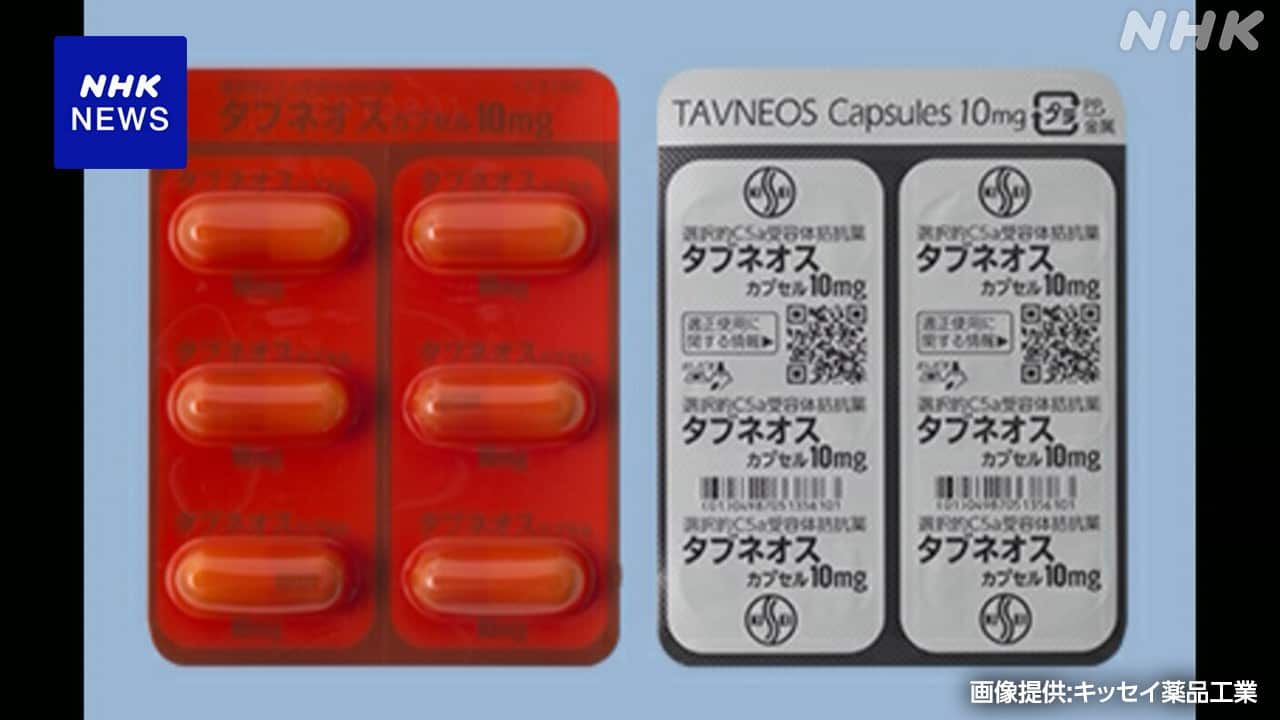
難病の血管炎の治療薬「タブネオス」を投与されたあと死亡した患者が国内で20人報告されたと、この薬を販売する長野県の製薬会社が発表しました。会社は薬と死亡との因果関係はわからないとしたうえで、薬を使用している患者は主治医と相談するよう呼びかけています。
「タブネオス(一般名アバコパン)」はアメリカの企業が開発し、長野県の製薬会社「キッセイ薬品工業」が販売する薬で、全身の血管に炎症が起きる難病の血管炎の治療薬として使われています。
会社によりますと、この薬は4年前に発売されてから先月までに国内でおよそ8500人の患者に使われたとみられ、このうち20人の死亡が報告されたということです。
副作用としてまれに重い肝機能障害が起こることが知られていますが、死亡した患者のうち13人は肝臓内にある胆管が壊れて失われる「胆管消失症候群」と報告されたということです。
会社は薬と死亡との因果関係はわからないとしたうえで、▽当面、新規の患者への使用を控えることや、▽薬を使用している患者にリスクや代わりの治療について十分説明し継続するか慎重に判断するよう、医療機関に呼びかけています。
会社によりますと、欧米ではこの薬の治験のデータの一部に疑義があるという指摘が相次ぎ、承認の撤回の提案や調査などが行われているということです。
キッセイ薬品工業は「販売の自粛が必要な状況とは考えていないが、患者の安全性を最優先して呼びかけをした。薬を使用している患者は自分で判断せず主治医に相談してほしい。死亡例は国に報告していて、今後の対応の協議を進めたい」としています。
「タブネオス(一般名アバコパン)」はアメリカの企業が開発し、長野県の製薬会社「キッセイ薬品工業」が販売する薬で、全身の血管に炎症が起きる難病の血管炎の治療薬として使われています。
会社によりますと、この薬は4年前に発売されてから先月までに国内でおよそ8500人の患者に使われたとみられ、このうち20人の死亡が報告されたということです。
副作用としてまれに重い肝機能障害が起こることが知られていますが、死亡した患者のうち13人は肝臓内にある胆管が壊れて失われる「胆管消失症候群」と報告されたということです。
会社は薬と死亡との因果関係はわからないとしたうえで、▽当面、新規の患者への使用を控えることや、▽薬を使用している患者にリスクや代わりの治療について十分説明し継続するか慎重に判断するよう、医療機関に呼びかけています。
会社によりますと、欧米ではこの薬の治験のデータの一部に疑義があるという指摘が相次ぎ、承認の撤回の提案や調査などが行われているということです。
キッセイ薬品工業は「販売の自粛が必要な状況とは考えていないが、患者の安全性を最優先して呼びかけをした。薬を使用している患者は自分で判断せず主治医に相談してほしい。死亡例は国に報告していて、今後の対応の協議を進めたい」としています。
この記事の単語 (64)
×8
患者
かんじゃ
patient
×6
死亡
しぼう
1. death; mortality 2. to die; to pass away
×4
報告
ほうこく
report; information
×4
使用
しよう
use; application; employment; utilization; utilisation
×3
血管
けっかん
blood vessel; vein
×3
販売
はんばい
sales; selling; marketing
×2
難病
なんびょう
incurable disease
×2
治療薬
ちりょうやく
remedy; cure; therapeutic medication
×2
国内
こくない
internal; domestic
×2
長野県
ながのけん
Nagano prefecture (Chūbu area)
×2
製薬
せいやく
medicine manufacture; drug manufacture
×2
因果関係
いんがかんけい
consequence; causal relationship; nexus
×2
分かる
わかる
1. to understand; to comprehend; to grasp; to see; to get; to follow 2. to become clear; to be known; to be discovered; to be realized; to be realised; to be found out
×2
主治医
しゅじい
attending physician; physician in charge; (one's) family doctor
×2
呼び掛ける
よびかける
1. to call out to; to hail; to address 2. to appeal
×2
胆管
たんかん
bile duct
×2
判断
はんだん
1. judgment; judgement; decision; conclusion; adjudication 2. divination
×1
投与
とうよ
administration (of medicine)
×1
発表
はっぴょう
announcement; publication; presenting; statement; communique; making known; breaking (news story); expressing (one's opinion); releasing; unveiling
×1
一般
いっぱん
1. general; universal 2. ordinary; average; common; non-celebrity
×1
企業
きぎょう
enterprise; business; company; corporation
×1
開発
かいはつ
development; exploitation
×1
全身
ぜんしん
1. whole (body); full-length (e.g. portrait) 2. systemic
×1
炎症
えんしょう
inflammation; irritation
×1
発売
はつばい
sale; offering for sale; release (for sale); launch (product)
×1
副作用
ふくさよう
side effect; adverse reaction
×1
稀
まれ
rare; seldom
×1
肝機能障害
かんきのうしょうがい
impairment of liver function
×1
起こる
おこる
to occur; to happen
×1
知る
しる
1. to be aware of; to know; to be conscious of; to cognize; to cognise 2. to notice; to feel
×1
肝臓
かんぞう
liver
×1
壊れる
こわれる
1. to be broken; to break 2. to fall through; to come to nothing
×1
失う
うしなう
1. to lose 2. to miss (a change, opportunity)
×1
消失
しょうしつ
disappearance; vanishing; loss; dying away; wearing off
×1
症候群
しょうこうぐん
syndrome
×1
当面
とうめん
1. current; urgent; pressing; impending 2. to confront (an issue); to face (up to something)
×1
新規
しんき
1. new; fresh 2. new item (e.g. customer, regulation); newly created object
×1
控える
ひかえる
1. to be temperate in; to refrain; to abstain; to hold back; to restrain oneself from excessive ... 2. to make notes; to jot down (e.g. phone number)
×1
治療
ちりょう
(medical) treatment; care; therapy; cure; remedy
×1
継続
けいぞく
continuation
×1
慎重
しんちょう
careful; cautious; prudent; discreet; deliberate
×1
医療機関
いりょうきかん
medical institution
×1
欧米
おうべい
Europe and America; the West
×1
治験
ちけん
clinical trial
×1
一部
いちぶ
1. one part; one portion; one section; some 2. one copy (e.g. of a document)
×1
疑義
ぎぎ
doubt
×1
指摘
してき
pointing out; identification
×1
相
あい
together; mutually; fellow
×1
次ぐ
つぐ
to rank next to; to come after
×1
承認
しょうにん
recognition; acknowledgement; acknowledgment; approval; consent; agreement
×1
撤回
てっかい
withdrawal; retraction; revocation; repeal
×1
提案
ていあん
proposal; proposition; suggestion
×1
調査
ちょうさ
investigation; examination; inquiry; enquiry; survey
×1
自粛
じしゅく
self-restraint; voluntary restraint; self-imposed control; self-discipline
×1
状況
じょうきょう
state of affairs (around you); situation; circumstances
×1
考える
かんがえる
1. to think (about, of); to think over; to ponder; to contemplate; to reflect (on); to meditate (on) 2. to consider; to bear in mind; to allow for; to take into consideration
×1
安全性
あんぜんせい
safety; security
×1
最優先
さいゆうせん
maximum preference; maximum priority; priority handling
×1
呼び掛け
よびかけ
call; appeal
×1
例
れい
1. custom; practice; habit; usual 2. said; aforementioned
×1
今後
こんご
from now on; hereafter
×1
対応
たいおう
1. correspondence (to); equivalence 2. suitability; coordination; matching; being appropriate (for)
×1
協議
きょうぎ
conference; consultation; discussion; negotiation
×1
進める
すすめる
1. to advance; to move forward; to put (a clock, watch) forward 2. to carry forward (plans, work, etc.); to proceed with; to make progress in; to further; to advance; to hasten; to speed up