戦後50年の沖縄県戦没者追悼式に大使出席を検討 韓国外交文書
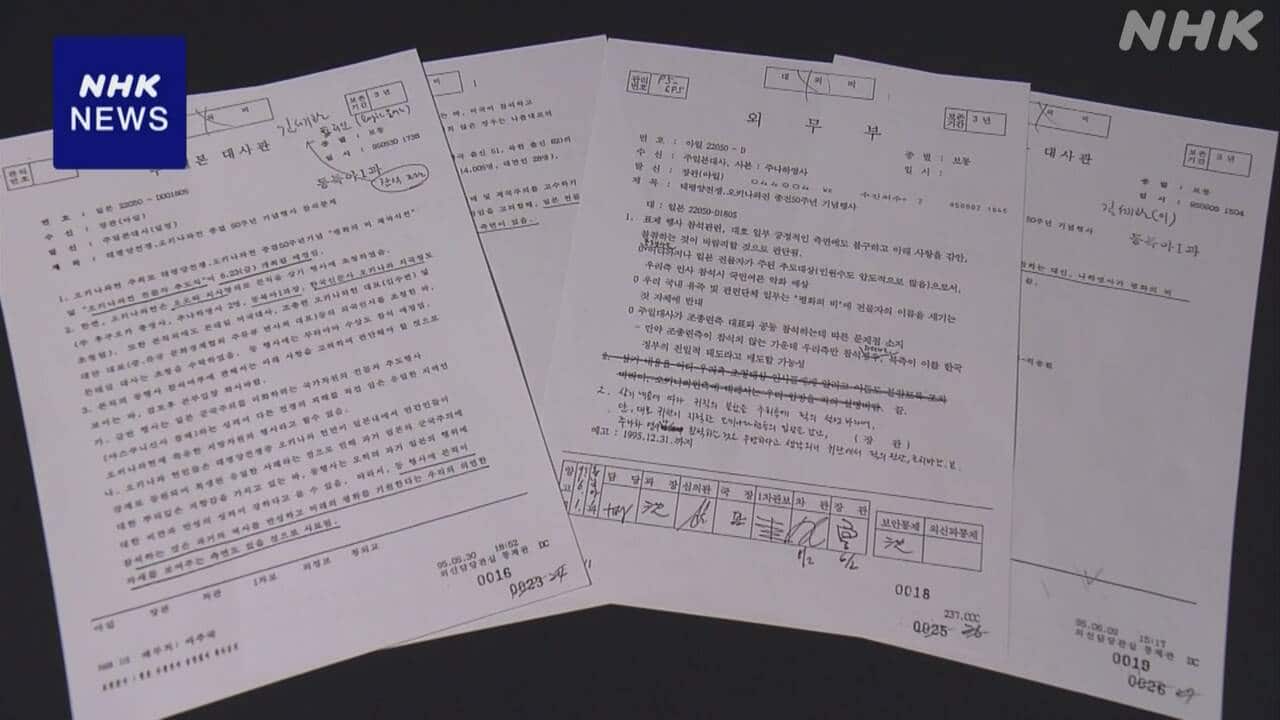
このほど公開された韓国の外交文書で、戦後50年の沖縄県の戦没者追悼式に、駐日韓国大使が出席するか韓国政府内で検討されたものの、国内世論などを理由に出席を見送っていたことが分かりました。専門家は「歴史問題に関する外交的対立がいかに敏感なテーマであったかよく示している」としています。
先週公開された1995年の文書には、戦後50年の沖縄県の戦没者追悼式とこの年建設された「平和の礎(いしじ)」の除幕式に、駐日韓国大使が招待されたことを受け、韓国政府内で対応を検討した経緯が記されています。
駐日韓国大使館が韓国外務省へ送った文書では、沖縄戦で多くの住民が犠牲になったことに触れ、「式典への出席は過去の歴史を反省し、未来の平和を祈るわれわれのきぜんとした姿勢を示す面がある」などとしたうえで、判断を仰いでいます。
これに対する韓国外務省の文書には、日本の戦没者が追悼の主な対象となっており、出席した場合に韓国世論の悪化が予想されるとか、韓国の遺族や関連団体の一部は「平和の礎」に名前を刻むことに反対しているなどとして、「一部、肯定的な面があるが欠席が望ましい」と記されていて、駐日大使の出席は見送られました。
日韓関係に詳しいクンミン(国民)大学のイ・ウォンドク(李元徳)教授は「当時の歴史問題に関する外交的対立がいかに敏感なテーマであったかよく示している。沖縄での式典は戦争を反省する性格のもので、韓国側がそれをよく理解できていたら、参加をそれほど敏感に考えることはなかっただろう」と話しています。
先週公開された1995年の文書には、戦後50年の沖縄県の戦没者追悼式とこの年建設された「平和の礎(いしじ)」の除幕式に、駐日韓国大使が招待されたことを受け、韓国政府内で対応を検討した経緯が記されています。
駐日韓国大使館が韓国外務省へ送った文書では、沖縄戦で多くの住民が犠牲になったことに触れ、「式典への出席は過去の歴史を反省し、未来の平和を祈るわれわれのきぜんとした姿勢を示す面がある」などとしたうえで、判断を仰いでいます。
これに対する韓国外務省の文書には、日本の戦没者が追悼の主な対象となっており、出席した場合に韓国世論の悪化が予想されるとか、韓国の遺族や関連団体の一部は「平和の礎」に名前を刻むことに反対しているなどとして、「一部、肯定的な面があるが欠席が望ましい」と記されていて、駐日大使の出席は見送られました。
日韓関係に詳しいクンミン(国民)大学のイ・ウォンドク(李元徳)教授は「当時の歴史問題に関する外交的対立がいかに敏感なテーマであったかよく示している。沖縄での式典は戦争を反省する性格のもので、韓国側がそれをよく理解できていたら、参加をそれほど敏感に考えることはなかっただろう」と話しています。
Vocabulary
General
Proper noun
JLPT N2
JLPT N1
| # | 言葉 | 意味 |
|---|---|---|
| 9 | 韓国 | かんこく (韓国) : 1. South Korea; Republic of Korea 2. Korean Empire (1897-1910) |
| 3 | 戦没者 | せんぼつしゃ (戦没者) : persons who have fallen in battle |
| 3 | 敏感 | びんかん (敏感) : sensitive; alert; aware; susceptible |
| 3 | 示す | しめす (示す) : 1. to (take out and) show; to demonstrate; to tell; to exemplify; to make apparent 2. to point out (finger, clock hand, needle, etc.) |
| 3 | 文書 | ぶんしょ (文書) : 1. document; writing; letter; papers; notes; records; archives 2. document addressed to someone |
| 3 | 平和 | へいわ (平和) : peace; harmony |
| 2 | 公開 | こうかい (公開) : opening to the public; making available to the public; putting on display; exhibiting; showing (play, movie, etc.); holding (interview, etc.); open; public |
| 2 | 戦後 | せんご (戦後) : postwar period; period after Second World War |
| 2 | 沖縄県 | おきなわけん (沖縄県) : Okinawa prefecture |
| 2 | 追悼式 | ついとうしき (追悼式) : memorial services |
| 2 | 政府 | せいふ (政府) : government; administration |
| 2 | 検討 | けんとう (検討) : consideration; examination; investigation; study; scrutiny; discussion; analysis; review |
| 2 | 世論 | よろん (世論) : public opinion; popular voice; public sentiment; consensus |
| 2 | 見送る | みおくる (見送る) : 1. to see someone off (at a station, an airport, etc.); to escort (e.g. home) 2. to follow something with one's eyes until it is out of sight |
| 2 | 関する | かんする (関する) : to concern; to be related |
| 2 | 外交的 | がいこうてき (外交的) : diplomatic |
| 2 | 対立 | たいりつ (対立) : confrontation; opposition; antagonism |
| 2 | いかに | いかに (如何に) : 1. how; in what way 2. how (much); to what extent |
| 2 | 記す | しるす (記す) : 1. to write down; to note; to jot down 2. to remember |
| 2 | 外務省 | がいむしょう (外務省) : Ministry of Foreign Affairs |
| 2 | 式典 | しきてん (式典) : ceremony; rites |
| 2 | 反省 | はんせい (反省) : 1. reflection; reconsideration; introspection; meditation; contemplation 2. regret; repentance; remorse; being sorry |
| 2 | 面 | おもて (面) : 1. face 2. surface |
| 2 | 一部 | いちぶ (一部) : 1. one part; one portion; one section; some 2. one copy (e.g. of a document) |
| 1 | 外交文書 | がいこうぶんしょ (外交文書) : diplomatic papers or documents |
| 1 | 国内 | こくない (国内) : internal; domestic |
| 1 | 分かる | わかる (分かる) : 1. to understand; to comprehend; to grasp; to see; to get; to follow 2. to become clear; to be known; to be discovered; to be realized; to be realised; to be found out |
| 1 | 専門家 | せんもんか (専門家) : specialist; expert; professional; authority; pundit |
| 1 | 建設 | けんせつ (建設) : construction; establishment |
| 1 | 除幕式 | じょまくしき (除幕式) : unveiling ceremony |
| 1 | 対応 | たいおう (対応) : 1. correspondence (to); equivalence 2. suitability; coordination; matching; being appropriate (for) |
| 1 | 経緯 | いきさつ (経緯) : 1. details; particulars; whole story; sequence of events; chronology; circumstances; how it started; how things got this way 2. longitude and latitude |
| 1 | 駐日 | ちゅうにち (駐日) : resident in Japan |
| 1 | 大使館 | たいしかん (大使館) : embassy |
| 1 | 送る | おくる (送る) : 1. to send (a thing); to dispatch; to despatch; to transmit 2. to take or escort (a person somewhere); to see off (a person) |
| 1 | 沖縄戦 | おきなわせん (沖縄戦) : Battle of Okinawa (April, 1945) |
| 1 | 住民 | じゅうみん (住民) : inhabitant; resident; citizen; population |
| 1 | 犠牲 | ぎせい (犠牲) : 1. sacrifice; victim; scapegoat 2. sacrifice (to the gods) |
| 1 | 触れる | ふれる (触れる) : 1. to touch; to feel 2. to touch (with) |
| 1 | 過去 | かこ (過去) : 1. the past; bygone days 2. one's past (that one would prefer remained secret) |
| 1 | 未来 | みらい (未来) : 1. the future (usually distant) 2. future tense |
| 1 | われわれ | われわれ (我々) : we |
| 1 | きぜん | きぜん (毅然) : resolute; firm; dauntless; undaunted |
| 1 | 姿勢 | しせい (姿勢) : 1. posture; pose; position; stance; carriage (of the body) 2. attitude; approach; stance |
| 1 | 判断 | はんだん (判断) : 1. judgment; judgement; decision; conclusion; adjudication 2. divination |
| 1 | 仰ぐ | あおぐ (仰ぐ) : 1. to look up (at) 2. to look up to; to respect; to revere |
| 1 | 追悼 | ついとう (追悼) : mourning (dead persons); memorial |
| 1 | 主な | おもな (主な) : chief; main; principal; important |
| 1 | 対象 | たいしょう (対象) : target; object (of worship, study, etc.); subject (of taxation, etc.) |
| 1 | 悪化 | あっか (悪化) : (suffer) deterioration; growing worse; aggravation; degeneration; corruption |
| 1 | 予想 | よそう (予想) : expectation; anticipation; prediction; forecast; conjecture |
| 1 | 遺族 | いぞく (遺族) : bereaved family; surviving family; family of the deceased |
| 1 | 関連 | かんれん (関連) : relation; connection; relevance |
| 1 | 団体 | だんたい (団体) : organization; organisation; association |
| 1 | 礎 | いしずえ (礎) : foundation stone; cornerstone |
| 1 | 刻む | きざむ (刻む) : 1. to mince; to cut fine; to chop up; to hash; to shred 2. to carve; to engrave; to chisel; to notch |
| 1 | 肯定的 | こうていてき (肯定的) : affirmative |
| 1 | 欠席 | けっせき (欠席) : absence; non-attendance |
| 1 | 望ましい | のぞましい (望ましい) : desirable; hoped for; preferable; advisable |
| 1 | 駐日大使 | ちゅうにちたいし (駐日大使) : ambassador to Japan |
| 1 | 日韓 | にっかん (日韓) : Japan and South Korea; Japanese-Korean |
| 1 | 詳しい | くわしい (詳しい) : 1. detailed; full; minute 2. knowing very well; knowledgeable (about); well-acquainted (with); well-informed (about); familiar (with) |
| 1 | 国民 | こくみん (国民) : people (of a country); nation; citizen; national |
| 1 | 李元 | すももと (李元) : Sumomoto (surname) |
| 1 | 教授 | きょうじゅ (教授) : 1. professor 2. teaching; instruction |
| 1 | 当時 | とうじ (当時) : at that time; in those days |
| 1 | 沖縄 | おきなわ (沖縄) : Okinawa (city, prefecture) |
| 1 | 性格 | せいかく (性格) : 1. character (of a person); personality; disposition; nature 2. characteristics; nature (of a thing, event, etc.) |
| 1 | 理解 | りかい (理解) : understanding; comprehension; appreciation; sympathy |
| 1 | 参加 | さんか (参加) : participation; joining; entry; adherence |