殺傷能力ある「武器」輸出 賛成32% 反対53% NHK世論調査
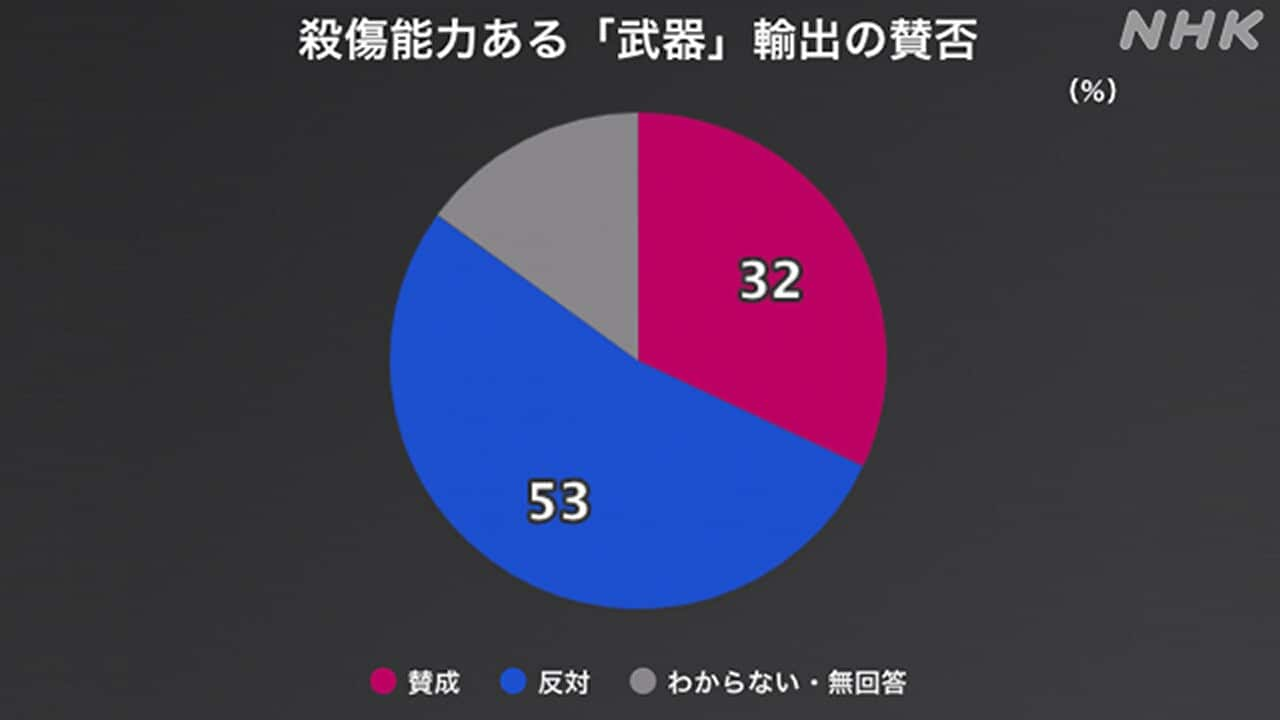
防衛装備品の海外への移転をめぐり、政府・与党が殺傷能力のある「武器」の輸出を原則可能とするのを検討していることについて、NHKの世論調査で賛否を尋ねたところ、「賛成」が32%だったのに対し「反対」は53%でした。
NHKは3月8日までの3日間、全国の18歳以上を対象にコンピューターで無作為に発生させた固定電話と携帯電話の番号に電話をかける「RDD」という方法で世論調査を行いました。
この中で、防衛装備品の海外への移転をめぐり、政府・与党が今の運用指針を見直し、殺傷能力のある「武器」の輸出を原則可能とするのを検討していることについて、賛否を尋ねたところ、「賛成」が32%、「反対」が53%でした。「わからない、無回答」が15%でした。
また、中国政府が、輸出規制を強化するなど、日本への経済的な圧力を続けていることを踏まえ、対中関係での政府の対応を評価するかどうか聞いた結果、「大いに評価する」が14%、「ある程度評価する」が38%、「あまり評価しない」が27%、「まったく評価しない」が11%でした。
去年生まれた子どもの数が70万人あまりで、10年連続で過去最少を更新したことを受けて、少子化が日本の将来にもたらす影響がどの程度あると思うか尋ねたところ、「大いにある」が66%、「ある程度ある」が21%、「あまりない」が5%、「まったくない」が1%でした。
東日本大震災の発生から3月11日で15年となることを踏まえ、災害に対する備えができているか聞いたところ、「できている」が6%、「どちらかといえば、できている」が30%、「どちらかといえば、できていない」が39%、「できていない」が18%でした。
NHKは3月8日までの3日間、全国の18歳以上を対象にコンピューターで無作為に発生させた固定電話と携帯電話の番号に電話をかける「RDD」という方法で世論調査を行いました。
この中で、防衛装備品の海外への移転をめぐり、政府・与党が今の運用指針を見直し、殺傷能力のある「武器」の輸出を原則可能とするのを検討していることについて、賛否を尋ねたところ、「賛成」が32%、「反対」が53%でした。「わからない、無回答」が15%でした。
また、中国政府が、輸出規制を強化するなど、日本への経済的な圧力を続けていることを踏まえ、対中関係での政府の対応を評価するかどうか聞いた結果、「大いに評価する」が14%、「ある程度評価する」が38%、「あまり評価しない」が27%、「まったく評価しない」が11%でした。
去年生まれた子どもの数が70万人あまりで、10年連続で過去最少を更新したことを受けて、少子化が日本の将来にもたらす影響がどの程度あると思うか尋ねたところ、「大いにある」が66%、「ある程度ある」が21%、「あまりない」が5%、「まったくない」が1%でした。
東日本大震災の発生から3月11日で15年となることを踏まえ、災害に対する備えができているか聞いたところ、「できている」が6%、「どちらかといえば、できている」が30%、「どちらかといえば、できていない」が39%、「できていない」が18%でした。
Vocabulary
General
Proper noun
JLPT N2
JLPT N1
| # | 言葉 | 意味 |
|---|---|---|
| 5 | 評価 | ひょうか (評価) : 1. valuation; appraisal; evaluation; assessment; estimation; rating; judging 2. appreciation; recognition; acknowledgement; rating highly; praising |
| 4 | 政府 | せいふ (政府) : government; administration |
| 3 | 尋ねる | たずねる (尋ねる) : 1. to ask; to enquire; to inquire 2. to search; to look for; to look into; to investigate |
| 3 | 程度 | ていど (程度) : degree; amount; grade; standard; of the order of (following a number); about; approximately |
| 2 | 防衛 | ぼうえい (防衛) : defense; defence; protection |
| 2 | 装備品 | そうびひん (装備品) : (item of) equipment; accessories (bike, auto) |
| 2 | 海外 | かいがい (海外) : foreign; abroad; overseas |
| 2 | 移転 | いてん (移転) : 1. moving; relocation; change of address 2. transfer (of deeds, property, etc.); demise |
| 2 | めぐる | めぐる (巡る) : 1. to go around 2. to return |
| 2 | 与党 | よとう (与党) : ruling party; government party; party in power; government |
| 2 | 殺傷 | さっしょう (殺傷) : killing and wounding; bloodshed |
| 2 | 能力 | のうりょく (能力) : ability; faculty |
| 2 | 武器 | ぶき (武器) : 1. weapon; arms; ordnance 2. weapon (something used to gain an advantage); asset |
| 2 | 原則 | げんそく (原則) : 1. principle; general rule 2. as a rule; in principle; in general |
| 2 | 可能 | かのう (可能) : possible; potential; practicable; feasible |
| 2 | 検討 | けんとう (検討) : consideration; examination; investigation; study; scrutiny; discussion; analysis; review |
| 2 | 世論調査 | よろんちょうさ (世論調査) : public opinion poll |
| 2 | 賛否 | さんぴ (賛否) : yes and no; for and against |
| 2 | 賛成 | さんせい (賛成) : approval; agreement; support; favour; favor |
| 2 | 発生 | はっせい (発生) : 1. outbreak; spring forth; occurrence; incidence 2. generation (e.g. of power or heat); genesis; origin |
| 2 | 踏まえる | ふまえる (踏まえる) : 1. to be based on; to take into account; to build upon; to have origin in 2. to have one's feet firmly planted on; to plant oneself on |
| 2 | 聞く | きく (聞く) : 1. to hear 2. to listen (e.g. to music) |
| 2 | 大いに | おおいに (大いに) : very; much; greatly; a lot of |
| 2 | まったく | まったく (全く) : 1. really; truly; entirely; completely; wholly; perfectly 2. indeed |
| 1 | 日間 | ひあい (日間) : 1. number of days; period of days 2. daily interest rate |
| 1 | 全国 | ぜんこく (全国) : the whole country |
| 1 | 対象 | たいしょう (対象) : target; object (of worship, study, etc.); subject (of taxation, etc.) |
| 1 | 無作為 | むさくい (無作為) : random; unintentional; unintended |
| 1 | 固定電話 | こていでんわ (固定電話) : landline telephone; fixed-line telephone |
| 1 | 携帯電話 | けいたいでんわ (携帯電話) : mobile telephone; cellular telephone |
| 1 | 方法 | ほうほう (方法) : method; process; manner; way; means; technique |
| 1 | 運用 | うんよう (運用) : 1. making use of; application; practical use; effective management (e.g. of funds) 2. operation; handling; steering (esp. a boat) |
| 1 | 指針 | ししん (指針) : 1. needle (compass, gauge, etc.); hand (clock); indicator; pointer; index 2. guiding principle; guideline; guide |
| 1 | 見直す | みなおす (見直す) : 1. to look at again 2. to re-examine (policy, estimate, plan, etc.); to review |
| 1 | わかる | わかる (分かる) : 1. to understand; to comprehend; to grasp; to see; to get; to follow 2. to become clear; to be known; to be discovered; to be realized; to be realised; to be found out |
| 1 | 無 | む (無) : 1. nothing; naught; nought; nil; zero 2. un-; non- |
| 1 | 回答 | かいとう (回答) : reply; answer |
| 1 | 中国 | ちゅうごく (中国) : 1. China 2. Chūgoku region of western Honshu (incl. Okayama, Hiroshima, Shimane, Tottori and Yamaguchi prefectures) |
| 1 | 規制 | きせい (規制) : regulation; (traffic) policing; control; restriction |
| 1 | 強化 | きょうか (強化) : strengthening; intensifying; reinforcement; enhancement; solidification |
| 1 | 経済的 | けいざいてき (経済的) : economic; economical; financial |
| 1 | 圧力 | あつりょく (圧力) : 1. pressure; stress 2. pressure (e.g. political); coercion; arm-twisting |
| 1 | 対応 | たいおう (対応) : 1. correspondence (to); equivalence 2. suitability; coordination; matching; being appropriate (for) |
| 1 | 結果 | けっか (結果) : 1. result; consequence; outcome; effect 2. coming to fruition; bearing fruit |
| 1 | 生まれる | うまれる (生まれる) : to be born |
| 1 | 子ども | こども (子供) : child |
| 1 | 数 | しばしば (屡々) : often; again and again; frequently; repeatedly |
| 1 | 連続 | れんぞく (連続) : continuation; succession; series |
| 1 | 過去 | かこ (過去) : 1. the past; bygone days 2. one's past (that one would prefer remained secret) |
| 1 | 最少 | さいしょう (最少) : 1. fewest; least; smallest (number); lowest; minimum 2. youngest |
| 1 | 更新 | こうしん (更新) : renewal; update; innovation; improvement |
| 1 | 少子化 | しょうしか (少子化) : declining birth rates; decrease in the number of children |
| 1 | もたらす | もたらす (齎す) : to bring; to take; to bring about |
| 1 | 影響 | えいきょう (影響) : 1. influence; effect 2. to influence; to affect; to have an influence on; to impact; to have an effect on |
| 1 | 東日本大震災 | ひがしにほんだいしんさい (東日本大震災) : Great East Japan earthquake (March 11, 2011); Tōhoku earthquake; Tohoku earthquake; Sendai earthquake |
| 1 | 災害 | さいがい (災害) : calamity; disaster; misfortune |
| 1 | 備え | そなえ (備え) : preparation; provision; guarding |