ロシアがウクライナに大規模攻撃 首都キーウで死者21人に
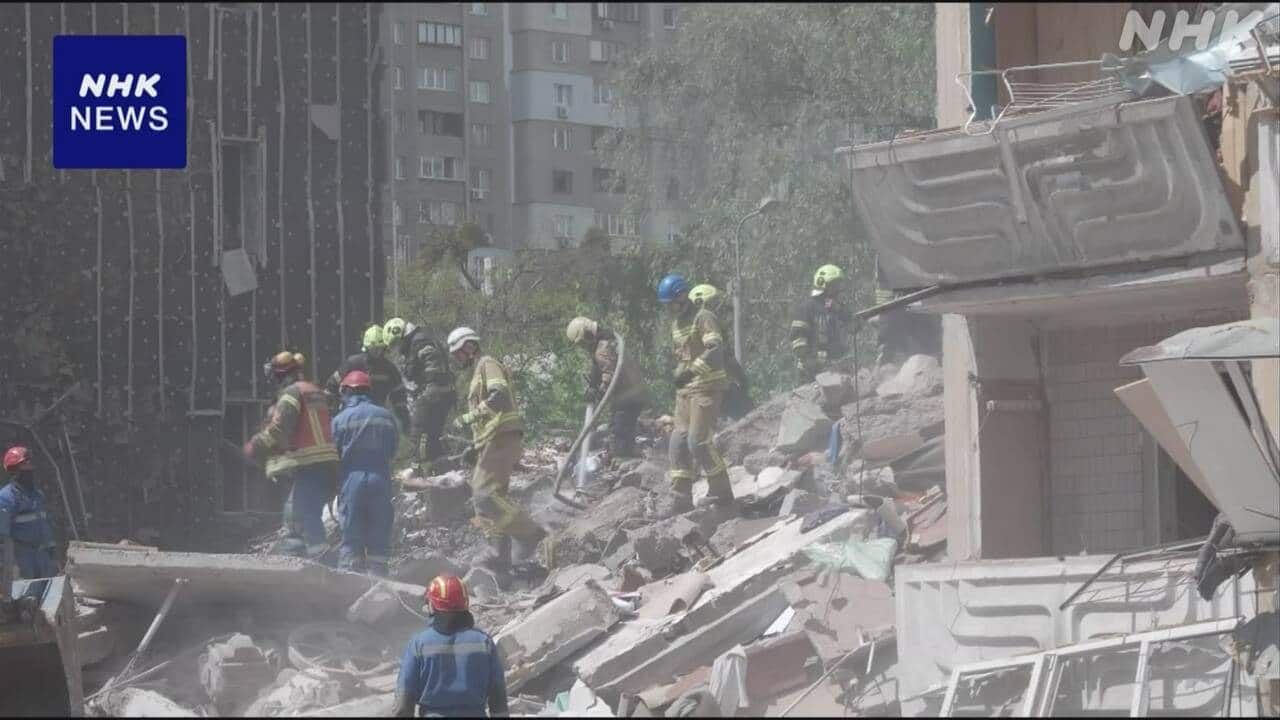
ウクライナの首都キーウでは14日にかけてのロシアによる大規模な攻撃で、これまでに21人が死亡し、ミサイルによる攻撃で崩壊した集合住宅の現場では、がれきの撤去や行方がわからない住民の捜索が行われていました。
ウクライナ空軍は、14日にかけて、ロシアがウクライナに対し無人機675機とミサイル56発で攻撃を行ったと発表し、ウクライナ非常事態庁は15日、これまでに首都キーウで子ども3人を含む21人が死亡したと明らかにしました。
キーウのダルニツキー地区では、ミサイルの攻撃を受けて集合住宅が大きく崩れ、現場では警察や救助隊などががれきを撤去したり、行方がわからない住民の捜索を行ったりしていました。
この集合住宅に住む44歳の男性は、「ガラスの破片が肌に突き刺さったが、恐ろしさを感じる時間もなかった。住民たちに死者やけが人が出ていることに大きな怒りを覚える」と話していました。
今回の攻撃について、ロシア国防省は14日、「ウクライナによるロシア国内の民間施設に対するテロ攻撃への対応として、ウクライナ軍を支える燃料や輸送関係のインフラなどに弾道ミサイルや無人機で、大規模な攻撃を行った」と発表し、報復攻撃だったと主張しました。
ウクライナのスビリデンコ首相によりますと、ダルニツキー地区の集合住宅では行方がわからない20人の捜索が続いています。
集合住宅は、ロシア軍のミサイル攻撃を受けて大きく崩れ、大量のがれきが積み上がっていました。
自宅に被害が出た82歳の女性は「この夜の攻撃は本当に大変だった。爆発音のようなものが聞こえるたびに身構えてしまう」と話していました。
またゼレンスキー大統領は、アメリカのトランプ大統領と中国の習近平国家主席との首脳会談でウクライナ情勢について意見が交わされることに期待を示していましたが、女性は「私はトランプも中国の国家主席も信用していない」と話していました。
ウクライナ空軍は、14日にかけて、ロシアがウクライナに対し無人機675機とミサイル56発で攻撃を行ったと発表し、ウクライナ非常事態庁は15日、これまでに首都キーウで子ども3人を含む21人が死亡したと明らかにしました。
キーウのダルニツキー地区では、ミサイルの攻撃を受けて集合住宅が大きく崩れ、現場では警察や救助隊などががれきを撤去したり、行方がわからない住民の捜索を行ったりしていました。
この集合住宅に住む44歳の男性は、「ガラスの破片が肌に突き刺さったが、恐ろしさを感じる時間もなかった。住民たちに死者やけが人が出ていることに大きな怒りを覚える」と話していました。
今回の攻撃について、ロシア国防省は14日、「ウクライナによるロシア国内の民間施設に対するテロ攻撃への対応として、ウクライナ軍を支える燃料や輸送関係のインフラなどに弾道ミサイルや無人機で、大規模な攻撃を行った」と発表し、報復攻撃だったと主張しました。
ウクライナのスビリデンコ首相によりますと、ダルニツキー地区の集合住宅では行方がわからない20人の捜索が続いています。
集合住宅は、ロシア軍のミサイル攻撃を受けて大きく崩れ、大量のがれきが積み上がっていました。
自宅に被害が出た82歳の女性は「この夜の攻撃は本当に大変だった。爆発音のようなものが聞こえるたびに身構えてしまう」と話していました。
またゼレンスキー大統領は、アメリカのトランプ大統領と中国の習近平国家主席との首脳会談でウクライナ情勢について意見が交わされることに期待を示していましたが、女性は「私はトランプも中国の国家主席も信用していない」と話していました。
Vocabulary
General
Proper noun
JLPT N2
JLPT N1
| # | 言葉 | 意味 |
|---|---|---|
| 9 | 攻撃 | こうげき (攻撃) : 1. attack; assault; raid; onslaught; offensive 2. criticism; censure; denunciation; condemnation |
| 5 | 集合住宅 | しゅうごうじゅうたく (集合住宅) : apartment building; housing complex |
| 3 | がれき | がれき (瓦礫) : rubble; debris; wreckage |
| 3 | 行方 | ゆくえ (行方) : 1. (one's) whereabouts 2. outcome |
| 3 | わかる | わかる (分かる) : 1. to understand; to comprehend; to grasp; to see; to get; to follow 2. to become clear; to be known; to be discovered; to be realized; to be realised; to be found out |
| 3 | 住民 | じゅうみん (住民) : inhabitant; resident; citizen; population |
| 3 | 捜索 | そうさく (捜索) : 1. search (esp. for someone or something missing); manhunt 2. legally authorized search of a person, building, etc. |
| 2 | 首都 | しゅと (首都) : capital city; metropolis |
| 2 | 大規模 | だいきぼ (大規模) : large-scale |
| 2 | 死亡 | しぼう (死亡) : 1. death; mortality 2. to die; to pass away |
| 2 | 現場 | げんば (現場) : 1. actual spot; scene; scene of the crime; site; location; setting 2. shop floor; factory floor; (on) site |
| 2 | 撤去 | てっきょ (撤去) : 1. withdrawal; revocation; repeal 2. demolition; removal |
| 2 | 無人機 | むじんき (無人機) : drone; unmanned aircraft |
| 2 | 発表 | はっぴょう (発表) : announcement; publication; presenting; statement; communique; making known; breaking (news story); expressing (one's opinion); releasing; unveiling |
| 2 | 地区 | ちく (地区) : district; section; sector |
| 2 | 大きく | おおきく (大きく) : in a big way; on a grand scale |
| 2 | 崩れる | くずれる (崩れる) : 1. to collapse; to crumble 2. to get out of shape; to lose one's shape; to become disorganized; to become untidy |
| 2 | 中国 | ちゅうごく (中国) : 1. China 2. Chūgoku region of western Honshu (incl. Okayama, Hiroshima, Shimane, Tottori and Yamaguchi prefectures) |
| 2 | 国家主席 | こっかしゅせき (国家主席) : head of state |
| 1 | 崩壊 | ほうかい (崩壊) : 1. collapse; crumbling; breaking down; caving in 2. (radioactive) decay; disintegration |
| 1 | 機 | はた (機) : loom |
| 1 | 非常事態 | ひじょうじたい (非常事態) : state of emergency |
| 1 | 庁 | ちょう (庁) : government office; agency; board |
| 1 | 子ども | こども (子供) : child |
| 1 | 含む | ふくむ (含む) : 1. to contain; to comprise; to have; to hold; to include; to embrace 2. to hold in the mouth |
| 1 | 明らか | あきらか (明らか) : 1. clear; obvious; evident; plain; definite 2. bright; light |
| 1 | 救助隊 | きゅうじょたい (救助隊) : rescue team or party |
| 1 | 破片 | はへん (破片) : fragment; broken piece; splinter; chip; shard |
| 1 | 肌 | はだ (肌) : 1. skin 2. body (in the context of intimate bodily contact) |
| 1 | 突き刺さる | つきささる (突き刺さる) : to stick into; to pierce; to run into |
| 1 | 感じる | かんじる (感じる) : to feel; to sense; to experience |
| 1 | 死者 | ししゃ (死者) : dead person; (the) deceased; (the) dead; casualties |
| 1 | けが人 | けがにん (けが人) : wounded person; injured person |
| 1 | 怒り | いかり (怒り) : anger; rage; fury; wrath; indignation |
| 1 | 国内 | こくない (国内) : internal; domestic |
| 1 | 民間 | みんかん (民間) : 1. private; non-governmental; non-official; civilian; civil 2. folk; popular |
| 1 | 施設 | しせつ (施設) : 1. institution; establishment; facility 2. home (for elderly, orphans, etc.) |
| 1 | テロ攻撃 | テロこうげき (テロ攻撃) : terrorist attack |
| 1 | 対応 | たいおう (対応) : 1. correspondence (to); equivalence 2. suitability; coordination; matching; being appropriate (for) |
| 1 | 支える | ささえる (支える) : 1. to support; to prop; to sustain; to underlay; to hold up; to defend 2. to hold at bay; to stem; to check |
| 1 | 燃料 | ねんりょう (燃料) : fuel |
| 1 | 輸送 | ゆそう (輸送) : transport; transportation |
| 1 | 弾道ミサイル | だんどうミサイル (弾道ミサイル) : ballistic missile |
| 1 | 報復 | ほうふく (報復) : 1. retaliation; revenge; reprisal; retribution 2. retorsion; retortion |
| 1 | 主張 | しゅちょう (主張) : claim; insistence; assertion; advocacy; emphasis; contention; opinion; tenet |
| 1 | 首相 | しゅしょう (首相) : prime minister; chancellor (Germany, Austria, etc.); premier |
| 1 | 大量 | たいりょう (大量) : large quantity; massive (quantity); mass (e.g. mass production, mass transit, mass destruction) |
| 1 | 自宅 | じたく (自宅) : one's home; one's house |
| 1 | 被害 | ひがい (被害) : (suffering) damage; injury; harm |
| 1 | 本当 | ほんとう (本当) : 1. truth; reality; actuality; fact 2. proper; right; correct; official |
| 1 | 大変 | たいへん (大変) : 1. very; greatly; terribly; awfully 2. immense; enormous; great |
| 1 | 爆発音 | ばくはつおん (爆発音) : sound of an explosion |
| 1 | のよ | のよ (乃代) : Noyo (unclass) |
| 1 | うな | うな (鰻) : eel (esp. the Japanese eel, Anguilla japonica) |
| 1 | もの | もの (者) : person |
| 1 | たび | たび (足袋) : tabi; Japanese socks (with split toe) |
| 1 | 身構える | みがまえる (身構える) : to put oneself on guard; to stand ready; to square off |
| 1 | 大統領 | だいとうりょう (大統領) : 1. president (of a nation) 2. big man; boss; buddy; mate |
| 1 | 習近平 | しゅうきんぺい (習近平) : Xi Jinping (person) |
| 1 | 首脳会談 | しゅのうかいだん (首脳会談) : leadership conference; summit meeting; top-level conference |
| 1 | 情勢 | じょうせい (情勢) : state of things; state of affairs; condition; situation; circumstances |
| 1 | 期待 | きたい (期待) : 1. expectation; anticipation; hope 2. promising; rising; up-and-coming |
| 1 | 示す | しめす (示す) : 1. to (take out and) show; to demonstrate; to tell; to exemplify; to make apparent 2. to point out (finger, clock hand, needle, etc.) |
| 1 | 信用 | しんよう (信用) : 1. confidence; trust; faith; reputation 2. credit (finance) |