BTSが東京ドームに帰ってきた!──RUNからSWIMへ、波に身を委ね自然体で紡ぐ新たな物語
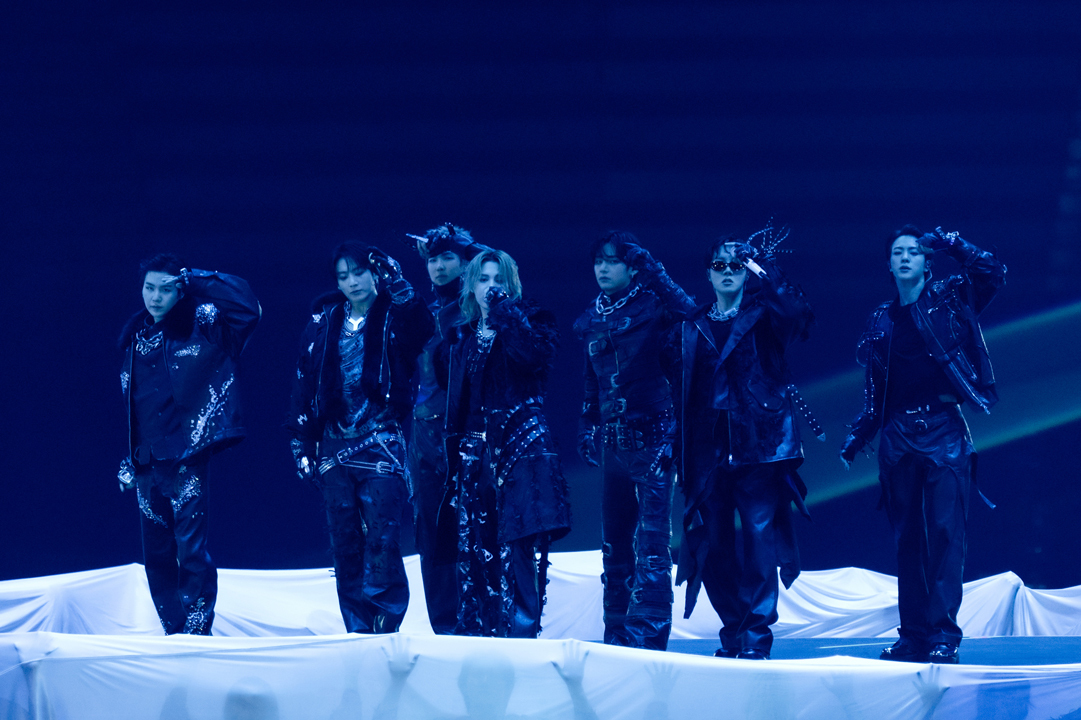
「BTS WORLD TOUR ‘ARIRANG’ IN JAPAN」が東京ドームで4月17日と18日に開催され、2日間で11万人を動員した。成熟した魅力と変わらない無邪気さを余すところなく披露し、ARMYと見つめ合った特別な約2時間半。メンバーのコメントとともに公演の模様をレポートする。
BTSがついに東京ドームへ帰ってきた。最後にここで公演をしたのは約7年半前の「BTS WORLD TOUR 'LOVE YOURSELF'~JAPAN EDITION~」(2018年11月13日、14日)。日本での公演としては、エコパスタジアムで2019年7月13日、14日に行われた「LOVE YOURSELF: SPEAK YOURSELF 」が最後となり、6年9ヶ月ぶりとなる。2020年9月に行われる予定だった「MAP OF THE SOUL TOUR」はコロナ禍で中止となり、その後、2022年12月にJinが入隊し、2025年6月に他メンバーが除隊するまで、グループとしての活動を一時休止することとなる。 そして去る3月20日、「The 5th Album ‘ARIRANG’」をリリースし、BTSは完全体でカムバックした。今回のツアー「BTS WORLD TOUR ‘ARIRANG’」は、アルバムに収録された曲をベースに、彼らの新たな決意と挑戦、そしてこれからの未来を描く構成となっている。 ■第1幕──苦悩と怒り 「The 5th Album ‘ARIRANG’」のアートワークが施された旗を持ったパフォーマーに続き、ダンサーが舞台へと全速力で走ってくる。それとは対象的に、ゆっくりと落ち着いた足取りでメンバーが舞台へ。ついに東京ドームにBTSが帰ってきた。 レザーやシルクといった光沢のある素材にビジュー、ビス、チェーン、ファーなどの装飾があしらわれたハードなムードのオールブラックの衣装を身に纏い、王者の貫禄を魅せつける。 1曲目は「Hooligan」からスタート。そして「Aliens」「Run BTS」とフルパワーで駆け抜ける。ドームの屋根すれすれまで炎があがり、会場のボルテージは否が応でも高まる。「Run BTS」でJung Kookが飛んできたドローンをキャッチする演出は、このツアーの見どころのひとつだ。 また今回のツアーは円形のステージをぐるりと観客席が囲む360度のステージが特徴で、どこの座席から観ても楽しめる構成となっている。右や左、バックスクリーン方向に向かってパフォーマンスを披露するこのステージは、どこにいても見ているし、どんな状況でも置いていかないよ、というBTSからARMYへのメッセージにも感じられる。 オープニングコメント RM お久しぶりです、皆さん。ご挨拶します。ドゥーセ、バン・タン。 全員 こんばんは、BTSです。 Jimin 久しぶりですねー。 Jung Kook ひさしぶりーya! 東京のARMYの皆さん、久しぶりー。ちょっと水を飲みます。LOVE YOURSELFツアーから8年ぶりに東京ドームに帰ってきましたね。ARMY本当に会いたかったです。 V はい、そうですよね。本当にたくさんのARMYが来てくれましたね。今日はライブストリーミングとライブビューイングで観ているARMYの皆さんも、一緒に全力で楽しんでくださいねー。 Jimin そうです、そうそうそう。僕も会いたかったです。久しぶりに新しいツアーをスタートするので、本当にわくわくしますよね、Jinさん。一生懸命準備した分、かんばります。 SUGA 今回のアリランツアーでは、いくつか新しい挑戦をしてみました。少し慣れなくても最後まで楽しんでくれたらうれしいです。 Jin ARMYの皆さんも楽しんでくれますよね? 全力で楽しめるARMY、make some noise! j-hope さあ、ここからもっと遊びましょうか。みんな後悔しないように公演を楽しんでいきましょう。 RM じゃあそろそろいいですね。早速次のステージをお見せします。行きましょう。 4曲目「they don’t know ’bout us」、5曲目「Like Animals」と「The 5th Album ‘ARIRANG’」の曲が続く。ダンサーたちが持っているタブレットには、嘲笑するような表情の仮面や指、目の画像が映し出され、BTSが置かれてきた、いつも誰かに見られ、指をさされ続けてきた状況を表しているようだ。 次に披露したのは人気曲の「FAKE LOVE」。中央から張り出したステージへメンバーが移動し、ARMYの近くへとやってくる。掛け声と歓声で歌声が聞こえないほどの盛り上がりをみせる。そしてタイトル曲「SWIM」へと続く。白布を波のように見立てた演出が美しく、ここはじっくり曲を聴かせる演出だ。本公演ではこういった緩急の付け方が見事だった。大人になったBTSの歌声にぐっと惹き付けられ、彼らが奏でる音の波へと心地よく溺れていったその先は「Merry Go Round」。ぐるぐると思考を繰り返しても答えのない問いを歌った曲と合わせるように、メンバーは舞台を周り、観客もその渦潮の中に引き込まれていく。そしてゆっくりと舞台を後にし第1幕は終わる。 まだコンサートの序盤なのに、圧巻のパフォーマンスに呆然となり、成熟したBTSの底知れない魅力をこれでもかと見せつけられる。デビューしてから13年。世界的な成功を掴んだ矢先のコロナ禍や、兵役など決して順風満帆ではなかった彼らだからこそ、伝えられる感情や表現がある。デビューから前だけを向いて走り続けてきた少年たちは、兵役によって自分と向き合う時間をもち、肩の力を抜いてゆっくりと大海へと泳ぎ出していく。 ■第2幕──アップデートしたBTS ダンサーによるパフォーマンスとVCRを経て、第2幕へと向かう。赤と青の布を用いたパフォーマンスは太極を舞台に描く。 2幕目は「2.0」から始まる。韓国を代表する名匠パク・チャヌクの映画『オールド・ボーイ』のシーンをオマージュしたMVも必見のこの楽曲は《You know how we do》という歌詞からも分かるように、前半の苦悩パートから一転、自信と余裕を手にした現在のBTSを表す。BTSはバージョン2.0にアップデートされたのだ。続く10曲目は「NORMAL」。スポットライトを浴び続け、世界的スターとして歩んできた彼らの裏側にある虚無感や恐怖はいつしか、彼らにとっての日常、normalになっていた。そんな異常な日々と平凡な日々への憧憬を歌い上げる。 「Not Today」「MIC Drop」「FYA」「Burning Up (FIRE)」と続き、クラブに来たような光の演出と重低音を全身に浴びる。メンバーもARMYも無我夢中で踊り続け、最高潮の盛り上がりに。まるで燃え盛る火を囲んで朝まで踊り続けるフェスのようだ。新曲「FYA」の終盤、レコードを逆回転したようなサウンドが入り、「Burning Up (FIRE)」へと繋がる。そして最後は「FYA」と「Burning Up (FIRE)」がマッシュアップして、新旧“ファイア”は新しい姿へと生まれ変わった。 2幕では、1幕目のオールブラックの衣装から一転し、ベージュやカーキといったアースカラーが基調のデニムやカーゴパンツ×MA-1やライダースへと変わる。ハードで重い衣装を脱ぎ捨て、肩の力の抜けた軽やかな装いは、重圧から解放され、待ちに待ったARMYとの時間をただ心から楽しみたいという彼らの思いが表れているようだ。 「Body to Body」で会場全体でアリランを大合唱したボルテージのまま「IDOL」へ。そしてARMYの近くへ。通常のコンサートであれば、トロッコに乗るのが定石だが、彼らは自分たちの足で歩くことを選んだ。深読みし過ぎかもしれないが、これもきっと彼らの決意の表れなのだと思う。BTSの新章、チャプター2は自分たちで舵を切り、自らの足で歩いていこうと。 ■第3幕──ARMYとともに 3幕目はsugaがプロデュースした「Come Over」から始まる。本曲はCDやサブスクにはなく「Deluxe Vinyl」にのみ収録されたボーナス・トラックだ。兵役期間中のsugaの苦しみや悲しみとARMYへ救いを求める歌詞に心が苦しくなる。come over=そっちに行ってもいい?という歌詞の通り、ここからはBTSとARMYが一緒に楽しむ時間が始まる。 RMが「皆さんの隣の家の犬のポチでも知っているあの曲」という紹介で「Butter」そして「Dynamite」が始まり、会場は大合唱。そしてARMYお待ちかねの過去曲タイムだ。 先週末に行われた高陽スタジアムでの公演では、「소우주 (Mikrokosmos)」「I Need U」「Take Two」「DNA」「Spring Day」「RUN」を披露したが、東京ドーム初日は「Save ME」と日本オリジナル曲の「Crystal Snow」をパフォーマンス。メンバーがうろ覚えのダンスを披露する姿に、BTSの新章が始まったのだなと改めて感じる。完璧な姿でなくても、BTSとARMYが楽しめるならそれでいい。この瞬間を楽しもう、という素晴らしい演出だった。もちろん一糸乱れぬ激しい群舞も彼らの魅力のひとつなのは確かだが、成熟した今の彼らは他の魅せ方もできるのだ。ステージで肩の力を抜き、素の自分を見せることができるのは余裕と経験があるからこそだろう。 イヤモニを外し、ARMYの声に耳を傾ける姿にもぐっとくる。一方的にパフォーマンスを披露するだけでなく、ファンも精一杯、そのパフォーマンスに掛け声という形で応えるのがK-POPコンサートの良さのひとつだと思うが、そんなお互いの魂の交換の瞬間がここにはあったように思う。 そして最後の挨拶へと公演は移る。 j-hope 最後の感想をお話しましょうか。 JK 今日は誰からしますか? Jimin 今日はJung Kookさんから。 Jung Kook ジョングック(CORTISの楽曲「young creator crew」の一節《ヤンクック》の発音で)、シュガから。 suga 僕たちがグループで公演したのは、ほぼ6年ぶりになりました。7年前かな。本当に考えてみたら時間があっという間に過ぎました。このように久しぶりに東京ドームに戻ってきて、みなさんと楽しみながら公演をしていたら昔に戻ったような気分になりました。もっと頻繁に頻繁に来たいと思っているので、これからも一緒に楽しく遊びましょう。来てくださってありがとうございました。 Jung Kook ジョングック♪。僕の番ですよね、今。チンッチャ逢いたかったよ。僕が本当に逢いたかったんですが、忙しくて。ようやく来ることができて、申し訳ない気持ちと、待っていてくださってありがたい気持ちと、話したいことがたくさんあります。久しぶりに来ているのに、皆さんには変わらない歓声と変わらない笑顔で迎えていただいて、力をもらったような報われたようなそんな気分になりました。今日はそんなことがたくさん感じられてステージをしながらも、ずっと笑顔がこぼれてしまうような感じになりました。皆さんのおかげです。だから今日はむしろ皆さんから力をたくさんもらうことができたことが本当にありがたくて、一日でも多く皆さんに会えるように、できる限りお約束したいと思います。とっても愛しています。本当に会いたかったよ。ありがとうございます。 Jin (投げキッス)公演の中で色々な時間がありましたが、僕はこの時間をすごく待っていました。皆さんに愛を込めた投げキッスをお届けできるこの時間を、です。いかがですか? 僕の投げキッスで気分が良くなりましたか? ARMYの皆さんにこうやって投げキッスをお届けできるなんて本当に最高の時間だなと。僕の投げキッスをもう一度受け取りたい方は、次のコンサートでまたお会いしましょう。I love you! RM 東京ドーム、8年ぶりですよね。2014年に日本で防弾少年団としてデビューして、東京にもたくさん来ました。でも考えみたら一回も旅行はしたことがなかったんです。 コロナの時から東京にプライベートで来るようになりました。その時、ただ街を歩きながら、皆さんのことを沢山考えました。東京の街で。皆さんはこういう景色を観ながら暮らしているんだなってそんな話を、今日はただ皆さんにしたかったです。こうしてまた来ることができてうれしいですし、本当に光栄ですし幸せです。今まで待っていてくれて本当にありがとうございます。日本の、そして東京のARMYの皆さん、心から愛しています。ありがとうございます。 V えっと、僕たちは友達だから、今からタメ口で話すね。ごめん、タメ口いい? 昨日、ラーメン食べて、和牛食べた。もし日本でこのお店絶対行ったほうがいいよとか、このジャズパブめちゃ楽しいよって場所があったら、僕にメッセージ送って。次は僕がそのお店の常連になると思う。それから、僕日本大好きだから、ドラマを観ながら日本語の勉強をしたんだけど、新しいドラマを探してまた勉強して来るね。そして、断ってください。ARMY、僕と付き合って! 断ってくださーい。 Jimin すごいですね。付き合って? 皆さん、会いたかったですよ。でも問題があります。僕、日本語全部忘れました。なぜなら僕たち軍隊、行ってきましたから、全部忘れました。それでぼくが昨日夜、夜中に手紙をつらつらと書きました。(ポケットから手紙を取り出す) Jung Kook 手紙手紙! Jin 手紙手紙! Jimin 愛してるARMYの皆さん、Jiminです。久しぶりに皆様に会えて、とてもうれしいです。久しぶりにみる皆さんは相変わらず美しいです。本当ですよ。8年ぶりに東京ドームに再び来ることができましたのも皆様のおかげです。本当に心から感謝します。これからはより多くより素晴らしい舞台をもっとたびたび皆様にお見せできるよう、努めてまいります。皆さんに会えてうれしかったですよ。ぼくも心から愛しています。付き合って。以上でした。 j-hope 僕は今日韓国語でいきますよ。 Jimin 大丈夫です。 j-hope ごめん。 Jimin 僕たち軍隊行ってきましたから。 j-hope 実は少し重い話かもしれませんが、今日の今の気持ちを表現したくてお話してみたいと思います。実は僕が日本に来てすぐ、僕が子供の頃から育ててくださった祖母が亡くなったという知らせに触れました。すごく驚いて動揺したのですが、メンバーとご飯をたべたり、リハーサルをしながら、その心の揺れを落ち着かせたような気がします。日頃から母方の祖母は、僕だけでなくメンバー皆のこともすごく誇りに思ってくれて、今日の公演を空から観てくれていたら、すごく喜んでくれていると思います。その意味をもっとARMYの皆さんがもっと素敵なものにしてくださって、今日はARMYの皆さんにありがとうございますとお伝えしたいです。チンチャチンチャめちゃ大好きです。ありがとうございます。 アンコールとして「Please」「Into the Sun」を披露し、どんな時もARMYと一緒に歩み続けたいというメッセージを伝えた。夜明けから太陽を探してBTSは次のステージへと進んでいく。 ■BTSとARMY、心が繋がった瞬間 公演全体を通してとにかく幸せそうなBTSの姿がそこにはあった。ARMYと一体になって、最高のパフォーマンスを届け、ファンは歓声で応える。それはコンサートでは当たり前のことかもしれないが、BTSの東京ドームのコンサートは何かが違った。2日目のコメントでRMが「今日皆さんは、スマホではなく、自分の目で僕たちを見てくれました。この2時間皆さんは僕たちを映画のなかの主人公にしてくれました」と話したように、東京ドームでは、アーティストとファンが目と目を合わせ、心を通わせ、お互いが繋がった瞬間が確実に存在した。その場にいる人すべてが心から楽しそうで、幸せで、誰のことも見捨てないよ、どこにいても繋がっているよと伝える彼らの姿勢が伝わってくるライブだった。「待っていてくれてありがとう」、「戻ってきてくれてありがとう」。BTSとARMYのお互いのその気持ちが溢れて、東京ドームがいつもよりパンパンに膨らんでいるように感じられた。 余談だが、AiScReamの「愛♡スクリ~ム!」を真似て、Jung Kookが「SUGAちゃーん、は〜い」とおどけてみせたり、Jiminが日本エレベーターの音声を真似て「ドアが閉まります」と言ったり、2日目の公演ではポーズ付きで「領域展開」を披露してくれたり、Vが「好きすぎて滅!」を知っていたり、そしてほとんどのコメントを日本語で話してくれたりと、メンバーが日本のカルチャーに敬意を払ってくれていることも素晴らしかった。 現時点で発表されているだけでも世界34都市を周り、2027年3月14日まで全85公演を行う。また戻ってくるよという言葉を信じて、進化し続ける彼らにまた会う日を楽しみに待ちたい。 編集と文・遠藤加奈(GQ)
BTSがついに東京ドームへ帰ってきた。最後にここで公演をしたのは約7年半前の「BTS WORLD TOUR 'LOVE YOURSELF'~JAPAN EDITION~」(2018年11月13日、14日)。日本での公演としては、エコパスタジアムで2019年7月13日、14日に行われた「LOVE YOURSELF: SPEAK YOURSELF 」が最後となり、6年9ヶ月ぶりとなる。2020年9月に行われる予定だった「MAP OF THE SOUL TOUR」はコロナ禍で中止となり、その後、2022年12月にJinが入隊し、2025年6月に他メンバーが除隊するまで、グループとしての活動を一時休止することとなる。 そして去る3月20日、「The 5th Album ‘ARIRANG’」をリリースし、BTSは完全体でカムバックした。今回のツアー「BTS WORLD TOUR ‘ARIRANG’」は、アルバムに収録された曲をベースに、彼らの新たな決意と挑戦、そしてこれからの未来を描く構成となっている。 ■第1幕──苦悩と怒り 「The 5th Album ‘ARIRANG’」のアートワークが施された旗を持ったパフォーマーに続き、ダンサーが舞台へと全速力で走ってくる。それとは対象的に、ゆっくりと落ち着いた足取りでメンバーが舞台へ。ついに東京ドームにBTSが帰ってきた。 レザーやシルクといった光沢のある素材にビジュー、ビス、チェーン、ファーなどの装飾があしらわれたハードなムードのオールブラックの衣装を身に纏い、王者の貫禄を魅せつける。 1曲目は「Hooligan」からスタート。そして「Aliens」「Run BTS」とフルパワーで駆け抜ける。ドームの屋根すれすれまで炎があがり、会場のボルテージは否が応でも高まる。「Run BTS」でJung Kookが飛んできたドローンをキャッチする演出は、このツアーの見どころのひとつだ。 また今回のツアーは円形のステージをぐるりと観客席が囲む360度のステージが特徴で、どこの座席から観ても楽しめる構成となっている。右や左、バックスクリーン方向に向かってパフォーマンスを披露するこのステージは、どこにいても見ているし、どんな状況でも置いていかないよ、というBTSからARMYへのメッセージにも感じられる。 オープニングコメント RM お久しぶりです、皆さん。ご挨拶します。ドゥーセ、バン・タン。 全員 こんばんは、BTSです。 Jimin 久しぶりですねー。 Jung Kook ひさしぶりーya! 東京のARMYの皆さん、久しぶりー。ちょっと水を飲みます。LOVE YOURSELFツアーから8年ぶりに東京ドームに帰ってきましたね。ARMY本当に会いたかったです。 V はい、そうですよね。本当にたくさんのARMYが来てくれましたね。今日はライブストリーミングとライブビューイングで観ているARMYの皆さんも、一緒に全力で楽しんでくださいねー。 Jimin そうです、そうそうそう。僕も会いたかったです。久しぶりに新しいツアーをスタートするので、本当にわくわくしますよね、Jinさん。一生懸命準備した分、かんばります。 SUGA 今回のアリランツアーでは、いくつか新しい挑戦をしてみました。少し慣れなくても最後まで楽しんでくれたらうれしいです。 Jin ARMYの皆さんも楽しんでくれますよね? 全力で楽しめるARMY、make some noise! j-hope さあ、ここからもっと遊びましょうか。みんな後悔しないように公演を楽しんでいきましょう。 RM じゃあそろそろいいですね。早速次のステージをお見せします。行きましょう。 4曲目「they don’t know ’bout us」、5曲目「Like Animals」と「The 5th Album ‘ARIRANG’」の曲が続く。ダンサーたちが持っているタブレットには、嘲笑するような表情の仮面や指、目の画像が映し出され、BTSが置かれてきた、いつも誰かに見られ、指をさされ続けてきた状況を表しているようだ。 次に披露したのは人気曲の「FAKE LOVE」。中央から張り出したステージへメンバーが移動し、ARMYの近くへとやってくる。掛け声と歓声で歌声が聞こえないほどの盛り上がりをみせる。そしてタイトル曲「SWIM」へと続く。白布を波のように見立てた演出が美しく、ここはじっくり曲を聴かせる演出だ。本公演ではこういった緩急の付け方が見事だった。大人になったBTSの歌声にぐっと惹き付けられ、彼らが奏でる音の波へと心地よく溺れていったその先は「Merry Go Round」。ぐるぐると思考を繰り返しても答えのない問いを歌った曲と合わせるように、メンバーは舞台を周り、観客もその渦潮の中に引き込まれていく。そしてゆっくりと舞台を後にし第1幕は終わる。 まだコンサートの序盤なのに、圧巻のパフォーマンスに呆然となり、成熟したBTSの底知れない魅力をこれでもかと見せつけられる。デビューしてから13年。世界的な成功を掴んだ矢先のコロナ禍や、兵役など決して順風満帆ではなかった彼らだからこそ、伝えられる感情や表現がある。デビューから前だけを向いて走り続けてきた少年たちは、兵役によって自分と向き合う時間をもち、肩の力を抜いてゆっくりと大海へと泳ぎ出していく。 ■第2幕──アップデートしたBTS ダンサーによるパフォーマンスとVCRを経て、第2幕へと向かう。赤と青の布を用いたパフォーマンスは太極を舞台に描く。 2幕目は「2.0」から始まる。韓国を代表する名匠パク・チャヌクの映画『オールド・ボーイ』のシーンをオマージュしたMVも必見のこの楽曲は《You know how we do》という歌詞からも分かるように、前半の苦悩パートから一転、自信と余裕を手にした現在のBTSを表す。BTSはバージョン2.0にアップデートされたのだ。続く10曲目は「NORMAL」。スポットライトを浴び続け、世界的スターとして歩んできた彼らの裏側にある虚無感や恐怖はいつしか、彼らにとっての日常、normalになっていた。そんな異常な日々と平凡な日々への憧憬を歌い上げる。 「Not Today」「MIC Drop」「FYA」「Burning Up (FIRE)」と続き、クラブに来たような光の演出と重低音を全身に浴びる。メンバーもARMYも無我夢中で踊り続け、最高潮の盛り上がりに。まるで燃え盛る火を囲んで朝まで踊り続けるフェスのようだ。新曲「FYA」の終盤、レコードを逆回転したようなサウンドが入り、「Burning Up (FIRE)」へと繋がる。そして最後は「FYA」と「Burning Up (FIRE)」がマッシュアップして、新旧“ファイア”は新しい姿へと生まれ変わった。 2幕では、1幕目のオールブラックの衣装から一転し、ベージュやカーキといったアースカラーが基調のデニムやカーゴパンツ×MA-1やライダースへと変わる。ハードで重い衣装を脱ぎ捨て、肩の力の抜けた軽やかな装いは、重圧から解放され、待ちに待ったARMYとの時間をただ心から楽しみたいという彼らの思いが表れているようだ。 「Body to Body」で会場全体でアリランを大合唱したボルテージのまま「IDOL」へ。そしてARMYの近くへ。通常のコンサートであれば、トロッコに乗るのが定石だが、彼らは自分たちの足で歩くことを選んだ。深読みし過ぎかもしれないが、これもきっと彼らの決意の表れなのだと思う。BTSの新章、チャプター2は自分たちで舵を切り、自らの足で歩いていこうと。 ■第3幕──ARMYとともに 3幕目はsugaがプロデュースした「Come Over」から始まる。本曲はCDやサブスクにはなく「Deluxe Vinyl」にのみ収録されたボーナス・トラックだ。兵役期間中のsugaの苦しみや悲しみとARMYへ救いを求める歌詞に心が苦しくなる。come over=そっちに行ってもいい?という歌詞の通り、ここからはBTSとARMYが一緒に楽しむ時間が始まる。 RMが「皆さんの隣の家の犬のポチでも知っているあの曲」という紹介で「Butter」そして「Dynamite」が始まり、会場は大合唱。そしてARMYお待ちかねの過去曲タイムだ。 先週末に行われた高陽スタジアムでの公演では、「소우주 (Mikrokosmos)」「I Need U」「Take Two」「DNA」「Spring Day」「RUN」を披露したが、東京ドーム初日は「Save ME」と日本オリジナル曲の「Crystal Snow」をパフォーマンス。メンバーがうろ覚えのダンスを披露する姿に、BTSの新章が始まったのだなと改めて感じる。完璧な姿でなくても、BTSとARMYが楽しめるならそれでいい。この瞬間を楽しもう、という素晴らしい演出だった。もちろん一糸乱れぬ激しい群舞も彼らの魅力のひとつなのは確かだが、成熟した今の彼らは他の魅せ方もできるのだ。ステージで肩の力を抜き、素の自分を見せることができるのは余裕と経験があるからこそだろう。 イヤモニを外し、ARMYの声に耳を傾ける姿にもぐっとくる。一方的にパフォーマンスを披露するだけでなく、ファンも精一杯、そのパフォーマンスに掛け声という形で応えるのがK-POPコンサートの良さのひとつだと思うが、そんなお互いの魂の交換の瞬間がここにはあったように思う。 そして最後の挨拶へと公演は移る。 j-hope 最後の感想をお話しましょうか。 JK 今日は誰からしますか? Jimin 今日はJung Kookさんから。 Jung Kook ジョングック(CORTISの楽曲「young creator crew」の一節《ヤンクック》の発音で)、シュガから。 suga 僕たちがグループで公演したのは、ほぼ6年ぶりになりました。7年前かな。本当に考えてみたら時間があっという間に過ぎました。このように久しぶりに東京ドームに戻ってきて、みなさんと楽しみながら公演をしていたら昔に戻ったような気分になりました。もっと頻繁に頻繁に来たいと思っているので、これからも一緒に楽しく遊びましょう。来てくださってありがとうございました。 Jung Kook ジョングック♪。僕の番ですよね、今。チンッチャ逢いたかったよ。僕が本当に逢いたかったんですが、忙しくて。ようやく来ることができて、申し訳ない気持ちと、待っていてくださってありがたい気持ちと、話したいことがたくさんあります。久しぶりに来ているのに、皆さんには変わらない歓声と変わらない笑顔で迎えていただいて、力をもらったような報われたようなそんな気分になりました。今日はそんなことがたくさん感じられてステージをしながらも、ずっと笑顔がこぼれてしまうような感じになりました。皆さんのおかげです。だから今日はむしろ皆さんから力をたくさんもらうことができたことが本当にありがたくて、一日でも多く皆さんに会えるように、できる限りお約束したいと思います。とっても愛しています。本当に会いたかったよ。ありがとうございます。 Jin (投げキッス)公演の中で色々な時間がありましたが、僕はこの時間をすごく待っていました。皆さんに愛を込めた投げキッスをお届けできるこの時間を、です。いかがですか? 僕の投げキッスで気分が良くなりましたか? ARMYの皆さんにこうやって投げキッスをお届けできるなんて本当に最高の時間だなと。僕の投げキッスをもう一度受け取りたい方は、次のコンサートでまたお会いしましょう。I love you! RM 東京ドーム、8年ぶりですよね。2014年に日本で防弾少年団としてデビューして、東京にもたくさん来ました。でも考えみたら一回も旅行はしたことがなかったんです。 コロナの時から東京にプライベートで来るようになりました。その時、ただ街を歩きながら、皆さんのことを沢山考えました。東京の街で。皆さんはこういう景色を観ながら暮らしているんだなってそんな話を、今日はただ皆さんにしたかったです。こうしてまた来ることができてうれしいですし、本当に光栄ですし幸せです。今まで待っていてくれて本当にありがとうございます。日本の、そして東京のARMYの皆さん、心から愛しています。ありがとうございます。 V えっと、僕たちは友達だから、今からタメ口で話すね。ごめん、タメ口いい? 昨日、ラーメン食べて、和牛食べた。もし日本でこのお店絶対行ったほうがいいよとか、このジャズパブめちゃ楽しいよって場所があったら、僕にメッセージ送って。次は僕がそのお店の常連になると思う。それから、僕日本大好きだから、ドラマを観ながら日本語の勉強をしたんだけど、新しいドラマを探してまた勉強して来るね。そして、断ってください。ARMY、僕と付き合って! 断ってくださーい。 Jimin すごいですね。付き合って? 皆さん、会いたかったですよ。でも問題があります。僕、日本語全部忘れました。なぜなら僕たち軍隊、行ってきましたから、全部忘れました。それでぼくが昨日夜、夜中に手紙をつらつらと書きました。(ポケットから手紙を取り出す) Jung Kook 手紙手紙! Jin 手紙手紙! Jimin 愛してるARMYの皆さん、Jiminです。久しぶりに皆様に会えて、とてもうれしいです。久しぶりにみる皆さんは相変わらず美しいです。本当ですよ。8年ぶりに東京ドームに再び来ることができましたのも皆様のおかげです。本当に心から感謝します。これからはより多くより素晴らしい舞台をもっとたびたび皆様にお見せできるよう、努めてまいります。皆さんに会えてうれしかったですよ。ぼくも心から愛しています。付き合って。以上でした。 j-hope 僕は今日韓国語でいきますよ。 Jimin 大丈夫です。 j-hope ごめん。 Jimin 僕たち軍隊行ってきましたから。 j-hope 実は少し重い話かもしれませんが、今日の今の気持ちを表現したくてお話してみたいと思います。実は僕が日本に来てすぐ、僕が子供の頃から育ててくださった祖母が亡くなったという知らせに触れました。すごく驚いて動揺したのですが、メンバーとご飯をたべたり、リハーサルをしながら、その心の揺れを落ち着かせたような気がします。日頃から母方の祖母は、僕だけでなくメンバー皆のこともすごく誇りに思ってくれて、今日の公演を空から観てくれていたら、すごく喜んでくれていると思います。その意味をもっとARMYの皆さんがもっと素敵なものにしてくださって、今日はARMYの皆さんにありがとうございますとお伝えしたいです。チンチャチンチャめちゃ大好きです。ありがとうございます。 アンコールとして「Please」「Into the Sun」を披露し、どんな時もARMYと一緒に歩み続けたいというメッセージを伝えた。夜明けから太陽を探してBTSは次のステージへと進んでいく。 ■BTSとARMY、心が繋がった瞬間 公演全体を通してとにかく幸せそうなBTSの姿がそこにはあった。ARMYと一体になって、最高のパフォーマンスを届け、ファンは歓声で応える。それはコンサートでは当たり前のことかもしれないが、BTSの東京ドームのコンサートは何かが違った。2日目のコメントでRMが「今日皆さんは、スマホではなく、自分の目で僕たちを見てくれました。この2時間皆さんは僕たちを映画のなかの主人公にしてくれました」と話したように、東京ドームでは、アーティストとファンが目と目を合わせ、心を通わせ、お互いが繋がった瞬間が確実に存在した。その場にいる人すべてが心から楽しそうで、幸せで、誰のことも見捨てないよ、どこにいても繋がっているよと伝える彼らの姿勢が伝わってくるライブだった。「待っていてくれてありがとう」、「戻ってきてくれてありがとう」。BTSとARMYのお互いのその気持ちが溢れて、東京ドームがいつもよりパンパンに膨らんでいるように感じられた。 余談だが、AiScReamの「愛♡スクリ~ム!」を真似て、Jung Kookが「SUGAちゃーん、は〜い」とおどけてみせたり、Jiminが日本エレベーターの音声を真似て「ドアが閉まります」と言ったり、2日目の公演ではポーズ付きで「領域展開」を披露してくれたり、Vが「好きすぎて滅!」を知っていたり、そしてほとんどのコメントを日本語で話してくれたりと、メンバーが日本のカルチャーに敬意を払ってくれていることも素晴らしかった。 現時点で発表されているだけでも世界34都市を周り、2027年3月14日まで全85公演を行う。また戻ってくるよという言葉を信じて、進化し続ける彼らにまた会う日を楽しみに待ちたい。 編集と文・遠藤加奈(GQ)
Vocabulary
General
Proper noun
JLPT N2
JLPT N1
| # | 言葉 | 意味 |
|---|---|---|
| 14 | 公演 | こうえん (公演) : 1. public performance 2. exhibition in a foreign country |
| 12 | 本当 | ほんとう (本当) : 1. truth; reality; actuality; fact 2. proper; right; correct; official |
| 11 | 東京ドーム | とうきょうドーム (東京ドーム) : Tokyo Dome |
| 9 | 曲 | きょく (曲) : 1. composition; piece of music; song; track (on a record) 2. tune; melody; air |
| 9 | 幕 | まく (幕) : 1. curtain; bunting 2. act (in play) |
| 8 | 披露 | ひろう (披露) : announcement; presentation; demonstration; displaying; showing; introducing; exhibiting; unveiling; revealing; showcasing; performing; giving a rendition |
| 8 | 待つ | まつ (待つ) : 1. to wait 2. to await; to look forward to; to anticipate |
| 8 | ありがとう | ありがとう (有り難う) : thank you; thanks |
| 6 | 舞台 | ぶたい (舞台) : 1. stage (theatre, theater) 2. scene or setting (e.g. of novel, play, etc.) |
| 6 | 楽しむ | たのしむ (楽しむ) : to enjoy (oneself) |
| 6 | 僕たち | ぼくたち (僕たち) : we |
| 5 | ぶり | ぶり (振り) : 1. style; manner; way 2. after (period of time) again (e.g. meeting again after a year); for the first time in (period of time) |
| 5 | 第 | だい (第) : prefix for forming ordinal numbers |
| 5 | 演出 | えんしゅつ (演出) : production (e.g. play); direction |
| 5 | 東京 | とうきょう (東京) : Tokyo |
| 5 | 会う | あう (会う) : 1. to meet; to encounter; to see 2. to have an accident; to have a bad experience |
| 5 | 姿 | すがた (姿) : 1. figure; form; shape 2. appearance; dress; guise |
| 5 | 投げ | なげ (投げ) : a throw; a fall |
| 4 | 繋がる | つながる (繋がる) : 1. to be tied together; to be connected to; to be linked to 2. to lead to; to be related to |
| 4 | 瞬間 | しゅんかん (瞬間) : moment; second; instant |
| 4 | 戻る | もどる (戻る) : 1. to turn back (e.g. half-way) 2. to return; to go back |
| 4 | 愛する | あいする (愛する) : to love |
| 4 | すごく | すごく (凄く) : awfully; very; immensely |
| 3 | 成熟 | せいじゅく (成熟) : maturity; ripeness |
| 3 | 魅力 | みりょく (魅力) : charm; fascination; glamour; glamor; attraction; appeal |
| 3 | 変わる | かわる (変わる) : 1. to change; to be transformed; to be altered; to vary 2. to move to |
| 3 | 帰る | かえる (帰る) : 1. to return; to come home; to go home; to go back 2. to leave |
| 3 | ゆっくり | ゆっくり : 1. slowly; unhurriedly; without haste; leisurely; at one's leisure 2. easily (e.g. in time); well; sufficiently; amply; with time to spare |
| 3 | 衣装 | いしょう (衣装) : clothing; costume; outfit; garment; dress |
| 3 | 楽しめる | たのしめる (楽しめる) : to be able to enjoy |
| 3 | 感ずる | かんずる (感ずる) : to feel; to sense |
| 3 | 歓声 | かんせい (歓声) : cheer; shout of joy |
| 3 | 兵役 | へいえき (兵役) : military service; conscription |
| 3 | 伝える | つたえる (伝える) : to convey; to report; to transmit; to communicate; to tell; to impart; to propagate; to teach; to bequeath |
| 3 | たち | やかた (館) : 1. mansion; palace; manor house; castle 2. nobleman; noblewoman; dignitary |
| 3 | 肩 | かた (肩) : shoulder |
| 3 | 歌詞 | かし (歌詞) : song lyrics; words of a song; libretto |
| 3 | ただ | ただ (只) : 1. ordinary; common; usual 2. free of charge |
| 3 | しれる | しれる (知れる) : 1. to become known; to come to light; to be discovered 2. to be known; to be understood |
| 3 | 互い | たがい (互い) : each other; one another |
| 3 | 考える | かんがえる (考える) : 1. to think (about, of); to think over; to ponder; to contemplate; to reflect (on); to meditate (on) 2. to consider; to bear in mind; to allow for; to take into consideration |
| 3 | 届ける | とどける (届ける) : 1. to deliver; to forward; to send 2. to report; to notify; to file notice (to the authorities); to give notice; to register |
| 3 | 幸せ | しあわせ (幸せ) : happiness; good fortune; luck; blessing |
| 3 | 日本語 | にほんご (日本語) : Japanese (language) |
| 3 | 付き合う | つきあう (付き合う) : 1. to associate with; to keep company with; to go out with; to go steady with; to get on with 2. to go along with; to follow someone's lead; to accompany someone; to compromise |
| 3 | 様 | ざま (様) : 1. mess; sorry state; plight; sad sight 2. -ways; -wards |
| 2 | ついに | ついに (遂に) : 1. finally; at last 2. in the end; after all; never (happened) |
| 2 | コロナ禍 | コロナか (コロナ禍) : coronavirus crisis; COVID-19 calamity |
| 2 | 他 | ほか (他) : 1. other (place, thing, person); the rest 2. outside; beyond |
| 2 | 収録 | しゅうろく (収録) : 1. compilation; editing 2. recording |
| 2 | 決意 | けつい (決意) : decision; determination; resolution |
| 2 | 挑戦 | ちょうせん (挑戦) : challenge; defiance; dare; attempt; try |
| 2 | 描く | えがく (描く) : 1. to draw; to paint; to sketch 2. to depict; to describe |
| 2 | 構成 | こうせい (構成) : composition; construction; formation; makeup; structure; organization; organisation |
| 2 | 苦悩 | くのう (苦悩) : (mental) agony; anguish; suffering; distress |
| 2 | 持つ | もつ (持つ) : 1. to hold (in one's hand); to take; to carry 2. to possess; to have; to own |
| 2 | 走る | はしる (走る) : 1. to run 2. to run (of a vehicle); to drive; to travel; to move; to sail |
| 2 | 落ち着く | おちつく (落ち着く) : 1. to calm down; to compose oneself; to regain presence of mind 2. to calm down; to settle down; to die down; to become stable; to abate |
| 2 | 曲目 | きょくもく (曲目) : 1. name of a piece of music; (musical) number 2. (musical) program; programme; selection (of music); list of songs |
| 2 | 囲む | かこむ (囲む) : 1. to surround; to encircle; to enclose; to fence; to wall in 2. to besiege; to lay siege to |
| 2 | 状況 | じょうきょう (状況) : state of affairs (around you); situation; circumstances |
| 2 | ねー | ね : 1. right?; don't you think 2. hey; come on; listen |
| 2 | り | り (利) : advantage; benefit; profit; interest |
| 2 | 全力 | ぜんりょく (全力) : all one's power (strength, energy, efforts); one's utmost |
| 2 | 表す | あらわす (表す) : 1. to represent; to signify; to stand for 2. to reveal; to show; to display |
| 2 | 掛け声 | かけごえ (掛け声) : shout (of encouragement, etc.); yell (used to time or encourage activity, e.g. "Heave ho!") |
| 2 | 歌声 | うたごえ (歌声) : singing voice; (sound of) singing |
| 2 | 盛り上がり | もりあがり (盛り上がり) : 1. climax; uprush 2. bulge |
| 2 | 波 | なみ (波) : 1. wave 2. ups and downs |
| 2 | 合わせる | あわせる (合わせる) : 1. to match (rhythm, speed, etc.) 2. to join together; to unite; to combine; to add up |
| 2 | 世界的 | せかいてき (世界的) : 1. worldwide; global; international; universal 2. world-famous; world-class |
| 2 | こそ | こそ : 1. it is ... that ...; precisely; in particular; definitely; for sure; only (when, after, because, etc.) 2. although; while; it is the case that ... but |
| 2 | 表現 | ひょうげん (表現) : 1. expression; presentation 2. representation; notation |
| 2 | 楽曲 | がっきょく (楽曲) : musical composition; tune |
| 2 | 一転 | いってん (一転) : 1. one turn; spinning around 2. complete change; reversal; (an) about-face; sudden transformation |
| 2 | 余裕 | よゆう (余裕) : 1. surplus; margin; leeway; room; space; time; allowance; flexibility; scope 2. composure; placidity; complacency; calm |
| 2 | 浴びる | あびる (浴びる) : 1. to dash over oneself (e.g. water); to take (e.g. shower); to bask in (e.g. the sun); to bathe in; to be flooded with (e.g. light); to be covered in 2. to suffer (e.g. an attack); to draw (e.g. criticism, attention, praise); to have heaped upon; to be showered with |
| 2 | 歩む | あゆむ (歩む) : 1. to walk; to go on foot 2. to tread (a figurative path); to follow; to lead (a life); to experience |
| 2 | 日々 | ひび (日々) : every day; daily; day after day; days (e.g. good old days) |
| 2 | 全体 | ぜんたい (全体) : whole; entirety; whatever (is the matter) |
| 2 | 合唱 | がっしょう (合唱) : chorus; singing in a chorus |
| 2 | 自分 | じぶん (自分) : 1. myself; yourself; oneself; himself; herself 2. I; me |
| 2 | 新章 | しんしょう (新章) : Shinshou (surname) |
| 2 | 歩く | あるく (歩く) : to walk |
| 2 | 知る | しる (知る) : 1. to be aware of; to know; to be conscious of; to cognize; to cognise 2. to notice; to feel |
| 2 | 始まる | はじまる (始まる) : 1. to begin; to start; to commence 2. to happen (again); to begin (anew) |
| 2 | 素晴らしい | すばらしい (素晴らしい) : wonderful; splendid; magnificent |
| 2 | 応える | こたえる (応える) : 1. to respond; to answer; to meet (e.g. demands, expectations) 2. to affect; to take a toll; to strike home; to have an effect on; to be hard on someone (e.g. heat, cold, work, illness, etc.); to be a strain |
| 2 | 頻繁 | ひんぱん (頻繁) : frequent; incessant |
| 2 | 逢う | あう (会う) : 1. to meet; to encounter; to see 2. to have an accident; to have a bad experience |
| 2 | 笑顔 | えがお (笑顔) : smiling face; smile |
| 2 | 愛 | あい (愛) : 1. love; affection; care 2. attachment; craving; desire |
| 2 | 最高 | さいこう (最高) : 1. most; highest; maximum; uppermost; supreme 2. best; wonderful; finest |
| 2 | 街 | がい (街) : ... street; ... quarter; ... district |
| 2 | って | って : 1. you said; he said; she said; they said 2. if ... then |
| 2 | タメ口 | タメぐち (タメ口) : casual talk; frank, unreserved speech; peer language |
| 2 | ごめん | ごめん (御免) : 1. I'm sorry; my apologies; excuse me; pardon me 2. may I come in? |
| 2 | 食べる | たべる (食べる) : 1. to eat 2. to live on (e.g. a salary); to live off; to subsist on |
| 2 | お店 | おたな (お店) : 1. merchant's home (esp. used by apprentices, etc.) 2. (your) rental home |
| 2 | めちゃ | めちゃ (目茶) : 1. absurd; ridiculous; nonsense 2. excessive; extreme |
| 2 | 探す | さがす (探す) : 1. to search for; to look for; to hunt for; to seek 2. to search (a house, pocket, etc.); to search through; to rummage in (e.g. a drawer); to fish around |
| 2 | 断る | ことわる (断る) : 1. to refuse; to reject; to dismiss; to turn down; to decline 2. to inform; to give notice; to tell in advance |
| 2 | 軍隊 | ぐんたい (軍隊) : armed forces; military; troops |
| 2 | 実 | じつ (実) : 1. truth; reality 2. sincerity; honesty; fidelity |
| 2 | 真似る | まねる (真似る) : to mimic; to imitate |
| 1 | 開催 | かいさい (開催) : holding (a conference, exhibition, etc.); opening; hosting (e.g. the Olympics) |
| 1 | 日間 | ひあい (日間) : 1. number of days; period of days 2. daily interest rate |
| 1 | 動員 | どういん (動員) : mobilization; mobilisation |
| 1 | 無邪気 | むじゃき (無邪気) : innocent; simple-minded |
| 1 | 余す | あます (余す) : to save; to leave over; to spare |
| 1 | 見つめる | みつめる (見つめる) : to stare at; to gaze at; to look hard at; to watch intently; to fix one's eyes on |
| 1 | 模様 | もよう (模様) : 1. pattern; figure; design 2. state; condition |
| 1 | ヶ月 | かげつ (ヶ月) : months (period of) |
| 1 | 中止 | ちゅうし (中止) : suspension; stoppage; discontinuance; interruption |
| 1 | 入隊 | にゅうたい (入隊) : enlistment |
| 1 | 除隊 | じょたい (除隊) : military discharge |
| 1 | 活動 | かつどう (活動) : 1. activity (of a person, organization, animal, volcano, etc.); action 2. movie (esp. during the silent movie period) |
| 1 | 一時 | ひととき (ひと時) : 1. a (short) time; a while; moment 2. one time (in the past); a period; former times |
| 1 | 休止 | きゅうし (休止) : pause; cessation; rest |
| 1 | 完全 | かんぜん (完全) : perfect; complete |
| 1 | 新た | あらた (新た) : new; fresh; novel |
| 1 | 未来 | みらい (未来) : 1. the future (usually distant) 2. future tense |
| 1 | 怒り | いかり (怒り) : anger; rage; fury; wrath; indignation |
| 1 | 施す | ほどこす (施す) : 1. to give (time, money, goods); to donate 2. to do; to perform; to conduct |
| 1 | 旗 | はた (旗) : 1. flag 2. pataka (banner) |
| 1 | 全速力 | ぜんそくりょく (全速力) : full speed |
| 1 | 対象 | たいしょう (対象) : target; object (of worship, study, etc.); subject (of taxation, etc.) |
| 1 | 足取り | あしどり (足取り) : 1. gait; walk; stride; pace; step; manner of walking 2. trace (e.g. of route taken by hunted criminal); track; trail; movements |
| 1 | 光沢 | こうたく (光沢) : brilliance; polish; lustre; luster; glossy finish (of photographs) |
| 1 | 素材 | そざい (素材) : 1. ingredient; (raw) material; resource 2. unprocessed timber; raw timber |
| 1 | 装飾 | そうしょく (装飾) : ornament; decoration |
| 1 | あしらう | あしらう (遇う) : 1. to treat; to handle; to deal with 2. to arrange; to decorate; to dress; to garnish |
| 1 | 身 | み (身) : 1. body 2. oneself |
| 1 | 纏う | まとう (纏う) : to put on; to wear; to be clad in |
| 1 | 王者 | おうじゃ (王者) : 1. king; monarch; ruler 2. champion |
| 1 | 貫禄 | かんろく (貫禄) : presence; dignity |
| 1 | 魅する | みする (魅する) : to charm; to bewitch; to enchant; to captivate; to fascinate |
| 1 | 駆け抜ける | かけぬける (駆け抜ける) : to run past from behind; to run through (e.g. gate, one's mind) |
| 1 | 屋根 | やね (屋根) : roof |
| 1 | すれすれ | すれすれ (擦れ擦れ) : 1. grazing; skimming; almost touching; passing within inches; being within a whisker; shaving close 2. barely; just; narrowly; by a slim margin |
| 1 | 炎 | ほのお (炎) : 1. flame; blaze 2. flames (of intense emotion, e.g. love, jealousy, anger); passion |
| 1 | あがる | あがる (上がる) : 1. to rise; to go up; to come up; to ascend; to be raised 2. to enter (esp. from outdoors); to come in; to go in |
| 1 | 否 | ひ (否) : no; the noes |
| 1 | 応 | おう (応) : 1. agreement; affirmative 2. aye; yes; OK; okay; yeah; all right |
| 1 | 高まる | たかまる (高まる) : to rise; to swell; to be promoted |
| 1 | 飛ぶ | とぶ (飛ぶ) : 1. to fly; to soar 2. to jump; to leap; to spring; to bound; to hop |
| 1 | 見どころ | みどころ (見どころ) : 1. point worthy of note; highlight; high point; main attraction; thing to note 2. good prospects for the future; promise |
| 1 | 円形 | えんけい (円形) : round shape; circle; circular form |
| 1 | ぐるり | ぐるり : surroundings; circumference |
| 1 | 観客席 | かんきゃくせき (観客席) : audience seating; (spectator) stands; auditorium; stadium |
| 1 | 特徴 | とくちょう (特徴) : feature; trait; characteristic; peculiarity; distinction |
| 1 | 座席 | ざせき (座席) : seat |
| 1 | 方向 | ほうこう (方向) : 1. direction; orientation; bearing; way 2. course (e.g. of action) |
| 1 | 向かう | むかう (向かう) : 1. to face 2. to go towards; to head towards |
| 1 | 挨拶 | あいさつ (挨拶) : 1. greeting; greetings; salutation; salute; condolences; congratulations 2. speech (congratulatory or appreciative); address |
| 1 | 全員 | ぜんいん (全員) : all members; all hands; everyone; everybody; whole crew |
| 1 | こんばんは | こんばんは (今晩は) : good evening |
| 1 | ひさし | ひさし (庇) : 1. awning (over window, doorway); eaves (of roof) 2. narrow aisle surrounding the core of a temple building |
| 1 | ぶ | ぶ (侮) : (something) despised; (something) made light of |
| 1 | 久 | きゅう (久) : Kyuu (surname; given) |
| 1 | しぶ | しぶ (市部) : urban areas |
| 1 | 飲む | のむ (飲む) : 1. to drink; to gulp; to swallow; to take (medicine) 2. to smoke (tobacco) |
| 1 | 今日は | こんにちは (今日は) : hello; good day; good afternoon |
| 1 | わくわく | わくわく : trembling; getting nervous; excited; thrilled |
| 1 | かん | かん (勘) : perception; intuition; the sixth sense |
| 1 | ばり | にょう (尿) : urine |
| 1 | 後悔 | こうかい (後悔) : regret; repentance; remorse |
| 1 | 早速 | さっそく (早速) : at once; immediately; without delay; promptly |
| 1 | 嘲笑 | ちょうしょう (嘲笑) : scornful laughter; ridicule; derision; sneer |
| 1 | 表情 | ひょうじょう (表情) : 1. facial expression; countenance 2. look; appearance; expression (vocal, etc.) |
| 1 | 仮面 | かめん (仮面) : 1. mask 2. disguise; guise; mask |
| 1 | 画像 | がぞう (画像) : image; picture; portrait |
| 1 | 映し出す | うつしだす (映し出す) : 1. to project; to show 2. to portray; to depict; to describe; to reflect |
| 1 | さす | さす (差す) : 1. to shine 2. to be visible |
| 1 | 人気 | にんき (人気) : 1. popularity; public favor 2. condition (e.g. market); tone; character; nature |
| 1 | 中央 | ちゅうおう (中央) : 1. centre; center; middle; heart 2. metropolis; capital city; central government |
| 1 | 張り出す | はりだす (張り出す) : 1. to project; to overhang; to stick out; to jut out; to overlie 2. to put up (a notice); to post |
| 1 | 移動 | いどう (移動) : 1. movement; transfer; migration; removal; travel 2. mobile; moving; traveling; travelling; roving |
| 1 | 聞こえる | きこえる (聞こえる) : 1. to be heard; to be audible 2. to be said to be; to be reputed |
| 1 | 白布 | はくふ (白布) : white cloth |
| 1 | 見立てる | みたてる (見立てる) : 1. to select; to choose 2. to diagnose (an illness); to judge |
| 1 | じっくり | じっくり : deliberately; carefully; thoroughly; without rushing |
| 1 | 聴く | きく (聞く) : 1. to hear 2. to listen (e.g. to music) |
| 1 | 緩急 | かんきゅう (緩急) : 1. pace; tempo; slow and fast 2. in case of emergency |
| 1 | 見事 | みごと (見事) : 1. splendid; magnificent; excellent; fine; superb; beautiful; admirable 2. utter (esp. defeat); total; complete |
| 1 | 惹く | ひく (惹く) : to draw (attention, sympathy, etc.); to attract (e.g. interest) |
| 1 | 奏でる | かなでる (奏でる) : 1. to play an instrument (esp. string instruments) 2. to dance |
| 1 | 溺れる | おぼれる (溺れる) : 1. to struggle in the water; to sink below the surface and become unable to breathe; to (nearly) drown 2. to indulge in; to lose one's head over something; to be addicted; to wallow in |
| 1 | ぐるぐる | ぐるぐる : 1. (turning) round and round; in circles 2. wrapping around; winding around |
| 1 | 思考 | しこう (思考) : thought; consideration; thinking |
| 1 | 繰り返す | くりかえす (繰り返す) : to repeat; to do something over again |
| 1 | 答え | こたえ (答え) : answer; reply; response; solution |
| 1 | 問い | とい (問い) : question; query |
| 1 | 歌う | うたう (歌う) : 1. to sing 2. to sing (one's praises in a poem, etc.); to compose a poem; to recite a poem |
| 1 | 観客 | かんきゃく (観客) : audience; spectator; spectators |
| 1 | 渦潮 | うずしお (渦潮) : whirling tides |
| 1 | 引き込む | ひきこむ (引き込む) : 1. to pull into; to draw in; to bring in 2. to win over |
| 1 | 序盤 | じょばん (序盤) : the opening(s) (e.g. in a game of go or chess) |
| 1 | 圧巻 | あっかん (圧巻) : 1. highlight; best part 2. stunning; incredible; superb |
| 1 | 呆然 | ぼうぜん (呆然) : dumbfounded; overcome with surprise; in blank amazement; in a daze |
| 1 | 底 | そこ (底) : bottom; sole |
| 1 | 知れる | しれる (知れる) : 1. to become known; to come to light; to be discovered 2. to be known; to be understood |
| 1 | 見せつける | みせつける (見せつける) : to make a display of; to show off; to flaunt |
| 1 | 成功 | せいこう (成功) : success; hit |
| 1 | 掴む | つかむ (掴む) : 1. to seize; to catch; to grasp; to grip; to grab; to clutch; to hold; to catch hold of; to lay one's hands on 2. to obtain; to acquire; to get; to win; to capture |
| 1 | 矢先 | やさき (矢先) : 1. arrowhead 2. target of a flying arrow; brunt (of an attack) |
| 1 | 順風満帆 | じゅんぷうまんぱん (順風満帆) : smooth sailing |
| 1 | 感情 | かんじょう (感情) : emotion; feeling; feelings; sentiment |
| 1 | 向く | むく (向く) : 1. to turn toward; to look (up, down, etc.) 2. to face (e.g. east); to look out on |
| 1 | 少年 | しょうねん (少年) : boy; juvenile; young boy; youth; lad |
| 1 | 向き合う | むきあう (向き合う) : 1. to be opposite; to face each other 2. to confront (an issue); to face |
| 1 | 大海 | たいかい (大海) : 1. ocean; large sea 2. fabric pattern |
| 1 | 泳ぎ出す | およぎだす (泳ぎだす) : to strike out; to start swimming |
| 1 | 経る | へる (経る) : 1. to pass; to elapse; to go by 2. to pass through; to go through |
| 1 | 布 | ぬの (布) : 1. cloth 2. bujian (spade-shaped bronze coin of ancient China) |
| 1 | 用いる | もちいる (用いる) : to use; to make use of; to utilize; to utilise |
| 1 | 太極 | たいきょく (太極) : taiji (in Chinese philosophy, the principle that embodies all potential things, incl. time and space) |
| 1 | 韓国 | かんこく (韓国) : 1. South Korea; Republic of Korea 2. Korean Empire (1897-1910) |
| 1 | 代表 | だいひょう (代表) : 1. representative; representation; delegation; type; example; model 2. switchboard number; main number |
| 1 | 名匠 | めいしょう (名匠) : master craftsman; skillful worker |
| 1 | 必見 | ひっけん (必見) : must-see; not to be missed; a must |
| 1 | 前半 | ぜんはん (前半) : first half |
| 1 | 自信 | じしん (自信) : self-confidence; confidence (in oneself) |
| 1 | 現在 | げんざい (現在) : now; current; present; present time; as of |
| 1 | 裏側 | うらがわ (裏側) : the reverse; other side; lining |
| 1 | 虚無感 | きょむかん (虚無感) : sense of emptiness; empty feeling; feeling of meaninglessness |
| 1 | 恐怖 | きょうふ (恐怖) : fear; dread; dismay; terror; horror; scare; panic |
| 1 | 日常 | にちじょう (日常) : everyday; daily; ordinary; usual; routine; regular |
| 1 | 異常 | いじょう (異常) : strangeness; abnormality; disorder |
| 1 | 平凡 | へいぼん (平凡) : ordinary; common; commonplace; mediocre; unremarkable; undistinguished; uneventful |
| 1 | 憧憬 | どうけい (憧憬) : longing; yearning; aspiration; adoration |
| 1 | 歌い上げる | うたいあげる (歌い上げる) : 1. to sing at the top of one's voice; to belt out a song 2. to express one's feelings fully in a poem; to praise in poetry |
| 1 | 重低音 | じゅうていおん (重低音) : very low frequency sound; heavy bass sound; low-register sound |
| 1 | 全身 | ぜんしん (全身) : 1. whole (body); full-length (e.g. portrait) 2. systemic |
| 1 | 無我夢中 | むがむちゅう (無我夢中) : being absorbed in; losing oneself in; losing control of oneself |
| 1 | 最高潮 | さいこうちょう (最高潮) : climax; peak; zenith; apex |
| 1 | まるで | まるで (丸で) : 1. quite; entirely; completely; at all 2. as if; as though; just like |
| 1 | 燃え盛る | もえさかる (燃え盛る) : to blaze; to burn brightly |
| 1 | 新曲 | しんきょく (新曲) : new (musical) composition; new piece; new song |
| 1 | 終盤 | しゅうばん (終盤) : endgame; final stage |
| 1 | 逆回転 | ぎゃくかいてん (逆回転) : spinning the opposite way; backspin (tennis, baseball); counter |
| 1 | 新旧 | しんきゅう (新旧) : new and old; incoming and outgoing |
| 1 | 生まれ変わる | うまれかわる (生まれ変わる) : to be born again; to make a fresh start in life |
| 1 | 基調 | きちょう (基調) : 1. basic tone; underlying tone; basic theme; basis; keynote 2. trend |
| 1 | 脱ぎ捨てる | ぬぎすてる (脱ぎ捨てる) : to fling; to throw off (clothes); to kick off (boots) |
| 1 | 軽やか | かろやか (軽やか) : light; easy; non-serious; minor |
| 1 | 装い | よそおい (装い) : dress; outfit; equipment; makeup; adornment; guise; get-up |
| 1 | 重圧 | じゅうあつ (重圧) : strong pressure; heavy pressure |
| 1 | 解放 | かいほう (解放) : 1. release; unleashing; liberation; emancipation; setting free 2. deallocation (of computer memory) |
| 1 | 思い | おもい (思い) : 1. thought 2. imagination; mind; heart |
| 1 | 表れる | あらわれる (現れる) : 1. to appear; to come in sight; to become visible; to come out; to embody; to materialize; to materialise 2. to be expressed (e.g. emotions); to become apparent (e.g. trends, effects) |
| 1 | まま | うば (乳母) : wet nurse; nursing mother |
| 1 | 通常 | つうじょう (通常) : usual; ordinary; normal; regular; general; common |
| 1 | 定石 | じょうせき (定石) : 1. standard practice; playing by the book; established tactic; formula 2. joseki (in go); standard sequence (esp. in a corner); standard move |
| 1 | 選ぶ | えらぶ (選ぶ) : to choose; to select |
| 1 | 深読み | ふかよみ (深読み) : reading too much into (what ... says) |
| 1 | 過ぎ | すぎ (過ぎ) : 1. past; after 2. too (much); over- (e.g. eating) |
| 1 | 表れ | あらわれ (現れ) : embodiment; manifestation; materialization; materialisation; expression; indication |
| 1 | 舵 | かじ (舵) : rudder; helm |
| 1 | 自ら | おのずから (自ずから) : naturally; in due course; by itself; of its own accord |
| 1 | 本曲 | ほんきょく (本曲) : var. of traditional shakuhachi music |
| 1 | のみ | のみ : only; nothing but |
| 1 | 期間中 | きかんちゅう (期間中) : during; for the duration of |
| 1 | 苦しみ | くるしみ (苦しみ) : pain; anguish; distress; suffering; hardship |
| 1 | 悲しみ | かなしみ (悲しみ) : 1. sadness; sorrow; grief 2. affection; love |
| 1 | 救い | すくい (救い) : 1. help; rescue; aid; relief 2. salvation; solace; (source of) comfort; saving grace |
| 1 | 求める | もとめる (求める) : 1. to want; to wish for 2. to request; to demand; to require; to ask for |
| 1 | 通り | とおり (通り) : 1. avenue; street; way; road 2. coming and going; street traffic |
| 1 | かね | おはぐろ (お歯黒) : 1. tooth blackening 2. tooth-blackening dye |
| 1 | 過去 | かこ (過去) : 1. the past; bygone days 2. one's past (that one would prefer remained secret) |
| 1 | 高陽 | こうよう (高陽) : Kouyou (place) |
| 1 | 初日 | しょにち (初日) : first day; opening day |
| 1 | うろ覚え | うろおぼえ (うろ覚え) : 1. vague recollection; faint memory 2. rote memorization; rote memorisation |
| 1 | 改めて | あらためて (改めて) : 1. another time; again; over again; once again; anew 2. formally; especially; intentionally; deliberately |
| 1 | 感じる | かんじる (感じる) : to feel; to sense; to experience |
| 1 | 完璧 | かんぺき (完璧) : perfect; complete; flawless |
| 1 | 一糸 | いっし (一糸) : thread; strand; string |
| 1 | 乱れる | みだれる (乱れる) : 1. to be disordered; to be disarranged; to be disarrayed; to be disheveled; to be dishevelled 2. to be discomposed; to be upset; to get confused; to be disturbed |
| 1 | 激しい | はげしい (激しい) : 1. violent; furious; tempestuous 2. extreme; intense; fierce; strong |
| 1 | 群舞 | ぐんぶ (群舞) : group dancing |
| 1 | 素 | もと (元) : 1. origin; source 2. base; basis; foundation; root |
| 1 | 外す | はずす (外す) : 1. to remove; to take off; to detach; to unfasten; to undo 2. to drop (e.g. from a team); to remove (from a position); to exclude; to expel |
| 1 | 傾ける | かたむける (傾ける) : 1. to incline; to lean; to tip; to tilt; to slant; to bend; to list 2. to devote oneself to; to concentrate on; to pour one's energy into |
| 1 | もぐる | もぐる (潜る) : 1. to dive (into or under water) 2. to get under; to get into; to get in; to creep into; to crawl under; to bury oneself; to burrow into; to dig oneself into; to snuggle under |
| 1 | 一方的 | いっぽうてき (一方的) : one-sided; unilateral; arbitrary |
| 1 | 精一杯 | せいいっぱい (精一杯) : 1. the best one can do; one's best effort 2. with all one's might; to the best of one's ability |
| 1 | 魂 | たましい (魂) : soul; spirit |
| 1 | 交換 | こうかん (交換) : exchange; interchange; switching; reciprocity; barter; substitution; replacement; clearing (of checks, cheques) |
| 1 | 最後 | さいご (最後) : 1. end; conclusion 2. last; final; latest; most recent |
| 1 | 感想 | かんそう (感想) : impressions; thoughts; feelings; reactions |
| 1 | 一節 | いっせつ (一節) : a verse (e.g. in the Bible); stanza; paragraph; passage; a joint; section; a tune; note; strain; measure |
| 1 | ほぼ | ほぼ (略) : almost; roughly; approximately |
| 1 | あっ | あっ : 1. ah; oh 2. hey! |
| 1 | ようやく | ようやく (漸く) : 1. finally; at last 2. barely; narrowly; hardly; only just |
| 1 | 申し訳 | もうしわけ (申し訳) : apology; excuse |
| 1 | ありがたい | ありがたい (有難い) : grateful; thankful; welcome; appreciated; evoking gratitude |
| 1 | 迎える | むかえる (迎える) : 1. to go out to meet 2. to receive; to welcome; to greet; to salute; to hail; to reach; to approach; to enter (a phase, era, etc.) |
| 1 | 報う | むくう (報う) : 1. to reward; to recompense; to repay 2. to retaliate; to get revenge |
| 1 | ずっと | ずっと : 1. continuously in some state (for a long time, distance); throughout; all along; the whole time; all the way 2. much (better, etc.); by far; far and away |
| 1 | こぼれる | こぼれる (零れる) : 1. to spill; to fall out of; to overflow 2. to peek through; to become visible (although normally not) |
| 1 | 感じ | かんじ (感じ) : feeling; sense; impression |
| 1 | むしろ | むしろ (寧ろ) : rather; better; instead; if anything |
| 1 | できる限り | できるかぎり (できる限り) : as ... as one can; as ... as possible; as much as possible |
| 1 | とっても | とても (迚も) : 1. very; awfully; exceedingly 2. (not) at all; by no means; simply (cannot) |
| 1 | 色々 | いろいろ (色々) : 1. various; all sorts of; variety of 2. various colors (colours) |
| 1 | 込める | こめる (込める) : 1. to load (a gun, etc.); to charge 2. to put into (e.g. emotion, effort) |
| 1 | なんて | なんて (何て) : 1. how ...!; what ...! 2. what?; what's that? |
| 1 | 受け取る | うけとる (受け取る) : 1. to receive; to get; to accept 2. to take; to interpret; to understand |
| 1 | 防弾 | ぼうだん (防弾) : bulletproof; bombproof |
| 1 | 少年団 | しょうねんだん (少年団) : Boy Scouts |
| 1 | 一回 | いっかい (一回) : once; one time; one round; one game; one bout; one heat; one inning |
| 1 | 沢山 | たくさん (沢山) : 1. a lot; lots; plenty; many; a large number; much; a great deal; a good deal 2. enough; sufficient |
| 1 | 暮らす | くらす (暮らす) : 1. to live; to get along 2. to spend (time) |
| 1 | 光栄 | こうえい (光栄) : honour; honor; glory; privilege |
| 1 | 今まで | いままで (今まで) : until now; so far; up to the present |
| 1 | えっ | えっ : huh?; what's up? |
| 1 | 和牛 | わぎゅう (和牛) : Wagyu beef; Japanese beef |
| 1 | 絶対 | ぜったい (絶対) : 1. definitely; absolutely; unconditionally 2. absolute; unconditional; unmistakable |
| 1 | 送る | おくる (送る) : 1. to send (a thing); to dispatch; to despatch; to transmit 2. to take or escort (a person somewhere); to see off (a person) |
| 1 | 常連 | じょうれん (常連) : 1. regular customer; regular patron; frequenter 2. constant companion |
| 1 | 夜中 | よなか (夜中) : middle of the night; dead of night |
| 1 | つらつら | つらつら (倩々) : carefully; attentively; profoundly; deeply; at length |
| 1 | 書く | かく (書く) : 1. to write; to compose; to pen 2. to draw; to paint |
| 1 | 取り出す | とりだす (取り出す) : 1. to take out; to produce; to pick out 2. to fetch; to retrieve |
| 1 | 相変わらず | あいかわらず (相変わらず) : as usual; as always; as before; as ever; still |
| 1 | 再び | ふたたび (再び) : again; once more; a second time |
| 1 | 感謝 | かんしゃ (感謝) : thanks; gratitude |
| 1 | たびたび | たびたび (度々) : often; again and again; over and over again; repeatedly; frequently |
| 1 | 努める | つとめる (努める) : to endeavor (endeavour); to try; to strive; to make an effort; to exert oneself; to be diligent; to be committed (to doing something) |
| 1 | 韓国語 | かんこくご (韓国語) : Korean (language) |
| 1 | 頃 | ころ (頃) : 1. (approximate) time; around; about; toward 2. suitable time (or condition) |
| 1 | 育てる | そだてる (育てる) : 1. to raise; to rear; to bring up 2. to train; to teach; to educate |
| 1 | 亡くなる | なくなる (亡くなる) : to die |
| 1 | 知らせ | しらせ (知らせ) : 1. news; word; tidings; notice; notification; information 2. omen |
| 1 | 触れる | ふれる (触れる) : 1. to touch; to feel 2. to touch (with) |
| 1 | 驚く | おどろく (驚く) : to be surprised; to be astonished |
| 1 | 動揺 | どうよう (動揺) : 1. shaking; trembling; pitching; rolling; oscillation 2. disturbance; unrest; agitation; excitement; commotion; turmoil; discomposure; feeling shaken |
| 1 | ご飯 | ごはん (ご飯) : 1. cooked rice 2. meal |
| 1 | たべる | たべる (食べる) : 1. to eat 2. to live on (e.g. a salary); to live off; to subsist on |
| 1 | 揺れ | ゆれ (揺れ) : 1. shaking; shake; jolt; jolting; vibration; tremor; flickering 2. unsettledness; instability; vacillating; wavering |
| 1 | 日頃 | ひごろ (日ごろ) : normally; habitually |
| 1 | 母方 | ははかた (母方) : 1. mother's side of family 2. maternal (grandfather, uncle, etc.) |
| 1 | 誇り | ほこり (誇り) : pride; boast; credit (to) |
| 1 | 喜ぶ | よろこぶ (喜ぶ) : 1. to be delighted; to be glad; to be pleased 2. to congratulate |
| 1 | 素敵 | すてき (素敵) : lovely; wonderful; nice; great; fantastic; superb; cool |
| 1 | 夜明け | よあけ (夜明け) : dawn; daybreak |
| 1 | 太陽 | たいよう (太陽) : sun |
| 1 | 進む | すすむ (進む) : 1. to advance; to go forward 2. to precede; to go ahead (of) |
| 1 | とにかく | とにかく (兎に角) : anyhow; at any rate; anyway; somehow or other; generally speaking; in any case; at least |
| 1 | 一体 | いったい (一体) : 1. (what) the heck; (why) in the world; (who) on earth 2. one object; one body; unity |
| 1 | 当たり前 | あたりまえ (当たり前) : 1. natural; reasonable; obvious 2. usual; common; ordinary; commonplace; the norm |
| 1 | 違う | ちがう (違う) : 1. to differ (from); to vary 2. to not be in the usual condition |
| 1 | 主人公 | しゅじんこう (主人公) : 1. protagonist; main character; hero(ine) (of a story) 2. head of household |
| 1 | 通う | かよう (通う) : 1. to go to and from (a place); to go back and forth between; to run between (e.g. bus, train, etc.); to ply between 2. to go to (school, work, etc.); to attend; to commute; to frequent |
| 1 | 確実 | かくじつ (確実) : certain; sure; definite; reliable; sound; solid; safe; secure |
| 1 | 存在 | そんざい (存在) : existence; being |
| 1 | 見捨てる | みすてる (見捨てる) : to abandon; to fail; to desert; to forsake |
| 1 | 姿勢 | しせい (姿勢) : 1. posture; pose; position; stance; carriage (of the body) 2. attitude; approach; stance |
| 1 | 伝わる | つたわる (伝わる) : to be handed down; to be introduced; to be transmitted; to be circulated; to go along; to walk along |
| 1 | 溢れる | あぶれる (溢れる) : 1. to fail (in getting a job); to miss out (at fishing, hunting, etc.) 2. to be left out; to be crowded out |
| 1 | 膨らむ | ふくらむ (膨らむ) : to expand; to swell (out); to get big; to become inflated |
| 1 | 余談 | よだん (余談) : digression; sequel (of a story) |
| 1 | おどける | おどける (戯ける) : to jest; to joke; to play the fool; to act indecently; to be silly over; to talk foolishly |
| 1 | 音声 | おんせい (音声) : 1. voice; speech; sound of a voice 2. sound (e.g. of a TV) |
| 1 | 閉まる | しまる (閉まる) : 1. to be shut; to close; to be closed 2. to be firm (of a body, face, etc.); to be well-knit |
| 1 | 付き | つき (付き) : 1. furnished with; including 2. attached to |
| 1 | 領域 | りょういき (領域) : area; domain; territory; field; range; region; regime |
| 1 | 展開 | てんかい (展開) : 1. development; evolution; progression; unfolding; (plot) twist 2. expansion; spreading out; extending; deployment; building up |
| 1 | 敬意 | けいい (敬意) : respect; honour; honor |
| 1 | 払う | はらう (払う) : 1. to pay (e.g. money, bill) 2. to brush off; to wipe away; to clear away; to dust off; to cut off (e.g. branches) |
| 1 | 現時点 | げんじてん (現時点) : present point (i.e. in history); at the present time |
| 1 | 発表 | はっぴょう (発表) : announcement; publication; presenting; statement; communique; making known; breaking (news story); expressing (one's opinion); releasing; unveiling |
| 1 | 都市 | とし (都市) : town; city; municipal; urban |
| 1 | 全 | ぜん (全) : 1. all; whole; entire; complete; total; pan- 2. complete (set); in total |
| 1 | 信ずる | しんずる (信ずる) : to believe; to believe in; to place trust in; to confide in; to have faith in |
| 1 | 進化 | しんか (進化) : evolution; progress |
| 1 | 編集 | へんしゅう (編集) : editing; compilation |
| 1 | 遠藤 | えとう (遠藤) : Etou (surname) |
| 1 | 加奈 | かな (加奈) : Kana (fem) |