OpenAI、未成年の安全なAI利用に向け日本独自のレポート
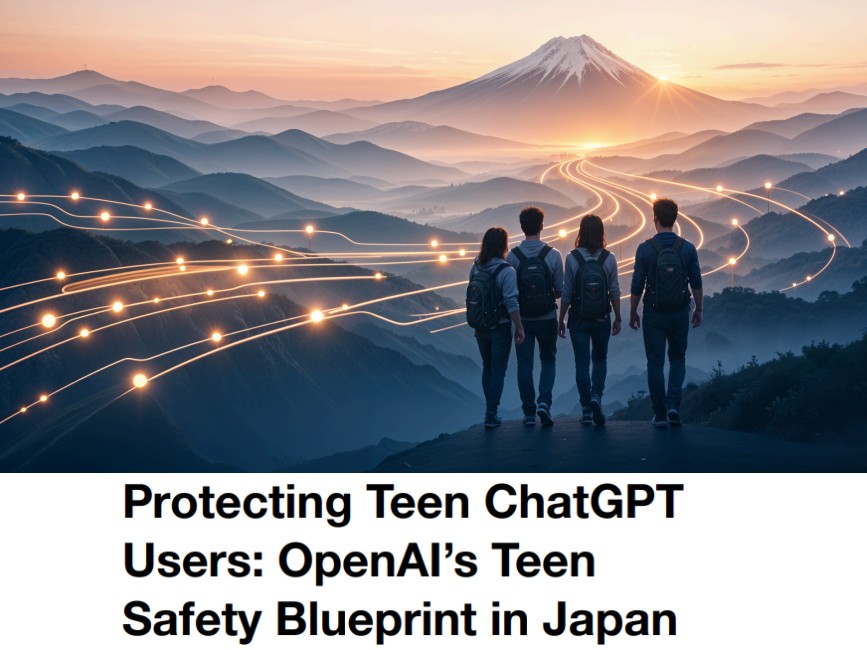
OpenAI Japanは、日本の未成年ユーザーが安全にAIを活用できる環境づくりに向けた取り組みをまとめた「未成年の安全性に関するブループリント」を発表した。未成年ユーザーの安心なAI利用のための基本方針や今後の方向性を示したもので、サービス設計を中心に保護の仕組みを整理している。
安全な利用に向けた考え方としては、安全性を設計段階から組み込むこと、ユーザーに応じた保護を行なうこと、実証を通じて安全性を継続的に高めていくことを挙げる。研究成果を製品に反映しながら、より安全な利用環境を整えていくとしている。
具体的な取り組みとしては、年齢推定技術の活用や、18歳未満ユーザー向けの安全ポリシーの適用、ペアレンタルコントロールで各種機能や利用時間などを管理できる仕組み、外部の専門家と連携したウェルビーイングを重視した安全対策を挙げる。
生成AIの利用が急速に広がるなか、若い世代にとってAIは学びや創造の新しいツールとなりつつある。一方で、誤情報や不適切なコンテンツへの配慮が不可欠であることから、未成年ユーザー向けの安全対策や保護の仕組みの強化を進める。
ChatGPTでは、自殺や自傷行為の描写、露骨な性的・暴力的コンテンツを禁止するほか、過度な食事制限などの有害な身体イメージを助長する回答への対策が徹底されている。また、未成年が危険な行動を保護者から隠す方法を案内しない設計にも取り組む。
同社は、未成年ユーザーが安心してAIと付き合い、将来の学びやキャリア形成につなげられる環境づくりについて、AI企業のみならず社会全体と連携しながら進めていくべき課題であるとする。
なお、OpenAIは2025年9月に、未成年ユーザーの安全対策を強化する方針を明らかにしており、グローバル向けの未成年の安全性に関するブループリントも発表している。
今回新たに発表された日本版のブループリントでは、日本の高校生の約6割が生成AIを利用しているという急速な普及実態や、若年層が誤情報を見極めにくいリスクが記載されているほか、安全とプライバシーを守りながら利点を活かすという日本の法制度や政策方針に強く賛同する姿勢が示されている。
■ 子どもがAIに丸投げしない仕組みづくりを
発表会では、OpenAI Japan 政策パートナーシップ担当の大久保和也氏によるJapan Safety Blueprintの説明が行なわれたほか、早稲田大学 教育・総合科学学術院 大学院教育学研究科の田中博之教授との対談も実施された。
対談では、教育現場で生成AIの活用が広がりつつあり、生徒の学力向上や創造性の支援に役立ちはじめていると紹介。英語では話す力や書く力の強化、数学では証明の考え方を深める用途などで活用が進み、実際に集中力やテストの成績の向上といった手応えも出ているという。
レポートやスピーチの作成でも、AIを推敲の相手として使うことで表現力を高める効果が見られるとした。また、多くの生徒を受け持つ教師にとって、AIを補助役や伴走者として活用する動きも広がっており、授業を支える存在としての期待も示された。
一方で、未成年のAI利用には大人とは異なる特有の配慮が欠かせないと指摘した。特に日本の子どもにおいて懸念されるリスクは、有害情報へのアクセスよりも「AI依存」と「丸投げ」であるとし、深夜まで使い続けたり、自分で考える前に宿題やレポートをAIに任せきりにしてしまう姿勢が大きな課題だとした。
個人情報の漏洩や有害情報への対策は前提としつつ、教育の観点ではAIを単なる効率化の道具ではなく、子どもが自律的かつ創造的に考える力を支える存在であるべきとした。また、AI企業が安全対策や機能改善を継続し、行政や学校と連携しながら子どもたちのAIリテラシーを高める機会を増やしていくことへの期待も語られた。
OpenAI Japanは、日本の未成年ユーザーが安全にAIを活用できる環境づくりに向けた取り組みをまとめた「未成年の安全性に関するブループリント」を発表した。未成年ユーザーの安心なAI利用のための基本方針や今後の方向性を示したもので、サービス設計を中心に保護の仕組みを整理している。 安全な利用に向けた考え方としては、安全性を設計段階から組み込むこと、ユーザーに応じた保護を行なうこと、実証を通じて安全性を継続的に高めていくことを挙げる。研究成果を製品に反映しながら、より安全な利用環境を整えていくとしている。 具体的な取り組みとしては、年齢推定技術の活用や、18歳未満ユーザー向けの安全ポリシーの適用、ペアレンタルコントロールで各種機能や利用時間などを管理できる仕組み、外部の専門家と連携したウェルビーイングを重視した安全対策を挙げる。 生成AIの利用が急速に広がるなか、若い世代にとってAIは学びや創造の新しいツールとなりつつある。一方で、誤情報や不適切なコンテンツへの配慮が不可欠であることから、未成年ユーザー向けの安全対策や保護の仕組みの強化を進める。 ChatGPTでは、自殺や自傷行為の描写、露骨な性的・暴力的コンテンツを禁止するほか、過度な食事制限などの有害な身体イメージを助長する回答への対策が徹底されている。また、未成年が危険な行動を保護者から隠す方法を案内しない設計にも取り組む。 同社は、未成年ユーザーが安心してAIと付き合い、将来の学びやキャリア形成につなげられる環境づくりについて、AI企業のみならず社会全体と連携しながら進めていくべき課題であるとする。 なお、OpenAIは2025年9月に、未成年ユーザーの安全対策を強化する方針を明らかにしており、グローバル向けの未成年の安全性に関するブループリントも発表している。 今回新たに発表された日本版のブループリントでは、日本の高校生の約6割が生成AIを利用しているという急速な普及実態や、若年層が誤情報を見極めにくいリスクが記載されているほか、安全とプライバシーを守りながら利点を活かすという日本の法制度や政策方針に強く賛同する姿勢が示されている。 ■ 子どもがAIに丸投げしない仕組みづくりを 発表会では、OpenAI Japan 政策パートナーシップ担当の大久保和也氏によるJapan Safety Blueprintの説明が行なわれたほか、早稲田大学 教育・総合科学学術院 大学院教育学研究科の田中博之教授との対談も実施された。 対談では、教育現場で生成AIの活用が広がりつつあり、生徒の学力向上や創造性の支援に役立ちはじめていると紹介。英語では話す力や書く力の強化、数学では証明の考え方を深める用途などで活用が進み、実際に集中力やテストの成績の向上といった手応えも出ているという。 レポートやスピーチの作成でも、AIを推敲の相手として使うことで表現力を高める効果が見られるとした。また、多くの生徒を受け持つ教師にとって、AIを補助役や伴走者として活用する動きも広がっており、授業を支える存在としての期待も示された。 一方で、未成年のAI利用には大人とは異なる特有の配慮が欠かせないと指摘した。特に日本の子どもにおいて懸念されるリスクは、有害情報へのアクセスよりも「AI依存」と「丸投げ」であるとし、深夜まで使い続けたり、自分で考える前に宿題やレポートをAIに任せきりにしてしまう姿勢が大きな課題だとした。 個人情報の漏洩や有害情報への対策は前提としつつ、教育の観点ではAIを単なる効率化の道具ではなく、子どもが自律的かつ創造的に考える力を支える存在であるべきとした。また、AI企業が安全対策や機能改善を継続し、行政や学校と連携しながら子どもたちのAIリテラシーを高める機会を増やしていくことへの期待も語られた。
OpenAI Japanは、日本の未成年ユーザーが安全にAIを活用できる環境づくりに向けた取り組みをまとめた「未成年の安全性に関するブループリント」を発表した。未成年ユーザーの安心なAI利用のための基本方針や今後の方向性を示したもので、サービス設計を中心に保護の仕組みを整理している。 安全な利用に向けた考え方としては、安全性を設計段階から組み込むこと、ユーザーに応じた保護を行なうこと、実証を通じて安全性を継続的に高めていくことを挙げる。研究成果を製品に反映しながら、より安全な利用環境を整えていくとしている。 具体的な取り組みとしては、年齢推定技術の活用や、18歳未満ユーザー向けの安全ポリシーの適用、ペアレンタルコントロールで各種機能や利用時間などを管理できる仕組み、外部の専門家と連携したウェルビーイングを重視した安全対策を挙げる。 生成AIの利用が急速に広がるなか、若い世代にとってAIは学びや創造の新しいツールとなりつつある。一方で、誤情報や不適切なコンテンツへの配慮が不可欠であることから、未成年ユーザー向けの安全対策や保護の仕組みの強化を進める。 ChatGPTでは、自殺や自傷行為の描写、露骨な性的・暴力的コンテンツを禁止するほか、過度な食事制限などの有害な身体イメージを助長する回答への対策が徹底されている。また、未成年が危険な行動を保護者から隠す方法を案内しない設計にも取り組む。 同社は、未成年ユーザーが安心してAIと付き合い、将来の学びやキャリア形成につなげられる環境づくりについて、AI企業のみならず社会全体と連携しながら進めていくべき課題であるとする。 なお、OpenAIは2025年9月に、未成年ユーザーの安全対策を強化する方針を明らかにしており、グローバル向けの未成年の安全性に関するブループリントも発表している。 今回新たに発表された日本版のブループリントでは、日本の高校生の約6割が生成AIを利用しているという急速な普及実態や、若年層が誤情報を見極めにくいリスクが記載されているほか、安全とプライバシーを守りながら利点を活かすという日本の法制度や政策方針に強く賛同する姿勢が示されている。 ■ 子どもがAIに丸投げしない仕組みづくりを 発表会では、OpenAI Japan 政策パートナーシップ担当の大久保和也氏によるJapan Safety Blueprintの説明が行なわれたほか、早稲田大学 教育・総合科学学術院 大学院教育学研究科の田中博之教授との対談も実施された。 対談では、教育現場で生成AIの活用が広がりつつあり、生徒の学力向上や創造性の支援に役立ちはじめていると紹介。英語では話す力や書く力の強化、数学では証明の考え方を深める用途などで活用が進み、実際に集中力やテストの成績の向上といった手応えも出ているという。 レポートやスピーチの作成でも、AIを推敲の相手として使うことで表現力を高める効果が見られるとした。また、多くの生徒を受け持つ教師にとって、AIを補助役や伴走者として活用する動きも広がっており、授業を支える存在としての期待も示された。 一方で、未成年のAI利用には大人とは異なる特有の配慮が欠かせないと指摘した。特に日本の子どもにおいて懸念されるリスクは、有害情報へのアクセスよりも「AI依存」と「丸投げ」であるとし、深夜まで使い続けたり、自分で考える前に宿題やレポートをAIに任せきりにしてしまう姿勢が大きな課題だとした。 個人情報の漏洩や有害情報への対策は前提としつつ、教育の観点ではAIを単なる効率化の道具ではなく、子どもが自律的かつ創造的に考える力を支える存在であるべきとした。また、AI企業が安全対策や機能改善を継続し、行政や学校と連携しながら子どもたちのAIリテラシーを高める機会を増やしていくことへの期待も語られた。
Vocabulary
General
Proper noun
JLPT N2
JLPT N1
| # | 言葉 | 意味 |
|---|---|---|
| 18 | 未成年 | みせいねん (未成年) : minor; not of age |
| 10 | 活用 | かつよう (活用) : 1. practical use; application 2. conjugation; inflection |
| 8 | 安全性 | あんぜんせい (安全性) : safety; security |
| 8 | 安全対策 | あんぜんたいさく (安全対策) : safety measure |
| 6 | 環境 | かんきょう (環境) : environment; circumstance |
| 6 | 発表 | はっぴょう (発表) : announcement; publication; presenting; statement; communique; making known; breaking (news story); expressing (one's opinion); releasing; unveiling |
| 6 | 示す | しめす (示す) : 1. to (take out and) show; to demonstrate; to tell; to exemplify; to make apparent 2. to point out (finger, clock hand, needle, etc.) |
| 6 | 保護 | ほご (保護) : 1. protection; safeguard; guardianship; custody; patronage 2. preservation; conservation |
| 6 | 仕組み | しくみ (仕組み) : 1. structure; construction; arrangement; contrivance; mechanism; workings 2. plan; plot; contrivance |
| 6 | 高める | たかめる (高める) : to raise; to lift; to boost; to enhance |
| 6 | 向け | むけ (向け) : intended for ...; oriented towards ...; aimed at ... |
| 6 | 連携 | れんけい (連携) : cooperation; coordination; link |
| 6 | 広がる | ひろがる (広がる) : to spread (out); to extend; to stretch; to reach to; to get around; to fill (e.g. a space) |
| 6 | 強化 | きょうか (強化) : strengthening; intensifying; reinforcement; enhancement; solidification |
| 6 | 子ども | こども (子供) : child |
| 4 | づくり | づくり (作り) : 1. making; forming; cultivating; growing 2. form; appearance |
| 4 | 取り組み | とりくみ (取り組み) : 1. bout (in sports, etc.); match 2. effort; initiative; dealing with; grappling with; wrestling with |
| 4 | 関する | かんする (関する) : to concern; to be related |
| 4 | 考え方 | かんがえかた (考え方) : way of thinking |
| 4 | 設計 | せっけい (設計) : plan; design; layout |
| 4 | 行なう | おこなう (行う) : to perform; to do; to conduct oneself; to carry out |
| 4 | 機能 | きのう (機能) : function; facility; faculty; feature |
| 4 | 急速 | きゅうそく (急速) : rapid (e.g. progress) |
| 4 | 学びや | まなびや (学び舎) : school; school building; schoolhouse |
| 4 | 配慮 | はいりょ (配慮) : consideration; concern; attention; thoughtfulness; making arrangements; care; trouble |
| 4 | 進める | すすめる (進める) : 1. to advance; to move forward; to put (a clock, watch) forward 2. to carry forward (plans, work, etc.); to proceed with; to make progress in; to further; to advance; to hasten; to speed up |
| 4 | 対策 | たいさく (対策) : measure; step; countermeasure; counterplan; countermove; strategy; preparation (e.g. for a test) |
| 4 | 企業 | きぎょう (企業) : enterprise; business; company; corporation |
| 4 | 課題 | かだい (課題) : 1. subject; theme; issue; matter 2. homework; assignment |
| 4 | 方針 | ほうしん (方針) : 1. policy; course; plan (of action); principle 2. magnetic needle |
| 4 | 政策 | せいさく (政策) : political measures; policy |
| 4 | 姿勢 | しせい (姿勢) : 1. posture; pose; position; stance; carriage (of the body) 2. attitude; approach; stance |
| 4 | 丸投げ | まるなげ (丸投げ) : wholesale delegation; hundred-percent subcontracting; leaving all the decision-making to somebody else |
| 4 | 対談 | たいだん (対談) : talk; dialogue; conversation |
| 4 | 向上 | こうじょう (向上) : elevation; rise; improvement; advancement; progress |
| 4 | 支える | ささえる (支える) : 1. to support; to prop; to sustain; to underlay; to hold up; to defend 2. to hold at bay; to stem; to check |
| 4 | 存在 | そんざい (存在) : existence; being |
| 4 | 期待 | きたい (期待) : 1. expectation; anticipation; hope 2. promising; rising; up-and-coming |
| 2 | まとめる | まとめる (纏める) : 1. to collect; to put (it all) together; to integrate; to consolidate; to unify 2. to summarize; to aggregate |
| 2 | 基本方針 | きほんほうしん (基本方針) : basic policy; fundamental policy; fundamental plan of action |
| 2 | 今後 | こんご (今後) : from now on; hereafter |
| 2 | 方向性 | ほうこうせい (方向性) : 1. trend; course of action; direction 2. directionality; directivity; orientation |
| 2 | 中心 | ちゅうしん (中心) : 1. center; centre; middle; heart; core; focus; pivot; emphasis; balance 2. -centered; -centred; -focused; -oriented; centered on; focused on |
| 2 | 整理 | せいり (整理) : 1. sorting; arrangement; organization; putting in order; adjustment; regulation 2. liquidation; settlement; consolidation; clearance (e.g. debt); paying off |
| 2 | 段階 | だんかい (段階) : grade; level; stage; class; phase; steps; order; gradation |
| 2 | 組み込む | くみこむ (組み込む) : to insert; to include; to incorporate; to cut in (printing) |
| 2 | 応ずる | おうずる (応ずる) : 1. to answer; to respond; to meet 2. to satisfy; to accept |
| 2 | 実証 | じっしょう (実証) : demonstration; verification; substantiation; actual proof |
| 2 | 通ずる | つうずる (通ずる) : 1. to be open (to traffic); to lead to; to communicate (with) 2. to flow (liquid, current); to pass; to get through to |
| 2 | 継続的 | けいぞくてき (継続的) : continuous |
| 2 | 成果 | せいか (成果) : (good) result; outcome; fruits (of one's labors); product; accomplishment |
| 2 | 製品 | せいひん (製品) : manufactured goods; finished goods; product |
| 2 | 反映 | はんえい (反映) : 1. reflection (light, image, situation, attitude, etc.); reflecting 2. influence; application (e.g. of an update) |
| 2 | 整える | ととのえる (整える) : 1. to put in order; to arrange; to tidy up; to straighten; to adjust; to fix 2. to get ready; to prepare; to arrange; to supply; to assemble; to buy |
| 2 | 具体的 | ぐたいてき (具体的) : concrete; definite; specific; material; substantial |
| 2 | 年齢 | ねんれい (年齢) : age; years |
| 2 | 推定 | すいてい (推定) : 1. presumption; assumption 2. estimation |
| 2 | 未満 | みまん (未満) : less than; under; below |
| 2 | 適用 | てきよう (適用) : applying (e.g. a technology); adoption |
| 2 | 各種 | かくしゅ (各種) : every kind; all sorts |
| 2 | 管理 | かんり (管理) : control; management (e.g. of a business) |
| 2 | 外部 | がいぶ (外部) : 1. outside (e.g. of a building); exterior 2. outside (of a group, company, etc.); outside world |
| 2 | 専門家 | せんもんか (専門家) : specialist; expert; professional; authority; pundit |
| 2 | 重視 | じゅうし (重視) : regarding as important; attaching importance to; taking a serious view of; putting emphasis on |
| 2 | 若い | わかい (若い) : 1. young; youthful 2. immature; green |
| 2 | 世代 | せだい (世代) : generation; the world; the age |
| 2 | 創造 | そうぞう (創造) : creation |
| 2 | 不適切 | ふてきせつ (不適切) : unsuitable; inappropriate; improper |
| 2 | 不可欠 | ふかけつ (不可欠) : indispensable; essential |
| 2 | 自殺 | じさつ (自殺) : suicide |
| 2 | 自傷行為 | じしょうこうい (自傷行為) : act of self-harm; self-injurious behavior; self-injurious behaviour |
| 2 | 描写 | びょうしゃ (描写) : depiction; description; portrayal |
| 2 | 露骨 | ろこつ (露骨) : 1. open; unconcealed; undisguised; blatant; plain; frank 2. broad; lewd; indecent; crude |
| 2 | 性的 | せいてき (性的) : 1. (relating to) gender 2. sex; sexual |
| 2 | 暴力的 | ぼうりょくてき (暴力的) : violent |
| 2 | 禁止 | きんし (禁止) : prohibition; inhibition; ban |
| 2 | 過度 | かど (過度) : excessive; immoderate |
| 2 | 食事制限 | しょくじせいげん (食事制限) : dietary restriction |
| 2 | 有害 | ゆうがい (有害) : harmful; hazardous |
| 2 | 身体 | からだ (体) : 1. body 2. torso; trunk |
| 2 | 助長 | じょちょう (助長) : 1. promotion; encouragement; fostering; furtherance 2. unwanted help (usu. unintentionally harmful); unnecessary help |
| 2 | 回答 | かいとう (回答) : reply; answer |
| 2 | 徹底 | てってい (徹底) : 1. thoroughness; completeness; consistency 2. thorough enforcement; seeing to it that a policy, etc. is carried out without exception |
| 2 | 行動 | こうどう (行動) : action; conduct; behaviour; behavior; mobilization; mobilisation |
| 2 | 保護者 | ほごしゃ (保護者) : guardian; protector; patron; parent |
| 2 | 隠す | かくす (隠す) : to hide; to conceal |
| 2 | 方法 | ほうほう (方法) : method; process; manner; way; means; technique |
| 2 | 取り組む | とりくむ (取り組む) : 1. to grapple with; to wrestle with; to engage in a bout; to be matched against 2. to tackle (e.g. a problem); to come to grips with; to work hard on |
| 2 | 同社 | どうしゃ (同社) : the same firm |
| 2 | 付き合う | つきあう (付き合う) : 1. to associate with; to keep company with; to go out with; to go steady with; to get on with 2. to go along with; to follow someone's lead; to accompany someone; to compromise |
| 2 | つなげる | つなげる (繋げる) : 1. to connect 2. to tie; to fasten |
| 2 | のみ | のみ : only; nothing but |
| 2 | 全体 | ぜんたい (全体) : whole; entirety; whatever (is the matter) |
| 2 | なお | なお (尚) : 1. still; yet 2. more; still more; greater; further |
| 2 | 明らか | あきらか (明らか) : 1. clear; obvious; evident; plain; definite 2. bright; light |
| 2 | 新た | あらた (新た) : new; fresh; novel |
| 2 | 版 | はん (版) : 1. edition; version; printing; impression; implementation (e.g. software) 2. plate; block; cast |
| 2 | 割 | わり (割り) : 1. rate; ratio; proportion; percentage 2. profit |
| 2 | 普及 | ふきゅう (普及) : diffusion; spread; popularization; promulgation; familiarization |
| 2 | 実態 | じったい (実態) : true state; actual condition; reality |
| 2 | 若年層 | じゃくねんそう (若年層) : the young |
| 2 | 見極める | みきわめる (見極める) : to ascertain; to make sure of; to determine; to probe; to get to the bottom (of something) |
| 2 | 記載 | きさい (記載) : mention (in a document); record; entry; statement; listing |
| 2 | 守る | まもる (守る) : 1. to protect; to guard; to defend 2. to keep (i.e. a promise); to abide (by the rules); to observe; to obey; to follow |
| 2 | 利点 | りてん (利点) : advantage; point in favor; point in favour |
| 2 | 活かす | いかす (生かす) : 1. to make (the best) use of; to put to good use; to leverage (skills, attributes, experience, etc.); to capitalise on (experience, etc.) 2. to let live; to keep alive |
| 2 | 法制度 | ほうせいど (法制度) : legal system |
| 2 | 賛同 | さんどう (賛同) : approval; endorsement |
| 2 | 発表会 | はっぴょうかい (発表会) : 1. recital (i.e. of music, by a pupil) 2. presentation (e.g. product launch) |
| 2 | 担当 | たんとう (担当) : being in charge (of an area of responsibility); being responsible (for a work role, etc.) |
| 2 | 大久保 | おおくほ (大久保) : Ookuho (surname) |
| 2 | 和也 | かずなり (和也) : Kazunari (given) |
| 2 | 氏 | うじ (氏) : 1. family name; lineage; birth 2. clan |
| 2 | 早稲田大学 | わせだだいがく (早稲田大学) : Waseda University (organization) |
| 2 | 総合科学 | そうごうかがく (総合科学) : integrated science (i.e. collaboration of various sciences and arts); (a) synthetic science |
| 2 | 学術 | がくじゅつ (学術) : science; learning; scholarship; arts and sciences; academic pursuits |
| 2 | 大学院 | だいがくいん (大学院) : graduate school |
| 2 | 田中 | たなか (田中) : Tanaka (place; surname; fem) |
| 2 | 博之 | ひろし (博之) : Hiroshi (given) |
| 2 | 教授 | きょうじゅ (教授) : 1. professor 2. teaching; instruction |
| 2 | 実施 | じっし (実施) : enforcement; implementation; putting into practice; carrying out; operation; working (e.g. working parameters); enactment |
| 2 | 教育現場 | きょういくげんば (教育現場) : educational interface; the classroom; the chalkface |
| 2 | 学力 | がくりょく (学力) : scholarly ability; scholarship; knowledge; literary ability |
| 2 | 創造性 | そうぞうせい (創造性) : creativity |
| 2 | 支援 | しえん (支援) : support; backing; aid; assistance |
| 2 | 役立つ | やくだつ (役立つ) : to be useful; to be helpful; to serve the purpose |
| 2 | 証明 | しょうめい (証明) : proof; testimony; demonstration; verification; certification |
| 2 | 深める | ふかめる (深める) : to deepen; to heighten; to intensify |
| 2 | 用途 | ようと (用途) : use; service; purpose |
| 2 | 進む | すすむ (進む) : 1. to advance; to go forward 2. to precede; to go ahead (of) |
| 2 | 実際 | じっさい (実際) : 1. reality; actuality; truth; fact; actual conditions 2. practice (as opposed to theory) |
| 2 | 集中力 | しゅうちゅうりょく (集中力) : (powers of) concentration; ability to concentrate |
| 2 | 成績 | せいせき (成績) : results; record; grades; marks |
| 2 | 手応え | てごたえ (手応え) : 1. response (felt in the hands); resistance 2. reaction; response; effect |
| 2 | 作成 | さくせい (作成) : drawing up (e.g. legal document, contract, will, etc.); preparing; writing; framing; making; producing; creating; creation |
| 2 | 推敲 | すいこう (推敲) : polishing (e.g. essay); revision; elaboration; refinement; improvement |
| 2 | 相手 | あいて (相手) : 1. companion; partner; company 2. other party; addressee |
| 2 | 表現力 | ひょうげんりょく (表現力) : power of expression; expressiveness; expressive power |
| 2 | 効果 | こうか (効果) : 1. effect; effectiveness; efficacy; result 2. effects (e.g. sound effects, visual effects, special effects) |
| 2 | 受け持つ | うけもつ (受け持つ) : to take (be in) charge of |
| 2 | 教師 | きょうし (教師) : teacher (classroom) |
| 2 | 補助 | ほじょ (補助) : 1. assistance; support; aid; help 2. subsidy; supplement; subvention; grant-in-aid |
| 2 | 役 | えき (役) : 1. war; campaign; battle 2. unpaid work (ritsuryo system); forced labor |
| 2 | 動き | うごき (動き) : 1. movement; move; motion 2. trend; development; change; fluctuation |
| 2 | 異なる | ことなる (異なる) : to differ; to vary; to disagree |
| 2 | 特有 | とくゆう (特有) : characteristic (of); peculiar (to) |
| 2 | 指摘 | してき (指摘) : pointing out; identification |
| 2 | 懸念 | けねん (懸念) : worry; fear; anxiety; concern |
| 2 | 依存 | いぞん (依存) : dependence; reliance |
| 2 | 深夜 | しんや (深夜) : late at night |
| 2 | 任せる | まかせる (任せる) : 1. to entrust (e.g. a task) to another; to leave to 2. to passively leave to someone else's facilities |
| 2 | きり | きり (桐) : paulownia (Paulownia tomentosa); empress tree; foxglove tree |
| 2 | 個人情報 | こじんじょうほう (個人情報) : personal information |
| 2 | 漏洩 | ろうえい (漏洩) : 1. leak (of secrets, information, etc.); disclosure; divulging 2. leak (of gas, liquid, etc.); leakage; escape (of gas); coming through (of light) |
| 2 | 前提 | ぜんてい (前提) : 1. condition; assumption; prerequisite; hypothesis 2. intention; intent; aim; goal |
| 2 | 観点 | かんてん (観点) : point of view |
| 2 | 単なる | たんなる (単なる) : mere; simple; sheer |
| 2 | 効率化 | こうりつか (効率化) : making efficient; optimization |
| 2 | 自律的 | じりつてき (自律的) : autonomous; autonomic; self-sustaining; self-directed |
| 2 | 創造的 | そうぞうてき (創造的) : creative |
| 2 | 考える | かんがえる (考える) : 1. to think (about, of); to think over; to ponder; to contemplate; to reflect (on); to meditate (on) 2. to consider; to bear in mind; to allow for; to take into consideration |
| 2 | 改善 | かいぜん (改善) : 1. betterment; improvement 2. kaizen (Japanese business philosophy of continuous improvement) |
| 2 | 継続 | けいぞく (継続) : continuation |
| 2 | 行政 | ぎょうせい (行政) : administration; governance; the authorities; authority |
| 2 | 子どもたち | こどもたち (子供たち) : children |
| 2 | 増やす | ふやす (増やす) : to increase; to add to; to augment |
| 2 | 語る | かたる (語る) : 1. to talk about; to speak of; to tell; to narrate 2. to recite; to chant |