東京マラソン、アシックス「メタスピード エッジ トーキョー」で自己ベスト更新も、サブ3ならず!──東京マラソン2026リポート
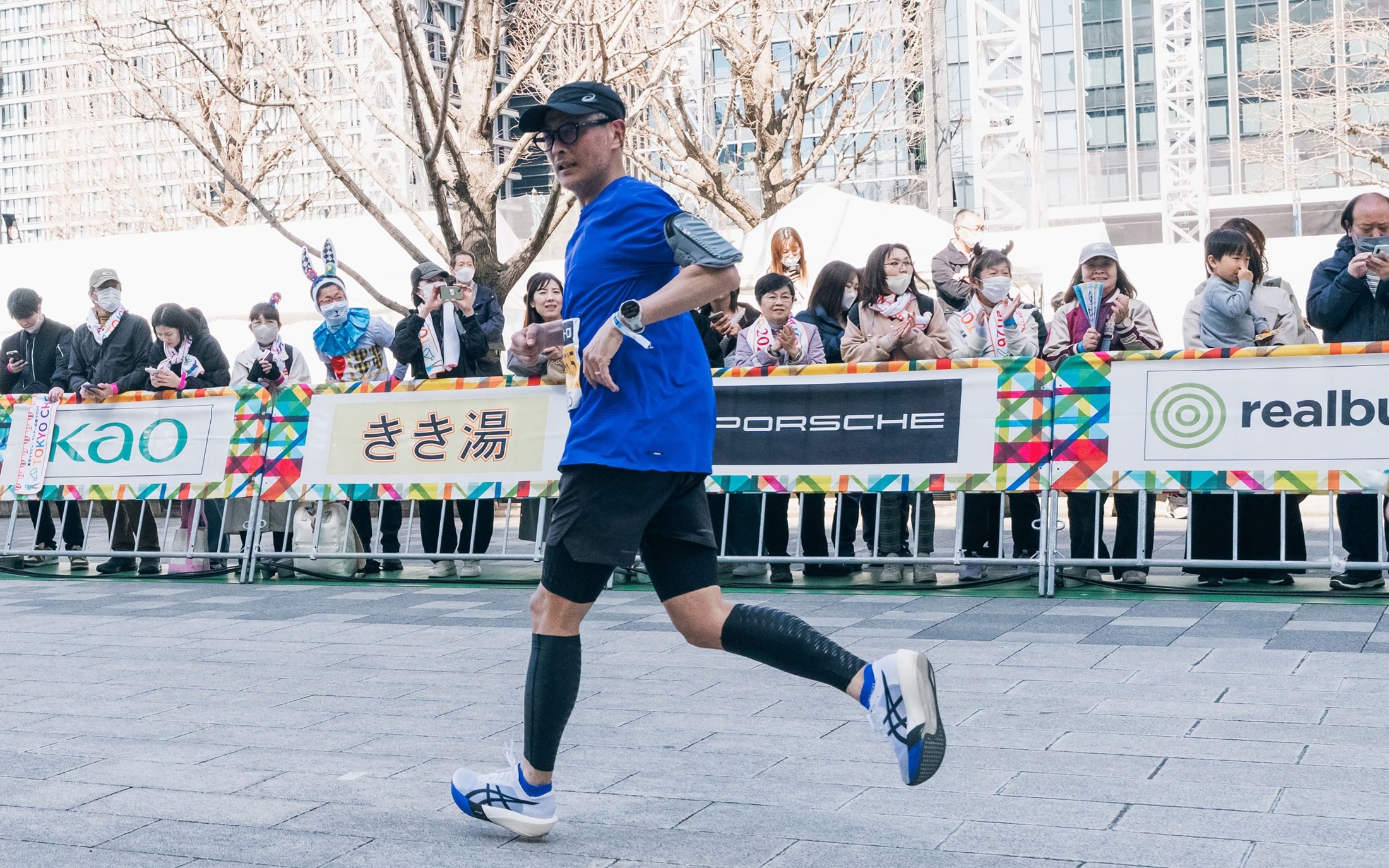
東京マラソン2026が3月1日に行われ、GQエディター・神谷晃が参戦。3時間4分19秒で自己ベストを更新したものの、目標だったサブ3を逃した。アシックス「メタスピード エッジ トーキョー」でアタックしたレースの模様をリポートする。
自己ベスト更新でも悔しいって思えるぐらい成長したのかな──ミラノ・コルティナ五輪フィギュアスケートの女子シングルで銀メダルを獲得した直後の坂本花織のコメントの受け売りだが、これは本心だ。 東京マラソン2026のタイムは3時間4分19秒。両サイドにギャラリーが待ち受けるゴール直前の丸の内の仲通り、つまり東京マラソンの花道で右のハムストリングスが攣って20秒ほど立ち止まり、アシックスの撮影スタッフに「(サブ3達成できなくて)ごめん!」と謝罪しながらのゴールとなった。 目標のサブ3、その達成には1kmあたり4分15秒/kmペースの維持が必要であり、4分10秒〜12秒での確実な巡航が現実的な指標となる。 レース後のラップを見返してみると、ほぼ狙い通りだったタイムが乱れはじめたのは28km地点。門前仲町折り返し後の清澄通り(アップダウン区間)を抜け、浅草方面へ向かうランナーが蔵前橋を渡るレース中盤の重要なポイントで、疲労とはまた違う脚の違和感を覚えた。平均ペースは4分22秒に、10秒ほど落ちる。レース前の予想より、2kmほど早い異変の到来だ。 ガクッときた。脚が重い。それでも気持ちを入れ直し、腰が落ちないように、気持ち脚を速く回転、脚の付け根を意識する、正しいフォームを再確認する。 この日の相棒である「メタスピード エッジ トーキョー(METASPEED EDGE TOKYO)」に、平均ペースを4分15秒に戻すように指令を下すと、アシックスが誇るピッチ型ランナー向けトップレーシングシューズは、涼しい顔で任務を遂行する。シューズのポテンシャルをまだまだ使い切っていない、ということか。 ところでアシックスの「メタスピードシリーズ」は、トップレベルのランナーが2時間半、2時間半よりも速いペースで走ることを想定したシューズだ。踵からの接地は基本的に想定していない。アウトソールの接地面積を見るとわかりやすいのだが、トップランナーが1秒単位でタイムを削るために、無駄なものを削いで出来上がった形状であることがわかる。自己ベストが3時間13分10秒の筆者にとっては、ワンクラス上のレーシングシューズという位置付けだ。 選びをめぐっては、毎回アシックスのコーチとひと悶着あるのだが、今回はサブ3が目標ということもあって、意見は一致。筆者のランニングフォームなどの特性を踏まえて、「メタスピード エッジ トーキョー(METASPEED EDGE TOKYO)」の一択となった。
はじめて「目標サブ3」を公言した。例年なら、テスト前に「全然勉強していない」というアレに倣って「目標は3時間5分です」と控えめなフリをするところだが、白髪まみれのマラソン小僧は予防線を張らない。ちょっと大人になった。 石橋を散々叩いたうえに渡らない意気地なし、と性格を自認する筆者が、サブ3を公言したのにはそれなりの理由がある。 1月下旬、アシックスのランニングラボに小谷浩コーチを尋ねた。今回は銀座の「ASICS TOKYO GINZA」が舞台だ。こちらのラボでは、丸の内で計測した①ランニングフォーム測定 、②全身持久力測定、に加えて、③アライメント・筋力測定のメニューも含まれるという。 呼吸代謝装置を用いてランニング中の酸素摂取量や心拍数を測定することで、フォームはもちろん、心肺機能も含めた能力を数値化してもらうのが主な目的だが、③のメニューでは、筋力の状態をチェックしたり、関節可動域などの解析をもとにランニング障害のリスクを予見して回避することも期待できるという。 言い換えれば、自分の走りをデータ化することで、怪我を恐れずに思い切った追い込み系の練習ができるようになる、と解釈しても良さそうだ。マイペースがどんなものなのか、何を目標にすれば良いのか、その基準をデータ化して「ランナーとしての現在地」を把握することは、シューズ選びと同じか、あるいはそれ以上に重要だ。これはレベルを問わず、すべてのランナーが対象である。 あくまで呼吸循環系能力から推定できるタイム予測という前提付きだが、データ上は「4分00秒/kmで2時間50分を目指せる」という驚きの診断結果が出た。 「4分17秒/kmで3時間4分」という2年前の測定結果から大幅に成長しているではないか! 「高いレベルにも関わらず、着実に走力が向上しています。まずは自己ベスト更新~前回の測定結果(AT)のペースを目安に走ると、より楽にフルマラソンを走り切れるはずです」と、コメントも添えられている。そんなお墨付きまでもらってしまったのだ。鼻息が荒くなって当然である。 上記の「4分00秒/km」をもう少し補足しておくと、これは全身持久力測定により導き出されたマラソンを走るうえで欠かせない指標であり、「ATペース」と呼ばれる。「有酸素運動から無酸素運動にシフトしていく閾値(いきち)」を表したもので、フルマラソンのゴールタイムと非常に高い相関関係があることで知られる。つまり、「4分00秒/km」は、筆者のマラソン練習、マラソン本番におけるすべての「指針」となるペースなのだ。 ここから導き出されるトレーニングは、①ATペースより速いランニング、②ATペースもしくはATペースより少し速いランニング(もしくは持続走)、③ATペースより遅いランニング、というメニューとなった。 筆者のATペース「4分00秒/km」で換算すると、ATペースより速いペース(3分50秒/km~4分00秒/km以内)でスピードを意識して走る練習(40分間~60分)を週1(or週2)回、ATペース「4分00秒/km」、あるいはそれ以下のペースで、距離や時間を意識して走る練習(60分間以上目安)を週1回──ポイントとなる練習を週2~3回程度設定し、その間をジョグや休養日でつないでいく──というメニューができあがった。筋力トレーニングストレッチ、長距離練習も推奨メニューに含まれていたことも付け加えておこう。 ただ、測定結果から導き出された「4分00秒/kmで2時間50分」を鵜呑みにするほど自信家でも、無垢でもない。それに「4分00秒/km」でフルマラソンを走り切る厳しさは日々の練習で十分過ぎるくらいに理解している。実際にハーフマラソンの距離で試してみても、かなりしんどい。現実的な数値ではないというのが本音だ。 そこで、今回の測定結果は「ここまでスピードを出せる」という限界値、モチベーションを保つための参考値と理解して、2年前のデータ「4分17秒/kmで3時間4分」を現実的な基準とした。 推奨メニューには、「レース前の走りこみ期に30km(あるいは3時間)以上走るようなロング練習を何度が取り入れると長い距離を走り切る脚ができる」という助言も含まれていたのだが、これは後回し。若干軽視していた。「遵守していれば後半の失速はなかったのに」と、今となっては悔やむばかりである。
小谷コーチからのアドバイスには、「距離とペースによるシューズの使いわけ」も含まれていた。筆者のランデータを解析したうえで、本番用のレーシングシューズはもちろん、レースペース、リカバリージョグ&テンポアップのためのシューズを選び、さらに履きわけのノウハウまで助言してくれるという。 ATペース、体形、フォームの癖など、筆者の走りを丸裸にした小谷コーチは、本人も知らないポテンシャルまでを知り尽くした主治医みたいな存在であるが、こういった助言は、店舗に出向けば、ランナーのレベルを問わず、誰でも受けられるという。とにかく目的をもった、メリハリの効いた練習には欠かせないプログラムなのだが、対象は中・上級者だけでなく、むしろ入門者にこそ試してほしいところだ。 レース用:メタスピード エッジ トーキョー(METASPEED EDGE TOKYO) レースペース:マジックスピード 5(MAGIC SPEED 5) ロング走、快適ペース:ノヴァブラスト 5(NOVABLAST 5) 疲労抜き:ゲルニンバス 28(GEL-NIMBUS 28) 筆者がランニングシューズの履きわけを取り入れることになったきっかけについて、改めて触れておこう。 あるイベントに参加していた大学駅伝名門校の指導者によると、カーボンプレート搭載の厚底シューズ、いわゆるレーシングシューズには、スピードに乗りやすい、推進力を得やすいというメリットがある反面、本来のポテンシャル以上のパフォーマンスを引き出してしまうため、どうしても脚へのダメージが避けられないという。駅伝選手のMRI検査をしてみると、微細な疲労骨折をしているケースもあるそうで、なんと自覚症状がないのだという。対策として、レーシングシューズとテンポアップシューズの履きわけを徹底したところ、故障者数が劇的に改善されたそうだ。 もちろん、これは箱根駅伝に参加するようなトップレベルのアスリートが対象となる話ではあるのだが、レーシングシューズによって本来の脚力以上のスピードが出てしまうのはアマチュアでも同じこと。カーボンプレートを搭載する厚底系レーシングシューズに「走らされてしまう感覚」は、市民ランナーレベルであっても身に覚えがあるのではないだろうか。 困ったことに、自分を追い込むことに陶酔しやすい筆者は、タイムが出やすいカーボンプレートを搭載する厚底系レーシングシューズで追い込みを連日続けてしまう傾向があった。故障のリスクが高まるのは火を見るより明らかだ。 「だからこそ、距離とペース、練習メニューによって、リカバリージョグ、テンポアップ、スピードといったシューズの履きわけが大切なんです。ポイントとなるスピード系の練習は週2~3回程度設定し、その間をジョグや休養日でつないでいく。効率的に練習を進めましょう」 漠然と追い込む練習を繰り返すのではなく、スピード練習とリカバリージョグをバランスよく取り入れることが、フルマラソンのサブ3達成に繋がるというのが、小谷コーチの方針だ。 東京マラソン2026当日を含めた、履きわけのテスト期間は約2カ月。その日の気分に合わせて履きたいシューズを履く、1回の走行距離は8km以上、本番用シューズの事前テストは2回のみ、というスタンスで試走を繰り返した。練習時のATペース「4分00秒/km」はあくまで目安。現実的にかなりキツめに感じるペースのため、「4分10秒から4分15秒/km」を目安とした。これはレース本番も同じく、である。 ここからは試走を重ねたシューズのインプレッションを紹介したい。 メタスピード エッジ トーキョー METASPEED EDGE TOKYO 自己記録更新を目指すピッチスタイルのランナーのために設計された、トップアスリート向けのレーシングシューズ。驚くのは軽さ。昨年、東京マラソンで使用した「パリ」からさらに軽量化を実現。新設計のFF LEAPフォーム・テクノロジーがもたらす弾むような履き心地は、ムキにならなくても自然と5~10秒ぐらいペースを上げてくれそうな印象がある。反発力・クッション性・安定性・フィット感ともに抜群。¥29,700 マジックスピード 5 MAGIC SPEED 5 メタスピードシリーズの1ランク下のシリーズは、レースペースでの練習に好適。カチッとした剛性感も好み。ミッドソールに反発性とクッション性に優れたFF LEAPを上層部に、安定性に優れたFF BLAST PLUSを下層部に、それぞれ採用することで、「このまま本番も行けるのでは?」と思わせるほど、速くて気持ち良い。はじめてカーボンプレート入りシューズを試すランナーにもおすすめ。¥19,800 ノヴァブラスト 5 NOVABLAST 5 ランニング時に感じる「跳ねる楽しさ」を追求した、テンポアップにも好適なモデル。ミッドソール素材をアップデートしたことにより、先代よりも軽く、反発性が向上した。ゆっくり走るとクッション性を感じ、テンポが上がってくるとほどよい反発が得られる。スタートがイマイチでも、いつの間にか良いテンポで走ることができている感覚は◎。「今日は調子がイマイチ?」と感じたときに積極的に試した。¥16,500 ゲルニンバス 28 GEL-NIMBUS 28 ゆっくりランニングを楽しみたいランナーや、快適なクッション性を求めているランナーにおすすめ。新作は前作の305gから約20g軽量化。先代までは、安定感を求めるあまり、どこかもっさりした感覚があったが、ゆっくりペースの最後にテンポアップしたい場面でしっかりスピードに反応してくれた。ジョグを軽視していた筆者にとっては、今回のテストでもっとも感銘を受けたのがこの万能モデルだ。¥22,000
話をレース当日に戻そう。蔵前橋でガクッと落ち込んだペースだが、毎回モチベーションが上がる日本橋〜京橋〜銀座のエリアでは、それほど無理することなく、想定ペースに戻すことに成功していた。正面から初夏のような強い陽射を浴びながら中央通りを銀座4丁目交差点に向かって突き進む。後ろ向きになっていた気持ちをリセットしてくれる、個人的に一番好きな東京マラソンのコースである。 それでもこの後に訪れることがわかっている鬼門を想像して腰がひける筆者を尻目に「メタスピード エッジ トーキョー」は粛々と任務を遂行。4分15秒/km前後で快調に脚を運んでいる。 さあ、いよいよ34kmの日比谷交差点付近。東京マラソンはここからが本番である。 晴海通りを抜けて日比谷通りを左に曲がると、誰もが極端にペースを落とす東京マラソンの鬼門が現れる。行く先には脚がパンクして座り込む、苦しそうにストレッチするランナーの数が目に見えて増えてくる。丸の内のゴールまで残り約8km。増上寺や東京タワーを通過し、田町で折り返して再び日比谷・丸の内方面へ戻る、レースの終盤となる厳しい勝負どころだ。 ここまであの手この手で機嫌をなだめてきたが、往路の増上寺を過ぎたあたりで、ついに脚が悲鳴をあげた。完全に攣ってしまって歩くこともままならない。「今日は調子がいいかもしれない」と、レース前半、本来のATペースに近い4分ひと桁で突っ込んでしまった筆者に対する右足ハムストリングスからの抗議行動だろうか。歩行すら許してくれない。完全に立ち止まる。 メンタルをやられた。 ここまでのペースはギリギリでサブ3を狙えるものであったが、退却を即断した。サブ3を諦め、パーソナルベスト「3時間13分10秒」の更新へと方針転換である。もしここで踏ん張ってしまったら、完走すら危うくなるかもしれない。そう思わせるほどのダメージだ。しかも、増上寺〜田町の区間は、コンディションが良かったとしてもタイムが落ちやすい。まさに鬼門なのである。 症状が和らいだ瞬間を狙って前進をつづけるが、37.5kmの田町の折り返し地点で、4分35秒/kmにペースが落ちた。 苦しい、もう苦しい。 村上春樹の著書『走ることについて語るときに僕の語ること』で見つけてからランナーとして座右の銘にしている「Pain is inevitable. Suffering is optional.(痛みは避けられないけれど、苦しみは自分次第)」という名言にさえ、このときの筆者は「知らんがな!」と毒付いてしまいそうだ。2010年のおきなわマラソン以来に味わう苦しさ。ここからはもう気力だけだ。 左手の日比谷公園、右手の帝国ホテルをはるか前方に見ながら、攣り気味の脚がパンクしないように細心の注意を払い、ただただ前進する。腰を落とさず、視線を前方に向けて、胸を張る──理想のフォームは捨てた。腰が落ちてもスルー、下を見て、何も考えず、ただ脚を前に動かす。「メタスピード エッジ トーキョー」は無言で伴走している。過剰に寄り添わない、超軽量で反発力に優れるトップレーシングシューズの沈黙が、なんだか逆に頼もしい。
2度目の危機は残り1kmを切った丸の内の仲通り、東京マラソンの花道で訪れる。再び右ハムストリングスの反乱だ。攣り方は深刻で、先ほどよりもダメージが大きい。完全にストップした。歩こうとすると、ハムストリングスは「NO!」と明確に意思を示してくる。この時点でとっくにサブ3は諦めている。ペースは4分35秒/kmにガクンと落ちた。思考能力の低下も著しいが、自己ベスト更新の可能性は残っている。 20秒ほど立ちすくんだであろうか。沿道からもの凄いエールが、多言語で筆者に届いた。いや、浴びせかけられたという表現が正しいか。誰の声にというわけではないが、それらの声援に力なく頷く。すると、右サイド最前列の10代と思しき青年から「Almost there!」の声をキャッチした。この時点で言葉の正確な意味はわからなかったが、(知り合いでもない筆者への)必死の叫びからは確かに伝わってくるものがあった。グッと胸が熱くなる。少し気持ちが前向きになった。 もう一度勇気を振り絞って前進を試みると、攣りがおさまった。この先には、ゴール手前でアシックスの撮影ポイントが待っている。断じて、歩くわけにはいかない。ポケットに忍ばせていた老眼鏡を着用して撮影モードに気持ちをリセットすると、再び走り出す。 最終的に、平均ペース4分18秒/km、3時間4分19秒でゴール。昨年の3時間13分10秒(GQエディターが、アシックス「メタスピード エッジ パリ」で3時間15分切り「サブ3.15」を達成──東京マラソン2025リポート)から自己ベストこそ更新したものの、目標としていた3時間切り、サブ3は叶わなかった。 と、ここで気がついた。2年前にアシックスのランニングラボで測定したデータから導き出された予測タイム「4分17秒/kmで3時間4分」、ほぼそのままじゃないか! もしかして、この結果を予見していたのだろうか。2年前のこととはいえ、無計画に走っていた当時は、予測タイムを含めたデータを軽視していた、いやどこか疑ってすらいたことを、心より恥じたい気分だ。 「(サブ3達成できなくて)ごめん!」と謝罪しながら、なぜか笑顔でゴール。©東京マラソン財団 ところでサブ3とは、1km4分15秒/km以下のペースで42km走り続ける持久力とスピード、月間200〜300km以上の走り込みが求められるとされており、達成率は全ランナーの上位約3%程度と言われるシリアスランナーの証であり、50歳代となると1%とも言われている。 一般的にランナーにとってはハードルの高い目標であり、それを52歳にして目指して、あと一歩のところまで迫ったのである。自分を褒めたい。2度も立ち止まるなど悔しいはずのレースだったが、アシックスから届いた丸の内近辺の記録写真を見ると、なかなか笑顔である。 補足しておくと、冒頭に記した通り、この笑顔は「(サブ3達成できなくて)ごめん!」の苦笑いに近いもの。それでも悔しさの一方で、ベストを尽くして走り切った満足感もあったのであろう。 レース翌朝、デイリートレーナーである「ゲルニンバス28(GEL-NIMBUS 28)」を履いて、寒空の砧公園に向かった。 走り出してみると、左右前後問わず腿まわりの筋肉になかなかのダメージが残っていることがわかった。両脚のつま先には、血の色で滲んだ派手なマメを数本確認できる。これまでのフルマラソン後には見られなかった症状であり、そこに何かしらのネガティブな要因があることは間違いないのだが、「一番大きな筋肉を使って走る」「つま先着地(フォアフット走法)」という昨年からのお題を完遂できた証でもある。いずれにせよ、この痛みは“攻めた走り”の勲章と捉えたい。
レースを終えて、小谷コーチは筆者の「苦しい42.195km」を次のように総括した。 「間違いなく“挑戦したレース”でした。ランニングラボの測定で裏付けられた走力で、十分にサブ3レベルに到達しています。今回見えたのは、30km以降の“筋持久力”と“後半の脚づくり”という課題。ハムストリングスの攣りは偶然ではなく、攻めた証でもあり、今後の伸びしろと言ってもいいでしょう。 次に向けての課題は“削られない脚・パンクしない脚”を作ること。そのために、30km以上のロング走の質向上、後半失速を防ぐ補強(臀部・ハム)、そして前半の入りをコントロールする勇気がポイントになります。ただ、普段のトレーニングとハーフの記録から考えると、今回の記録は私にとっては予想通りと言わせていただきます。守りに入ればベスト更新はできても、今回ほどの好記録には届かなかったと思います。攻めたことで自己ベストを大幅に更新でき、次こそサブ3を達成できる領域に入った、ということです」 そして、サブ3の達成に向けた具体的なメニューの提示を含む方針で締め括った。 「今回の結果は“サブ3に届かなかった”で終わらせるのではなく、“サブ3が射程圏内になった”と捉えましょう。ようこそ、本気のサブ3挑戦ゾーンへ! ここからが、本当のステージです。 まずはアシックスランニングプログラムの目的と意図を理解したうえで、トレーニングに取り入れる。距離をこなすだけでなく、意図を理解して取り組むことが重要になってきます。 今回の東京マラソンでも、プログラム参加者の多くがサブ3や目標を達成しています。プログラムに、神谷さんが苦手なスピードインターバル系の練習メニューはありませんのでご安心ください(笑)。インターバルなしでも、サブ3の達成は可能です」 アシックスが主催する「Running Program Road to Tokyo Marathon」は、東京マラソンや、冬~春のマラソンに挑戦するランナーをサポートするランニングプログラムであり、完走を目指す、サブ4~4.5/サブ3~3.5の記録を目指す、それぞれのランナーに向けた3つのコースを用意している。毎週のバーチャルレースを活用したトレーニング機会や、コーチからのアドバイス配信などで参加者をサポートするという。このスペシャルなプログラム、昨年12月に打診されたときは見送ったのだが、いよいよ腹を括ってチャレンジしてみたい。 企画としてアシックスの新作シューズをテストしたのは2カ月だったが、じつは2025年は他社のシューズも含めた、ジョグ、テンポアップ、スピード練の履きわけに継続チャレンジしていた。その効果がどれほどのものか、一般ランナーの感覚レベルですぐに結論が出せるものではないが、少なくとも元旦を除く364日、雨の日も雪の日も、スイス、タイ、シンガポール、韓国などの海外出張先でも1日も休むことなく走り続けられたことは事実だ。そして怪我もなく、本番の東京マラソンでは自己ベストの更新に成功している。 アシックスのランニングラボでの走力測定に基づく目標設定、具体的な走行ペース(これが何よりも助かった!)も含めた練習メニュー提案のおかけで、苦手だったスピードに対する恐怖心は克服できた。この一歩はあまりにも大きい。だからこそ、自己ベストを更新してなお、悔しいとさえ思えたのだろう。 たかが4分19秒されど4分19秒。 ある先輩ランナー、そして小谷コーチは「ようこそ」と歓迎の意思を示してくれた。 サブ3の達成に向けて、やるべきことは山のようにある。 おきなわマラソンで遁走した弱虫ランナーは、今年53歳になる。 次の課題が見つかることは幸せなことかもしれない。 文と編集・神谷 晃 AKIRA KAMIYA(GQ) 写真・©東京マラソン財団(レース)、梅津有希子、GQ JAPAN
自己ベスト更新でも悔しいって思えるぐらい成長したのかな──ミラノ・コルティナ五輪フィギュアスケートの女子シングルで銀メダルを獲得した直後の坂本花織のコメントの受け売りだが、これは本心だ。 東京マラソン2026のタイムは3時間4分19秒。両サイドにギャラリーが待ち受けるゴール直前の丸の内の仲通り、つまり東京マラソンの花道で右のハムストリングスが攣って20秒ほど立ち止まり、アシックスの撮影スタッフに「(サブ3達成できなくて)ごめん!」と謝罪しながらのゴールとなった。 目標のサブ3、その達成には1kmあたり4分15秒/kmペースの維持が必要であり、4分10秒〜12秒での確実な巡航が現実的な指標となる。 レース後のラップを見返してみると、ほぼ狙い通りだったタイムが乱れはじめたのは28km地点。門前仲町折り返し後の清澄通り(アップダウン区間)を抜け、浅草方面へ向かうランナーが蔵前橋を渡るレース中盤の重要なポイントで、疲労とはまた違う脚の違和感を覚えた。平均ペースは4分22秒に、10秒ほど落ちる。レース前の予想より、2kmほど早い異変の到来だ。 ガクッときた。脚が重い。それでも気持ちを入れ直し、腰が落ちないように、気持ち脚を速く回転、脚の付け根を意識する、正しいフォームを再確認する。 この日の相棒である「メタスピード エッジ トーキョー(METASPEED EDGE TOKYO)」に、平均ペースを4分15秒に戻すように指令を下すと、アシックスが誇るピッチ型ランナー向けトップレーシングシューズは、涼しい顔で任務を遂行する。シューズのポテンシャルをまだまだ使い切っていない、ということか。 ところでアシックスの「メタスピードシリーズ」は、トップレベルのランナーが2時間半、2時間半よりも速いペースで走ることを想定したシューズだ。踵からの接地は基本的に想定していない。アウトソールの接地面積を見るとわかりやすいのだが、トップランナーが1秒単位でタイムを削るために、無駄なものを削いで出来上がった形状であることがわかる。自己ベストが3時間13分10秒の筆者にとっては、ワンクラス上のレーシングシューズという位置付けだ。 選びをめぐっては、毎回アシックスのコーチとひと悶着あるのだが、今回はサブ3が目標ということもあって、意見は一致。筆者のランニングフォームなどの特性を踏まえて、「メタスピード エッジ トーキョー(METASPEED EDGE TOKYO)」の一択となった。
はじめて「目標サブ3」を公言した。例年なら、テスト前に「全然勉強していない」というアレに倣って「目標は3時間5分です」と控えめなフリをするところだが、白髪まみれのマラソン小僧は予防線を張らない。ちょっと大人になった。 石橋を散々叩いたうえに渡らない意気地なし、と性格を自認する筆者が、サブ3を公言したのにはそれなりの理由がある。 1月下旬、アシックスのランニングラボに小谷浩コーチを尋ねた。今回は銀座の「ASICS TOKYO GINZA」が舞台だ。こちらのラボでは、丸の内で計測した①ランニングフォーム測定 、②全身持久力測定、に加えて、③アライメント・筋力測定のメニューも含まれるという。 呼吸代謝装置を用いてランニング中の酸素摂取量や心拍数を測定することで、フォームはもちろん、心肺機能も含めた能力を数値化してもらうのが主な目的だが、③のメニューでは、筋力の状態をチェックしたり、関節可動域などの解析をもとにランニング障害のリスクを予見して回避することも期待できるという。 言い換えれば、自分の走りをデータ化することで、怪我を恐れずに思い切った追い込み系の練習ができるようになる、と解釈しても良さそうだ。マイペースがどんなものなのか、何を目標にすれば良いのか、その基準をデータ化して「ランナーとしての現在地」を把握することは、シューズ選びと同じか、あるいはそれ以上に重要だ。これはレベルを問わず、すべてのランナーが対象である。 あくまで呼吸循環系能力から推定できるタイム予測という前提付きだが、データ上は「4分00秒/kmで2時間50分を目指せる」という驚きの診断結果が出た。 「4分17秒/kmで3時間4分」という2年前の測定結果から大幅に成長しているではないか! 「高いレベルにも関わらず、着実に走力が向上しています。まずは自己ベスト更新~前回の測定結果(AT)のペースを目安に走ると、より楽にフルマラソンを走り切れるはずです」と、コメントも添えられている。そんなお墨付きまでもらってしまったのだ。鼻息が荒くなって当然である。 上記の「4分00秒/km」をもう少し補足しておくと、これは全身持久力測定により導き出されたマラソンを走るうえで欠かせない指標であり、「ATペース」と呼ばれる。「有酸素運動から無酸素運動にシフトしていく閾値(いきち)」を表したもので、フルマラソンのゴールタイムと非常に高い相関関係があることで知られる。つまり、「4分00秒/km」は、筆者のマラソン練習、マラソン本番におけるすべての「指針」となるペースなのだ。 ここから導き出されるトレーニングは、①ATペースより速いランニング、②ATペースもしくはATペースより少し速いランニング(もしくは持続走)、③ATペースより遅いランニング、というメニューとなった。 筆者のATペース「4分00秒/km」で換算すると、ATペースより速いペース(3分50秒/km~4分00秒/km以内)でスピードを意識して走る練習(40分間~60分)を週1(or週2)回、ATペース「4分00秒/km」、あるいはそれ以下のペースで、距離や時間を意識して走る練習(60分間以上目安)を週1回──ポイントとなる練習を週2~3回程度設定し、その間をジョグや休養日でつないでいく──というメニューができあがった。筋力トレーニングストレッチ、長距離練習も推奨メニューに含まれていたことも付け加えておこう。 ただ、測定結果から導き出された「4分00秒/kmで2時間50分」を鵜呑みにするほど自信家でも、無垢でもない。それに「4分00秒/km」でフルマラソンを走り切る厳しさは日々の練習で十分過ぎるくらいに理解している。実際にハーフマラソンの距離で試してみても、かなりしんどい。現実的な数値ではないというのが本音だ。 そこで、今回の測定結果は「ここまでスピードを出せる」という限界値、モチベーションを保つための参考値と理解して、2年前のデータ「4分17秒/kmで3時間4分」を現実的な基準とした。 推奨メニューには、「レース前の走りこみ期に30km(あるいは3時間)以上走るようなロング練習を何度が取り入れると長い距離を走り切る脚ができる」という助言も含まれていたのだが、これは後回し。若干軽視していた。「遵守していれば後半の失速はなかったのに」と、今となっては悔やむばかりである。
小谷コーチからのアドバイスには、「距離とペースによるシューズの使いわけ」も含まれていた。筆者のランデータを解析したうえで、本番用のレーシングシューズはもちろん、レースペース、リカバリージョグ&テンポアップのためのシューズを選び、さらに履きわけのノウハウまで助言してくれるという。 ATペース、体形、フォームの癖など、筆者の走りを丸裸にした小谷コーチは、本人も知らないポテンシャルまでを知り尽くした主治医みたいな存在であるが、こういった助言は、店舗に出向けば、ランナーのレベルを問わず、誰でも受けられるという。とにかく目的をもった、メリハリの効いた練習には欠かせないプログラムなのだが、対象は中・上級者だけでなく、むしろ入門者にこそ試してほしいところだ。 レース用:メタスピード エッジ トーキョー(METASPEED EDGE TOKYO) レースペース:マジックスピード 5(MAGIC SPEED 5) ロング走、快適ペース:ノヴァブラスト 5(NOVABLAST 5) 疲労抜き:ゲルニンバス 28(GEL-NIMBUS 28) 筆者がランニングシューズの履きわけを取り入れることになったきっかけについて、改めて触れておこう。 あるイベントに参加していた大学駅伝名門校の指導者によると、カーボンプレート搭載の厚底シューズ、いわゆるレーシングシューズには、スピードに乗りやすい、推進力を得やすいというメリットがある反面、本来のポテンシャル以上のパフォーマンスを引き出してしまうため、どうしても脚へのダメージが避けられないという。駅伝選手のMRI検査をしてみると、微細な疲労骨折をしているケースもあるそうで、なんと自覚症状がないのだという。対策として、レーシングシューズとテンポアップシューズの履きわけを徹底したところ、故障者数が劇的に改善されたそうだ。 もちろん、これは箱根駅伝に参加するようなトップレベルのアスリートが対象となる話ではあるのだが、レーシングシューズによって本来の脚力以上のスピードが出てしまうのはアマチュアでも同じこと。カーボンプレートを搭載する厚底系レーシングシューズに「走らされてしまう感覚」は、市民ランナーレベルであっても身に覚えがあるのではないだろうか。 困ったことに、自分を追い込むことに陶酔しやすい筆者は、タイムが出やすいカーボンプレートを搭載する厚底系レーシングシューズで追い込みを連日続けてしまう傾向があった。故障のリスクが高まるのは火を見るより明らかだ。 「だからこそ、距離とペース、練習メニューによって、リカバリージョグ、テンポアップ、スピードといったシューズの履きわけが大切なんです。ポイントとなるスピード系の練習は週2~3回程度設定し、その間をジョグや休養日でつないでいく。効率的に練習を進めましょう」 漠然と追い込む練習を繰り返すのではなく、スピード練習とリカバリージョグをバランスよく取り入れることが、フルマラソンのサブ3達成に繋がるというのが、小谷コーチの方針だ。 東京マラソン2026当日を含めた、履きわけのテスト期間は約2カ月。その日の気分に合わせて履きたいシューズを履く、1回の走行距離は8km以上、本番用シューズの事前テストは2回のみ、というスタンスで試走を繰り返した。練習時のATペース「4分00秒/km」はあくまで目安。現実的にかなりキツめに感じるペースのため、「4分10秒から4分15秒/km」を目安とした。これはレース本番も同じく、である。 ここからは試走を重ねたシューズのインプレッションを紹介したい。 メタスピード エッジ トーキョー METASPEED EDGE TOKYO 自己記録更新を目指すピッチスタイルのランナーのために設計された、トップアスリート向けのレーシングシューズ。驚くのは軽さ。昨年、東京マラソンで使用した「パリ」からさらに軽量化を実現。新設計のFF LEAPフォーム・テクノロジーがもたらす弾むような履き心地は、ムキにならなくても自然と5~10秒ぐらいペースを上げてくれそうな印象がある。反発力・クッション性・安定性・フィット感ともに抜群。¥29,700 マジックスピード 5 MAGIC SPEED 5 メタスピードシリーズの1ランク下のシリーズは、レースペースでの練習に好適。カチッとした剛性感も好み。ミッドソールに反発性とクッション性に優れたFF LEAPを上層部に、安定性に優れたFF BLAST PLUSを下層部に、それぞれ採用することで、「このまま本番も行けるのでは?」と思わせるほど、速くて気持ち良い。はじめてカーボンプレート入りシューズを試すランナーにもおすすめ。¥19,800 ノヴァブラスト 5 NOVABLAST 5 ランニング時に感じる「跳ねる楽しさ」を追求した、テンポアップにも好適なモデル。ミッドソール素材をアップデートしたことにより、先代よりも軽く、反発性が向上した。ゆっくり走るとクッション性を感じ、テンポが上がってくるとほどよい反発が得られる。スタートがイマイチでも、いつの間にか良いテンポで走ることができている感覚は◎。「今日は調子がイマイチ?」と感じたときに積極的に試した。¥16,500 ゲルニンバス 28 GEL-NIMBUS 28 ゆっくりランニングを楽しみたいランナーや、快適なクッション性を求めているランナーにおすすめ。新作は前作の305gから約20g軽量化。先代までは、安定感を求めるあまり、どこかもっさりした感覚があったが、ゆっくりペースの最後にテンポアップしたい場面でしっかりスピードに反応してくれた。ジョグを軽視していた筆者にとっては、今回のテストでもっとも感銘を受けたのがこの万能モデルだ。¥22,000
話をレース当日に戻そう。蔵前橋でガクッと落ち込んだペースだが、毎回モチベーションが上がる日本橋〜京橋〜銀座のエリアでは、それほど無理することなく、想定ペースに戻すことに成功していた。正面から初夏のような強い陽射を浴びながら中央通りを銀座4丁目交差点に向かって突き進む。後ろ向きになっていた気持ちをリセットしてくれる、個人的に一番好きな東京マラソンのコースである。 それでもこの後に訪れることがわかっている鬼門を想像して腰がひける筆者を尻目に「メタスピード エッジ トーキョー」は粛々と任務を遂行。4分15秒/km前後で快調に脚を運んでいる。 さあ、いよいよ34kmの日比谷交差点付近。東京マラソンはここからが本番である。 晴海通りを抜けて日比谷通りを左に曲がると、誰もが極端にペースを落とす東京マラソンの鬼門が現れる。行く先には脚がパンクして座り込む、苦しそうにストレッチするランナーの数が目に見えて増えてくる。丸の内のゴールまで残り約8km。増上寺や東京タワーを通過し、田町で折り返して再び日比谷・丸の内方面へ戻る、レースの終盤となる厳しい勝負どころだ。 ここまであの手この手で機嫌をなだめてきたが、往路の増上寺を過ぎたあたりで、ついに脚が悲鳴をあげた。完全に攣ってしまって歩くこともままならない。「今日は調子がいいかもしれない」と、レース前半、本来のATペースに近い4分ひと桁で突っ込んでしまった筆者に対する右足ハムストリングスからの抗議行動だろうか。歩行すら許してくれない。完全に立ち止まる。 メンタルをやられた。 ここまでのペースはギリギリでサブ3を狙えるものであったが、退却を即断した。サブ3を諦め、パーソナルベスト「3時間13分10秒」の更新へと方針転換である。もしここで踏ん張ってしまったら、完走すら危うくなるかもしれない。そう思わせるほどのダメージだ。しかも、増上寺〜田町の区間は、コンディションが良かったとしてもタイムが落ちやすい。まさに鬼門なのである。 症状が和らいだ瞬間を狙って前進をつづけるが、37.5kmの田町の折り返し地点で、4分35秒/kmにペースが落ちた。 苦しい、もう苦しい。 村上春樹の著書『走ることについて語るときに僕の語ること』で見つけてからランナーとして座右の銘にしている「Pain is inevitable. Suffering is optional.(痛みは避けられないけれど、苦しみは自分次第)」という名言にさえ、このときの筆者は「知らんがな!」と毒付いてしまいそうだ。2010年のおきなわマラソン以来に味わう苦しさ。ここからはもう気力だけだ。 左手の日比谷公園、右手の帝国ホテルをはるか前方に見ながら、攣り気味の脚がパンクしないように細心の注意を払い、ただただ前進する。腰を落とさず、視線を前方に向けて、胸を張る──理想のフォームは捨てた。腰が落ちてもスルー、下を見て、何も考えず、ただ脚を前に動かす。「メタスピード エッジ トーキョー」は無言で伴走している。過剰に寄り添わない、超軽量で反発力に優れるトップレーシングシューズの沈黙が、なんだか逆に頼もしい。
2度目の危機は残り1kmを切った丸の内の仲通り、東京マラソンの花道で訪れる。再び右ハムストリングスの反乱だ。攣り方は深刻で、先ほどよりもダメージが大きい。完全にストップした。歩こうとすると、ハムストリングスは「NO!」と明確に意思を示してくる。この時点でとっくにサブ3は諦めている。ペースは4分35秒/kmにガクンと落ちた。思考能力の低下も著しいが、自己ベスト更新の可能性は残っている。 20秒ほど立ちすくんだであろうか。沿道からもの凄いエールが、多言語で筆者に届いた。いや、浴びせかけられたという表現が正しいか。誰の声にというわけではないが、それらの声援に力なく頷く。すると、右サイド最前列の10代と思しき青年から「Almost there!」の声をキャッチした。この時点で言葉の正確な意味はわからなかったが、(知り合いでもない筆者への)必死の叫びからは確かに伝わってくるものがあった。グッと胸が熱くなる。少し気持ちが前向きになった。 もう一度勇気を振り絞って前進を試みると、攣りがおさまった。この先には、ゴール手前でアシックスの撮影ポイントが待っている。断じて、歩くわけにはいかない。ポケットに忍ばせていた老眼鏡を着用して撮影モードに気持ちをリセットすると、再び走り出す。 最終的に、平均ペース4分18秒/km、3時間4分19秒でゴール。昨年の3時間13分10秒(GQエディターが、アシックス「メタスピード エッジ パリ」で3時間15分切り「サブ3.15」を達成──東京マラソン2025リポート)から自己ベストこそ更新したものの、目標としていた3時間切り、サブ3は叶わなかった。 と、ここで気がついた。2年前にアシックスのランニングラボで測定したデータから導き出された予測タイム「4分17秒/kmで3時間4分」、ほぼそのままじゃないか! もしかして、この結果を予見していたのだろうか。2年前のこととはいえ、無計画に走っていた当時は、予測タイムを含めたデータを軽視していた、いやどこか疑ってすらいたことを、心より恥じたい気分だ。 「(サブ3達成できなくて)ごめん!」と謝罪しながら、なぜか笑顔でゴール。©東京マラソン財団 ところでサブ3とは、1km4分15秒/km以下のペースで42km走り続ける持久力とスピード、月間200〜300km以上の走り込みが求められるとされており、達成率は全ランナーの上位約3%程度と言われるシリアスランナーの証であり、50歳代となると1%とも言われている。 一般的にランナーにとってはハードルの高い目標であり、それを52歳にして目指して、あと一歩のところまで迫ったのである。自分を褒めたい。2度も立ち止まるなど悔しいはずのレースだったが、アシックスから届いた丸の内近辺の記録写真を見ると、なかなか笑顔である。 補足しておくと、冒頭に記した通り、この笑顔は「(サブ3達成できなくて)ごめん!」の苦笑いに近いもの。それでも悔しさの一方で、ベストを尽くして走り切った満足感もあったのであろう。 レース翌朝、デイリートレーナーである「ゲルニンバス28(GEL-NIMBUS 28)」を履いて、寒空の砧公園に向かった。 走り出してみると、左右前後問わず腿まわりの筋肉になかなかのダメージが残っていることがわかった。両脚のつま先には、血の色で滲んだ派手なマメを数本確認できる。これまでのフルマラソン後には見られなかった症状であり、そこに何かしらのネガティブな要因があることは間違いないのだが、「一番大きな筋肉を使って走る」「つま先着地(フォアフット走法)」という昨年からのお題を完遂できた証でもある。いずれにせよ、この痛みは“攻めた走り”の勲章と捉えたい。
レースを終えて、小谷コーチは筆者の「苦しい42.195km」を次のように総括した。 「間違いなく“挑戦したレース”でした。ランニングラボの測定で裏付けられた走力で、十分にサブ3レベルに到達しています。今回見えたのは、30km以降の“筋持久力”と“後半の脚づくり”という課題。ハムストリングスの攣りは偶然ではなく、攻めた証でもあり、今後の伸びしろと言ってもいいでしょう。 次に向けての課題は“削られない脚・パンクしない脚”を作ること。そのために、30km以上のロング走の質向上、後半失速を防ぐ補強(臀部・ハム)、そして前半の入りをコントロールする勇気がポイントになります。ただ、普段のトレーニングとハーフの記録から考えると、今回の記録は私にとっては予想通りと言わせていただきます。守りに入ればベスト更新はできても、今回ほどの好記録には届かなかったと思います。攻めたことで自己ベストを大幅に更新でき、次こそサブ3を達成できる領域に入った、ということです」 そして、サブ3の達成に向けた具体的なメニューの提示を含む方針で締め括った。 「今回の結果は“サブ3に届かなかった”で終わらせるのではなく、“サブ3が射程圏内になった”と捉えましょう。ようこそ、本気のサブ3挑戦ゾーンへ! ここからが、本当のステージです。 まずはアシックスランニングプログラムの目的と意図を理解したうえで、トレーニングに取り入れる。距離をこなすだけでなく、意図を理解して取り組むことが重要になってきます。 今回の東京マラソンでも、プログラム参加者の多くがサブ3や目標を達成しています。プログラムに、神谷さんが苦手なスピードインターバル系の練習メニューはありませんのでご安心ください(笑)。インターバルなしでも、サブ3の達成は可能です」 アシックスが主催する「Running Program Road to Tokyo Marathon」は、東京マラソンや、冬~春のマラソンに挑戦するランナーをサポートするランニングプログラムであり、完走を目指す、サブ4~4.5/サブ3~3.5の記録を目指す、それぞれのランナーに向けた3つのコースを用意している。毎週のバーチャルレースを活用したトレーニング機会や、コーチからのアドバイス配信などで参加者をサポートするという。このスペシャルなプログラム、昨年12月に打診されたときは見送ったのだが、いよいよ腹を括ってチャレンジしてみたい。 企画としてアシックスの新作シューズをテストしたのは2カ月だったが、じつは2025年は他社のシューズも含めた、ジョグ、テンポアップ、スピード練の履きわけに継続チャレンジしていた。その効果がどれほどのものか、一般ランナーの感覚レベルですぐに結論が出せるものではないが、少なくとも元旦を除く364日、雨の日も雪の日も、スイス、タイ、シンガポール、韓国などの海外出張先でも1日も休むことなく走り続けられたことは事実だ。そして怪我もなく、本番の東京マラソンでは自己ベストの更新に成功している。 アシックスのランニングラボでの走力測定に基づく目標設定、具体的な走行ペース(これが何よりも助かった!)も含めた練習メニュー提案のおかけで、苦手だったスピードに対する恐怖心は克服できた。この一歩はあまりにも大きい。だからこそ、自己ベストを更新してなお、悔しいとさえ思えたのだろう。 たかが4分19秒されど4分19秒。 ある先輩ランナー、そして小谷コーチは「ようこそ」と歓迎の意思を示してくれた。 サブ3の達成に向けて、やるべきことは山のようにある。 おきなわマラソンで遁走した弱虫ランナーは、今年53歳になる。 次の課題が見つかることは幸せなことかもしれない。 文と編集・神谷 晃 AKIRA KAMIYA(GQ) 写真・©東京マラソン財団(レース)、梅津有希子、GQ JAPAN
Vocabulary
General
Proper noun
JLPT N2
JLPT N1
| # | 言葉 | 意味 |
|---|---|---|
| 38 | 秒 | びょう (秒) : 1. second (unit of time) 2. arc second |
| 16 | 筆者 | ひっしゃ (筆者) : writer; author |
| 15 | 東京 | とうきょう (東京) : Tokyo |
| 14 | 脚 | あし (足) : 1. foot; paw; arm (of an octopus, squid, etc.) 2. leg |
| 12 | 測定 | そくてい (測定) : measurement |
| 11 | 更新 | こうしん (更新) : renewal; update; innovation; improvement |
| 11 | 達成 | たっせい (達成) : achievement; attainment; accomplishment; realization |
| 9 | 自己ベスト | じこベスト (自己ベスト) : personal record; personal best |
| 9 | 目標 | めじるし (目印) : 1. mark (for quick identification or recognition); sign 2. landmark; guide |
| 9 | 走る | はしる (走る) : 1. to run 2. to run (of a vehicle); to drive; to travel; to move; to sail |
| 9 | 履く | はく (履く) : 1. to put on (lower-body clothing, e.g. pants, skirt, footwear); to wear 2. to affix (a sword to one's hip) |
| 7 | 通り | とおり (通り) : 1. avenue; street; way; road 2. coming and going; street traffic |
| 7 | 結果 | けっか (結果) : 1. result; consequence; outcome; effect 2. coming to fruition; bearing fruit |
| 7 | 本番 | ほんばん (本番) : 1. performance; take; going before an audience or on-air 2. game; season; crucial moment |
| 6 | 丸の内 | まるのうち (丸の内) : Marunouchi (place) |
| 6 | 攣る | つる (攣る) : to cramp; to be cramped; to contract |
| 6 | 落ちる | おちる (落ちる) : 1. to fall down; to drop; to fall (e.g. rain); to sink (e.g. sun or moon); to fall onto (e.g. light or one's gaze); to be used in a certain place (e.g. money) 2. to be omitted; to be missing |
| 6 | 小谷 | おうたに (小谷) : Outani (place) |
| 6 | 距離 | きょり (距離) : distance; range |
| 6 | 記録 | きろく (記録) : 1. record; minutes; document 2. record (e.g. in sports); results; score |
| 5 | 含む | ふくむ (含む) : 1. to contain; to comprise; to have; to hold; to include; to embrace 2. to hold in the mouth |
| 5 | 含める | ふくめる (含める) : 1. to include (in a group or scope) 2. to instruct; to make one understand |
| 5 | 系 | けい (系) : 1. system; lineage; group 2. corollary |
| 5 | こそ | こそ : 1. it is ... that ...; precisely; in particular; definitely; for sure; only (when, after, because, etc.) 2. although; while; it is the case that ... but |
| 4 | 現実的 | げんじつてき (現実的) : realistic; pragmatic |
| 4 | 腰 | こし (腰) : 1. lower back; waist; hips; lumbar region 2. body (of hair, noodle, paper, etc.); resilience; spring |
| 4 | わかる | わかる (分かる) : 1. to understand; to comprehend; to grasp; to see; to get; to follow 2. to become clear; to be known; to be discovered; to be realized; to be realised; to be found out |
| 4 | 持久力 | じきゅうりょく (持久力) : stamina; tenacity |
| 4 | 目安 | めやす (目安) : 1. criterion; standard; yardstick; reference; aim 2. rough estimate; approximation |
| 4 | 導き出す | みちびきだす (導き出す) : to draw (conclusion); to deduce; to derive |
| 4 | 知る | しる (知る) : 1. to be aware of; to know; to be conscious of; to cognize; to cognise 2. to notice; to feel |
| 4 | 理解 | りかい (理解) : understanding; comprehension; appreciation; sympathy |
| 4 | 試す | ためす (試す) : to attempt; to test; to try out |
| 4 | 取り入れる | とりいれる (取り入れる) : 1. to harvest; to reap 2. to take in; to gather in |
| 4 | 感覚 | かんかく (感覚) : sense; sensation; feeling; intuition |
| 4 | 目指す | めざす (目指す) : 1. to aim at (for, to do, to become); to try for; to have an eye on 2. to go toward; to head for |
| 4 | 昨年 | さくねん (昨年) : last year |
| 4 | 届く | とどく (届く) : 1. to reach; to touch; to get to; to carry (of sound) 2. to be delivered; to arrive |
| 3 | 神谷 | かしや (神谷) : Kashiya (surname) |
| 3 | 悔しい | くやしい (悔しい) : vexing; annoying; frustrating; regrettable; mortifying |
| 3 | 立ち止まる | たちどまる (立ち止まる) : to stop (in one's tracks); to come to a stop; to halt; to pause; to stand still |
| 3 | 撮影 | さつえい (撮影) : photography (still or motion); photographing; filming; shooting; (video) recording |
| 3 | ごめん | ごめん (御免) : 1. I'm sorry; my apologies; excuse me; pardon me 2. may I come in? |
| 3 | 重要 | じゅうよう (重要) : important; momentous; essential; principal; major |
| 3 | 平均 | へいきん (平均) : 1. average; mean 2. balance; equilibrium |
| 3 | 意識 | いしき (意識) : 1. consciousness 2. becoming aware (of); awareness; sense |
| 3 | 戻す | もどす (戻す) : 1. to put back; to return; to give back; to restore (to a previous state, e.g. defrosting, reconstituting, reconciling); to turn back (e.g. clock hand) 2. to vomit; to throw up |
| 3 | 想定 | そうてい (想定) : hypothesis; supposition; assumption |
| 3 | 銀座 | ぎんざ (銀座) : 1. Ginza (shopping district in Tokyo) 2. (Edo period) silver mint |
| 3 | 能力 | のうりょく (能力) : ability; faculty |
| 3 | 目的 | もくてき (目的) : purpose; goal; aim; objective; intention |
| 3 | 走り | はしり (走り) : 1. running 2. gliding |
| 3 | あるいは | あるいは (或いは) : 1. or; either ... or 2. maybe; perhaps; possibly |
| 3 | 問う | とう (問う) : 1. to ask; to inquire 2. to blame (someone) for; to accuse of; to pursue (question of responsibility); to charge with |
| 3 | 対象 | たいしょう (対象) : target; object (of worship, study, etc.); subject (of taxation, etc.) |
| 3 | 予測 | よそく (予測) : prediction; estimation |
| 3 | 走力 | そうりょく (走力) : running ability |
| 3 | 向上 | こうじょう (向上) : elevation; rise; improvement; advancement; progress |
| 3 | 程度 | ていど (程度) : degree; amount; grade; standard; of the order of (following a number); about; approximately |
| 3 | ただ | ただ (只) : 1. ordinary; common; usual 2. free of charge |
| 3 | 助言 | じょげん (助言) : advice; counsel; suggestion; tip; hint |
| 3 | 軽視 | けいし (軽視) : making light of; thinking little of; slighting; belittling; dismissing; contempt; disdain |
| 3 | 後半 | こうはん (後半) : second half; latter half |
| 3 | 搭載 | とうさい (搭載) : 1. loading (on board); equipping 2. equipped (with); built-in |
| 3 | 厚底 | あつぞこ (厚底) : thick soles; thick-soled footwear |
| 3 | 本来 | ほんらい (本来) : 1. originally; primarily 2. essentially; intrinsically; naturally; by nature; in (and of) itself |
| 3 | 練習 | れんしゅう (練習) : practice; training; drill; (an) exercise; workout |
| 3 | 方針 | ほうしん (方針) : 1. policy; course; plan (of action); principle 2. magnetic needle |
| 3 | 反発 | はんぱつ (反発) : 1. opposition; rebellion; revolt; resistance; backlash; refusal 2. rebounding; recoiling; repulsion |
| 3 | 優れる | すぐれる (優れる) : to surpass; to outstrip; to excel |
| 3 | ゆっくり | ゆっくり : 1. slowly; unhurriedly; without haste; leisurely; at one's leisure 2. easily (e.g. in time); well; sufficiently; amply; with time to spare |
| 3 | 求める | もとめる (求める) : 1. to want; to wish for 2. to request; to demand; to require; to ask for |
| 3 | 鬼門 | きもん (鬼門) : 1. the northeastern (unlucky) direction; person or thing to be avoided; the demon's gate 2. weak point; Achilles' heel |
| 3 | 日比谷 | ひひたに (日比谷) : Hihitani (surname) |
| 3 | 増上寺 | ぞうじょうじ (増上寺) : Zoujouji (unclass) |
| 3 | 田町 | たちょう (田町) : Tachō (place) |
| 3 | 再び | ふたたび (再び) : again; once more; a second time |
| 3 | 完全 | かんぜん (完全) : perfect; complete |
| 3 | しれる | しれる (知れる) : 1. to become known; to come to light; to be discovered 2. to be known; to be understood |
| 3 | すら | しゅら (修羅) : 1. Asura; demigod; anti-god; titan; demigods that fight the Devas (gods) in Hindu mythology 2. fighting; carnage; conflict; strife |
| 3 | 前進 | ぜんしん (前進) : advance; moving forward; progress |
| 3 | 苦しい | くるしい (苦しい) : 1. painful; difficult; tough; hard 2. distressing; (psychologically) difficult; stressful; awkward (e.g. position) |
| 3 | 笑顔 | えがお (笑顔) : smiling face; smile |
| 3 | 証 | しるし (印) : 1. mark; sign 2. symbol; emblem |
| 3 | 攻める | せめる (攻める) : to attack; to assault; to assail |
| 3 | 挑戦 | ちょうせん (挑戦) : challenge; defiance; dare; attempt; try |
| 3 | 課題 | かだい (課題) : 1. subject; theme; issue; matter 2. homework; assignment |
| 2 | 思える | おもえる (思える) : to seem; to appear likely |
| 2 | 成長 | せいちょう (成長) : 1. growth; development; growing up; becoming an adult 2. growth (of a company, the economy, etc.) |
| 2 | 仲通り | なかどおり (仲通り) : Nakadoori (place) |
| 2 | つまり | つまり (詰まり) : 1. that is to say; that is; in other words; I mean; that (this, it) means 2. in short; in brief; to sum up; ultimately; in the end; in the long run; when all is said and done; what it all comes down to; when you get right down to it; basically |
| 2 | 花道 | はなみち (花道) : 1. elevated walkway through the audience to the stage (kabuki) 2. honourable end to a career |
| 2 | 謝罪 | しゃざい (謝罪) : apology |
| 2 | あたり | あたり (当たり) : 1. hit 2. success |
| 2 | 指標 | しひょう (指標) : index; indices; indicator |
| 2 | ほぼ | ほぼ (略) : almost; roughly; approximately |
| 2 | 狙う | ねらう (狙う) : 1. to aim at 2. to be after (something); to have an eye on |
| 2 | 地点 | ちてん (地点) : site; point on a map; spot |
| 2 | 折り返し | おりかえし (折り返し) : 1. by return; (call or write back) without delay 2. lapel; cuff; turn-up; flap |
| 2 | 区間 | くかん (区間) : 1. section (of track, etc.); segment; dimension 2. interval |
| 2 | 方面 | ほうめん (方面) : 1. direction; district; area 2. field (e.g. of study); sphere; quarter; aspect; angle |
| 2 | 蔵前橋 | くらまえばし (蔵前橋) : Kuramaebashi (unclass) |
| 2 | 疲労 | ひろう (疲労) : fatigue; weariness |
| 2 | 予想 | よそう (予想) : expectation; anticipation; prediction; forecast; conjecture |
| 2 | 速く | はやく (早く) : 1. early; soon 2. quickly; swiftly; rapidly; fast |
| 2 | 向け | むけ (向け) : intended for ...; oriented towards ...; aimed at ... |
| 2 | 任務 | にんむ (任務) : duty; function; office; mission; task |
| 2 | 遂行 | すいこう (遂行) : accomplishment; execution |
| 2 | 接地 | せっち (接地) : 1. (electrical) ground; earth; grounding; earthing 2. touching the ground; landing (an airplane) |
| 2 | 削る | けずる (削る) : 1. to shave (wood, leather, etc.); to sharpen (e.g. pencil); to plane; to whittle; to pare; to scrape off; to erode 2. to cut down (budget, expenses, staff, time, etc.); to curtail; to reduce |
| 2 | 選び | えらび (選び) : choosing; selecting; deciding (on) |
| 2 | 毎回 | まいかい (毎回) : every time; each round |
| 2 | 公言 | こうげん (公言) : declaration; profession |
| 2 | 張る | はる (張る) : 1. to stick; to paste; to affix 2. to stretch; to spread; to strain; to tighten; to put up (tent) |
| 2 | なし | なし (無し) : 1. without 2. unacceptable; not alright; unsatisfactory |
| 2 | 全身 | ぜんしん (全身) : 1. whole (body); full-length (e.g. portrait) 2. systemic |
| 2 | 筋力 | きんりょく (筋力) : physical strength; muscle strength |
| 2 | 呼吸 | こきゅう (呼吸) : 1. breathing; respiration 2. knack; trick; secret (of doing something) |
| 2 | 解析 | かいせき (解析) : 1. analysis; analytical study 2. parsing; parse |
| 2 | 予見 | よけん (予見) : foresight; foreknowledge; divination |
| 2 | データ化 | データか (データ化) : digitization; digitalization |
| 2 | 怪我 | けが (怪我) : injury (to animate object); hurt |
| 2 | 追い込み | おいこみ (追い込み) : 1. final stage; final stretch; final spurt; last spurt; final push; late charge 2. live printing area (in publishing) |
| 2 | 基準 | きじゅん (基準) : standard; basis; criterion; norm; reference; datum |
| 2 | あくまで | あくまで (飽くまで) : 1. to the end; to the bitter end; to the last; stubbornly; persistently; consistently; to the utmost 2. after all; it must be remembered; only; purely; simply |
| 2 | 大幅 | おおはば (大幅) : 1. big; large; drastic; substantial 2. full-width cloth (approx. 72 cm wide for traditional Japanese clothing; approx. 140 cm wide for Western clothing) |
| 2 | 補足 | ほそく (補足) : supplement; complement |
| 2 | もしくは | もしくは (若しくは) : or; otherwise |
| 2 | 分間 | ふんかん (分間) : minutes (period of) |
| 2 | 設定 | せってい (設定) : 1. establishment; creation; posing (a problem); setting (movie, novel, etc.); scene 2. options setting; preference settings; configuration; setup |
| 2 | 休養 | きゅうよう (休養) : rest; break; recreation; recuperation; convalescence |
| 2 | つなぐ | つなぐ (繋ぐ) : 1. to connect; to link together 2. to tie; to fasten; to restrain |
| 2 | 推奨 | すいしょう (推奨) : recommendation; endorsement |
| 2 | かなり | かなり (可也) : considerably; fairly; quite |
| 2 | 失速 | しっそく (失速) : 1. stall (in flying) 2. downturn; slowdown; slump; weakening; decline |
| 2 | 快適 | かいてき (快適) : pleasant; agreeable; comfortable |
| 2 | 参加 | さんか (参加) : participation; joining; entry; adherence |
| 2 | 避ける | さける (避ける) : 1. to avoid (physical contact with) 2. to avoid (situation) |
| 2 | 数 | しばしば (屡々) : often; again and again; frequently; repeatedly |
| 2 | 追い込む | おいこむ (追い込む) : 1. to herd; to drive; to chase; to corral 2. to corner; to force someone into doing |
| 2 | 繰り返す | くりかえす (繰り返す) : to repeat; to do something over again |
| 2 | 当日 | とうじつ (当日) : day in question; appointed day; that very day; the day (of issue, publication, etc.) |
| 2 | カ月 | かげつ (ヶ月) : months (period of) |
| 2 | 試走 | しそう (試走) : test drive; trial run |
| 2 | 感じる | かんじる (感じる) : to feel; to sense; to experience |
| 2 | 設計 | せっけい (設計) : plan; design; layout |
| 2 | 反発力 | はんぱつりょく (反発力) : repellent force; resiliency; elasticity |
| 2 | 安定性 | あんていせい (安定性) : stability; security; equilibrium |
| 2 | 好適 | こうてき (好適) : ideal; fit; fitted; fitting; suitable |
| 2 | まま | うば (乳母) : wet nurse; nursing mother |
| 2 | 入り | いり (入り) : 1. entering 2. setting (of the Sun) |
| 2 | おすすめ | おすすめ (お勧め) : recommendation; advice; suggestion; encouragement |
| 2 | 先代 | せんだい (先代) : 1. previous generation (e.g. one's parents); family predecessor 2. predecessor |
| 2 | 感ずる | かんずる (感ずる) : to feel; to sense |
| 2 | 上がる | あがる (上がる) : 1. to rise; to go up; to come up; to ascend; to be raised 2. to enter (esp. from outdoors); to come in; to go in |
| 2 | 調子 | ちょうし (調子) : 1. tune; tone; key; pitch; time; rhythm 2. vein; mood; way; manner; style; knack |
| 2 | 新作 | しんさく (新作) : new work; new production |
| 2 | 成功 | せいこう (成功) : success; hit |
| 2 | 向かう | むかう (向かう) : 1. to face 2. to go towards; to head towards |
| 2 | 一番 | いちばん (一番) : 1. number one; first; first place 2. best; most |
| 2 | 訪れる | おとずれる (訪れる) : 1. to visit; to call on 2. to arrive (season, time, situation, etc.); to come; to appear |
| 2 | 前後 | ぜんご (前後) : 1. front and rear; front and back; before and behind; back and forth 2. before and after |
| 2 | いよいよ | いよいよ (愈) : 1. more and more; all the more; increasingly 2. at last; finally; beyond doubt |
| 2 | 落とす | おとす (落とす) : 1. to drop; to lose; to let fall; to shed (light); to cast (one's gaze); to pour in (liquid); to leave behind 2. to clean off (dirt, makeup, paint, etc.); to remove (e.g. stains or facial hair); to lose; to spend money at a certain place; to omit; to leave out; to secretly let escape |
| 2 | 見える | みえる (見える) : 1. to be seen; to be in sight 2. to look; to seem; to appear |
| 2 | 残り | のこり (残り) : remnant; residue; remaining; left-over |
| 2 | 前半 | ぜんはん (前半) : first half |
| 2 | 諦める | あきらめる (諦める) : to give up; to abandon (hope, plans); to resign oneself (to) |
| 2 | 完走 | かんそう (完走) : finishing (a race); running the whole distance; reaching the goal; staying the course |
| 2 | 症状 | しょうじょう (症状) : symptoms; condition (of a patient) |
| 2 | 語る | かたる (語る) : 1. to talk about; to speak of; to tell; to narrate 2. to recite; to chant |
| 2 | 痛み | いたみ (痛み) : 1. pain; ache; soreness; grief; distress 2. damage; injury; wear; bruise; break |
| 2 | さえ | さえ : 1. even 2. (if) only; just; as long as |
| 2 | おきなわ | おきなわ (沖縄) : Okinawa (city, prefecture) |
| 2 | 前方 | ぜんぽう (前方) : 1. forward; frontward; ahead 2. rectangular front |
| 2 | 胸 | むね (胸) : 1. chest; breast 2. breasts; bosom; bust |
| 2 | 意思 | いし (意思) : intention; wish; purpose; mind (to do) |
| 2 | 示す | しめす (示す) : 1. to (take out and) show; to demonstrate; to tell; to exemplify; to make apparent 2. to point out (finger, clock hand, needle, etc.) |
| 2 | 時点 | じてん (時点) : point in time; occasion |
| 2 | 残る | のこる (残る) : to remain; to be left |
| 2 | 勇気 | ゆうき (勇気) : courage; bravery; valour; valor; nerve; boldness |
| 2 | 筋肉 | きんにく (筋肉) : muscle |
| 2 | つま先 | つまさき (つま先) : toes; tips of the toes; toe of a shoe, sock, etc. |
| 2 | 間違い | まちがい (間違い) : 1. mistake; error; blunder 2. accident; mishap; trouble |
| 2 | 捉える | とらえる (捉える) : 1. to catch; to capture; to seize; to arrest; to grab; to catch hold of 2. to grasp (e.g. meaning); to perceive; to capture (e.g. features) |
| 2 | 具体的 | ぐたいてき (具体的) : concrete; definite; specific; material; substantial |
| 2 | ようこそ | ようこそ : welcome!; nice to see you! |
| 2 | 意図 | いと (意図) : intention; aim; design |
| 2 | 参加者 | さんかしゃ (参加者) : participant; entrant |
| 2 | 苦手 | にがて (苦手) : 1. poor (at); weak (in); not very good (at) 2. not one's cup of tea; not one's favorite |
| 1 | 参戦 | さんせん (参戦) : 1. participation in a war; going to war 2. taking part in a competition or contest |
| 1 | 逃す | のがす (逃す) : 1. to miss (e.g. a chance); to lose; to let get away 2. to set free; to let go |
| 1 | 模様 | もよう (模様) : 1. pattern; figure; design 2. state; condition |
| 1 | って | って : 1. you said; he said; she said; they said 2. if ... then |
| 1 | 五輪 | ごりん (五輪) : Olympic rings; Olympics |
| 1 | 女子 | じょし (女子) : woman; girl |
| 1 | 銀メダル | ぎんメダル (銀メダル) : silver medal |
| 1 | 獲得 | かくとく (獲得) : acquisition; possession |
| 1 | 直後 | ちょくご (直後) : immediately following |
| 1 | 坂本 | かるめら (坂本) : Karumera (surname) |
| 1 | 花織 | かおり (花織) : Kaori (fem) |
| 1 | 受け売り | うけうり (受け売り) : 1. retailing 2. repeating (someone else's words, opinion, etc.); parroting; echoing; telling at second hand |
| 1 | 本心 | ほんしん (本心) : 1. true feelings; real intention; one's heart 2. one's right mind; one's senses; one's conscience |
| 1 | 両 | りょう (両) : 1. both (hands, parents, sides, etc.) 2. counter for carriages (e.g. in a train); counter for vehicles |
| 1 | 待ち受ける | まちうける (待ち受ける) : to await; to expect |
| 1 | 直前 | ちょくぜん (直前) : just before |
| 1 | 維持 | いじ (維持) : maintenance; preservation; improvement |
| 1 | 確実 | かくじつ (確実) : certain; sure; definite; reliable; sound; solid; safe; secure |
| 1 | 巡航 | じゅんこう (巡航) : cruise; cruising |
| 1 | 見返す | みかえす (見返す) : 1. to look (stare) back at (somebody) 2. to look at again; to re-examine |
| 1 | 乱れる | みだれる (乱れる) : 1. to be disordered; to be disarranged; to be disarrayed; to be disheveled; to be dishevelled 2. to be discomposed; to be upset; to get confused; to be disturbed |
| 1 | 門前仲町 | もんぜんなかちょう (門前仲町) : Monzennakachō (unclass) |
| 1 | 清澄 | せいちょう (清澄) : clear; serene |
| 1 | 浅草 | あさくさ (浅草) : Asakusa (place; surname) |
| 1 | 中盤 | ちゅうばん (中盤) : middle stage; middle phase; middle game; midfield |
| 1 | 違和感 | いわかん (違和感) : 1. uncomfortable feeling; feeling out of place; sense of discomfort 2. malaise; physical unease |
| 1 | 覚える | おぼえる (覚える) : 1. to memorize; to memorise; to commit to memory; to learn by heart; to bear in mind; to remember 2. to learn; to pick up; to acquire |
| 1 | 異変 | いへん (異変) : unusual event; strange occurrence; strange phenomenon; something abnormal; change (for the worse); accident; disaster |
| 1 | 到来 | とうらい (到来) : arrival; coming (e.g. something awaited); advent |
| 1 | 回転 | かいてん (回転) : rotation (usu. around something); revolution; turning |
| 1 | 付け根 | つけね (付け根) : root; joint; base; crotch |
| 1 | 再確認 | さいかくにん (再確認) : reaffirmation; reconfirmation; revalidation |
| 1 | 相棒 | あいぼう (相棒) : partner; pal; accomplice |
| 1 | 指令 | しれい (指令) : orders; instructions; directive; command |
| 1 | 下す | くだす (下す) : 1. to make a decision; to draw a conclusion 2. to give a judgement; to hand down a verdict; to pass a sentence; to give an order |
| 1 | 誇る | ほこる (誇る) : to boast of; to be proud of; to take pride in |
| 1 | 涼しい顔 | すずしいかお (涼しい顔) : nonchalant air; unruffled air |
| 1 | まだまだ | まだまだ (未だ未だ) : 1. still; much more; (not) yet 2. still a long way to go; still a long way off; not there yet |
| 1 | 使い切る | つかいきる (使い切る) : to use up; to exhaust; to wear out |
| 1 | 踵 | かかと (踵) : heel (of foot, shoe, stocking, etc.) |
| 1 | 基本的 | きほんてき (基本的) : fundamental; basic |
| 1 | 面積 | めんせき (面積) : square measure; size (e.g. of land); area; surface |
| 1 | 単位 | たんい (単位) : 1. unit; denomination 2. credit (in school) |
| 1 | 無駄 | むだ (無駄) : futility; waste; uselessness; pointlessness; idleness |
| 1 | 削ぐ | そぐ (削ぐ) : 1. to chip (off); to shave (off); to slice (off); to sharpen 2. to dampen (e.g. enthusiasm); to discourage; to weaken; to reduce |
| 1 | 出来上がる | できあがる (出来上がる) : 1. to be completed; to be finished; to be ready (e.g. to serve or eat) 2. to be very drunk |
| 1 | 形状 | けいじょう (形状) : shape; form |
| 1 | 位置付け | いちづけ (位置付け) : placement; fixed position; mapping out; location |
| 1 | めぐる | めぐる (巡る) : 1. to go around 2. to return |
| 1 | 悶着 | もんちゃく (悶着) : trouble; quarrel; dispute |
| 1 | 一致 | いっち (一致) : 1. coincidence; agreement; union; match 2. conformity; consistency |
| 1 | 特性 | とくせい (特性) : special characteristic; special quality; trait; idiosyncrasy; peculiarity |
| 1 | 踏まえる | ふまえる (踏まえる) : 1. to be based on; to take into account; to build upon; to have origin in 2. to have one's feet firmly planted on; to plant oneself on |
| 1 | 択 | たく (択) : counter for choices, options, etc. |
| 1 | 例年 | れいねん (例年) : 1. average (normal, ordinary) year 2. every year; annually |
| 1 | 全然 | ぜんぜん (全然) : 1. (not) at all; (not) in the slightest 2. wholly; entirely; completely; totally |
| 1 | 倣う | ならう (倣う) : to imitate; to follow; to emulate |
| 1 | 控えめ | ひかえめ (控えめ) : moderate; reserved; conservative; humble; mild-mannered; self-effacing; unassuming; well-behaved; low-key; temperate; in small quantities |
| 1 | 白髪 | しらが (白髪) : white hair; grey hair; gray hair |
| 1 | まみれ | まみれ (塗れ) : covered with; stained; smeared |
| 1 | 小僧 | こぞう (小僧) : 1. youngster; boy; kid; brat 2. young Buddhist monk; young bonze |
| 1 | 予防線 | よぼうせん (予防線) : 1. defensive perimeter; defence line; defense line; defensive measures 2. precaution; safeguard; safety measure |
| 1 | 石橋 | いしばし (石橋) : stone bridge |
| 1 | 散々 | さんざん (散々) : 1. thoroughly; completely; utterly 2. severely; harshly; terribly; miserably; wretchedly; badly |
| 1 | 叩く | たたく (叩く) : 1. to strike; to clap; to knock; to beat; to tap; to pat 2. to play drums |
| 1 | 意気地 | いくじ (意気地) : self-respect; self-confidence; guts; backbone; pride; drive; willpower |
| 1 | 性格 | せいかく (性格) : 1. character (of a person); personality; disposition; nature 2. characteristics; nature (of a thing, event, etc.) |
| 1 | 自認 | じにん (自認) : 1. admission; (self-)acknowledgment; (self-)acknowledgement 2. self-identification |
| 1 | なり | なり (也) : 1. to be 2. to be (location) |
| 1 | 下旬 | げじゅん (下旬) : last third of a month; 21st to the last day of a month |
| 1 | 尋ねる | たずねる (尋ねる) : 1. to ask; to enquire; to inquire 2. to search; to look for; to look into; to investigate |
| 1 | 舞台 | ぶたい (舞台) : 1. stage (theatre, theater) 2. scene or setting (e.g. of novel, play, etc.) |
| 1 | 計測 | けいそく (計測) : measuring; measurement |
| 1 | 代謝 | たいしゃ (代謝) : 1. metabolism 2. renewal; regeneration; replacing the old with the new |
| 1 | 装置 | そうち (装置) : 1. equipment; device; installation; apparatus 2. stage setting |
| 1 | 用いる | もちいる (用いる) : to use; to make use of; to utilize; to utilise |
| 1 | 酸素 | さんそ (酸素) : oxygen (O) |
| 1 | 摂取量 | せっしゅりょう (摂取量) : intake (nutrients, calories, etc.); intake amount |
| 1 | 心拍数 | しんぱくすう (心拍数) : one's heart rate; pulse rate |
| 1 | 心肺 | しんぱい (心肺) : 1. heart and lungs 2. cardiopulmonary |
| 1 | 機能 | きのう (機能) : function; facility; faculty; feature |
| 1 | 数値化 | すうちか (数値化) : quantification; expressing in numerical form; conversion to numerical form |
| 1 | 主な | おもな (主な) : chief; main; principal; important |
| 1 | 状態 | じょうたい (状態) : state; condition; situation; appearance; circumstances |
| 1 | もと | もと (元) : 1. origin; source 2. base; basis; foundation; root |
| 1 | 障害 | しょうがい (障害) : 1. obstacle; impediment; hindrance; difficulty; barrier 2. handicap; impairment; disability; disorder; malfunction |
| 1 | 回避 | かいひ (回避) : evasion; avoidance |
| 1 | 期待 | きたい (期待) : 1. expectation; anticipation; hope 2. promising; rising; up-and-coming |
| 1 | 言い換える | いいかえる (言い換える) : to say in other words; to put another way; to express in different words; to reword; to rephrase |
| 1 | 恐れる | おそれる (恐れる) : to fear; to be afraid of |
| 1 | 思い切る | おもいきる (思い切る) : 1. to give up all thoughts of; to abandon; to despair of 2. to make up one's mind; to take a momentous decision |
| 1 | 解釈 | かいしゃく (解釈) : explanation; interpretation |
| 1 | 現在地 | げんざいち (現在地) : present location; current location; "you are here" (on map) |
| 1 | 把握 | はあく (把握) : grasp; catch; understanding |
| 1 | 循環系 | じゅんかんけい (循環系) : circulatory system (blood, lymph, etc.) |
| 1 | 推定 | すいてい (推定) : 1. presumption; assumption 2. estimation |
| 1 | 前提 | ぜんてい (前提) : 1. condition; assumption; prerequisite; hypothesis 2. intention; intent; aim; goal |
| 1 | 付き | つき (付き) : 1. furnished with; including 2. attached to |
| 1 | 驚き | おどろき (驚き) : surprise; astonishment; wonder; amazement |
| 1 | 診断 | しんだん (診断) : diagnosis; medical examination |
| 1 | 関わる | かかわる (関わる) : 1. to be affected; to be influenced 2. to be concerned with; to have to do with |
| 1 | 着実 | ちゃくじつ (着実) : steady; sound; solid; reliable; trustworthy |
| 1 | 前回 | ぜんかい (前回) : previous time; last time; previous installment; previous instalment; previous session |
| 1 | 添える | そえる (添える) : 1. to garnish; to accompany (as a card does a gift) 2. to add to as support; to prop up |
| 1 | お墨付き | おすみつき (お墨付き) : 1. certificate; certified document; authorization; authorisation 2. (the) thumbs up; seal of approval |
| 1 | 鼻息 | はないき (鼻息) : 1. nasal breathing; breathing through one's nose 2. person's pleasure; excitement |
| 1 | 当然 | とうぜん (当然) : 1. natural; right; proper; just; reasonable; appropriate; deserved 2. naturally; as a matter of course; rightly; deservedly; justly; of course |
| 1 | 上記 | じょうき (上記) : above-mentioned; above-named; above |
| 1 | もう少し | もうすこし (もう少し) : a bit more; a bit longer |
| 1 | 呼ぶ | よぶ (呼ぶ) : 1. to call out (to); to call; to invoke 2. to summon (a doctor, etc.) |
| 1 | 有酸素運動 | ゆうさんそうんどう (有酸素運動) : aerobic exercise |
| 1 | 無酸素運動 | むさんそうんどう (無酸素運動) : anaerobic exercise |
| 1 | 表す | あらわす (表す) : 1. to represent; to signify; to stand for 2. to reveal; to show; to display |
| 1 | 非常 | ひじょう (非常) : 1. emergency 2. extraordinary; unusual |
| 1 | 相関関係 | そうかんかんけい (相関関係) : correlation; interrelation; intertwining |
| 1 | 指針 | ししん (指針) : 1. needle (compass, gauge, etc.); hand (clock); indicator; pointer; index 2. guiding principle; guideline; guide |
| 1 | 持続 | じぞく (持続) : continuation; persisting; lasting; sustaining; enduring |
| 1 | 換算 | かんさん (換算) : conversion (e.g. yen to dollars); change; exchange; translation (numerical) |
| 1 | できあがる | できあがる (出来上がる) : 1. to be completed; to be finished; to be ready (e.g. to serve or eat) 2. to be very drunk |
| 1 | 筋力トレーニング | きんりょくトレーニング (筋力トレーニング) : muscle training; resistance training; strength training |
| 1 | 長距離 | ちょうきょり (長距離) : long distance; long haul |
| 1 | 付け加える | つけくわえる (付け加える) : to add (one thing to another); to add (a few more words, an explanation, etc.) |
| 1 | 鵜呑み | うのみ (鵜呑み) : 1. swallowing without chewing 2. swallowing (e.g. a story); accepting without questioning |
| 1 | 自信 | じしん (自信) : self-confidence; confidence (in oneself) |
| 1 | 無垢 | むく (無垢) : 1. pure; innocent; spotless; immaculate; unspoiled 2. pure; unmixed; unadulterated |
| 1 | 厳しさ | きびしさ (厳しさ) : severity; strictness; intensity |
| 1 | 日々 | ひび (日々) : every day; daily; day after day; days (e.g. good old days) |
| 1 | 実際 | じっさい (実際) : 1. reality; actuality; truth; fact; actual conditions 2. practice (as opposed to theory) |
| 1 | しんどい | しんどい : 1. tired; frazzled 2. tiresome; tiring; draining; bothersome; worrisome |
| 1 | 数値 | すうち (数値) : 1. numerical value; numerics 2. reading (on a meter, etc.) |
| 1 | 本音 | ほんね (本音) : real intention; motive; true opinion; what one really thinks |
| 1 | 限界 | げんかい (限界) : limit; bound |
| 1 | 値 | あたい (値) : 1. price; cost 2. value; worth; merit |
| 1 | 保つ | たもつ (保つ) : 1. to keep; to preserve; to hold; to retain; to maintain; to sustain 2. to last; to endure; to keep well (food); to wear well; to be durable |
| 1 | 走りこむ | はしりこむ (走り込む) : 1. to run into (room, building, etc.) 2. to go for long training runs |
| 1 | 期 | き (期) : 1. period; time 2. opportunity; chance; occasion |
| 1 | 何度 | なんど (何度) : 1. how many times 2. how many degrees (temperature, angle, etc.) |
| 1 | 後回し | あとまわし (後回し) : putting off; postponing |
| 1 | 若干 | じゃっかん (若干) : 1. some; few; a number of; a little (bit) 2. somewhat; to a certain extent |
| 1 | 遵守 | じゅんしゅ (遵守) : observance (of laws, rules, etc.); adherence; obeying; following; abiding by; compliance |
| 1 | 悔やむ | くやむ (悔やむ) : 1. to mourn; to lament 2. to be sorry; to regret; to repent |
| 1 | 使いわけ | つかいわけ (使い分け) : proper use; using (different things) for different purposes |
| 1 | 選ぶ | えらぶ (選ぶ) : to choose; to select |
| 1 | 体形 | たいけい (体型) : 1. figure; body shape; build; physique; form 2. somatotype; biotype; habitus; (type of) physique |
| 1 | 癖 | くせ (癖) : 1. habit (often a bad habit, i.e. vice); tendency 2. peculiarity; idiosyncrasy; mannerism |
| 1 | 丸裸 | まるはだか (丸裸) : 1. being stark-naked 2. having no possessions; losing all one's belongings |
| 1 | 本人 | ほんにん (本人) : the person in question; the person themselves; said person |
| 1 | 主治医 | しゅじい (主治医) : attending physician; physician in charge; (one's) family doctor |
| 1 | みたい | みたい : -like; sort of; similar to; resembling |
| 1 | 存在 | そんざい (存在) : existence; being |
| 1 | 店舗 | てんぽ (店舗) : shop; store |
| 1 | 出向く | でむく (出向く) : to go to; to proceed to; to leave for |
| 1 | とにかく | とにかく (兎に角) : anyhow; at any rate; anyway; somehow or other; generally speaking; in any case; at least |
| 1 | 効く | きく (効く) : 1. to be effective; to take effect; to be good (for) 2. to work; to function well |
| 1 | 上級者 | じょうきゅうしゃ (上級者) : advanced student; advanced learner; advanced practitioner; experienced person |
| 1 | むしろ | むしろ (寧ろ) : rather; better; instead; if anything |
| 1 | 入門 | にゅうもん (入門) : 1. entering an institution; beginning training 2. primer; manual; introduction (to) |
| 1 | きっかけ | きっかけ (切っ掛け) : chance; start; cue; excuse; motive; impetus; occasion |
| 1 | 改めて | あらためて (改めて) : 1. another time; again; over again; once again; anew 2. formally; especially; intentionally; deliberately |
| 1 | 触れる | ふれる (触れる) : 1. to touch; to feel 2. to touch (with) |
| 1 | 大学駅 | だいがくえき (大学駅) : Daigaku Station (station) |
| 1 | 伝 | つて (伝) : 1. means of making contact; intermediary; go-between 2. connections; influence; pull; good offices |
| 1 | 名門校 | めいもんこう (名門校) : prestigious school |
| 1 | 指導者 | しどうしゃ (指導者) : leader; guide; mentor; coach |
| 1 | いわゆる | いわゆる (所謂) : what is called; as it is called; the so-called; so to speak |
| 1 | 乗る | のる (乗る) : 1. to get on (train, plane, bus, ship, etc.); to get in; to board; to take; to embark 2. to get on (e.g. a footstool); to step on; to jump on; to sit on; to mount |
| 1 | 推進力 | すいしんりょく (推進力) : propulsive power; driving force |
| 1 | 反面 | はんめん (反面) : on the other hand; opposite side; reverse |
| 1 | 駅伝 | えきでん (駅伝) : 1. long-distance relay race 2. stagecoach; post horse |
| 1 | 選手 | せんしゅ (選手) : player (sports); athlete; team member |
| 1 | 検査 | けんさ (検査) : inspection (e.g. customs, factory); examination; scan (e.g. MRI, PET, etc.) |
| 1 | 微細 | びさい (微細) : minute; micro; detailed; delicate; subtle |
| 1 | 疲労骨折 | ひろうこっせつ (疲労骨折) : stress fracture |
| 1 | 自覚症状 | じかくしょうじょう (自覚症状) : subjective symptoms; patient's complaints |
| 1 | 対策 | たいさく (対策) : measure; step; countermeasure; counterplan; countermove; strategy; preparation (e.g. for a test) |
| 1 | 徹底 | てってい (徹底) : 1. thoroughness; completeness; consistency 2. thorough enforcement; seeing to it that a policy, etc. is carried out without exception |
| 1 | 劇的 | げきてき (劇的) : 1. dramatic; exciting; touching 2. extreme |
| 1 | 改善 | かいぜん (改善) : 1. betterment; improvement 2. kaizen (Japanese business philosophy of continuous improvement) |
| 1 | 箱根駅伝 | はこねえきでん (箱根駅伝) : Hakone ekiden; Hakone long-distance relay race |
| 1 | 脚力 | きゃくりょく (脚力) : leg strength; walking ability; running ability |
| 1 | 走らす | はしらす (走らす) : 1. to dispatch (someone); to send; to make run 2. to make go fast (a car, horse, etc.); to drive; to ride; to sail |
| 1 | 身 | み (身) : 1. body 2. oneself |
| 1 | 覚え | おぼえ (覚え) : memory; sense; experience |
| 1 | 困る | こまる (困る) : 1. to be troubled; to have difficulty; to be in a fix; to be at a loss; to be stumped; to be embarrassed 2. to be bothered; to be inconvenienced; to be annoyed |
| 1 | 陶酔 | とうすい (陶酔) : 1. intoxication 2. being carried away by; being enraptured by |
| 1 | 連日 | れんじつ (連日) : day after day; every day |
| 1 | 傾向 | けいこう (傾向) : tendency; trend; inclination |
| 1 | 高まる | たかまる (高まる) : to rise; to swell; to be promoted |
| 1 | 明らか | あきらか (明らか) : 1. clear; obvious; evident; plain; definite 2. bright; light |
| 1 | 効率的 | こうりつてき (効率的) : efficient |
| 1 | 進める | すすめる (進める) : 1. to advance; to move forward; to put (a clock, watch) forward 2. to carry forward (plans, work, etc.); to proceed with; to make progress in; to further; to advance; to hasten; to speed up |
| 1 | 漠然 | ばくぜん (漠然) : vague; obscure; indistinct; hazy; ambiguous |
| 1 | 繋がる | つながる (繋がる) : 1. to be tied together; to be connected to; to be linked to 2. to lead to; to be related to |
| 1 | 期間 | きかん (期間) : period; term; interval |
| 1 | 合わせる | あわせる (合わせる) : 1. to match (rhythm, speed, etc.) 2. to join together; to unite; to combine; to add up |
| 1 | 走行距離 | そうこうきょり (走行距離) : distance travelled; mileage |
| 1 | 事前 | じぜん (事前) : prior; beforehand; in advance; before the fact; ex ante |
| 1 | のみ | のみ : only; nothing but |
| 1 | キツめ | きつめ (きつ目) : 1. a little tight; a little snug 2. a little strong; a little harsh |
| 1 | 同じく | おなじく (同じく) : similarly; same (idea); same (name) |
| 1 | 重ねる | かさねる (重ねる) : 1. to pile up; to heap up; to stack up; to put on top of another 2. to repeat many times over; to go through repeatedly; to accumulate |
| 1 | 自己 | じこ (自己) : self; oneself |
| 1 | 軽 | けい (軽) : 1. light (e.g. aircraft, truck) 2. light motor vehicle (up to 660cc and 64bhp); kei car |
| 1 | 使用 | しよう (使用) : use; application; employment; utilization; utilisation |
| 1 | 実現 | じつげん (実現) : implementation (e.g. of a system); materialization; materialisation; realization; realisation; actualization; actualisation |
| 1 | もたらす | もたらす (齎す) : to bring; to take; to bring about |
| 1 | 弾む | はずむ (弾む) : 1. to spring; to bound; to bounce 2. to be stimulated; to be encouraged; to get lively |
| 1 | 自然 | しぜん (自然) : 1. nature 2. natural; spontaneous; automatic |
| 1 | 印象 | いんしょう (印象) : impression |
| 1 | 抜群 | ばつぐん (抜群) : 1. outstanding; excellent; exceptional; surpassing; extraordinary; distinguished 2. preeminence; distinction; extraordinariness |
| 1 | 剛性 | ごうせい (剛性) : hardness; rigidity |
| 1 | 好み | このみ (好み) : liking; taste; choice |
| 1 | 上層部 | じょうそうぶ (上層部) : top brass; upper echelon; higher-ups; top management; upper reaches; top of the pile |
| 1 | 下層 | かそう (下層) : 1. lower layer; layer beneath 2. lower strata (classes) |
| 1 | 採用 | さいよう (採用) : 1. use; adoption; acceptance 2. appointment; employment; engagement; recruitment |
| 1 | 跳ねる | はねる (跳ねる) : 1. to jump; to leap; to prance; to spring up; to bound; to hop 2. to break up; to close; to come to an end |
| 1 | 追求 | ついきゅう (追求) : pursuit (of a goal, ideal, etc.); search; chase; seeking after |
| 1 | 素材 | そざい (素材) : 1. ingredient; (raw) material; resource 2. unprocessed timber; raw timber |
| 1 | ほどよい | ほどよい (程よい) : 1. moderate 2. proper; just right |
| 1 | 積極的 | せっきょくてき (積極的) : positive; assertive; active; proactive; aggressive |
| 1 | 前作 | ぜんさく (前作) : 1. previous work; preceding work 2. first crop grown in a double-cropped field; preceding crop |
| 1 | 安定感 | あんていかん (安定感) : sense of stability |
| 1 | もっさり | もっさり : 1. slow; sluggish; dim-witted 2. bushy (hair); thick |
| 1 | 場面 | ばめん (場面) : 1. scene; setting; place (where something happens); scenario; case 2. scene (in a movie, play); shot |
| 1 | 反応 | はんのう (反応) : reaction; response |
| 1 | 感銘 | かんめい (感銘) : deep impression |
| 1 | 万能 | ばんのう (万能) : 1. all-purpose; utility; universal 2. all-powerful; almighty; omnipotent; all-round (e.g. athlete) |
| 1 | 落ち込む | おちこむ (落ち込む) : 1. to feel down; to feel sad; to be depressed; to be in low spirits 2. to be in a slump (business, economy, etc.); to be in an unfavourable condition |
| 1 | 日本橋 | にっぽんばし (日本橋) : Nipponbashi (place) |
| 1 | 京橋 | きょうはし (京橋) : Kyouhashi (surname) |
| 1 | 正面 | しょうめん (正面) : front; frontage; facade; main |
| 1 | 初夏 | しょか (初夏) : 1. early summer 2. fourth month of the lunar calendar |
| 1 | 陽 | よう (陽) : 1. (the) positive 2. yang (in Chinese divination) |
| 1 | 射 | しゃ (射) : 1. archery 2. mapping |
| 1 | 浴びる | あびる (浴びる) : 1. to dash over oneself (e.g. water); to take (e.g. shower); to bask in (e.g. the sun); to bathe in; to be flooded with (e.g. light); to be covered in 2. to suffer (e.g. an attack); to draw (e.g. criticism, attention, praise); to have heaped upon; to be showered with |
| 1 | 中央 | ちゅうおう (中央) : 1. centre; center; middle; heart 2. metropolis; capital city; central government |
| 1 | 丁目 | ちょうめ (丁目) : district of a town; city block (of irregular size) |
| 1 | 突き進む | つきすすむ (突き進む) : to push on; to plunge forward; to push one's way to |
| 1 | 後ろ向き | うしろむき (後ろ向き) : 1. back-facing; backwards 2. backward-looking; retrogressive; reactionary; retrospective; negative |
| 1 | 個人的 | こじんてき (個人的) : personal; individual; private |
| 1 | 想像 | そうぞう (想像) : imagination; guess |
| 1 | ひける | ひける (引ける) : 1. to close; to be over; to break up (e.g. school) 2. to lose one's nerve; to feel daunted |
| 1 | 尻目 | しりめ (尻目) : 1. backward glance; sidelong glance 2. faceless ghost with an eye in its rump |
| 1 | 粛々 | しゅくしゅく (粛々) : silent; solemn; quiet |
| 1 | 快調 | かいちょう (快調) : good (condition); going well; fine; smooth |
| 1 | 運ぶ | はこぶ (運ぶ) : 1. to carry; to transport; to move; to convey 2. to come; to go |
| 1 | 付近 | ふきん (付近) : 1. neighborhood; vicinity; environs; district 2. approaching |
| 1 | 晴海 | せいかい (晴海) : Seikai (given) |
| 1 | 曲がる | まがる (曲がる) : 1. to bend; to curve; to warp; to wind; to twist 2. to turn |
| 1 | 極端 | きょくたん (極端) : extreme; extremity |
| 1 | 現れる | あらわれる (現れる) : 1. to appear; to come in sight; to become visible; to come out; to embody; to materialize; to materialise 2. to be expressed (e.g. emotions); to become apparent (e.g. trends, effects) |
| 1 | 行く先 | ゆくさき (行く先) : 1. destination 2. whereabouts |
| 1 | 座り込む | すわりこむ (座り込む) : to sit down (and refuse to move); to sit-in (in protest) |
| 1 | 増える | ふえる (増える) : to increase; to multiply |
| 1 | 東京タワー | とうきょうタワー (東京タワー) : Tokyo Tower (place) |
| 1 | 通過 | つうか (通過) : 1. passing through (a tunnel, station, town, etc.); passing by (e.g. of a typhoon); transit 2. passage (of a bill, e.g. through parliament); carriage |
| 1 | 折り返す | おりかえす (折り返す) : 1. to turn up (hem, sleeves, etc.); to fold back (e.g. page) 2. to turn back; to double back; to return |
| 1 | 終盤 | しゅうばん (終盤) : endgame; final stage |
| 1 | 勝負どころ | しょうぶどころ (勝負どころ) : decisive moment; turning point; critical moment; win-or-bust situation |
| 1 | 機嫌 | きげん (機嫌) : 1. humour; humor; temper; mood; spirits 2. safety; health; well-being; one's situation |
| 1 | なだめる | なだめる (宥める) : to soothe; to calm; to pacify |
| 1 | 往路 | おうろ (往路) : outward journey |
| 1 | ついに | ついに (遂に) : 1. finally; at last 2. in the end; after all; never (happened) |
| 1 | 悲鳴 | ひめい (悲鳴) : shriek; scream |
| 1 | 桁 | けた (桁) : 1. column; beam; girder; crossbeam; spar; yard 2. digit; decade; order of magnitude |
| 1 | 突っ込む | つっこむ (突っ込む) : 1. to thrust (something) into (something); to cram; to stuff; to shove 2. to plunge into; to charge into; to rush into; to ram into; to crash into |
| 1 | 右足 | みぎあし (右足) : 1. right foot 2. right leg |
| 1 | 抗議 | こうぎ (抗議) : protest; objection |
| 1 | 行動 | こうどう (行動) : action; conduct; behaviour; behavior; mobilization; mobilisation |
| 1 | 歩行 | ほこう (歩行) : walk |
| 1 | 許す | ゆるす (許す) : 1. to permit; to allow; to approve; to consent to 2. to forgive; to pardon; to excuse; to tolerate |
| 1 | 退却 | たいきゃく (退却) : retreat; withdrawal; retirement |
| 1 | 即断 | そくだん (即断) : prompt decision; snap judgement; snap judgment |
| 1 | 転換 | てんかん (転換) : conversion; diversion; changeover; commutation; switchover |
| 1 | 踏ん張る | ふんばる (踏ん張る) : to brace one's legs; to straddle; to stand firm; to plant oneself (somewhere); to hold out; to persist |
| 1 | 危うく | あやうく (危うく) : 1. barely; narrowly 2. almost; nearly |
| 1 | しかも | しかも (然も) : 1. moreover; furthermore 2. nevertheless; and yet |
| 1 | まさに | まさに (正に) : 1. exactly; surely; certainly; just 2. right then; just then; at that moment |
| 1 | 和らぐ | やわらぐ (和らぐ) : to soften; to calm down; to be eased; to be mitigated; to subside; to abate |
| 1 | 瞬間 | しゅんかん (瞬間) : moment; second; instant |
| 1 | 村上春樹 | むらかみはるき (村上春樹) : Murakami Haruki (1949-) (person) |
| 1 | 著書 | ちょしょ (著書) : (written) work; book; writings |
| 1 | 見つける | みつける (見つける) : 1. to discover; to find (e.g. an error in a book); to come across; to detect; to spot 2. to locate; to find (e.g. something missing); to find fault |
| 1 | 座右 | ざゆう (座右) : 1. (by) one's side; nearby location; place close to one's person; area by one's hand 2. you |
| 1 | 銘 | めい (銘) : 1. inscription; epitaph 2. (manufacturer's) engraved signature |
| 1 | 苦しみ | くるしみ (苦しみ) : pain; anguish; distress; suffering; hardship |
| 1 | 次第 | しだい (次第) : 1. depending on 2. as soon as; immediately after; upon |
| 1 | 名言 | めいげん (名言) : wise saying; famous saying |
| 1 | 以来 | いらい (以来) : since; henceforth |
| 1 | 味わう | あじわう (味わう) : 1. to taste; to savor; to savour; to relish 2. to appreciate; to enjoy; to relish; to digest |
| 1 | 気力 | きりょく (気力) : willpower; energy; vitality |
| 1 | 左手 | ひだりて (左手) : 1. left hand 2. left-hand side; left-hand direction; (on) the left |
| 1 | 日比谷公園 | ひびやこうえん (日比谷公園) : Hibiya Park (place) |
| 1 | 右手 | みぎて (右手) : 1. right hand 2. right-hand side; right-hand direction; (on) the right |
| 1 | 帝国ホテル | ていこくホテル (帝国ホテル) : Imperial Hotel (in Tokyo) (place) |
| 1 | はるか | はるか (遥か) : far; far away; distant; remote; far off |
| 1 | 気味 | きみ (気味) : 1. sensation; feeling 2. tendency; propensity |
| 1 | 細心 | さいしん (細心) : meticulous; careful; discreet; scrupulous; prudent |
| 1 | 払う | はらう (払う) : 1. to pay (e.g. money, bill) 2. to brush off; to wipe away; to clear away; to dust off; to cut off (e.g. branches) |
| 1 | ただただ | ただただ (只々) : absolutely; only |
| 1 | 視線 | しせん (視線) : one's line of sight; one's gaze; one's eyes (looking); glance; gaze; look |
| 1 | 理想 | りそう (理想) : ideal; ideals |
| 1 | 捨てる | すてる (捨てる) : 1. to throw away; to cast away; to dump; to discard 2. to abandon; to desert; to leave |
| 1 | 考える | かんがえる (考える) : 1. to think (about, of); to think over; to ponder; to contemplate; to reflect (on); to meditate (on) 2. to consider; to bear in mind; to allow for; to take into consideration |
| 1 | 動かす | うごかす (動かす) : 1. to move; to shift; to stir; to budge; to change position 2. to inspire; to rouse; to move (e.g. feeling); to influence |
| 1 | 無言 | むごん (無言) : silence (not speaking); muteness |
| 1 | 伴走 | ばんそう (伴走) : running alongside; pacesetting; accompanying |
| 1 | 過剰 | かじょう (過剰) : excess; surplus; superabundance; overabundance |
| 1 | 寄り添う | よりそう (寄り添う) : to get close; to cuddle close together; to nestle close to; to snuggle up to |
| 1 | 超軽量 | ちょうけいりょう (超軽量) : ultralight; ultralightweight |
| 1 | 沈黙 | ちんもく (沈黙) : 1. silence; being silent; quiet; hush 2. reticence; inaction |
| 1 | 逆 | ぎゃく (逆) : 1. reverse; opposite 2. converse (of a hypothesis, etc.) |
| 1 | 頼もしい | たのもしい (頼もしい) : 1. reliable; trustworthy 2. hopeful; promising |
| 1 | 度目 | どめ (度目) : the Nth time |
| 1 | 危機 | きき (危機) : crisis; critical situation; emergency; pinch |
| 1 | 反乱 | はんらん (反乱) : insurrection; mutiny; rebellion; revolt; uprising |
| 1 | 深刻 | しんこく (深刻) : serious; severe; grave; acute |
| 1 | 先ほど | さきほど (先ほど) : a short while ago; a moment ago; just now; some time ago |
| 1 | 歩く | あるく (歩く) : to walk |
| 1 | 明確 | めいかく (明確) : clear; precise; definite; distinct |
| 1 | とっく | とっく (疾っく) : 1. a long time ago 2. quickly; swiftly |
| 1 | 思考 | しこう (思考) : thought; consideration; thinking |
| 1 | 低下 | ていか (低下) : fall; decline; lowering; deterioration; degradation |
| 1 | 著しい | いちじるしい (著しい) : striking; remarkable; considerable |
| 1 | 可能性 | かのうせい (可能性) : potentiality; likelihood; possibility; availability |
| 1 | 立ちすくむ | たちすくむ (立ちすくむ) : to be petrified; to be unable to move; to be paralyzed (with horror); to be stupefied (with amazement) |
| 1 | 沿道 | えんどう (沿道) : roadside; wayside; route |
| 1 | もの凄い | ものすごい (物凄い) : 1. terrific; staggering; tremendous; incredible; extreme 2. frightful; ghastly; horrific; terrible; awful; gruesome; eerie |
| 1 | 多言語 | たげんご (多言語) : multilingual |
| 1 | 浴びせかける | あびせかける (浴びせかける) : 1. to throw (liquid) at; to dash 2. to inundate (with questions); to heap (praise); to hurl (abuse); to level (insults) |
| 1 | 表現 | ひょうげん (表現) : 1. expression; presentation 2. representation; notation |
| 1 | 声援 | せいえん (声援) : (shout of) encouragement; cheering; rooting; support |
| 1 | 頷く | うなずく (頷く) : to nod; to bow one's head in assent; to agree |
| 1 | 最前列 | さいぜんれつ (最前列) : front row |
| 1 | 思しき | おぼしき (思しき) : apparently; appears to be |
| 1 | 青年 | せいねん (青年) : youth; young man |
| 1 | 正確 | せいかく (正確) : accurate; correct; precise; exact |
| 1 | 知り合い | しりあい (知り合い) : acquaintance |
| 1 | 必死 | ひっし (必死) : 1. frantic; frenetic; desperate 2. inevitable death |
| 1 | 叫び | さけび (叫び) : shout; scream; outcry |
| 1 | 伝わる | つたわる (伝わる) : to be handed down; to be introduced; to be transmitted; to be circulated; to go along; to walk along |
| 1 | 前向き | まえむき (前向き) : 1. front-facing 2. forward-looking; positive; constructive |
| 1 | 振り絞る | ふりしぼる (振り絞る) : to use to the full (one's voice, energy, etc.); to muster all of (one's strength, courage, etc.); to summon all of; to exert fully; to strain (one's voice) |
| 1 | 試みる | こころみる (試みる) : to try; to attempt; to have a go (at something) |
| 1 | おさまる | おさまる (治まる) : 1. to die down (storm, anger, conflict, etc.); to calm down; to cool off; to abate; to be settled; to be brought under control 2. to be at peace; to be governed well |
| 1 | この先 | このさき (この先) : beyond this point; from now on; after this |
| 1 | 手前 | てまえ (手前) : 1. before oneself; in front of one; nearby 2. a bit before reaching (a location); this side (of a location) |
| 1 | 待つ | まつ (待つ) : 1. to wait 2. to await; to look forward to; to anticipate |
| 1 | 断ずる | だんずる (断ずる) : 1. to decide; to determine 2. to judge |
| 1 | 忍ばせる | しのばせる (忍ばせる) : to conceal; to hide |
| 1 | 老眼鏡 | ろうがんきょう (老眼鏡) : reading (farsighted) glasses; spectacles for the aged |
| 1 | 着用 | ちゃくよう (着用) : wearing (e.g. uniform, seat belt); having on |
| 1 | 最終的 | さいしゅうてき (最終的) : final; eventual; ultimate |
| 1 | 切り | きり (切り) : 1. end; finish; stop 2. bounds; limits |
| 1 | 叶う | かなう (叶う) : 1. to come true (of a wish, prayer, etc.); to be realized; to be fulfilled 2. to suit (e.g. a purpose); to meet (wishes, ideals, etc.); to conform to (standards, rules, etc.); to be consistent with |
| 1 | そのまま | そのまま (其のまま) : 1. without change; as is 2. just like; extremely similar |
| 1 | 無計画 | むけいかく (無計画) : lacking a plan; haphazard |
| 1 | 当時 | とうじ (当時) : at that time; in those days |
| 1 | 疑う | うたがう (疑う) : to doubt; to distrust; to be suspicious of; to suspect |
| 1 | 恥じる | はじる (恥じる) : to feel ashamed |
| 1 | 月間 | げっかん (月間) : month-long period; (during) month |
| 1 | 走り込み | はしりこみ (走り込み) : doing long training runs |
| 1 | 全 | ぜん (全) : 1. all; whole; entire; complete; total; pan- 2. complete (set); in total |
| 1 | 上位 | じょうい (上位) : 1. superior (in rank); top; ranking 2. higher order (e.g. byte) |
| 1 | 一般的 | いっぱんてき (一般的) : general; popular; common; typical |
| 1 | 一歩 | いっぽ (一歩) : 1. (a) step; one step 2. level; stage; step |
| 1 | 迫る | せまる (迫る) : 1. to approach; to draw near; to be imminent 2. to press (someone for something); to urge; to compel |
| 1 | 褒める | ほめる (褒める) : to praise; to commend; to compliment; to speak well of; to speak highly of |
| 1 | 近辺 | きんぺん (近辺) : neighbourhood; neighborhood; vicinity |
| 1 | 冒頭 | ぼうとう (冒頭) : beginning; start; outset |
| 1 | 記す | しるす (記す) : 1. to write down; to note; to jot down 2. to remember |
| 1 | 苦笑い | にがわらい (苦笑い) : bitter smile; wry smile; forced smile; strained laugh |
| 1 | 満足感 | まんぞくかん (満足感) : feeling of satisfaction |
| 1 | 翌朝 | よくあさ (翌朝) : next morning |
| 1 | 寒空 | さむぞら (寒空) : wintry sky; cold weather (in winter); wintry weather |
| 1 | 砧公園 | きぬたこうえん (砧公園) : Kinuta Park (place) |
| 1 | 左右 | さゆう (左右) : 1. left and right; right and left 2. (asserting) control; influence; domination |
| 1 | 腿 | もも (股) : 1. thigh 2. femoral |
| 1 | 両脚 | りょうきゃく (両脚) : both legs |
| 1 | 滲む | にじむ (滲む) : 1. to run (of liquid); to spread 2. to blur; to blot; to be blurred |
| 1 | 派手 | はで (派手) : showy; loud; gay; flashy; gaudy |
| 1 | 確認 | かくにん (確認) : confirmation; verification; validation; review; check; affirmation; identification |
| 1 | かしら | かしら : 1. I wonder 2. some kind; some stage; somehow; somewhere |
| 1 | 要因 | よういん (要因) : main cause; primary factor |
| 1 | 着地 | ちゃくち (着地) : landing |
| 1 | 走法 | そうほう (走法) : running style |
| 1 | 完遂 | かんすい (完遂) : successful execution; accomplishment; completion; fulfillment; carrying through |
| 1 | いずれ | いずれ (何れ) : 1. where; which; who 2. anyway; anyhow; at any rate |
| 1 | 勲章 | くんしょう (勲章) : decoration; order; medal |
| 1 | 総括 | そうかつ (総括) : 1. summarization; summary; generalization 2. review (by labour or political movements of past activities, results, etc.) |
| 1 | 裏付ける | うらづける (裏付ける) : to support (a theory, claim, etc.); to back up; to substantiate; to prove |
| 1 | 到達 | とうたつ (到達) : reaching; attaining; arrival |
| 1 | 以降 | いこう (以降) : on and after; as from; hereafter; thereafter; since |
| 1 | 筋 | すじ (筋) : 1. muscle; tendon; sinew 2. vein; artery |
| 1 | づくり | づくり (作り) : 1. making; forming; cultivating; growing 2. form; appearance |
| 1 | 偶然 | ぐうぜん (偶然) : 1. coincidence; chance; accident; fortuity 2. by chance; unexpectedly; accidentally |
| 1 | 今後 | こんご (今後) : from now on; hereafter |
| 1 | 伸び | のび (伸び) : 1. growth; development 2. stretching (one's body, e.g. when waking up) |
| 1 | 防ぐ | ふせぐ (防ぐ) : 1. to defend against; to protect against 2. to prevent; to avert; to avoid |
| 1 | 補強 | ほきょう (補強) : reinforcement; strengthening |
| 1 | 臀部 | でんぶ (臀部) : 1. buttocks 2. gluteal; rear |
| 1 | 普段 | ふだん (普段) : 1. usual; normal; everyday; habitual; ordinary 2. usually; normally; generally; habitually; always |
| 1 | 守り | もり (守り) : 1. babysitting; babysitter 2. protecting; keeping; keeper |
| 1 | 好 | よしみ (誼) : friendship; friendly relations; connection; relation; intimacy |
| 1 | 領域 | りょういき (領域) : area; domain; territory; field; range; region; regime |
| 1 | 提示 | ていじ (提示) : presentation; exhibit; suggest; citation |
| 1 | 締め括る | しめくくる (締めくくる) : 1. to bring to a finish 2. to bind firmly |
| 1 | 射程 | しゃてい (射程) : range (of a rifle, missile, etc.) |
| 1 | 圏 | けん (圏) : 1. sphere; circle; range; area; zone; bloc 2. category |
| 1 | 本気 | ほんき (本気) : seriousness; earnestness; truth; sanctity |
| 1 | 本当 | ほんとう (本当) : 1. truth; reality; actuality; fact 2. proper; right; correct; official |
| 1 | 取り組む | とりくむ (取り組む) : 1. to grapple with; to wrestle with; to engage in a bout; to be matched against 2. to tackle (e.g. a problem); to come to grips with; to work hard on |
| 1 | 可能 | かのう (可能) : possible; potential; practicable; feasible |
| 1 | 主催 | しゅさい (主催) : sponsorship (i.e. conducting under one's auspices); promotion; organizing; organising; hosting; staging |
| 1 | ~ | にょろ (~) : tilde; wave dash |
| 1 | 活用 | かつよう (活用) : 1. practical use; application 2. conjugation; inflection |
| 1 | 配信 | はいしん (配信) : distribution (of information, etc.); broadcast; delivery; transmission; streaming |
| 1 | 打診 | だしん (打診) : 1. percussion; tapping; examining by percussion 2. sounding out (someone's intentions); making an approach (about) |
| 1 | 見送る | みおくる (見送る) : 1. to see someone off (at a station, an airport, etc.); to escort (e.g. home) 2. to follow something with one's eyes until it is out of sight |
| 1 | 腹 | はら (腹) : 1. abdomen; belly; stomach 2. womb |
| 1 | 括る | くくる (括る) : 1. to tie up; to tie together; to bind; to bundle; to fasten 2. to hang (oneself) |
| 1 | 企画 | きかく (企画) : planning; project; plan; design |
| 1 | じつ | じつ (実) : 1. truth; reality 2. sincerity; honesty; fidelity |
| 1 | 他社 | たしゃ (他社) : another company; other company |
| 1 | 練 | きたう (練) : Kitau (unclass) |
| 1 | 継続 | けいぞく (継続) : continuation |
| 1 | 効果 | こうか (効果) : 1. effect; effectiveness; efficacy; result 2. effects (e.g. sound effects, visual effects, special effects) |
| 1 | 一般 | いっぱん (一般) : 1. general; universal 2. ordinary; average; common; non-celebrity |
| 1 | 結論 | けつろん (結論) : conclusion |
| 1 | 元旦 | がんたん (元旦) : 1. New Year's Day 2. New Year's morning; morning of New Year's Day |
| 1 | 除く | のぞく (除く) : 1. to remove; to eliminate; to eradicate 2. to exclude; to except |
| 1 | 韓国 | かんこく (韓国) : 1. South Korea; Republic of Korea 2. Korean Empire (1897-1910) |
| 1 | 海外 | かいがい (海外) : foreign; abroad; overseas |
| 1 | 事実 | じじつ (事実) : fact; truth; reality |
| 1 | 基づく | もとづく (基づく) : to be grounded on; to be based on; to be due to; to originate from |
| 1 | 目標設定 | もくひょうせってい (目標設定) : goal setting |
| 1 | 走行 | そうこう (走行) : 1. running (of a car, bus, etc.); traveling; travelling 2. running (of a program) |
| 1 | 助かる | たすかる (助かる) : 1. to be saved; to be rescued; to survive 2. to escape harm; to be spared damage |
| 1 | 提案 | ていあん (提案) : proposal; proposition; suggestion |
| 1 | かけ | かけ (掛け) : 1. credit 2. money owed on an account; bill |
| 1 | 恐怖心 | きょうふしん (恐怖心) : fear; terror |
| 1 | 克服 | こくふく (克服) : conquest (of a difficulty, illness, handicap, etc.); overcoming; bringing under control; subjugation; victory over |
| 1 | なお | なお (尚) : 1. still; yet 2. more; still more; greater; further |
| 1 | たか | たか (多寡) : degree (of something); greatness or smallness (of something); quantity; number; amount; size |
| 1 | されど | されど (然れど) : be that as it may; even so; though that be so |
| 1 | 歓迎 | かんげい (歓迎) : welcome; reception |
| 1 | 遁走 | とんそう (遁走) : flight; escape |
| 1 | 弱虫 | よわむし (弱虫) : coward; weakling; scaredy cat; wimp; sissy |
| 1 | 幸せ | しあわせ (幸せ) : happiness; good fortune; luck; blessing |
| 1 | 編集 | へんしゅう (編集) : editing; compilation |
| 1 | 梅津 | うのづ (梅津) : Unozu (surname) |
| 1 | 有希子 | あきこ (有希子) : Akiko (fem) |