東日本大震災から15年 「知らない」世代が被災地へ あの日といま 宮城・岩手・福島へ 防災教育 チルシル
2011年に起きた東日本大震災(だいしんさい)のあとに生まれたこどもの数です。(※総務省統計局 人口推計(2025年9月1日現在))
「学校かニュースで聞いたことあるような、ないような」「ネットでしか見ないし、自分でも経験(けいけん)したことないから、本当かなって」
震災を経験していない10代のひなたと、当時は小学生だった岡田結実(おかだ・ゆい)さん。
まず訪れたのは、震災で最も多くの人が犠牲(ぎせい)になった、宮城県石巻(いしのまき)市。
地震(じしん)直後、巨大な津波(つなみ)が海と川から押しよせ、3970人がなくなったり、行方不明になったりしています。(※総務省消防庁 2025年)
(ひなた)「津波がどう来たのか全然想像できない。きれいだなと最初見たときは思っていたけど、過去にはそんなことがあったのかって。不思議な感覚です」
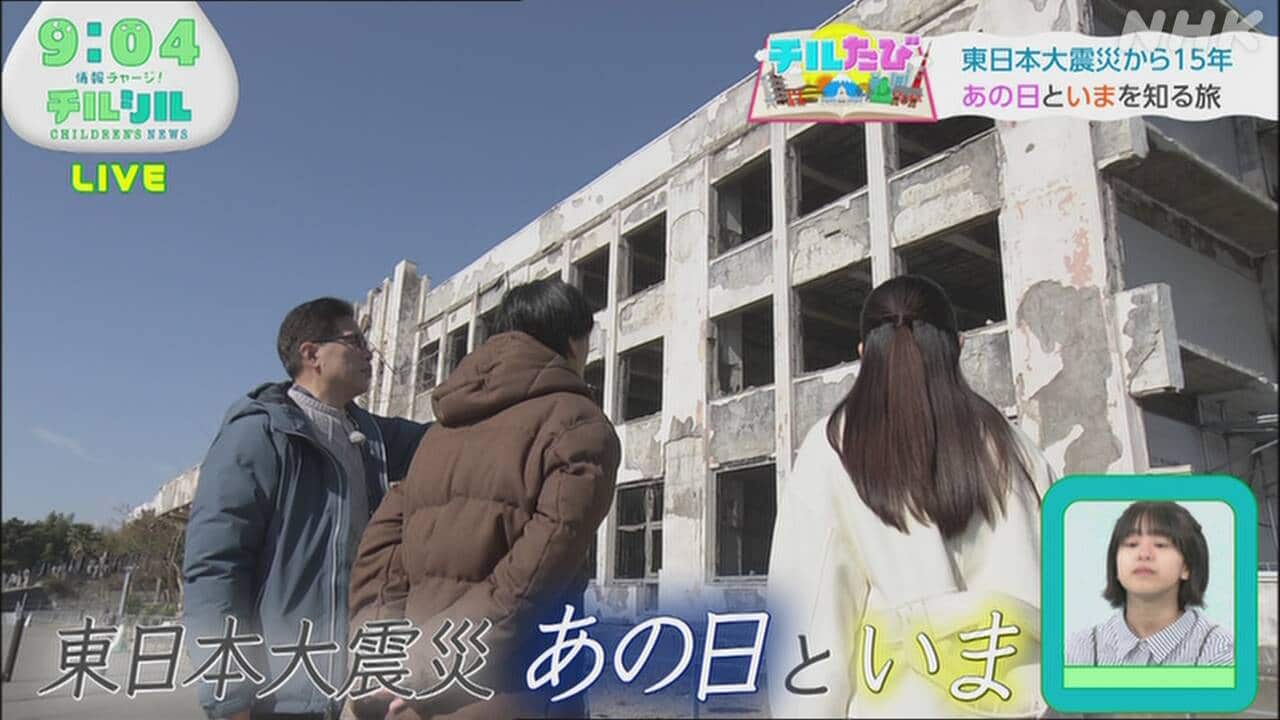
今回、案内したのはNHKの清永(きよなが)解説委員(かいせついいん)です。震災直後から取材に訪れています。
7メートルをこす津波がおし寄(よ)せましたが、学校にいた教職員とこどもたちは避難(ひなん)して無事(ぶじ)でした。
(清永解説委員)「火事による被害です。津波で家とか車がおし流されてくる。その際に、ガスのボンベから火が出る。1階は水に浸(つ)かっているから、その上に流されてくるわけです。それで2階から火災が起きたと考えられます」
市場(いちば)や漁船などがはげしく被害を受けて、一時、魚がとれなくなってしまったんです。
今も漁獲量(ぎょかくりょう)は完全には戻っていませんが、石巻の海の魅力(みりょく)を伝える取り組みが始まっています。
そのひとつが、2013年に生まれた「金華丼(きんかどん)」。地元の魚がたっぷりのっています。
(伏見不二雄さん)「海のめぐみ、これをなんとかね、日本中のみなさんにごちそうしたいと思いますね。こんなめぐまれた土地はないと思うんですよ」
あの日、大川小学校で起きたことを伝え続けている、只野英昭(ただの・ひであき)さんです。
(只野英昭さん)「ここにやっと戻(もど)ってこられたのが震災の3日後。4メートルくらい周辺一帯、全部、土砂で埋(う)もれていたんですね。それが震災後、初めて戻ったときに見た景色でした」
海からおよそ4キロ離(はな)れた、大川小学校。当時、学校は「津波はここまで来ない」と考えていました。
地震直後、校庭に集められたこどもたち。しかし、避難先(ひなんさき)が決まらず、移動を始めたのは、およそ50分後。
(只野英昭さん)「逃(に)げる時間がないので、土石流そのままかぶっちゃった。生き埋めで見つかっているような状態です。息子も最前列にいたようで。目の前に民家がいっぱい建ってるんですよね。あふれてきた津波によって家が壊(こわ)れるときに、土煙(つちけむり)が見えて驚(おどろ)いて。来た道を戻って、35度の急こう配(ばい)になっているが、そこを四つんばいで2メートルぐらい登ったそうなんですね。あふれた津波が、最終的に今度は山をかけ登るので、それで打ち上げられて助かった」
津波が押しよせるまで、学校がどのようなやりとりをしたのか、はっきりわかっていません。
しかし、地域の実態を反映(はんえい)していない防災マニュアルを使っていたことなどが分かっています。
(只野英昭さん)「やっぱり救えた、守ることができた命だった。それを、つらくても、都合が悪くても、伝えていくことが大切。同じ遺族(いぞく)、被災者(ひさいしゃ)になってほしくないという思いから続けています」
(ひなた)「だれかが言ってみんなが動くじゃなくて、1人1人が自分の命のために全力で逃(に)げたりとか、時にはたたかったりとか。いざとなったときに誰も苦しまないように、日々活動するのは大事なんだなって改めて思いました」
只野さんたちは、大川小学校を追悼(ついとう)の場所としてだけではなく、災害に備える心構えを学ぶ場所にしてほしいと話していました。
震災の1か月前に生まれた多恵さんは、当時の災害を伝える「語り部(べ)」を目指しています。
(米沢多恵さん)「父がやっているというのもありますし、津波の怖(こわ)さとか知ってもらうためにも『語り部』をやりたいなと思っています」
海に面した陸前高田市も、死者・行方不明者が1807人と、大きな被害を受けました。(※総務省消防庁 2025年)
日用品を販売するお店を営む祐一さんは、店舗にいるときに津波におそわれ、無我夢中(むがむちゅう)で3階建てのビルの屋上に避難しました。
15メートルの津波がビルを飲み込み、足元まで海水が迫る中、一睡(いっすい)もせず、朝まで耐(た)え抜きました。
このビルで一命をとりとめた経験から「命を守る行動を自分で考えてほしい」と伝え続けています。
多恵さんは幼いころから、3月11日になるたびに、お父さんが生きのびた場所で津波の様子を聞いてきました。
命を守るには、どうしたらよいか。自ら防災の勉強をはじめ、人に伝えていくようになります。
(米沢多恵さん)「父が体験したことって誰(だれ)も体験したことがないようなことなので、(父が)話せない日が来ちゃったら経験が途絶(とだ)えてしまうと思ったので。若い人たちに語り継(つ)いでいくためにも、私が『語り部』をやってみようって思いました」
(米沢多恵さん)「そのときの父の気持ちに感情移入しながら話さないといけないので、ちょっとむずかしいです」
「感情移入するためには、父の気持ちを聞くのが一番だと思っているので。『ここではこんな気持ちだった』とか『焦(あせ)ってた』みたいな気持ちを細かく聞いて、メモして。より感情をこめられるようにしています」
東京電力福島第一原子力発電所では、地震と津波の影響で、原子炉(げんしろ)などが入る建物で相次いで爆発(ばくはつ)が起きました。
健康に影響する放射性物質(ほうしゃせいぶっしつ)が大量に放出され、福島県内の12市町村に住む人たちが国の指示で避難。多いときは16万人をこえる人が避難をすることになったのです。
(清永解説委員)「3号機の爆発がとても大規模(だいきぼ)で、爆発したって聞いたときにニュースセンターの中、みんな、ものすごく青ざめたことを覚えています」
2万人をこえる住民全員が避難をした、浪江町(なみえまち)の展示がおこなわれています。
(横山和佳奈さん)「こちら、震災当時、私が着ていたジャージなんです。小学校6年生のころに着てました」
浪江町では今もなお、8割(わり)の地域で立ち入りが制限されていて、放射線物質を取りのぞく作業が続けられています。
(あいれ)「自分のふるさとが今もこんな感じ、こういう状況なのは、どう思うんですか?」
(横山和佳奈さん)「やっぱり悲しいっていう気持ちと、どこか実感がないみたいな気持ちもあったりとかして。今まで普通にすごせていた地域が、3月12日を境に急に『入っちゃだめ』って言われて、それが15年間続いている状態なので。もちろん『何で?』っていうふうにシンプルに思います」
ふるさとから車でおよそ1時間20分。二本松(にほんまつ)市に避難をしているご夫婦に会いに行きました。
浪江町から避難してきた、食堂の店主の芹川輝男(せりかわ・てるお)さんです。2011年7月に、食堂をオープンしました。
原発事故の直後、同居していた娘夫婦や孫は県外に避難することになり、はなればなれになりました。
(芹川輝男さん)「あの別れがさ、悲しくて悲しくて涙がとまんなかったですよ。あのちっちゃいこどもたちが知らないところに行って、このズーズー弁でしゃべれば『田舎者(いなかもの)』とかって言われるのがまちがいない。『どんな境遇(きょうぐう)にあっても、がんばれば何とかなるよ』っていうところを自分は見せたかった」
孫にがんばっている姿を見せたい。避難してまもなく、奥さんと一緒にお店を開くことにしました。
(客)「来ると、浪江の人に会えるんだよね。友達とか知人に。結構、ほっとしたんです。」
(芹川輝男さん)「最初は思ったんですよ。最初は戻る気でいたんですけど、3年、4年、5年、6年となるともう、こっちのお客さんも。復興(ふっこう)住宅があって、浪江の人たちとかいっぱいいるので。ここをやめて、浪江で営業するような気分ではなかったのね」
奥さんの体調不良もあり、3月末で店を閉め、二本松市でくらしていくことを決めました。
(芹川輝男さん)「おかげさまで、二本松の人たちに助けられた。こうして拾ってもらって15年、ここで商売させてもらったので。もう浪江で(なみえ焼そばを出す)店も何軒(なんけん)かできた。自分はつなぎ役としてパイプ役は終わったかなと。バトンタッチできる」
(妻・春子さん)「いままでね、病院にも行かないでお店優先(ゆうせん)だったので。これを機会にゆっくりしないといけないなと思って」
芹川さんと妻の春子さんは「自分たちがなくなったら、墓のある浪江に帰る」と話していました。
ここで行われているのが、“ぶっつけ本番”の「抜(ぬ)き打ち避難訓練(ひなんくんれん)」です。
こどもたちには事前に知らせず、授業中や、あえて先生がいない掃除(そうじ)や給食の時間にも行われるそうです。
(清永解説委員)石巻市の大川小学校の被害については裁判(さいばん)になり、司法の判断としては「学校側は安全を確保する義務(ぎむ)がある」という内容でした。つまり、学校はこどもたちの命を守る責任がありますよ、ということです。
やはり、まずは自分で考えて行動するということが大事ですし、そのためにはふだんから「どんな備えが必要か」家族ともよく話をしておいてください。
NHK for Scool 学校向けのさまざまなサービスを展開!動画や教材・資料など多数
アニメ 科学×冒険(ぼうけん)サバイバル! 仲間とともに“勇気”と“科学”でピンチに立ち向かう!
「学校かニュースで聞いたことあるような、ないような」「ネットでしか見ないし、自分でも経験(けいけん)したことないから、本当かなって」
震災を経験していない10代のひなたと、当時は小学生だった岡田結実(おかだ・ゆい)さん。
まず訪れたのは、震災で最も多くの人が犠牲(ぎせい)になった、宮城県石巻(いしのまき)市。
地震(じしん)直後、巨大な津波(つなみ)が海と川から押しよせ、3970人がなくなったり、行方不明になったりしています。(※総務省消防庁 2025年)
(ひなた)「津波がどう来たのか全然想像できない。きれいだなと最初見たときは思っていたけど、過去にはそんなことがあったのかって。不思議な感覚です」
今回、案内したのはNHKの清永(きよなが)解説委員(かいせついいん)です。震災直後から取材に訪れています。
7メートルをこす津波がおし寄(よ)せましたが、学校にいた教職員とこどもたちは避難(ひなん)して無事(ぶじ)でした。
(清永解説委員)「火事による被害です。津波で家とか車がおし流されてくる。その際に、ガスのボンベから火が出る。1階は水に浸(つ)かっているから、その上に流されてくるわけです。それで2階から火災が起きたと考えられます」
市場(いちば)や漁船などがはげしく被害を受けて、一時、魚がとれなくなってしまったんです。
今も漁獲量(ぎょかくりょう)は完全には戻っていませんが、石巻の海の魅力(みりょく)を伝える取り組みが始まっています。
そのひとつが、2013年に生まれた「金華丼(きんかどん)」。地元の魚がたっぷりのっています。
(伏見不二雄さん)「海のめぐみ、これをなんとかね、日本中のみなさんにごちそうしたいと思いますね。こんなめぐまれた土地はないと思うんですよ」
あの日、大川小学校で起きたことを伝え続けている、只野英昭(ただの・ひであき)さんです。
(只野英昭さん)「ここにやっと戻(もど)ってこられたのが震災の3日後。4メートルくらい周辺一帯、全部、土砂で埋(う)もれていたんですね。それが震災後、初めて戻ったときに見た景色でした」
海からおよそ4キロ離(はな)れた、大川小学校。当時、学校は「津波はここまで来ない」と考えていました。
地震直後、校庭に集められたこどもたち。しかし、避難先(ひなんさき)が決まらず、移動を始めたのは、およそ50分後。
(只野英昭さん)「逃(に)げる時間がないので、土石流そのままかぶっちゃった。生き埋めで見つかっているような状態です。息子も最前列にいたようで。目の前に民家がいっぱい建ってるんですよね。あふれてきた津波によって家が壊(こわ)れるときに、土煙(つちけむり)が見えて驚(おどろ)いて。来た道を戻って、35度の急こう配(ばい)になっているが、そこを四つんばいで2メートルぐらい登ったそうなんですね。あふれた津波が、最終的に今度は山をかけ登るので、それで打ち上げられて助かった」
津波が押しよせるまで、学校がどのようなやりとりをしたのか、はっきりわかっていません。
しかし、地域の実態を反映(はんえい)していない防災マニュアルを使っていたことなどが分かっています。
(只野英昭さん)「やっぱり救えた、守ることができた命だった。それを、つらくても、都合が悪くても、伝えていくことが大切。同じ遺族(いぞく)、被災者(ひさいしゃ)になってほしくないという思いから続けています」
(ひなた)「だれかが言ってみんなが動くじゃなくて、1人1人が自分の命のために全力で逃(に)げたりとか、時にはたたかったりとか。いざとなったときに誰も苦しまないように、日々活動するのは大事なんだなって改めて思いました」
只野さんたちは、大川小学校を追悼(ついとう)の場所としてだけではなく、災害に備える心構えを学ぶ場所にしてほしいと話していました。
震災の1か月前に生まれた多恵さんは、当時の災害を伝える「語り部(べ)」を目指しています。
(米沢多恵さん)「父がやっているというのもありますし、津波の怖(こわ)さとか知ってもらうためにも『語り部』をやりたいなと思っています」
海に面した陸前高田市も、死者・行方不明者が1807人と、大きな被害を受けました。(※総務省消防庁 2025年)
日用品を販売するお店を営む祐一さんは、店舗にいるときに津波におそわれ、無我夢中(むがむちゅう)で3階建てのビルの屋上に避難しました。
15メートルの津波がビルを飲み込み、足元まで海水が迫る中、一睡(いっすい)もせず、朝まで耐(た)え抜きました。
このビルで一命をとりとめた経験から「命を守る行動を自分で考えてほしい」と伝え続けています。
多恵さんは幼いころから、3月11日になるたびに、お父さんが生きのびた場所で津波の様子を聞いてきました。
命を守るには、どうしたらよいか。自ら防災の勉強をはじめ、人に伝えていくようになります。
(米沢多恵さん)「父が体験したことって誰(だれ)も体験したことがないようなことなので、(父が)話せない日が来ちゃったら経験が途絶(とだ)えてしまうと思ったので。若い人たちに語り継(つ)いでいくためにも、私が『語り部』をやってみようって思いました」
(米沢多恵さん)「そのときの父の気持ちに感情移入しながら話さないといけないので、ちょっとむずかしいです」
「感情移入するためには、父の気持ちを聞くのが一番だと思っているので。『ここではこんな気持ちだった』とか『焦(あせ)ってた』みたいな気持ちを細かく聞いて、メモして。より感情をこめられるようにしています」
東京電力福島第一原子力発電所では、地震と津波の影響で、原子炉(げんしろ)などが入る建物で相次いで爆発(ばくはつ)が起きました。
健康に影響する放射性物質(ほうしゃせいぶっしつ)が大量に放出され、福島県内の12市町村に住む人たちが国の指示で避難。多いときは16万人をこえる人が避難をすることになったのです。
(清永解説委員)「3号機の爆発がとても大規模(だいきぼ)で、爆発したって聞いたときにニュースセンターの中、みんな、ものすごく青ざめたことを覚えています」
2万人をこえる住民全員が避難をした、浪江町(なみえまち)の展示がおこなわれています。
(横山和佳奈さん)「こちら、震災当時、私が着ていたジャージなんです。小学校6年生のころに着てました」
浪江町では今もなお、8割(わり)の地域で立ち入りが制限されていて、放射線物質を取りのぞく作業が続けられています。
(あいれ)「自分のふるさとが今もこんな感じ、こういう状況なのは、どう思うんですか?」
(横山和佳奈さん)「やっぱり悲しいっていう気持ちと、どこか実感がないみたいな気持ちもあったりとかして。今まで普通にすごせていた地域が、3月12日を境に急に『入っちゃだめ』って言われて、それが15年間続いている状態なので。もちろん『何で?』っていうふうにシンプルに思います」
ふるさとから車でおよそ1時間20分。二本松(にほんまつ)市に避難をしているご夫婦に会いに行きました。
浪江町から避難してきた、食堂の店主の芹川輝男(せりかわ・てるお)さんです。2011年7月に、食堂をオープンしました。
原発事故の直後、同居していた娘夫婦や孫は県外に避難することになり、はなればなれになりました。
(芹川輝男さん)「あの別れがさ、悲しくて悲しくて涙がとまんなかったですよ。あのちっちゃいこどもたちが知らないところに行って、このズーズー弁でしゃべれば『田舎者(いなかもの)』とかって言われるのがまちがいない。『どんな境遇(きょうぐう)にあっても、がんばれば何とかなるよ』っていうところを自分は見せたかった」
孫にがんばっている姿を見せたい。避難してまもなく、奥さんと一緒にお店を開くことにしました。
(客)「来ると、浪江の人に会えるんだよね。友達とか知人に。結構、ほっとしたんです。」
(芹川輝男さん)「最初は思ったんですよ。最初は戻る気でいたんですけど、3年、4年、5年、6年となるともう、こっちのお客さんも。復興(ふっこう)住宅があって、浪江の人たちとかいっぱいいるので。ここをやめて、浪江で営業するような気分ではなかったのね」
奥さんの体調不良もあり、3月末で店を閉め、二本松市でくらしていくことを決めました。
(芹川輝男さん)「おかげさまで、二本松の人たちに助けられた。こうして拾ってもらって15年、ここで商売させてもらったので。もう浪江で(なみえ焼そばを出す)店も何軒(なんけん)かできた。自分はつなぎ役としてパイプ役は終わったかなと。バトンタッチできる」
(妻・春子さん)「いままでね、病院にも行かないでお店優先(ゆうせん)だったので。これを機会にゆっくりしないといけないなと思って」
芹川さんと妻の春子さんは「自分たちがなくなったら、墓のある浪江に帰る」と話していました。
ここで行われているのが、“ぶっつけ本番”の「抜(ぬ)き打ち避難訓練(ひなんくんれん)」です。
こどもたちには事前に知らせず、授業中や、あえて先生がいない掃除(そうじ)や給食の時間にも行われるそうです。
(清永解説委員)石巻市の大川小学校の被害については裁判(さいばん)になり、司法の判断としては「学校側は安全を確保する義務(ぎむ)がある」という内容でした。つまり、学校はこどもたちの命を守る責任がありますよ、ということです。
やはり、まずは自分で考えて行動するということが大事ですし、そのためにはふだんから「どんな備えが必要か」家族ともよく話をしておいてください。
NHK for Scool 学校向けのさまざまなサービスを展開!動画や教材・資料など多数
アニメ 科学×冒険(ぼうけん)サバイバル! 仲間とともに“勇気”と“科学”でピンチに立ち向かう!
Vocabulary
General
Proper noun
JLPT N2
JLPT N1
| # | 言葉 | 意味 |
|---|---|---|
| 12 | 津波 | つなみ (津波) : tsunami; tidal wave |
| 11 | って | って : 1. you said; he said; she said; they said 2. if ... then |
| 8 | 避難 | ひなん (避難) : taking refuge; finding shelter; evacuation; escape; seeking safe haven |
| 6 | 震災 | しんさい (震災) : 1. earthquake disaster 2. Great Kanto Earthquake (1923) |
| 5 | 只野 | しの (只野) : Shino (surname) |
| 5 | 命 | いのち (命) : 1. life; life force 2. lifetime; lifespan |
| 5 | 多恵 | かずえ (多恵) : Kazue (fem) |
| 5 | 芹川 | かりかわ (芹川) : Karikawa (surname) |
| 5 | 浪江 | なにえ (浪江) : Nanie (surname) |
| 4 | 起きる | おきる (起きる) : 1. to get up; to rise; to blaze up (fire) 2. to wake up; to be awake; to stay awake |
| 4 | 聞く | きく (聞く) : 1. to hear 2. to listen (e.g. to music) |
| 4 | 当時 | とうじ (当時) : at that time; in those days |
| 4 | 直後 | ちょくご (直後) : immediately following |
| 4 | 清永 | きよなが (清永) : Kiyonaga (place; surname) |
| 4 | 解説 | かいせつ (解説) : explanation; commentary; exposition; elucidation |
| 4 | 委員 | いいん (委員) : committee member |
| 4 | 被害 | ひがい (被害) : (suffering) damage; injury; harm |
| 4 | 考える | かんがえる (考える) : 1. to think (about, of); to think over; to ponder; to contemplate; to reflect (on); to meditate (on) 2. to consider; to bear in mind; to allow for; to take into consideration |
| 4 | 戻る | もどる (戻る) : 1. to turn back (e.g. half-way) 2. to return; to go back |
| 4 | 大川 | おおかわ (大川) : big river |
| 4 | 伝える | つたえる (伝える) : to convey; to report; to transmit; to communicate; to tell; to impart; to propagate; to teach; to bequeath |
| 4 | 英昭 | あきてる (英昭) : Akiteru (unclass) |
| 4 | 守る | まもる (守る) : 1. to protect; to guard; to defend 2. to keep (i.e. a promise); to abide (by the rules); to observe; to obey; to follow |
| 4 | 輝男 | てるお (輝男) : Teruo (given) |
| 3 | 生まれる | うまれる (生まれる) : to be born |
| 3 | ひなた | ひなた (日向) : sunny place; in the sun |
| 3 | 地域 | ちいき (地域) : area; region |
| 3 | 米沢 | こめさわ (米沢) : Komesawa (surname) |
| 3 | 知る | しる (知る) : 1. to be aware of; to know; to be conscious of; to cognize; to cognise 2. to notice; to feel |
| 3 | お店 | おたな (お店) : 1. merchant's home (esp. used by apprentices, etc.) 2. (your) rental home |
| 3 | 浪江町 | なみえまち (浪江町) : Namiemachi (place) |
| 2 | 訪れる | おとずれる (訪れる) : 1. to visit; to call on 2. to arrive (season, time, situation, etc.); to come; to appear |
| 2 | 石巻 | いしのまき (石巻) : Ishinomaki (place) |
| 2 | 押しよせる | おしよせる (押し寄せる) : to advance on; to close in; to march on; to descend on (the enemy); to move towards; to surge forward (crowd, wave of nostalgia, wave, etc.); to rush for (the door); to inundate; to overwhelm; to push aside |
| 2 | なくなる | なくなる (亡くなる) : to die |
| 2 | 行方不明 | ゆくえふめい (行方不明) : missing (of a person); lost; unaccounted for; whereabouts unknown |
| 2 | ひなん | ひなん (非難) : criticism; blame; censure; attack; reproach |
| 2 | 逃げる | にげる (逃げる) : to escape; to run away |
| 2 | 状態 | じょうたい (状態) : state; condition; situation; appearance; circumstances |
| 2 | あふれる | あふれる (溢れる) : to overflow; to brim over; to flood |
| 2 | 防災 | ぼうさい (防災) : disaster preparedness; prevention of damage resulting from a natural disaster; protection against disaster |
| 2 | 災害 | さいがい (災害) : calamity; disaster; misfortune |
| 2 | 語り部 | かたりべ (語り部) : 1. (professional) storyteller 2. hereditary role of narrator in early imperial court |
| 2 | 行動 | こうどう (行動) : action; conduct; behaviour; behavior; mobilization; mobilisation |
| 2 | 体験 | たいけん (体験) : (practical) experience; personal experience; hands-on experience; first-hand experience |
| 2 | 感情移入 | かんじょういにゅう (感情移入) : empathy |
| 2 | みたい | みたい : -like; sort of; similar to; resembling |
| 2 | 影響 | えいきょう (影響) : 1. influence; effect 2. to influence; to affect; to have an influence on; to impact; to have an effect on |
| 2 | こえる | こえる (肥える) : 1. to grow fat; to gain weight; to put on weight 2. to grow fertile |
| 2 | 爆発 | ばくはつ (爆発) : 1. explosion; detonation; eruption 2. eruption (of discontent, etc.); outburst; outpouring |
| 2 | なみえ | なみえ : Namie (fem) |
| 2 | 横山 | かつとし (横山) : Katsutoshi (surname) |
| 2 | 和佳奈 | わかな (和佳奈) : Wakana (fem) |
| 2 | ふるさと | ふるさと (故郷) : 1. home town; birthplace; native place; one's old home 2. ruins; historic remains |
| 2 | 二本松 | にほんまつ (二本松) : Nihonmatsu (place; surname) |
| 2 | 夫婦 | ふうふ (夫婦) : 1. married couple; husband and wife; man and wife 2. his and hers; pair of objects, one larger (for man), one smaller (for woman) |
| 2 | 孫 | まご (孫) : grandchild |
| 2 | がんばる | がんばる (頑張る) : 1. to persevere; to persist; to keep at it; to hang on; to hold out; to do one's best 2. to insist that; to stick to (one's opinion) |
| 2 | 春子 | ちゅんず (春子) : Chunzu (unclass) |
| 1 | 東日本大震災 | ひがしにほんだいしんさい (東日本大震災) : Great East Japan earthquake (March 11, 2011); Tōhoku earthquake; Tohoku earthquake; Sendai earthquake |
| 1 | しんさい | しんさい (震災) : 1. earthquake disaster 2. Great Kanto Earthquake (1923) |
| 1 | 数 | しばしば (屡々) : often; again and again; frequently; repeatedly |
| 1 | 総務省 | そうむしょう (総務省) : Ministry of Internal Affairs and Communications |
| 1 | 統計局 | とうけいきょく (統計局) : Toukeikyoku (place) |
| 1 | 推計 | すいけい (推計) : estimate; estimation |
| 1 | 現在 | げんざい (現在) : now; current; present; present time; as of |
| 1 | 本当 | ほんとう (本当) : 1. truth; reality; actuality; fact 2. proper; right; correct; official |
| 1 | 小学生 | しょうがくせい (小学生) : elementary school student; primary school student; grade school student |
| 1 | 岡田 | おかた (岡田) : Okata (place; surname) |
| 1 | 結実 | けつじつ (結実) : 1. fruition; fructification; bearing fruit 2. bearing fruit (of efforts, plans, etc.); coming to fruition; yielding success; paying off; realization; realisation; fruit (e.g. of hard work); result |
| 1 | おか | りく (陸) : land; shore |
| 1 | ゆい | ゆい : Yui (fem) |
| 1 | 最も | もっとも (最も) : most; extremely |
| 1 | 宮城県 | みやぎけん (宮城県) : Miyagi prefecture (Tōhoku area) |
| 1 | いしの | いしの (意紫乃) : Ishino (fem) |
| 1 | まき | まき (巻) : 1. roll (e.g. of cloth) 2. winding (e.g. watch) |
| 1 | 巨大 | きょだい (巨大) : huge; gigantic; enormous |
| 1 | 全然 | ぜんぜん (全然) : 1. (not) at all; (not) in the slightest 2. wholly; entirely; completely; totally |
| 1 | 想像 | そうぞう (想像) : imagination; guess |
| 1 | 過去 | かこ (過去) : 1. the past; bygone days 2. one's past (that one would prefer remained secret) |
| 1 | 不思議 | ふしぎ (不思議) : 1. wonderful; marvelous; strange; incredible; amazing; curious; miraculous; mysterious 2. strangely enough; oddly enough; for some reason; curiously |
| 1 | 感覚 | かんかく (感覚) : sense; sensation; feeling; intuition |
| 1 | せつ | せつ (切) : 1. eager; earnest; ardent; kind; keen; acute 2. OFF (on switch) |
| 1 | 取材 | しゅざい (取材) : 1. news coverage; collecting data (e.g. for an article); covering (something for media) 2. interview |
| 1 | こす | こす (越す) : 1. to cross over (e.g. mountain); to go across 2. to get over (e.g. hardship) |
| 1 | 教職員 | きょうしょくいん (教職員) : teaching staff; faculty |
| 1 | 際 | きわ (際) : 1. edge; brink; verge; side 2. time; moment of |
| 1 | 浸かる | つかる (浸かる) : 1. to be submerged; to be soaked 2. to be pickled; to be well seasoned |
| 1 | 流す | ながす (流す) : 1. to drain; to pour; to spill; to shed (blood, tears) 2. to wash away |
| 1 | 火災 | かさい (火災) : conflagration; fire |
| 1 | 漁船 | ぎょせん (漁船) : fishing boat |
| 1 | 一時 | ひととき (ひと時) : 1. a (short) time; a while; moment 2. one time (in the past); a period; former times |
| 1 | とれる | とれる (取れる) : 1. to come off; to be removed 2. to disappear (of pain, a fever, etc.) |
| 1 | 漁獲量 | ぎょかくりょう (漁獲量) : haul (catch) (of fish) |
| 1 | ぎ | ぎ (儀) : 1. ceremony 2. matter; affair |
| 1 | りょう | りょう (了) : finish; completion; the end |
| 1 | 完全 | かんぜん (完全) : perfect; complete |
| 1 | 取り組み | とりくみ (取り組み) : 1. bout (in sports, etc.); match 2. effort; initiative; dealing with; grappling with; wrestling with |
| 1 | 始まる | はじまる (始まる) : 1. to begin; to start; to commence 2. to happen (again); to begin (anew) |
| 1 | 金華 | かねはな (金華) : Kanehana (place) |
| 1 | 丼 | どんぶり (丼) : 1. porcelain bowl 2. donburi; bowl of meat, fish, etc. served over rice |
| 1 | きん | きん (斤) : 1. kin; catty; traditional unit of weight, 600g 2. pound (unit of weight) |
| 1 | どん | どんぶり (丼) : 1. porcelain bowl 2. donburi; bowl of meat, fish, etc. served over rice |
| 1 | 地元 | じもと (地元) : 1. home area; home town 2. local |
| 1 | たっぷり | たっぷり : full; in plenty; ample |
| 1 | のる | のる (乗る) : 1. to get on (train, plane, bus, ship, etc.); to get in; to board; to take; to embark 2. to get on (e.g. a footstool); to step on; to jump on; to sit on; to mount |
| 1 | 伏見 | ふしみ (伏見) : Fushimi (place; surname; fem) |
| 1 | 不二雄 | ふじお (不二雄) : Fujio (given) |
| 1 | めぐみ | めぐみ (恵み) : blessing; grace |
| 1 | めぐまれる | めぐまれる (恵まれる) : to be blessed with; to be rich in; to abound in |
| 1 | 土地 | とち (土地) : 1. plot of land; lot; soil 2. locality; region; place |
| 1 | ただ | ただ (只) : 1. ordinary; common; usual 2. free of charge |
| 1 | ひであき | ひであき (栄旭) : Hideaki (unclass) |
| 1 | 周辺 | しゅうへん (周辺) : 1. circumference; outskirts; environs; around; in the area of; in the vicinity of 2. (computer) peripheral |
| 1 | 一帯 | いったい (一帯) : 1. whole area; whole region 2. stretch (of land); tract; belt; zone |
| 1 | 土砂 | どしゃ (土砂) : sediment; earth and sand |
| 1 | 埋もれる | うもれる (埋もれる) : to be buried; to be covered; to be hidden |
| 1 | 離れる | はなれる (離れる) : 1. to be separated; to be apart; to be distant 2. to leave; to go away |
| 1 | 校庭 | こうてい (校庭) : schoolyard; playground; school grounds; campus |
| 1 | 集める | あつめる (集める) : to collect; to assemble; to gather |
| 1 | 避難先 | ひなんさき (避難先) : place of refuge; refugee destination |
| 1 | 決まる | きまる (決まる) : 1. to be decided; to be settled; to be fixed; to be arranged 2. to be unchanging; to be the same (as always); to be fixed; to be set |
| 1 | 移動 | いどう (移動) : 1. movement; transfer; migration; removal; travel 2. mobile; moving; traveling; travelling; roving |
| 1 | 土石流 | どせきりゅう (土石流) : avalanche of earth and rocks |
| 1 | そのまま | そのまま (其のまま) : 1. without change; as is 2. just like; extremely similar |
| 1 | かぶる | かぶる (被る) : 1. to put on (one's head); to wear; to have on; to pull over (one's head); to crown (oneself) 2. to be covered with (dust, snow, etc.); to pour (water, etc.) on oneself; to dash on oneself; to ship water |
| 1 | 生き埋め | いきうめ (生き埋め) : burying alive |
| 1 | 見つかる | みつかる (見つかる) : to be found; to be discovered |
| 1 | 最前列 | さいぜんれつ (最前列) : front row |
| 1 | 民家 | みんか (民家) : private house |
| 1 | 建つ | たつ (建つ) : to be erected; to be built |
| 1 | 壊れる | こわれる (壊れる) : 1. to be broken; to break 2. to fall through; to come to nothing |
| 1 | 土煙 | つちけむり (土煙) : cloud of dust |
| 1 | つち | つち (土) : 1. earth; soil; dirt; clay; mud 2. the earth (historically, esp. as opposed to the heavens); the ground; the land |
| 1 | けむり | けむり (煙) : smoke; fumes |
| 1 | 見える | みえる (見える) : 1. to be seen; to be in sight 2. to look; to seem; to appear |
| 1 | 驚く | おどろく (驚く) : to be surprised; to be astonished |
| 1 | 四つんばい | よつんばい (四つん這い) : crawling on all fours; getting on one's hands and knees; falling flat |
| 1 | 登る | のぼる (上る) : 1. to ascend; to go up; to climb 2. to ascend (as a natural process, e.g. the Sun); to rise |
| 1 | 最終的 | さいしゅうてき (最終的) : final; eventual; ultimate |
| 1 | 打ち上げる | うちあげる (打ち上げる) : 1. to launch; to shoot up 2. (of waves) to dash; to wash up (ashore) |
| 1 | 助かる | たすかる (助かる) : 1. to be saved; to be rescued; to survive 2. to escape harm; to be spared damage |
| 1 | やりとり | やりとり (やり取り) : giving and taking; exchange (of letters); arguing back and forth; (conversational) exchange |
| 1 | わかる | わかる (分かる) : 1. to understand; to comprehend; to grasp; to see; to get; to follow 2. to become clear; to be known; to be discovered; to be realized; to be realised; to be found out |
| 1 | 実態 | じったい (実態) : true state; actual condition; reality |
| 1 | 分かる | わかる (分かる) : 1. to understand; to comprehend; to grasp; to see; to get; to follow 2. to become clear; to be known; to be discovered; to be realized; to be realised; to be found out |
| 1 | つらく | つらく (辛く) : harshly; bitterly; cruelly; badly |
| 1 | 被災者 | ひさいしゃ (被災者) : victim of (a disaster) |
| 1 | ひさ | ひさご (瓠) : 1. gourd; calabash; bottle gourd 2. dried gourd, used as flask |
| 1 | 思い | おもい (思い) : 1. thought 2. imagination; mind; heart |
| 1 | 1人1人 | ひとりひとり (一人一人) : each (person); individually; one by one; one at a time; in turn |
| 1 | 全力 | ぜんりょく (全力) : all one's power (strength, energy, efforts); one's utmost |
| 1 | たたかう | たたかう (戦う) : 1. to make war (on); to wage war (against); to go to war (with); to fight (with); to do battle (against) 2. to compete (against) |
| 1 | いざ | いざ : now; come (now); well |
| 1 | 苦しむ | くるしむ (苦しむ) : to suffer; to groan; to be worried |
| 1 | 日々 | ひび (日々) : every day; daily; day after day; days (e.g. good old days) |
| 1 | 活動 | かつどう (活動) : 1. activity (of a person, organization, animal, volcano, etc.); action 2. movie (esp. during the silent movie period) |
| 1 | 改めて | あらためて (改めて) : 1. another time; again; over again; once again; anew 2. formally; especially; intentionally; deliberately |
| 1 | 備える | そなえる (備える) : 1. to furnish with; to equip with; to provide; to install 2. to prepare for; to make preparations for; to make provision for |
| 1 | 心構え | こころがまえ (心構え) : preparedness; readiness; mental attitude; frame of mind |
| 1 | 学ぶ | まなぶ (学ぶ) : to study (in depth); to learn; to take lessons in |
| 1 | 目指す | めざす (目指す) : 1. to aim at (for, to do, to become); to try for; to have an eye on 2. to go toward; to head for |
| 1 | 面する | めんする (面する) : to face on; to look out on to |
| 1 | 陸前高田市 | りくぜんたかたし (陸前高田市) : Rikuzentakata (city) (place) |
| 1 | 死者 | ししゃ (死者) : dead person; (the) deceased; (the) dead; casualties |
| 1 | 用品 | ようひん (用品) : articles; supplies; parts |
| 1 | 販売 | はんばい (販売) : sales; selling; marketing |
| 1 | 営む | いとなむ (営む) : 1. to run (a business); to operate; to conduct; to practice (law, medicine, etc.) 2. to carry out; to perform; to lead (a life) |
| 1 | 祐一 | こういち (祐一) : Kouichi (masc) |
| 1 | 店舗 | てんぽ (店舗) : shop; store |
| 1 | おそう | おそう (襲う) : 1. to attack; to assail; to make an assault; to strike; to hunt down 2. to succeed (someone in a post, role, etc.) |
| 1 | 無我夢中 | むがむちゅう (無我夢中) : being absorbed in; losing oneself in; losing control of oneself |
| 1 | む | ろく (六) : six |
| 1 | むちゅう | むちゅう (夢中) : 1. absorbed in; immersed in; crazy about; obsessed with; devoted to 2. forgetting oneself; daze; trance; ecstasy; delirium |
| 1 | 建て | だて (建て) : 1. indicates storeys, structures, or materials used in a building 2. indicates denomination |
| 1 | 飲み込む | のみこむ (飲み込む) : 1. to gulp down; to swallow deeply 2. to understand; to take in; to catch on to; to learn; to digest |
| 1 | 足元 | あしもと (足元) : 1. at one's feet; underfoot; one's step (as in "watch your step") 2. gait; pace; step |
| 1 | 海水 | かいすい (海水) : seawater; saltwater |
| 1 | 迫る | せまる (迫る) : 1. to approach; to draw near; to be imminent 2. to press (someone for something); to urge; to compel |
| 1 | 耐える | たえる (耐える) : 1. to bear; to stand; to endure; to put up with 2. to support; to withstand; to resist; to brave |
| 1 | 一命 | いちめい (一命) : (a) life; (a) command |
| 1 | とりとめる | とりとめる (取り留める) : 1. to narrowly escape (e.g. death); to hang onto (life) 2. to ascertain; to make definite |
| 1 | 幼い | おさない (幼い) : 1. very young; little 2. childish; immature |
| 1 | たび | たび (足袋) : tabi; Japanese socks (with split toe) |
| 1 | 生きのびる | いきのびる (生き延びる) : to survive; to live long |
| 1 | 様子 | ようす (様子) : 1. state; state of affairs; situation; circumstances 2. appearance; look; aspect |
| 1 | 自ら | おのずから (自ずから) : naturally; in due course; by itself; of its own accord |
| 1 | 話せる | はなせる (話せる) : 1. to be able to speak; to be able to talk 2. to be understanding; to be sensible |
| 1 | 途絶える | とだえる (途絶える) : to stop; to cease; to come to an end; to cut off |
| 1 | 語り継ぐ | かたりつぐ (語り継ぐ) : to transmit; to hand down |
| 1 | 一番 | いちばん (一番) : 1. number one; first; first place 2. best; most |
| 1 | 焦る | あせる (焦る) : 1. to be in a hurry; to be impatient; to be anxious (to do); to fret 2. to get a fright; to panic; to get flustered; to be startled |
| 1 | 細かく | こまかく (細かく) : minutely; finely |
| 1 | 感情 | かんじょう (感情) : emotion; feeling; feelings; sentiment |
| 1 | 東京電力 | とうきょうでんりょく (東京電力) : Tokyo Electric Power (company) |
| 1 | 福島第一原子力発電所 | ふくしまだいいちげんしりょくはつでんしょ (福島第一原子力発電所) : Fukushima I Nuclear Power Plant (place) |
| 1 | 相 | さが (性) : 1. one's nature; one's destiny 2. custom; tradition; habit; convention |
| 1 | 次ぐ | つぐ (次ぐ) : to rank next to; to come after |
| 1 | 健康 | けんこう (健康) : 1. health 2. healthy; sound; fit; wholesome |
| 1 | 放射性物質 | ほうしゃせいぶっしつ (放射性物質) : radioactive material |
| 1 | しゃ | しゃ (舎) : 1. hut; house 2. boarding house; school dormitory |
| 1 | ぶっ | ぶっ (打っ) : strongly; violently; quickly; suddenly |
| 1 | しつ | しつ (室) : 1. room 2. wife (of someone of high rank) |
| 1 | 大量 | たいりょう (大量) : large quantity; massive (quantity); mass (e.g. mass production, mass transit, mass destruction) |
| 1 | 放出 | ほうしゅつ (放出) : release; emission; ejection |
| 1 | 福島県 | ふくしまけん (福島県) : Fukushima prefecture (Tōhoku area) |
| 1 | 市町村 | しちょうそん (市町村) : cities, towns and villages; municipalities |
| 1 | 指示 | しじ (指示) : 1. indication; denotation; designation 2. instructions; directions |
| 1 | 青ざめる | あおざめる (青ざめる) : to become pale; to turn pale |
| 1 | 覚える | おぼえる (覚える) : 1. to memorize; to memorise; to commit to memory; to learn by heart; to bear in mind; to remember 2. to learn; to pick up; to acquire |
| 1 | 住民 | じゅうみん (住民) : inhabitant; resident; citizen; population |
| 1 | 全員 | ぜんいん (全員) : all members; all hands; everyone; everybody; whole crew |
| 1 | 展示 | てんじ (展示) : exhibition; display |
| 1 | おこなう | おこなう (行う) : to perform; to do; to conduct oneself; to carry out |
| 1 | 年生 | ねんせい (年生) : pupil in ... year; student in ... year |
| 1 | なお | なお (尚) : 1. still; yet 2. more; still more; greater; further |
| 1 | 立ち入り | たちいり (立ち入り) : entering; going into |
| 1 | 制限 | せいげん (制限) : restriction; restraint; limitation; limit |
| 1 | 放射線 | ほうしゃせん (放射線) : radiation |
| 1 | 物質 | ぶっしつ (物質) : 1. material; substance 2. matter |
| 1 | 取りのぞく | とりのぞく (取り除く) : to remove; to deinstall; to take away; to set apart |
| 1 | 作業 | さぎょう (作業) : work; operation; manufacturing; fatigue duty |
| 1 | あう | あう (会う) : 1. to meet; to encounter; to see 2. to have an accident; to have a bad experience |
| 1 | 感じ | かんじ (感じ) : feeling; sense; impression |
| 1 | 状況 | じょうきょう (状況) : state of affairs (around you); situation; circumstances |
| 1 | 実感 | じっかん (実感) : 1. real feeling; actual feeling 2. to actually feel; to have a real feeling (that ...); to experience personally |
| 1 | 今まで | いままで (今まで) : until now; so far; up to the present |
| 1 | 境 | さかい (境) : 1. border; boundary 2. turning point; watershed |
| 1 | 年間 | ねんかん (年間) : 1. (period of) a year 2. during an era |
| 1 | ふう | に (二) : two |
| 1 | にほんまつ | にほんまつ (二本松) : Nihonmatsu (place; surname) |
| 1 | 会う | あう (会う) : 1. to meet; to encounter; to see 2. to have an accident; to have a bad experience |
| 1 | 店主 | てんしゅ (店主) : shopkeeper; storekeeper; proprietor of a shop |
| 1 | せり | せり (芹) : Java water dropwort (Oenanthe javanica); Japanese parsley |
| 1 | わ | われ (我) : 1. I; me 2. oneself |
| 1 | 原発事故 | げんぱつじこ (原発事故) : nuclear power plant accident; nuclear accident |
| 1 | 同居 | どうきょ (同居) : coexistence; living together |
| 1 | 県外 | けんがい (県外) : outside the prefecture |
| 1 | はなればなれ | はなればなれ (離れ離れ) : separate; scattered; apart |
| 1 | 別れ | わかれ (別れ) : parting; separation; farewell |
| 1 | 涙 | なみだ (涙) : 1. tear; tears; lachrymal secretion 2. sympathy |
| 1 | とまる | とまる (止まる) : 1. to stop (moving); to come to a stop 2. to stop (doing, working, being supplied); to come to a halt; to cease; to be stopped; to be suspended |
| 1 | ちっちゃい | ちっちゃい (小っちゃい) : tiny; little; wee |
| 1 | ズーズー弁 | ずうずうべん (ずうずう弁) : thick Tōhoku accent (wherein some "j" sounds become "z" sounds) |
| 1 | しゃべる | しゃべる (喋る) : to talk; to chat; to chatter |
| 1 | 田舎者 | いなかもの (田舎者) : countryman; provincial; person from the country; provincial person; bumpkin; hick; hillbilly |
| 1 | まちがい | まちがい (間違い) : 1. mistake; error; blunder 2. accident; mishap; trouble |
| 1 | 境遇 | きょうぐう (境遇) : one's circumstances; environment; situation (in life) |
| 1 | ぐう | ぐう : 1. rock (in rock-paper-scissors); stone; fist 2. ungh; gulp |
| 1 | 姿 | すがた (姿) : 1. figure; form; shape 2. appearance; dress; guise |
| 1 | ま | まあ : 1. just (e.g. "just wait here"); come now; now, now 2. tolerably; passably; moderately; reasonably; fairly; rather; somewhat |
| 1 | 知人 | ちじん (知人) : friend; acquaintance |
| 1 | ほっと | ほっと : 1. with a feeling of relief; with a sigh of relief 2. deeply (sigh) |
| 1 | お客さん | おきゃくさん (お客さん) : 1. guest; visitor 2. customer; client; shopper; spectator; audience; tourist; sightseer; passenger |
| 1 | 住宅 | じゅうたく (住宅) : residence; housing; residential building |
| 1 | やめる | やめる (止める) : 1. to stop (an activity); to cease; to discontinue; to end; to quit 2. to cancel; to abandon; to give up; to abolish; to abstain; to refrain |
| 1 | 営業 | えいぎょう (営業) : 1. business; trade; operations 2. sales |
| 1 | 体調不良 | たいちょうふりょう (体調不良) : poor physical health; bad shape |
| 1 | 末 | うら (末) : top end; tip |
| 1 | 閉める | しめる (閉める) : to close; to shut |
| 1 | 二本松市 | にほんまつし (二本松市) : Nihonmatsu (city) (place) |
| 1 | くらす | くらす (暮らす) : 1. to live; to get along 2. to spend (time) |
| 1 | 決める | きめる (決める) : 1. to decide; to choose; to determine; to make up one's mind; to resolve; to set one's heart on; to settle; to arrange; to set; to appoint; to fix 2. to clinch (a victory); to decide (the outcome of a match) |
| 1 | おかげさま | おかげさま (お蔭様) : 1. (someone's) assistance; help; aid; kindness; goodwill 2. grace (of God); benevolence (of Buddha); blessing |
| 1 | 助ける | たすける (助ける) : 1. to save; to rescue 2. to help; to assist |
| 1 | 拾う | ひろう (拾う) : to pick up; to find; to gather |
| 1 | 商売 | しょうばい (商売) : trade; business; commerce; transaction; occupation |
| 1 | 焼そば | やきそば (焼きそば) : yakisoba; fried noodles, usu. with vegetables and meat |
| 1 | パイプ役 | パイプやく (パイプ役) : mediator |
| 1 | ゆっくり | ゆっくり : 1. slowly; unhurriedly; without haste; leisurely; at one's leisure 2. easily (e.g. in time); well; sufficiently; amply; with time to spare |
| 1 | 自分 | じぶん (自分) : 1. myself; yourself; oneself; himself; herself 2. I; me |
| 1 | たち | やかた (館) : 1. mansion; palace; manor house; castle 2. nobleman; noblewoman; dignitary |
| 1 | 墓 | はか (墓) : gravesite; tomb |
| 1 | ぶっつけ | ぶっつけ (打っ付け) : 1. without preparation; off the cuff; abrupt; without warning 2. unreserved; without restraint; frank; blunt; direct |
| 1 | 本番 | ほんばん (本番) : 1. performance; take; going before an audience or on-air 2. game; season; crucial moment |
| 1 | 避難訓練 | ひなんくんれん (避難訓練) : disaster drill |
| 1 | くんれん | くんれん (訓練) : training; drill; practice; discipline |
| 1 | 事前 | じぜん (事前) : prior; beforehand; in advance; before the fact; ex ante |
| 1 | あえて | あえて (敢えて) : 1. purposely (of something needless, unexpected or seemingly counterproductive, etc.); daringly (doing something); deliberately; intentionally 2. not necessarily; not particularly; not especially |
| 1 | 給食 | きゅうしょく (給食) : provision of lunch (e.g. at office, school, etc.); providing a meal; lunch service |
| 1 | 石巻市 | いしのまきし (石巻市) : Ishinomaki (city) (place) |
| 1 | 司法 | しほう (司法) : administration of justice |
| 1 | 判断 | はんだん (判断) : 1. judgment; judgement; decision; conclusion; adjudication 2. divination |
| 1 | 確保 | かくほ (確保) : 1. securing; obtaining; ensuring; guarantee; maintaining 2. belay; belaying |
| 1 | 内容 | ないよう (内容) : contents; content; substance; matter; detail; import |
| 1 | つまり | つまり (詰まり) : 1. that is to say; that is; in other words; I mean; that (this, it) means 2. in short; in brief; to sum up; ultimately; in the end; in the long run; when all is said and done; what it all comes down to; when you get right down to it; basically |
| 1 | 責任 | せきにん (責任) : 1. duty; responsibility (incl. supervision of staff) 2. liability; onus |
| 1 | ふだん | ふだん (不断) : 1. constant; persistent; unremitting; ceaseless 2. indecisiveness |
| 1 | 備え | そなえ (備え) : preparation; provision; guarding |
| 1 | 向け | むけ (向け) : intended for ...; oriented towards ...; aimed at ... |
| 1 | 展開 | てんかい (展開) : 1. development; evolution; progression; unfolding; (plot) twist 2. expansion; spreading out; extending; deployment; building up |
| 1 | 動画 | どうが (動画) : 1. video; movie; moving picture 2. animation; animated cartoon |
| 1 | 教材 | きょうざい (教材) : teaching materials |
| 1 | 資料 | しりょう (資料) : materials; data; document |
| 1 | 多数 | たすう (多数) : 1. large number (of); many 2. majority |
| 1 | 仲間 | ちゅうげん (中間) : samurai's attendant; footman |
| 1 | 勇気 | ゆうき (勇気) : courage; bravery; valour; valor; nerve; boldness |
| 1 | 立ち向かう | たちむかう (立ち向かう) : to fight against; to oppose; to face |