パナソニック、冷蔵庫を電力需要に応じて自動制御する「DR自動運転」
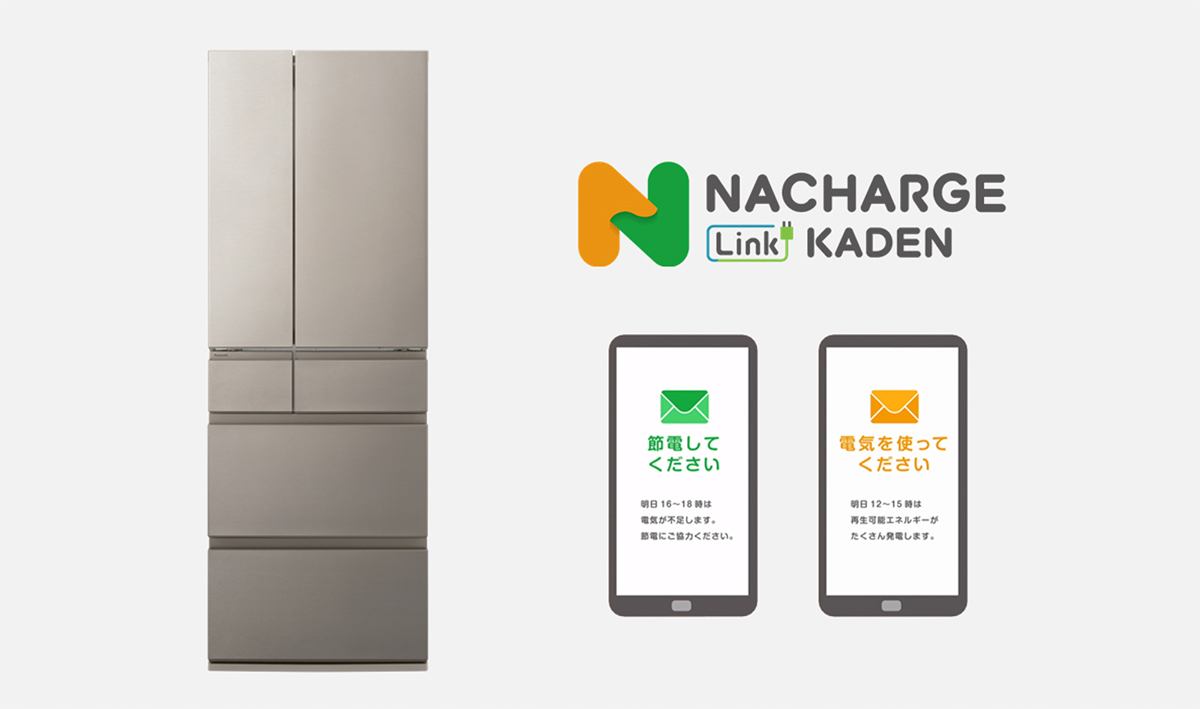
パナソニックは、中部電力ミライズと共同で、電力需給の最適化に応じて冷蔵庫の稼働を自動制御する「デマンドレスポンス(DR)自動運転サービス」を開発し、申込受付を開始した。電力会社の要請に応じて電力使用を抑制する「下げDR」と、使用を増やす「上げDR」の双方に自動対応する日本初の取り組み。
太陽光や風力などの再生可能エネルギーは、天候の影響を受けやすいため発電量が安定せず、時間帯や季節によって電力需給のバランスが崩れやすいという課題がある。この状況を補うため、電力を使う側が使用量やタイミングを調整(ピークシフト)して需給を支えるのがDRの仕組み。
しかし、従来の家庭向けDRは、「通知を受けて、その都度行動する必要がある」「やり方がわからない」「忙しくて対応できない」など生活者の手間が多く、継続的な参加が課題となっていた。
パナソニックは、家庭内での消費電力量の割合が高く、かつ常時通電している冷蔵庫に着目。中部電力ミライズとの共同実証の結果を踏まえ、電力会社からの要請に応じて稼働を自動制御するDR機能搭載の冷蔵庫を開発した。
専用アプリで設定すると、下げDR時は事前に庫内を冷やすことで要請時間にコンプレッサーを停止して電力使用を抑制、上げDR時には扉の開閉が少ない夜間などに実施するケースが多い霜取り運転のタイミングを変更して要請時間に電力を使用するなど、庫内の食品への影響を抑えながら冷蔵庫の稼働状況を自動制御する。
DR要請時間の開始・終了を冷蔵庫が音で通知する「DRお知らせ機能」も搭載。DR要請はメールやアプリなどでの個人宛のプッシュ通知が一般的だが、本機能により家族の誰もがDR要請時間中であることを認識しやすくなり、家庭内での自主的な行動を促すきっかけになることが期待されるという。
また、中部電力ミライズが提供する「NACHARGE Link KADEN(ネイチャージリンク カデン)」へ登録すると、DR要請に対する電力使用量の変化(直近の平均使用量との差)を貢献量としてポイント化。ポイントは1カ月単位で集計し、翌月上旬にまとめて進呈される。
パナソニックは、中部電力ミライズと共同で、電力需給の最適化に応じて冷蔵庫の稼働を自動制御する「デマンドレスポンス(DR)自動運転サービス」を開発し、申込受付を開始した。電力会社の要請に応じて電力使用を抑制する「下げDR」と、使用を増やす「上げDR」の双方に自動対応する日本初の取り組み。 太陽光や風力などの再生可能エネルギーは、天候の影響を受けやすいため発電量が安定せず、時間帯や季節によって電力需給のバランスが崩れやすいという課題がある。この状況を補うため、電力を使う側が使用量やタイミングを調整(ピークシフト)して需給を支えるのがDRの仕組み。 しかし、従来の家庭向けDRは、「通知を受けて、その都度行動する必要がある」「やり方がわからない」「忙しくて対応できない」など生活者の手間が多く、継続的な参加が課題となっていた。 パナソニックは、家庭内での消費電力量の割合が高く、かつ常時通電している冷蔵庫に着目。中部電力ミライズとの共同実証の結果を踏まえ、電力会社からの要請に応じて稼働を自動制御するDR機能搭載の冷蔵庫を開発した。 専用アプリで設定すると、下げDR時は事前に庫内を冷やすことで要請時間にコンプレッサーを停止して電力使用を抑制、上げDR時には扉の開閉が少ない夜間などに実施するケースが多い霜取り運転のタイミングを変更して要請時間に電力を使用するなど、庫内の食品への影響を抑えながら冷蔵庫の稼働状況を自動制御する。 DR要請時間の開始・終了を冷蔵庫が音で通知する「DRお知らせ機能」も搭載。DR要請はメールやアプリなどでの個人宛のプッシュ通知が一般的だが、本機能により家族の誰もがDR要請時間中であることを認識しやすくなり、家庭内での自主的な行動を促すきっかけになることが期待されるという。 また、中部電力ミライズが提供する「NACHARGE Link KADEN(ネイチャージリンク カデン)」へ登録すると、DR要請に対する電力使用量の変化(直近の平均使用量との差)を貢献量としてポイント化。ポイントは1カ月単位で集計し、翌月上旬にまとめて進呈される。
パナソニックは、中部電力ミライズと共同で、電力需給の最適化に応じて冷蔵庫の稼働を自動制御する「デマンドレスポンス(DR)自動運転サービス」を開発し、申込受付を開始した。電力会社の要請に応じて電力使用を抑制する「下げDR」と、使用を増やす「上げDR」の双方に自動対応する日本初の取り組み。 太陽光や風力などの再生可能エネルギーは、天候の影響を受けやすいため発電量が安定せず、時間帯や季節によって電力需給のバランスが崩れやすいという課題がある。この状況を補うため、電力を使う側が使用量やタイミングを調整(ピークシフト)して需給を支えるのがDRの仕組み。 しかし、従来の家庭向けDRは、「通知を受けて、その都度行動する必要がある」「やり方がわからない」「忙しくて対応できない」など生活者の手間が多く、継続的な参加が課題となっていた。 パナソニックは、家庭内での消費電力量の割合が高く、かつ常時通電している冷蔵庫に着目。中部電力ミライズとの共同実証の結果を踏まえ、電力会社からの要請に応じて稼働を自動制御するDR機能搭載の冷蔵庫を開発した。 専用アプリで設定すると、下げDR時は事前に庫内を冷やすことで要請時間にコンプレッサーを停止して電力使用を抑制、上げDR時には扉の開閉が少ない夜間などに実施するケースが多い霜取り運転のタイミングを変更して要請時間に電力を使用するなど、庫内の食品への影響を抑えながら冷蔵庫の稼働状況を自動制御する。 DR要請時間の開始・終了を冷蔵庫が音で通知する「DRお知らせ機能」も搭載。DR要請はメールやアプリなどでの個人宛のプッシュ通知が一般的だが、本機能により家族の誰もがDR要請時間中であることを認識しやすくなり、家庭内での自主的な行動を促すきっかけになることが期待されるという。 また、中部電力ミライズが提供する「NACHARGE Link KADEN(ネイチャージリンク カデン)」へ登録すると、DR要請に対する電力使用量の変化(直近の平均使用量との差)を貢献量としてポイント化。ポイントは1カ月単位で集計し、翌月上旬にまとめて進呈される。
Vocabulary
General
Proper noun
JLPT N2
JLPT N1
| # | 言葉 | 意味 |
|---|---|---|
| 16 | 要請 | ようせい (要請) : 1. appeal; call for something; request; claim; demand 2. axiom |
| 10 | 電力 | でんりょく (電力) : electric power |
| 6 | 中部電力 | ちゅうぶでんりょく (中部電力) : Chubu Electric Power (company) |
| 6 | 応ずる | おうずる (応ずる) : 1. to answer; to respond; to meet 2. to satisfy; to accept |
| 6 | 稼働 | かどう (稼働) : operation (of machine); operating; running; working |
| 6 | 自動制御 | じどうせいぎょ (自動制御) : automatic control |
| 6 | 使用量 | しようりょう (使用量) : amount used |
| 6 | 機能 | きのう (機能) : function; facility; faculty; feature |
| 4 | 共同 | きょうどう (共同) : doing together (as equals); sharing; common (land, etc.); joint (statement, etc.); cooperation; co-operation; collaboration; association |
| 4 | 開発 | かいはつ (開発) : development; exploitation |
| 4 | 開始 | かいし (開始) : start; commencement; beginning; initiation |
| 4 | 抑制 | よくせい (抑制) : control; restraint; suppression; constraint; curtailment; inhibition; check; curb |
| 4 | 使用 | しよう (使用) : use; application; employment; utilization; utilisation |
| 4 | 上げ | あげ (上げ) : 1. tuck (e.g. in a dress) 2. rise (e.g. in price) |
| 4 | 対応 | たいおう (対応) : 1. correspondence (to); equivalence 2. suitability; coordination; matching; being appropriate (for) |
| 4 | 影響 | えいきょう (影響) : 1. influence; effect 2. to influence; to affect; to have an influence on; to impact; to have an effect on |
| 4 | 量 | りょう (量) : 1. quantity; amount; volume; capacity; portion (of food) 2. generosity; magnanimity; tolerance |
| 4 | 課題 | かだい (課題) : 1. subject; theme; issue; matter 2. homework; assignment |
| 4 | 状況 | じょうきょう (状況) : state of affairs (around you); situation; circumstances |
| 4 | 通知 | つうち (通知) : notice; notification; report; posting |
| 4 | 行動 | こうどう (行動) : action; conduct; behaviour; behavior; mobilization; mobilisation |
| 4 | 家庭内 | かていない (家庭内) : domestic; in the family |
| 4 | 搭載 | とうさい (搭載) : 1. loading (on board); equipping 2. equipped (with); built-in |
| 4 | 庫内 | こない (庫内) : inside (refrigerator, warehouse, etc.) |
| 2 | 最適化 | さいてきか (最適化) : optimization; optimisation |
| 2 | 自動運転 | じどううんてん (自動運転) : automatic operation (machine); automatic driving (vehicle) |
| 2 | 申込 | もうしこみ (申し込み) : application; entry; request; subscription; offer; proposal; overture; challenge |
| 2 | 下げ | さげ (下げ) : 1. lowering; sinking; bringing down; letting down 2. depreciation; price fall |
| 2 | 増やす | ふやす (増やす) : to increase; to add to; to augment |
| 2 | 双方 | そうほう (双方) : both parties; both sides |
| 2 | 自動 | じどう (自動) : 1. automatic 2. intransitive verb |
| 2 | 日本初 | にほんはつ (日本初) : first (of its kind) in Japan |
| 2 | 取り組み | とりくみ (取り組み) : 1. bout (in sports, etc.); match 2. effort; initiative; dealing with; grappling with; wrestling with |
| 2 | 太陽光 | たいようこう (太陽光) : sunlight |
| 2 | 風力 | ふうりょく (風力) : 1. wind power 2. force (level on the Beaufort wind speed scale) |
| 2 | 再生可能エネルギー | さいせいかのうエネルギー (再生可能エネルギー) : renewable energy |
| 2 | 天候 | てんこう (天候) : weather |
| 2 | 発電 | はつでん (発電) : 1. generation (e.g. power) 2. sending a telegram; telegraphing |
| 2 | 安定 | あんてい (安定) : stability; steadiness; equilibrium |
| 2 | 時間帯 | じかんたい (時間帯) : period of time; time slot; time zone |
| 2 | 崩れる | くずれる (崩れる) : 1. to collapse; to crumble 2. to get out of shape; to lose one's shape; to become disorganized; to become untidy |
| 2 | 補う | おぎなう (補う) : to supplement; to make up for; to compensate for; to cover (a shortage, loss, etc.); to fill (e.g. a vacancy) |
| 2 | 調整 | ちょうせい (調整) : adjustment; regulation; coordination; reconciliation; tuning; fixing; tailoring |
| 2 | 需給 | じゅきゅう (需給) : supply and demand |
| 2 | 支える | ささえる (支える) : 1. to support; to prop; to sustain; to underlay; to hold up; to defend 2. to hold at bay; to stem; to check |
| 2 | 仕組み | しくみ (仕組み) : 1. structure; construction; arrangement; contrivance; mechanism; workings 2. plan; plot; contrivance |
| 2 | 従来 | じゅうらい (従来) : 1. up to now; so far 2. traditional; conventional; usual; existing |
| 2 | 向け | むけ (向け) : intended for ...; oriented towards ...; aimed at ... |
| 2 | 都度 | つど (都度) : each (every) time; whenever |
| 2 | やり方 | やりかた (やり方) : way (of doing); manner; method; means |
| 2 | わかる | わかる (分かる) : 1. to understand; to comprehend; to grasp; to see; to get; to follow 2. to become clear; to be known; to be discovered; to be realized; to be realised; to be found out |
| 2 | 生活者 | せいかつしゃ (生活者) : 1. consumer; ordinary citizen; stakeholder 2. person who lives on (e.g. situation, income, place) |
| 2 | 手間 | てま (手間) : time; labour; labor |
| 2 | 継続的 | けいぞくてき (継続的) : continuous |
| 2 | 参加 | さんか (参加) : participation; joining; entry; adherence |
| 2 | 消費 | しょうひ (消費) : consumption; expenditure |
| 2 | 電力量 | でんりょくりょう (電力量) : electric energy |
| 2 | 常時 | じょうじ (常時) : 1. usually; ordinarily; always 2. continuous; 24-hour (operation, care, etc.); constant; always on |
| 2 | 通電 | つうでん (通電) : the passage of electric current |
| 2 | 着目 | ちゃくもく (着目) : attention; giving one's attention; focusing |
| 2 | 実証 | じっしょう (実証) : demonstration; verification; substantiation; actual proof |
| 2 | 結果 | けっか (結果) : 1. result; consequence; outcome; effect 2. coming to fruition; bearing fruit |
| 2 | 踏まえる | ふまえる (踏まえる) : 1. to be based on; to take into account; to build upon; to have origin in 2. to have one's feet firmly planted on; to plant oneself on |
| 2 | 専用 | せんよう (専用) : 1. (one's) exclusive use; private use; personal use 2. dedicated use; use for a particular purpose |
| 2 | 設定 | せってい (設定) : 1. establishment; creation; posing (a problem); setting (movie, novel, etc.); scene 2. options setting; preference settings; configuration; setup |
| 2 | 下げる | さげる (下げる) : 1. to hang; to suspend; to wear (e.g. decoration) 2. to lower; to reduce; to bring down |
| 2 | 事前 | じぜん (事前) : prior; beforehand; in advance; before the fact; ex ante |
| 2 | 冷やす | ひやす (冷やす) : 1. to cool (from room temperature); to chill; to refrigerate 2. to calm down; to cool off; to regain one's composure; to relax |
| 2 | 停止 | ていし (停止) : 1. stoppage; coming to a stop; halt; standstill 2. ceasing (movement, activity, etc.); suspension (of operations); interruption (e.g. of electricity supply); cutting off |
| 2 | 扉 | とびら (扉) : 1. door; gate; opening 2. title page |
| 2 | 開閉 | かいへい (開閉) : opening and shutting; opening and closing |
| 2 | 夜間 | やかん (夜間) : night; nighttime |
| 2 | 実施 | じっし (実施) : enforcement; implementation; putting into practice; carrying out; operation; working (e.g. working parameters); enactment |
| 2 | 霜取り | しもとり (霜取り) : defrost; defrosting |
| 2 | 変更 | へんこう (変更) : change; modification; alteration; revision; amendment |
| 2 | 食品 | しょくひん (食品) : food; food products; foodstuffs |
| 2 | 抑える | おさえる (抑える) : 1. to keep within limits (e.g. spending); to restrain (e.g. emotions); to control; to curb; to hold in check 2. to hold back (e.g. an enemy); to check; to curb; to contain; to quell; to subdue; to suppress; to repress |
| 2 | 終了 | しゅうりょう (終了) : end; close; termination |
| 2 | お知らせ | おしらせ (お知らせ) : notice; notification |
| 2 | 個人 | こじん (個人) : individual; private person; personal; private |
| 2 | 宛 | あて (当て) : 1. aim; object; purpose; end 2. expectations; prospects; hopes |
| 2 | プッシュ通知 | プッシュつうち (プッシュ通知) : push notification |
| 2 | 一般的 | いっぱんてき (一般的) : general; popular; common; typical |
| 2 | 認識 | にんしき (認識) : recognition; awareness; perception; understanding; knowledge; cognition; cognizance; cognisance |
| 2 | やすく | やすく (安く) : inexpensively |
| 2 | 自主的 | じしゅてき (自主的) : independent; autonomous; voluntary; of one's own initiative |
| 2 | 促す | うながす (促す) : 1. to urge; to encourage; to press; to prompt; to draw (attention to) 2. to stimulate (e.g. growth); to hasten (e.g. development); to quicken; to accelerate; to promote |
| 2 | きっかけ | きっかけ (切っ掛け) : chance; start; cue; excuse; motive; impetus; occasion |
| 2 | 期待 | きたい (期待) : 1. expectation; anticipation; hope 2. promising; rising; up-and-coming |
| 2 | 提供 | ていきょう (提供) : 1. offer; tender; providing; supplying; making available; donating (blood, organs, etc.) 2. sponsoring (a TV program) |
| 2 | 登録 | とうろく (登録) : registration; accession; register; entry; record |
| 2 | 変化 | へんか (変化) : 1. change; variation; alteration; mutation; transition; transformation; transfiguration; metamorphosis 2. variety; diversity |
| 2 | 直近 | ちょっきん (直近) : latest; most recent; nearest (in time) |
| 2 | 平均 | へいきん (平均) : 1. average; mean 2. balance; equilibrium |
| 2 | 差 | さ (差) : 1. difference; variation 2. difference |
| 2 | 貢献 | こうけん (貢献) : contribution (furthering a goal or cause); services (to a cause) |
| 2 | 化 | か (化) : action of making something; -ification |
| 2 | カ月 | かげつ (ヶ月) : months (period of) |
| 2 | 単位 | たんい (単位) : 1. unit; denomination 2. credit (in school) |
| 2 | 集計 | しゅうけい (集計) : totalization; totalisation; aggregation; tally (e.g. of votes); adding up; summing up |
| 2 | 翌月 | よくげつ (翌月) : following month |
| 2 | 上旬 | じょうじゅん (上旬) : first 10 days of month |
| 2 | まとめる | まとめる (纏める) : 1. to collect; to put (it all) together; to integrate; to consolidate; to unify 2. to summarize; to aggregate |
| 2 | 進呈 | しんてい (進呈) : presentation (e.g. of a gift) |