多機能ロッカー「マルチエキューブ」、Bounceの手荷物預かりに対応
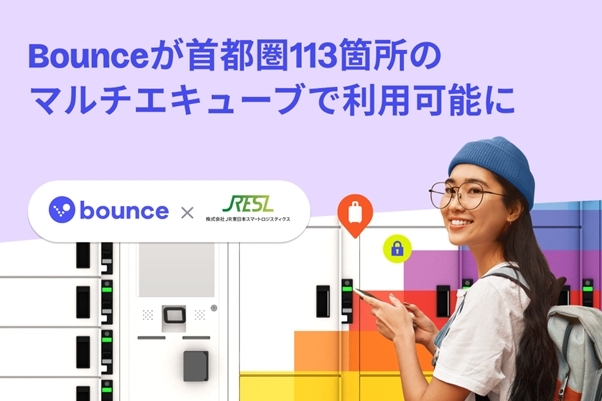
BounceとJR東日本スマートロジスティクスは、多機能ロッカー「マルチエキューブ」で、手荷物預かりサービス「Bounce」の受け付けを開始した。首都圏113カ所のマルチエキューブでBounceを利用できる。
マルチエキューブは、予約・預け入れ・受け取り・発送の4機能を1台で利用できるロッカー。目的ごとにロッカーを使い分ける必要がなく、身近な駅でシームレスに利用できる。同ロッカーは、ユーザーの操作時を除き、扉は常時施錠される。3月末時点で、首都圏・東北・関西・北海道・九州など290駅に計912台を設置しており、2026年度内には全国で約1,000台を展開する予定としている。
Bounceは、旅行中や外出先で荷物を一時的に預けたいユーザーと、空きスペースを有効活用したい店舗・施設をつなぐ手荷物預かりプラットフォーム。19年にサンフランシスコで創業し、現在は世界4,000都市・35,000拠点以上で展開する。日本では東京・大阪・京都・福岡など650都市・5,500拠点以上でサービスを提供している。
近年、インバウンド旅行者の増加に伴い、主要駅や観光エリアでは大型スーツケースを持った移動による混雑が課題となっている。両社は今回の連携を通じ、荷物による制約を減らし、観光体験の向上と混雑の緩和を図るとともに、インバウンド旅行者と地域社会が共存できる環境づくりを進める。
BounceとJR東日本スマートロジスティクスは、多機能ロッカー「マルチエキューブ」で、手荷物預かりサービス「Bounce」の受け付けを開始した。首都圏113カ所のマルチエキューブでBounceを利用できる。 マルチエキューブは、予約・預け入れ・受け取り・発送の4機能を1台で利用できるロッカー。目的ごとにロッカーを使い分ける必要がなく、身近な駅でシームレスに利用できる。同ロッカーは、ユーザーの操作時を除き、扉は常時施錠される。3月末時点で、首都圏・東北・関西・北海道・九州など290駅に計912台を設置しており、2026年度内には全国で約1,000台を展開する予定としている。 Bounceは、旅行中や外出先で荷物を一時的に預けたいユーザーと、空きスペースを有効活用したい店舗・施設をつなぐ手荷物預かりプラットフォーム。19年にサンフランシスコで創業し、現在は世界4,000都市・35,000拠点以上で展開する。日本では東京・大阪・京都・福岡など650都市・5,500拠点以上でサービスを提供している。 近年、インバウンド旅行者の増加に伴い、主要駅や観光エリアでは大型スーツケースを持った移動による混雑が課題となっている。両社は今回の連携を通じ、荷物による制約を減らし、観光体験の向上と混雑の緩和を図るとともに、インバウンド旅行者と地域社会が共存できる環境づくりを進める。
BounceとJR東日本スマートロジスティクスは、多機能ロッカー「マルチエキューブ」で、手荷物預かりサービス「Bounce」の受け付けを開始した。首都圏113カ所のマルチエキューブでBounceを利用できる。 マルチエキューブは、予約・預け入れ・受け取り・発送の4機能を1台で利用できるロッカー。目的ごとにロッカーを使い分ける必要がなく、身近な駅でシームレスに利用できる。同ロッカーは、ユーザーの操作時を除き、扉は常時施錠される。3月末時点で、首都圏・東北・関西・北海道・九州など290駅に計912台を設置しており、2026年度内には全国で約1,000台を展開する予定としている。 Bounceは、旅行中や外出先で荷物を一時的に預けたいユーザーと、空きスペースを有効活用したい店舗・施設をつなぐ手荷物預かりプラットフォーム。19年にサンフランシスコで創業し、現在は世界4,000都市・35,000拠点以上で展開する。日本では東京・大阪・京都・福岡など650都市・5,500拠点以上でサービスを提供している。 近年、インバウンド旅行者の増加に伴い、主要駅や観光エリアでは大型スーツケースを持った移動による混雑が課題となっている。両社は今回の連携を通じ、荷物による制約を減らし、観光体験の向上と混雑の緩和を図るとともに、インバウンド旅行者と地域社会が共存できる環境づくりを進める。
Vocabulary
General
Proper noun
JLPT N2
JLPT N1
| # | 言葉 | 意味 |
|---|---|---|
| 4 | 手荷物 | てにもつ (手荷物) : hand luggage; hand baggage |
| 4 | 預かる | あずかる (預かる) : 1. to look after; to take care of; to keep; to hold on to; to keep in custody 2. to be put in charge of; to be given responsibility for; to be entrusted with |
| 4 | 首都圏 | しゅとけん (首都圏) : the capital city (often Tokyo) area (typically within 50 km of city's centre) (center) |
| 4 | 展開 | てんかい (展開) : 1. development; evolution; progression; unfolding; (plot) twist 2. expansion; spreading out; extending; deployment; building up |
| 4 | 都市 | とし (都市) : town; city; municipal; urban |
| 4 | 拠点 | きょてん (拠点) : position; location; base; point; site |
| 4 | 旅行者 | りょこうしゃ (旅行者) : traveller; traveler |
| 4 | 観光 | かんこう (観光) : sightseeing; tourism |
| 4 | 混雑 | こんざつ (混雑) : 1. congestion; crush; crowding; jam 2. confusion; disorder |
| 2 | JR | ジェイアール (JR) : Japan Railways; JR |
| 2 | 東日本 | ひがしにほん (東日本) : eastern Japan; Japan east of the Itoigawa-Shizuoka Tectonic Line, i.e. east of the Chūbu region |
| 2 | 多機能 | たきのう (多機能) : multifunction; multipurpose |
| 2 | 受け付け | うけつけ (受付) : 1. reception (desk); information desk 2. receipt; acceptance |
| 2 | 開始 | かいし (開始) : start; commencement; beginning; initiation |
| 2 | カ所 | かしょ (箇所) : 1. place; point; part; spot; area; passage; portion 2. counter for places, parts, passages, etc. |
| 2 | 預け入れ | あずけいれ (預け入れ) : deposit |
| 2 | 受け取り | うけとり (受取り) : receiving; receipt |
| 2 | 発送 | はっそう (発送) : sending; forwarding; shipping |
| 2 | 機能 | きのう (機能) : function; facility; faculty; feature |
| 2 | 目的 | もくてき (目的) : purpose; goal; aim; objective; intention |
| 2 | ごと | ごと (毎) : each; every |
| 2 | 使い分ける | つかいわける (使い分ける) : to use properly; to use (different things) for different purposes |
| 2 | 身近 | みぢか (身近) : near oneself; close to one; familiar |
| 2 | 操作 | そうさ (操作) : 1. operation; management; handling 2. manipulating (to one's benefit); manipulation; influencing |
| 2 | 除く | のぞく (除く) : 1. to remove; to eliminate; to eradicate 2. to exclude; to except |
| 2 | 扉 | とびら (扉) : 1. door; gate; opening 2. title page |
| 2 | 常時 | じょうじ (常時) : 1. usually; ordinarily; always 2. continuous; 24-hour (operation, care, etc.); constant; always on |
| 2 | 施錠 | せじょう (施錠) : locking |
| 2 | 末 | うら (末) : top end; tip |
| 2 | 時点 | じてん (時点) : point in time; occasion |
| 2 | 東北 | とうほく (東北) : 1. north-east 2. Tōhoku (northernmost six prefectures of Honshu); Tohoku |
| 2 | 関西 | かんさい (関西) : 1. Kansai; region consisting of Osaka, Kobe, Kyoto and surrounding prefectures 2. Kansai; south-western half of Japan (during the feudal era) |
| 2 | 北海道 | ほっかいどう (北海道) : Hokkaido (island, prefectural-level administrative unit) |
| 2 | 九州 | きゅうしゅう (九州) : Kyūshū (southernmost of the four main islands of Japan) |
| 2 | 設置 | せっち (設置) : 1. establishment; institution 2. installation (of a machine or equipment) |
| 2 | 全国 | ぜんこく (全国) : the whole country |
| 2 | 外出先 | がいしゅつさき (外出先) : where one has gone to; place one has gone to; (outing) destination |
| 2 | 一時的 | いちじてき (一時的) : temporary |
| 2 | 預ける | あずける (預ける) : 1. to leave (in someone's keeping); to put (in someone's care); to place (in someone's custody); to entrust (someone) with; to deposit 2. to put (someone) in charge of; to leave (a matter) in someone's hands; to let (someone) decide |
| 2 | 空く | すく (空く) : 1. to become less crowded; to thin out; to get empty 2. to be hungry |
| 2 | 店舗 | てんぽ (店舗) : shop; store |
| 2 | 施設 | しせつ (施設) : 1. institution; establishment; facility 2. home (for elderly, orphans, etc.) |
| 2 | つなぐ | つなぐ (繋ぐ) : 1. to connect; to link together 2. to tie; to fasten; to restrain |
| 2 | 創業 | そうぎょう (創業) : establishment (of a business); founding |
| 2 | 現在 | げんざい (現在) : now; current; present; present time; as of |
| 2 | 東京 | とうきょう (東京) : Tokyo |
| 2 | 大阪 | おおさか (大阪) : 1. Osaka (city, prefecture) 2. large hill |
| 2 | 京都 | きょうと (京都) : Kyoto (city, prefecture) |
| 2 | 福岡 | ふくおか (福岡) : Fukuoka (city, prefecture) |
| 2 | 提供 | ていきょう (提供) : 1. offer; tender; providing; supplying; making available; donating (blood, organs, etc.) 2. sponsoring (a TV program) |
| 2 | 近年 | きんねん (近年) : recent years |
| 2 | 増加 | ぞうか (増加) : increase; rise; growth; addition; increment |
| 2 | 伴う | ともなう (伴う) : 1. to accompany; to go hand in hand with; to be consequent upon 2. to be accompanied by; to bring with; to take with; to be involved in |
| 2 | 主要 | しゅよう (主要) : chief; main; principal; major |
| 2 | 大型 | おおがた (大型) : large; large-sized; large-scale; big |
| 2 | 持つ | もつ (持つ) : 1. to hold (in one's hand); to take; to carry 2. to possess; to have; to own |
| 2 | 移動 | いどう (移動) : 1. movement; transfer; migration; removal; travel 2. mobile; moving; traveling; travelling; roving |
| 2 | 課題 | かだい (課題) : 1. subject; theme; issue; matter 2. homework; assignment |
| 2 | 両社 | りょうしゃ (両社) : both companies |
| 2 | 連携 | れんけい (連携) : cooperation; coordination; link |
| 2 | 通ずる | つうずる (通ずる) : 1. to be open (to traffic); to lead to; to communicate (with) 2. to flow (liquid, current); to pass; to get through to |
| 2 | 制約 | せいやく (制約) : limitation; restriction; condition; constraints |
| 2 | 減らす | へらす (減らす) : to abate; to decrease; to diminish; to shorten |
| 2 | 体験 | たいけん (体験) : (practical) experience; personal experience; hands-on experience; first-hand experience |
| 2 | 向上 | こうじょう (向上) : elevation; rise; improvement; advancement; progress |
| 2 | 緩和 | かんわ (緩和) : relief; mitigation; alleviation; relaxation (of restrictions, tensions, etc.); easing; softening |
| 2 | 図る | はかる (図る) : 1. to plan; to attempt; to devise 2. to plot; to conspire; to scheme |
| 2 | 地域社会 | ちいきしゃかい (地域社会) : regional community |
| 2 | 共存 | きょうぞん (共存) : coexistence |
| 2 | 環境 | かんきょう (環境) : environment; circumstance |
| 2 | づくり | づくり (作り) : 1. making; forming; cultivating; growing 2. form; appearance |
| 2 | 進める | すすめる (進める) : 1. to advance; to move forward; to put (a clock, watch) forward 2. to carry forward (plans, work, etc.); to proceed with; to make progress in; to further; to advance; to hasten; to speed up |