「RSウイルス感染症」ワクチン SNSで広がる根拠ない情報に注意
4月1日から妊婦を対象に定期接種が始まった「RSウイルス感染症」のワクチンについて、副反応に関する科学的根拠のない情報がSNSで広がっています。専門家は、赤ちゃんがRSウイルスに感染すると命に関わることもあるとして、注意を呼びかけています。
「RSウイルス感染症」は主に子どもが感染し、発熱やせきなどかぜのような症状が出る病気で、生後6か月未満の赤ちゃんなどは肺炎や気管支炎を起こして重症化することもあります。
1日から定期接種が始まったワクチンは妊娠中の女性を対象にしたもので、接種によって体内でつくられた抗体が胎児に移行し、赤ちゃんの重症化を防ぐ効果が期待されています。
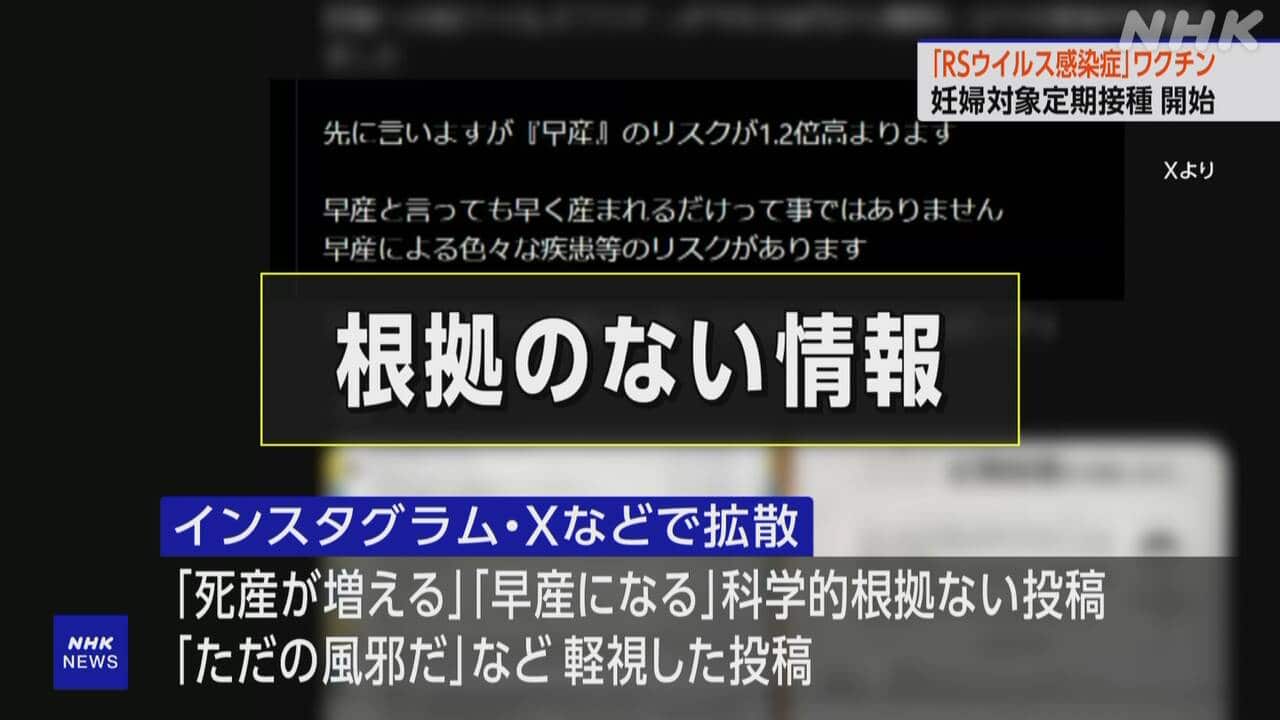
ワクチンの主な副反応は接種部位の痛みや頭痛、筋肉痛などで、厚生労働省の専門家部会は有効性が確認され、安全性にも重大な懸念はないと評価していますが、インスタグラムやXなどでは接種によって「死産が増える」とか「早産になる」といった科学的根拠のない投稿のほか、RSウイルス感染症について「ただの風邪だ」などと軽視した投稿が複数拡散されていて、中には150万回以上見られているものもあります。
子どもの感染症に詳しい、日本大学医学部の森岡一朗 主任教授はRSウイルスワクチンによって死産や早産が増えるといった事実はないとしたうえで「臨床試験の結果に加え、実際に広く使われるようになってからも早産率が上がるという結果は出ておらず、早産と接種の因果関係は否定されている」と指摘しています。
そのうえで「RSウイルス感染症は低月齢の赤ちゃんがかかると命に関わることもあると知っておいてほしい。安全に接種できるワクチンだと考えているので、赤ちゃんを守るためにも心配なく接種してもらいたい」と話しています。
「RSウイルス感染症」のワクチンは、海外や日本国内での臨床試験を経て、おととし2024年に承認され、ことし4月1日から妊娠中の女性を対象にした定期接種が始まりました。
ワクチンの添付文書や厚生労働省の資料によりますと、7000人余りが参加した国際的な臨床試験では、赤ちゃんの肺炎や気管支炎の重症化を予防する効果は、生後90日までで81.8%、生後180日までだと69.4%でした。
一方、副反応については10%以上の頻度で起きたのは接種した部位の痛みや頭痛、筋肉痛としています。
SNSでは「早産が起きる」とする科学的根拠がない主張が広がっていますが、早産になったのはワクチンを接種した人たちは5.7%、接種していない人たちでは4.7%で、臨床試験に参加した仙台市立病院の大槻健郎 産婦人科部長は「統計的に明らかな有意差は見られておらず、早産のリスクがあるとは結論づけられていない」としています。
そして、実際には日本国内では接種した人たちの方が早産の割合が低くなっていたということで「ワクチンが原因で早産が増えるならば、国によって傾向が変わることはないはずで、早産はあまり心配しなくてもよい」と話しています。
さらに、ほとんどの早産は妊娠34週以降で、大槻医師は「仮に早産に至ったとしても、日本の医療レベルを考えると34週以降に生まれた乳児は、ほぼ問題なく成長できる」と話しています。
このほかにも、SNSでは「RSウイルスで重症化するのはまれだ」とか「ただの風邪だ」などとする主張もあります。
これについて子どもの感染症に詳しい、日本大学医学部の森岡一朗 主任教授は「流行期には重症化してミルクが飲めなくなったり、呼吸が荒くなったりする赤ちゃんが毎日のように入院してくる。RSウイルス感染症はかぜの一種だが、赤ちゃんがかかると一大事だと思ってほしい。重症化すればするほど、将来のぜんそくのリスクが上がるので、重症化を防ぐことで、ぜんそくの予防にもつながる」と指摘しています。
「RSウイルス感染症」は主に子どもが感染し、発熱やせきなどかぜのような症状が出る病気で、生後6か月未満の赤ちゃんなどは肺炎や気管支炎を起こして重症化することもあります。
1日から定期接種が始まったワクチンは妊娠中の女性を対象にしたもので、接種によって体内でつくられた抗体が胎児に移行し、赤ちゃんの重症化を防ぐ効果が期待されています。
ワクチンの主な副反応は接種部位の痛みや頭痛、筋肉痛などで、厚生労働省の専門家部会は有効性が確認され、安全性にも重大な懸念はないと評価していますが、インスタグラムやXなどでは接種によって「死産が増える」とか「早産になる」といった科学的根拠のない投稿のほか、RSウイルス感染症について「ただの風邪だ」などと軽視した投稿が複数拡散されていて、中には150万回以上見られているものもあります。
子どもの感染症に詳しい、日本大学医学部の森岡一朗 主任教授はRSウイルスワクチンによって死産や早産が増えるといった事実はないとしたうえで「臨床試験の結果に加え、実際に広く使われるようになってからも早産率が上がるという結果は出ておらず、早産と接種の因果関係は否定されている」と指摘しています。
そのうえで「RSウイルス感染症は低月齢の赤ちゃんがかかると命に関わることもあると知っておいてほしい。安全に接種できるワクチンだと考えているので、赤ちゃんを守るためにも心配なく接種してもらいたい」と話しています。
「RSウイルス感染症」のワクチンは、海外や日本国内での臨床試験を経て、おととし2024年に承認され、ことし4月1日から妊娠中の女性を対象にした定期接種が始まりました。
ワクチンの添付文書や厚生労働省の資料によりますと、7000人余りが参加した国際的な臨床試験では、赤ちゃんの肺炎や気管支炎の重症化を予防する効果は、生後90日までで81.8%、生後180日までだと69.4%でした。
一方、副反応については10%以上の頻度で起きたのは接種した部位の痛みや頭痛、筋肉痛としています。
SNSでは「早産が起きる」とする科学的根拠がない主張が広がっていますが、早産になったのはワクチンを接種した人たちは5.7%、接種していない人たちでは4.7%で、臨床試験に参加した仙台市立病院の大槻健郎 産婦人科部長は「統計的に明らかな有意差は見られておらず、早産のリスクがあるとは結論づけられていない」としています。
そして、実際には日本国内では接種した人たちの方が早産の割合が低くなっていたということで「ワクチンが原因で早産が増えるならば、国によって傾向が変わることはないはずで、早産はあまり心配しなくてもよい」と話しています。
さらに、ほとんどの早産は妊娠34週以降で、大槻医師は「仮に早産に至ったとしても、日本の医療レベルを考えると34週以降に生まれた乳児は、ほぼ問題なく成長できる」と話しています。
このほかにも、SNSでは「RSウイルスで重症化するのはまれだ」とか「ただの風邪だ」などとする主張もあります。
これについて子どもの感染症に詳しい、日本大学医学部の森岡一朗 主任教授は「流行期には重症化してミルクが飲めなくなったり、呼吸が荒くなったりする赤ちゃんが毎日のように入院してくる。RSウイルス感染症はかぜの一種だが、赤ちゃんがかかると一大事だと思ってほしい。重症化すればするほど、将来のぜんそくのリスクが上がるので、重症化を防ぐことで、ぜんそくの予防にもつながる」と指摘しています。
Vocabulary
General
Proper noun
JLPT N2
JLPT N1
| # | 言葉 | 意味 |
|---|---|---|
| 12 | 早産 | そうざん (早産) : premature birth |
| 10 | 接種 | せっしゅ (接種) : inoculation; vaccination |
| 8 | 感染症 | かんせんしょう (感染症) : infectious disease; infection |
| 8 | 赤ちゃん | あかちゃん (赤ちゃん) : baby; infant |
| 7 | 重症化 | じゅうしょうか (重症化) : aggravation (of an illness); exacerbation; worsening |
| 4 | 臨床試験 | りんしょうしけん (臨床試験) : clinical study; clinical trial |
| 3 | 対象 | たいしょう (対象) : target; object (of worship, study, etc.); subject (of taxation, etc.) |
| 3 | 始まる | はじまる (始まる) : 1. to begin; to start; to commence 2. to happen (again); to begin (anew) |
| 3 | 副反応 | ふくはんのう (副反応) : 1. side effect (from a vaccine) 2. side reaction |
| 3 | 科学的根拠 | かがくてきこんきょ (科学的根拠) : scientific basis; scientific foundation; scientific grounds |
| 3 | 子ども | こども (子供) : child |
| 3 | 生後 | せいご (生後) : post-natal; since birth |
| 2 | 広がる | ひろがる (広がる) : to spread (out); to extend; to stretch; to reach to; to get around; to fill (e.g. a space) |
| 2 | 専門家 | せんもんか (専門家) : specialist; expert; professional; authority; pundit |
| 2 | 感染 | かんせん (感染) : infection; contagion; becoming infected |
| 2 | 命 | いのち (命) : 1. life; life force 2. lifetime; lifespan |
| 2 | 関わる | かかわる (関わる) : 1. to be affected; to be influenced 2. to be concerned with; to have to do with |
| 2 | 肺炎 | はいえん (肺炎) : pneumonia |
| 2 | 気管支炎 | きかんしえん (気管支炎) : bronchitis |
| 2 | 防ぐ | ふせぐ (防ぐ) : 1. to defend against; to protect against 2. to prevent; to avert; to avoid |
| 2 | 効果 | こうか (効果) : 1. effect; effectiveness; efficacy; result 2. effects (e.g. sound effects, visual effects, special effects) |
| 2 | 部位 | ぶい (部位) : part (esp. of the body); region; site; cut (of meat) |
| 2 | 痛み | いたみ (痛み) : 1. pain; ache; soreness; grief; distress 2. damage; injury; wear; bruise; break |
| 2 | 頭痛 | ずつう (頭痛) : headache |
| 2 | 筋肉痛 | きんにくつう (筋肉痛) : muscular pain; myalgia |
| 2 | 厚生労働省 | こうせいろうどうしょう (厚生労働省) : Ministry of Health, Labour and Welfare |
| 2 | 死産 | しざん (死産) : stillbirth |
| 2 | 投稿 | とうこう (投稿) : contribution (to a newspaper, magazine, etc.); submission; post (on a blog, social media, etc.) |
| 2 | ただ | ただ (只) : 1. ordinary; common; usual 2. free of charge |
| 2 | 詳しい | くわしい (詳しい) : 1. detailed; full; minute 2. knowing very well; knowledgeable (about); well-acquainted (with); well-informed (about); familiar (with) |
| 2 | 日本大学 | にほんだいがく (日本大学) : Nihon University (organization) |
| 2 | 医学部 | いがくぶ (医学部) : medical faculty |
| 2 | 森岡 | もりおか (森岡) : Morioka (place; surname) |
| 2 | 一朗 | いちろう (一朗) : Ichirō (masc) |
| 2 | 主任 | しゅにん (主任) : person in charge; senior staff; manager; chief; head |
| 2 | 教授 | きょうじゅ (教授) : 1. professor 2. teaching; instruction |
| 2 | 結果 | けっか (結果) : 1. result; consequence; outcome; effect 2. coming to fruition; bearing fruit |
| 2 | 実際 | じっさい (実際) : 1. reality; actuality; truth; fact; actual conditions 2. practice (as opposed to theory) |
| 2 | 上がる | あがる (上がる) : 1. to rise; to go up; to come up; to ascend; to be raised 2. to enter (esp. from outdoors); to come in; to go in |
| 2 | 指摘 | してき (指摘) : pointing out; identification |
| 2 | 日本国内 | にほんこくない (日本国内) : Japanese domestic |
| 2 | 参加 | さんか (参加) : participation; joining; entry; adherence |
| 2 | 予防 | よぼう (予防) : prevention; precaution; protection against |
| 2 | 主張 | しゅちょう (主張) : claim; insistence; assertion; advocacy; emphasis; contention; opinion; tenet |
| 2 | 大槻 | おおき (大槻) : Ooki (surname) |
| 2 | 以降 | いこう (以降) : on and after; as from; hereafter; thereafter; since |
| 2 | ぜんそく | ぜんそく (全速) : full speed |
| 1 | 妊婦 | にんぷ (妊婦) : pregnant woman |
| 1 | 関する | かんする (関する) : to concern; to be related |
| 1 | 情報 | じょうほう (情報) : 1. information; news; intelligence; advices 2. information; data contained in characters, signals, code, etc. |
| 1 | 呼びかける | よびかける (呼びかける) : 1. to call out to; to hail; to address 2. to appeal |
| 1 | 主に | おもに (主に) : mainly; primarily |
| 1 | 発熱 | はつねつ (発熱) : 1. generation of heat 2. (attack of) fever; pyrexia |
| 1 | 症状 | しょうじょう (症状) : symptoms; condition (of a patient) |
| 1 | 未満 | みまん (未満) : less than; under; below |
| 1 | 起こす | おこす (起こす) : 1. to raise; to raise up; to set up; to pick up 2. to wake; to wake up; to waken; to awaken |
| 1 | 体内 | たいない (体内) : interior of the body |
| 1 | つくる | つくる (作る) : 1. to make; to produce; to manufacture; to build; to construct 2. to prepare (food); to brew (alcohol) |
| 1 | 抗体 | こうたい (抗体) : antibody |
| 1 | 胎児 | たいじ (胎児) : fetus; foetus; embryo; unborn child |
| 1 | 移行 | いこう (移行) : switching over to; migration; transition |
| 1 | 期待 | きたい (期待) : 1. expectation; anticipation; hope 2. promising; rising; up-and-coming |
| 1 | 主な | おもな (主な) : chief; main; principal; important |
| 1 | 部会 | ぶかい (部会) : section meeting |
| 1 | 有効性 | ゆうこうせい (有効性) : validity; effectiveness |
| 1 | 確認 | かくにん (確認) : confirmation; verification; validation; review; check; affirmation; identification |
| 1 | 安全性 | あんぜんせい (安全性) : safety; security |
| 1 | 重大 | じゅうだい (重大) : serious; important; significant; grave; weighty |
| 1 | 懸念 | けねん (懸念) : worry; fear; anxiety; concern |
| 1 | 評価 | ひょうか (評価) : 1. valuation; appraisal; evaluation; assessment; estimation; rating; judging 2. appreciation; recognition; acknowledgement; rating highly; praising |
| 1 | 軽視 | けいし (軽視) : making light of; thinking little of; slighting; belittling; dismissing; contempt; disdain |
| 1 | 複数 | ふくすう (複数) : plural; multiple; several |
| 1 | 拡散 | かくさん (拡散) : scattering; diffusion; spread (e.g. signal across the spectrum) |
| 1 | 事実 | じじつ (事実) : fact; truth; reality |
| 1 | 広く | ひろく (広く) : widely; far and wide; extensively; universally |
| 1 | 率 | りつ (率) : rate; ratio; proportion; percentage |
| 1 | 因果関係 | いんがかんけい (因果関係) : consequence; causal relationship; nexus |
| 1 | 否定 | ひてい (否定) : 1. denial; negation; repudiation; disavowal 2. negation (logic) |
| 1 | 低 | てい (低) : low (level, value, price, etc.) |
| 1 | 月齢 | げつれい (月齢) : 1. age of the Moon; number of days since the new moon 2. age in months (esp. of an infant) |
| 1 | 知る | しる (知る) : 1. to be aware of; to know; to be conscious of; to cognize; to cognise 2. to notice; to feel |
| 1 | 考える | かんがえる (考える) : 1. to think (about, of); to think over; to ponder; to contemplate; to reflect (on); to meditate (on) 2. to consider; to bear in mind; to allow for; to take into consideration |
| 1 | 守る | まもる (守る) : 1. to protect; to guard; to defend 2. to keep (i.e. a promise); to abide (by the rules); to observe; to obey; to follow |
| 1 | 海外 | かいがい (海外) : foreign; abroad; overseas |
| 1 | 経る | へる (経る) : 1. to pass; to elapse; to go by 2. to pass through; to go through |
| 1 | 承認 | しょうにん (承認) : recognition; acknowledgement; acknowledgment; approval; consent; agreement |
| 1 | 添付 | てんぷ (添付) : attaching (documents, etc.); appending; affixing |
| 1 | 文書 | ぶんしょ (文書) : 1. document; writing; letter; papers; notes; records; archives 2. document addressed to someone |
| 1 | 資料 | しりょう (資料) : materials; data; document |
| 1 | 余り | あまり (余り) : 1. remainder; remnant; rest; balance; surplus; remains (of a meal); leftovers 2. (not) very; (not) much |
| 1 | 国際的 | こくさいてき (国際的) : international |
| 1 | 頻度 | ひんど (頻度) : frequency (of occurrence) |
| 1 | 起きる | おきる (起きる) : 1. to get up; to rise; to blaze up (fire) 2. to wake up; to be awake; to stay awake |
| 1 | 仙台市 | せんだいし (仙台市) : Sendai (city) (place) |
| 1 | 健郎 | けんろう (健郎) : Kenrou (masc) |
| 1 | 産婦人科 | さんふじんか (産婦人科) : maternity and gynaecology department (gynecology); department of obstetrics and gynaecology (gynecology) |
| 1 | 統計的 | とうけいてき (統計的) : statistical |
| 1 | 明らか | あきらか (明らか) : 1. clear; obvious; evident; plain; definite 2. bright; light |
| 1 | 有意差 | ゆういさ (有意差) : significant difference; statistical significance |
| 1 | 結論 | けつろん (結論) : conclusion |
| 1 | 傾向 | けいこう (傾向) : tendency; trend; inclination |
| 1 | 妊娠 | にんしん (妊娠) : conception; pregnancy |
| 1 | 医師 | いし (医師) : doctor; physician |
| 1 | 仮 | け (仮) : lacking substance and existing in name only; something without substance |
| 1 | 至る | いたる (至る) : 1. to arrive at (e.g. a decision); to reach (a stage); to attain 2. to lead to (a place); to get to |
| 1 | 医療 | いりょう (医療) : medical care; medical treatment |
| 1 | 生まれる | うまれる (生まれる) : to be born |
| 1 | 乳児 | にゅうじ (乳児) : infant (below 1 year old); suckling baby |
| 1 | ほぼ | ほぼ (略) : almost; roughly; approximately |
| 1 | 成長 | せいちょう (成長) : 1. growth; development; growing up; becoming an adult 2. growth (of a company, the economy, etc.) |
| 1 | まれ | まれ (稀) : rare; seldom |
| 1 | 流行 | りゅうこう (流行) : 1. fashion; trend; vogue; craze; fad; popularity 2. prevalence (of a disease); epidemic |
| 1 | 期 | き (期) : 1. period; time 2. opportunity; chance; occasion |
| 1 | 飲める | のめる (飲める) : 1. to be able to drink 2. to be worth drinking |
| 1 | 呼吸 | こきゅう (呼吸) : 1. breathing; respiration 2. knack; trick; secret (of doing something) |
| 1 | 一種 | いっしゅ (一種) : species; kind; variety |
| 1 | つながる | つながる (繋がる) : 1. to be tied together; to be connected to; to be linked to 2. to lead to; to be related to |