アルツハイマー病の記憶障害 ドーパミン不足関与か 東北大など
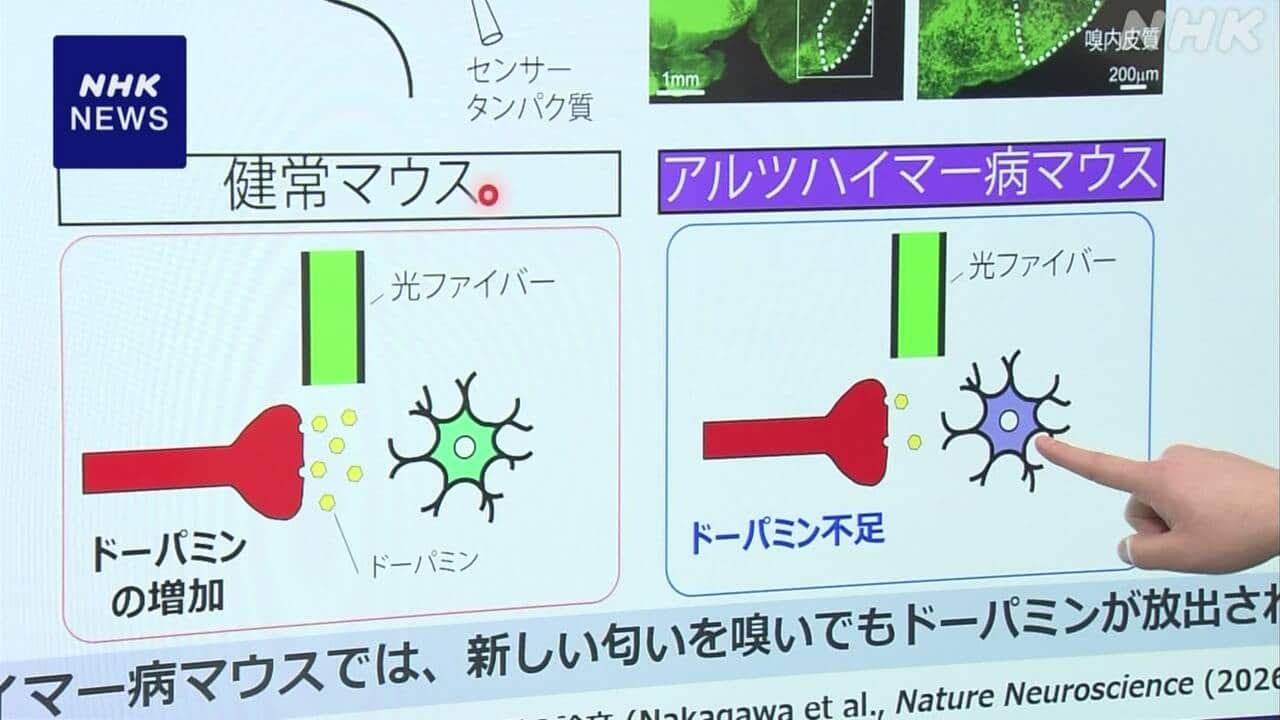
アルツハイマー病で生じる記憶障害の原因にドーパミンと呼ばれる神経伝達物質の不足が深く関わっていることがマウスを使った実験で示されたと、東北大学などの研究グループが発表しました。
東北大学大学院医学系研究科の五十嵐啓 国際卓越教授などの研究グループは、アルツハイマー病の状態を再現したマウスを使って脳の「嗅内皮質」という部分にどのような変化が起きているか詳しく調べました。
その結果、嗅内皮質ではドーパミンという神経伝達物質が正常なマウスよりも5分の1程度に減少していることが分かったということです。
このグループの別の研究では嗅内皮質がドーパミンの働きで記憶に作用していることが示されていることから、今回、アルツハイマー病を再現したマウスにドーパミンを補充する薬を投与するなどしたところ記憶力の改善がみられたということです。
研究グループはアルツハイマー病で生じる記憶障害の原因に、嗅内皮質のドーパミンの不足が深く関わっていることが示されたとしています。
アルツハイマー病の患者では初期に嗅内皮質に異常が起きることが知られていて、研究グループの中川達貴 助教は「今後、ヒトでも研究を進め、アルツハイマー病による記憶障害を改善する治療薬の開発につなげたい」としています。
この研究結果は、国際的な科学雑誌「ネイチャー・ニューロサイエンス」に掲載されました。
東北大学大学院医学系研究科の五十嵐啓 国際卓越教授などの研究グループは、アルツハイマー病の状態を再現したマウスを使って脳の「嗅内皮質」という部分にどのような変化が起きているか詳しく調べました。
その結果、嗅内皮質ではドーパミンという神経伝達物質が正常なマウスよりも5分の1程度に減少していることが分かったということです。
このグループの別の研究では嗅内皮質がドーパミンの働きで記憶に作用していることが示されていることから、今回、アルツハイマー病を再現したマウスにドーパミンを補充する薬を投与するなどしたところ記憶力の改善がみられたということです。
研究グループはアルツハイマー病で生じる記憶障害の原因に、嗅内皮質のドーパミンの不足が深く関わっていることが示されたとしています。
アルツハイマー病の患者では初期に嗅内皮質に異常が起きることが知られていて、研究グループの中川達貴 助教は「今後、ヒトでも研究を進め、アルツハイマー病による記憶障害を改善する治療薬の開発につなげたい」としています。
この研究結果は、国際的な科学雑誌「ネイチャー・ニューロサイエンス」に掲載されました。
Vocabulary
General
Proper noun
JLPT N2
JLPT N1
| # | 言葉 | 意味 |
|---|---|---|
| 6 | アルツハイマー病 | アルツハイマーびょう (アルツハイマー病) : Alzheimer's disease |
| 5 | 内皮 | ないひ (内皮) : endothelium; endodermis |
| 4 | 研究グループ | けんきゅうグループ (研究グループ) : research group |
| 3 | 記憶障害 | きおくしょうがい (記憶障害) : defect of memory |
| 3 | 示す | しめす (示す) : 1. to (take out and) show; to demonstrate; to tell; to exemplify; to make apparent 2. to point out (finger, clock hand, needle, etc.) |
| 2 | 生じる | しょうじる (生じる) : 1. to produce; to yield; to cause 2. to result from; to arise; to be generated |
| 2 | 神経伝達物質 | しんけいでんたつぶっしつ (神経伝達物質) : neurotransmitter |
| 2 | 不足 | ふそく (不足) : 1. insufficiency; deficiency; shortage; lack; scarcity; deficit 2. dissatisfaction; discontent; complaint |
| 2 | 深く | ふかく (深く) : deeply; intimately; heartily; sincerely; profoundly |
| 2 | 関わる | かかわる (関わる) : 1. to be affected; to be influenced 2. to be concerned with; to have to do with |
| 2 | 東北大学 | とうほくだいがく (東北大学) : Tohoku University (organization) |
| 2 | 再現 | さいげん (再現) : 1. reappearance; reemergence; return; revival 2. reproduction; reenactment; recreation |
| 2 | 結果 | けっか (結果) : 1. result; consequence; outcome; effect 2. coming to fruition; bearing fruit |
| 2 | 改善 | かいぜん (改善) : 1. betterment; improvement 2. kaizen (Japanese business philosophy of continuous improvement) |
| 1 | 呼ぶ | よぶ (呼ぶ) : 1. to call out (to); to call; to invoke 2. to summon (a doctor, etc.) |
| 1 | 実験 | じっけん (実験) : experiment |
| 1 | 発表 | はっぴょう (発表) : announcement; publication; presenting; statement; communique; making known; breaking (news story); expressing (one's opinion); releasing; unveiling |
| 1 | 大学院 | だいがくいん (大学院) : graduate school |
| 1 | 系 | けい (系) : 1. system; lineage; group 2. corollary |
| 1 | 研究科 | けんきゅうか (研究科) : postgraduate course; graduate course |
| 1 | 五十嵐 | いかざき (五十嵐) : Ikazaki (surname) |
| 1 | 卓越 | たくえつ (卓越) : preeminence; excellence; superiority; transcendence |
| 1 | 教授 | きょうじゅ (教授) : 1. professor 2. teaching; instruction |
| 1 | 状態 | じょうたい (状態) : state; condition; situation; appearance; circumstances |
| 1 | 脳 | のう (脳) : 1. brain 2. brains; mind |
| 1 | 部分 | ぶぶん (部分) : portion; section; part |
| 1 | 変化 | へんか (変化) : 1. change; variation; alteration; mutation; transition; transformation; transfiguration; metamorphosis 2. variety; diversity |
| 1 | 起きる | おきる (起きる) : 1. to get up; to rise; to blaze up (fire) 2. to wake up; to be awake; to stay awake |
| 1 | 詳しく | くわしく (詳しく) : in detail; fully; minutely; at length |
| 1 | 調べる | しらべる (調べる) : to examine; to look up; to investigate; to check up; to sense; to study; to inquire; to search |
| 1 | 正常 | せいじょう (正常) : normalcy; normality; normal |
| 1 | 程度 | ていど (程度) : degree; amount; grade; standard; of the order of (following a number); about; approximately |
| 1 | 減少 | げんしょう (減少) : decrease; reduction; decline |
| 1 | 分かる | わかる (分かる) : 1. to understand; to comprehend; to grasp; to see; to get; to follow 2. to become clear; to be known; to be discovered; to be realized; to be realised; to be found out |
| 1 | 働き | はたらき (働き) : 1. work; labor; labour 2. achievement; performance; ability; talent |
| 1 | 記憶 | きおく (記憶) : 1. memory; recollection; remembrance 2. storage |
| 1 | 作用 | さよう (作用) : action; operation; effect; function |
| 1 | 補充 | ほじゅう (補充) : replenishment; supplementation; supplement; replacement; refilling |
| 1 | 投与 | とうよ (投与) : administration (of medicine) |
| 1 | 記憶力 | きおくりょく (記憶力) : memory; ability to remember |
| 1 | 患者 | かんじゃ (患者) : patient |
| 1 | 初期 | しょき (初期) : 1. early (days); initial stage 2. initial |
| 1 | 異常 | いじょう (異常) : strangeness; abnormality; disorder |
| 1 | 知る | しる (知る) : 1. to be aware of; to know; to be conscious of; to cognize; to cognise 2. to notice; to feel |
| 1 | 中川 | なかかわ (中川) : Nakakawa (surname) |
| 1 | 達貴 | たつき (達貴) : Tatsuki (unclass) |
| 1 | 助教 | じょきょう (助教) : assistant professor |
| 1 | 今後 | こんご (今後) : from now on; hereafter |
| 1 | 進める | すすめる (進める) : 1. to advance; to move forward; to put (a clock, watch) forward 2. to carry forward (plans, work, etc.); to proceed with; to make progress in; to further; to advance; to hasten; to speed up |
| 1 | 治療薬 | ちりょうやく (治療薬) : remedy; cure; therapeutic medication |
| 1 | 開発 | かいはつ (開発) : development; exploitation |
| 1 | つなげる | つなげる (繋げる) : 1. to connect 2. to tie; to fasten |
| 1 | 国際的 | こくさいてき (国際的) : international |
| 1 | 科学雑誌 | かがくざっし (科学雑誌) : science magazine |
| 1 | 掲載 | けいさい (掲載) : publication (e.g. of an article in a newspaper); carrying (e.g. a story); running (e.g. a serial); insertion (e.g. of an advertisement); printing; posting (e.g. on the web) |