Roblox、年齢別アカウント開始 9歳未満と16歳未満の2区分
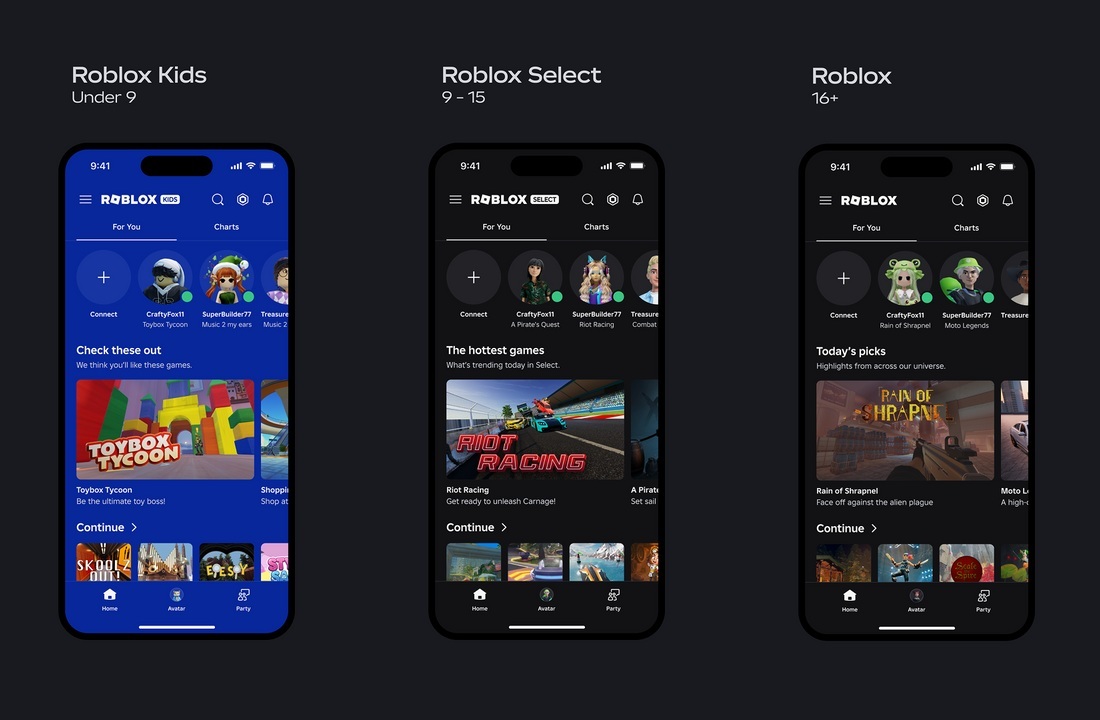
オンラインゲームプラットフォーム「Roblox(ロブロックス)」は、低年齢層のユーザー向けに新しい年齢別アカウントを6月上旬から導入する。5歳~8歳向けの「Roblox Kids」と、9歳~15歳向けの「Roblox Select」の2種類を用意。
新しいアカウント区分により、コンテンツへのアクセス、コミュニケーション設定、ペアレンタルコントロールが、ユーザーの年齢により調整されるようになる。16歳未満のユーザーが利用できるゲームは、継続的な審査プロセスを確立する。
5歳~8歳向けは、同社のグローバル年齢確認技術、もしくは保護者が確認済みとした場合に、自動的にRoblox Kidsアカウントに割り当てられる。Roblox Kidsではコミュニケーション機能はデフォルトで無効化される。
9歳~15歳向けは、同社の統一年齢確認システムによる判定、もしくは保護者が確認するとRoblox Selectアカウントとなる。デフォルトの通信設定は変更されない。
コンテンツの選定には3段階のプロセスを採用。Roblox Kidsは「Minimal(最小限)」または「Mild(軽度)」ラベルが付いたゲームに、Roblox Selectは「中程度(Moderate)」以下のゲームに限定される。アカウントの種類を判別できるよう独自のデザインを採用している。
いずれもゲームは厳選して収録されるが、収録ゲーム数は数千におよぶ。同社によると、サービス開始時点ではお気に入りのゲームの大部分にアクセスでき、Robloxでの体験に変更はないとする。なお選定内容は動的に更新される。
年齢確認が完了していない場合は、「Minimal」または「Mild」と評価されたゲームのみ利用でき、すべてのコミュニケーション機能も利用不可。年齢確認が完了すると、該当する年齢別アカウントに移行する。
アカウントの移行は年齢に応じて自動で行なわれ、9歳になるとRoblox KidsからRoblox Selectに、16歳になるとRoblox Selectから標準のRobloxアカウントに自動で移行する。
保護者がコンテンツのレーティング、通信設定、スクリーンタイムや支出の制限を管理できる「ペアレンタルコントロール」機能も拡充。子供がどのゲームで時間を過ごしているか、友達が誰であるかを透明性のあるかたちで表示する。
新たな管理機能も追加。子供が16歳になるまでは、特定のゲームを個別でブロックできるほか、チャット設定も管理可能。また、区分された年齢別アカウントでは利用できないゲームについて、保護者が利用承認することもできる。
オンラインゲームプラットフォーム「Roblox(ロブロックス)」は、低年齢層のユーザー向けに新しい年齢別アカウントを6月上旬から導入する。5歳~8歳向けの「Roblox Kids」と、9歳~15歳向けの「Roblox Select」の2種類を用意。 新しいアカウント区分により、コンテンツへのアクセス、コミュニケーション設定、ペアレンタルコントロールが、ユーザーの年齢により調整されるようになる。16歳未満のユーザーが利用できるゲームは、継続的な審査プロセスを確立する。 5歳~8歳向けは、同社のグローバル年齢確認技術、もしくは保護者が確認済みとした場合に、自動的にRoblox Kidsアカウントに割り当てられる。Roblox Kidsではコミュニケーション機能はデフォルトで無効化される。 9歳~15歳向けは、同社の統一年齢確認システムによる判定、もしくは保護者が確認するとRoblox Selectアカウントとなる。デフォルトの通信設定は変更されない。 コンテンツの選定には3段階のプロセスを採用。Roblox Kidsは「Minimal(最小限)」または「Mild(軽度)」ラベルが付いたゲームに、Roblox Selectは「中程度(Moderate)」以下のゲームに限定される。アカウントの種類を判別できるよう独自のデザインを採用している。 いずれもゲームは厳選して収録されるが、収録ゲーム数は数千におよぶ。同社によると、サービス開始時点ではお気に入りのゲームの大部分にアクセスでき、Robloxでの体験に変更はないとする。なお選定内容は動的に更新される。 年齢確認が完了していない場合は、「Minimal」または「Mild」と評価されたゲームのみ利用でき、すべてのコミュニケーション機能も利用不可。年齢確認が完了すると、該当する年齢別アカウントに移行する。 アカウントの移行は年齢に応じて自動で行なわれ、9歳になるとRoblox KidsからRoblox Selectに、16歳になるとRoblox Selectから標準のRobloxアカウントに自動で移行する。 保護者がコンテンツのレーティング、通信設定、スクリーンタイムや支出の制限を管理できる「ペアレンタルコントロール」機能も拡充。子供がどのゲームで時間を過ごしているか、友達が誰であるかを透明性のあるかたちで表示する。 新たな管理機能も追加。子供が16歳になるまでは、特定のゲームを個別でブロックできるほか、チャット設定も管理可能。また、区分された年齢別アカウントでは利用できないゲームについて、保護者が利用承認することもできる。
オンラインゲームプラットフォーム「Roblox(ロブロックス)」は、低年齢層のユーザー向けに新しい年齢別アカウントを6月上旬から導入する。5歳~8歳向けの「Roblox Kids」と、9歳~15歳向けの「Roblox Select」の2種類を用意。 新しいアカウント区分により、コンテンツへのアクセス、コミュニケーション設定、ペアレンタルコントロールが、ユーザーの年齢により調整されるようになる。16歳未満のユーザーが利用できるゲームは、継続的な審査プロセスを確立する。 5歳~8歳向けは、同社のグローバル年齢確認技術、もしくは保護者が確認済みとした場合に、自動的にRoblox Kidsアカウントに割り当てられる。Roblox Kidsではコミュニケーション機能はデフォルトで無効化される。 9歳~15歳向けは、同社の統一年齢確認システムによる判定、もしくは保護者が確認するとRoblox Selectアカウントとなる。デフォルトの通信設定は変更されない。 コンテンツの選定には3段階のプロセスを採用。Roblox Kidsは「Minimal(最小限)」または「Mild(軽度)」ラベルが付いたゲームに、Roblox Selectは「中程度(Moderate)」以下のゲームに限定される。アカウントの種類を判別できるよう独自のデザインを採用している。 いずれもゲームは厳選して収録されるが、収録ゲーム数は数千におよぶ。同社によると、サービス開始時点ではお気に入りのゲームの大部分にアクセスでき、Robloxでの体験に変更はないとする。なお選定内容は動的に更新される。 年齢確認が完了していない場合は、「Minimal」または「Mild」と評価されたゲームのみ利用でき、すべてのコミュニケーション機能も利用不可。年齢確認が完了すると、該当する年齢別アカウントに移行する。 アカウントの移行は年齢に応じて自動で行なわれ、9歳になるとRoblox KidsからRoblox Selectに、16歳になるとRoblox Selectから標準のRobloxアカウントに自動で移行する。 保護者がコンテンツのレーティング、通信設定、スクリーンタイムや支出の制限を管理できる「ペアレンタルコントロール」機能も拡充。子供がどのゲームで時間を過ごしているか、友達が誰であるかを透明性のあるかたちで表示する。 新たな管理機能も追加。子供が16歳になるまでは、特定のゲームを個別でブロックできるほか、チャット設定も管理可能。また、区分された年齢別アカウントでは利用できないゲームについて、保護者が利用承認することもできる。
Vocabulary
General
Proper noun
JLPT N2
JLPT N1
| # | 言葉 | 意味 |
|---|---|---|
| 10 | 向け | むけ (向け) : intended for ...; oriented towards ...; aimed at ... |
| 10 | 年齢 | ねんれい (年齢) : age; years |
| 8 | ~ | にょろ (~) : tilde; wave dash |
| 8 | 設定 | せってい (設定) : 1. establishment; creation; posing (a problem); setting (movie, novel, etc.); scene 2. options setting; preference settings; configuration; setup |
| 8 | 年齢確認 | ねんれいかくにん (年齢確認) : age verification |
| 8 | 保護者 | ほごしゃ (保護者) : guardian; protector; patron; parent |
| 8 | 機能 | きのう (機能) : function; facility; faculty; feature |
| 6 | 別アカウント | べつアカウント (別アカウント) : alternate account; alternative account; separate account; alt account; alt |
| 6 | 同社 | どうしゃ (同社) : the same firm |
| 6 | 移行 | いこう (移行) : switching over to; migration; transition |
| 6 | 管理 | かんり (管理) : control; management (e.g. of a business) |
| 4 | 種類 | しゅるい (種類) : 1. variety; kind; type; category 2. counter for kinds, species, etc. |
| 4 | 区分 | くぶん (区分) : division; section; demarcation; partition; segmentation; subdivision; (traffic) lane; compartment; classification; sorting |
| 4 | もしくは | もしくは (若しくは) : or; otherwise |
| 4 | 確認 | かくにん (確認) : confirmation; verification; validation; review; check; affirmation; identification |
| 4 | 通信 | つうしん (通信) : correspondence; communication; transmission; news; signal; telecommunications |
| 4 | 変更 | へんこう (変更) : change; modification; alteration; revision; amendment |
| 4 | 選定 | せんてい (選定) : selection |
| 4 | 採用 | さいよう (採用) : 1. use; adoption; acceptance 2. appointment; employment; engagement; recruitment |
| 4 | 収録 | しゅうろく (収録) : 1. compilation; editing 2. recording |
| 4 | 完了 | かんりょう (完了) : 1. completion; conclusion 2. perfect (tense, form, aspect) |
| 4 | 自動 | じどう (自動) : 1. automatic 2. intransitive verb |
| 2 | 低 | てい (低) : low (level, value, price, etc.) |
| 2 | 年齢層 | ねんれいそう (年齢層) : age range; age-group; age bracket |
| 2 | 上旬 | じょうじゅん (上旬) : first 10 days of month |
| 2 | 導入 | どうにゅう (導入) : introduction; bringing in; leading in; installation |
| 2 | 調整 | ちょうせい (調整) : adjustment; regulation; coordination; reconciliation; tuning; fixing; tailoring |
| 2 | 未満 | みまん (未満) : less than; under; below |
| 2 | 継続的 | けいぞくてき (継続的) : continuous |
| 2 | 審査 | しんさ (審査) : judging; inspection; examination; investigation; review |
| 2 | 確立 | かくりつ (確立) : establishment; settlement |
| 2 | 済み | ずみ (済み) : arranged; taken care of; settled; completed; finished |
| 2 | 自動的 | じどうてき (自動的) : automatic |
| 2 | 割り当てる | わりあてる (割り当てる) : to assign; to allot; to allocate; to divide among; to distribute; to prorate; to apportion |
| 2 | 無効化 | むこうか (無効化) : 1. disabling; invalidation; nullification; override; voiding; circumvention 2. vitiation |
| 2 | 統一 | とういつ (統一) : unity; consolidation; uniformity; unification; compatible |
| 2 | 判定 | はんてい (判定) : judgement; judgment; decision; adjudication; award; verdict; determination |
| 2 | 段階 | だんかい (段階) : grade; level; stage; class; phase; steps; order; gradation |
| 2 | 最小限 | さいしょうげん (最小限) : minimum; lowest; minimal; least |
| 2 | 軽度 | けいど (軽度) : slight (degree); light |
| 2 | 程度 | ていど (程度) : degree; amount; grade; standard; of the order of (following a number); about; approximately |
| 2 | 限定 | げんてい (限定) : limit; restriction |
| 2 | 判別 | はんべつ (判別) : distinction; discrimination; distinguishing; discernment |
| 2 | 独自 | どくじ (独自) : 1. original; unique; distinctive; characteristic; peculiar 2. independent; one's own; personal |
| 2 | いずれ | いずれ (何れ) : 1. where; which; who 2. anyway; anyhow; at any rate |
| 2 | 厳選 | げんせん (厳選) : careful selection; careful screening; hand-picking |
| 2 | 数 | しばしば (屡々) : often; again and again; frequently; repeatedly |
| 2 | およぶ | およぶ (及ぶ) : 1. to reach; to amount to; to befall; to happen to; to extend; to go on (for, until) 2. to be up to the task; to come up to |
| 2 | 時点 | じてん (時点) : point in time; occasion |
| 2 | お気に入り | おきにいり (お気に入り) : 1. favorite; favourite; pet (e.g. teacher's pet) 2. bookmark (in web browser) |
| 2 | 大部分 | だいぶぶん (大部分) : most part; greater part; majority |
| 2 | 体験 | たいけん (体験) : (practical) experience; personal experience; hands-on experience; first-hand experience |
| 2 | なお | なお (尚) : 1. still; yet 2. more; still more; greater; further |
| 2 | 内容 | ないよう (内容) : contents; content; substance; matter; detail; import |
| 2 | 動的 | どうてき (動的) : dynamic; kinetic |
| 2 | 更新 | こうしん (更新) : renewal; update; innovation; improvement |
| 2 | 評価 | ひょうか (評価) : 1. valuation; appraisal; evaluation; assessment; estimation; rating; judging 2. appreciation; recognition; acknowledgement; rating highly; praising |
| 2 | のみ | のみ : only; nothing but |
| 2 | 不可 | ふか (不可) : 1. wrong; bad; improper; unjustifiable; inadvisable 2. not allowed; not possible |
| 2 | 該当 | がいとう (該当) : corresponding to; being applicable to; being relevant to; coming under; falling under; fulfilling (requirements); meeting (conditions); qualifying for |
| 2 | 応ずる | おうずる (応ずる) : 1. to answer; to respond; to meet 2. to satisfy; to accept |
| 2 | 行なう | おこなう (行う) : to perform; to do; to conduct oneself; to carry out |
| 2 | 標準 | ひょうじゅん (標準) : standard; level; norm |
| 2 | 支出 | ししゅつ (支出) : expenditure; disbursement; expenses |
| 2 | 制限 | せいげん (制限) : restriction; restraint; limitation; limit |
| 2 | 拡充 | かくじゅう (拡充) : expansion |
| 2 | 過ごす | すごす (過ごす) : 1. to pass (time); to spend 2. to overdo (esp. of one's alcohol consumption); to drink (alcohol) |
| 2 | 透明性 | とうめいせい (透明性) : transparency |
| 2 | 表示 | ひょうじ (表示) : 1. indication; expression; showing; manifestation; demonstration 2. display; displaying |
| 2 | 新た | あらた (新た) : new; fresh; novel |
| 2 | 追加 | ついか (追加) : addition; supplement; appending; appendix |
| 2 | 特定 | とくてい (特定) : 1. specific; particular; designated; special 2. specifying; designating; identifying; pinpointing |
| 2 | 個別 | こべつ (個別) : individual; separate; personal; case-by-case |
| 2 | 可能 | かのう (可能) : possible; potential; practicable; feasible |
| 2 | 承認 | しょうにん (承認) : recognition; acknowledgement; acknowledgment; approval; consent; agreement |