パキスタンとアフガン 衝突続く 双方主張の犠牲者320人以上
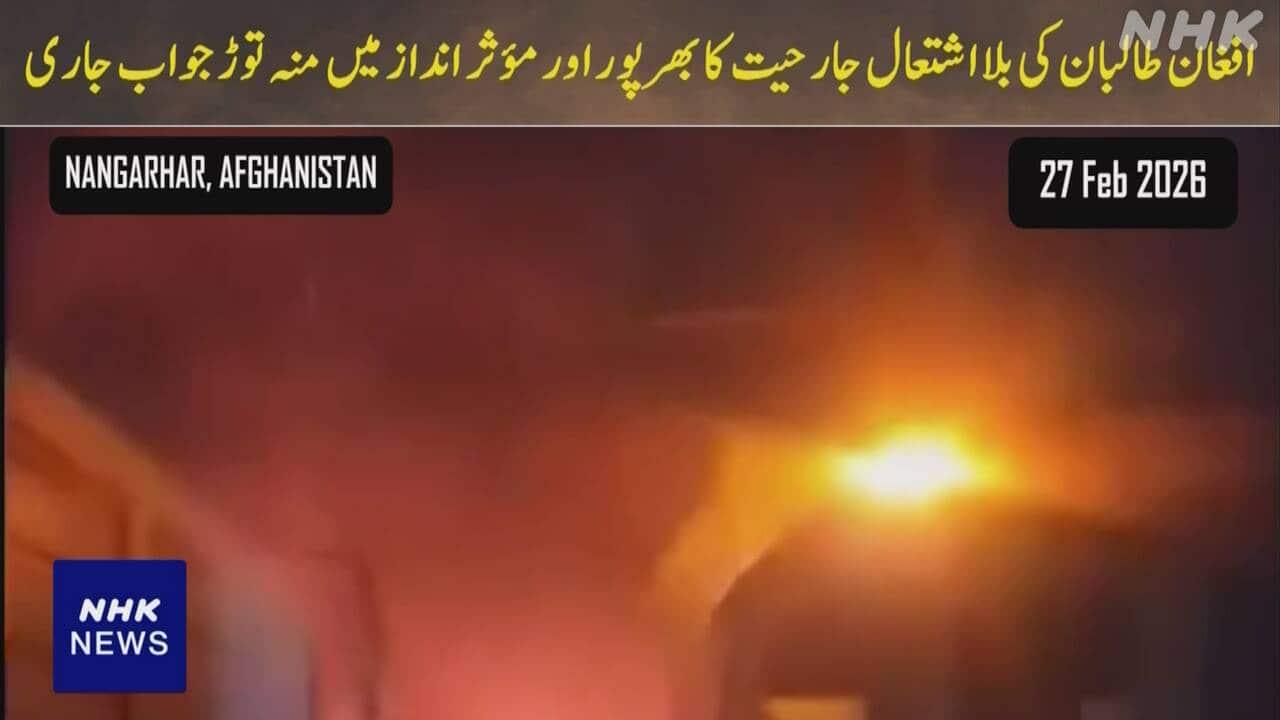
パキスタンとアフガニスタンの間では、27日夜もパキスタンが空爆を続けるなど武力衝突が続き、双方が主張する犠牲者は320人以上に上っています。各国が停戦に向けた働きかけを始めていますが、事態の沈静化につながるかは不透明な情勢です。
パキスタンとアフガニスタンの間では、国境付近の過激派への対応をめぐって26日から武力衝突が発生し、パキスタン軍はアフガニスタンの首都カブールなどを空爆しています。
さらに、パキスタンの治安当局者によりますと、パキスタン軍は27日夜、アフガニスタン東部ナンガルハル州の軍事施設を標的に空爆を行ったということです。
空爆に先立って、パキスタン軍の報道官は記者会見し、アフガニスタンで実権を握るタリバン暫定政権の関係者や兵士274人を殺害したと主張しました。
双方が殺害したと主張する兵士などの数は、これまでに合わせて320人以上に上っています。
一方、タリバン暫定政権の報道官は27日夜に開いた記者会見で、武力衝突の原因はパキスタン側にあると非難しつつ、対話を通じた問題の解決を望む考えを示しました。
中国やロシア、それにトルコなどが停戦に向けて両国に働きかけを始めていますが、パキスタン側は強硬な姿勢を崩しておらず、事態の沈静化につながるかは不透明な情勢です。
パキスタンとアフガニスタンの間では、国境付近の過激派への対応をめぐって26日から武力衝突が発生し、パキスタン軍はアフガニスタンの首都カブールなどを空爆しています。
さらに、パキスタンの治安当局者によりますと、パキスタン軍は27日夜、アフガニスタン東部ナンガルハル州の軍事施設を標的に空爆を行ったということです。
空爆に先立って、パキスタン軍の報道官は記者会見し、アフガニスタンで実権を握るタリバン暫定政権の関係者や兵士274人を殺害したと主張しました。
双方が殺害したと主張する兵士などの数は、これまでに合わせて320人以上に上っています。
一方、タリバン暫定政権の報道官は27日夜に開いた記者会見で、武力衝突の原因はパキスタン側にあると非難しつつ、対話を通じた問題の解決を望む考えを示しました。
中国やロシア、それにトルコなどが停戦に向けて両国に働きかけを始めていますが、パキスタン側は強硬な姿勢を崩しておらず、事態の沈静化につながるかは不透明な情勢です。
Vocabulary
General
Proper noun
JLPT N2
JLPT N1
| # | 言葉 | 意味 |
|---|---|---|
| 4 | 空爆 | くうばく (空爆) : aerial bombing |
| 3 | 武力衝突 | ぶりょくしょうとつ (武力衝突) : military conflict; armed conflict |
| 3 | 主張 | しゅちょう (主張) : claim; insistence; assertion; advocacy; emphasis; contention; opinion; tenet |
| 2 | 双方 | そうほう (双方) : both parties; both sides |
| 2 | 上る | あがる (上がる) : 1. to rise; to go up; to come up; to ascend; to be raised 2. to enter (esp. from outdoors); to come in; to go in |
| 2 | 停戦 | ていせん (停戦) : armistice; ceasefire |
| 2 | 働きかけ | はたらきかけ (働きかけ) : pressure; encouragement; urging; promoting |
| 2 | 事態 | じたい (事態) : situation; (present) state of affairs; circumstances |
| 2 | 沈静 | ちんせい (沈静) : stillness; tranquility; tranquillity; dullness |
| 2 | 化 | か (化) : action of making something; -ification |
| 2 | つながる | つながる (繋がる) : 1. to be tied together; to be connected to; to be linked to 2. to lead to; to be related to |
| 2 | 不透明 | ふとうめい (不透明) : 1. opaque; obscure; murky; turbid 2. opacity; obscurity |
| 2 | 情勢 | じょうせい (情勢) : state of things; state of affairs; condition; situation; circumstances |
| 2 | 報道官 | ほうどうかん (報道官) : press officer; press secretary |
| 2 | 記者会見 | きしゃかいけん (記者会見) : press conference |
| 2 | 暫定 | ざんてい (暫定) : provisional; temporary; tentative |
| 2 | 政権 | せいけん (政権) : (political) administration; political power |
| 2 | 兵士 | へいし (兵士) : soldier |
| 2 | 殺害 | さつがい (殺害) : killing; murder |
| 1 | 犠牲者 | ぎせいしゃ (犠牲者) : victim |
| 1 | 各国 | かっこく (各国) : 1. each nation 2. many nations; many countries |
| 1 | 過激派 | かげきは (過激派) : radical party; extremists |
| 1 | 対応 | たいおう (対応) : 1. correspondence (to); equivalence 2. suitability; coordination; matching; being appropriate (for) |
| 1 | めぐる | めぐる (巡る) : 1. to go around 2. to return |
| 1 | 発生 | はっせい (発生) : 1. outbreak; spring forth; occurrence; incidence 2. generation (e.g. of power or heat); genesis; origin |
| 1 | 首都 | しゅと (首都) : capital city; metropolis |
| 1 | 治安 | ちあん (治安) : public order |
| 1 | 当局者 | とうきょくしゃ (当局者) : authority (person) |
| 1 | 東部 | とうぶ (東部) : eastern part; the east (of a region) |
| 1 | 州 | しゅう (州) : 1. state (US, Australia, India, Germany, etc.); province (e.g. Canada); canton (e.g. Switzerland); oblast (e.g. Russia); department (e.g. ancient China) 2. continent |
| 1 | 軍事施設 | ぐんじしせつ (軍事施設) : military installations |
| 1 | 標的 | ひょうてき (標的) : target |
| 1 | 先立つ | さきだつ (先立つ) : 1. to lead; to take the lead (in doing something) 2. to precede; to go before; to take precedence |
| 1 | 実権 | じっけん (実権) : real power |
| 1 | 握る | にぎる (握る) : 1. to clasp; to grasp; to grip; to clutch 2. to make (nigirizushi, rice ball, etc.); to form; to press into shape; to mold; to mould |
| 1 | 関係者 | かんけいしゃ (関係者) : person concerned; people involved (in an event); those concerned; staff |
| 1 | 数 | しばしば (屡々) : often; again and again; frequently; repeatedly |
| 1 | 合わせる | あわせる (合わせる) : 1. to match (rhythm, speed, etc.) 2. to join together; to unite; to combine; to add up |
| 1 | 開く | ひらく (開く) : 1. to open; to undo; to unseal; to unpack 2. to bloom; to unfold; to spread out |
| 1 | 非難 | ひなん (非難) : criticism; blame; censure; attack; reproach |
| 1 | 対話 | たいわ (対話) : dialogue; discussion; conversation; interaction |
| 1 | 通ずる | つうずる (通ずる) : 1. to be open (to traffic); to lead to; to communicate (with) 2. to flow (liquid, current); to pass; to get through to |
| 1 | 解決 | かいけつ (解決) : settlement; solution; resolution |
| 1 | 望む | のぞむ (望む) : 1. to desire 2. to wish for; to expect |
| 1 | 考え | かんがえ (考え) : 1. thinking; thought; view; opinion; concept 2. idea; notion; imagination |
| 1 | 示す | しめす (示す) : 1. to (take out and) show; to demonstrate; to tell; to exemplify; to make apparent 2. to point out (finger, clock hand, needle, etc.) |
| 1 | 中国 | ちゅうごく (中国) : 1. China 2. Chūgoku region of western Honshu (incl. Okayama, Hiroshima, Shimane, Tottori and Yamaguchi prefectures) |
| 1 | 両国 | りょうこく (両国) : 1. both countries 2. Ryōgoku (area of Tokyo) |
| 1 | 強硬 | きょうこう (強硬) : firm; strong; unbending; unyielding; uncompromising; stubborn; tough; hard-line |
| 1 | 姿勢 | しせい (姿勢) : 1. posture; pose; position; stance; carriage (of the body) 2. attitude; approach; stance |
| 1 | 崩す | くずす (崩す) : 1. to destroy; to demolish; to pull down; to tear down; to level 2. to disturb; to put into disorder; to throw off balance; to make shaky |