トランプ大統領 停戦延長と投稿 イランとの協議が結論至るまで
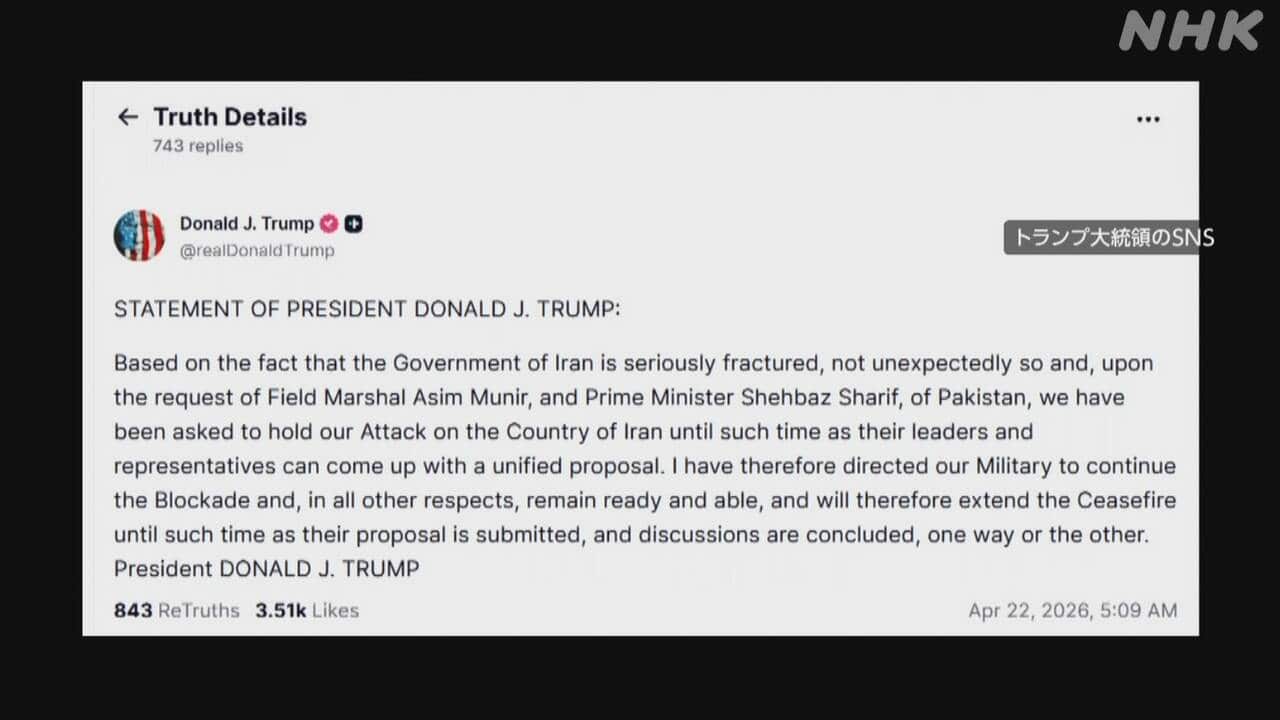
アメリカのトランプ大統領は、イランとの停戦の期限が迫るなか、21日、SNSへの投稿で、仲介国パキスタンからイランへの攻撃を控えるよう要請されたとした上で「停戦を延長する」と明らかにしました。一方、イランの革命防衛隊とつながりのある「タスニム通信」は、複数の関係者の話として「イランは停戦延長を要請していない」と伝えています。
アメリカとイランが合意した2週間の停戦について、トランプ大統領は、アメリカ東部時間の22日の夜、日本時間の23日午前が停戦の期限だとしていました。
これについて、トランプ大統領は21日、SNSに、仲介国パキスタンからイランへの攻撃を控えるよう要請されたとした上で「イランからの提案が提出されて、協議が何らかの形で結論に至るまで停戦を延長する」と投稿しました。停戦の期限など詳しいことは明らかにしていません。
一方、イランの港に出入りする船舶への封鎖措置は継続するようアメリカ軍に指示したとしています。
イラン側からの公式な反応は出ていませんが、革命防衛隊とつながりのある「タスニム通信」は22日、複数の関係者の話として「イランは停戦延長を要請していない」と伝えています。
そのうえで、「停戦延長の発表は、トランプが、戦争によって何も達成できないことを知り、戦争から撤退するための最善策を検討していることを意味している」としています。
また、イランの港に出入りする船舶への封鎖措置を継続するようアメリカ軍に指示したことについて「敵対行為に等しい。封鎖が続くかぎり、イランはホルムズ海峡を開かず、必要であれば、武力で封鎖を突破する」と伝えています。
アメリカとイランの停戦をめぐって、仲介国のパキスタンのダール外相は21日、パキスタンに駐在するアメリカのベーカー臨時代理大使と会談しアメリカとイランの双方に停戦の延長を検討するよう促していました。
しかし、ロイター通信は、トランプ大統領の発表を前にイランの高官が「アメリカが圧力や脅しの政策をやめれば、イランは協議に出席する可能性がある。降伏を目的とした交渉は拒否する」と述べたと伝えていて2回目の対面協議が実現するのかは依然として不透明な状況です。
トランプ大統領の発表を受けて仲介国のパキスタンのシャリフ首相はSNSに「トランプ大統領が、停戦延長の要請を快く受け入れ、外交努力が順調に進むよう配慮いただいたことに心より感謝申し上げる」と投稿しました。
その上で、「双方が引き続き停戦を順守し、紛争の恒久的な終結に向けてイスラマバードで予定されている2回目の協議において包括的な『和平合意』を締結できることを心から願っている」と述べました。
アメリカのホワイトハウスの当局者は、トランプ大統領がイラン側からの提案を待つとSNSで表明したことを受け、バンス副大統領の協議のためのパキスタンへの訪問は21日には行われないと明らかにしました。
アメリカとイランの2回目の対面での協議をめぐり、アメリカの有力紙ウォール・ストリート・ジャーナルは21日、複数の関係者の話としてバンス副大統領がパキスタンに向けた出発を取りやめたいきさつを報じました。
記事によりますと、バンス副大統領は21日にワシントンを出発しパキスタンの首都イスラマバードで協議を行う予定だったものの、ホワイトハウス内で立て続けに会合が行われたあと出発がいったん取りやめになったとしています。
その理由について関係者は、イランが協議への参加を確約しなかったことを挙げているということです。
また、別の関係者の話として、バンス副大統領は依然として今週後半にかけて出発する可能性はある一方、トランプ大統領は、イラン側がウラン濃縮に関する要求を受け入れる意思がないことを理由に訪問の全面的な取りやめも検討していると伝えています。
アメリカのトランプ大統領は、21日、経済チャンネルCNBCとの電話インタビューの中で、イランとの2回目の対面協議について「イラン側は代表団を派遣する以外に選択肢がない。われわれは最終的にすばらしい合意に達するだろう」と主張しました。
また、停戦合意を延長したくないという考えを示した上でイラン側の交渉姿勢について「彼らは血に飢えているようで、残念ながらタフな人たちが率いている。これは褒めことばではなく、イランにとって悪いことだ。なぜならわれわれはもっとタフだからだ」と述べました。
その上で、合意に達しない場合の対応について「イランを爆撃することになる。われわれは準備ができていて、軍はやる気に満ちている」と述べ、攻撃を再開する可能性を示して、イランに圧力をかけました。
一方、「私はせかされていない。私には時間がある。よい合意ではなく、すばらしい合意を結びたいのだ」と述べ、妥協しない考えを強調しました。
トランプ大統領は21日、経済チャンネルCNBCの電話インタビューの中でアメリカが拿捕したとするイランに関連する船舶をめぐり、「船の中にあまり好ましくないものが積まれていた。おそらく中国からの贈り物だ」と述べ、中国からイランに向けて何らかの物資が輸送されていた可能性があるとの認識を示しました。
その上で、「私は少し驚いた。習近平国家主席の理解を得たと思っていたが、まぁいいだろう。戦争とはそういうものだ」と述べました。
トランプ大統領は習主席に対しイランに武器を供与しないよう求める書簡を送ったとしたうえで、今月15日に「彼らは武器を送らないことに合意した」と主張していました。
ロイター通信は、アメリカ軍が拿捕したとするイラン船籍の貨物船「トゥスカ」について、先月下旬に中国東部と南部の港に寄ったあと、マレーシアを経由してイラン方面に向かっていたとしています。
また、治安関係者の話として、船には、アメリカが軍事転用が可能とみなす、軍民両用物資が積まれていた可能性があると伝えています。
アメリカ財務省は21日、イランの武器やその部品の調達や輸送に関与したとして、イランやトルコ、UAE=アラブ首長国連邦を拠点とする14の個人や団体、それに航空機に対し、制裁を科すと発表しました。
ベッセント財務長官は「イランの体制は世界のエネルギー市場を脅かしていることの責任を問われなければならない。今後も、資金の流れを追跡し、イランの無謀な行動やそれを助長するものたちを標的とする」とコメントし、イランへの圧力を強める姿勢を改めて示しました。
イランのアラグチ外相は日本時間の22日午前3時すぎ、SNSに「イランの港を封鎖するのは戦争行為で、停戦違反だ。商船を攻撃し、乗組員を人質にとる行為は、さらに重大な違反だ。イランは、自国の利益を守る方法や威圧に抵抗する方法などを熟知している」と投稿しました。
イランの港を出入りする船舶への封鎖措置を続けるアメリカは19日、警告に従わなかったイラン船籍の貨物船を攻撃し拿捕したと発表していました。
アラグチ外相の投稿は、停戦期限が迫るなか、アメリカの措置に対するイラン側の反発を改めて示したかたちです。
イラン政府の報道官は21日、イランメディアに対し「われわれは望んでいないが、もしも攻撃があるなら、これまで以上に激しく反撃するだろう」と述べ、アメリカ側をけん制しました。
また革命防衛隊とつながりのある「タスニム通信」は21日、「停戦の期間が残りわずかとなり、アメリカの過剰な要求と、イランに対する海上封鎖で、新たな協議が実現しないことをふまえ、イランは戦闘再開の可能性に備えている。新たな衝突に備え、『サプライズ』も用意している」などと伝えています。
アメリカとイランが合意した2週間の停戦について、トランプ大統領は、アメリカ東部時間の22日の夜、日本時間の23日午前が停戦の期限だとしていました。
これについて、トランプ大統領は21日、SNSに、仲介国パキスタンからイランへの攻撃を控えるよう要請されたとした上で「イランからの提案が提出されて、協議が何らかの形で結論に至るまで停戦を延長する」と投稿しました。停戦の期限など詳しいことは明らかにしていません。
一方、イランの港に出入りする船舶への封鎖措置は継続するようアメリカ軍に指示したとしています。
イラン側からの公式な反応は出ていませんが、革命防衛隊とつながりのある「タスニム通信」は22日、複数の関係者の話として「イランは停戦延長を要請していない」と伝えています。
そのうえで、「停戦延長の発表は、トランプが、戦争によって何も達成できないことを知り、戦争から撤退するための最善策を検討していることを意味している」としています。
また、イランの港に出入りする船舶への封鎖措置を継続するようアメリカ軍に指示したことについて「敵対行為に等しい。封鎖が続くかぎり、イランはホルムズ海峡を開かず、必要であれば、武力で封鎖を突破する」と伝えています。
アメリカとイランの停戦をめぐって、仲介国のパキスタンのダール外相は21日、パキスタンに駐在するアメリカのベーカー臨時代理大使と会談しアメリカとイランの双方に停戦の延長を検討するよう促していました。
しかし、ロイター通信は、トランプ大統領の発表を前にイランの高官が「アメリカが圧力や脅しの政策をやめれば、イランは協議に出席する可能性がある。降伏を目的とした交渉は拒否する」と述べたと伝えていて2回目の対面協議が実現するのかは依然として不透明な状況です。
トランプ大統領の発表を受けて仲介国のパキスタンのシャリフ首相はSNSに「トランプ大統領が、停戦延長の要請を快く受け入れ、外交努力が順調に進むよう配慮いただいたことに心より感謝申し上げる」と投稿しました。
その上で、「双方が引き続き停戦を順守し、紛争の恒久的な終結に向けてイスラマバードで予定されている2回目の協議において包括的な『和平合意』を締結できることを心から願っている」と述べました。
アメリカのホワイトハウスの当局者は、トランプ大統領がイラン側からの提案を待つとSNSで表明したことを受け、バンス副大統領の協議のためのパキスタンへの訪問は21日には行われないと明らかにしました。
アメリカとイランの2回目の対面での協議をめぐり、アメリカの有力紙ウォール・ストリート・ジャーナルは21日、複数の関係者の話としてバンス副大統領がパキスタンに向けた出発を取りやめたいきさつを報じました。
記事によりますと、バンス副大統領は21日にワシントンを出発しパキスタンの首都イスラマバードで協議を行う予定だったものの、ホワイトハウス内で立て続けに会合が行われたあと出発がいったん取りやめになったとしています。
その理由について関係者は、イランが協議への参加を確約しなかったことを挙げているということです。
また、別の関係者の話として、バンス副大統領は依然として今週後半にかけて出発する可能性はある一方、トランプ大統領は、イラン側がウラン濃縮に関する要求を受け入れる意思がないことを理由に訪問の全面的な取りやめも検討していると伝えています。
アメリカのトランプ大統領は、21日、経済チャンネルCNBCとの電話インタビューの中で、イランとの2回目の対面協議について「イラン側は代表団を派遣する以外に選択肢がない。われわれは最終的にすばらしい合意に達するだろう」と主張しました。
また、停戦合意を延長したくないという考えを示した上でイラン側の交渉姿勢について「彼らは血に飢えているようで、残念ながらタフな人たちが率いている。これは褒めことばではなく、イランにとって悪いことだ。なぜならわれわれはもっとタフだからだ」と述べました。
その上で、合意に達しない場合の対応について「イランを爆撃することになる。われわれは準備ができていて、軍はやる気に満ちている」と述べ、攻撃を再開する可能性を示して、イランに圧力をかけました。
一方、「私はせかされていない。私には時間がある。よい合意ではなく、すばらしい合意を結びたいのだ」と述べ、妥協しない考えを強調しました。
トランプ大統領は21日、経済チャンネルCNBCの電話インタビューの中でアメリカが拿捕したとするイランに関連する船舶をめぐり、「船の中にあまり好ましくないものが積まれていた。おそらく中国からの贈り物だ」と述べ、中国からイランに向けて何らかの物資が輸送されていた可能性があるとの認識を示しました。
その上で、「私は少し驚いた。習近平国家主席の理解を得たと思っていたが、まぁいいだろう。戦争とはそういうものだ」と述べました。
トランプ大統領は習主席に対しイランに武器を供与しないよう求める書簡を送ったとしたうえで、今月15日に「彼らは武器を送らないことに合意した」と主張していました。
ロイター通信は、アメリカ軍が拿捕したとするイラン船籍の貨物船「トゥスカ」について、先月下旬に中国東部と南部の港に寄ったあと、マレーシアを経由してイラン方面に向かっていたとしています。
また、治安関係者の話として、船には、アメリカが軍事転用が可能とみなす、軍民両用物資が積まれていた可能性があると伝えています。
アメリカ財務省は21日、イランの武器やその部品の調達や輸送に関与したとして、イランやトルコ、UAE=アラブ首長国連邦を拠点とする14の個人や団体、それに航空機に対し、制裁を科すと発表しました。
ベッセント財務長官は「イランの体制は世界のエネルギー市場を脅かしていることの責任を問われなければならない。今後も、資金の流れを追跡し、イランの無謀な行動やそれを助長するものたちを標的とする」とコメントし、イランへの圧力を強める姿勢を改めて示しました。
イランのアラグチ外相は日本時間の22日午前3時すぎ、SNSに「イランの港を封鎖するのは戦争行為で、停戦違反だ。商船を攻撃し、乗組員を人質にとる行為は、さらに重大な違反だ。イランは、自国の利益を守る方法や威圧に抵抗する方法などを熟知している」と投稿しました。
イランの港を出入りする船舶への封鎖措置を続けるアメリカは19日、警告に従わなかったイラン船籍の貨物船を攻撃し拿捕したと発表していました。
アラグチ外相の投稿は、停戦期限が迫るなか、アメリカの措置に対するイラン側の反発を改めて示したかたちです。
イラン政府の報道官は21日、イランメディアに対し「われわれは望んでいないが、もしも攻撃があるなら、これまで以上に激しく反撃するだろう」と述べ、アメリカ側をけん制しました。
また革命防衛隊とつながりのある「タスニム通信」は21日、「停戦の期間が残りわずかとなり、アメリカの過剰な要求と、イランに対する海上封鎖で、新たな協議が実現しないことをふまえ、イランは戦闘再開の可能性に備えている。新たな衝突に備え、『サプライズ』も用意している」などと伝えています。
Vocabulary
General
Proper noun
JLPT N2
JLPT N1
| # | 言葉 | 意味 |
|---|---|---|
| 16 | 停戦 | ていせん (停戦) : armistice; ceasefire |
| 10 | 協議 | きょうぎ (協議) : conference; consultation; discussion; negotiation |
| 8 | 延長 | えんちょう (延長) : 1. extension; elongation; prolongation; lengthening 2. Enchō era (923.4.11-931.4.26) |
| 8 | 述べる | のべる (述べる) : to state; to express; to mention |
| 7 | 伝える | つたえる (伝える) : to convey; to report; to transmit; to communicate; to tell; to impart; to propagate; to teach; to bequeath |
| 6 | 攻撃 | こうげき (攻撃) : 1. attack; assault; raid; onslaught; offensive 2. criticism; censure; denunciation; condemnation |
| 6 | 関係者 | かんけいしゃ (関係者) : person concerned; people involved (in an event); those concerned; staff |
| 6 | 合意 | ごうい (合意) : (coming to an) agreement; consent; mutual understanding; accord; consensus |
| 6 | 封鎖 | ふうさ (封鎖) : 1. blockade; lockdown; sealing off (an area) 2. freezing (funds) |
| 6 | 可能性 | かのうせい (可能性) : potentiality; likelihood; possibility; availability |
| 5 | 投稿 | とうこう (投稿) : contribution (to a newspaper, magazine, etc.); submission; post (on a blog, social media, etc.) |
| 5 | 要請 | ようせい (要請) : 1. appeal; call for something; request; claim; demand 2. axiom |
| 5 | 通信 | つうしん (通信) : correspondence; communication; transmission; news; signal; telecommunications |
| 5 | 発表 | はっぴょう (発表) : announcement; publication; presenting; statement; communique; making known; breaking (news story); expressing (one's opinion); releasing; unveiling |
| 5 | 示す | しめす (示す) : 1. to (take out and) show; to demonstrate; to tell; to exemplify; to make apparent 2. to point out (finger, clock hand, needle, etc.) |
| 4 | 期限 | きげん (期限) : 1. term; period; time frame 2. time limit; deadline; cutoff (date) |
| 4 | 仲介 | ちゅうかい (仲介) : agency; intermediation |
| 4 | 船舶 | せんぱく (船舶) : vessel; ship; shipping; seacraft |
| 4 | 措置 | そち (措置) : measure; step; action |
| 4 | 副大統領 | ふくだいとうりょう (副大統領) : vice president (of a country) |
| 4 | われわれ | われわれ (我々) : we |
| 3 | 明らか | あきらか (明らか) : 1. clear; obvious; evident; plain; definite 2. bright; light |
| 3 | 革命 | かくめい (革命) : 1. revolution 2. 58th year of the sexagenary cycle (in Onmyōdō) |
| 3 | つながり | つながり (繋がり) : connection; link; relationship |
| 3 | 複数 | ふくすう (複数) : plural; multiple; several |
| 3 | 出入り | でいり (出入り) : 1. going in and out; entering and exiting 2. visiting regularly; frequenting; having regular dealings with |
| 3 | アメリカ軍 | アメリカぐん (アメリカ軍) : U.S. forces; American military |
| 3 | 検討 | けんとう (検討) : consideration; examination; investigation; study; scrutiny; discussion; analysis; review |
| 3 | めぐる | めぐる (巡る) : 1. to go around 2. to return |
| 3 | 外相 | がいしょう (外相) : Foreign Minister |
| 3 | 圧力 | あつりょく (圧力) : 1. pressure; stress 2. pressure (e.g. political); coercion; arm-twisting |
| 3 | 対面 | たいめん (対面) : 1. meeting face-to-face; seeing in person 2. facing (each other); opposing (traffic, etc.); confronting |
| 3 | 拿捕 | だほ (拿捕) : 1. capture; seizure 2. military capture of a foreign vessel; making a prize of |
| 3 | 中国 | ちゅうごく (中国) : 1. China 2. Chūgoku region of western Honshu (incl. Okayama, Hiroshima, Shimane, Tottori and Yamaguchi prefectures) |
| 3 | 武器 | ぶき (武器) : 1. weapon; arms; ordnance 2. weapon (something used to gain an advantage); asset |
| 2 | 迫る | せまる (迫る) : 1. to approach; to draw near; to be imminent 2. to press (someone for something); to urge; to compel |
| 2 | 控える | ひかえる (控える) : 1. to be temperate in; to refrain; to abstain; to hold back; to restrain oneself from excessive ... 2. to make notes; to jot down (e.g. phone number) |
| 2 | 東部 | とうぶ (東部) : eastern part; the east (of a region) |
| 2 | 提案 | ていあん (提案) : proposal; proposition; suggestion |
| 2 | 継続 | けいぞく (継続) : continuation |
| 2 | 指示 | しじ (指示) : 1. indication; denotation; designation 2. instructions; directions |
| 2 | 双方 | そうほう (双方) : both parties; both sides |
| 2 | 交渉 | こうしょう (交渉) : 1. negotiations; discussions 2. connection |
| 2 | 実現 | じつげん (実現) : implementation (e.g. of a system); materialization; materialisation; realization; realisation; actualization; actualisation |
| 2 | 依然 | いぜん (依然) : still; as yet; as it has been |
| 2 | 受け入れる | うけいれる (受け入れる) : to accept; to receive; to agree |
| 2 | 訪問 | ほうもん (訪問) : call; visit |
| 2 | 取りやめ | とりやめ (取り止め) : cancellation; suspension |
| 2 | 要求 | ようきゅう (要求) : demand; firm request; requisition; requirement; desire |
| 2 | 達する | たっする (達する) : to reach; to get to; to arrive at |
| 2 | 主張 | しゅちょう (主張) : claim; insistence; assertion; advocacy; emphasis; contention; opinion; tenet |
| 2 | 考え | かんがえ (考え) : 1. thinking; thought; view; opinion; concept 2. idea; notion; imagination |
| 2 | 姿勢 | しせい (姿勢) : 1. posture; pose; position; stance; carriage (of the body) 2. attitude; approach; stance |
| 2 | 再開 | さいかい (再開) : reopening; resumption; restarting |
| 2 | 船 | ふね (船) : 1. ship; boat; watercraft; vessel; seaplane 2. tank; tub; vat; trough |
| 2 | 積む | つむ (積む) : 1. to pile up; to stack 2. to load (car, ship, etc.); to pack |
| 2 | 物資 | ぶっし (物資) : goods; materials; commodities; resources; supplies |
| 2 | 輸送 | ゆそう (輸送) : transport; transportation |
| 2 | 送る | おくる (送る) : 1. to send (a thing); to dispatch; to despatch; to transmit 2. to take or escort (a person somewhere); to see off (a person) |
| 2 | 船籍 | せんせき (船籍) : ship's nationality; ship's country of registration |
| 2 | 貨物船 | かもつせん (貨物船) : freighter (vessel); cargo ship |
| 2 | 改めて | あらためて (改めて) : 1. another time; again; over again; once again; anew 2. formally; especially; intentionally; deliberately |
| 2 | 違反 | いはん (違反) : violation; offense; offence; breach; transgression; infringement; contravention |
| 2 | 方法 | ほうほう (方法) : method; process; manner; way; means; technique |
| 2 | 新た | あらた (新た) : new; fresh; novel |
| 2 | 備える | そなえる (備える) : 1. to furnish with; to equip with; to provide; to install 2. to prepare for; to make preparations for; to make provision for |
| 1 | 提出 | ていしゅつ (提出) : presentation (of documents); submission (of an application, report, etc.); production (e.g. of evidence); introduction (e.g. of a bill); filing; turning in |
| 1 | 結論 | けつろん (結論) : conclusion |
| 1 | 至る | いたる (至る) : 1. to arrive at (e.g. a decision); to reach (a stage); to attain 2. to lead to (a place); to get to |
| 1 | 詳しい | くわしい (詳しい) : 1. detailed; full; minute 2. knowing very well; knowledgeable (about); well-acquainted (with); well-informed (about); familiar (with) |
| 1 | 公式 | こうしき (公式) : 1. official; formal 2. formula (e.g. mathematical) |
| 1 | 反応 | はんのう (反応) : reaction; response |
| 1 | 達成 | たっせい (達成) : achievement; attainment; accomplishment; realization |
| 1 | 知る | しる (知る) : 1. to be aware of; to know; to be conscious of; to cognize; to cognise 2. to notice; to feel |
| 1 | 撤退 | てったい (撤退) : evacuation; withdrawal; revocation; repeal; retreat |
| 1 | 最善 | さいぜん (最善) : the very best; utmost |
| 1 | 策 | さく (策) : 1. plan; policy; means; measure; stratagem; scheme 2. fifth principle of the Eight Principles of Yong; right upward flick |
| 1 | 敵対行為 | てきたいこうい (敵対行為) : hostile act |
| 1 | 等しい | ひとしい (等しい) : 1. equal; identical; the same 2. no different (to); just like; equivalent |
| 1 | かぎり | かぎり (限り) : 1. limit; limits; bounds 2. degree; extent; scope |
| 1 | ホルムズ海峡 | ホルムズかいきょう (ホルムズ海峡) : Strait of Hormuz (place) |
| 1 | 開く | ひらく (開く) : 1. to open; to undo; to unseal; to unpack 2. to bloom; to unfold; to spread out |
| 1 | 武力 | ぶりょく (武力) : armed might; military power; the sword; force |
| 1 | 突破 | とっぱ (突破) : 1. breaking through; breakthrough; penetration 2. surmounting; overcoming |
| 1 | 駐在 | ちゅうざい (駐在) : 1. residence; stay; (job) posting; being stationed (overseas, etc.) 2. residential police box; residential police box officer |
| 1 | 臨時 | りんじ (臨時) : 1. temporary; provisional; interim 2. special; extraordinary; extra |
| 1 | 代理大使 | だいりたいし (代理大使) : charge d'affaires of embassy |
| 1 | 会談 | かいだん (会談) : conversation; conference (usu. between important people); discussion; interview |
| 1 | 促す | うながす (促す) : 1. to urge; to encourage; to press; to prompt; to draw (attention to) 2. to stimulate (e.g. growth); to hasten (e.g. development); to quicken; to accelerate; to promote |
| 1 | 高官 | こうかん (高官) : high official |
| 1 | 脅し | おどし (脅し) : 1. threat 2. bird-scaring device (scarecrow, gun, etc.) |
| 1 | 政策 | せいさく (政策) : political measures; policy |
| 1 | やめる | やめる (止める) : 1. to stop (an activity); to cease; to discontinue; to end; to quit 2. to cancel; to abandon; to give up; to abolish; to abstain; to refrain |
| 1 | 降伏 | こうふく (降伏) : 1. capitulation; surrender; submission 2. yield |
| 1 | 目的 | もくてき (目的) : purpose; goal; aim; objective; intention |
| 1 | 拒否 | きょひ (拒否) : refusal; rejection; denial; veto |
| 1 | 不透明 | ふとうめい (不透明) : 1. opaque; obscure; murky; turbid 2. opacity; obscurity |
| 1 | 状況 | じょうきょう (状況) : state of affairs (around you); situation; circumstances |
| 1 | 首相 | しゅしょう (首相) : prime minister; chancellor (Germany, Austria, etc.); premier |
| 1 | 快く | こころよく (快く) : 1. comfortably; pleasantly; cheerfully 2. willingly; gladly; readily; with pleasure; with good grace |
| 1 | 外交 | がいこう (外交) : 1. diplomacy 2. selling (e.g. door-to-door); canvassing |
| 1 | 努力 | どりょく (努力) : effort; exertion; endeavour; endeavor; hard work; striving |
| 1 | 順調 | じゅんちょう (順調) : favourable; favorable; doing well; OK; all right |
| 1 | 配慮 | はいりょ (配慮) : consideration; concern; attention; thoughtfulness; making arrangements; care; trouble |
| 1 | 感謝 | かんしゃ (感謝) : thanks; gratitude |
| 1 | 引き続く | ひきつづく (引き続く) : to continue (for a long time); to occur in succession; to come next (e.g. on TV) |
| 1 | 順守 | じゅんしゅ (遵守) : observance (of laws, rules, etc.); adherence; obeying; following; abiding by; compliance |
| 1 | 紛争 | ふんそう (紛争) : dispute; conflict; trouble; strife |
| 1 | 恒久 | こうきゅう (恒久) : permanence; perpetuity |
| 1 | 終結 | しゅうけつ (終結) : end; close |
| 1 | 包括的 | ほうかつてき (包括的) : comprehensive; inclusive; encompassing |
| 1 | 和平合意 | わへいごうい (和平合意) : peace accord; peace agreement |
| 1 | 締結 | ていけつ (締結) : 1. conclusion; execution (of a contract); entering (into treaty) 2. fastening (as in a joint) |
| 1 | 当局者 | とうきょくしゃ (当局者) : authority (person) |
| 1 | 表明 | ひょうめい (表明) : declaration; indication; representation; manifestation; demonstration; expression; announcement; assertion |
| 1 | 有力 | ゆうりょく (有力) : 1. influential; prominent 2. strong; likely; plausible; potent |
| 1 | 取りやめる | とりやめる (取り止める) : to cancel; to call off |
| 1 | いきさつ | いきさつ (経緯) : 1. details; particulars; whole story; sequence of events; chronology; circumstances; how it started; how things got this way 2. longitude and latitude |
| 1 | 報ずる | ほうずる (報ずる) : to inform; to report |
| 1 | 記事 | きじ (記事) : article; news story; report; account |
| 1 | 首都 | しゅと (首都) : capital city; metropolis |
| 1 | 立て続け | たてつづけ (立て続け) : succession; continuation; series; sequence |
| 1 | 会合 | かいごう (会合) : 1. meeting; assembly; gathering 2. association |
| 1 | いったん | いったん (一旦) : 1. once 2. for a short time; briefly; temporarily |
| 1 | 参加 | さんか (参加) : participation; joining; entry; adherence |
| 1 | 確約 | かくやく (確約) : firm promise; definite promise |
| 1 | 後半 | こうはん (後半) : second half; latter half |
| 1 | ウラン濃縮 | ウランのうしゅく (ウラン濃縮) : uranium enrichment |
| 1 | 関する | かんする (関する) : to concern; to be related |
| 1 | 意思 | いし (意思) : intention; wish; purpose; mind (to do) |
| 1 | 全面的 | ぜんめんてき (全面的) : total; complete; all-out; general; extensive; full-scale |
| 1 | 代表団 | だいひょうだん (代表団) : delegation |
| 1 | 派遣 | はけん (派遣) : 1. dispatch; despatch; deployment 2. temporary employee (esp. from an agency); temporary worker; agency temp |
| 1 | 選択肢 | せんたくし (選択肢) : choices; alternatives; options |
| 1 | 最終的 | さいしゅうてき (最終的) : final; eventual; ultimate |
| 1 | 停戦合意 | ていせんごうい (停戦合意) : cease-fire agreement |
| 1 | 飢える | うえる (飢える) : 1. to starve; to be famished; to be hungry 2. to be starved of (e.g. love); to be thirsty for (e.g. knowledge); to be hungry for |
| 1 | 率いる | ひきいる (率いる) : to lead; to spearhead (a group); to command (troops) |
| 1 | 悪い | わるい (悪い) : 1. bad; poor; undesirable 2. poor (quality); inferior; insufficient |
| 1 | こと | こと (琴) : 1. koto (13-stringed Japanese zither) 2. stringed instrument |
| 1 | 対応 | たいおう (対応) : 1. correspondence (to); equivalence 2. suitability; coordination; matching; being appropriate (for) |
| 1 | 爆撃 | ばくげき (爆撃) : bombing (raid) |
| 1 | 軍 | ぐん (軍) : 1. army; armed forces; troops 2. military authorities |
| 1 | やる気 | やるき (やる気) : willingness (e.g. to do something); eagerness; motivation; inspiration; determination; high aspirations |
| 1 | 満ちる | みちる (満ちる) : 1. to be full 2. to wax (e.g. moon) |
| 1 | せかす | せかす (急かす) : to hurry (up); to urge on; to press; to rush |
| 1 | 結ぶ | むすぶ (結ぶ) : 1. to tie; to bind; to link 2. to bear (fruit) |
| 1 | 妥協 | だきょう (妥協) : compromise; giving in |
| 1 | 強調 | きょうちょう (強調) : emphasis; highlight; stress; stressed point |
| 1 | 関連 | かんれん (関連) : relation; connection; relevance |
| 1 | おそらく | おそらく (恐らく) : perhaps; likely; probably; I dare say |
| 1 | 認識 | にんしき (認識) : recognition; awareness; perception; understanding; knowledge; cognition; cognizance; cognisance |
| 1 | 驚く | おどろく (驚く) : to be surprised; to be astonished |
| 1 | 習近平 | しゅうきんぺい (習近平) : Xi Jinping (person) |
| 1 | 国家主席 | こっかしゅせき (国家主席) : head of state |
| 1 | 理解 | りかい (理解) : understanding; comprehension; appreciation; sympathy |
| 1 | まぁ | まあ : 1. just (e.g. "just wait here"); come now; now, now 2. tolerably; passably; moderately; reasonably; fairly; rather; somewhat |
| 1 | 主席 | しゅせき (主席) : 1. head; chief 2. chairman; governor; president |
| 1 | 供与 | きょうよ (供与) : giving; provision; furnishing |
| 1 | 求める | もとめる (求める) : 1. to want; to wish for 2. to request; to demand; to require; to ask for |
| 1 | 書簡 | しょかん (書簡) : letter; note; epistle; correspondence |
| 1 | 下旬 | げじゅん (下旬) : last third of a month; 21st to the last day of a month |
| 1 | 南部 | なんぶ (南部) : southern part; the south (of a region) |
| 1 | 寄る | よる (寄る) : 1. to approach; to draw near; to come near; to be close to 2. to gather (in one place); to come together; to meet |
| 1 | 経由 | けいゆ (経由) : going through; going via; going by way of |
| 1 | 方面 | ほうめん (方面) : 1. direction; district; area 2. field (e.g. of study); sphere; quarter; aspect; angle |
| 1 | 向かう | むかう (向かう) : 1. to face 2. to go towards; to head towards |
| 1 | 治安 | ちあん (治安) : public order |
| 1 | 軍事転用 | ぐんじてんよう (軍事転用) : diversion to military use |
| 1 | 可能 | かのう (可能) : possible; potential; practicable; feasible |
| 1 | みなす | みなす (見なす) : to consider as; to regard (as equivalent); to deem (as); to equate |
| 1 | 軍民 | ぐんみん (軍民) : the military and civilians |
| 1 | 両用 | りょうよう (両用) : dual use |
| 1 | 財務省 | ざいむしょう (財務省) : Ministry of Finance |
| 1 | 部品 | ぶひん (部品) : parts; accessories; components |
| 1 | 調達 | ちょうたつ (調達) : supply; provision; raising; procurement |
| 1 | 関与 | かんよ (関与) : participation; taking part in; participating in; being concerned in |
| 1 | アラブ首長国連邦 | アラブしゅちょうこくれんぽう (アラブ首長国連邦) : United Arab Emirates; UAE |
| 1 | 拠点 | きょてん (拠点) : position; location; base; point; site |
| 1 | 個人 | こじん (個人) : individual; private person; personal; private |
| 1 | 団体 | だんたい (団体) : organization; organisation; association |
| 1 | 航空機 | こうくうき (航空機) : aircraft |
| 1 | 制裁 | せいさい (制裁) : sanctions; punishment |
| 1 | 科す | かす (科す) : to inflict; to impose (a fine, etc.) |
| 1 | 財務 | ざいむ (財務) : financial affairs |
| 1 | 長官 | ちょうかん (長官) : secretary (government); director; chief |
| 1 | 体制 | たいせい (体制) : order; system; structure; set-up; organization; organisation |
| 1 | 市場 | いちば (市場) : (town) market; (street) market; marketplace |
| 1 | 脅かす | おどかす (脅かす) : 1. to threaten; to menace; to intimidate 2. to startle; to frighten; to scare |
| 1 | 責任 | せきにん (責任) : 1. duty; responsibility (incl. supervision of staff) 2. liability; onus |
| 1 | 問う | とう (問う) : 1. to ask; to inquire 2. to blame (someone) for; to accuse of; to pursue (question of responsibility); to charge with |
| 1 | 今後 | こんご (今後) : from now on; hereafter |
| 1 | 資金 | しきん (資金) : funds; capital |
| 1 | 流れ | ながれ (流れ) : 1. flow (of a fluid or gas); stream; current 2. flow (of people, things); passage (of time); tide; passing; (changing) trends; tendency |
| 1 | 追跡 | ついせき (追跡) : 1. chase; pursuit; tracking; stalking 2. following up; tracing |
| 1 | 無謀 | むぼう (無謀) : reckless; thoughtless; rash; ill-advised; impulsive; mad (e.g. scheme) |
| 1 | 行動 | こうどう (行動) : action; conduct; behaviour; behavior; mobilization; mobilisation |
| 1 | 助長 | じょちょう (助長) : 1. promotion; encouragement; fostering; furtherance 2. unwanted help (usu. unintentionally harmful); unnecessary help |
| 1 | 標的 | ひょうてき (標的) : target |
| 1 | 強める | つよめる (強める) : to strengthen; to emphasize; to emphasise |
| 1 | 戦争行為 | せんそうこうい (戦争行為) : act of war; hostile act |
| 1 | 商船 | しょうせん (商船) : merchant ship |
| 1 | 乗組員 | のりくみいん (乗組員) : crew |
| 1 | 人質 | ひとじち (人質) : hostage |
| 1 | 行為 | こうい (行為) : act; deed; conduct |
| 1 | 重大 | じゅうだい (重大) : serious; important; significant; grave; weighty |
| 1 | 自国 | じこく (自国) : one's own country |
| 1 | 利益 | りえき (利益) : 1. profit; gains 2. benefit; advantage; interest (of the public, etc.) |
| 1 | 守る | まもる (守る) : 1. to protect; to guard; to defend 2. to keep (i.e. a promise); to abide (by the rules); to observe; to obey; to follow |
| 1 | 威圧 | いあつ (威圧) : 1. coercion; overpowering 2. to overpower; to overawe; to daunt |
| 1 | 抵抗 | ていこう (抵抗) : 1. resistance; opposition; standing up to 2. reluctance; repulsion; repugnance |
| 1 | 熟知 | じゅくち (熟知) : being familiar with; having a thorough knowledge of; being well-informed about |
| 1 | 警告 | けいこく (警告) : warning; advice |
| 1 | 従う | したがう (従う) : 1. to obey (an order, law, etc.); to abide by (a rule, custom, etc.); to follow; to observe; to conform to; to yield to 2. to follow (a person); to accompany; to go with |
| 1 | 反発 | はんぱつ (反発) : 1. opposition; rebellion; revolt; resistance; backlash; refusal 2. rebounding; recoiling; repulsion |
| 1 | 報道官 | ほうどうかん (報道官) : press officer; press secretary |
| 1 | 望む | のぞむ (望む) : 1. to desire 2. to wish for; to expect |
| 1 | 反撃 | はんげき (反撃) : counterattack; counteroffensive; counterblow |
| 1 | けん制 | けんせい (牽制) : 1. check; keeping in check; restraint; curbing; reining in; discouraging (from doing) 2. containment (of enemy forces); diversionary action; feint operation; show of force |
| 1 | 期間 | きかん (期間) : period; term; interval |
| 1 | 残り | のこり (残り) : remnant; residue; remaining; left-over |
| 1 | わずか | わずか (僅か) : 1. (a) little; (a) few; slight; small (amount); trifling; meagre; meager 2. only; just; merely |
| 1 | 過剰 | かじょう (過剰) : excess; surplus; superabundance; overabundance |
| 1 | 海上封鎖 | かいじょうふうさ (海上封鎖) : sea blockade |
| 1 | ふまえる | ふまえる (踏まえる) : 1. to be based on; to take into account; to build upon; to have origin in 2. to have one's feet firmly planted on; to plant oneself on |
| 1 | 戦闘 | せんとう (戦闘) : battle; fight; combat |
| 1 | 衝突 | しょうとつ (衝突) : 1. collision; crash; running into 2. conflict; quarrel; clashing |