仕事と病気の治療を両立へ 1日から企業の支援が努力義務に
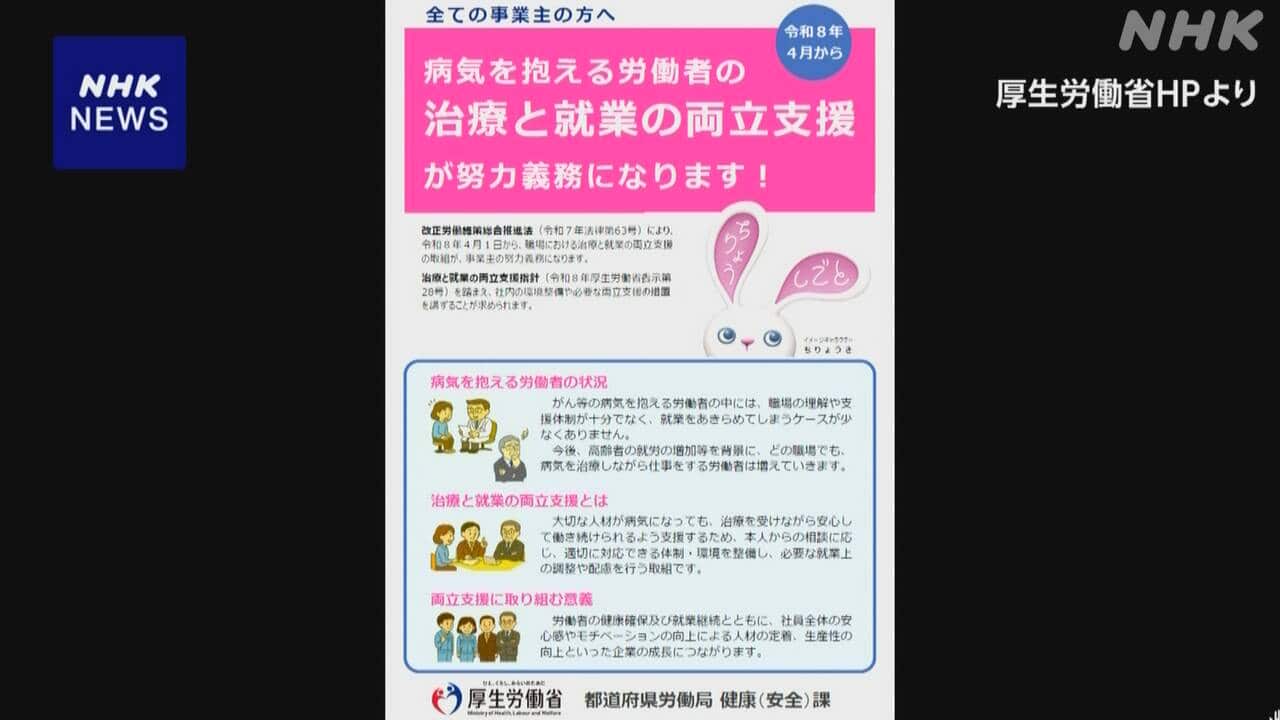
医療技術の進歩などで病気を治療しながら働く人が増えています。仕事を辞めずに治療と両立ができるよう4月1日から、企業の支援が努力義務となります。
厚生労働省によりますと、通院しながら働く人は4年前の時点で2326万人に上り、働く人全体の40.6%です。
背景にあるのが医療技術の進歩や働く高齢者の増加で、治療をしながら仕事をする人がこれからも増えると見込まれています。
そこで、すべての労働者が安心して働き続けられるよう、1日から企業の支援が努力義務となりました。
具体的には、両立支援は労働者本人からの申し出を基本とし、本人と十分に話し合うとともに上司や同僚の理解が欠かせないとしています。
企業は、主治医が提出した治療のスケジュールや残業や出張の可否などの望ましい対応についての意見書や、産業医の意見などを踏まえた上で労働者本人と話して勤務時間や業務内容を決めます。
このほか▽相談窓口の明確化や社内の支援体制の整備▽1時間単位の有給休暇や病気休暇、時差出勤などの勤務制度の整備などが望ましいとされています。
厚生労働省は「治療と仕事の両立支援を進めることで、社員全体の安心感やモチベーションの向上など企業の成長にもつながるので取り組みを進めてほしい」としています。
厚生労働省によりますと、通院しながら働く人は4年前の時点で2326万人に上り、働く人全体の40.6%です。
背景にあるのが医療技術の進歩や働く高齢者の増加で、治療をしながら仕事をする人がこれからも増えると見込まれています。
そこで、すべての労働者が安心して働き続けられるよう、1日から企業の支援が努力義務となりました。
具体的には、両立支援は労働者本人からの申し出を基本とし、本人と十分に話し合うとともに上司や同僚の理解が欠かせないとしています。
企業は、主治医が提出した治療のスケジュールや残業や出張の可否などの望ましい対応についての意見書や、産業医の意見などを踏まえた上で労働者本人と話して勤務時間や業務内容を決めます。
このほか▽相談窓口の明確化や社内の支援体制の整備▽1時間単位の有給休暇や病気休暇、時差出勤などの勤務制度の整備などが望ましいとされています。
厚生労働省は「治療と仕事の両立支援を進めることで、社員全体の安心感やモチベーションの向上など企業の成長にもつながるので取り組みを進めてほしい」としています。
Vocabulary
General
Proper noun
JLPT N2
JLPT N1
| # | 言葉 | 意味 |
|---|---|---|
| 5 | 治療 | ちりょう (治療) : (medical) treatment; care; therapy; cure; remedy |
| 5 | 支援 | しえん (支援) : support; backing; aid; assistance |
| 4 | 企業 | きぎょう (企業) : enterprise; business; company; corporation |
| 3 | 両立 | りょうりつ (両立) : compatibility; coexistence; standing together |
| 3 | 労働者 | ろうどうしゃ (労働者) : 1. employee; worker 2. laborer (labourer); blue-collar worker |
| 3 | 本人 | ほんにん (本人) : the person in question; the person themselves; said person |
| 2 | 医療 | いりょう (医療) : medical care; medical treatment |
| 2 | 進歩 | しんぽ (進歩) : progress; advance; improvement; development |
| 2 | 厚生労働省 | こうせいろうどうしょう (厚生労働省) : Ministry of Health, Labour and Welfare |
| 2 | 全体 | ぜんたい (全体) : whole; entirety; whatever (is the matter) |
| 2 | 望ましい | のぞましい (望ましい) : desirable; hoped for; preferable; advisable |
| 2 | 整備 | せいび (整備) : 1. maintenance; servicing 2. putting in place; establishment; development; preparation; provision; outfitting |
| 2 | 進める | すすめる (進める) : 1. to advance; to move forward; to put (a clock, watch) forward 2. to carry forward (plans, work, etc.); to proceed with; to make progress in; to further; to advance; to hasten; to speed up |
| 1 | 増える | ふえる (増える) : to increase; to multiply |
| 1 | 辞める | やめる (辞める) : to resign; to retire; to quit; to leave (one's job, etc.) |
| 1 | 通院 | つういん (通院) : going to the hospital for regular treatment |
| 1 | 時点 | じてん (時点) : point in time; occasion |
| 1 | 上る | あがる (上がる) : 1. to rise; to go up; to come up; to ascend; to be raised 2. to enter (esp. from outdoors); to come in; to go in |
| 1 | 背景 | はいけい (背景) : 1. background; scenery; backdrop; setting 2. background (of an incident, situation, etc.); circumstances; context |
| 1 | 高齢者 | こうれいしゃ (高齢者) : old person; old people |
| 1 | 増加 | ぞうか (増加) : increase; rise; growth; addition; increment |
| 1 | 見込む | みこむ (見込む) : 1. to anticipate; to expect; to estimate; to count on; to allow for; to take into account 2. to place confidence in; to put trust in; to trust |
| 1 | 働く | はたらく (働く) : 1. to work; to labor; to labour 2. to function; to operate; to be effective; to work (i.e. ... works); to come into play |
| 1 | 具体的 | ぐたいてき (具体的) : concrete; definite; specific; material; substantial |
| 1 | 申し出 | もうしで (申し出) : proposal; request; claim; report; notice; offer |
| 1 | 基本 | きほん (基本) : basics; fundamentals; basis; foundation |
| 1 | 話し合う | はなしあう (話し合う) : to discuss; to talk together |
| 1 | 上司 | じょうし (上司) : (one's) superior; (one's) boss; the higher-ups |
| 1 | 同僚 | どうりょう (同僚) : coworker; co-worker; colleague; associate |
| 1 | 理解 | りかい (理解) : understanding; comprehension; appreciation; sympathy |
| 1 | 主治医 | しゅじい (主治医) : attending physician; physician in charge; (one's) family doctor |
| 1 | 提出 | ていしゅつ (提出) : presentation (of documents); submission (of an application, report, etc.); production (e.g. of evidence); introduction (e.g. of a bill); filing; turning in |
| 1 | 残業 | ざんぎょう (残業) : overtime (work) |
| 1 | 出張 | しゅっちょう (出張) : business trip; official trip |
| 1 | 可否 | かひ (可否) : 1. propriety; right and wrong; advisability; possibility 2. pro and con; ayes and noes |
| 1 | 対応 | たいおう (対応) : 1. correspondence (to); equivalence 2. suitability; coordination; matching; being appropriate (for) |
| 1 | 意見書 | いけんしょ (意見書) : opinion in writing; written opinion; argument |
| 1 | 踏まえる | ふまえる (踏まえる) : 1. to be based on; to take into account; to build upon; to have origin in 2. to have one's feet firmly planted on; to plant oneself on |
| 1 | 勤務時間 | きんむじかん (勤務時間) : office hours; business hours; working hours |
| 1 | 決める | きめる (決める) : 1. to decide; to choose; to determine; to make up one's mind; to resolve; to set one's heart on; to settle; to arrange; to set; to appoint; to fix 2. to clinch (a victory); to decide (the outcome of a match) |
| 1 | 相談窓口 | そうだんまどぐち (相談窓口) : inquiry counter; consulting service; assistance service |
| 1 | 明確化 | めいかくか (明確化) : clarification; definition |
| 1 | 社内 | しゃない (社内) : 1. within a company; in-house 2. within a shrine; shrine precincts |
| 1 | 体制 | たいせい (体制) : order; system; structure; set-up; organization; organisation |
| 1 | 有給休暇 | ゆうきゅうきゅうか (有給休暇) : paid vacation; leave |
| 1 | 病気休暇 | びょうききゅうか (病気休暇) : sick leave; paid sick days |
| 1 | 時差出勤 | じさしゅっきん (時差出勤) : staggered work hours |
| 1 | 社員 | しゃいん (社員) : 1. company employee 2. member of a corporation; company stockholder (esp. in legal contexts) |
| 1 | 安心感 | あんしんかん (安心感) : sense of security |
| 1 | 向上 | こうじょう (向上) : elevation; rise; improvement; advancement; progress |
| 1 | 成長 | せいちょう (成長) : 1. growth; development; growing up; becoming an adult 2. growth (of a company, the economy, etc.) |
| 1 | つながる | つながる (繋がる) : 1. to be tied together; to be connected to; to be linked to 2. to lead to; to be related to |
| 1 | 取り組み | とりくみ (取り組み) : 1. bout (in sports, etc.); match 2. effort; initiative; dealing with; grappling with; wrestling with |