Claude、ChatGPTなどから"記憶"の移行が可能に
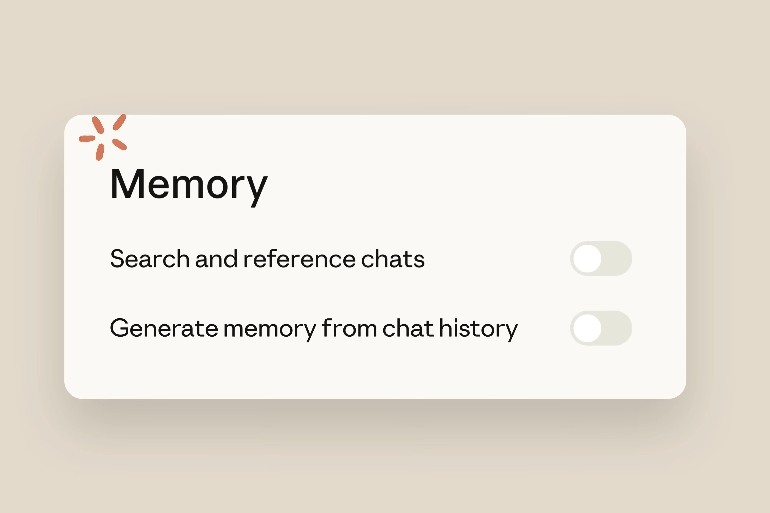
Anthropicは、他のAIプロバイダーで蓄積したユーザーの好みやコンテキストを「Claude」に引き継ぐためのプロンプトを公開した。Claudeの「メモリ」機能を活用し、コピー&ペースト操作のみで過去の利用履歴を反映できる。
Anthropicは、ユーザーとのやり取りを引き継ぐための専用プロンプトを提供。ChatGPTなどAIサービスの、その出力結果をClaudeのメモリ設定画面に貼り付けることで移行が完了する。これまでAIに学習させてきた趣味嗜好やプロジェクト情報をClaudeに引き継げる。
公開したプロンプト
I'm moving to another service and need to export my data. List every memory you have stored about me, as well as any context you've learned about me from past conversations. Output everything in a single code block so I can easily copy it. Format each entry as: [date saved, if available] - memory content. Make sure to cover all of the following — preserve my words verbatim where possible: Instructions I've given you about how to respond (tone, format, style, 'always do X', 'never do Y'). Personal details: name, location, job, family, interests. Projects, goals, and recurring topics. Tools, languages, and frameworks I use. Preferences and corrections I've made to your behavior. Any other stored context not covered above. Do not summarize, group, or omit any entries. After the code block, confirm whether that is the complete set or if any remain.
取り込める情報には、トーンや形式、スタイル、「常にXをする」「Yを決してはいけない」といった回答方法に関する指示のほか、名前や所在地、職業、趣味などの個人情報、ユーザーの目標やプロジェクト、使用しているツールや言語、フレームワーク、振る舞いや好みに関する内容などが含まれる。提供される専用プロンプトを既存のAIチャットに貼り付け、その出力結果をClaudeのメモリ設定に登録することで移行が完了する。
Claudeは会話を通じてユーザーの好みを学習し、プロジェクトごとにコンテキストを分離して管理する設計。保存されたメモリはユーザー自身が閲覧や編集できる。
メモリ機能は、ユーザーとAIのチャット履歴を記憶して、後から参照しながら回答するため、ユーザーの文脈や好みにあった回答を得られるようにする仕組み。Claudeでは有料プラン向けの機能として提供されていたが、2日からは無料版でも利用可能となった。
Memory is now available on the free plan.
We've also made it easier to import saved memories into Claude.
You can export them whenever you want. pic.twitter.com/6994lxNjo2
— Claude (@claudeai) March 2, 2026
Anthropicは、他のAIプロバイダーで蓄積したユーザーの好みやコンテキストを「Claude」に引き継ぐためのプロンプトを公開した。Claudeの「メモリ」機能を活用し、コピー&ペースト操作のみで過去の利用履歴を反映できる。 Anthropicは、ユーザーとのやり取りを引き継ぐための専用プロンプトを提供。ChatGPTなどAIサービスの、その出力結果をClaudeのメモリ設定画面に貼り付けることで移行が完了する。これまでAIに学習させてきた趣味嗜好やプロジェクト情報をClaudeに引き継げる。 公開したプロンプト I'm moving to another service and need to export my data. List every memory you have stored about me, as well as any context you've learned about me from past conversations. Output everything in a single code block so I can easily copy it. Format each entry as: [date saved, if available] - memory content. Make sure to cover all of the following — preserve my words verbatim where possible: Instructions I've given you about how to respond (tone, format, style, 'always do X', 'never do Y'). Personal details: name, location, job, family, interests. Projects, goals, and recurring topics. Tools, languages, and frameworks I use. Preferences and corrections I've made to your behavior. Any other stored context not covered above. Do not summarize, group, or omit any entries. After the code block, confirm whether that is the complete set or if any remain. 取り込める情報には、トーンや形式、スタイル、「常にXをする」「Yを決してはいけない」といった回答方法に関する指示のほか、名前や所在地、職業、趣味などの個人情報、ユーザーの目標やプロジェクト、使用しているツールや言語、フレームワーク、振る舞いや好みに関する内容などが含まれる。提供される専用プロンプトを既存のAIチャットに貼り付け、その出力結果をClaudeのメモリ設定に登録することで移行が完了する。 Claudeは会話を通じてユーザーの好みを学習し、プロジェクトごとにコンテキストを分離して管理する設計。保存されたメモリはユーザー自身が閲覧や編集できる。 メモリ機能は、ユーザーとAIのチャット履歴を記憶して、後から参照しながら回答するため、ユーザーの文脈や好みにあった回答を得られるようにする仕組み。Claudeでは有料プラン向けの機能として提供されていたが、2日からは無料版でも利用可能となった。 Memory is now available on the free plan. We've also made it easier to import saved memories into Claude. You can export them whenever you want. pic.twitter.com/6994lxNjo2 — Claude (@claudeai) March 2, 2026
Anthropicは、他のAIプロバイダーで蓄積したユーザーの好みやコンテキストを「Claude」に引き継ぐためのプロンプトを公開した。Claudeの「メモリ」機能を活用し、コピー&ペースト操作のみで過去の利用履歴を反映できる。 Anthropicは、ユーザーとのやり取りを引き継ぐための専用プロンプトを提供。ChatGPTなどAIサービスの、その出力結果をClaudeのメモリ設定画面に貼り付けることで移行が完了する。これまでAIに学習させてきた趣味嗜好やプロジェクト情報をClaudeに引き継げる。 公開したプロンプト I'm moving to another service and need to export my data. List every memory you have stored about me, as well as any context you've learned about me from past conversations. Output everything in a single code block so I can easily copy it. Format each entry as: [date saved, if available] - memory content. Make sure to cover all of the following — preserve my words verbatim where possible: Instructions I've given you about how to respond (tone, format, style, 'always do X', 'never do Y'). Personal details: name, location, job, family, interests. Projects, goals, and recurring topics. Tools, languages, and frameworks I use. Preferences and corrections I've made to your behavior. Any other stored context not covered above. Do not summarize, group, or omit any entries. After the code block, confirm whether that is the complete set or if any remain. 取り込める情報には、トーンや形式、スタイル、「常にXをする」「Yを決してはいけない」といった回答方法に関する指示のほか、名前や所在地、職業、趣味などの個人情報、ユーザーの目標やプロジェクト、使用しているツールや言語、フレームワーク、振る舞いや好みに関する内容などが含まれる。提供される専用プロンプトを既存のAIチャットに貼り付け、その出力結果をClaudeのメモリ設定に登録することで移行が完了する。 Claudeは会話を通じてユーザーの好みを学習し、プロジェクトごとにコンテキストを分離して管理する設計。保存されたメモリはユーザー自身が閲覧や編集できる。 メモリ機能は、ユーザーとAIのチャット履歴を記憶して、後から参照しながら回答するため、ユーザーの文脈や好みにあった回答を得られるようにする仕組み。Claudeでは有料プラン向けの機能として提供されていたが、2日からは無料版でも利用可能となった。 Memory is now available on the free plan. We've also made it easier to import saved memories into Claude. You can export them whenever you want. pic.twitter.com/6994lxNjo2 — Claude (@claudeai) March 2, 2026
Vocabulary
General
Proper noun
JLPT N2
JLPT N1
| # | 言葉 | 意味 |
|---|---|---|
| 8 | 好み | このみ (好み) : liking; taste; choice |
| 6 | 機能 | きのう (機能) : function; facility; faculty; feature |
| 6 | 提供 | ていきょう (提供) : 1. offer; tender; providing; supplying; making available; donating (blood, organs, etc.) 2. sponsoring (a TV program) |
| 6 | 回答 | かいとう (回答) : reply; answer |
| 4 | 引き継ぐ | ひきつぐ (引き継ぐ) : to take over; to hand over |
| 4 | 公開 | こうかい (公開) : opening to the public; making available to the public; putting on display; exhibiting; showing (play, movie, etc.); holding (interview, etc.); open; public |
| 4 | 専用 | せんよう (専用) : 1. (one's) exclusive use; private use; personal use 2. dedicated use; use for a particular purpose |
| 4 | 出力 | しゅつりょく (出力) : output (electrical, signal, etc.) |
| 4 | 結果 | けっか (結果) : 1. result; consequence; outcome; effect 2. coming to fruition; bearing fruit |
| 4 | 設定 | せってい (設定) : 1. establishment; creation; posing (a problem); setting (movie, novel, etc.); scene 2. options setting; preference settings; configuration; setup |
| 4 | 貼り付ける | はりつける (貼り付ける) : 1. to paste; to stick; to affix 2. to station; to post |
| 4 | 移行 | いこう (移行) : switching over to; migration; transition |
| 4 | 完了 | かんりょう (完了) : 1. completion; conclusion 2. perfect (tense, form, aspect) |
| 4 | 学習 | がくしゅう (学習) : study; learning; tutorial |
| 4 | 情報 | じょうほう (情報) : 1. information; news; intelligence; advices 2. information; data contained in characters, signals, code, etc. |
| 4 | 関する | かんする (関する) : to concern; to be related |
| 2 | 他 | ほか (他) : 1. other (place, thing, person); the rest 2. outside; beyond |
| 2 | 蓄積 | ちくせき (蓄積) : accumulation; accumulate; store |
| 2 | 活用 | かつよう (活用) : 1. practical use; application 2. conjugation; inflection |
| 2 | 操作 | そうさ (操作) : 1. operation; management; handling 2. manipulating (to one's benefit); manipulation; influencing |
| 2 | のみ | のみ : only; nothing but |
| 2 | 過去 | かこ (過去) : 1. the past; bygone days 2. one's past (that one would prefer remained secret) |
| 2 | 反映 | はんえい (反映) : 1. reflection (light, image, situation, attitude, etc.); reflecting 2. influence; application (e.g. of an update) |
| 2 | やり取り | やりとり (やり取り) : giving and taking; exchange (of letters); arguing back and forth; (conversational) exchange |
| 2 | 画面 | がめん (画面) : 1. screen (of a TV, computer, etc.) 2. image (on a screen); picture; scene |
| 2 | 嗜好 | しこう (嗜好) : taste; liking; preference |
| 2 | 形式 | けいしき (形式) : 1. form (as opposed to substance); formality 2. method; system; style |
| 2 | 常 | とこ (常) : constant; unchanging; eternal |
| 2 | 決する | けっする (決する) : to decide; to determine |
| 2 | 方法 | ほうほう (方法) : method; process; manner; way; means; technique |
| 2 | 指示 | しじ (指示) : 1. indication; denotation; designation 2. instructions; directions |
| 2 | 所在地 | しょざいち (所在地) : location; address |
| 2 | 職業 | しょくぎょう (職業) : occupation; profession; job; vocation; trade; calling; business |
| 2 | 個人情報 | こじんじょうほう (個人情報) : personal information |
| 2 | 目標 | めじるし (目印) : 1. mark (for quick identification or recognition); sign 2. landmark; guide |
| 2 | 使用 | しよう (使用) : use; application; employment; utilization; utilisation |
| 2 | 言語 | げんご (言語) : language |
| 2 | 振る舞い | ふるまい (振る舞い) : 1. behavior; behaviour; conduct 2. entertainment; treat; feast; banquet |
| 2 | 内容 | ないよう (内容) : contents; content; substance; matter; detail; import |
| 2 | 含む | ふくむ (含む) : 1. to contain; to comprise; to have; to hold; to include; to embrace 2. to hold in the mouth |
| 2 | 既存 | きそん (既存) : existing |
| 2 | 登録 | とうろく (登録) : registration; accession; register; entry; record |
| 2 | 通ずる | つうずる (通ずる) : 1. to be open (to traffic); to lead to; to communicate (with) 2. to flow (liquid, current); to pass; to get through to |
| 2 | ごと | ごと (毎) : each; every |
| 2 | 分離 | ぶんり (分離) : separation; partition; detachment; segregation; isolation |
| 2 | 管理 | かんり (管理) : control; management (e.g. of a business) |
| 2 | 設計 | せっけい (設計) : plan; design; layout |
| 2 | 保存 | ほぞん (保存) : 1. preservation; conservation; storage; maintenance 2. saving (e.g. to disk) |
| 2 | 自身 | じしん (自身) : (one's) self; oneself |
| 2 | 閲覧 | えつらん (閲覧) : 1. inspection; reading; perusal 2. browsing (the web) |
| 2 | 編集 | へんしゅう (編集) : editing; compilation |
| 2 | 履歴 | りれき (履歴) : 1. personal history; background; career 2. log; record; history |
| 2 | 記憶 | きおく (記憶) : 1. memory; recollection; remembrance 2. storage |
| 2 | 参照 | さんしょう (参照) : reference; bibliographical reference; consultation; browsing (e.g. when selecting a file to upload on a computer); checking out |
| 2 | 文脈 | ぶんみゃく (文脈) : 1. context (of a passage); line of thought 2. context; environment; circumstances |
| 2 | 仕組み | しくみ (仕組み) : 1. structure; construction; arrangement; contrivance; mechanism; workings 2. plan; plot; contrivance |
| 2 | 有料 | ゆうりょう (有料) : 1. fee-charging; paid; not free 2. toll road |
| 2 | 向け | むけ (向け) : intended for ...; oriented towards ...; aimed at ... |
| 2 | 利用可能 | りようかのう (利用可能) : available; usable (e.g. bandwidth) |