お洒落メンズはバレエシューズを履く──スニーカーに代わる新トレンドは定番となるか
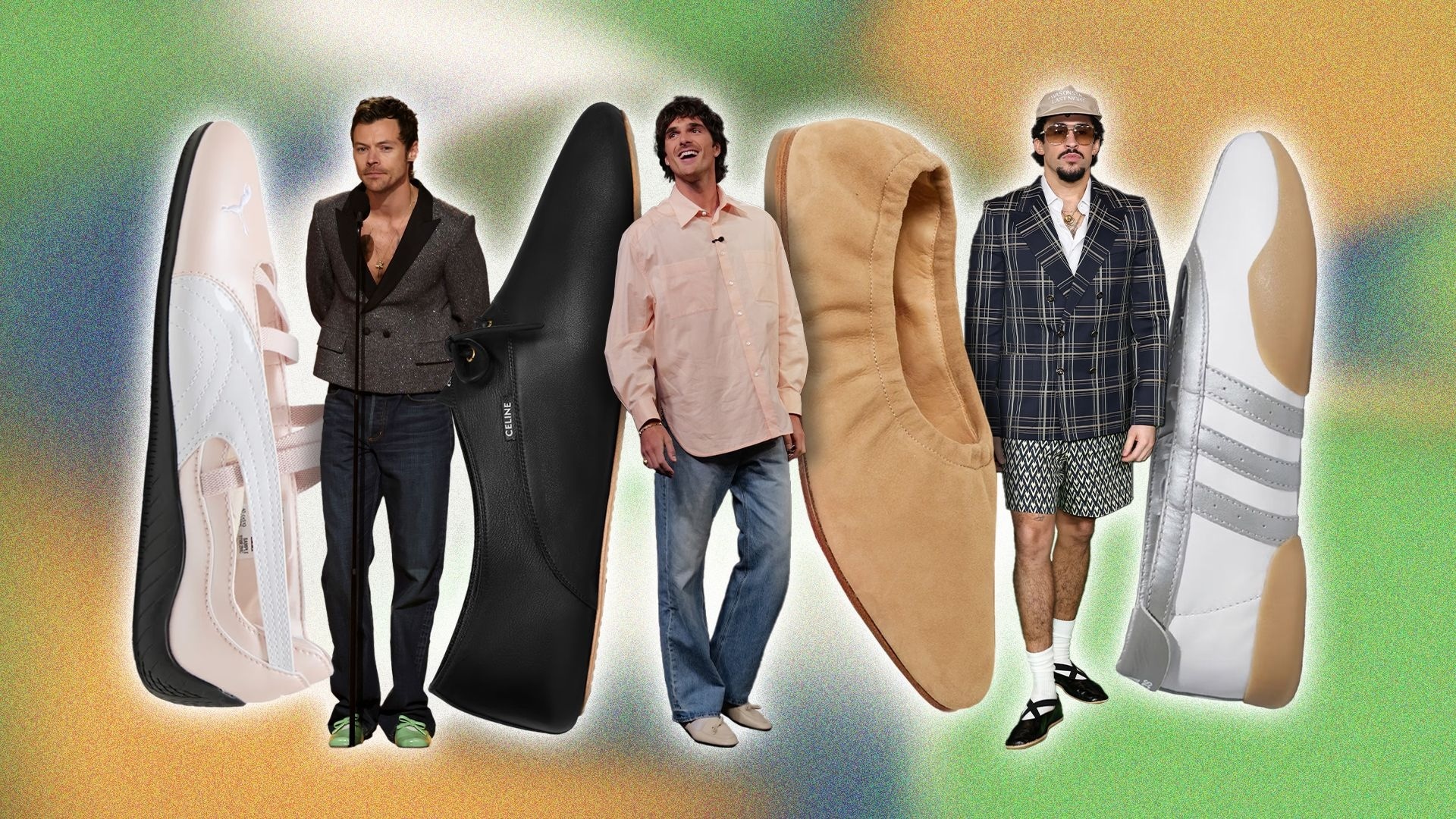
バッド・バニーからハリー・スタイルズまで、メンズセレブたちの間でバレエシューズが新たに支持を集めている。
私は昔からゴツめのスニーカー派だった。がっしりとしたソールで、いくつかの惨事にも耐えられそうなデザイン。存在感があって、履いている自分より足もとに目がいくほどのインパクトがある靴。ずっとそれが私の定番だった。ところが突然、お洒落なメンズたちは重厚感のあるスニーカーを履き捨て、代わりに軽やかなバレエシューズを選び始めた。 バレエシューズは、自分のスタイルに意識的な若者たちが選ぶ靴として静かに定着しつつある。ファッションを追う人であれば、これが真新しいトレンドではないと知っているだろう。このアイテムがメンズファッションにも登場するようになったのは2020年頃。バレエシューズといえば40年代からウィメンズの定番だったが、2020年春夏のメンズショーでボーディ、ドリス ヴァン ノッテン、ジル サンダーといったブランドが洗練されたバレエシューズをメンズ向けに発表したことで、私たちメンズにもその扉が開かれた。コスプレでもなければ、「あえて」という含みを伴ったものでもない。クリーンかつスリムで、柔らかなラインを描く靴。当時は万人受けするとは思えず、業界人にしか通じないと感じていたが、今となっては至るところで見かけるまでになっている。 ■バレエシューズを履くメンズセレブたち セリーヌはメンズ向けのバレエシューズを展開しており、オフィシン ジェネラルもワイドパンツと合わせるために作られたようなゴートスエードのバージョンを提案している。メゾン マルジェラに至っては、もう何年もバレエシューズ風の「タビ」をプッシュしている。また、バレエスニーカーというものも存在する。「スニーカリーナ」とも呼ばれるこのシルエットは、フラットシューズの柔らかさとスニーカーらしいスポーティな雰囲気を兼ね備えているのが特徴だ。アディダス、プーマ、ルイ・ヴィトン、シモーネ・ロシャらもこの波に乗っている。リボンに薄底のソール、柔らかなアッパー──2010年代後半を席巻した「アグリースニーカー」とは正反対の見た目だ。 ではなぜ、ここまでの広がりを見せているのか? その一因は、これまでのスタイルに対する飽きだ。マキシマリズムが10年も君臨すれば、もう少し軽やかなものが欲しくなるのも無理はない。シルエットにも抜け感を求めたくなる頃だ。バレエシューズには、全体のプロポーションを完全に変えてしまうほどの力がある。セレブの間でも愛用者が続出しており、エイサップ・ロッキーはバレエシューズを世界で最もカジュアルな靴のように履きこなしている。ハリー・スタイルズは「Aperture」のミュージックビデオでプラダのそれをスタイリングしていたが、2026年のグラミー賞(このときはジョナサン・アンダーソン率いるディオールによるものだった)でも、ブリット・アワードでも履いていた。 ジェイコブ・エロルディがトーク番組『ジミー・キンメル・ライブ!』に出演した際に選んだのはセリーヌによる一足。コールマン・ドミンゴはヴァレンティノをリピートしているようだ。バッド・バニーは『俺は飛ばし屋/プロゴルファー・ギル2』のプレミアにバレエシューズで登場し、レッドカーペットにふさわしい雰囲気を演出した。彼はこのほかにも、文字通り「バレリーナ」と呼ばれるアディダスのモデルを所有している。どれも一度きりの話題づくりではなく、ひとつの流れを作るきっかけとなった。 ■メンズウェア全体の潮流に変化 バレエシューズには、ある種の自信が漂う。というのも、この靴には分厚いソールのような「鎧」はない。機能性でごまかすこともできない。シルエットはスリムで、むしろ無防備ですらある。半端な気持ちでは履きこなせないからこそ、その自信が生まれるのだろう。 これはまた、テーラードスタイルはよりルースに、生地はより柔らかにといった、昨今のメンズウェアを席巻しているソフトなスタイルともマッチする。「マスキュリン」なフットウェアの概念も、5年前よりも柔軟になってきた。バレエシューズをワイドパンツとハリのあるTシャツに合わせれば、どっしりとした「ダッドシューズ」では作ることのできない、モダンなルックが一気に完成する。 そして意外にも、バレエシューズは実用的だ。とにかく軽くて、履きやすい。足にレンガを縛り付けているような重さを感じることなく、楽に歩き回ることができるのだ。特にスニーカリーナは従来のスニーカーからの乗り換えもしやすい上、控えめながらもより力強いオーラを放つ。 バレエシューズがチャンキースニーカーに完全に取って代わるかといえば、それはおそらくないだろう。私は今でも、ちょっとした災難をものともしないタフな靴が大好きだ。しかしこのところ、イケてるメンズは新しいスタイルへと前進している。足首を見せたり、スリムな靴を履いている。その足取りは軽やかで、ドシドシと踏みつけるようなものではない。私は自分のなかで何かが崩れ始めようとしているのを感じている。 先日、ネットでロエベのバレエスニーカーをチェックする自分がいた。ブラックでミニマル、それに少しスポーティ。ゆったりとしたワイドパンツと合わせてもちゃんとハマりそうな一足だ。2026年こそは、チャンキースニーカーを(ほんの少しの間)脇に追いやって、もう少し奇抜でないものに挑戦する年なのかもしれない。イケてるメンズが取り入れているのなら、少なくとも検討する価値はありそうだ。 From British GQ By Adam Cheung Translated and Adapted by Motoko Fujita
私は昔からゴツめのスニーカー派だった。がっしりとしたソールで、いくつかの惨事にも耐えられそうなデザイン。存在感があって、履いている自分より足もとに目がいくほどのインパクトがある靴。ずっとそれが私の定番だった。ところが突然、お洒落なメンズたちは重厚感のあるスニーカーを履き捨て、代わりに軽やかなバレエシューズを選び始めた。 バレエシューズは、自分のスタイルに意識的な若者たちが選ぶ靴として静かに定着しつつある。ファッションを追う人であれば、これが真新しいトレンドではないと知っているだろう。このアイテムがメンズファッションにも登場するようになったのは2020年頃。バレエシューズといえば40年代からウィメンズの定番だったが、2020年春夏のメンズショーでボーディ、ドリス ヴァン ノッテン、ジル サンダーといったブランドが洗練されたバレエシューズをメンズ向けに発表したことで、私たちメンズにもその扉が開かれた。コスプレでもなければ、「あえて」という含みを伴ったものでもない。クリーンかつスリムで、柔らかなラインを描く靴。当時は万人受けするとは思えず、業界人にしか通じないと感じていたが、今となっては至るところで見かけるまでになっている。 ■バレエシューズを履くメンズセレブたち セリーヌはメンズ向けのバレエシューズを展開しており、オフィシン ジェネラルもワイドパンツと合わせるために作られたようなゴートスエードのバージョンを提案している。メゾン マルジェラに至っては、もう何年もバレエシューズ風の「タビ」をプッシュしている。また、バレエスニーカーというものも存在する。「スニーカリーナ」とも呼ばれるこのシルエットは、フラットシューズの柔らかさとスニーカーらしいスポーティな雰囲気を兼ね備えているのが特徴だ。アディダス、プーマ、ルイ・ヴィトン、シモーネ・ロシャらもこの波に乗っている。リボンに薄底のソール、柔らかなアッパー──2010年代後半を席巻した「アグリースニーカー」とは正反対の見た目だ。 ではなぜ、ここまでの広がりを見せているのか? その一因は、これまでのスタイルに対する飽きだ。マキシマリズムが10年も君臨すれば、もう少し軽やかなものが欲しくなるのも無理はない。シルエットにも抜け感を求めたくなる頃だ。バレエシューズには、全体のプロポーションを完全に変えてしまうほどの力がある。セレブの間でも愛用者が続出しており、エイサップ・ロッキーはバレエシューズを世界で最もカジュアルな靴のように履きこなしている。ハリー・スタイルズは「Aperture」のミュージックビデオでプラダのそれをスタイリングしていたが、2026年のグラミー賞(このときはジョナサン・アンダーソン率いるディオールによるものだった)でも、ブリット・アワードでも履いていた。 ジェイコブ・エロルディがトーク番組『ジミー・キンメル・ライブ!』に出演した際に選んだのはセリーヌによる一足。コールマン・ドミンゴはヴァレンティノをリピートしているようだ。バッド・バニーは『俺は飛ばし屋/プロゴルファー・ギル2』のプレミアにバレエシューズで登場し、レッドカーペットにふさわしい雰囲気を演出した。彼はこのほかにも、文字通り「バレリーナ」と呼ばれるアディダスのモデルを所有している。どれも一度きりの話題づくりではなく、ひとつの流れを作るきっかけとなった。 ■メンズウェア全体の潮流に変化 バレエシューズには、ある種の自信が漂う。というのも、この靴には分厚いソールのような「鎧」はない。機能性でごまかすこともできない。シルエットはスリムで、むしろ無防備ですらある。半端な気持ちでは履きこなせないからこそ、その自信が生まれるのだろう。 これはまた、テーラードスタイルはよりルースに、生地はより柔らかにといった、昨今のメンズウェアを席巻しているソフトなスタイルともマッチする。「マスキュリン」なフットウェアの概念も、5年前よりも柔軟になってきた。バレエシューズをワイドパンツとハリのあるTシャツに合わせれば、どっしりとした「ダッドシューズ」では作ることのできない、モダンなルックが一気に完成する。 そして意外にも、バレエシューズは実用的だ。とにかく軽くて、履きやすい。足にレンガを縛り付けているような重さを感じることなく、楽に歩き回ることができるのだ。特にスニーカリーナは従来のスニーカーからの乗り換えもしやすい上、控えめながらもより力強いオーラを放つ。 バレエシューズがチャンキースニーカーに完全に取って代わるかといえば、それはおそらくないだろう。私は今でも、ちょっとした災難をものともしないタフな靴が大好きだ。しかしこのところ、イケてるメンズは新しいスタイルへと前進している。足首を見せたり、スリムな靴を履いている。その足取りは軽やかで、ドシドシと踏みつけるようなものではない。私は自分のなかで何かが崩れ始めようとしているのを感じている。 先日、ネットでロエベのバレエスニーカーをチェックする自分がいた。ブラックでミニマル、それに少しスポーティ。ゆったりとしたワイドパンツと合わせてもちゃんとハマりそうな一足だ。2026年こそは、チャンキースニーカーを(ほんの少しの間)脇に追いやって、もう少し奇抜でないものに挑戦する年なのかもしれない。イケてるメンズが取り入れているのなら、少なくとも検討する価値はありそうだ。 From British GQ By Adam Cheung Translated and Adapted by Motoko Fujita
Vocabulary
General
Proper noun
JLPT N2
JLPT N1
| # | 言葉 | 意味 |
|---|---|---|
| 7 | 履く | はく (履く) : 1. to put on (lower-body clothing, e.g. pants, skirt, footwear); to wear 2. to affix (a sword to one's hip) |
| 4 | 柔らか | やわらか (柔らか) : soft; tender; limp; subdued (colour or light) (color); gentle; meek |
| 3 | 軽やか | かろやか (軽やか) : light; easy; non-serious; minor |
| 3 | 合わせる | あわせる (合わせる) : 1. to match (rhythm, speed, etc.) 2. to join together; to unite; to combine; to add up |
| 2 | 定番 | ていばん (定番) : standard; routine; regular; basic; staple |
| 2 | 選ぶ | えらぶ (選ぶ) : to choose; to select |
| 2 | 登場 | とうじょう (登場) : 1. entry (on stage); appearance (on screen) 2. entrance; introduction (into a market) |
| 2 | 頃 | ころ (頃) : 1. (approximate) time; around; about; toward 2. suitable time (or condition) |
| 2 | 向け | むけ (向け) : intended for ...; oriented towards ...; aimed at ... |
| 2 | 感ずる | かんずる (感ずる) : to feel; to sense |
| 2 | 至る | いたる (至る) : 1. to arrive at (e.g. a decision); to reach (a stage); to attain 2. to lead to (a place); to get to |
| 2 | 呼ぶ | よぶ (呼ぶ) : 1. to call out (to); to call; to invoke 2. to summon (a doctor, etc.) |
| 2 | 雰囲気 | ふんいき (雰囲気) : 1. atmosphere; mood; ambience; ambiance; aura; feel 2. a certain air; presence; special aura; something (about someone) |
| 2 | 席巻 | せっけん (席巻) : sweeping conquest; sweeping over; conquering; invading |
| 2 | もう少し | もうすこし (もう少し) : a bit more; a bit longer |
| 2 | 全体 | ぜんたい (全体) : whole; entirety; whatever (is the matter) |
| 2 | 完全 | かんぜん (完全) : perfect; complete |
| 2 | 一足 | いっそく (一足) : a pair (of shoes or socks) |
| 2 | 自信 | じしん (自信) : self-confidence; confidence (in oneself) |
| 2 | こそ | こそ : 1. it is ... that ...; precisely; in particular; definitely; for sure; only (when, after, because, etc.) 2. although; while; it is the case that ... but |
| 1 | 新た | あらた (新た) : new; fresh; novel |
| 1 | 支持 | しじ (支持) : 1. support; backing; endorsement; approval 2. support; holding up; propping |
| 1 | 集める | あつめる (集める) : to collect; to assemble; to gather |
| 1 | 派 | は (派) : 1. clique; group; coterie 2. (political) faction; wing; party; camp |
| 1 | がっしり | がっしり : firmly; solidly; sturdily; strongly; toughly |
| 1 | 惨事 | さんじ (惨事) : disaster; tragedy; tragic incident; horrible accident |
| 1 | 耐える | たえる (耐える) : 1. to bear; to stand; to endure; to put up with 2. to support; to withstand; to resist; to brave |
| 1 | 存在感 | そんざいかん (存在感) : presence (impressive quality) |
| 1 | 足もと | あしもと (足元) : 1. at one's feet; underfoot; one's step (as in "watch your step") 2. gait; pace; step |
| 1 | ずっと | ずっと : 1. continuously in some state (for a long time, distance); throughout; all along; the whole time; all the way 2. much (better, etc.); by far; far and away |
| 1 | 突然 | とつぜん (突然) : abrupt; sudden; unexpected |
| 1 | お洒落 | おしゃれ (お洒落) : 1. smartly dressed; stylish; fashion-conscious 2. someone smartly dressed |
| 1 | 重厚 | じゅうこう (重厚) : profound; deep; grave; solid; dignified; stately; solemn; massive; composed |
| 1 | 履き捨てる | はきすてる (履き捨てる) : 1. to wear out and discard 2. to kick off (e.g. shoes); to fling off |
| 1 | 意識的 | いしきてき (意識的) : conscious; deliberate; intentional |
| 1 | 若者 | わかもの (若者) : young man; young woman; young people; youth; youngsters |
| 1 | たち | やかた (館) : 1. mansion; palace; manor house; castle 2. nobleman; noblewoman; dignitary |
| 1 | 定着 | ていちゃく (定着) : 1. sticking (in one place, position, etc.); settling; fixing; adherence 2. becoming established (of a custom, system, etc.); taking hold; taking root |
| 1 | 追う | おう (追う) : 1. to chase; to run after; to pursue; to follow after 2. to follow (a set order, a trend, etc.) |
| 1 | 真新しい | まあたらしい (真新しい) : brand new |
| 1 | 知る | しる (知る) : 1. to be aware of; to know; to be conscious of; to cognize; to cognise 2. to notice; to feel |
| 1 | 洗練 | せんれん (洗練) : polish; refinement |
| 1 | 発表 | はっぴょう (発表) : announcement; publication; presenting; statement; communique; making known; breaking (news story); expressing (one's opinion); releasing; unveiling |
| 1 | 私たち | わたしたち (私たち) : we; us |
| 1 | 扉 | とびら (扉) : 1. door; gate; opening 2. title page |
| 1 | 開く | ひらく (開く) : 1. to open; to undo; to unseal; to unpack 2. to bloom; to unfold; to spread out |
| 1 | あえて | あえて (敢えて) : 1. purposely (of something needless, unexpected or seemingly counterproductive, etc.); daringly (doing something); deliberately; intentionally 2. not necessarily; not particularly; not especially |
| 1 | 含み | ふくみ (含み) : implication; hidden meaning; latitude; atmosphere; tone; sentiment; inclusion |
| 1 | 伴う | ともなう (伴う) : 1. to accompany; to go hand in hand with; to be consequent upon 2. to be accompanied by; to bring with; to take with; to be involved in |
| 1 | 描く | えがく (描く) : 1. to draw; to paint; to sketch 2. to depict; to describe |
| 1 | 当時 | とうじ (当時) : at that time; in those days |
| 1 | 人受け | ひとうけ (人受け) : popularity |
| 1 | 思える | おもえる (思える) : to seem; to appear likely |
| 1 | 業界人 | ぎょうかいじん (業界人) : person in the business (entertainment, music, film, etc.) |
| 1 | 通ずる | つうずる (通ずる) : 1. to be open (to traffic); to lead to; to communicate (with) 2. to flow (liquid, current); to pass; to get through to |
| 1 | 見かける | みかける (見かける) : to (happen to) see; to notice; to catch sight of |
| 1 | 展開 | てんかい (展開) : 1. development; evolution; progression; unfolding; (plot) twist 2. expansion; spreading out; extending; deployment; building up |
| 1 | 作る | つくる (作る) : 1. to make; to produce; to manufacture; to build; to construct 2. to prepare (food); to brew (alcohol) |
| 1 | 提案 | ていあん (提案) : proposal; proposition; suggestion |
| 1 | 存在 | そんざい (存在) : existence; being |
| 1 | らしい | らしい : 1. seeming ...; appearing ... 2. -ish; like a ...; typical of ...; appropriate for ...; becoming of ...; worthy of the name ... |
| 1 | 兼ね備える | かねそなえる (兼ね備える) : to have both; to possess both; to combine with |
| 1 | 特徴 | とくちょう (特徴) : feature; trait; characteristic; peculiarity; distinction |
| 1 | 波 | なみ (波) : 1. wave 2. ups and downs |
| 1 | 乗る | のる (乗る) : 1. to get on (train, plane, bus, ship, etc.); to get in; to board; to take; to embark 2. to get on (e.g. a footstool); to step on; to jump on; to sit on; to mount |
| 1 | 薄 | すすき (薄) : Japanese pampas grass (Miscanthus sinensis); maiden silvergrass; zebra grass |
| 1 | 底 | そこ (底) : bottom; sole |
| 1 | 後半 | こうはん (後半) : second half; latter half |
| 1 | 正反対 | せいはんたい (正反対) : exactly opposite (of) |
| 1 | 見た目 | みため (見た目) : appearance; (outward) looks; exterior appearance |
| 1 | 広がり | ひろがり (広がり) : spread; span; expanse; extent |
| 1 | 一因 | いちいん (一因) : one cause; one reason; one factor |
| 1 | 飽き | あき (飽き) : weariness; boredom; tedium; tiresomeness |
| 1 | 君臨 | くんりん (君臨) : reigning; controlling; dictating |
| 1 | 抜け感 | ぬけかん (抜け感) : air of (deliberate) imperfection (esp. in make-up) |
| 1 | 求める | もとめる (求める) : 1. to want; to wish for 2. to request; to demand; to require; to ask for |
| 1 | 変える | かえる (変える) : 1. to change; to alter; to transform; to convert; to turn; to vary 2. to reform; to revise; to amend |
| 1 | 愛用 | あいよう (愛用) : favorite; favourite; habitually used |
| 1 | 続出 | ぞくしゅつ (続出) : appearing one after another; cropping up one after another; occurring in succession |
| 1 | 最も | もっとも (最も) : most; extremely |
| 1 | グラミー賞 | グラミーしょう (グラミー賞) : Grammy Awards; Grammy Award |
| 1 | 率いる | ひきいる (率いる) : to lead; to spearhead (a group); to command (troops) |
| 1 | トーク番組 | トークばんぐみ (トーク番組) : talk show |
| 1 | 出演 | しゅつえん (出演) : performance; appearance (in a stage, film, TV show, etc.) |
| 1 | 際 | きわ (際) : 1. edge; brink; verge; side 2. time; moment of |
| 1 | 俺 | おれ (俺) : I; me |
| 1 | 飛ばす | とばす (飛ばす) : 1. to let fly; to make fly; to send flying; to blow off (e.g. in the wind); to launch; to fire; to hurl; to shoot 2. to skip over; to leave out; to omit; to drop (e.g. a stitch) |
| 1 | ふさわしい | ふさわしい (相応しい) : appropriate; adequate; suitable; fitting; worthy |
| 1 | 演出 | えんしゅつ (演出) : production (e.g. play); direction |
| 1 | 文字 | もじ (文字) : 1. letter (of alphabet); character 2. writing |
| 1 | 通り | とおり (通り) : 1. avenue; street; way; road 2. coming and going; street traffic |
| 1 | 所有 | しょゆう (所有) : one's possessions; ownership |
| 1 | きり | きり (桐) : paulownia (Paulownia tomentosa); empress tree; foxglove tree |
| 1 | 話題 | わだい (話題) : topic; subject |
| 1 | づくり | づくり (作り) : 1. making; forming; cultivating; growing 2. form; appearance |
| 1 | 流れ | ながれ (流れ) : 1. flow (of a fluid or gas); stream; current 2. flow (of people, things); passage (of time); tide; passing; (changing) trends; tendency |
| 1 | きっかけ | きっかけ (切っ掛け) : chance; start; cue; excuse; motive; impetus; occasion |
| 1 | 潮流 | ちょうりゅう (潮流) : 1. tide; tidal current 2. tendency; drift; trend |
| 1 | 変化 | へんか (変化) : 1. change; variation; alteration; mutation; transition; transformation; transfiguration; metamorphosis 2. variety; diversity |
| 1 | 種 | しゅ (種) : 1. kind; variety 2. (biological) species |
| 1 | 漂う | ただよう (漂う) : 1. to drift; to float 2. to waft (e.g. a scent); to hang in the air |
| 1 | 分厚い | ぶあつい (分厚い) : bulky; massive; thick; heavy |
| 1 | 鎧 | よろい (鎧) : armor; armour |
| 1 | 機能性 | きのうせい (機能性) : functionality |
| 1 | ごまかす | ごまかす (誤魔化す) : 1. to deceive; to falsify; to misrepresent; to cheat; to swindle; to tamper; to juggle; to manipulate 2. to dodge; to beg the question (issue, difficulties) |
| 1 | むしろ | むしろ (寧ろ) : rather; better; instead; if anything |
| 1 | 無防備 | むぼうび (無防備) : defenseless; defenceless; unprotected; vulnerable |
| 1 | すら | しゅら (修羅) : 1. Asura; demigod; anti-god; titan; demigods that fight the Devas (gods) in Hindu mythology 2. fighting; carnage; conflict; strife |
| 1 | 半端 | はんぱ (半端) : 1. remnant; fragment; incomplete set; incompleteness 2. fraction; odd sum |
| 1 | 生地 | きじ (生地) : 1. cloth; fabric; material; texture 2. dough; batter |
| 1 | 昨今 | さっこん (昨今) : nowadays; recently |
| 1 | 概念 | がいねん (概念) : general idea; concept; notion |
| 1 | 柔軟 | じゅうなん (柔軟) : flexible; lithe; soft; pliable |
| 1 | どっしり | どっしり : 1. bulky and heavy; massive; solid; weighty; substantial 2. dignified; imposing; composed |
| 1 | 一気 | いっき (一気) : 1. one breath 2. chug!; drink! |
| 1 | 完成 | かんせい (完成) : 1. complete; completion 2. perfection; accomplishment |
| 1 | 意外 | いがい (意外) : unexpected; surprising |
| 1 | 実用的 | じつようてき (実用的) : practical; useful; utilitarian; pragmatic |
| 1 | とにかく | とにかく (兎に角) : anyhow; at any rate; anyway; somehow or other; generally speaking; in any case; at least |
| 1 | 縛り付ける | しばりつける (縛り付ける) : to tie; to restrain; to confine; to bind; to fasten |
| 1 | 重さ | おもさ (重さ) : weight |
| 1 | 感じる | かんじる (感じる) : to feel; to sense; to experience |
| 1 | 歩き回る | あるきまわる (歩き回る) : to walk about; to walk to and fro; to pace around |
| 1 | 従来 | じゅうらい (従来) : 1. up to now; so far 2. traditional; conventional; usual; existing |
| 1 | 乗り換え | のりかえ (乗り換え) : 1. transfer (trains, buses, etc.); change; connection 2. switch (to another ideology, party, system, method, etc.); change; conversion |
| 1 | 控えめ | ひかえめ (控えめ) : moderate; reserved; conservative; humble; mild-mannered; self-effacing; unassuming; well-behaved; low-key; temperate; in small quantities |
| 1 | 力強い | ちからづよい (力強い) : 1. powerful; strong; forceful; vigorous 2. reassuring; encouraging |
| 1 | 放つ | はなつ (放つ) : 1. to fire (gun, arrow, questions, etc.); to shoot; to hit (e.g. baseball); to break wind 2. to set free; to release; to let loose |
| 1 | 取る | とる (取る) : 1. to take; to pick up; to grab; to catch 2. to pass; to hand; to give |
| 1 | 代わる | かわる (替わる) : 1. to succeed; to relieve; to replace 2. to take the place of; to substitute for; to take over for; to represent; to hand over (telephone) |
| 1 | おそらく | おそらく (恐らく) : perhaps; likely; probably; I dare say |
| 1 | 災難 | さいなん (災難) : calamity; misfortune; disaster |
| 1 | 前進 | ぜんしん (前進) : advance; moving forward; progress |
| 1 | 足首 | あしくび (足首) : ankle |
| 1 | 足取り | あしどり (足取り) : 1. gait; walk; stride; pace; step; manner of walking 2. trace (e.g. of route taken by hunted criminal); track; trail; movements |
| 1 | 踏みつける | ふみつける (踏みつける) : 1. to trample down; to tread on 2. to ignore; to spurn |
| 1 | 崩れる | くずれる (崩れる) : 1. to collapse; to crumble 2. to get out of shape; to lose one's shape; to become disorganized; to become untidy |
| 1 | 先日 | せんじつ (先日) : the other day; a few days ago |
| 1 | ゆったり | ゆったり : 1. comfortable; easy; calm; relaxed 2. loose; spacious |
| 1 | ちゃんと | ちゃんと : 1. diligently; seriously; earnestly; reliably; steadily; legitimately 2. perfectly; properly; exactly; orderly; punctually; regularly |
| 1 | ハマる | はまる (嵌まる) : 1. to fit; to get into; to go into; to be fitted with (e.g. door with a window) 2. to be fit for (a job, etc.); to be suited for; to satisfy (conditions) |
| 1 | ほんの | ほんの (本の) : mere; only; just; slight |
| 1 | 脇 | わき (脇) : 1. armpit; under one's arm; side; flank 2. beside; close to; near; by |
| 1 | 追いやる | おいやる (追いやる) : 1. to drive away; to order off; to chase away 2. to force into an unpleasant situation (bankruptcy, prostitution, suicide, etc.) |
| 1 | 奇抜 | きばつ (奇抜) : novel; original; striking; strange; eccentric; fantastic |
| 1 | 挑戦 | ちょうせん (挑戦) : challenge; defiance; dare; attempt; try |
| 1 | しれる | しれる (知れる) : 1. to become known; to come to light; to be discovered 2. to be known; to be understood |
| 1 | 取り入れる | とりいれる (取り入れる) : 1. to harvest; to reap 2. to take in; to gather in |
| 1 | 検討 | けんとう (検討) : consideration; examination; investigation; study; scrutiny; discussion; analysis; review |
| 1 | 価値 | かち (価値) : value; worth; merit |