JR東日本 きょうから運賃値上げ 消費税対応除き会社発足以来初
1日あたりの利用者が1600万人に上る日本最大の鉄道会社、JR東日本は、14日、運賃を平均7.1%、値上げしました。値上げは消費税への対応を除いて1987年の会社発足以来、初めてです。
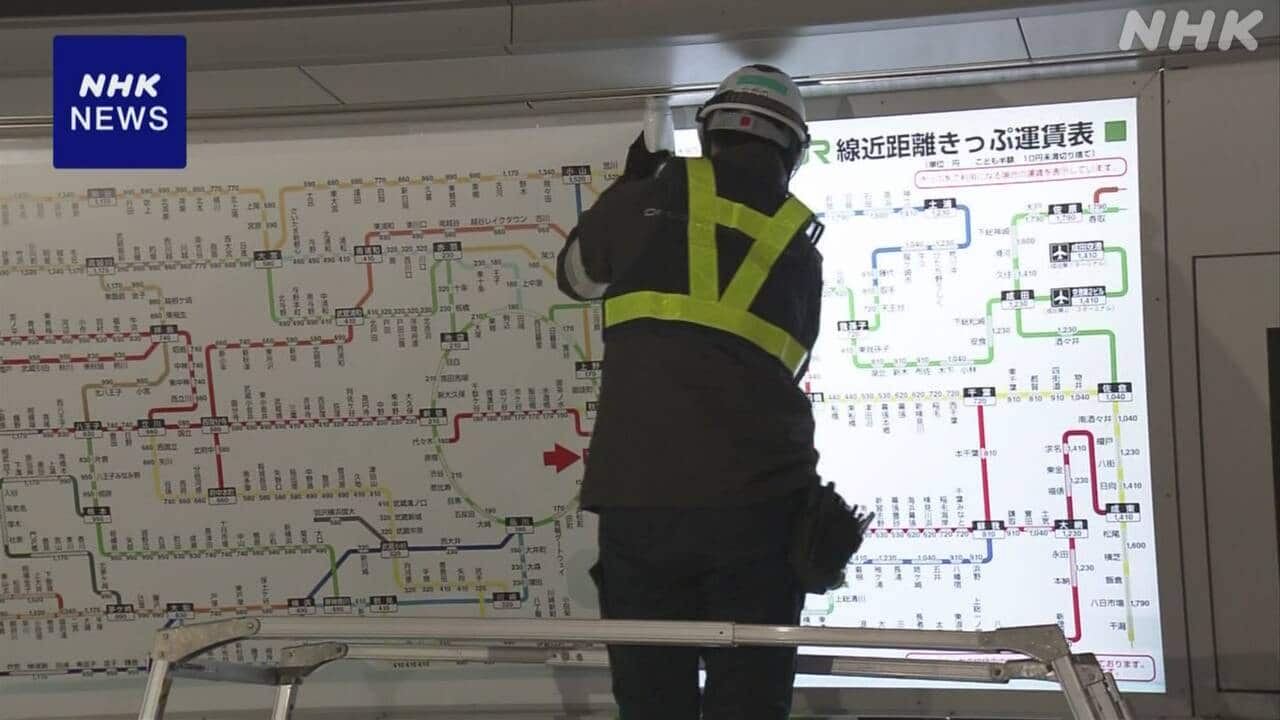
それぞれの駅では始発までの間に掲示されている運賃表を新しくするなどの準備が行われました。
値上げ幅は平均7.1%で、このうち、普通運賃は平均7.8%、通勤定期は平均12%、通学定期は平均4.9%の引き上げです。
初乗り運賃は、切符が10円上がって160円に、ICカードは8円から9円上がって155円になりました。
また、国鉄時代から40年以上、続いてきた都心や都心周辺の運賃を割安に抑えるための区分が廃止されたため、こうした地域での値上げ幅が大きくなっています。
JR東日本が運賃を全面的に値上げするのは、消費税の導入や増税のタイミングを除くと1987年の会社発足以来、初めてです。
理由について、会社は、人口減少やリモート勤務の定着で利用者が伸び悩んでいることや、物価上昇によるコストの増加などを挙げています。
年間880億円の増収を見込み、設備の更新や修繕にあてる計画ですが、ことしに入って大規模な輸送トラブルが相次ぐなか、安全運行を確保し、サービスを向上させられるかが課題となります。
それぞれの駅では始発までの間に掲示されている運賃表を新しくするなどの準備が行われました。
値上げ幅は平均7.1%で、このうち、普通運賃は平均7.8%、通勤定期は平均12%、通学定期は平均4.9%の引き上げです。
初乗り運賃は、切符が10円上がって160円に、ICカードは8円から9円上がって155円になりました。
また、国鉄時代から40年以上、続いてきた都心や都心周辺の運賃を割安に抑えるための区分が廃止されたため、こうした地域での値上げ幅が大きくなっています。
JR東日本が運賃を全面的に値上げするのは、消費税の導入や増税のタイミングを除くと1987年の会社発足以来、初めてです。
理由について、会社は、人口減少やリモート勤務の定着で利用者が伸び悩んでいることや、物価上昇によるコストの増加などを挙げています。
年間880億円の増収を見込み、設備の更新や修繕にあてる計画ですが、ことしに入って大規模な輸送トラブルが相次ぐなか、安全運行を確保し、サービスを向上させられるかが課題となります。
Vocabulary
General
Proper noun
JLPT N2
JLPT N1
| # | 言葉 | 意味 |
|---|---|---|
| 5 | 平均 | へいきん (平均) : 1. average; mean 2. balance; equilibrium |
| 5 | 値上げ | ねあげ (値上げ) : price hike; mark-up |
| 3 | 運賃 | うんちん (運賃) : 1. (passenger) fare 2. freight rates; shipping expenses |
| 2 | 利用者 | りようしゃ (利用者) : user; end-user; consumer |
| 2 | JR | ジェイアール (JR) : Japan Railways; JR |
| 2 | 東日本 | ひがしにほん (東日本) : eastern Japan; Japan east of the Itoigawa-Shizuoka Tectonic Line, i.e. east of the Chūbu region |
| 2 | 消費税 | しょうひぜい (消費税) : consumption tax (incl. sales tax, VAT, excise duty, etc.) |
| 2 | 除く | のぞく (除く) : 1. to remove; to eliminate; to eradicate 2. to exclude; to except |
| 2 | 発足 | ほっそく (発足) : starting; inauguration; launch; founding; establishment; start-up |
| 2 | 以来 | いらい (以来) : since; henceforth |
| 2 | 幅 | はば (幅) : 1. width; breadth 2. freedom (e.g. of thought); latitude |
| 2 | 上がる | あがる (上がる) : 1. to rise; to go up; to come up; to ascend; to be raised 2. to enter (esp. from outdoors); to come in; to go in |
| 2 | 都心 | としん (都心) : city centre (center) (esp. capital city); urban centre; heart of city a metropolis |
| 1 | あたり | あたり (当たり) : 1. hit 2. success |
| 1 | 最大 | さいだい (最大) : biggest; greatest; largest; maximum |
| 1 | 鉄道会社 | てつどうがいしゃ (鉄道会社) : railroad corporation; railway company |
| 1 | 対応 | たいおう (対応) : 1. correspondence (to); equivalence 2. suitability; coordination; matching; being appropriate (for) |
| 1 | 始発 | しはつ (始発) : 1. first departure (of the day); first train; first bus 2. departing one's home station (of a train, bus, etc.) |
| 1 | 掲示 | けいじ (掲示) : notice; bulletin; post; posting; placard |
| 1 | 新しく | あたらしく (新しく) : newly; new; anew |
| 1 | 通勤定期 | つうきんていき (通勤定期) : commutation ticket; season ticket |
| 1 | 通学 | つうがく (通学) : commuting to school; school commute |
| 1 | 定期 | ていき (定期) : 1. fixed period; fixed term 2. regular; periodic; periodical |
| 1 | 引き上げ | ひきあげ (引き上げ) : 1. pulling up; drawing up; salvage; re-flotation 2. raising; increase; upward revision |
| 1 | 国鉄 | こくてつ (国鉄) : national railway (esp. former Japan National Railways) |
| 1 | 時代 | じだい (時代) : 1. period; epoch; era; age 2. the times; those days |
| 1 | 周辺 | しゅうへん (周辺) : 1. circumference; outskirts; environs; around; in the area of; in the vicinity of 2. (computer) peripheral |
| 1 | 割安 | わりやす (割安) : economical; comparatively cheap |
| 1 | 抑える | おさえる (抑える) : 1. to keep within limits (e.g. spending); to restrain (e.g. emotions); to control; to curb; to hold in check 2. to hold back (e.g. an enemy); to check; to curb; to contain; to quell; to subdue; to suppress; to repress |
| 1 | 区分 | くぶん (区分) : division; section; demarcation; partition; segmentation; subdivision; (traffic) lane; compartment; classification; sorting |
| 1 | 廃止 | はいし (廃止) : abolition; repeal |
| 1 | 地域 | ちいき (地域) : area; region |
| 1 | 大きく | おおきく (大きく) : in a big way; on a grand scale |
| 1 | 全面的 | ぜんめんてき (全面的) : total; complete; all-out; general; extensive; full-scale |
| 1 | 導入 | どうにゅう (導入) : introduction; bringing in; leading in; installation |
| 1 | 増税 | ぞうぜい (増税) : tax increase |
| 1 | 人口減少 | じんこうげんしょう (人口減少) : depopulation; falling population; decrease in population; population decline |
| 1 | 勤務 | きんむ (勤務) : service; duty; work |
| 1 | 定着 | ていちゃく (定着) : 1. sticking (in one place, position, etc.); settling; fixing; adherence 2. becoming established (of a custom, system, etc.); taking hold; taking root |
| 1 | 伸び悩む | のびなやむ (伸び悩む) : to be sluggish (business); to make little progress; to not grow as much as expected |
| 1 | 物価上昇 | ぶっかじょうしょう (物価上昇) : price increase; prise rise |
| 1 | 増加 | ぞうか (増加) : increase; rise; growth; addition; increment |
| 1 | 年間 | ねんかん (年間) : 1. (period of) a year 2. during an era |
| 1 | 増収 | ぞうしゅう (増収) : increase in yield |
| 1 | 見込む | みこむ (見込む) : 1. to anticipate; to expect; to estimate; to count on; to allow for; to take into account 2. to place confidence in; to put trust in; to trust |
| 1 | 設備 | せつび (設備) : equipment; facilities; installation; accommodations; conveniences; arrangements |
| 1 | 更新 | こうしん (更新) : renewal; update; innovation; improvement |
| 1 | 修繕 | しゅうぜん (修繕) : repair; mending |
| 1 | あてる | あてる (宛てる) : to address |
| 1 | 大規模 | だいきぼ (大規模) : large-scale |
| 1 | 輸送 | ゆそう (輸送) : transport; transportation |
| 1 | 相 | さが (性) : 1. one's nature; one's destiny 2. custom; tradition; habit; convention |
| 1 | 次ぐ | つぐ (次ぐ) : to rank next to; to come after |
| 1 | 安全 | あんぜん (安全) : safety; security |
| 1 | 運行 | うんこう (運行) : 1. service (bus, train); operation 2. motion; revolution; movement |
| 1 | 確保 | かくほ (確保) : 1. securing; obtaining; ensuring; guarantee; maintaining 2. belay; belaying |
| 1 | 向上 | こうじょう (向上) : elevation; rise; improvement; advancement; progress |
| 1 | 課題 | かだい (課題) : 1. subject; theme; issue; matter 2. homework; assignment |