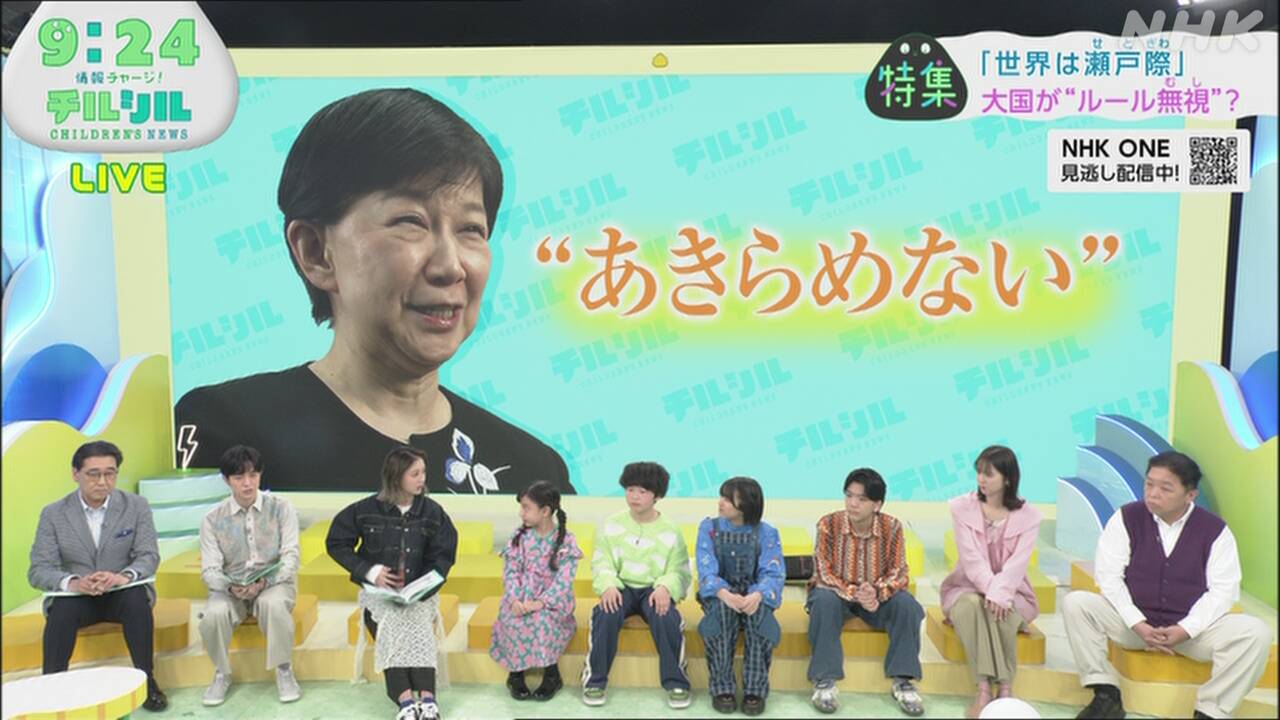
1週間ニュースふりかえり “戦争を防ぐ” 国連事務次長 中満泉さん「あきらめない」 チルシル 教育
去年(2025年)相次ぐケガに苦しみましたが、アルペンスキー女子「スーパー大回転」と「大回転」の座(すわ)って滑(すべ)るクラスで、2つの銀メダルを獲得(かくとく)。
ちなみに、このパラリンピック。1948年、第二次世界大戦で負傷(ふしょう=けがをすること)した兵士のリハビリのため、イギリスの病院で行われたスポーツ大会が起源(きげん=始まり)とされています。
津波で両親を亡(な)くした男性は「もう少し親孝行(おやこうこう)したかった。いろいろ思いはあるんですけど、この気持ちは永遠に忘(わす)れないように」と話していました。
岩手県の小学生は「大人になったら防災のために次の世代に震災のことを伝えていきたい」と話していました。
3月9日、トランプ大統領(だいとうりょう)は「イランのあらゆる軍事力を完全に破壊(はかい)した」と話しました。
これに対し、イラン側も徹底的(てっていてき)に戦う姿勢(しせい)をくずしていません。
中東からの原油をのせたタンカーが通る「ホルムズ海峡(かいきょう)」を事実上、封鎖(ふうさ)。
高市総理大臣(そうりだいじん)は11日、「3月下旬以降、わが国への原油輸入(ゆにゅう)は大幅(おおはば)に減少する見通しだ」としています。
ガソリンの値(ね)上がりが続くなか、国は備蓄(びちく=たくわえておくこと)している石油の放出を決めました。
住宅など2万1720の民間の施設(しせつ)が被害を受けたとされています。(イラン赤新月社 3月11日)
66の学校が空爆(くうばく)を受けて、児童や生徒、教育関係者192人が死亡。(イラン教育省 3月7日)
こどもをふくむ民間の人の死者は、1300人以上にのぼるということです。(イラン国連大使 3月10日)
なにより気がかりなのは、世界がだんだんとそれに慣(な)れてしまい、戦争のおそろしさを感じなくなってしまっているようで、とても危(あや)うい状況だと感じています。
世界大戦のあと作られた国連は「二度と同じような世界大戦を起こさせない」ことをかかげています。
その国連で「戦争をできるだけ防ぐ」という大事な役割を担う1人が、ある日本人なんです。
この日はロシアによるウクライナ侵攻(しんこう)から4年。アメリカとイスラエルがイランを攻撃する直前でした。
「軍縮」とは、戦争で使われる危険(きけん)な兵器を、話し合いで減(へ)らしていく取り組みのこと。
2017年には、核兵器を世界からなくすための「核兵器禁止条約」で国際的な合意がまとまるよう、支えました。
捕(と)らえられた市民を解放するよう武装(ぶそう)勢力(せいりょく)と交渉しました。
戦争のおそろしさ、立場の弱い人が犠牲になる現実を、その目で見続けてきたといいます。
(中満泉さん)「やっぱり紛争(ふんそう)・戦争というのは美化されるところはまったくない。本当におそろしい現場なんだというのが、本当に自分の体験から申し上げられることなんです。戦争は始まったものをやめるよりも防ぐほうが簡単(かんたん)ですので、なるべく戦争にならないように何をすればいいのかということを私の仕事の中でも考える、その一環(いっかん)として『軍縮』というのもあるわけです」
Q.いま、世界中でたくさん戦争とか悲しいニュースがありますが、どう感じていますか。
(中満泉さん)「なかなかそれ(戦争を防ぐこと)がうまくできていないことにいら立ちであったり、フラストレーションであったり、無力感であったり、そういったものと実は結構、戦いながら、毎日仕事にのぞむというような、そういった状況です」
(中満泉さん)「『もう本当大変だ、つかれた』って思うことはありますけれども、でも私たちがあきらめたら世界はまちがいなくもっと悪いところになるんですよね。なので絶対に私たち国連はあきらめないと。どんなに難(むずか)しくてもあきらめないと。世の中って、そういった“あきらめない人たち”が集まって努力を積み重ねることによってなんとかなるんじゃないか、というような期待をもちながらあきらめずにがんばっています」
ロシアやアメリカといった大国が戦争を引き起こしている現状を、中満さんはこう表現します。
(中満泉さん)「力を持っている、武力を持っている、そういった国が何でも好きなことを始めるような世界になっては困るわけですから、国際法にもとづいて、ルールにもとづいて秩序(ちつじょ=整理されて安定した状態)を作っていると。その秩序がですね、ひとつひとついろいろなところで弱体化をしていき、弱体化からさらに崩壊(ほうかい=くずれること)を始めているような、そういった瀬戸際にあると言っても過言(かごん=大げさに言いすぎること)でないと思いますね」
いま、この時代が「世界中に戦火が広がる入口だった」と後からふりかえられるかもしれないほど、それくらい危うい“瀬戸際”にあるということだと思います。
たとえば、「国際法」は他の国を一方的に武力で攻撃することや、民間人を攻撃することは禁止しています。
それなのに、ロシアやアメリカといった大国が自分たちで「国際法」をやぶってしまっているわけですね。
トランプ大統領は「私に国際法は必要ない」とまで言っているんですね。(ニューヨーク・タイムズより)
その気持ちを支えているのが、小学生のころからずっと忘れられない“勇気の記憶”なんだそうです。
(中満泉さん)「たしか小学校4年生のときだったと思いますけど、1人のクラスメイトがおもらしをしてしまったんですね」
(中満泉さん)「あるショートヘアのしずかな女の子のクラスメイトが『だいじょうぶよ。いっしょに行こうね』ってその子を教室から連れ出してあげた。私まだ名前も覚えているんですけれども、そのときにがく然(がくぜん=非常におどろいた様子)として。みんながはやし立てているようななかでも、正しいことをする。ひとりでも声を上げられるような勇気。これが本当の勇気だなって思いました」
「本当に紛争(ふんそう)のようなおそろしいときも、実はものすごい勇気をふりしぼって隣人(りんじん)を家でかくまうような人もいて。武器を持って声を大にして人を傷(きず)つけるような人たちに、静かなかたちでもいいので対抗(たいこう)できるのは、そういう勇気を持ったひとりひとりの人間だと思ってますので。そういったことをふだんから考えて、声を上げられるような社会にしてほしいなと思っています」
(中満泉さん)「学校であったり、クラブだったり、塾(じゅく)だったり、そういったところで『あのニュースどう思う?』というかたちで議論(ぎろん)を始めていく。友達同士でも本当にいろいろ異(こと)なる意見があるということが分かると思います。いろいろ異なる意見があるけれども、異なる意見の中で話し合う。友達などといろんな話をしてみるというところから始めてみるといいんじゃないかなと思います」
(鴨志田解説委員)いま世界のこどもの5人に1人が武力紛争の中で生きているともいわれています。(※ユニセフ(=世界中のこどもの命と権利を守るために活動する機関))
大人たちがあきらめてしまったり受け流してしまったりすることも「おかしいことはおかしい」と思って、勇気を出して声に出してもらいたい。
NHK for Scool 学校向けのさまざまなサービスを展開!動画や教材・資料など多数
ちなみに、このパラリンピック。1948年、第二次世界大戦で負傷(ふしょう=けがをすること)した兵士のリハビリのため、イギリスの病院で行われたスポーツ大会が起源(きげん=始まり)とされています。
津波で両親を亡(な)くした男性は「もう少し親孝行(おやこうこう)したかった。いろいろ思いはあるんですけど、この気持ちは永遠に忘(わす)れないように」と話していました。
岩手県の小学生は「大人になったら防災のために次の世代に震災のことを伝えていきたい」と話していました。
3月9日、トランプ大統領(だいとうりょう)は「イランのあらゆる軍事力を完全に破壊(はかい)した」と話しました。
これに対し、イラン側も徹底的(てっていてき)に戦う姿勢(しせい)をくずしていません。
中東からの原油をのせたタンカーが通る「ホルムズ海峡(かいきょう)」を事実上、封鎖(ふうさ)。
高市総理大臣(そうりだいじん)は11日、「3月下旬以降、わが国への原油輸入(ゆにゅう)は大幅(おおはば)に減少する見通しだ」としています。
ガソリンの値(ね)上がりが続くなか、国は備蓄(びちく=たくわえておくこと)している石油の放出を決めました。
住宅など2万1720の民間の施設(しせつ)が被害を受けたとされています。(イラン赤新月社 3月11日)
66の学校が空爆(くうばく)を受けて、児童や生徒、教育関係者192人が死亡。(イラン教育省 3月7日)
こどもをふくむ民間の人の死者は、1300人以上にのぼるということです。(イラン国連大使 3月10日)
なにより気がかりなのは、世界がだんだんとそれに慣(な)れてしまい、戦争のおそろしさを感じなくなってしまっているようで、とても危(あや)うい状況だと感じています。
世界大戦のあと作られた国連は「二度と同じような世界大戦を起こさせない」ことをかかげています。
その国連で「戦争をできるだけ防ぐ」という大事な役割を担う1人が、ある日本人なんです。
この日はロシアによるウクライナ侵攻(しんこう)から4年。アメリカとイスラエルがイランを攻撃する直前でした。
「軍縮」とは、戦争で使われる危険(きけん)な兵器を、話し合いで減(へ)らしていく取り組みのこと。
2017年には、核兵器を世界からなくすための「核兵器禁止条約」で国際的な合意がまとまるよう、支えました。
捕(と)らえられた市民を解放するよう武装(ぶそう)勢力(せいりょく)と交渉しました。
戦争のおそろしさ、立場の弱い人が犠牲になる現実を、その目で見続けてきたといいます。
(中満泉さん)「やっぱり紛争(ふんそう)・戦争というのは美化されるところはまったくない。本当におそろしい現場なんだというのが、本当に自分の体験から申し上げられることなんです。戦争は始まったものをやめるよりも防ぐほうが簡単(かんたん)ですので、なるべく戦争にならないように何をすればいいのかということを私の仕事の中でも考える、その一環(いっかん)として『軍縮』というのもあるわけです」
Q.いま、世界中でたくさん戦争とか悲しいニュースがありますが、どう感じていますか。
(中満泉さん)「なかなかそれ(戦争を防ぐこと)がうまくできていないことにいら立ちであったり、フラストレーションであったり、無力感であったり、そういったものと実は結構、戦いながら、毎日仕事にのぞむというような、そういった状況です」
(中満泉さん)「『もう本当大変だ、つかれた』って思うことはありますけれども、でも私たちがあきらめたら世界はまちがいなくもっと悪いところになるんですよね。なので絶対に私たち国連はあきらめないと。どんなに難(むずか)しくてもあきらめないと。世の中って、そういった“あきらめない人たち”が集まって努力を積み重ねることによってなんとかなるんじゃないか、というような期待をもちながらあきらめずにがんばっています」
ロシアやアメリカといった大国が戦争を引き起こしている現状を、中満さんはこう表現します。
(中満泉さん)「力を持っている、武力を持っている、そういった国が何でも好きなことを始めるような世界になっては困るわけですから、国際法にもとづいて、ルールにもとづいて秩序(ちつじょ=整理されて安定した状態)を作っていると。その秩序がですね、ひとつひとついろいろなところで弱体化をしていき、弱体化からさらに崩壊(ほうかい=くずれること)を始めているような、そういった瀬戸際にあると言っても過言(かごん=大げさに言いすぎること)でないと思いますね」
いま、この時代が「世界中に戦火が広がる入口だった」と後からふりかえられるかもしれないほど、それくらい危うい“瀬戸際”にあるということだと思います。
たとえば、「国際法」は他の国を一方的に武力で攻撃することや、民間人を攻撃することは禁止しています。
それなのに、ロシアやアメリカといった大国が自分たちで「国際法」をやぶってしまっているわけですね。
トランプ大統領は「私に国際法は必要ない」とまで言っているんですね。(ニューヨーク・タイムズより)
その気持ちを支えているのが、小学生のころからずっと忘れられない“勇気の記憶”なんだそうです。
(中満泉さん)「たしか小学校4年生のときだったと思いますけど、1人のクラスメイトがおもらしをしてしまったんですね」
(中満泉さん)「あるショートヘアのしずかな女の子のクラスメイトが『だいじょうぶよ。いっしょに行こうね』ってその子を教室から連れ出してあげた。私まだ名前も覚えているんですけれども、そのときにがく然(がくぜん=非常におどろいた様子)として。みんながはやし立てているようななかでも、正しいことをする。ひとりでも声を上げられるような勇気。これが本当の勇気だなって思いました」
「本当に紛争(ふんそう)のようなおそろしいときも、実はものすごい勇気をふりしぼって隣人(りんじん)を家でかくまうような人もいて。武器を持って声を大にして人を傷(きず)つけるような人たちに、静かなかたちでもいいので対抗(たいこう)できるのは、そういう勇気を持ったひとりひとりの人間だと思ってますので。そういったことをふだんから考えて、声を上げられるような社会にしてほしいなと思っています」
(中満泉さん)「学校であったり、クラブだったり、塾(じゅく)だったり、そういったところで『あのニュースどう思う?』というかたちで議論(ぎろん)を始めていく。友達同士でも本当にいろいろ異(こと)なる意見があるということが分かると思います。いろいろ異なる意見があるけれども、異なる意見の中で話し合う。友達などといろんな話をしてみるというところから始めてみるといいんじゃないかなと思います」
(鴨志田解説委員)いま世界のこどもの5人に1人が武力紛争の中で生きているともいわれています。(※ユニセフ(=世界中のこどもの命と権利を守るために活動する機関))
大人たちがあきらめてしまったり受け流してしまったりすることも「おかしいことはおかしい」と思って、勇気を出して声に出してもらいたい。
NHK for Scool 学校向けのさまざまなサービスを展開!動画や教材・資料など多数
Vocabulary
General
Proper noun
JLPT N2
JLPT N1
| # | 言葉 | 意味 |
|---|---|---|
| 8 | 中満 | ちゅうまん (中満) : Chuuman (surname) |
| 6 | 本当 | ほんとう (本当) : 1. truth; reality; actuality; fact 2. proper; right; correct; official |
| 6 | あきらめる | あきらめる (諦める) : to give up; to abandon (hope, plans); to resign oneself (to) |
| 6 | 勇気 | ゆうき (勇気) : courage; bravery; valour; valor; nerve; boldness |
| 4 | って | って : 1. you said; he said; she said; they said 2. if ... then |
| 4 | 持つ | もつ (持つ) : 1. to hold (in one's hand); to take; to carry 2. to possess; to have; to own |
| 4 | 国際法 | こくさいほう (国際法) : international law; law of nations |
| 3 | 世界大戦 | せかいたいせん (世界大戦) : world war |
| 3 | 感ずる | かんずる (感ずる) : to feel; to sense |
| 3 | 国連 | こくれん (国連) : United Nations; UN |
| 3 | 防ぐ | ふせぐ (防ぐ) : 1. to defend against; to protect against 2. to prevent; to avert; to avoid |
| 3 | 攻撃 | こうげき (攻撃) : 1. attack; assault; raid; onslaught; offensive 2. criticism; censure; denunciation; condemnation |
| 3 | 世界中 | せかいじゅう (世界中) : around the world; throughout the world |
| 3 | 異なる | ことなる (異なる) : to differ; to vary; to disagree |
| 2 | 小学生 | しょうがくせい (小学生) : elementary school student; primary school student; grade school student |
| 2 | 戦う | たたかう (戦う) : 1. to make war (on); to wage war (against); to go to war (with); to fight (with); to do battle (against) 2. to compete (against) |
| 2 | 原油 | げんゆ (原油) : crude oil |
| 2 | 民間 | みんかん (民間) : 1. private; non-governmental; non-official; civilian; civil 2. folk; popular |
| 2 | 状況 | じょうきょう (状況) : state of affairs (around you); situation; circumstances |
| 2 | 作る | つくる (作る) : 1. to make; to produce; to manufacture; to build; to construct 2. to prepare (food); to brew (alcohol) |
| 2 | 軍縮 | ぐんしゅく (軍縮) : reduction of armaments; disarmament |
| 2 | 核兵器 | かくへいき (核兵器) : nuclear weapon |
| 2 | 支える | ささえる (支える) : 1. to support; to prop; to sustain; to underlay; to hold up; to defend 2. to hold at bay; to stem; to check |
| 2 | おそろしい | おそろしい (恐ろしい) : 1. terrible; dreadful; terrifying; frightening 2. surprising; startling; tremendous; amazing |
| 2 | 実 | じつ (実) : 1. truth; reality 2. sincerity; honesty; fidelity |
| 2 | 私たち | わたしたち (私たち) : we; us |
| 2 | 大国 | たいこく (大国) : 1. large country; major nation; great power 2. province of the highest rank (ritsuryo system) |
| 2 | 武力 | ぶりょく (武力) : armed might; military power; the sword; force |
| 2 | もとづく | もとづく (基づく) : to be grounded on; to be based on; to be due to; to originate from |
| 2 | 秩序 | ちつじょ (秩序) : order; discipline; regularity; system; method |
| 2 | 弱体化 | じゃくたいか (弱体化) : weakening |
| 2 | 瀬戸際 | せとぎわ (瀬戸際) : brink; critical moment |
| 1 | 相 | さが (性) : 1. one's nature; one's destiny 2. custom; tradition; habit; convention |
| 1 | 次ぐ | つぐ (次ぐ) : to rank next to; to come after |
| 1 | 苦しむ | くるしむ (苦しむ) : to suffer; to groan; to be worried |
| 1 | 女子 | じょし (女子) : woman; girl |
| 1 | 大回転 | だいかいてん (大回転) : the giant slalom |
| 1 | 座る | すわる (座る) : 1. to sit; to squat 2. to assume (a position) |
| 1 | 滑る | すべる (滑る) : 1. to glide; to slide (e.g. on skis); to slip 2. to fail (an examination); to bomb (when telling a joke) |
| 1 | 銀メダル | ぎんメダル (銀メダル) : silver medal |
| 1 | ちなみ | ちなみ (因み) : 1. association; link; connection 2. pledge (esp. for marriage); promise |
| 1 | 第 | だい (第) : prefix for forming ordinal numbers |
| 1 | 負傷 | ふしょう (負傷) : injury; wound |
| 1 | ふ | に (二) : two |
| 1 | しょう | たくみ (匠) : 1. workman; artisan; mechanic; carpenter 2. craft; skill |
| 1 | 兵士 | へいし (兵士) : soldier |
| 1 | スポーツ大会 | スポーツたいかい (スポーツ大会) : athletic meet (esp. at primary school); sports day; field day |
| 1 | 起源 | きげん (起源) : origin; beginning; source; rise |
| 1 | きげん | きげん (期限) : 1. term; period; time frame 2. time limit; deadline; cutoff (date) |
| 1 | 始まり | はじまり (始まり) : origin; beginning |
| 1 | 津波 | つなみ (津波) : tsunami; tidal wave |
| 1 | 亡くす | なくす (亡くす) : to lose (through death) (e.g. wife, child) |
| 1 | もう少し | もうすこし (もう少し) : a bit more; a bit longer |
| 1 | 親孝行 | おやこうこう (親孝行) : filial piety; being kind to one's parents; taking care of one's parents |
| 1 | 思い | おもい (思い) : 1. thought 2. imagination; mind; heart |
| 1 | 永遠 | えいえん (永遠) : eternity; perpetuity; permanence; immortality |
| 1 | 岩手県 | いわてけん (岩手県) : Iwate prefecture (Tōhoku area) |
| 1 | 防災 | ぼうさい (防災) : disaster preparedness; prevention of damage resulting from a natural disaster; protection against disaster |
| 1 | 世代 | せだい (世代) : generation; the world; the age |
| 1 | 震災 | しんさい (震災) : 1. earthquake disaster 2. Great Kanto Earthquake (1923) |
| 1 | 伝える | つたえる (伝える) : to convey; to report; to transmit; to communicate; to tell; to impart; to propagate; to teach; to bequeath |
| 1 | とうりょう | とうりょう (棟梁) : 1. central figure; pillar (e.g. of the nation); mainstay; chief support; leader 2. chief; boss; leader; head |
| 1 | あらゆる | あらゆる (有らゆる) : all; every |
| 1 | 軍事力 | ぐんじりょく (軍事力) : military force; military strength |
| 1 | 完全 | かんぜん (完全) : perfect; complete |
| 1 | 徹底的 | てっていてき (徹底的) : thorough; exhaustive; complete |
| 1 | てってい | てってい (徹底) : 1. thoroughness; completeness; consistency 2. thorough enforcement; seeing to it that a policy, etc. is carried out without exception |
| 1 | てき | てき (的) : 1. -ical; -ive; -al; -ic; -y 2. -like; -ish; -sort of; -kind of |
| 1 | くずす | くずす (崩す) : 1. to destroy; to demolish; to pull down; to tear down; to level 2. to disturb; to put into disorder; to throw off balance; to make shaky |
| 1 | 中東 | ちゅうとう (中東) : Middle East |
| 1 | のせる | のせる (乗せる) : 1. to place on (something) 2. to give (someone) a ride; to give a lift; to pick up; to help on board |
| 1 | ホルムズ海峡 | ホルムズかいきょう (ホルムズ海峡) : Strait of Hormuz (place) |
| 1 | 事実上 | じじつじょう (事実上) : as a matter of fact; actually; effectively; in reality; in effect |
| 1 | 高市 | こういち (高市) : Kouichi (surname) |
| 1 | 総理大臣 | そうりだいじん (総理大臣) : prime minister (as the head of a cabinet government); premier |
| 1 | 下旬 | げじゅん (下旬) : last third of a month; 21st to the last day of a month |
| 1 | 以降 | いこう (以降) : on and after; as from; hereafter; thereafter; since |
| 1 | わが | わが (我が) : my; our; one's own |
| 1 | 減少 | げんしょう (減少) : decrease; reduction; decline |
| 1 | 見通し | みとおし (見通し) : 1. unobstructed view; perspective; visibility; vista 2. forecast; outlook; prospect; prediction |
| 1 | 備蓄 | びちく (備蓄) : stockpile; reserves; storing; stocking up; laying in (supplies) |
| 1 | び | び (美) : beauty |
| 1 | ちく | ちく (地区) : district; section; sector |
| 1 | たくわえる | たくわえる (蓄える) : 1. to store; to save up; to stock up on; to lay in stock; to set aside 2. to accumulate (e.g. knowledge); to build up (e.g. experience); to develop (e.g. one's skills) |
| 1 | 石油 | せきゆ (石油) : 1. oil; petroleum 2. kerosene; paraffin |
| 1 | 放出 | ほうしゅつ (放出) : release; emission; ejection |
| 1 | 決める | きめる (決める) : 1. to decide; to choose; to determine; to make up one's mind; to resolve; to set one's heart on; to settle; to arrange; to set; to appoint; to fix 2. to clinch (a victory); to decide (the outcome of a match) |
| 1 | 住宅 | じゅうたく (住宅) : residence; housing; residential building |
| 1 | 被害 | ひがい (被害) : (suffering) damage; injury; harm |
| 1 | 児童 | じどう (児童) : children; juvenile |
| 1 | 死亡 | しぼう (死亡) : 1. death; mortality 2. to die; to pass away |
| 1 | 教育省 | きょういくしょう (教育省) : Department of Education (e.g. USA, Australia); Ministry of Education |
| 1 | ふくむ | ふくむ (含む) : 1. to contain; to comprise; to have; to hold; to include; to embrace 2. to hold in the mouth |
| 1 | 死者 | ししゃ (死者) : dead person; (the) deceased; (the) dead; casualties |
| 1 | 国連大使 | こくれんたいし (国連大使) : UN ambassador |
| 1 | 気がかり | きがかり (気がかり) : worry; anxiety; concern |
| 1 | 起こす | おこす (起こす) : 1. to raise; to raise up; to set up; to pick up 2. to wake; to wake up; to waken; to awaken |
| 1 | かかげる | かかげる (掲げる) : 1. to put up (a notice, sign, etc.); to hang out (e.g. a banner); to fly (e.g. a flag); to hoist; to raise; to display 2. to hold up high; to raise overhead |
| 1 | 役割 | やくわり (役割) : part; assigning (allotment of) parts; role; duties |
| 1 | 担う | になう (担う) : 1. to carry on one's shoulder; to shoulder; to bear 2. to bear (burden, responsibility, etc.); to take upon oneself |
| 1 | 日本人 | にほんじん (日本人) : Japanese person; Japanese people |
| 1 | 直前 | ちょくぜん (直前) : just before |
| 1 | 兵器 | へいき (兵器) : arms; weapon; ordnance |
| 1 | 話し合い | はなしあい (話し合い) : discussion; talk; tête-à-tête; conference |
| 1 | 減らす | へらす (減らす) : to abate; to decrease; to diminish; to shorten |
| 1 | 取り組み | とりくみ (取り組み) : 1. bout (in sports, etc.); match 2. effort; initiative; dealing with; grappling with; wrestling with |
| 1 | 禁止条約 | きんしじょうやく (禁止条約) : ban (treaty) |
| 1 | 国際的 | こくさいてき (国際的) : international |
| 1 | 合意 | ごうい (合意) : (coming to an) agreement; consent; mutual understanding; accord; consensus |
| 1 | まとまる | まとまる (纏まる) : 1. to find resolution; to be settled; to be agreed on; to be completed 2. to be collected; to be assembled; to be brought together |
| 1 | 捕らえる | とらえる (捉える) : 1. to catch; to capture; to seize; to arrest; to grab; to catch hold of 2. to grasp (e.g. meaning); to perceive; to capture (e.g. features) |
| 1 | 解放 | かいほう (解放) : 1. release; unleashing; liberation; emancipation; setting free 2. deallocation (of computer memory) |
| 1 | 武装 | ぶそう (武装) : arms; armament |
| 1 | いりょく | いりょく (意力) : will; will-power |
| 1 | 交渉 | こうしょう (交渉) : 1. negotiations; discussions 2. connection |
| 1 | 立場 | たちば (立場) : 1. position; situation 2. viewpoint; standpoint; point of view |
| 1 | 犠牲 | ぎせい (犠牲) : 1. sacrifice; victim; scapegoat 2. sacrifice (to the gods) |
| 1 | 現実 | げんじつ (現実) : reality; actuality; hard fact |
| 1 | 美化 | びか (美化) : beautification; glorification |
| 1 | まったく | まったく (全く) : 1. really; truly; entirely; completely; wholly; perfectly 2. indeed |
| 1 | 現場 | げんば (現場) : 1. actual spot; scene; scene of the crime; site; location; setting 2. shop floor; factory floor; (on) site |
| 1 | 体験 | たいけん (体験) : (practical) experience; personal experience; hands-on experience; first-hand experience |
| 1 | 申し上げる | もうしあげる (申し上げる) : 1. to say; to tell; to state; to express; to offer; to extend (greetings, congratulations, etc.) 2. to do |
| 1 | 始まる | はじまる (始まる) : 1. to begin; to start; to commence 2. to happen (again); to begin (anew) |
| 1 | うまく | うまく (上手く) : 1. skilfully; skillfully; well; aptly; cleverly 2. successfully; smoothly |
| 1 | いら立ち | いらだち (苛立ち) : irritation; annoyance; frustration |
| 1 | 無力感 | むりょくかん (無力感) : sense of helplessness; feeling of powerlessness |
| 1 | のぞむ | のぞむ (望む) : 1. to desire 2. to wish for; to expect |
| 1 | 大変 | たいへん (大変) : 1. very; greatly; terribly; awfully 2. immense; enormous; great |
| 1 | つく | つく (就く) : 1. to take (seat, position, course, office, etc.); to assume; to be hired; to be employed 2. to ascend (the throne); to accede |
| 1 | まちがい | まちがい (間違い) : 1. mistake; error; blunder 2. accident; mishap; trouble |
| 1 | 絶対 | ぜったい (絶対) : 1. definitely; absolutely; unconditionally 2. absolute; unconditional; unmistakable |
| 1 | 世の中 | よのなか (世の中) : society; the world; the times |
| 1 | 集まる | あつまる (集まる) : to gather; to collect; to assemble |
| 1 | 努力 | どりょく (努力) : effort; exertion; endeavour; endeavor; hard work; striving |
| 1 | 積み重ねる | つみかさねる (積み重ねる) : to pile up; to accumulate |
| 1 | 期待 | きたい (期待) : 1. expectation; anticipation; hope 2. promising; rising; up-and-coming |
| 1 | がんばる | がんばる (頑張る) : 1. to persevere; to persist; to keep at it; to hang on; to hold out; to do one's best 2. to insist that; to stick to (one's opinion) |
| 1 | 引き起こす | ひきおこす (引き起こす) : 1. to cause; to induce; to bring about; to provoke 2. to pull upright; to help up (e.g. a fallen person) |
| 1 | 現状 | げんじょう (現状) : present condition; existing state; status quo; current state |
| 1 | 表現 | ひょうげん (表現) : 1. expression; presentation 2. representation; notation |
| 1 | ちつ | ちつ (膣) : vagina |
| 1 | じょ | じょ (助) : help; rescue; assistant |
| 1 | 整理 | せいり (整理) : 1. sorting; arrangement; organization; putting in order; adjustment; regulation 2. liquidation; settlement; consolidation; clearance (e.g. debt); paying off |
| 1 | 安定 | あんてい (安定) : stability; steadiness; equilibrium |
| 1 | 状態 | じょうたい (状態) : state; condition; situation; appearance; circumstances |
| 1 | 崩壊 | ほうかい (崩壊) : 1. collapse; crumbling; breaking down; caving in 2. (radioactive) decay; disintegration |
| 1 | い | い (偉) : greatness |
| 1 | くずれる | くずれる (崩れる) : 1. to collapse; to crumble 2. to get out of shape; to lose one's shape; to become disorganized; to become untidy |
| 1 | 過言 | かごん (過言) : 1. exaggeration; overstatement; saying too much 2. misstatement; slip of the tongue; gaffe |
| 1 | ごん | ごん (艮) : gen (one of the trigrams of the I Ching: mountain, northeast) |
| 1 | 大げさ | おおげさ (大げさ) : grandiose; exaggerated |
| 1 | 戦火 | せんか (戦火) : 1. wartime fire 2. war; wartime destruction; horrors of war |
| 1 | 広がる | ひろがる (広がる) : to spread (out); to extend; to stretch; to reach to; to get around; to fill (e.g. a space) |
| 1 | ふりかえる | ふりかえる (振り替える) : to change (e.g. a bill); to transfer (e.g. money); to switch over; to move over |
| 1 | しれる | しれる (知れる) : 1. to become known; to come to light; to be discovered 2. to be known; to be understood |
| 1 | 危うい | あやうい (危うい) : 1. dangerous; in danger; facing imminent danger 2. precarious (situation); perilous (state, balance, etc.); in doubt; in jeopardy; uncertain; insecure; concerning; worrying |
| 1 | 他 | ほか (他) : 1. other (place, thing, person); the rest 2. outside; beyond |
| 1 | 一方的 | いっぽうてき (一方的) : one-sided; unilateral; arbitrary |
| 1 | 民間人 | みんかんじん (民間人) : private citizen; civilian |
| 1 | 禁止 | きんし (禁止) : prohibition; inhibition; ban |
| 1 | 自分 | じぶん (自分) : 1. myself; yourself; oneself; himself; herself 2. I; me |
| 1 | たち | やかた (館) : 1. mansion; palace; manor house; castle 2. nobleman; noblewoman; dignitary |
| 1 | やぶる | やぶる (破る) : 1. to tear; to rip; to break; to destroy 2. to break through (cordon, opponent's defense, etc.); to breach |
| 1 | ずっと | ずっと : 1. continuously in some state (for a long time, distance); throughout; all along; the whole time; all the way 2. much (better, etc.); by far; far and away |
| 1 | 記憶 | きおく (記憶) : 1. memory; recollection; remembrance 2. storage |
| 1 | 年生 | ねんせい (年生) : pupil in ... year; student in ... year |
| 1 | おもらし | おもらし (お漏らし) : wetting oneself; peeing in one's pants |
| 1 | 連れ出す | つれだす (連れ出す) : 1. to take (someone) out (for a walk, to lunch, etc.) 2. to entice out; to lure away |
| 1 | 覚える | おぼえる (覚える) : 1. to memorize; to memorise; to commit to memory; to learn by heart; to bear in mind; to remember 2. to learn; to pick up; to acquire |
| 1 | がくぜん | がくぜん (愕然) : astonished; shocked; amazed; astounded; aghast |
| 1 | 非常 | ひじょう (非常) : 1. emergency 2. extraordinary; unusual |
| 1 | おどろく | おどろく (驚く) : to be surprised; to be astonished |
| 1 | 様子 | ようす (様子) : 1. state; state of affairs; situation; circumstances 2. appearance; look; aspect |
| 1 | はやし立てる | はやしたてる (はやし立てる) : 1. to cheer 2. to jeer; to mock |
| 1 | ものすごい | ものすごい (物凄い) : 1. terrific; staggering; tremendous; incredible; extreme 2. frightful; ghastly; horrific; terrible; awful; gruesome; eerie |
| 1 | ふりしぼる | ふりしぼる (振り絞る) : to use to the full (one's voice, energy, etc.); to muster all of (one's strength, courage, etc.); to summon all of; to exert fully; to strain (one's voice) |
| 1 | かくまう | かくまう (匿う) : to shelter (e.g. a fugitive); to harbour; to harbor; to hide; to give refuge to |
| 1 | 武器 | ぶき (武器) : 1. weapon; arms; ordnance 2. weapon (something used to gain an advantage); asset |
| 1 | 傷つける | きずつける (傷つける) : 1. to wound; to injure 2. to hurt someone's feelings (pride, etc.) |
| 1 | ひとりひとり | ひとりひとり (一人一人) : each (person); individually; one by one; one at a time; in turn |
| 1 | 人間 | にんげん (人間) : 1. human being; human; person; man; mankind; humankind 2. character (of a person) |
| 1 | ふだん | ふだん (不断) : 1. constant; persistent; unremitting; ceaseless 2. indecisiveness |
| 1 | 考える | かんがえる (考える) : 1. to think (about, of); to think over; to ponder; to contemplate; to reflect (on); to meditate (on) 2. to consider; to bear in mind; to allow for; to take into consideration |
| 1 | 同士 | どうし (同士) : fellow; mutual; companion; comrade |
| 1 | 話し合う | はなしあう (話し合う) : to discuss; to talk together |
| 1 | いろんな | いろんな (色んな) : various |
| 1 | 鴨志田 | かもした (鴨志田) : Kamoshita (surname) |
| 1 | 解説 | かいせつ (解説) : explanation; commentary; exposition; elucidation |
| 1 | 委員 | いいん (委員) : committee member |
| 1 | 生きる | いきる (生きる) : 1. to live; to exist 2. to make a living; to subsist |
| 1 | 命 | いのち (命) : 1. life; life force 2. lifetime; lifespan |
| 1 | 権利 | けんり (権利) : right; privilege |
| 1 | 守る | まもる (守る) : 1. to protect; to guard; to defend 2. to keep (i.e. a promise); to abide (by the rules); to observe; to obey; to follow |
| 1 | 活動 | かつどう (活動) : 1. activity (of a person, organization, animal, volcano, etc.); action 2. movie (esp. during the silent movie period) |
| 1 | 機関 | からくり (絡繰り) : 1. mechanism; machinery; contrivance; device 2. trick; dodge |
| 1 | 受け流す | うけながす (受け流す) : to ward off (e.g. an attack); to fend off (e.g. a question); to elude; to evade; to dodge; to turn aside (e.g. a joke) |
| 1 | 向け | むけ (向け) : intended for ...; oriented towards ...; aimed at ... |
| 1 | 展開 | てんかい (展開) : 1. development; evolution; progression; unfolding; (plot) twist 2. expansion; spreading out; extending; deployment; building up |
| 1 | 動画 | どうが (動画) : 1. video; movie; moving picture 2. animation; animated cartoon |
| 1 | 教材 | きょうざい (教材) : teaching materials |
| 1 | 資料 | しりょう (資料) : materials; data; document |
| 1 | 多数 | たすう (多数) : 1. large number (of); many 2. majority |