自炊にストレスを感じている人は62%!物価高で外食控えも
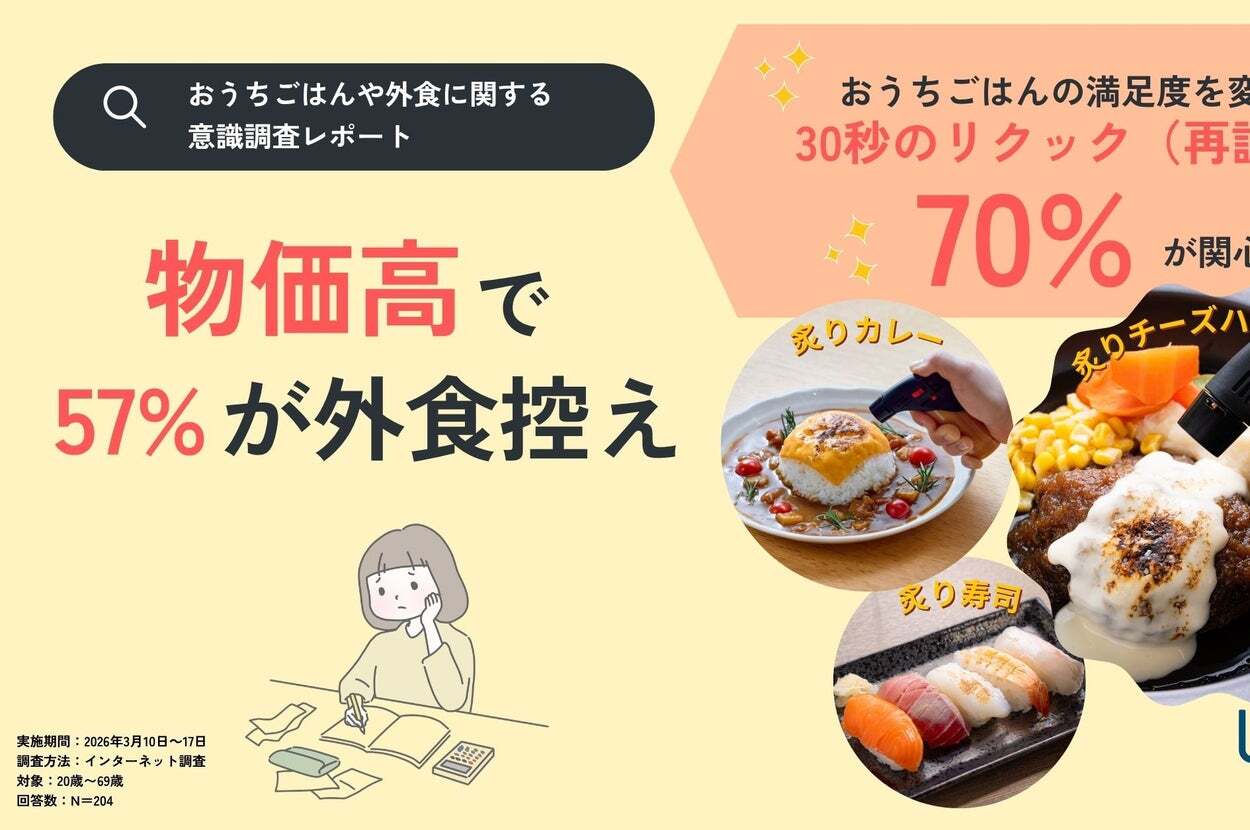
株式会社ライテック(東京都台東区)は、物価高の影響や自炊のストレスなどについての「おうちごはんや外食に関する調査」を実施し、結果を公表しました。4月6日のプレスリリースをもとに紹介します。
「物価高の影響で外食を控え、家で食べる頻度が増えたか」との質問で、「はい」と回答した人は57.4%でした。 「はい」と回答した人の中では、「60歳以上」と「20〜29歳」の割合がやや高く、いずれも収入の低さが影響しているとみられます。
「自炊のマンネリ化や手間にストレスを感じるか」との質問では、「はい」と答えた人が62.3%でした。 節約のために外食を控える人が増えている一方、自炊に負担を感じている人も半数を超えているのが現状となっています。
また、「手間(洗い物や包丁)は減らしたいけれど、食卓に『自分なりのこだわり』や『美味しそうな見た目』はプラスしたいと感じたことがあるか」との質問では、「はい」と答えた人が55.4%でした。 自炊の負担は低減しつつも、ただ単に食事を摂るだけでなく、見た目なども大切にしたいという人が半数以上いることが分かります。
「手軽な食事(レンジのみ等)で済ませた際、お腹は満たされても物足りなさや空虚感を感じることがあるか」との質問でも、「よくある」が8.8%、「たまにある」が39.7%という結果に。 約半数の人が、レンジで温めるだけの食事に満足できなかった経験があることが分かります。
また、「買ってきたお惣菜や弁当を家で食べる“中食” は、自炊の一部(自炊と同等)だと感じますか?」という質問では、「自炊とは別物(手抜き、または楽をしたい時用)だと感じる」と答えた人が54.4%、「自炊の一部だと感じる」が30.4%でした。 一方、調査では「料理への関与意欲が高い人ほど、中食も自炊体験の延長として取り込もうとする傾向」があり、惣菜や弁当であっても「ひと手間」を加えることで「満足度を引き上げる」可能性が示唆されたとのことです。
実施期間:2026年3月10日~17日 調査方法:インターネット調査 対象:20歳〜69歳 回答数:204件
「物価高の影響で外食を控え、家で食べる頻度が増えたか」との質問で、「はい」と回答した人は57.4%でした。 「はい」と回答した人の中では、「60歳以上」と「20〜29歳」の割合がやや高く、いずれも収入の低さが影響しているとみられます。
「自炊のマンネリ化や手間にストレスを感じるか」との質問では、「はい」と答えた人が62.3%でした。 節約のために外食を控える人が増えている一方、自炊に負担を感じている人も半数を超えているのが現状となっています。
また、「手間(洗い物や包丁)は減らしたいけれど、食卓に『自分なりのこだわり』や『美味しそうな見た目』はプラスしたいと感じたことがあるか」との質問では、「はい」と答えた人が55.4%でした。 自炊の負担は低減しつつも、ただ単に食事を摂るだけでなく、見た目なども大切にしたいという人が半数以上いることが分かります。
「手軽な食事(レンジのみ等)で済ませた際、お腹は満たされても物足りなさや空虚感を感じることがあるか」との質問でも、「よくある」が8.8%、「たまにある」が39.7%という結果に。 約半数の人が、レンジで温めるだけの食事に満足できなかった経験があることが分かります。
また、「買ってきたお惣菜や弁当を家で食べる“中食” は、自炊の一部(自炊と同等)だと感じますか?」という質問では、「自炊とは別物(手抜き、または楽をしたい時用)だと感じる」と答えた人が54.4%、「自炊の一部だと感じる」が30.4%でした。 一方、調査では「料理への関与意欲が高い人ほど、中食も自炊体験の延長として取り込もうとする傾向」があり、惣菜や弁当であっても「ひと手間」を加えることで「満足度を引き上げる」可能性が示唆されたとのことです。
実施期間:2026年3月10日~17日 調査方法:インターネット調査 対象:20歳〜69歳 回答数:204件
Vocabulary
General
Proper noun
JLPT N2
JLPT N1
| # | 言葉 | 意味 |
|---|---|---|
| 9 | 自炊 | じすい (自炊) : 1. cooking for oneself; cooking one's own food; doing one's own cooking; making food oneself; self-catering 2. scanning a book or magazine to create an ebook by oneself |
| 4 | 調査 | ちょうさ (調査) : investigation; examination; inquiry; enquiry; survey |
| 4 | 感じる | かんじる (感じる) : to feel; to sense; to experience |
| 3 | 影響 | えいきょう (影響) : 1. influence; effect 2. to influence; to affect; to have an influence on; to impact; to have an effect on |
| 3 | 外食 | がいしょく (外食) : eating out; dining out |
| 3 | 回答 | かいとう (回答) : reply; answer |
| 3 | 答える | こたえる (答える) : to answer; to reply |
| 3 | 感ずる | かんずる (感ずる) : to feel; to sense |
| 3 | 半数 | はんすう (半数) : 1. half the number 2. haploid |
| 2 | 物価高 | ぶっかだか (物価高) : high prices of commodities |
| 2 | 結果 | けっか (結果) : 1. result; consequence; outcome; effect 2. coming to fruition; bearing fruit |
| 2 | 控える | ひかえる (控える) : 1. to be temperate in; to refrain; to abstain; to hold back; to restrain oneself from excessive ... 2. to make notes; to jot down (e.g. phone number) |
| 2 | 増える | ふえる (増える) : to increase; to multiply |
| 2 | 手間 | てま (手間) : time; labour; labor |
| 2 | 負担 | ふたん (負担) : 1. burden; load; responsibility 2. bearing (a cost, responsibility, etc.); shouldering |
| 2 | 見た目 | みため (見た目) : appearance; (outward) looks; exterior appearance |
| 2 | 分かる | わかる (分かる) : 1. to understand; to comprehend; to grasp; to see; to get; to follow 2. to become clear; to be known; to be discovered; to be realized; to be realised; to be found out |
| 2 | 惣菜 | そうざい (惣菜) : small dish (served as a part of an ordinary household meal); side dish |
| 2 | 弁当 | べんとう (弁当) : bento; Japanese box lunch |
| 2 | 中食 | ちゅうしょく (昼食) : 1. lunch; midday meal 2. food served at a tea party (tea ceremony) |
| 2 | 一部 | いちぶ (一部) : 1. one part; one portion; one section; some 2. one copy (e.g. of a document) |
| 1 | 株式会社 | かぶしきがいしゃ (株式会社) : stock company; corporation; kabushiki kaisha; KK |
| 1 | 東京都 | とうきょうと (東京都) : Tokyo Metropolis (prefecture); Tokyo metropolitan area |
| 1 | 台東区 | たいとうく (台東区) : Taitō Ward (place) |
| 1 | おうち | くぼち (窪地) : hollow; low ground; basin; pit; dip; depression |
| 1 | 関する | かんする (関する) : to concern; to be related |
| 1 | 実施 | じっし (実施) : enforcement; implementation; putting into practice; carrying out; operation; working (e.g. working parameters); enactment |
| 1 | 公表 | こうひょう (公表) : official announcement; proclamation |
| 1 | もと | もと (元) : 1. origin; source 2. base; basis; foundation; root |
| 1 | 頻度 | ひんど (頻度) : frequency (of occurrence) |
| 1 | やや | やや (稍) : a little; partially; somewhat; slightly; semi-; -ish; on the ... side; a short time; a while |
| 1 | いずれ | いずれ (何れ) : 1. where; which; who 2. anyway; anyhow; at any rate |
| 1 | 収入 | しゅうにゅう (収入) : income; receipts; revenue |
| 1 | 低 | てい (低) : low (level, value, price, etc.) |
| 1 | マンネリ化 | マンネリか (マンネリ化) : getting stuck in a rut; becoming stereotyped |
| 1 | 節約 | せつやく (節約) : economising; saving |
| 1 | 超える | こえる (越える) : 1. to cross over; to cross; to pass through; to pass over (out of); to go beyond; to go past 2. to exceed; to surpass; to be more (than) |
| 1 | 現状 | げんじょう (現状) : present condition; existing state; status quo; current state |
| 1 | 洗い物 | あらいもの (洗い物) : washing (esp. dishes and laundry) |
| 1 | 包丁 | ほうちょう (包丁) : 1. kitchen knife; carving knife 2. cooking; food |
| 1 | 減らす | へらす (減らす) : to abate; to decrease; to diminish; to shorten |
| 1 | 食卓 | しょくたく (食卓) : dining table |
| 1 | なり | なり (也) : 1. to be 2. to be (location) |
| 1 | こだわり | こだわり (拘り) : 1. obsession; fixation; hangup; determination; fastidiousness; pickiness about (trait, style, etc.) 2. complaining; criticizing |
| 1 | 低減 | ていげん (低減) : decrease; reduction; fall; depreciation; mitigation |
| 1 | ただ | ただ (只) : 1. ordinary; common; usual 2. free of charge |
| 1 | 単に | たんに (単に) : simply; merely; only; solely |
| 1 | 摂る | とる (摂る) : to have (e.g. lunch); to take (e.g. vitamins) |
| 1 | 手軽 | てがる (手軽) : easy; simple; informal; offhand; cheap |
| 1 | のみ | のみ : only; nothing but |
| 1 | 等 | など (等) : 1. et cetera; etc.; and the like; and so forth 2. or something |
| 1 | 済む | すむ (済む) : 1. to finish; to end; to be completed 2. to merely result in something less severe than expected |
| 1 | 際 | きわ (際) : 1. edge; brink; verge; side 2. time; moment of |
| 1 | お腹 | おなか (お腹) : belly; abdomen; stomach |
| 1 | 満たす | みたす (満たす) : 1. to satisfy (conditions, one's appetite, etc.); to meet (e.g. demands); to fulfill; to gratify 2. to fill (e.g. a cup); to pack; to supply |
| 1 | 足りる | たりる (足りる) : 1. to be sufficient; to be enough 2. to be worth doing; to be worthy of; to deserve |
| 1 | 空虚 | くうきょ (空虚) : 1. emptiness; hollowness; vacancy; void 2. inanity; pointlessness; meaninglessness |
| 1 | 温める | あたためる (温める) : to warm; to heat |
| 1 | 満足 | まんぞく (満足) : 1. satisfaction; contentment; gratification 2. sufficient; satisfactory; enough; adequate; proper; decent |
| 1 | 買う | かう (買う) : 1. to buy; to purchase 2. to value; to have a high opinion |
| 1 | 同等 | どうとう (同等) : equality; equal; same rights; same rank; equivalence |
| 1 | 別物 | べつもの (別物) : another thing; exception; special case |
| 1 | 手抜き | てぬき (手抜き) : 1. omitting crucial steps; cutting corners; skimping 2. intentional negligence |
| 1 | 関与 | かんよ (関与) : participation; taking part in; participating in; being concerned in |
| 1 | 意欲 | いよく (意欲) : will; desire; ambition; urge (e.g. creative urge) |
| 1 | 体験 | たいけん (体験) : (practical) experience; personal experience; hands-on experience; first-hand experience |
| 1 | 延長 | えんちょう (延長) : 1. extension; elongation; prolongation; lengthening 2. Enchō era (923.4.11-931.4.26) |
| 1 | 取り込む | とりこむ (取り込む) : 1. to take in; to bring in; to adopt (e.g. behaviour); to introduce 2. to capture (e.g. image); to import |
| 1 | 傾向 | けいこう (傾向) : tendency; trend; inclination |
| 1 | ひと手間 | ひとてま (一手間) : extra effort; one small touch; small twist |
| 1 | 満足度 | まんぞくど (満足度) : (degree of) satisfaction |
| 1 | 引き上げる | ひきあげる (引き上げる) : 1. to pull up; to drag up; to lift up 2. to increase; to raise (e.g. taxes) |
| 1 | 可能性 | かのうせい (可能性) : potentiality; likelihood; possibility; availability |
| 1 | 示唆 | しさ (示唆) : suggestion; hint; implication |
| 1 | ~ | にょろ (~) : tilde; wave dash |
| 1 | 方法 | ほうほう (方法) : method; process; manner; way; means; technique |
| 1 | 対象 | たいしょう (対象) : target; object (of worship, study, etc.); subject (of taxation, etc.) |
| 1 | 数 | しばしば (屡々) : often; again and again; frequently; repeatedly |
| 1 | 件 | くだん (件) : 1. the aforementioned; the said; (man, incident, etc.) in question; the above-mentioned; the aforesaid 2. the usual |