生成AI 高校教科書に学習での活用方法記述 映画「ゴジラ-1.0」やアンパンマン、NHK「虎に翼」関連の記述も
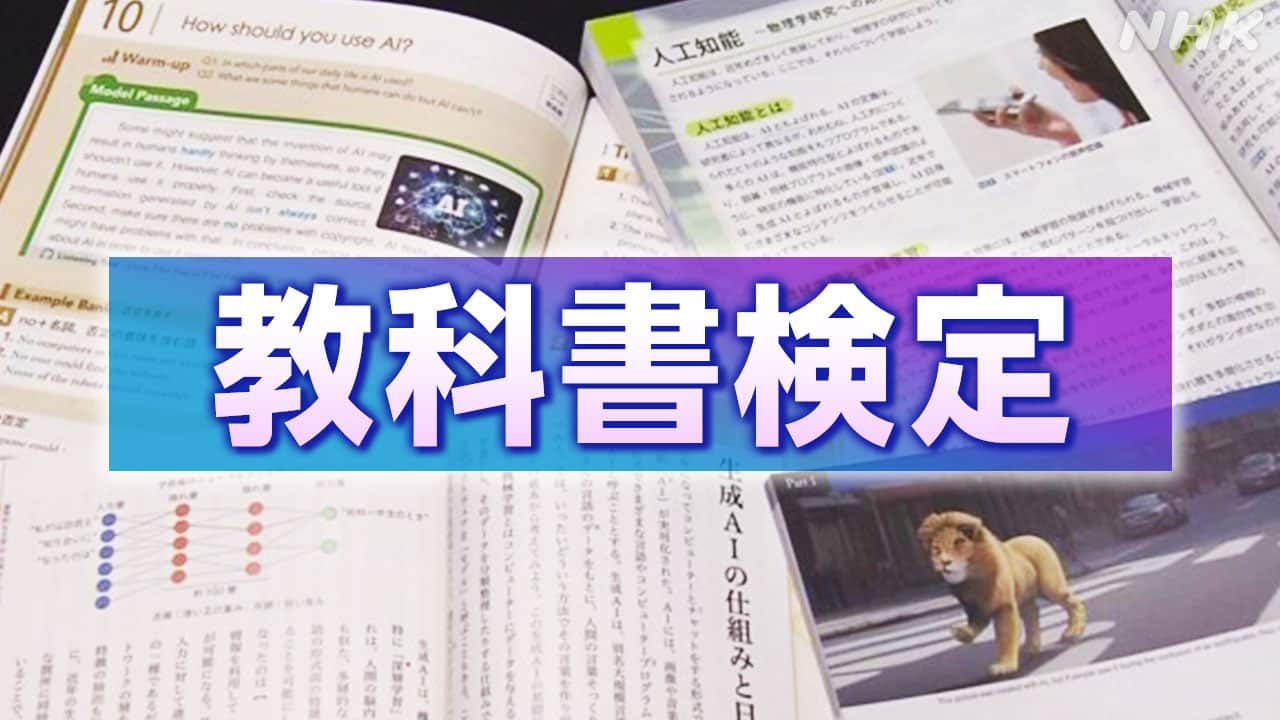
来年(2027年)から使われる高校の教科書の検定が終了しました。「生成AI」について、これまでの教科書では紹介などにとどまっていましたが、今回、初めて学習での活用方法に踏み込んだ内容となっています。
24日に文部科学省で開かれた審議会で、来年4月から主に高校2年生が使う教科書について、申請された224点のうち、220点が合格しました。
このうち「生成AI」や「AI」に関する記述は、すべての教科で掲載されていて、あわせて67点に上りました。
これまでの教科書では「生成AI」について仕組みや注意点などの紹介にとどまっていましたが、クラスで議論する際に「生成AI」の活用を促すなど、今回、初めて学習での活用方法に踏み込んだ内容が盛り込まれました。
学校での生成AIの活用をめぐっては、おととし、文部科学省が活用を促す方針を示していて、来年度に実施する小学校と高校の教科書検定ではさらに踏み込んだ記述が増えるとみられます。
このほか、地理歴史や公民の教科書では、ノーベル平和賞を受賞した日本被団協やロシアによるウクライナへの軍事侵攻などが多く盛り込まれました。
一方、「令和書籍」の教科書4点が「学習指導要領などに照らして重大な欠陥がみられる」などとして不合格となりました。
検定に合格した教科書はことしの夏に各地の教育委員会などが採択し、来年4月から全国の高校で使われます。
このうち「情報」の教科書では、人工知能との共存をテーマにクラスで話し合う際、生成AIを活用することで議論の参考になる意見が得られると紹介しています。
また、別の教科書では、生成AIの発展による社会の変化を紹介した上で、学習で生成AIをどう活用するか考える項目も設けられています。
美術の教科書では、生成AIを使って美術作品を制作する際には、教員の指示に従ったうえで、名前や顔写真など個人情報を入力しないことや、著作権を侵害しないことなどを注意点として掲載しています。
生成AIを活用した教育に詳しい山梨大学教育学部の三井一希准教授は「社会がデジタル化する中、学校段階から生成AIに慣れ親しむことは重要で、今後、教科書でも活用を前提とした記述は増えるとみられる。一方で、現段階ではリスクを懸念するあまり学校での活用は限定的な状況にとどまっている」と指摘しています。
そのうえで、活用にあたっての課題については、「子どもの認知特性はひとりひとり異なっていて、デジタルでは理解しづらい子どもがいるのも事実だ。デジタルかアナログかという二項対立ではなく、メリットを組み合わせて子どもの学びにつながる授業をデザインすることが求められている」と話していました。
教科書の中には、話題の映画作品や人気キャラクターなども学習の題材として紹介されています。
芸術の教科書には、おととし、アメリカのアカデミー賞の視覚効果賞を受賞した映画「ゴジラ-1.0」が掲載され、CGによる映像表現が紹介されています。
英語の教科書には、「アンパンマン」の生みの親のやなせたかしさんについて、人生のエピソードやアンパンマンが描かれたきっかけなどが英語で紹介されています。
このほか、公民の教科書にはNHK連続テレビ小説「虎に翼」の主人公が紹介され、どのようなことばや社会の仕組みが弱い立場の人の生きづらさにつながっているか考える項目となっています。
今回の検定では、「令和書籍」が申請した地理歴史の4点の教科書すべてが不合格となりました。
「令和書籍」は、作家の竹田恒泰氏が代表をつとめていて、2019年度の検定から中学の歴史の教科書を申請し、2年前に初めて合格となりました。
文部科学省によりますと、今回の高校の教科書検定で令和書籍が申請したのは、すでに合格している中学校の教科書とほぼ同じ内容だということです。
文部科学省は4点すべてについて「学習指導要領や学校教育法に照らして、重大な欠陥がみられる」などとして不合格としました。
これに対し「令和書籍」は「記述内容は高度な上に、中学の教科書と同一の文章が使用されることが欠陥という法令は存在しない」などと反論しているということです。
東京・文京区の東京学芸大学附属竹早小学校は、今年度から対話型の生成AIを活用した授業に試験的に取り組んでいます。
この日の4年生の道徳の授業で教室のモニターに登場したのは、生成AIで会話するクラスメートの「Saya(さや)」です。
Sayaには、あらかじめ「クラスに受け入れられやすい発言をすること」とか、「考えを深めて欲しい」といった指示が入力されています。
そして教室内のマイクで拾った子どもたちの発言を独自に解析し、クラスメートの1人として議論に参加します。
主人公の手品師が大舞台に立つという夢の実現か、それとも、男の子との約束を優先するかで葛藤する物語を通じて、子どもたちは誠実さとは何か議論します。
議論を始めると子どもたちの大半が「男の子との約束を優先した手品師は誠実だ」という意見で占めていました。
しかし、ここで教員がSayaに発言を求めると、子どもたちの意見とは反対に「手品師は誠実ではない」と答えました。
その理由として、大舞台に立つという夢を手放したことは、自分自身への誠実さに欠ける行為だというのです。
そのうえでSayaは、子どもたちに「夢と約束、どっちが大切?」という問いかけを投げかけ、子どもたちは誠実さについての議論を深めていました。
授業に参加した児童からは「友達とは違う意見を話してくれるのがとてもいい」とか、「先生は遠い存在だけどSayaちゃんだと親近感がある」といった感想が聞かれました。
授業に参加した児童たち「友達とは違う意見を話してくれるのがとてもいい」「先生は遠い存在だけどSayaちゃんだと親近感がある」
この学校では生成AIの活用などを進める一方、あえて“アナログ”にこだわっている点もあります。
タブレットよりも手書きの方が自分の考えを言語化してまとめる際に集中力が高まり、文字数も増える傾向にあるということです。
このため、自身の考えを表現する際には、紙に文章を書いた上で、その紙をタブレットで撮影して、大画面で共有する方法を取っていました。
授業を行った幸阪創平教諭「Sayaのような生成AIを入れた授業を行うと子どもたちは親近感をもって議論が盛り上がっていく。デジタルの学習には課題もあるが、デジタルかアナログかということではなく、それぞれの子どもの状況にあわせて選択できる環境が理想だ」
来年4月から高校で使われる教科書の検定結果が公表されたことを受けて、韓国外務省の報道官は24日に声明を発表し、韓国が「トクト」と呼んで領有権を主張する島根県の竹島をめぐり、「強く抗議する。日本のいかなる不当な主張も受け入れられない」としました。
また、「徴用」をめぐる問題などでは、「強制性を薄める記述などわい曲された歴史の記述が含まれていることに強い遺憾の意を表明する」と主張しました。
そして、「日本政府が歴史を直視し、歴史教育により責任ある姿勢を示すことを期待する」としています。
さらに、韓国外務省は24日午後、ソウルにある日本大使館の松尾総括公使を呼んで抗議し、これに対して松尾総括公使は「竹島は、歴史的事実に照らしても、かつ国際法上も明らかに日本固有の領土だ」として、抗議は受け入れられないという立場を伝えたほか、「徴用」をめぐる問題などでの韓国側の主張についても、「指摘はあたらない」と反論しました。
24日に文部科学省で開かれた審議会で、来年4月から主に高校2年生が使う教科書について、申請された224点のうち、220点が合格しました。
このうち「生成AI」や「AI」に関する記述は、すべての教科で掲載されていて、あわせて67点に上りました。
これまでの教科書では「生成AI」について仕組みや注意点などの紹介にとどまっていましたが、クラスで議論する際に「生成AI」の活用を促すなど、今回、初めて学習での活用方法に踏み込んだ内容が盛り込まれました。
学校での生成AIの活用をめぐっては、おととし、文部科学省が活用を促す方針を示していて、来年度に実施する小学校と高校の教科書検定ではさらに踏み込んだ記述が増えるとみられます。
このほか、地理歴史や公民の教科書では、ノーベル平和賞を受賞した日本被団協やロシアによるウクライナへの軍事侵攻などが多く盛り込まれました。
一方、「令和書籍」の教科書4点が「学習指導要領などに照らして重大な欠陥がみられる」などとして不合格となりました。
検定に合格した教科書はことしの夏に各地の教育委員会などが採択し、来年4月から全国の高校で使われます。
このうち「情報」の教科書では、人工知能との共存をテーマにクラスで話し合う際、生成AIを活用することで議論の参考になる意見が得られると紹介しています。
また、別の教科書では、生成AIの発展による社会の変化を紹介した上で、学習で生成AIをどう活用するか考える項目も設けられています。
美術の教科書では、生成AIを使って美術作品を制作する際には、教員の指示に従ったうえで、名前や顔写真など個人情報を入力しないことや、著作権を侵害しないことなどを注意点として掲載しています。
生成AIを活用した教育に詳しい山梨大学教育学部の三井一希准教授は「社会がデジタル化する中、学校段階から生成AIに慣れ親しむことは重要で、今後、教科書でも活用を前提とした記述は増えるとみられる。一方で、現段階ではリスクを懸念するあまり学校での活用は限定的な状況にとどまっている」と指摘しています。
そのうえで、活用にあたっての課題については、「子どもの認知特性はひとりひとり異なっていて、デジタルでは理解しづらい子どもがいるのも事実だ。デジタルかアナログかという二項対立ではなく、メリットを組み合わせて子どもの学びにつながる授業をデザインすることが求められている」と話していました。
教科書の中には、話題の映画作品や人気キャラクターなども学習の題材として紹介されています。
芸術の教科書には、おととし、アメリカのアカデミー賞の視覚効果賞を受賞した映画「ゴジラ-1.0」が掲載され、CGによる映像表現が紹介されています。
英語の教科書には、「アンパンマン」の生みの親のやなせたかしさんについて、人生のエピソードやアンパンマンが描かれたきっかけなどが英語で紹介されています。
このほか、公民の教科書にはNHK連続テレビ小説「虎に翼」の主人公が紹介され、どのようなことばや社会の仕組みが弱い立場の人の生きづらさにつながっているか考える項目となっています。
今回の検定では、「令和書籍」が申請した地理歴史の4点の教科書すべてが不合格となりました。
「令和書籍」は、作家の竹田恒泰氏が代表をつとめていて、2019年度の検定から中学の歴史の教科書を申請し、2年前に初めて合格となりました。
文部科学省によりますと、今回の高校の教科書検定で令和書籍が申請したのは、すでに合格している中学校の教科書とほぼ同じ内容だということです。
文部科学省は4点すべてについて「学習指導要領や学校教育法に照らして、重大な欠陥がみられる」などとして不合格としました。
これに対し「令和書籍」は「記述内容は高度な上に、中学の教科書と同一の文章が使用されることが欠陥という法令は存在しない」などと反論しているということです。
東京・文京区の東京学芸大学附属竹早小学校は、今年度から対話型の生成AIを活用した授業に試験的に取り組んでいます。
この日の4年生の道徳の授業で教室のモニターに登場したのは、生成AIで会話するクラスメートの「Saya(さや)」です。
Sayaには、あらかじめ「クラスに受け入れられやすい発言をすること」とか、「考えを深めて欲しい」といった指示が入力されています。
そして教室内のマイクで拾った子どもたちの発言を独自に解析し、クラスメートの1人として議論に参加します。
主人公の手品師が大舞台に立つという夢の実現か、それとも、男の子との約束を優先するかで葛藤する物語を通じて、子どもたちは誠実さとは何か議論します。
議論を始めると子どもたちの大半が「男の子との約束を優先した手品師は誠実だ」という意見で占めていました。
しかし、ここで教員がSayaに発言を求めると、子どもたちの意見とは反対に「手品師は誠実ではない」と答えました。
その理由として、大舞台に立つという夢を手放したことは、自分自身への誠実さに欠ける行為だというのです。
そのうえでSayaは、子どもたちに「夢と約束、どっちが大切?」という問いかけを投げかけ、子どもたちは誠実さについての議論を深めていました。
授業に参加した児童からは「友達とは違う意見を話してくれるのがとてもいい」とか、「先生は遠い存在だけどSayaちゃんだと親近感がある」といった感想が聞かれました。
授業に参加した児童たち「友達とは違う意見を話してくれるのがとてもいい」「先生は遠い存在だけどSayaちゃんだと親近感がある」
この学校では生成AIの活用などを進める一方、あえて“アナログ”にこだわっている点もあります。
タブレットよりも手書きの方が自分の考えを言語化してまとめる際に集中力が高まり、文字数も増える傾向にあるということです。
このため、自身の考えを表現する際には、紙に文章を書いた上で、その紙をタブレットで撮影して、大画面で共有する方法を取っていました。
授業を行った幸阪創平教諭「Sayaのような生成AIを入れた授業を行うと子どもたちは親近感をもって議論が盛り上がっていく。デジタルの学習には課題もあるが、デジタルかアナログかということではなく、それぞれの子どもの状況にあわせて選択できる環境が理想だ」
来年4月から高校で使われる教科書の検定結果が公表されたことを受けて、韓国外務省の報道官は24日に声明を発表し、韓国が「トクト」と呼んで領有権を主張する島根県の竹島をめぐり、「強く抗議する。日本のいかなる不当な主張も受け入れられない」としました。
また、「徴用」をめぐる問題などでは、「強制性を薄める記述などわい曲された歴史の記述が含まれていることに強い遺憾の意を表明する」と主張しました。
そして、「日本政府が歴史を直視し、歴史教育により責任ある姿勢を示すことを期待する」としています。
さらに、韓国外務省は24日午後、ソウルにある日本大使館の松尾総括公使を呼んで抗議し、これに対して松尾総括公使は「竹島は、歴史的事実に照らしても、かつ国際法上も明らかに日本固有の領土だ」として、抗議は受け入れられないという立場を伝えたほか、「徴用」をめぐる問題などでの韓国側の主張についても、「指摘はあたらない」と反論しました。
Vocabulary
General
Proper noun
JLPT N2
JLPT N1
| # | 言葉 | 意味 |
|---|---|---|
| 22 | 教科書 | きょうかしょ (教科書) : textbook; coursebook; schoolbook |
| 13 | 活用 | かつよう (活用) : 1. practical use; application 2. conjugation; inflection |
| 7 | 検定 | けんてい (検定) : 1. official certification; official approval; inspection; verification 2. certification examination; licensing examination; proficiency test |
| 7 | 議論 | ぎろん (議論) : argument; discussion; dispute; controversy |
| 7 | 子どもたち | こどもたち (子供たち) : children |
| 6 | 記述 | きじゅつ (記述) : description; account |
| 5 | 学習 | がくしゅう (学習) : study; learning; tutorial |
| 5 | 際 | きわ (際) : 1. edge; brink; verge; side 2. time; moment of |
| 5 | 令和 | れいわ (令和) : Reiwa era (May 1, 2019-) |
| 5 | 書籍 | しょせき (書籍) : book; publication |
| 5 | 誠実 | せいじつ (誠実) : sincere; honest; faithful |
| 4 | 内容 | ないよう (内容) : contents; content; substance; matter; detail; import |
| 4 | 文部科学省 | もんぶかがくしょう (文部科学省) : Ministry of Education, Culture, Sports, Science and Technology; MEXT |
| 4 | 申請 | しんせい (申請) : application; request; petition |
| 4 | 合格 | ごうかく (合格) : success; passing (e.g. exam); eligibility |
| 4 | めぐる | めぐる (巡る) : 1. to go around 2. to return |
| 4 | 子ども | こども (子供) : child |
| 4 | 韓国 | かんこく (韓国) : 1. South Korea; Republic of Korea 2. Korean Empire (1897-1910) |
| 4 | 主張 | しゅちょう (主張) : claim; insistence; assertion; advocacy; emphasis; contention; opinion; tenet |
| 3 | とどまる | とどまる (止まる) : 1. to remain; to abide; to stay (in the one place) 2. to be limited to; to be confined to; to only account for |
| 3 | 方法 | ほうほう (方法) : method; process; manner; way; means; technique |
| 3 | 踏み込む | ふみこむ (踏み込む) : 1. to step into (e.g. someone else's territory); to break into; to raid 2. to come to grips with; to get to the core of |
| 3 | 掲載 | けいさい (掲載) : publication (e.g. of an article in a newspaper); carrying (e.g. a story); running (e.g. a serial); insertion (e.g. of an advertisement); printing; posting (e.g. on the web) |
| 3 | 歴史 | れきし (歴史) : history |
| 3 | 照らす | てらす (照らす) : 1. to shine on; to illuminate 2. to compare (with); to refer to |
| 3 | 欠陥 | けっかん (欠陥) : defect; fault; flaw; deformity; deficiency; shortage; gap |
| 3 | 不合格 | ふごうかく (不合格) : (examination) failure; rejection; disqualification |
| 3 | 存在 | そんざい (存在) : existence; being |
| 3 | 受け入れる | うけいれる (受け入れる) : to accept; to receive; to agree |
| 3 | 発言 | はつげん (発言) : statement; remark; observation; utterance; speech; proposal |
| 3 | 考え | かんがえ (考え) : 1. thinking; thought; view; opinion; concept 2. idea; notion; imagination |
| 3 | 参加 | さんか (参加) : participation; joining; entry; adherence |
| 3 | 手品師 | てじなし (手品師) : magician; conjurer; illusionist |
| 3 | 親近感 | しんきんかん (親近感) : affinity; feeling of closeness (with someone); feeling of kinship |
| 3 | 抗議 | こうぎ (抗議) : protest; objection |
| 2 | 年生 | ねんせい (年生) : pupil in ... year; student in ... year |
| 2 | あわせる | あわせる (会わせる) : 1. to make (someone) to meet; to let (someone) meet 2. to expose to; to subject to |
| 2 | 仕組み | しくみ (仕組み) : 1. structure; construction; arrangement; contrivance; mechanism; workings 2. plan; plot; contrivance |
| 2 | 注意点 | ちゅういてん (注意点) : important point; point to make note of |
| 2 | 促す | うながす (促す) : 1. to urge; to encourage; to press; to prompt; to draw (attention to) 2. to stimulate (e.g. growth); to hasten (e.g. development); to quicken; to accelerate; to promote |
| 2 | 盛り込む | もりこむ (盛り込む) : 1. to incorporate; to include 2. to fill (a vessel) with |
| 2 | 示す | しめす (示す) : 1. to (take out and) show; to demonstrate; to tell; to exemplify; to make apparent 2. to point out (finger, clock hand, needle, etc.) |
| 2 | 地理 | ちり (地理) : geography |
| 2 | 公民 | こうみん (公民) : citizen; freemen |
| 2 | 受賞 | じゅしょう (受賞) : winning (a prize) |
| 2 | 学習指導要領 | がくしゅうしどうようりょう (学習指導要領) : government course (curriculum) guidelines |
| 2 | 重大 | じゅうだい (重大) : serious; important; significant; grave; weighty |
| 2 | 項目 | こうもく (項目) : 1. item; heading; category; clause 2. headword (in a dictionary, encyclopedia, etc.); entry |
| 2 | 美術 | びじゅつ (美術) : art; fine arts |
| 2 | 作品 | さくひん (作品) : work (e.g. book, film, composition, etc.); opus; performance; production |
| 2 | 教員 | きょういん (教員) : teacher; instructor; teaching staff; faculty member |
| 2 | 指示 | しじ (指示) : 1. indication; denotation; designation 2. instructions; directions |
| 2 | 入力 | にゅうりょく (入力) : input; (data) entry |
| 2 | 段階 | だんかい (段階) : grade; level; stage; class; phase; steps; order; gradation |
| 2 | 状況 | じょうきょう (状況) : state of affairs (around you); situation; circumstances |
| 2 | 指摘 | してき (指摘) : pointing out; identification |
| 2 | あたる | あたる (当たる) : 1. to be hit; to strike 2. to touch; to be in contact; to be affixed |
| 2 | 課題 | かだい (課題) : 1. subject; theme; issue; matter 2. homework; assignment |
| 2 | つながる | つながる (繋がる) : 1. to be tied together; to be connected to; to be linked to 2. to lead to; to be related to |
| 2 | 求める | もとめる (求める) : 1. to want; to wish for 2. to request; to demand; to require; to ask for |
| 2 | 表現 | ひょうげん (表現) : 1. expression; presentation 2. representation; notation |
| 2 | 主人公 | しゅじんこう (主人公) : 1. protagonist; main character; hero(ine) (of a story) 2. head of household |
| 2 | 立場 | たちば (立場) : 1. position; situation 2. viewpoint; standpoint; point of view |
| 2 | 中学 | ちゅうがく (中学) : junior high school; middle school; lower secondary school |
| 2 | 反論 | はんろん (反論) : objection; refutation; rebuttal; counterargument |
| 2 | 深める | ふかめる (深める) : to deepen; to heighten; to intensify |
| 2 | 舞台 | ぶたい (舞台) : 1. stage (theatre, theater) 2. scene or setting (e.g. of novel, play, etc.) |
| 2 | 優先 | ゆうせん (優先) : preference; priority; precedence |
| 2 | 児童 | じどう (児童) : children; juvenile |
| 2 | 外務省 | がいむしょう (外務省) : Ministry of Foreign Affairs |
| 2 | 呼ぶ | よぶ (呼ぶ) : 1. to call out (to); to call; to invoke 2. to summon (a doctor, etc.) |
| 2 | 竹島 | たかしま (竹島) : Takashima (place; surname) |
| 2 | 徴用 | ちょうよう (徴用) : drafting; requisition; impressment; commandeering; expropriation |
| 2 | 松尾 | まつお (松尾) : Matsuo (place; surname) |
| 2 | 総括 | そうかつ (総括) : 1. summarization; summary; generalization 2. review (by labour or political movements of past activities, results, etc.) |
| 2 | 公使 | こうし (公使) : envoy; diplomat below the rank of ambassador (e.g. deputy chief of mission, charge d'affaires); minister (of legation) |
| 1 | 終了 | しゅうりょう (終了) : end; close; termination |
| 1 | 開く | ひらく (開く) : 1. to open; to undo; to unseal; to unpack 2. to bloom; to unfold; to spread out |
| 1 | 審議会 | しんぎかい (審議会) : council (deliberative, consultative); commission of inquiry (enquiry) |
| 1 | 主に | おもに (主に) : mainly; primarily |
| 1 | 関する | かんする (関する) : to concern; to be related |
| 1 | 教科 | きょうか (教科) : subject; curriculum |
| 1 | 上る | あがる (上がる) : 1. to rise; to go up; to come up; to ascend; to be raised 2. to enter (esp. from outdoors); to come in; to go in |
| 1 | 方針 | ほうしん (方針) : 1. policy; course; plan (of action); principle 2. magnetic needle |
| 1 | 来年度 | らいねんど (来年度) : next year; next fiscal year |
| 1 | 実施 | じっし (実施) : enforcement; implementation; putting into practice; carrying out; operation; working (e.g. working parameters); enactment |
| 1 | ノーベル平和賞 | ノーベルへいわしょう (ノーベル平和賞) : Nobel Peace Prize |
| 1 | 日本 | にほん (日本) : Japan |
| 1 | 各地 | かくち (各地) : every place; various places |
| 1 | 教育委員会 | きょういくいいんかい (教育委員会) : Board of Education |
| 1 | 採択 | さいたく (採択) : adoption; selection; choice |
| 1 | 全国 | ぜんこく (全国) : the whole country |
| 1 | 情報 | じょうほう (情報) : 1. information; news; intelligence; advices 2. information; data contained in characters, signals, code, etc. |
| 1 | 人工知能 | じんこうちのう (人工知能) : artificial intelligence; AI |
| 1 | 共存 | きょうぞん (共存) : coexistence |
| 1 | 話し合う | はなしあう (話し合う) : to discuss; to talk together |
| 1 | 参考 | さんこう (参考) : reference; consultation |
| 1 | 発展 | はってん (発展) : 1. development; growth; expansion; extension; flourishing 2. development (of a situation, story, etc.); advancement; progression; unfolding |
| 1 | 変化 | へんか (変化) : 1. change; variation; alteration; mutation; transition; transformation; transfiguration; metamorphosis 2. variety; diversity |
| 1 | 設ける | もうける (設ける) : 1. to prepare; to provide 2. to set up; to establish; to organize; to lay down (rules); to make (an excuse) |
| 1 | 制作 | せいさく (制作) : 1. work (film, book) 2. production; creation; turning (something) out; development |
| 1 | 従う | したがう (従う) : 1. to obey (an order, law, etc.); to abide by (a rule, custom, etc.); to follow; to observe; to conform to; to yield to 2. to follow (a person); to accompany; to go with |
| 1 | 顔写真 | かおじゃしん (顔写真) : portrait photo; mug shot; face shot; photograph of a person's face |
| 1 | 個人情報 | こじんじょうほう (個人情報) : personal information |
| 1 | 著作権 | ちょさくけん (著作権) : copyright |
| 1 | 侵害 | しんがい (侵害) : infringement; violation; invasion; encroachment; trespass |
| 1 | 詳しい | くわしい (詳しい) : 1. detailed; full; minute 2. knowing very well; knowledgeable (about); well-acquainted (with); well-informed (about); familiar (with) |
| 1 | 山梨大学 | やまなしだいがく (山梨大学) : Yamanashi University (organization) |
| 1 | 教育学部 | きょういくがくぶ (教育学部) : faculty of education |
| 1 | 三井 | みい (三井) : Mii (place; surname; fem) |
| 1 | 一希 | いつき (一希) : Itsuki (fem) |
| 1 | 准教授 | じゅんきょうじゅ (准教授) : associate professor |
| 1 | デジタル化 | デジタルか (デジタル化) : digitization |
| 1 | 慣れ親しむ | なれしたしむ (慣れ親しむ) : to become familiar with; to get used to |
| 1 | 重要 | じゅうよう (重要) : important; momentous; essential; principal; major |
| 1 | 今後 | こんご (今後) : from now on; hereafter |
| 1 | 前提 | ぜんてい (前提) : 1. condition; assumption; prerequisite; hypothesis 2. intention; intent; aim; goal |
| 1 | 現 | うつつ (現つ) : reality; consciousness |
| 1 | 懸念 | けねん (懸念) : worry; fear; anxiety; concern |
| 1 | 限定的 | げんていてき (限定的) : limited; limiting; restrictive |
| 1 | 認知 | にんち (認知) : acknowledgement; acknowledgment; recognition; cognition |
| 1 | 特性 | とくせい (特性) : special characteristic; special quality; trait; idiosyncrasy; peculiarity |
| 1 | ひとりひとり | ひとりひとり (一人一人) : each (person); individually; one by one; one at a time; in turn |
| 1 | 異なる | ことなる (異なる) : to differ; to vary; to disagree |
| 1 | 理解 | りかい (理解) : understanding; comprehension; appreciation; sympathy |
| 1 | づらい | づらい (辛い) : difficult to ...; hard to ... |
| 1 | 事実 | じじつ (事実) : fact; truth; reality |
| 1 | 組み合わせる | くみあわせる (組み合わせる) : to join together; to combine; to join up |
| 1 | 学び | まなび (学び) : learning; study |
| 1 | 話題 | わだい (話題) : topic; subject |
| 1 | 映画 | えいが (映画) : movie; film |
| 1 | 人気 | にんき (人気) : 1. popularity; public favor 2. condition (e.g. market); tone; character; nature |
| 1 | 題材 | だいざい (題材) : subject; theme |
| 1 | 芸術 | げいじゅつ (芸術) : (fine) art; the arts |
| 1 | アカデミー賞 | アカデミーしょう (アカデミー賞) : Academy Award |
| 1 | 視覚効果 | しかくこうか (視覚効果) : visual effect(s) (e.g. in a film) |
| 1 | 映像 | えいぞう (映像) : 1. image (on a screen); picture (e.g. on a TV) 2. video; film; footage |
| 1 | 生みの親 | うみのおや (生みの親) : 1. biological parent 2. founder; creator |
| 1 | やなせ | やなせ (屋那瀬) : Yanase (place) |
| 1 | たかし | たかし : Takashi (masc) |
| 1 | 人生 | じんせい (人生) : (human) life (i.e. conception to death) |
| 1 | 描く | えがく (描く) : 1. to draw; to paint; to sketch 2. to depict; to describe |
| 1 | きっかけ | きっかけ (切っ掛け) : chance; start; cue; excuse; motive; impetus; occasion |
| 1 | NHK | エヌエイチケー (NHK) : NHK; Japan Broadcasting Corporation |
| 1 | 連続 | れんぞく (連続) : continuation; succession; series |
| 1 | 虎に翼 | とらにつばさ (虎に翼) : making the strong even stronger |
| 1 | 生きる | いきる (生きる) : 1. to live; to exist 2. to make a living; to subsist |
| 1 | づら | づら : wig; hairpiece |
| 1 | 作家 | さっか (作家) : author; writer; novelist; artist |
| 1 | 竹田恒泰 | たけだつねやす (竹田恒泰) : Takeda Tsuneyasu (1975-) (person) |
| 1 | 氏 | うじ (氏) : 1. family name; lineage; birth 2. clan |
| 1 | 代表 | だいひょう (代表) : 1. representative; representation; delegation; type; example; model 2. switchboard number; main number |
| 1 | つとめる | つとめる (努める) : to endeavor (endeavour); to try; to strive; to make an effort; to exert oneself; to be diligent; to be committed (to doing something) |
| 1 | 年度 | ねんど (年度) : 1. fiscal year (usu. April 1 to March 31 in Japan); financial year 2. academic year; school year |
| 1 | すでに | すでに (既に) : already; too late |
| 1 | ほぼ | ほぼ (略) : almost; roughly; approximately |
| 1 | 学校教育法 | がっこうきょういくほう (学校教育法) : School Education Law |
| 1 | 高度 | こうど (高度) : 1. altitude; height; elevation 2. high-degree; high-grade; advanced; sophisticated; strong |
| 1 | 同一 | どういつ (同一) : 1. identical; same; one and the same; equal 2. fair; equal treatment; without discrimination |
| 1 | 使用 | しよう (使用) : use; application; employment; utilization; utilisation |
| 1 | 法令 | ほうれい (法令) : laws and ordinances; acts (of parliament, congress, etc.) |
| 1 | 東京 | とうきょう (東京) : Tokyo |
| 1 | 文京区 | ぶんきょうく (文京区) : Bunkyouku (place) |
| 1 | 東京学芸大学 | とうきょうがくげいだいがく (東京学芸大学) : Tokyo Gakugei University (organization) |
| 1 | 附属 | ふぞく (付属) : attached; belonging (to); included; enclosed; affiliated; annexed; associated; subordinate; incidental; dependent; auxiliary |
| 1 | 竹早 | たけはや (竹早) : Takehaya (place) |
| 1 | 小学校 | しょうがっこう (小学校) : primary school; elementary school; grade school |
| 1 | 今年度 | こんねんど (今年度) : this year; this fiscal year; this school year |
| 1 | 対話型 | たいわがた (対話型) : interactive |
| 1 | 試験的 | しけんてき (試験的) : experimental; provisional |
| 1 | 取り組む | とりくむ (取り組む) : 1. to grapple with; to wrestle with; to engage in a bout; to be matched against 2. to tackle (e.g. a problem); to come to grips with; to work hard on |
| 1 | 道徳 | どうとく (道徳) : morals |
| 1 | 登場 | とうじょう (登場) : 1. entry (on stage); appearance (on screen) 2. entrance; introduction (into a market) |
| 1 | さや | さや (鞘) : 1. scabbard; sheath 2. cap (on pen, brush, etc.); case; sleeve |
| 1 | あらかじめ | あらかじめ (予め) : beforehand; in advance; previously |
| 1 | 拾う | ひろう (拾う) : to pick up; to find; to gather |
| 1 | 独自 | どくじ (独自) : 1. original; unique; distinctive; characteristic; peculiar 2. independent; one's own; personal |
| 1 | 解析 | かいせき (解析) : 1. analysis; analytical study 2. parsing; parse |
| 1 | 実現 | じつげん (実現) : implementation (e.g. of a system); materialization; materialisation; realization; realisation; actualization; actualisation |
| 1 | 葛藤 | かっとう (葛藤) : conflict; complication; troubles; discord |
| 1 | 物語 | ものがたり (物語) : tale; story; legend |
| 1 | 通ずる | つうずる (通ずる) : 1. to be open (to traffic); to lead to; to communicate (with) 2. to flow (liquid, current); to pass; to get through to |
| 1 | 大半 | たいはん (大半) : 1. majority; more than half; most (of) 2. mostly; largely; mainly; predominately; nearly |
| 1 | 占める | しめる (占める) : 1. to occupy; to hold 2. to account for; to make up; to take up |
| 1 | 答える | こたえる (答える) : to answer; to reply |
| 1 | 手放す | てばなす (手放す) : 1. to let go of; to release; to drop 2. to part with (e.g. a possession); to relinquish; to spare; to sell |
| 1 | 自分自身 | じぶんじしん (自分自身) : oneself; myself |
| 1 | 欠ける | かける (欠ける) : 1. to be chipped; to be damaged; to be broken 2. to be lacking; to be missing |
| 1 | 行為 | こうい (行為) : act; deed; conduct |
| 1 | 問いかけ | といかけ (問いかけ) : query; interrogation; enquiry; question; inquiry |
| 1 | 投げかける | なげかける (投げかける) : to throw at; to turn; to raise |
| 1 | 感想 | かんそう (感想) : impressions; thoughts; feelings; reactions |
| 1 | 聞く | きく (聞く) : 1. to hear 2. to listen (e.g. to music) |
| 1 | 進める | すすめる (進める) : 1. to advance; to move forward; to put (a clock, watch) forward 2. to carry forward (plans, work, etc.); to proceed with; to make progress in; to further; to advance; to hasten; to speed up |
| 1 | あえて | あえて (敢えて) : 1. purposely (of something needless, unexpected or seemingly counterproductive, etc.); daringly (doing something); deliberately; intentionally 2. not necessarily; not particularly; not especially |
| 1 | こだわる | こだわる (拘る) : 1. to fuss over; to be particular about 2. to be obsessive about; to be fixated on |
| 1 | 手書き | てがき (手書き) : 1. handwriting 2. handwritten; hand-painted; hand-drawn |
| 1 | 言語化 | げんごか (言語化) : verbalizing; putting into words |
| 1 | まとめる | まとめる (纏める) : 1. to collect; to put (it all) together; to integrate; to consolidate; to unify 2. to summarize; to aggregate |
| 1 | 集中力 | しゅうちゅうりょく (集中力) : (powers of) concentration; ability to concentrate |
| 1 | 高まる | たかまる (高まる) : to rise; to swell; to be promoted |
| 1 | 文字数 | もじすう (文字数) : number of characters; number of letters; word count |
| 1 | 傾向 | けいこう (傾向) : tendency; trend; inclination |
| 1 | 自身 | じしん (自身) : (one's) self; oneself |
| 1 | 書く | かく (書く) : 1. to write; to compose; to pen 2. to draw; to paint |
| 1 | 撮影 | さつえい (撮影) : photography (still or motion); photographing; filming; shooting; (video) recording |
| 1 | 画面 | がめん (画面) : 1. screen (of a TV, computer, etc.) 2. image (on a screen); picture; scene |
| 1 | 共有 | きょうゆう (共有) : 1. joint ownership; co-ownership; sharing (e.g. a viewpoint) 2. sharing (files, devices on a network, posts on social media, etc.) |
| 1 | 取る | とる (取る) : 1. to take; to pick up; to grab; to catch 2. to pass; to hand; to give |
| 1 | 幸阪 | こうさか (幸阪) : Kousaka (surname) |
| 1 | 創平 | そうへい (創平) : Souhei (given) |
| 1 | 教諭 | きょうゆ (教諭) : (licensed) teacher |
| 1 | 入れる | いれる (入れる) : 1. to put in; to let in; to take in; to bring in; to insert; to install (e.g. software); to set (a jewel, etc.); to ink in (e.g. tattoo) 2. to admit; to accept; to employ; to hire |
| 1 | 盛り上がる | もりあがる (盛り上がる) : 1. to swell; to rise; to bulge; to be piled up 2. to rouse; to get excited |
| 1 | 選択 | せんたく (選択) : selection; choice; option |
| 1 | 環境 | かんきょう (環境) : environment; circumstance |
| 1 | 理想 | りそう (理想) : ideal; ideals |
| 1 | 結果 | けっか (結果) : 1. result; consequence; outcome; effect 2. coming to fruition; bearing fruit |
| 1 | 公表 | こうひょう (公表) : official announcement; proclamation |
| 1 | 報道官 | ほうどうかん (報道官) : press officer; press secretary |
| 1 | 声明 | せいめい (声明) : declaration; statement; proclamation |
| 1 | 発表 | はっぴょう (発表) : announcement; publication; presenting; statement; communique; making known; breaking (news story); expressing (one's opinion); releasing; unveiling |
| 1 | 領有権 | りょうゆうけん (領有権) : territorial right; dominion |
| 1 | 島根県 | しまねけん (島根県) : Shimane prefecture (Chūgoku area) |
| 1 | いかなる | いかなる (如何なる) : any kind of; every; whatsoever; whatever |
| 1 | 不当 | ふとう (不当) : injustice; impropriety; unreasonableness; undeserved; unfair; invalid |
| 1 | 強制 | きょうせい (強制) : compulsion; coercion; forcing (to do); enforcement |
| 1 | 薄める | うすめる (薄める) : to dilute; to water down |
| 1 | わい曲 | わいきょく (歪曲) : distortion; falsification; perversion |
| 1 | 含む | ふくむ (含む) : 1. to contain; to comprise; to have; to hold; to include; to embrace 2. to hold in the mouth |
| 1 | 遺憾 | いかん (遺憾) : regrettable; unsatisfactory; deplorable; lamentable |
| 1 | 表明 | ひょうめい (表明) : declaration; indication; representation; manifestation; demonstration; expression; announcement; assertion |
| 1 | 日本政府 | にほんせいふ (日本政府) : Japanese government |
| 1 | 直視 | ちょくし (直視) : looking someone in the eyes; taking a straight look at something |
| 1 | 教育 | きょういく (教育) : 1. education; schooling; training; instruction; teaching; upbringing 2. culture; cultivation; education |
| 1 | 責任 | せきにん (責任) : 1. duty; responsibility (incl. supervision of staff) 2. liability; onus |
| 1 | 姿勢 | しせい (姿勢) : 1. posture; pose; position; stance; carriage (of the body) 2. attitude; approach; stance |
| 1 | 期待 | きたい (期待) : 1. expectation; anticipation; hope 2. promising; rising; up-and-coming |
| 1 | 国際法 | こくさいほう (国際法) : international law; law of nations |
| 1 | 明らか | あきらか (明らか) : 1. clear; obvious; evident; plain; definite 2. bright; light |
| 1 | 固有 | こゆう (固有) : characteristic; traditional; peculiar; inherent; native; eigen- |
| 1 | 領土 | りょうど (領土) : dominion; territory; possession |
| 1 | 伝える | つたえる (伝える) : to convey; to report; to transmit; to communicate; to tell; to impart; to propagate; to teach; to bequeath |