2026年 新年度スタート 新年度スタート 制度や税制で変わったことは?【詳しく】
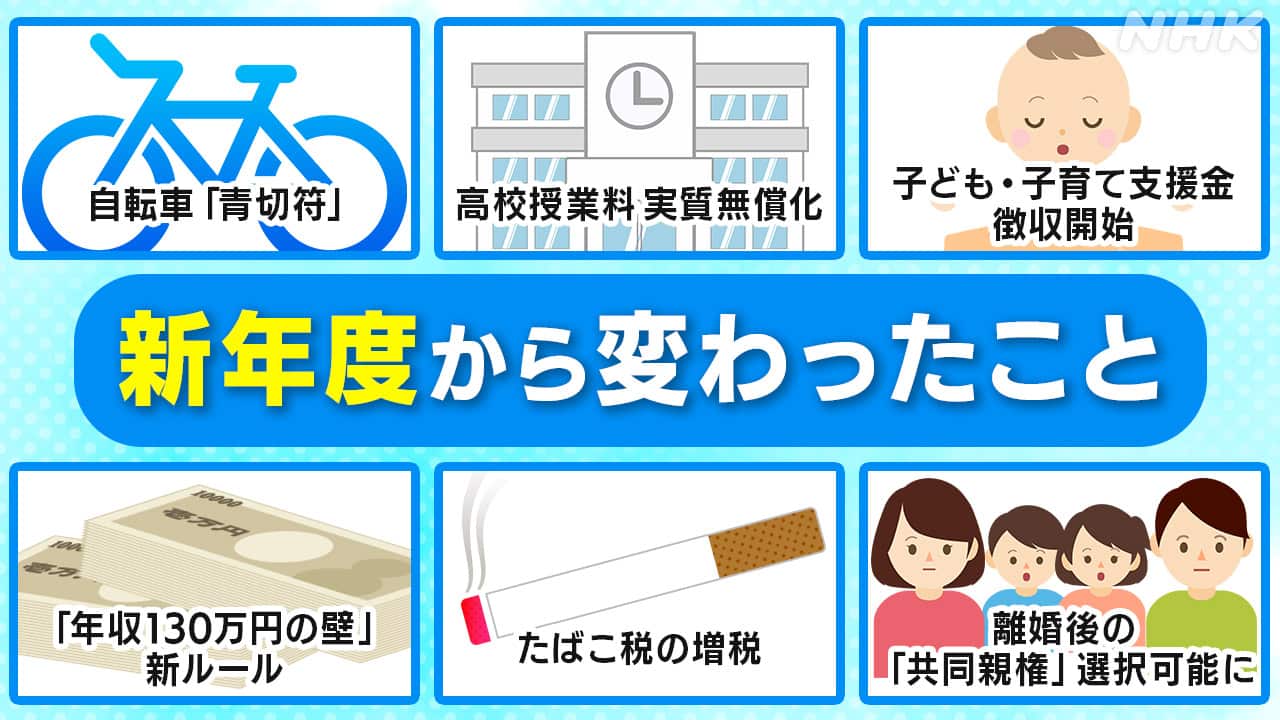
4月1日から新年度がスタートしました。交通違反に対して反則金の納付を通告するいわゆる「青切符」による取り締まりが始まるなど、制度や税制で変わったことをまとめました。
「青切符」制度は、16歳以上を対象に、自転車の交通違反に対し、反則金の納付を通告するもので、スマートフォンを使用しながら運転する「ながらスマホ」など、113種類の交通違反が取り締まりの対象になります。
違反した場合の主な反則金の額▽「ながらスマホ」が最も高額の1万2000円▽信号無視が6000円▽逆走や歩道通行などの通行区分違反は6000円▽一時不停止が5000円
警視庁は1日、東京 北区の交差点付近で自転車の利用者に対して取り締まりを行い、警察官など31人が出て違反の例などが書かれたチラシを配り、交通ルールを守るよう呼びかけました。
午前9時から1時間ほどの取り締まりで「青切符」の交付はありませんでしたが、一時不停止と信号無視で指導・警告を受けた人が16人いました。
高校授業料の無償化をめぐり31日の国会では改正就学支援金法が成立し、年収910万円未満の世帯の子を対象に支給されている就学支援金の所得制限が撤廃されました。
また、政府は私立高校を対象に加算されている支援金について全国平均の授業料に合わせて上限額を引き上げることを決めました。
これにより、支援金は今年度から世帯の年収にかかわらず、公立高校は11万8800円が、私立高校は全日制が45万7200円、通信制が33万7200円をそれぞれ上限として支給され、高校の授業料は実質的に無償化されます。
留学生など日本への定着が見込めない外国籍の生徒は対象外となる一方、すでに受けている支援は継続されます。
具体的には、市町村に対して給食を実施する公立小学校の児童1人あたり月額5200円を支援し、この範囲内であれば保護者は所得にかかわらず負担は生じないこととなります。
少子化対策をめぐり「子ども・子育て支援金」の徴収が今月から公的医療保険の保険料に上乗せする形で始まります。
今年度の1人あたりの平均月額はおよそ250円で、得られた財源は全額が子育て支援策の強化に充てられます。
この支援金はおととし成立した改正子ども・子育て支援法に基づくもので、今月から公的医療保険の保険料に上乗せする形で徴収が始まります。
保険の種類別では▽会社員や公務員など「被用者保険」で1人あたりおよそ500円▽自営業者などが加入する国民健康保険で1世帯あたりおよそ300円▽75歳以上が加入する後期高齢者医療制度で1人あたりおよそ200円となっています。
来年度以降、段階的に徴収額は増え、得られた財源は全額が児童手当の拡充をはじめとした子育て支援策の強化に充てられます。
これまで一部の自治体で試行的に行われていた働いていなくても子どもを保育所などに預けられる「こども誰でも通園制度」も1日から全国で実施されます。
生後半年から3歳未満の子どもを1人あたり月10時間まで預けることができ、自己負担額は1時間あたり300円程度となります。
子どもの養育のあり方をめぐり、離婚した父と母のどちらか一方が親権を持つ「単独親権」に加え、双方が親権を持つ「共同親権」が1日から選択できるようになります。
これはおととし成立した改正民法などに基づくもので、子どもの利益を確保することを目的に、離婚した父と母のどちらか一方が親権を持つ「単独親権」に加え、双方が親権を持つ「共同親権」が選択できるようになります。
「単独親権」とするか「共同親権」とするかは親が協議して決定し、合意できない場合は家庭裁判所が判断します。
DV=ドメスティック・バイオレンスや子どもへの虐待があると裁判所が認めた場合は「単独親権」となります。
厚生年金が適用されていない企業で働く人などが年収130万円以上になると扶養を外れて社会保険料の負担が生じる、いわゆる「年収130万円の壁」をめぐり、厚生労働省は、手取りを減らさないよう、働く時間を抑えるケースがみられるとして、今月以降、扶養の要件を緩和します。
給与収入のみの場合、残業代などを含めずに年収を計算するよう改め、残業や休日出勤によって結果的に年収130万円を超えても扶養を認めることにします。
軽油引取税の暫定税率や自動車を購入した際に課される環境性能割という税制が廃止された一方、防衛財源を確保するためにたばこ税や法人税が増税されました。
このうち、軽油引取税の暫定税率は、本来の課税額である1リットルあたり15円に17.1円を上乗せする形で続いてきましたが、廃止されました。
暫定税率の廃止に伴う混乱を防ぐための措置が設けられたことなどから価格は大きく変わらない見込みです。
また、自動車を購入した際に燃費性能に応じて税金が課される「環境性能割」は税制そのものが廃止され、自動車購入時の負担が軽減されることが見込まれます。
たばこ税は加熱式たばこの税率を4月と10月の2回引き上げ紙巻きたばことの差を無くします。
その上で、来年4月から、加熱式、紙巻き、いずれも1本あたり0.5円の引き上げを3年続け、合計1.5円引き上げます。
所得税は来年1月から「防衛特別所得税」として新たに所得税額に1%の付加税を課すことになっています。
一方で「復興特別所得税」の税率を1%引き下げて課税期間を10年延長するため政府は、当面の所得税の負担額は変わらないとしています。
原則、65歳以上の人が一定の収入を得ると厚生年金が減額される「在職老齢年金」制度が見直されます。
「在職老齢年金」は、一定の収入がある原則、65歳以上の厚生年金を減額するもので、その基準は、これまで、賃金と厚生年金あわせて月額51万円でした。
厚生労働省は、人手不足が続く中、高齢者の働き控えの要因になっているといった指摘も踏まえ、今月から月額65万円に基準を引き上げます。
厚生労働省によりますと、厚生年金が減額されたのは2022年度の時点でおよそ50万人で、今回の基準引き上げによって、30万人程度にまで減る見込みです。
「青切符」制度は、16歳以上を対象に、自転車の交通違反に対し、反則金の納付を通告するもので、スマートフォンを使用しながら運転する「ながらスマホ」など、113種類の交通違反が取り締まりの対象になります。
違反した場合の主な反則金の額▽「ながらスマホ」が最も高額の1万2000円▽信号無視が6000円▽逆走や歩道通行などの通行区分違反は6000円▽一時不停止が5000円
警視庁は1日、東京 北区の交差点付近で自転車の利用者に対して取り締まりを行い、警察官など31人が出て違反の例などが書かれたチラシを配り、交通ルールを守るよう呼びかけました。
午前9時から1時間ほどの取り締まりで「青切符」の交付はありませんでしたが、一時不停止と信号無視で指導・警告を受けた人が16人いました。
高校授業料の無償化をめぐり31日の国会では改正就学支援金法が成立し、年収910万円未満の世帯の子を対象に支給されている就学支援金の所得制限が撤廃されました。
また、政府は私立高校を対象に加算されている支援金について全国平均の授業料に合わせて上限額を引き上げることを決めました。
これにより、支援金は今年度から世帯の年収にかかわらず、公立高校は11万8800円が、私立高校は全日制が45万7200円、通信制が33万7200円をそれぞれ上限として支給され、高校の授業料は実質的に無償化されます。
留学生など日本への定着が見込めない外国籍の生徒は対象外となる一方、すでに受けている支援は継続されます。
具体的には、市町村に対して給食を実施する公立小学校の児童1人あたり月額5200円を支援し、この範囲内であれば保護者は所得にかかわらず負担は生じないこととなります。
少子化対策をめぐり「子ども・子育て支援金」の徴収が今月から公的医療保険の保険料に上乗せする形で始まります。
今年度の1人あたりの平均月額はおよそ250円で、得られた財源は全額が子育て支援策の強化に充てられます。
この支援金はおととし成立した改正子ども・子育て支援法に基づくもので、今月から公的医療保険の保険料に上乗せする形で徴収が始まります。
保険の種類別では▽会社員や公務員など「被用者保険」で1人あたりおよそ500円▽自営業者などが加入する国民健康保険で1世帯あたりおよそ300円▽75歳以上が加入する後期高齢者医療制度で1人あたりおよそ200円となっています。
来年度以降、段階的に徴収額は増え、得られた財源は全額が児童手当の拡充をはじめとした子育て支援策の強化に充てられます。
これまで一部の自治体で試行的に行われていた働いていなくても子どもを保育所などに預けられる「こども誰でも通園制度」も1日から全国で実施されます。
生後半年から3歳未満の子どもを1人あたり月10時間まで預けることができ、自己負担額は1時間あたり300円程度となります。
子どもの養育のあり方をめぐり、離婚した父と母のどちらか一方が親権を持つ「単独親権」に加え、双方が親権を持つ「共同親権」が1日から選択できるようになります。
これはおととし成立した改正民法などに基づくもので、子どもの利益を確保することを目的に、離婚した父と母のどちらか一方が親権を持つ「単独親権」に加え、双方が親権を持つ「共同親権」が選択できるようになります。
「単独親権」とするか「共同親権」とするかは親が協議して決定し、合意できない場合は家庭裁判所が判断します。
DV=ドメスティック・バイオレンスや子どもへの虐待があると裁判所が認めた場合は「単独親権」となります。
厚生年金が適用されていない企業で働く人などが年収130万円以上になると扶養を外れて社会保険料の負担が生じる、いわゆる「年収130万円の壁」をめぐり、厚生労働省は、手取りを減らさないよう、働く時間を抑えるケースがみられるとして、今月以降、扶養の要件を緩和します。
給与収入のみの場合、残業代などを含めずに年収を計算するよう改め、残業や休日出勤によって結果的に年収130万円を超えても扶養を認めることにします。
軽油引取税の暫定税率や自動車を購入した際に課される環境性能割という税制が廃止された一方、防衛財源を確保するためにたばこ税や法人税が増税されました。
このうち、軽油引取税の暫定税率は、本来の課税額である1リットルあたり15円に17.1円を上乗せする形で続いてきましたが、廃止されました。
暫定税率の廃止に伴う混乱を防ぐための措置が設けられたことなどから価格は大きく変わらない見込みです。
また、自動車を購入した際に燃費性能に応じて税金が課される「環境性能割」は税制そのものが廃止され、自動車購入時の負担が軽減されることが見込まれます。
たばこ税は加熱式たばこの税率を4月と10月の2回引き上げ紙巻きたばことの差を無くします。
その上で、来年4月から、加熱式、紙巻き、いずれも1本あたり0.5円の引き上げを3年続け、合計1.5円引き上げます。
所得税は来年1月から「防衛特別所得税」として新たに所得税額に1%の付加税を課すことになっています。
一方で「復興特別所得税」の税率を1%引き下げて課税期間を10年延長するため政府は、当面の所得税の負担額は変わらないとしています。
原則、65歳以上の人が一定の収入を得ると厚生年金が減額される「在職老齢年金」制度が見直されます。
「在職老齢年金」は、一定の収入がある原則、65歳以上の厚生年金を減額するもので、その基準は、これまで、賃金と厚生年金あわせて月額51万円でした。
厚生労働省は、人手不足が続く中、高齢者の働き控えの要因になっているといった指摘も踏まえ、今月から月額65万円に基準を引き上げます。
厚生労働省によりますと、厚生年金が減額されたのは2022年度の時点でおよそ50万人で、今回の基準引き上げによって、30万人程度にまで減る見込みです。
Vocabulary
General
Proper noun
JLPT N2
JLPT N1
| # | 言葉 | 意味 |
|---|---|---|
| 9 | あたり | あたり (当たり) : 1. hit 2. success |
| 7 | 子ども | こども (子供) : child |
| 6 | 年収 | ねんしゅう (年収) : annual income |
| 5 | 厚生年金 | こうせいねんきん (厚生年金) : welfare pension |
| 4 | 取り締まり | とりしまり (取り締まり) : control; management; supervision |
| 4 | 制度 | せいど (制度) : system; institution; organization; organisation |
| 4 | 対象 | たいしょう (対象) : target; object (of worship, study, etc.); subject (of taxation, etc.) |
| 4 | めぐる | めぐる (巡る) : 1. to go around 2. to return |
| 4 | 引き上げる | ひきあげる (引き上げる) : 1. to pull up; to drag up; to lift up 2. to increase; to raise (e.g. taxes) |
| 4 | 月額 | げつがく (月額) : monthly amount (sum) |
| 4 | 子育て | こそだて (子育て) : child rearing; child raising; raising children; parenting |
| 4 | 親権 | しんけん (親権) : parental authority |
| 4 | 単独親権 | たんどくしんけん (単独親権) : sole custody; sole parental authority |
| 4 | 廃止 | はいし (廃止) : abolition; repeal |
| 3 | 交通違反 | こうつういはん (交通違反) : traffic violation |
| 3 | 反則金 | はんそくきん (反則金) : fine |
| 3 | 青切符 | あおきっぷ (青切符) : 1. blue traffic violation ticket (designating a minor violation) 2. second-class ticket |
| 3 | 税制 | ぜいせい (税制) : tax system |
| 3 | 変わる | かわる (変わる) : 1. to change; to be transformed; to be altered; to vary 2. to move to |
| 3 | 違反 | いはん (違反) : violation; offense; offence; breach; transgression; infringement; contravention |
| 3 | 授業料 | じゅぎょうりょう (授業料) : tuition fee; course fee |
| 3 | 改正 | かいせい (改正) : revision; amendment; alteration |
| 3 | 支援 | しえん (支援) : support; backing; aid; assistance |
| 3 | 成立 | せいりつ (成立) : 1. formation; establishment; materialization; coming into existence 2. conclusion (e.g. of a deal); reaching (e.g. an agreement); approval; completion; closing; enacting; arrangement |
| 3 | 世帯 | せたい (世帯) : household; home; family; housekeeping |
| 3 | 負担 | ふたん (負担) : 1. burden; load; responsibility 2. bearing (a cost, responsibility, etc.); shouldering |
| 3 | 上乗せ | うわのせ (上乗せ) : adding; addition; extra |
| 3 | 財源 | ざいげん (財源) : source of funds; resources; finances |
| 3 | 共同親権 | きょうどうしんけん (共同親権) : joint custody; shared parental rights; joint parental authority |
| 3 | 扶養 | ふよう (扶養) : support (e.g. of one's dependents); maintenance |
| 3 | 厚生労働省 | こうせいろうどうしょう (厚生労働省) : Ministry of Health, Labour and Welfare |
| 3 | 購入 | こうにゅう (購入) : purchase; buy |
| 3 | 課す | かす (課す) : to levy; to charge; to assess; to impose; to assign |
| 3 | 性能 | せいのう (性能) : ability; performance; efficiency |
| 3 | 所得税 | しょとくぜい (所得税) : income tax |
| 3 | 減額 | げんがく (減額) : reduction; diminution; abatement |
| 3 | 基準 | きじゅん (基準) : standard; basis; criterion; norm; reference; datum |
| 2 | 納付 | のうふ (納付) : payment; supply |
| 2 | 通告 | つうこく (通告) : announcement; notice |
| 2 | いわゆる | いわゆる (所謂) : what is called; as it is called; the so-called; so to speak |
| 2 | 種類 | しゅるい (種類) : 1. variety; kind; type; category 2. counter for kinds, species, etc. |
| 2 | 信号無視 | しんごうむし (信号無視) : ignoring a traffic light; red-light violation; running a red light; jaywalking |
| 2 | 通行 | つうこう (通行) : 1. passage (of people, traffic); passing 2. common usage |
| 2 | 一時 | ひととき (ひと時) : 1. a (short) time; a while; moment 2. one time (in the past); a period; former times |
| 2 | 停止 | ていし (停止) : 1. stoppage; coming to a stop; halt; standstill 2. ceasing (movement, activity, etc.); suspension (of operations); interruption (e.g. of electricity supply); cutting off |
| 2 | 無償化 | むしょうか (無償化) : making (something) free of charge; dispensing with fees |
| 2 | 未満 | みまん (未満) : less than; under; below |
| 2 | 支給 | しきゅう (支給) : provision; supply; payment; allowance; grant |
| 2 | 政府 | せいふ (政府) : government; administration |
| 2 | 私立高校 | しりつこうこう (私立高校) : private high school |
| 2 | 全国 | ぜんこく (全国) : the whole country |
| 2 | 平均 | へいきん (平均) : 1. average; mean 2. balance; equilibrium |
| 2 | 今年度 | こんねんど (今年度) : this year; this fiscal year; this school year |
| 2 | かかわる | かかわる (関わる) : 1. to be affected; to be influenced 2. to be concerned with; to have to do with |
| 2 | 実施 | じっし (実施) : enforcement; implementation; putting into practice; carrying out; operation; working (e.g. working parameters); enactment |
| 2 | 徴収 | ちょうしゅう (徴収) : collection (of fees, taxes, etc.); levy |
| 2 | 公的 | こうてき (公的) : public; official |
| 2 | 医療保険 | いりょうほけん (医療保険) : medical-care insurance |
| 2 | 保険料 | ほけんりょう (保険料) : insurance premium |
| 2 | 始まる | はじまる (始まる) : 1. to begin; to start; to commence 2. to happen (again); to begin (anew) |
| 2 | 全額 | ぜんがく (全額) : total; full amount; sum |
| 2 | 支援策 | しえんさく (支援策) : support measures; assistance measures; support plan |
| 2 | 強化 | きょうか (強化) : strengthening; intensifying; reinforcement; enhancement; solidification |
| 2 | 充てる | あてる (充てる) : to assign; to set aside |
| 2 | 基づく | もとづく (基づく) : to be grounded on; to be based on; to be due to; to originate from |
| 2 | 保険 | ほけん (保険) : insurance; guarantee |
| 2 | 加入 | かにゅう (加入) : joining (a club, organization, etc.); becoming a member; entry; admission; subscription; affiliation; signing (e.g. a treaty); taking out (insurance) |
| 2 | 以降 | いこう (以降) : on and after; as from; hereafter; thereafter; since |
| 2 | 預ける | あずける (預ける) : 1. to leave (in someone's keeping); to put (in someone's care); to place (in someone's custody); to entrust (someone) with; to deposit 2. to put (someone) in charge of; to leave (a matter) in someone's hands; to let (someone) decide |
| 2 | 程度 | ていど (程度) : degree; amount; grade; standard; of the order of (following a number); about; approximately |
| 2 | 離婚 | りこん (離婚) : divorce |
| 2 | 双方 | そうほう (双方) : both parties; both sides |
| 2 | 選択 | せんたく (選択) : selection; choice; option |
| 2 | 確保 | かくほ (確保) : 1. securing; obtaining; ensuring; guarantee; maintaining 2. belay; belaying |
| 2 | 認める | したためる (認める) : 1. to write (e.g. a letter); to draw up (a document); to take down (e.g. notes) 2. to have (lunch, dinner, etc.); to eat |
| 2 | 軽油 | けいゆ (軽油) : 1. diesel oil; gas oil 2. light oil |
| 2 | 引取 | ひきとり (引き取り) : leaving; accepting |
| 2 | 際 | きわ (際) : 1. edge; brink; verge; side 2. time; moment of |
| 2 | 環境 | かんきょう (環境) : environment; circumstance |
| 2 | 割 | わり (割り) : 1. rate; ratio; proportion; percentage 2. profit |
| 2 | 防衛 | ぼうえい (防衛) : defense; defence; protection |
| 2 | たばこ税 | たばこぜい (たばこ税) : tobacco tax; cigarette tax |
| 2 | 見込み | みこみ (見込み) : 1. hope; promise; possibility; chance; probability; likelihood 2. expectation; anticipation; forecast; estimate |
| 2 | 税率 | ぜいりつ (税率) : 1. tariff 2. tax rate |
| 2 | 紙巻き | かみまき (紙巻き) : 1. something rolled in paper; paper roll 2. cigarette |
| 2 | 引き上げ | ひきあげ (引き上げ) : 1. pulling up; drawing up; salvage; re-flotation 2. raising; increase; upward revision |
| 2 | 原則 | げんそく (原則) : 1. principle; general rule 2. as a rule; in principle; in general |
| 2 | 一定 | いってい (一定) : fixed; settled; constant; definite; uniform; regularized; regularised; defined; standardized; standardised; certain; prescribed |
| 2 | 収入 | しゅうにゅう (収入) : income; receipts; revenue |
| 1 | まとめる | まとめる (纏める) : 1. to collect; to put (it all) together; to integrate; to consolidate; to unify 2. to summarize; to aggregate |
| 1 | 使用 | しよう (使用) : use; application; employment; utilization; utilisation |
| 1 | ながら運転 | ながらうんてん (ながら運転) : distracted driving |
| 1 | 主な | おもな (主な) : chief; main; principal; important |
| 1 | 額 | がく (額) : 1. (picture) frame; framed picture 2. amount (esp. of money); sum |
| 1 | 最も | もっとも (最も) : most; extremely |
| 1 | 高額 | こうがく (高額) : large sum (money) |
| 1 | 逆走 | ぎゃくそう (逆走) : 1. going in the opposite direction 2. going against the wind |
| 1 | 歩道 | ほどう (歩道) : footpath; walkway; sidewalk |
| 1 | 区分 | くぶん (区分) : division; section; demarcation; partition; segmentation; subdivision; (traffic) lane; compartment; classification; sorting |
| 1 | 警視庁 | けいしちょう (警視庁) : Metropolitan Police Department (esp. Tokyo) |
| 1 | 東京 | とうきょう (東京) : Tokyo |
| 1 | 北区 | きたく (北区) : Kitaku (place) |
| 1 | 付近 | ふきん (付近) : 1. neighborhood; vicinity; environs; district 2. approaching |
| 1 | 自転 | じてん (自転) : rotation (usu. on an axis); turning; spin |
| 1 | 利用者 | りようしゃ (利用者) : user; end-user; consumer |
| 1 | 警察官 | けいさつかん (警察官) : police officer; policeman; policewoman |
| 1 | 例 | れい (例) : 1. custom; practice; habit; usual 2. said; aforementioned |
| 1 | 書く | かく (書く) : 1. to write; to compose; to pen 2. to draw; to paint |
| 1 | 配る | くばる (配る) : 1. to distribute; to hand out; to deliver; to deal out; to serve out 2. to allot; to allocate; to place (staff, soldiers, etc.); to station |
| 1 | 守る | まもる (守る) : 1. to protect; to guard; to defend 2. to keep (i.e. a promise); to abide (by the rules); to observe; to obey; to follow |
| 1 | 呼びかける | よびかける (呼びかける) : 1. to call out to; to hail; to address 2. to appeal |
| 1 | 交付 | こうふ (交付) : delivery; issuance; handing over; granting |
| 1 | 指導 | しどう (指導) : 1. guidance; leadership; instruction; direction; coaching 2. shido (disciplinary action for a minor infringement of the rules of judo) |
| 1 | 警告 | けいこく (警告) : warning; advice |
| 1 | 国会 | こっかい (国会) : 1. National Diet; legislative assembly of Japan (1947-) 2. Imperial Diet; legislative assembly of Japan (1889-1947) |
| 1 | 就学 | しゅうがく (就学) : entering school; school attendance |
| 1 | 金法 | かねのり (金法) : Kanenori (surname) |
| 1 | 撤廃 | てっぱい (撤廃) : annulment; abolition; repeal; rescission |
| 1 | 加算 | かさん (加算) : addition; adding; supplement |
| 1 | 合わせる | あわせる (合わせる) : 1. to match (rhythm, speed, etc.) 2. to join together; to unite; to combine; to add up |
| 1 | 決める | きめる (決める) : 1. to decide; to choose; to determine; to make up one's mind; to resolve; to set one's heart on; to settle; to arrange; to set; to appoint; to fix 2. to clinch (a victory); to decide (the outcome of a match) |
| 1 | 公立高校 | こうりつこうこう (公立高校) : public high school |
| 1 | 全日制 | ぜんにちせい (全日制) : the full-day (school system) |
| 1 | 上限 | じょうげん (上限) : 1. upper limit 2. supremum |
| 1 | 実質的 | じっしつてき (実質的) : substantial; real (as opposed to nominal) |
| 1 | 定着 | ていちゃく (定着) : 1. sticking (in one place, position, etc.); settling; fixing; adherence 2. becoming established (of a custom, system, etc.); taking hold; taking root |
| 1 | 外国籍 | がいこくせき (外国籍) : foreign citizenship; foreign nationality |
| 1 | 対象外 | たいしょうがい (対象外) : not covered (by); not subject (to) |
| 1 | すでに | すでに (既に) : already; too late |
| 1 | 継続 | けいぞく (継続) : continuation |
| 1 | 具体的 | ぐたいてき (具体的) : concrete; definite; specific; material; substantial |
| 1 | 市町村 | しちょうそん (市町村) : cities, towns and villages; municipalities |
| 1 | 給食 | きゅうしょく (給食) : provision of lunch (e.g. at office, school, etc.); providing a meal; lunch service |
| 1 | 児童 | じどう (児童) : children; juvenile |
| 1 | 範囲 | はんい (範囲) : extent; scope; sphere; range; span |
| 1 | 保護者 | ほごしゃ (保護者) : guardian; protector; patron; parent |
| 1 | 所得 | しょとく (所得) : income; earnings |
| 1 | 生ずる | しょうずる (生ずる) : 1. to produce; to yield; to cause 2. to result from; to arise; to be generated |
| 1 | 少子化対策 | しょうしかたいさく (少子化対策) : countermeasures to the falling birthrate |
| 1 | 会社員 | かいしゃいん (会社員) : company employee; office worker; white-collar worker |
| 1 | 被用者 | ひようしゃ (被傭者) : employee |
| 1 | 自営業者 | じえいぎょうしゃ (自営業者) : self-employed person |
| 1 | 国民健康保険 | こくみんけんこうほけん (国民健康保険) : national health insurance |
| 1 | 後期高齢者医療制度 | こうきこうれいしゃいりょうせいど (後期高齢者医療制度) : latter-stage elderly healthcare system |
| 1 | 来年度 | らいねんど (来年度) : next year; next fiscal year |
| 1 | 段階的 | だんかいてき (段階的) : incremental; step-by-step; gradual; stepwise |
| 1 | 増える | ふえる (増える) : to increase; to multiply |
| 1 | 児童手当 | じどうてあて (児童手当) : child-rearing assistance; support for young parents; child-care allowance |
| 1 | 拡充 | かくじゅう (拡充) : expansion |
| 1 | 一部 | いちぶ (一部) : 1. one part; one portion; one section; some 2. one copy (e.g. of a document) |
| 1 | 自治体 | じちたい (自治体) : municipality; local government; self-governing body; autonomous body |
| 1 | 試行 | しこう (試行) : making an attempt; trial run |
| 1 | 働く | はたらく (働く) : 1. to work; to labor; to labour 2. to function; to operate; to be effective; to work (i.e. ... works); to come into play |
| 1 | 保育所 | ほいくしょ (保育所) : nursery school; nursery |
| 1 | 通園 | つうえん (通園) : commuting to nursery school or kindergarten |
| 1 | 生後 | せいご (生後) : post-natal; since birth |
| 1 | 半年 | はんとし (半年) : half a year; six months |
| 1 | 養育 | よういく (養育) : bringing up; rearing; upbringing |
| 1 | あり方 | ありかた (あり方) : 1. the way something ought to be 2. the (current) state of things; how things are |
| 1 | 民法 | みんぽう (民法) : civil law; civil code |
| 1 | 利益 | りえき (利益) : 1. profit; gains 2. benefit; advantage; interest (of the public, etc.) |
| 1 | 目的 | もくてき (目的) : purpose; goal; aim; objective; intention |
| 1 | 協議 | きょうぎ (協議) : conference; consultation; discussion; negotiation |
| 1 | 決定 | けってい (決定) : decision; determination |
| 1 | 合意 | ごうい (合意) : (coming to an) agreement; consent; mutual understanding; accord; consensus |
| 1 | 家庭裁判所 | かていさいばんしょ (家庭裁判所) : family court |
| 1 | 判断 | はんだん (判断) : 1. judgment; judgement; decision; conclusion; adjudication 2. divination |
| 1 | 虐待 | ぎゃくたい (虐待) : abuse; ill-treatment; maltreatment; mistreatment; cruelty |
| 1 | 裁判所 | さいばんしょ (裁判所) : court; courthouse |
| 1 | 適用 | てきよう (適用) : applying (e.g. a technology); adoption |
| 1 | 企業 | きぎょう (企業) : enterprise; business; company; corporation |
| 1 | 外れる | はずれる (外れる) : 1. to be disconnected; to get out of place; to be off; to be out (e.g. of gear) 2. to miss the mark; to get it wrong (e.g. guess, expectation); to draw a blank (e.g. lottery) |
| 1 | 生じる | しょうじる (生じる) : 1. to produce; to yield; to cause 2. to result from; to arise; to be generated |
| 1 | 手取り | てどり (手取り) : after tax income; net income |
| 1 | 減らす | へらす (減らす) : to abate; to decrease; to diminish; to shorten |
| 1 | 抑える | おさえる (抑える) : 1. to keep within limits (e.g. spending); to restrain (e.g. emotions); to control; to curb; to hold in check 2. to hold back (e.g. an enemy); to check; to curb; to contain; to quell; to subdue; to suppress; to repress |
| 1 | 要件 | ようけん (要件) : 1. important matter 2. requirement; requisite; necessary condition; sine qua non |
| 1 | 緩和 | かんわ (緩和) : relief; mitigation; alleviation; relaxation (of restrictions, tensions, etc.); easing; softening |
| 1 | のみ | のみ : only; nothing but |
| 1 | 残業代 | ざんぎょうだい (残業代) : overtime pay; overtime money; overtime payment |
| 1 | 含める | ふくめる (含める) : 1. to include (in a group or scope) 2. to instruct; to make one understand |
| 1 | 計算 | けいさん (計算) : 1. calculation; reckoning; count 2. forecast |
| 1 | 改める | あらためる (改める) : 1. to change; to alter; to revise; to replace 2. to reform; to correct; to mend; to improve |
| 1 | 残業 | ざんぎょう (残業) : overtime (work) |
| 1 | 休日出勤 | きゅうじつしゅっきん (休日出勤) : working on a day off |
| 1 | 結果的 | けっかてき (結果的) : concerning the result (as opposed to the means used to achieve this result or the original goal) |
| 1 | 超える | こえる (越える) : 1. to cross over; to cross; to pass through; to pass over (out of); to go beyond; to go past 2. to exceed; to surpass; to be more (than) |
| 1 | 法人税 | ほうじんぜい (法人税) : corporation tax |
| 1 | 増税 | ぞうぜい (増税) : tax increase |
| 1 | 本来 | ほんらい (本来) : 1. originally; primarily 2. essentially; intrinsically; naturally; by nature; in (and of) itself |
| 1 | 伴う | ともなう (伴う) : 1. to accompany; to go hand in hand with; to be consequent upon 2. to be accompanied by; to bring with; to take with; to be involved in |
| 1 | 混乱 | こんらん (混乱) : disorder; chaos; confusion; mayhem |
| 1 | 防ぐ | ふせぐ (防ぐ) : 1. to defend against; to protect against 2. to prevent; to avert; to avoid |
| 1 | 措置 | そち (措置) : measure; step; action |
| 1 | 設ける | もうける (設ける) : 1. to prepare; to provide 2. to set up; to establish; to organize; to lay down (rules); to make (an excuse) |
| 1 | 価格 | かかく (価格) : price; value; cost |
| 1 | 大きく | おおきく (大きく) : in a big way; on a grand scale |
| 1 | 燃費 | ねんぴ (燃費) : fuel consumption; gas mileage |
| 1 | 応ずる | おうずる (応ずる) : 1. to answer; to respond; to meet 2. to satisfy; to accept |
| 1 | 税金 | ぜいきん (税金) : tax; duty |
| 1 | 軽減 | けいげん (軽減) : abatement; reduction |
| 1 | 見込む | みこむ (見込む) : 1. to anticipate; to expect; to estimate; to count on; to allow for; to take into account 2. to place confidence in; to put trust in; to trust |
| 1 | 加熱式たばこ | かねつしきタバコ (加熱式タバコ) : heated tobacco product; heat-not-burn tobacco product; electrically heated smoking |
| 1 | 差 | さ (差) : 1. difference; variation 2. difference |
| 1 | 無くす | なくす (無くす) : 1. to lose (something); to mislay 2. to get rid of; to eliminate; to remove |
| 1 | 加熱 | かねつ (加熱) : heating; application of heat |
| 1 | 式 | しき (式) : 1. equation; formula; expression 2. ceremony |
| 1 | いずれ | いずれ (何れ) : 1. where; which; who 2. anyway; anyhow; at any rate |
| 1 | 合計 | ごうけい (合計) : sum total; total amount |
| 1 | 新た | あらた (新た) : new; fresh; novel |
| 1 | 付加 | ふか (付加) : addition; annexation; appendage |
| 1 | 税 | ぜい (税) : tax |
| 1 | 復興特別所得税 | ふっこうとくべつしょとくぜい (復興特別所得税) : Special Income Tax for Reconstruction (of areas affected by the 2011 Tōhoku earthquake and tsunami) |
| 1 | 引き下げる | ひきさげる (引き下げる) : to pull down; to lower; to reduce; to withdraw |
| 1 | 課税 | かぜい (課税) : taxation |
| 1 | 期間 | きかん (期間) : period; term; interval |
| 1 | 延長 | えんちょう (延長) : 1. extension; elongation; prolongation; lengthening 2. Enchō era (923.4.11-931.4.26) |
| 1 | 当面 | とうめん (当面) : 1. current; urgent; pressing; impending 2. to confront (an issue); to face (up to something) |
| 1 | 負担額 | ふたんがく (負担額) : amount to be borne; one's share (of expenses) |
| 1 | 見直す | みなおす (見直す) : 1. to look at again 2. to re-examine (policy, estimate, plan, etc.); to review |
| 1 | 賃金 | ちんぎん (賃金) : 1. wages; pay 2. rental payment |
| 1 | あわせる | あわせる (会わせる) : 1. to make (someone) to meet; to let (someone) meet 2. to expose to; to subject to |
| 1 | 人手不足 | ひとでぶそく (人手不足) : labour shortage; labor shortage; shortage of workers; shortage of hands |
| 1 | 高齢者 | こうれいしゃ (高齢者) : old person; old people |
| 1 | 働き | はたらき (働き) : 1. work; labor; labour 2. achievement; performance; ability; talent |
| 1 | 控え | ひかえ (控え) : 1. reserve; spare; backup 2. note; memorandum |
| 1 | 要因 | よういん (要因) : main cause; primary factor |
| 1 | 指摘 | してき (指摘) : pointing out; identification |
| 1 | 踏まえる | ふまえる (踏まえる) : 1. to be based on; to take into account; to build upon; to have origin in 2. to have one's feet firmly planted on; to plant oneself on |
| 1 | 年度 | ねんど (年度) : 1. fiscal year (usu. April 1 to March 31 in Japan); financial year 2. academic year; school year |
| 1 | 時点 | じてん (時点) : point in time; occasion |
| 1 | 減る | へる (減る) : to decrease (in size or number); to diminish; to abate |