京都 小学生 行方不明 南丹市で見つかった遺体は行方不明の男児と確認 18:45~警察が説明へ【速報中】
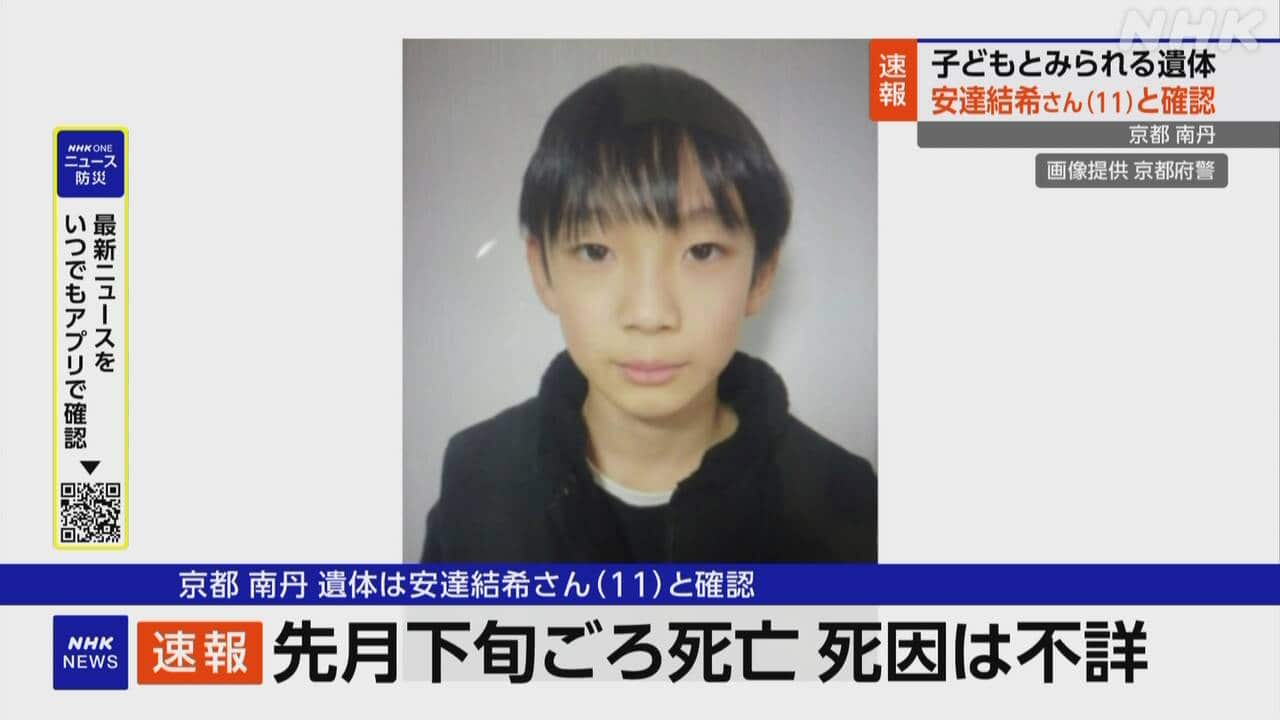
13日、京都府南丹市の山林で見つかった子どもとみられる遺体について警察は先月から行方が分からなくなっていた11歳の男子児童と確認されたと発表しました。死亡したのは先月下旬ごろで、死因は不詳だということで、警察は、事件に巻き込まれたとみて捜査しています。※京都府警察本部が午後6時45分ごろから行った報道陣への説明について、情報を随時更新してお伝えしています。
警察によりますと、同じ南丹市園部町では小学生の安達結希さん(11)が先月23日から行方が分からなくなっていました。
遺体が見つかった現場は、子どもが靴を履かずに迷い込むには不自然な場所で、警察は事件に巻き込まれたとみて捜査しています。
警察によりますと、安達結希さんの遺体を詳しく調べた結果、身につけていた衣服には大きく破れているなどの損傷はなかったということです。
警察によりますと、安達結希さんの遺体を詳しく調べた結果、刺し傷や切り傷といった鋭利なものによる損傷はなかったということです。
警察は13日見つかった安達結希さんの遺体を詳しく調べた結果について発表しました。それによりますと、死因は不詳だということです。また、死亡したのは先月下旬ごろだということです。
13日、京都府南丹市園部町の山林で見つかった子どもとみられる遺体について、京都府警察本部は、先月から行方が分からなくなっていた小学生、安達結希さん(11)と確認されたと発表しました。
遺体は山林で、13日午後5時前に見つかりました。あおむけで倒れていて、靴は履いておらず、靴下は、はいていたということです。
また、見つかった際、落ち葉や枯れ草で覆われるなど隠されたような形跡はなかったということです。
現場は、子どもが靴をはかずに迷い込むには不自然な場所で、警察は事件に巻き込まれたとみて捜査しています。
近所の人「山仕事する人と、田んぼの、あれする人しか入らへんな。子どもの遊び場になっている?子どもは入らへんで。誰も。子どもが行くところじゃない」「まわりには子どもあんまりいないですね、年寄りばっかりで。びっくりした、かわいそうに」
先月23日の朝、父親が自宅から車で小学校の敷地内まで送ったあと行方が分からなくなった安達さん。
警察の捜索が続くなか、小学校からおよそ3キロ離れた山の中で安達さんの通学用の黄色いリュックサックを親族が見つけ、小学校からおよそ6キロ離れた山の中で安達さんのものとみられる靴が見つかりました。
安達さんの顔写真のほか、当時の服装の写真が掲載されていますが、13日、見つかった遺体は濃紺色のようなフリースとその下に、「84」という数字がプリントされたトレーナーを身につけていたということで、警察が14日、遺体を詳しく調べて、身元の確認を進めていました。
警察によりますと、遺体は、亡くなってから相当な期間がたっているとみられていますが、ここ数日の間に現場付近を訪れたという人も。
近所に住む男性「(Q遺体が発見されたとされる現場付近も通っていた)まさにその付近にいました。(Qその時に何か気になるような状況はありませんでしたか)それがまったく気にならなかった。(山林に入った)11日に関しては(遺体は)なかったよということは言えるなってくらいな気持ちなので」
近所に住む男性「土の道になるので、軽トラ1台が通れる道。一般の方が入っていかれる姿がもしあるとこの辺のご近所の方が、『何かあったんじゃない』とかいう話になる、それくらい横のつながりがしっかりした地域なので、そういった話も一切ない」
警察によりますと、同じ南丹市園部町では小学生の安達結希さん(11)が先月23日から行方が分からなくなっていました。
遺体が見つかった現場は、子どもが靴を履かずに迷い込むには不自然な場所で、警察は事件に巻き込まれたとみて捜査しています。
警察によりますと、安達結希さんの遺体を詳しく調べた結果、身につけていた衣服には大きく破れているなどの損傷はなかったということです。
警察によりますと、安達結希さんの遺体を詳しく調べた結果、刺し傷や切り傷といった鋭利なものによる損傷はなかったということです。
警察は13日見つかった安達結希さんの遺体を詳しく調べた結果について発表しました。それによりますと、死因は不詳だということです。また、死亡したのは先月下旬ごろだということです。
13日、京都府南丹市園部町の山林で見つかった子どもとみられる遺体について、京都府警察本部は、先月から行方が分からなくなっていた小学生、安達結希さん(11)と確認されたと発表しました。
遺体は山林で、13日午後5時前に見つかりました。あおむけで倒れていて、靴は履いておらず、靴下は、はいていたということです。
また、見つかった際、落ち葉や枯れ草で覆われるなど隠されたような形跡はなかったということです。
現場は、子どもが靴をはかずに迷い込むには不自然な場所で、警察は事件に巻き込まれたとみて捜査しています。
近所の人「山仕事する人と、田んぼの、あれする人しか入らへんな。子どもの遊び場になっている?子どもは入らへんで。誰も。子どもが行くところじゃない」「まわりには子どもあんまりいないですね、年寄りばっかりで。びっくりした、かわいそうに」
先月23日の朝、父親が自宅から車で小学校の敷地内まで送ったあと行方が分からなくなった安達さん。
警察の捜索が続くなか、小学校からおよそ3キロ離れた山の中で安達さんの通学用の黄色いリュックサックを親族が見つけ、小学校からおよそ6キロ離れた山の中で安達さんのものとみられる靴が見つかりました。
安達さんの顔写真のほか、当時の服装の写真が掲載されていますが、13日、見つかった遺体は濃紺色のようなフリースとその下に、「84」という数字がプリントされたトレーナーを身につけていたということで、警察が14日、遺体を詳しく調べて、身元の確認を進めていました。
警察によりますと、遺体は、亡くなってから相当な期間がたっているとみられていますが、ここ数日の間に現場付近を訪れたという人も。
近所に住む男性「(Q遺体が発見されたとされる現場付近も通っていた)まさにその付近にいました。(Qその時に何か気になるような状況はありませんでしたか)それがまったく気にならなかった。(山林に入った)11日に関しては(遺体は)なかったよということは言えるなってくらいな気持ちなので」
近所に住む男性「土の道になるので、軽トラ1台が通れる道。一般の方が入っていかれる姿がもしあるとこの辺のご近所の方が、『何かあったんじゃない』とかいう話になる、それくらい横のつながりがしっかりした地域なので、そういった話も一切ない」
Vocabulary
General
Proper noun
JLPT N2
JLPT N1
| # | 言葉 | 意味 |
|---|---|---|
| 12 | 遺体 | いたい (遺体) : corpse; remains |
| 9 | 安達 | あたち (安達) : Atachi (unclass) |
| 8 | 見つかる | みつかる (見つかる) : to be found; to be discovered |
| 8 | 子ども | こども (子供) : child |
| 5 | 結希 | ゆうい (結希) : Yuui (fem) |
| 4 | 山林 | さんりん (山林) : 1. mountain forest; forest on a mountain; montane forest 2. mountains and forest |
| 4 | 行方 | ゆくえ (行方) : 1. (one's) whereabouts 2. outcome |
| 4 | 分かる | わかる (分かる) : 1. to understand; to comprehend; to grasp; to see; to get; to follow 2. to become clear; to be known; to be discovered; to be realized; to be realised; to be found out |
| 4 | 現場 | げんば (現場) : 1. actual spot; scene; scene of the crime; site; location; setting 2. shop floor; factory floor; (on) site |
| 4 | 詳しく | くわしく (詳しく) : in detail; fully; minutely; at length |
| 4 | 調べる | しらべる (調べる) : to examine; to look up; to investigate; to check up; to sense; to study; to inquire; to search |
| 3 | 確認 | かくにん (確認) : confirmation; verification; validation; review; check; affirmation; identification |
| 3 | 発表 | はっぴょう (発表) : announcement; publication; presenting; statement; communique; making known; breaking (news story); expressing (one's opinion); releasing; unveiling |
| 3 | 事件 | じけん (事件) : event; affair; incident; case; plot; trouble; scandal |
| 3 | 巻き込む | まきこむ (巻き込む) : 1. to roll up; to enfold; to swallow up 2. to involve; to drag into |
| 3 | 捜査 | そうさ (捜査) : search (esp. in criminal investigations); investigation; inquiry; enquiry |
| 3 | 結果 | けっか (結果) : 1. result; consequence; outcome; effect 2. coming to fruition; bearing fruit |
| 3 | 付近 | ふきん (付近) : 1. neighborhood; vicinity; environs; district 2. approaching |
| 2 | 京都府 | きょうとふ (京都府) : Kyoto Prefecture |
| 2 | 死亡 | しぼう (死亡) : 1. death; mortality 2. to die; to pass away |
| 2 | 下旬 | げじゅん (下旬) : last third of a month; 21st to the last day of a month |
| 2 | 死因 | しいん (死因) : cause of death |
| 2 | 不詳 | ふしょう (不詳) : unknown; unidentified; unspecified |
| 2 | 京都府警 | きょうとふけい (京都府警) : Kyoto Prefectural Police |
| 2 | 本部 | ほんぶ (本部) : headquarters; head office; main office |
| 2 | 園部町 | そのべちょう (園部町) : Sonobechō (place) |
| 2 | 小学生 | しょうがくせい (小学生) : elementary school student; primary school student; grade school student |
| 2 | 履く | はく (履く) : 1. to put on (lower-body clothing, e.g. pants, skirt, footwear); to wear 2. to affix (a sword to one's hip) |
| 2 | 迷い込む | まよいこむ (迷い込む) : to stray into; to lose one's way (and enter); to wander into |
| 2 | 不自然 | ふしぜん (不自然) : unnatural; artificial; affected; strained |
| 2 | 身 | み (身) : 1. body 2. oneself |
| 2 | 損傷 | そんしょう (損傷) : damage; injury |
| 2 | 離れる | はなれる (離れる) : 1. to be separated; to be apart; to be distant 2. to leave; to go away |
| 1 | 男子 | だんし (男子) : youth; young man |
| 1 | 児童 | じどう (児童) : children; juvenile |
| 1 | 報道陣 | ほうどうじん (報道陣) : press corps |
| 1 | 情報 | じょうほう (情報) : 1. information; news; intelligence; advices 2. information; data contained in characters, signals, code, etc. |
| 1 | 随時 | ずいじ (随時) : 1. whenever necessary; as needed; as required; as occasion demands 2. at any time; at all times |
| 1 | 更新 | こうしん (更新) : renewal; update; innovation; improvement |
| 1 | 伝える | つたえる (伝える) : to convey; to report; to transmit; to communicate; to tell; to impart; to propagate; to teach; to bequeath |
| 1 | 衣服 | いふく (衣服) : clothes |
| 1 | 大きく | おおきく (大きく) : in a big way; on a grand scale |
| 1 | 破れる | われる (割れる) : 1. to break; to be smashed 2. to split; to crack; to fissure; to be torn |
| 1 | 刺し傷 | さしきず (刺し傷) : stab wound; puncture wound; bite (e.g. from a insect); sting; prick |
| 1 | 切り傷 | きりきず (切り傷) : cut; gash; incision |
| 1 | 鋭利 | えいり (鋭利) : sharp; keen; acute |
| 1 | あおむけ | あおむけ (仰向け) : facing upward |
| 1 | 倒れる | たおれる (倒れる) : 1. to fall (over, down); to collapse; to take a fall; to topple 2. to be destroyed (in a collapse); to collapse; to cave in; to crumble; to give away |
| 1 | 際 | きわ (際) : 1. edge; brink; verge; side 2. time; moment of |
| 1 | 落ち葉 | おちば (落ち葉) : 1. fallen leaves; leaf litter; falling leaves 2. leaf fall; dropping leaves; defoliation |
| 1 | 枯れ草 | かれくさ (枯れ草) : dry grass; dead grass; hay; withered grass |
| 1 | 覆う | おおう (覆う) : to cover; to hide; to conceal; to wrap; to disguise |
| 1 | 隠す | かくす (隠す) : to hide; to conceal |
| 1 | 形跡 | けいせき (形跡) : traces; evidence |
| 1 | はく | はく (掃く) : 1. to sweep; to brush; to clean 2. to gather silkworms |
| 1 | 田んぼ | たんぼ (田んぼ) : paddy field; farm |
| 1 | 遊び場 | あそびば (遊び場) : playground |
| 1 | あんまり | あまり (余り) : 1. remainder; remnant; rest; balance; surplus; remains (of a meal); leftovers 2. (not) very; (not) much |
| 1 | 年寄り | としより (年寄り) : 1. old person; elderly person; senior citizen 2. trustee of the Japan Sumo Association; retired high-ranking wrestler who is licensed to coach and receives retirement pay |
| 1 | ばっかり | ばかり (許り) : 1. only; merely; nothing but; no more than 2. approximately; about |
| 1 | かわいそう | かわいそう (可哀想) : poor; pitiable; pathetic; pitiful |
| 1 | 父親 | ちちおや (父親) : father |
| 1 | 自宅 | じたく (自宅) : one's home; one's house |
| 1 | 送る | おくる (送る) : 1. to send (a thing); to dispatch; to despatch; to transmit 2. to take or escort (a person somewhere); to see off (a person) |
| 1 | 捜索 | そうさく (捜索) : 1. search (esp. for someone or something missing); manhunt 2. legally authorized search of a person, building, etc. |
| 1 | 通学 | つうがく (通学) : commuting to school; school commute |
| 1 | 親族 | しんぞく (親族) : relative; relation |
| 1 | 見つける | みつける (見つける) : 1. to discover; to find (e.g. an error in a book); to come across; to detect; to spot 2. to locate; to find (e.g. something missing); to find fault |
| 1 | 顔写真 | かおじゃしん (顔写真) : portrait photo; mug shot; face shot; photograph of a person's face |
| 1 | 当時 | とうじ (当時) : at that time; in those days |
| 1 | 服装 | ふくそう (服装) : garments; attire |
| 1 | 掲載 | けいさい (掲載) : publication (e.g. of an article in a newspaper); carrying (e.g. a story); running (e.g. a serial); insertion (e.g. of an advertisement); printing; posting (e.g. on the web) |
| 1 | 濃紺 | のうこん (濃紺) : dark blue |
| 1 | 数字 | すうじ (数字) : numeral; figure; digit; numeric character |
| 1 | 身元 | みもと (身元) : person's identity; ID; past; background |
| 1 | 進める | すすめる (進める) : 1. to advance; to move forward; to put (a clock, watch) forward 2. to carry forward (plans, work, etc.); to proceed with; to make progress in; to further; to advance; to hasten; to speed up |
| 1 | 亡くなる | なくなる (亡くなる) : to die |
| 1 | 相当 | そうとう (相当) : 1. corresponding to (in meaning, function, etc.); being equivalent to 2. appropriate; suitable; befitting; proportionate |
| 1 | 期間 | きかん (期間) : period; term; interval |
| 1 | たつ | たつ (起つ) : to rise up; to initiate (political) action |
| 1 | 訪れる | おとずれる (訪れる) : 1. to visit; to call on 2. to arrive (season, time, situation, etc.); to come; to appear |
| 1 | 発見 | はっけん (発見) : discovery; detection; finding |
| 1 | 通う | かよう (通う) : 1. to go to and from (a place); to go back and forth between; to run between (e.g. bus, train, etc.); to ply between 2. to go to (school, work, etc.); to attend; to commute; to frequent |
| 1 | まさに | まさに (正に) : 1. exactly; surely; certainly; just 2. right then; just then; at that moment |
| 1 | 状況 | じょうきょう (状況) : state of affairs (around you); situation; circumstances |
| 1 | まったく | まったく (全く) : 1. really; truly; entirely; completely; wholly; perfectly 2. indeed |
| 1 | 関する | かんする (関する) : to concern; to be related |
| 1 | 言える | いえる (言える) : 1. to be possible to say; to be able to say 2. said; have said |
| 1 | って | って : 1. you said; he said; she said; they said 2. if ... then |
| 1 | 軽トラ | けいトラ (軽トラ) : minitruck; light truck; small truck; light pickup |
| 1 | 一般 | いっぱん (一般) : 1. general; universal 2. ordinary; average; common; non-celebrity |
| 1 | 姿 | すがた (姿) : 1. figure; form; shape 2. appearance; dress; guise |
| 1 | つながり | つながり (繋がり) : connection; link; relationship |
| 1 | 地域 | ちいき (地域) : area; region |
| 1 | 一切 | いっさい (一切) : 1. all; everything; entirety; the whole 2. absolutely (not); (not) at all; (none) whatsoever; without exception |