JR東、気仙沼線BRTで自動運転 運転士監視不要のレベル4
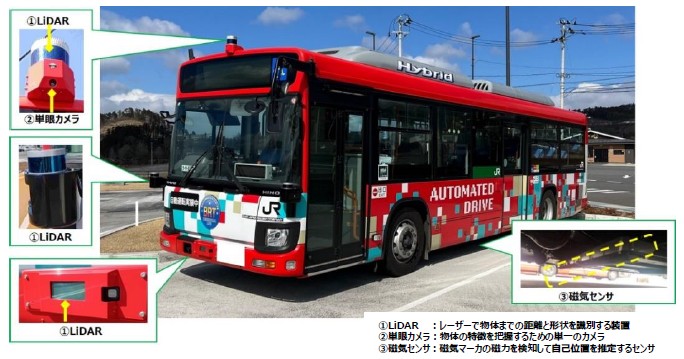
JR東日本は、気仙沼線BRTの柳津(やないづ)駅~水尻川(みずしりがわ)AP間の専用道において、レベル4の自動運転走行を5月から実施する。自動運転レベル4は、特定条件下でシステムがすべての運転操作と緊急停止を行なうため、運転士の監視、介入が不要。東北地方でのレベル4での自動運転に関する認可等取得は同社が初めてとなる。
JR東日本では、2018年度からBRT専用道区間で自動運転バスの各種試験を実施している。これまでの試験結果等から安全性の確認が取れ、2025年度に気仙沼線柳津駅~水尻川AP(アプローチ=専用道と一般道の境界部分)間において「走行環境条件の付与(東北運輸局)」「特定自動運行許可(宮城県公安委員会)」といった各種認可等を得た。これにより自動運転レベル4での走行が可能となった。
今回の取り組みは最高時速約60km、走行距離約15.5kmで、国内のバスによるレベル4での自動運転で最速・最長となる。なお、乗務員乗車型の自動運転にて実施する。
BRT専用道内に約2mごとに埋設した磁気マーカ(約10mごとにRFID付)と車両の磁気センサで自車位置を高精度に認識することで、最高時速約60kmでの自動運転を実現。GNSS位置情報を受信しにくいトンネル内でも自車位置認識が可能で、安定した走行ができるとしている。また、RFID付磁気マーカを用いることで、車両が「今、ルート上のどの地点にいるか」という絶対位置を瞬時に認識できる。
運行日は、5月29日から7月4日の間の毎週金曜日と土曜日で、通常の営業運転とは異なる形態で実施。柳津駅から水尻川APまでの専用道を自動運転で運行したのち、一般道となる水尻川APから志津川駅までを手動運転で運行。志津川駅で折り返し、同様に区間により手動運転、自動運転を切り替えて、柳津駅まで戻る。
乗車には事前の応募が必要で、運賃は無料。応募締切日は各実施日の2週間前。集合、解散とも柳津駅で、志津川駅等での途中下車はできない。
JR東日本は、気仙沼線BRTの柳津(やないづ)駅~水尻川(みずしりがわ)AP間の専用道において、レベル4の自動運転走行を5月から実施する。自動運転レベル4は、特定条件下でシステムがすべての運転操作と緊急停止を行なうため、運転士の監視、介入が不要。東北地方でのレベル4での自動運転に関する認可等取得は同社が初めてとなる。 JR東日本では、2018年度からBRT専用道区間で自動運転バスの各種試験を実施している。これまでの試験結果等から安全性の確認が取れ、2025年度に気仙沼線柳津駅~水尻川AP(アプローチ=専用道と一般道の境界部分)間において「走行環境条件の付与(東北運輸局)」「特定自動運行許可(宮城県公安委員会)」といった各種認可等を得た。これにより自動運転レベル4での走行が可能となった。 今回の取り組みは最高時速約60km、走行距離約15.5kmで、国内のバスによるレベル4での自動運転で最速・最長となる。なお、乗務員乗車型の自動運転にて実施する。 BRT専用道内に約2mごとに埋設した磁気マーカ(約10mごとにRFID付)と車両の磁気センサで自車位置を高精度に認識することで、最高時速約60kmでの自動運転を実現。GNSS位置情報を受信しにくいトンネル内でも自車位置認識が可能で、安定した走行ができるとしている。また、RFID付磁気マーカを用いることで、車両が「今、ルート上のどの地点にいるか」という絶対位置を瞬時に認識できる。 運行日は、5月29日から7月4日の間の毎週金曜日と土曜日で、通常の営業運転とは異なる形態で実施。柳津駅から水尻川APまでの専用道を自動運転で運行したのち、一般道となる水尻川APから志津川駅までを手動運転で運行。志津川駅で折り返し、同様に区間により手動運転、自動運転を切り替えて、柳津駅まで戻る。 乗車には事前の応募が必要で、運賃は無料。応募締切日は各実施日の2週間前。集合、解散とも柳津駅で、志津川駅等での途中下車はできない。
JR東日本は、気仙沼線BRTの柳津(やないづ)駅~水尻川(みずしりがわ)AP間の専用道において、レベル4の自動運転走行を5月から実施する。自動運転レベル4は、特定条件下でシステムがすべての運転操作と緊急停止を行なうため、運転士の監視、介入が不要。東北地方でのレベル4での自動運転に関する認可等取得は同社が初めてとなる。 JR東日本では、2018年度からBRT専用道区間で自動運転バスの各種試験を実施している。これまでの試験結果等から安全性の確認が取れ、2025年度に気仙沼線柳津駅~水尻川AP(アプローチ=専用道と一般道の境界部分)間において「走行環境条件の付与(東北運輸局)」「特定自動運行許可(宮城県公安委員会)」といった各種認可等を得た。これにより自動運転レベル4での走行が可能となった。 今回の取り組みは最高時速約60km、走行距離約15.5kmで、国内のバスによるレベル4での自動運転で最速・最長となる。なお、乗務員乗車型の自動運転にて実施する。 BRT専用道内に約2mごとに埋設した磁気マーカ(約10mごとにRFID付)と車両の磁気センサで自車位置を高精度に認識することで、最高時速約60kmでの自動運転を実現。GNSS位置情報を受信しにくいトンネル内でも自車位置認識が可能で、安定した走行ができるとしている。また、RFID付磁気マーカを用いることで、車両が「今、ルート上のどの地点にいるか」という絶対位置を瞬時に認識できる。 運行日は、5月29日から7月4日の間の毎週金曜日と土曜日で、通常の営業運転とは異なる形態で実施。柳津駅から水尻川APまでの専用道を自動運転で運行したのち、一般道となる水尻川APから志津川駅までを手動運転で運行。志津川駅で折り返し、同様に区間により手動運転、自動運転を切り替えて、柳津駅まで戻る。 乗車には事前の応募が必要で、運賃は無料。応募締切日は各実施日の2週間前。集合、解散とも柳津駅で、志津川駅等での途中下車はできない。
Vocabulary
General
Proper noun
JLPT N2
JLPT N1
| # | 言葉 | 意味 |
|---|---|---|
| 20 | 自動運転 | じどううんてん (自動運転) : automatic operation (machine); automatic driving (vehicle) |
| 10 | 柳津 | やないづ (柳津) : Yanaizu (place; surname) |
| 10 | 専用 | せんよう (専用) : 1. (one's) exclusive use; private use; personal use 2. dedicated use; use for a particular purpose |
| 10 | 実施 | じっし (実施) : enforcement; implementation; putting into practice; carrying out; operation; working (e.g. working parameters); enactment |
| 8 | 水尻川 | すいじりかわ (水尻川) : Suijirikawa (unclass) |
| 8 | 走行 | そうこう (走行) : 1. running (of a car, bus, etc.); traveling; travelling 2. running (of a program) |
| 8 | 等 | など (等) : 1. et cetera; etc.; and the like; and so forth 2. or something |
| 8 | 運行 | うんこう (運行) : 1. service (bus, train); operation 2. motion; revolution; movement |
| 6 | 磁気 | じき (磁気) : magnetism |
| 6 | 位置 | いち (位置) : place; situation; position; location |
| 6 | 認識 | にんしき (認識) : recognition; awareness; perception; understanding; knowledge; cognition; cognizance; cognisance |
| 6 | 志津川駅 | しづがわえき (志津川駅) : Shizugawa Station (station) |
| 4 | JR | ジェイアール (JR) : Japan Railways; JR |
| 4 | 東日本 | ひがしにほん (東日本) : eastern Japan; Japan east of the Itoigawa-Shizuoka Tectonic Line, i.e. east of the Chūbu region |
| 4 | 気仙沼 | きせんぬま (気仙沼) : Kisennuma (surname) |
| 4 | 特定 | とくてい (特定) : 1. specific; particular; designated; special 2. specifying; designating; identifying; pinpointing |
| 4 | 条件 | じょうけん (条件) : condition; term; requirement; qualification; prerequisite |
| 4 | 認可 | にんか (認可) : approval; license; licence; permission |
| 4 | 年度 | ねんど (年度) : 1. fiscal year (usu. April 1 to March 31 in Japan); financial year 2. academic year; school year |
| 4 | 区間 | くかん (区間) : 1. section (of track, etc.); segment; dimension 2. interval |
| 4 | 各種 | かくしゅ (各種) : every kind; all sorts |
| 4 | 可能 | かのう (可能) : possible; potential; practicable; feasible |
| 4 | 最高 | さいこう (最高) : 1. most; highest; maximum; uppermost; supreme 2. best; wonderful; finest |
| 4 | 時速 | じそく (時速) : speed (per hour) |
| 4 | 乗車 | じょうしゃ (乗車) : boarding (a train, bus, etc.); getting into (e.g. a taxi) |
| 4 | ごと | ごと (毎) : each; every |
| 4 | 付 | つき (付き) : 1. furnished with; including 2. attached to |
| 4 | 車両 | しゃりょう (車両) : rolling stock; railroad cars; wheeled vehicles |
| 4 | 手動 | しゅどう (手動) : manual (operation) |
| 4 | 応募 | おうぼ (応募) : application; subscription; entry (competition, raffle, etc.); enlistment |
| 2 | しり | しり (尻) : 1. buttocks; behind; rump; bottom; hips 2. undersurface; bottom |
| 2 | わ | われ (我) : 1. I; me 2. oneself |
| 2 | 操作 | そうさ (操作) : 1. operation; management; handling 2. manipulating (to one's benefit); manipulation; influencing |
| 2 | 緊急 | きんきゅう (緊急) : urgency; emergency |
| 2 | 停止 | ていし (停止) : 1. stoppage; coming to a stop; halt; standstill 2. ceasing (movement, activity, etc.); suspension (of operations); interruption (e.g. of electricity supply); cutting off |
| 2 | 行なう | おこなう (行う) : to perform; to do; to conduct oneself; to carry out |
| 2 | 運転士 | うんてんし (運転士) : 1. (professional) driver (of a taxi, train, etc.); motorman 2. mate (on a ship); officer |
| 2 | 監視 | かんし (監視) : monitoring; watching; observation; surveillance; guarding; supervision; lookout |
| 2 | 介入 | かいにゅう (介入) : intervention |
| 2 | 不要 | ふよう (不要) : unnecessary; unneeded |
| 2 | 東北地方 | とうほくちほう (東北地方) : Tōhoku region (northernmost six prefectures of Honshu); Tohoku region |
| 2 | 関する | かんする (関する) : to concern; to be related |
| 2 | 取得 | とりえ (取り柄) : worth; merit; value; good point; redeeming feature; saving grace |
| 2 | 同社 | どうしゃ (同社) : the same firm |
| 2 | 試験結果 | しけんけっか (試験結果) : examination results; test result; test outcome |
| 2 | 安全性 | あんぜんせい (安全性) : safety; security |
| 2 | 確認 | かくにん (確認) : confirmation; verification; validation; review; check; affirmation; identification |
| 2 | 取れる | とれる (取れる) : 1. to come off; to be removed 2. to disappear (of pain, a fever, etc.) |
| 2 | 一般 | いっぱん (一般) : 1. general; universal 2. ordinary; average; common; non-celebrity |
| 2 | 境界 | きょうかい (境界) : boundary; border; limit; bounds; frontier |
| 2 | 部分 | ぶぶん (部分) : portion; section; part |
| 2 | 環境 | かんきょう (環境) : environment; circumstance |
| 2 | 付与 | ふよ (付与) : grant; allowance; endowment; bestowal; assignment; conferment |
| 2 | 東北 | とうほく (東北) : 1. north-east 2. Tōhoku (northernmost six prefectures of Honshu); Tohoku |
| 2 | 運輸 | うんゆ (運輸) : transportation |
| 2 | 自動 | じどう (自動) : 1. automatic 2. intransitive verb |
| 2 | 許可 | きょか (許可) : 1. permission; approval; authorization; license 2. to permit; to authorize |
| 2 | 宮城県 | みやぎけん (宮城県) : Miyagi prefecture (Tōhoku area) |
| 2 | 公安委員会 | こうあんいいんかい (公安委員会) : public safety commission |
| 2 | 取り組み | とりくみ (取り組み) : 1. bout (in sports, etc.); match 2. effort; initiative; dealing with; grappling with; wrestling with |
| 2 | 走行距離 | そうこうきょり (走行距離) : distance travelled; mileage |
| 2 | 国内 | こくない (国内) : internal; domestic |
| 2 | 最速 | さいそく (最速) : fastest |
| 2 | 最長 | さいちょう (最長) : 1. longest 2. oldest |
| 2 | なお | なお (尚) : 1. still; yet 2. more; still more; greater; further |
| 2 | 乗務員 | じょうむいん (乗務員) : transport staff (driver, conductor, etc.); crew member; crewman |
| 2 | にて | で : 1. at; in 2. at; when |
| 2 | 道内 | どうない (道内) : within Hokkaido |
| 2 | 埋設 | まいせつ (埋設) : laying underground (e.g. cables); burying (e.g. pipe) |
| 2 | 精度 | せいど (精度) : precision; accuracy |
| 2 | 実現 | じつげん (実現) : implementation (e.g. of a system); materialization; materialisation; realization; realisation; actualization; actualisation |
| 2 | 位置情報 | いちじょうほう (位置情報) : location information (as used by location-based services, e.g. GPS position) |
| 2 | 受信 | じゅしん (受信) : receiving (a message, letter, email, etc.); reception (radio, TV, etc.) |
| 2 | 安定 | あんてい (安定) : stability; steadiness; equilibrium |
| 2 | 用いる | もちいる (用いる) : to use; to make use of; to utilize; to utilise |
| 2 | 地点 | ちてん (地点) : site; point on a map; spot |
| 2 | 絶対 | ぜったい (絶対) : 1. definitely; absolutely; unconditionally 2. absolute; unconditional; unmistakable |
| 2 | 瞬時 | しゅんじ (瞬時) : instant; moment; (split) second; (in a) flash; (in the) blink of an eye |
| 2 | 通常 | つうじょう (通常) : usual; ordinary; normal; regular; general; common |
| 2 | 営業 | えいぎょう (営業) : 1. business; trade; operations 2. sales |
| 2 | 異なる | ことなる (異なる) : to differ; to vary; to disagree |
| 2 | 形態 | けいたい (形態) : form; shape; figure |
| 2 | のち | のち (後) : 1. later; afterwards 2. future |
| 2 | 一般道 | いっぱんどう (一般道) : public highway; local street; open road; ordinary road |
| 2 | 折り返す | おりかえす (折り返す) : 1. to turn up (hem, sleeves, etc.); to fold back (e.g. page) 2. to turn back; to double back; to return |
| 2 | 同様 | どうよう (同様) : same; similar; (just) like; equal |
| 2 | 切り替える | きりかえる (切り替える) : to change; to exchange; to convert; to renew; to throw a switch; to replace; to switch over |
| 2 | 事前 | じぜん (事前) : prior; beforehand; in advance; before the fact; ex ante |
| 2 | 運賃 | うんちん (運賃) : 1. (passenger) fare 2. freight rates; shipping expenses |
| 2 | 無料 | むりょう (無料) : free (of charge); gratuitous |
| 2 | 締切日 | しめきりび (締め切り日) : time limit; closing day; deadline |
| 2 | 各 | かく (各) : each; every; all |
| 2 | 集合 | しゅうごう (集合) : 1. meeting up; gathering; assembly 2. set |
| 2 | 解散 | かいさん (解散) : 1. breaking up (e.g. meeting); dispersing (e.g. crowd) 2. dissolving (company, organization, etc.); liquidating; disbanding |
| 2 | 途中下車 | とちゅうげしゃ (途中下車) : stopover (during a train or bus journey) |