ロシア 戦勝記念日に「兵器の隊列は不参加」と発表 異例の措置
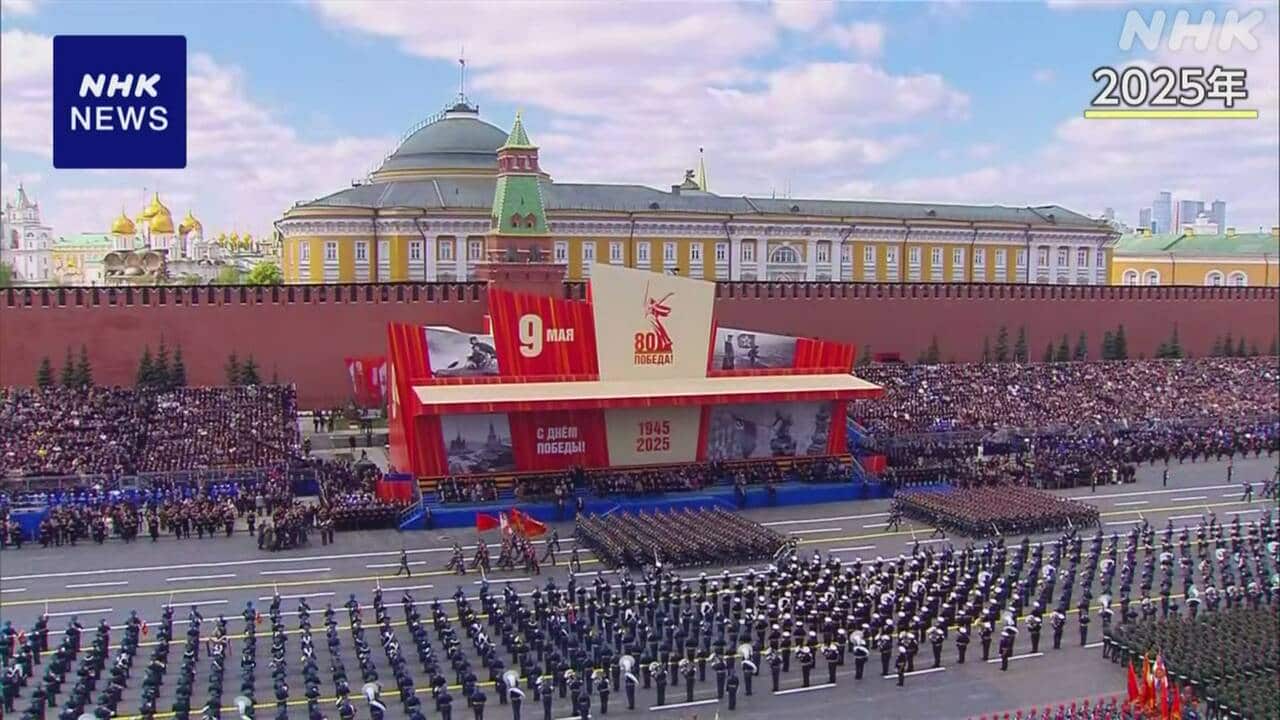
ロシア国防省は第2次世界大戦でナチス・ドイツに勝利したことを祝う「戦勝記念日」で、首都モスクワで行われることしの式典に「兵器の隊列は参加しない」と発表しました。式典では例年、戦車や弾道ミサイルなどが披露されてきたため、今回の措置は異例です。
ロシア国防省は28日、毎年5月9日にモスクワ中心部の「赤の広場」で行われる、第2次世界大戦で旧ソビエトがナチス・ドイツに勝利したことを祝う「戦勝記念日」の式典についてSNSで発表しました。
この中で、ことしの式典の軍事パレードには「兵器の隊列は参加しない」と明らかにしました。
式典では、旧ソビエトの崩壊後に初めて本格的な軍事パレードが復活した2008年以降、毎年、戦車や弾道ミサイルなどが披露され、ロシアが軍事力を内外に誇示する場となってきただけに今回の措置は異例です。
理由について国防省は「現在の作戦の状況を踏まえた」と説明するにとどめていますが、ウクライナの戦場に大量の兵器を投入していることの影響や、ウクライナからの無人機攻撃を警戒した可能性もあります。
ロシア大統領府のペスコフ報道官は29日、記者団に対し「ウクライナは戦場で領土を失っており、本格的なテロ活動を開始した。危険を最小限にするためあらゆる措置をとる」と述べました。
アメリカの議会調査局はことし2月に公表した報告書の中で、アメリカ政府当局者の推計として、ロシアはウクライナへの侵攻開始以降、3000両以上の戦車のほか、装甲車や大砲などを失ったと指摘しています。
ロシア国防省は28日、毎年5月9日にモスクワ中心部の「赤の広場」で行われる、第2次世界大戦で旧ソビエトがナチス・ドイツに勝利したことを祝う「戦勝記念日」の式典についてSNSで発表しました。
この中で、ことしの式典の軍事パレードには「兵器の隊列は参加しない」と明らかにしました。
式典では、旧ソビエトの崩壊後に初めて本格的な軍事パレードが復活した2008年以降、毎年、戦車や弾道ミサイルなどが披露され、ロシアが軍事力を内外に誇示する場となってきただけに今回の措置は異例です。
理由について国防省は「現在の作戦の状況を踏まえた」と説明するにとどめていますが、ウクライナの戦場に大量の兵器を投入していることの影響や、ウクライナからの無人機攻撃を警戒した可能性もあります。
ロシア大統領府のペスコフ報道官は29日、記者団に対し「ウクライナは戦場で領土を失っており、本格的なテロ活動を開始した。危険を最小限にするためあらゆる措置をとる」と述べました。
アメリカの議会調査局はことし2月に公表した報告書の中で、アメリカ政府当局者の推計として、ロシアはウクライナへの侵攻開始以降、3000両以上の戦車のほか、装甲車や大砲などを失ったと指摘しています。
Vocabulary
General
Proper noun
JLPT N2
JLPT N1
| # | 言葉 | 意味 |
|---|---|---|
| 5 | 式典 | しきてん (式典) : ceremony; rites |
| 3 | 兵器 | へいき (兵器) : arms; weapon; ordnance |
| 3 | 戦車 | せんしゃ (戦車) : 1. tank (military vehicle) 2. chariot |
| 3 | 措置 | そち (措置) : measure; step; action |
| 2 | 第 | だい (第) : prefix for forming ordinal numbers |
| 2 | 世界大戦 | せかいたいせん (世界大戦) : world war |
| 2 | 勝利 | しょうり (勝利) : victory; triumph; conquest; success; win |
| 2 | 祝う | いわう (祝う) : 1. to celebrate; to congratulate; to observe (a festival) 2. to present (a gift) in celebration; to drink in celebration |
| 2 | 戦勝 | せんしょう (戦勝) : winning a war; victory |
| 2 | 記念日 | きねんび (記念日) : memorial day; commemoration day; anniversary |
| 2 | 隊列 | たいれつ (隊列) : rank (of troops); file; column; formation |
| 2 | 参加 | さんか (参加) : participation; joining; entry; adherence |
| 2 | 発表 | はっぴょう (発表) : announcement; publication; presenting; statement; communique; making known; breaking (news story); expressing (one's opinion); releasing; unveiling |
| 2 | 弾道ミサイル | だんどうミサイル (弾道ミサイル) : ballistic missile |
| 2 | 披露 | ひろう (披露) : announcement; presentation; demonstration; displaying; showing; introducing; exhibiting; unveiling; revealing; showcasing; performing; giving a rendition |
| 2 | 異例 | いれい (異例) : exceptional; unusual; extraordinary; unprecedented; singular |
| 2 | 旧 | きゅう (旧) : 1. old; former; ex- 2. the old; old things; old customs |
| 2 | 本格的 | ほんかくてき (本格的) : 1. genuine; real; regular; normal; typical; standard; orthodox 2. full-scale; full-blown; all-out |
| 2 | 以降 | いこう (以降) : on and after; as from; hereafter; thereafter; since |
| 2 | 戦場 | せんじょう (戦場) : battlefield; battleground |
| 2 | 失う | うしなう (失う) : 1. to lose 2. to miss (a change, opportunity) |
| 2 | 開始 | かいし (開始) : start; commencement; beginning; initiation |
| 1 | 首都 | しゅと (首都) : capital city; metropolis |
| 1 | 例年 | れいねん (例年) : 1. average (normal, ordinary) year 2. every year; annually |
| 1 | 中心部 | ちゅうしんぶ (中心部) : central part; heart (of a city) |
| 1 | 赤の広場 | あかのひろば (赤の広場) : Red Square (Moscow) (place) |
| 1 | 明らか | あきらか (明らか) : 1. clear; obvious; evident; plain; definite 2. bright; light |
| 1 | 崩壊 | ほうかい (崩壊) : 1. collapse; crumbling; breaking down; caving in 2. (radioactive) decay; disintegration |
| 1 | 復活 | ふっかつ (復活) : 1. revival (e.g. musical); come-back 2. restoration; rebirth; resurrection |
| 1 | 軍事力 | ぐんじりょく (軍事力) : military force; military strength |
| 1 | 内外 | ないがい (内外) : 1. inside and outside; interior and exterior 2. inside and outside the country; home and abroad; domestic and foreign |
| 1 | 誇示 | こじ (誇示) : ostentation; display |
| 1 | 国防省 | こくぼうしょう (国防省) : Department of Defense (USA); the Pentagon; Ministry of Defence (UK, etc.) |
| 1 | 現在 | げんざい (現在) : now; current; present; present time; as of |
| 1 | 作戦 | さくせん (作戦) : 1. tactics; strategy 2. military operation; naval operation |
| 1 | 状況 | じょうきょう (状況) : state of affairs (around you); situation; circumstances |
| 1 | 踏まえる | ふまえる (踏まえる) : 1. to be based on; to take into account; to build upon; to have origin in 2. to have one's feet firmly planted on; to plant oneself on |
| 1 | とどめる | とどめる (留める) : 1. to stop; to stay (e.g. the night); to cease; to put an end to 2. to contain; to keep (in position, in place); to limit |
| 1 | 大量 | たいりょう (大量) : large quantity; massive (quantity); mass (e.g. mass production, mass transit, mass destruction) |
| 1 | 投入 | とうにゅう (投入) : 1. throwing in; inserting; depositing (e.g. a ballot) 2. investment; commitment (of funds, personnel, etc.); injection; infusion |
| 1 | 影響 | えいきょう (影響) : 1. influence; effect 2. to influence; to affect; to have an influence on; to impact; to have an effect on |
| 1 | 無人機 | むじんき (無人機) : drone; unmanned aircraft |
| 1 | 攻撃 | こうげき (攻撃) : 1. attack; assault; raid; onslaught; offensive 2. criticism; censure; denunciation; condemnation |
| 1 | 警戒 | けいかい (警戒) : vigilance; caution; alertness; precaution; being on guard |
| 1 | 可能性 | かのうせい (可能性) : potentiality; likelihood; possibility; availability |
| 1 | 大統領府 | だいとうりょうふ (大統領府) : Executive Office of the President (USA, etc.) |
| 1 | 報道官 | ほうどうかん (報道官) : press officer; press secretary |
| 1 | 記者団 | きしゃだん (記者団) : press group; press corps; group of reporters; press organization; press organisation |
| 1 | 領土 | りょうど (領土) : dominion; territory; possession |
| 1 | 最小限 | さいしょうげん (最小限) : minimum; lowest; minimal; least |
| 1 | あらゆる | あらゆる (有らゆる) : all; every |
| 1 | 述べる | のべる (述べる) : to state; to express; to mention |
| 1 | 公表 | こうひょう (公表) : official announcement; proclamation |
| 1 | 報告書 | ほうこくしょ (報告書) : (written) report |
| 1 | 当局者 | とうきょくしゃ (当局者) : authority (person) |
| 1 | 推計 | すいけい (推計) : estimate; estimation |
| 1 | 侵攻 | しんこう (侵攻) : invasion |
| 1 | 両 | りょう (両) : 1. both (hands, parents, sides, etc.) 2. counter for carriages (e.g. in a train); counter for vehicles |
| 1 | 装甲車 | そうこうしゃ (装甲車) : armoured vehicle; armored vehicle |
| 1 | 大砲 | たいほう (大砲) : gun; cannon; artillery |
| 1 | 指摘 | してき (指摘) : pointing out; identification |