アメリカ イスラエルがイラン攻撃 経済への影響は 専門家「長期化で原油価格上昇か 物価高再燃も」
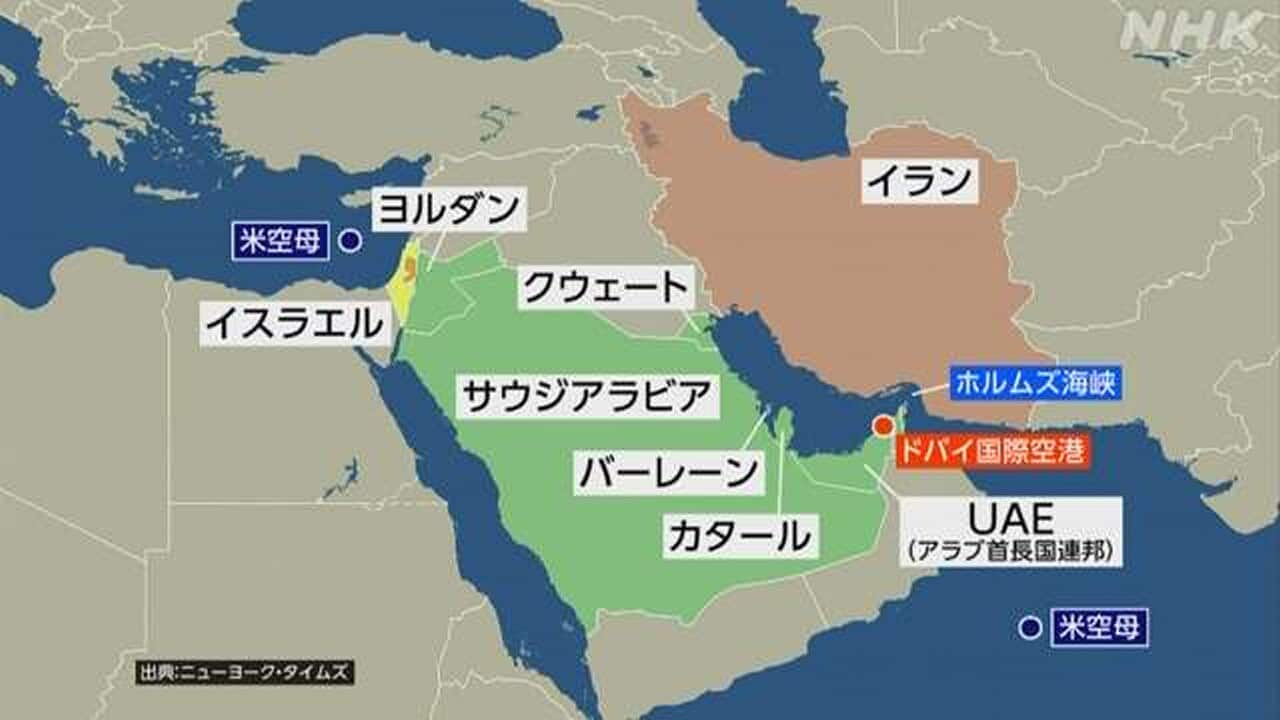
イランに対するアメリカとイスラエルの攻撃で、イランの最高指導者、ハメネイ師が死亡しました。
国際的な原油価格の指標の1つ、WTIの先物価格は、このところイラン情勢への懸念を背景に上昇傾向にあり、直近では1バレル=67ドル台となっています。
日本総研の栂野裕貴研究員は「ホルムズ海峡」が封鎖された場合、原油価格はおよそ50ドル上昇し、1バレル=120ドル程度まで急騰するおそれがあるとしています。
日本は原油の輸入を中東に頼っているため経済への影響が大きく、中東からの化石燃料の輸入がすべて途絶えるという最も悪いケースの場合、日本のGDP=国内総生産は3%程度、下押しされる可能性があるということです。
石油は備蓄があるためただちに不足に陥ることはない一方、原油が入ってこなくなればガソリンや軽油などを精製する生産活動がとまるほか、輸送業やサービス業など、ガソリンなどを消費する産業で企業活動にも影響が波及し、GDPの下押しにつながるとみられるとしています。
楽天証券経済研究所の吉田哲コモディティアナリストはNHKの取材に対し、「ホルムズ海峡の封鎖、それに戦闘や情勢の悪化などが長期化した場合には原油価格の上昇が懸念され、日本に大きな影響が及ぶおそれがある。まず、週明けのマーケットで原油相場が大幅な反発で始まる可能性がある」と話しています。
そのうえで、イラン情勢の悪化が長期化した場合について「原油価格の上昇によって、日本では暫定税率の廃止で安くなったガソリンの小売価格が上がり、電力や輸送コストも上昇して物価高が再燃する可能性がある。こうした動きが目立ってくれば足元で議論されている物価高対策や金融政策の方向性にも影響がおよぶかもしれない。また、中東地域から原油を多く買っているアジアの経済にマイナスの影響が出ると考えられる」と懸念を示しています。
日本政府は1973年に起きたオイルショックの経験を踏まえて、石油備蓄法を制定しました。国や石油会社などが石油の供給が不足した場合に備えて、石油のほかガソリンや灯油をすぐに供給できるよう国内に保管を義務づけています。
備蓄の方法は、国が備蓄する「国家備蓄」、民間の石油会社が義務づけられている「民間備蓄」、それに産油国と協力して国内の石油タンクで備蓄する「産油国共同備蓄」の3つがあります。
資源エネルギー庁によりますと、去年12月末時点の備蓄量は、「国家備蓄」が国内消費量の146日分、「民間備蓄」は101日分、また、「産油国共同備蓄」は7日分と、あわせて254日分だということです。
経済産業省は、ホルムズ海峡での船舶の運航状況をはじめ、日本への原油や天然ガスの供給にどのような影響が考えられるか、民間企業から情報収集を進めているということです。これらの情報を分析した上で、週明けの原油市場の動向を注意深くみていくとしています。
国際的な原油価格の指標の1つ、WTIの先物価格は、このところイラン情勢への懸念を背景に上昇傾向にあり、直近では1バレル=67ドル台となっています。
日本総研の栂野裕貴研究員は「ホルムズ海峡」が封鎖された場合、原油価格はおよそ50ドル上昇し、1バレル=120ドル程度まで急騰するおそれがあるとしています。
日本は原油の輸入を中東に頼っているため経済への影響が大きく、中東からの化石燃料の輸入がすべて途絶えるという最も悪いケースの場合、日本のGDP=国内総生産は3%程度、下押しされる可能性があるということです。
石油は備蓄があるためただちに不足に陥ることはない一方、原油が入ってこなくなればガソリンや軽油などを精製する生産活動がとまるほか、輸送業やサービス業など、ガソリンなどを消費する産業で企業活動にも影響が波及し、GDPの下押しにつながるとみられるとしています。
楽天証券経済研究所の吉田哲コモディティアナリストはNHKの取材に対し、「ホルムズ海峡の封鎖、それに戦闘や情勢の悪化などが長期化した場合には原油価格の上昇が懸念され、日本に大きな影響が及ぶおそれがある。まず、週明けのマーケットで原油相場が大幅な反発で始まる可能性がある」と話しています。
そのうえで、イラン情勢の悪化が長期化した場合について「原油価格の上昇によって、日本では暫定税率の廃止で安くなったガソリンの小売価格が上がり、電力や輸送コストも上昇して物価高が再燃する可能性がある。こうした動きが目立ってくれば足元で議論されている物価高対策や金融政策の方向性にも影響がおよぶかもしれない。また、中東地域から原油を多く買っているアジアの経済にマイナスの影響が出ると考えられる」と懸念を示しています。
日本政府は1973年に起きたオイルショックの経験を踏まえて、石油備蓄法を制定しました。国や石油会社などが石油の供給が不足した場合に備えて、石油のほかガソリンや灯油をすぐに供給できるよう国内に保管を義務づけています。
備蓄の方法は、国が備蓄する「国家備蓄」、民間の石油会社が義務づけられている「民間備蓄」、それに産油国と協力して国内の石油タンクで備蓄する「産油国共同備蓄」の3つがあります。
資源エネルギー庁によりますと、去年12月末時点の備蓄量は、「国家備蓄」が国内消費量の146日分、「民間備蓄」は101日分、また、「産油国共同備蓄」は7日分と、あわせて254日分だということです。
経済産業省は、ホルムズ海峡での船舶の運航状況をはじめ、日本への原油や天然ガスの供給にどのような影響が考えられるか、民間企業から情報収集を進めているということです。これらの情報を分析した上で、週明けの原油市場の動向を注意深くみていくとしています。
Vocabulary
General
Proper noun
JLPT N2
JLPT N1
| # | 言葉 | 意味 |
|---|---|---|
| 10 | 備蓄 | びちく (備蓄) : stockpile; reserves; storing; stocking up; laying in (supplies) |
| 6 | 原油 | げんゆ (原油) : crude oil |
| 6 | 影響 | えいきょう (影響) : 1. influence; effect 2. to influence; to affect; to have an influence on; to impact; to have an effect on |
| 6 | 石油 | せきゆ (石油) : 1. oil; petroleum 2. kerosene; paraffin |
| 4 | 原油価格 | げんゆかかく (原油価格) : crude oil price |
| 4 | 上昇 | じょうしょう (上昇) : rising; ascending; climbing |
| 3 | 情勢 | じょうせい (情勢) : state of things; state of affairs; condition; situation; circumstances |
| 3 | 懸念 | けねん (懸念) : worry; fear; anxiety; concern |
| 3 | ホルムズ海峡 | ホルムズかいきょう (ホルムズ海峡) : Strait of Hormuz (place) |
| 3 | 中東 | ちゅうとう (中東) : Middle East |
| 3 | 可能性 | かのうせい (可能性) : potentiality; likelihood; possibility; availability |
| 3 | 供給 | きょうきゅう (供給) : supply; provision |
| 3 | 国内 | こくない (国内) : internal; domestic |
| 3 | 民間 | みんかん (民間) : 1. private; non-governmental; non-official; civilian; civil 2. folk; popular |
| 3 | 産油国 | さんゆこく (産油国) : oil-producing countries (nations) |
| 2 | 封鎖 | ふうさ (封鎖) : 1. blockade; lockdown; sealing off (an area) 2. freezing (funds) |
| 2 | 程度 | ていど (程度) : degree; amount; grade; standard; of the order of (following a number); about; approximately |
| 2 | おそれ | おそれ (恐れ) : fear; horror; anxiety; concern; uneasiness; reverence |
| 2 | 下押し | したおし (下押し) : fall; drop; decline |
| 2 | 不足 | ふそく (不足) : 1. insufficiency; deficiency; shortage; lack; scarcity; deficit 2. dissatisfaction; discontent; complaint |
| 2 | 活動 | かつどう (活動) : 1. activity (of a person, organization, animal, volcano, etc.); action 2. movie (esp. during the silent movie period) |
| 2 | 悪化 | あっか (悪化) : (suffer) deterioration; growing worse; aggravation; degeneration; corruption |
| 2 | 長期化 | ちょうきか (長期化) : lengthening |
| 2 | 週明け | しゅうあけ (週明け) : beginning of next week (usu. Monday); early next week |
| 2 | 物価高 | ぶっかだか (物価高) : high prices of commodities |
| 2 | 考える | かんがえる (考える) : 1. to think (about, of); to think over; to ponder; to contemplate; to reflect (on); to meditate (on) 2. to consider; to bear in mind; to allow for; to take into consideration |
| 2 | 義務 | ぎむ (義務) : duty; obligation; responsibility |
| 2 | 国家 | こっか (国家) : state; country; nation |
| 2 | 共同 | きょうどう (共同) : doing together (as equals); sharing; common (land, etc.); joint (statement, etc.); cooperation; co-operation; collaboration; association |
| 2 | 情報 | じょうほう (情報) : 1. information; news; intelligence; advices 2. information; data contained in characters, signals, code, etc. |
| 1 | 攻撃 | こうげき (攻撃) : 1. attack; assault; raid; onslaught; offensive 2. criticism; censure; denunciation; condemnation |
| 1 | 師 | し (師) : 1. teacher; master; one's mentor 2. religious leader |
| 1 | 死亡 | しぼう (死亡) : 1. death; mortality 2. to die; to pass away |
| 1 | 国際的 | こくさいてき (国際的) : international |
| 1 | 指標 | しひょう (指標) : index; indices; indicator |
| 1 | 先物 | さきもの (先物) : futures; futures contract |
| 1 | 価格 | かかく (価格) : price; value; cost |
| 1 | 背景 | はいけい (背景) : 1. background; scenery; backdrop; setting 2. background (of an incident, situation, etc.); circumstances; context |
| 1 | 上昇傾向 | じょうしょうけいこう (上昇傾向) : upward tendency; rising trend |
| 1 | 直近 | ちょっきん (直近) : latest; most recent; nearest (in time) |
| 1 | 日本 | にほん (日本) : Japan |
| 1 | 総研 | そうけん (総研) : institute for general research; multidiscipline laboratory |
| 1 | 栂野 | つがの (栂野) : Tsugano (surname) |
| 1 | 裕貴 | ひろき (裕貴) : Hiroki (given) |
| 1 | 研究員 | けんきゅういん (研究員) : researcher; lab worker |
| 1 | 急騰 | きゅうとう (急騰) : sudden rise (in price); sharp rise; jump; surge |
| 1 | 頼る | たよる (頼る) : to rely on; to depend on; to count on; to turn to (for help) |
| 1 | 大きく | おおきく (大きく) : in a big way; on a grand scale |
| 1 | 化石燃料 | かせきねんりょう (化石燃料) : fossil fuel |
| 1 | 途絶える | とだえる (途絶える) : to stop; to cease; to come to an end; to cut off |
| 1 | 最も | もっとも (最も) : most; extremely |
| 1 | 国内総生産 | こくないそうせいさん (国内総生産) : gross domestic product; GDP |
| 1 | ただちに | ただちに (直ちに) : 1. at once; immediately; right away; without delay 2. directly (face, lead to, etc.); automatically (mean, result in, etc.) |
| 1 | 陥る | おちいる (陥る) : 1. to fall into (e.g. a hole) 2. to fall into (chaos, depression, dilemma, illness, etc.) |
| 1 | 軽油 | けいゆ (軽油) : 1. diesel oil; gas oil 2. light oil |
| 1 | 精製 | せいせい (精製) : refining; purification |
| 1 | サービス業 | サービスぎょう (サービス業) : service industry; service sector |
| 1 | 消費 | しょうひ (消費) : consumption; expenditure |
| 1 | 企業 | きぎょう (企業) : enterprise; business; company; corporation |
| 1 | 波及 | はきゅう (波及) : spread; extension; influence; aftereffect; ripple |
| 1 | つながる | つながる (繋がる) : 1. to be tied together; to be connected to; to be linked to 2. to lead to; to be related to |
| 1 | 楽天 | らくてん (楽天) : optimism |
| 1 | 証券 | しょうけん (証券) : bond; bill; certificate; security |
| 1 | 研究所 | けんきゅうしょ (研究所) : research establishment; research institute; laboratory |
| 1 | 吉田哲 | よしださとし (吉田哲) : Yoshida Satoshi (person) |
| 1 | 取材 | しゅざい (取材) : 1. news coverage; collecting data (e.g. for an article); covering (something for media) 2. interview |
| 1 | 戦闘 | せんとう (戦闘) : battle; fight; combat |
| 1 | 及ぶ | およぶ (及ぶ) : 1. to reach; to amount to; to befall; to happen to; to extend; to go on (for, until) 2. to be up to the task; to come up to |
| 1 | 相場 | そうば (相場) : 1. market price 2. speculation (e.g. on stocks) |
| 1 | 大幅 | おおはば (大幅) : 1. big; large; drastic; substantial 2. full-width cloth (approx. 72 cm wide for traditional Japanese clothing; approx. 140 cm wide for Western clothing) |
| 1 | 反発 | はんぱつ (反発) : 1. opposition; rebellion; revolt; resistance; backlash; refusal 2. rebounding; recoiling; repulsion |
| 1 | 廃止 | はいし (廃止) : abolition; repeal |
| 1 | 安く | やすく (安く) : inexpensively |
| 1 | 小売価格 | こうりかかく (小売価格) : retail price |
| 1 | 上がる | あがる (上がる) : 1. to rise; to go up; to come up; to ascend; to be raised 2. to enter (esp. from outdoors); to come in; to go in |
| 1 | 電力 | でんりょく (電力) : electric power |
| 1 | 輸送 | ゆそう (輸送) : transport; transportation |
| 1 | 再燃 | さいねん (再燃) : recurrence; revival; resuscitation |
| 1 | 動き | うごき (動き) : 1. movement; move; motion 2. trend; development; change; fluctuation |
| 1 | 目立つ | めだつ (目立つ) : to be conspicuous; to stand out |
| 1 | 足元 | あしもと (足元) : 1. at one's feet; underfoot; one's step (as in "watch your step") 2. gait; pace; step |
| 1 | 議論 | ぎろん (議論) : argument; discussion; dispute; controversy |
| 1 | 対策 | たいさく (対策) : measure; step; countermeasure; counterplan; countermove; strategy; preparation (e.g. for a test) |
| 1 | 金融政策 | きんゆうせいさく (金融政策) : monetary policy |
| 1 | 方向性 | ほうこうせい (方向性) : 1. trend; course of action; direction 2. directionality; directivity; orientation |
| 1 | およぶ | およぶ (及ぶ) : 1. to reach; to amount to; to befall; to happen to; to extend; to go on (for, until) 2. to be up to the task; to come up to |
| 1 | しれる | しれる (知れる) : 1. to become known; to come to light; to be discovered 2. to be known; to be understood |
| 1 | 地域 | ちいき (地域) : area; region |
| 1 | 買う | かう (買う) : 1. to buy; to purchase 2. to value; to have a high opinion |
| 1 | 示す | しめす (示す) : 1. to (take out and) show; to demonstrate; to tell; to exemplify; to make apparent 2. to point out (finger, clock hand, needle, etc.) |
| 1 | 日本政府 | にほんせいふ (日本政府) : Japanese government |
| 1 | 起きる | おきる (起きる) : 1. to get up; to rise; to blaze up (fire) 2. to wake up; to be awake; to stay awake |
| 1 | 踏まえる | ふまえる (踏まえる) : 1. to be based on; to take into account; to build upon; to have origin in 2. to have one's feet firmly planted on; to plant oneself on |
| 1 | 石油備蓄 | せきゆびちく (石油備蓄) : oil reserve |
| 1 | 法 | ほう (法) : 1. law; act; principle 2. method |
| 1 | 制定 | せいてい (制定) : enactment; establishment; creation |
| 1 | 備える | そなえる (備える) : 1. to furnish with; to equip with; to provide; to install 2. to prepare for; to make preparations for; to make provision for |
| 1 | 灯油 | とうゆ (灯油) : kerosene; paraffin; lamp oil |
| 1 | 保管 | ほかん (保管) : charge; custody; safekeeping; deposit; storage |
| 1 | 方法 | ほうほう (方法) : method; process; manner; way; means; technique |
| 1 | 協力 | きょうりょく (協力) : cooperation; collaboration |
| 1 | 資源エネルギー庁 | しげんエネルギーちょう (資源エネルギー庁) : Agency of Natural Resources and Energy |
| 1 | 末 | うら (末) : top end; tip |
| 1 | 時点 | じてん (時点) : point in time; occasion |
| 1 | 消費量 | しょうひりょう (消費量) : amount of consumption |
| 1 | あわせる | あわせる (会わせる) : 1. to make (someone) to meet; to let (someone) meet 2. to expose to; to subject to |
| 1 | 経済産業省 | けいざいさんぎょうしょう (経済産業省) : Ministry of Economy, Trade and Industry; METI |
| 1 | 船舶 | せんぱく (船舶) : vessel; ship; shipping; seacraft |
| 1 | 運航 | うんこう (運航) : operating (e.g. ships, aircraft) |
| 1 | 状況 | じょうきょう (状況) : state of affairs (around you); situation; circumstances |
| 1 | 天然ガス | てんねんガス (天然ガス) : natural gas |
| 1 | 民間企業 | みんかんきぎょう (民間企業) : private enterprise; private business; private company; private firm; private-sector business; private-sector corporation |
| 1 | 収集 | しゅうしゅう (収集) : 1. collecting; accumulating; gathering 2. collection (of art, stamps, insects, etc.) |
| 1 | 進める | すすめる (進める) : 1. to advance; to move forward; to put (a clock, watch) forward 2. to carry forward (plans, work, etc.); to proceed with; to make progress in; to further; to advance; to hasten; to speed up |
| 1 | 分析 | ぶんせき (分析) : analysis |
| 1 | 市場 | いちば (市場) : (town) market; (street) market; marketplace |
| 1 | 動向 | どうこう (動向) : trend; tendency; movement; attitude |
| 1 | 深く | ふかく (深く) : deeply; intimately; heartily; sincerely; profoundly |