自転車の交通違反 4月から「青切符」の制度はじまる どんな制度? 反則金の額は? 注意するポイントも
こうした乗り方はこれまでも交通違反(いはん)でしたが、4月から、警察が「青切符(あおきっぷ)」とよばれる制度で取りしまりをすることになりました。
4月から自転車の交通違反について「青切符」の制度が始まりましたが、これまでの自転車の乗り方についてのルールは変わっていません。変わったのは、違反をしたあとの手続きです。
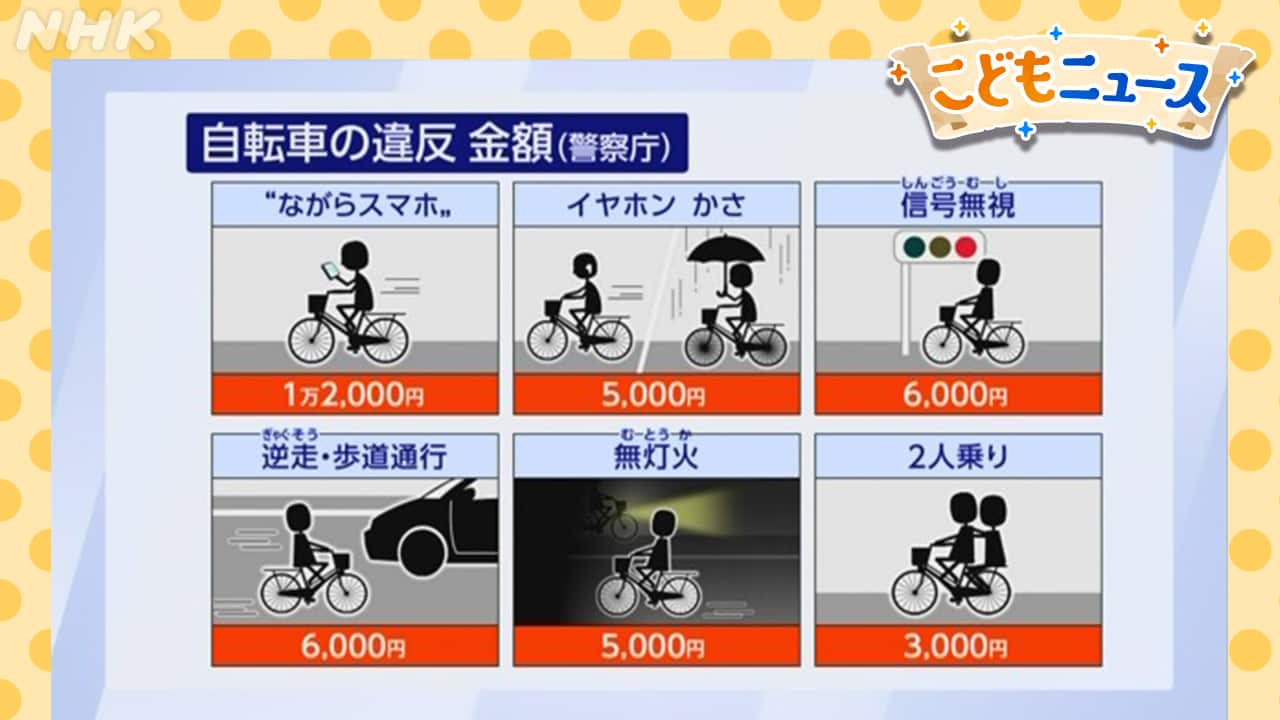
自転車の交通違反で「青切符」を渡されたとき、払わなければいけない金額(きんがく)についてまとめました。
<“ながらスマホ”>スマートフォンなどを使って話したり、画面を見たりしながら自転車を運転する“ながらスマホ”はもっとも高い1万2000円
<イヤホン・かさ>両耳にイヤホンをつけて音楽をきいたり、かさをさしたりしながら運転するのは5000円
<ふみきりへの立ち入り>遮断機(しゃだんき)がおりているふみきりに入ると7000円
<一時不停止(ふていし)>一時不停止(=決められた場所で止まらなかった場合)は5000円
警察によりますと、自転車の交通違反をした人に対しては、まずその場で注意して、指導(しどう)・警告(けいこく)をします。しかし、それでも違反を続けた場合は「青切符」を渡してお金を払うように伝えます。
また、交通事故につながるような危(あぶ)ないことをした場合などは「青切符」での取りしまりになるということです。
警察は状況によって判断するとして「これまで以上に安全に自転車を使ってほしい」とよびかけています。
「自転車は車道を通るのが原則(げんそく)」ですが、歩道を通ってもよいケースもあります。
▽道路工事や、とまっている車が何台もある場合など、車道の左側を通るのがむずかしいとき
▽自動車の交通量がとても多かったり、車道がせまかったりして自転車で車道を通ると、かえって危ないとき
▽歩道に、自転車が通れる「自転車通行指定部分」がある場合でも、すぐに止まれるくらいのスピードで走るのを原則とすること
警察庁は「単に自転車で歩道を走っただけでは基本的には取りしまらない」としていますが、「悪質・危険(あくしつ・きけん)」な違反は「青切符」による取りしまりの対象になるとしています。
たとえば、スピードを出して歩道を走り、歩いている人をおどろかせて立ち止まらせた場合などです。
それぞれのケースによるので「何秒」見ていたらだめ、とは決まっていませんが、画面に集中せずにまわりをよく見ることが大切です。
イヤホンをしながらの自転車の運転について、両方の耳にイヤホンをして、まわりの音が聞こえない場合は「青切符」での取りしまりとなります。
イヤホンを片方の耳だけにしているときや、耳を完全にはふさがない場合は、安全な運転に必要な音や声が聞こえているかぎりは違反にはならないとしています。
2人乗りについては、小学校に入る前の子どもを幼児(ようじ)用の席に乗せて運転する場合は問題ありません。
小学生を乗せていた場合も、それだけで違反になることは基本的にはないということですが、バランスがくずれて危ない運転だと判断されれば「青切符」による取りしまりとなる可能性もあります。
警察によりますと、自転車が関係する事故は、去年(2025年)1年間で6万7470件ありました。
また、自転車と歩行者の事故は3269件あり、2006年以降でもっとも多くなりました。
このうち半分をこえる1851件は、衝突(しょうとつ)した場所が歩道や横断歩道でした。
自転車は車などとちがって、免許が必要だったり、教習所でルールについて教わったりするわけではありません。
被害者、加害者にならないために、交通ルールを知って、まわりの人たちとも話し合ってみてくださいね。
4月から自転車の交通違反について「青切符」の制度が始まりましたが、これまでの自転車の乗り方についてのルールは変わっていません。変わったのは、違反をしたあとの手続きです。
自転車の交通違反で「青切符」を渡されたとき、払わなければいけない金額(きんがく)についてまとめました。
<“ながらスマホ”>スマートフォンなどを使って話したり、画面を見たりしながら自転車を運転する“ながらスマホ”はもっとも高い1万2000円
<イヤホン・かさ>両耳にイヤホンをつけて音楽をきいたり、かさをさしたりしながら運転するのは5000円
<ふみきりへの立ち入り>遮断機(しゃだんき)がおりているふみきりに入ると7000円
<一時不停止(ふていし)>一時不停止(=決められた場所で止まらなかった場合)は5000円
警察によりますと、自転車の交通違反をした人に対しては、まずその場で注意して、指導(しどう)・警告(けいこく)をします。しかし、それでも違反を続けた場合は「青切符」を渡してお金を払うように伝えます。
また、交通事故につながるような危(あぶ)ないことをした場合などは「青切符」での取りしまりになるということです。
警察は状況によって判断するとして「これまで以上に安全に自転車を使ってほしい」とよびかけています。
「自転車は車道を通るのが原則(げんそく)」ですが、歩道を通ってもよいケースもあります。
▽道路工事や、とまっている車が何台もある場合など、車道の左側を通るのがむずかしいとき
▽自動車の交通量がとても多かったり、車道がせまかったりして自転車で車道を通ると、かえって危ないとき
▽歩道に、自転車が通れる「自転車通行指定部分」がある場合でも、すぐに止まれるくらいのスピードで走るのを原則とすること
警察庁は「単に自転車で歩道を走っただけでは基本的には取りしまらない」としていますが、「悪質・危険(あくしつ・きけん)」な違反は「青切符」による取りしまりの対象になるとしています。
たとえば、スピードを出して歩道を走り、歩いている人をおどろかせて立ち止まらせた場合などです。
それぞれのケースによるので「何秒」見ていたらだめ、とは決まっていませんが、画面に集中せずにまわりをよく見ることが大切です。
イヤホンをしながらの自転車の運転について、両方の耳にイヤホンをして、まわりの音が聞こえない場合は「青切符」での取りしまりとなります。
イヤホンを片方の耳だけにしているときや、耳を完全にはふさがない場合は、安全な運転に必要な音や声が聞こえているかぎりは違反にはならないとしています。
2人乗りについては、小学校に入る前の子どもを幼児(ようじ)用の席に乗せて運転する場合は問題ありません。
小学生を乗せていた場合も、それだけで違反になることは基本的にはないということですが、バランスがくずれて危ない運転だと判断されれば「青切符」による取りしまりとなる可能性もあります。
警察によりますと、自転車が関係する事故は、去年(2025年)1年間で6万7470件ありました。
また、自転車と歩行者の事故は3269件あり、2006年以降でもっとも多くなりました。
このうち半分をこえる1851件は、衝突(しょうとつ)した場所が歩道や横断歩道でした。
自転車は車などとちがって、免許が必要だったり、教習所でルールについて教わったりするわけではありません。
被害者、加害者にならないために、交通ルールを知って、まわりの人たちとも話し合ってみてくださいね。
Vocabulary
General
Proper noun
JLPT N2
JLPT N1
| # | 言葉 | 意味 |
|---|---|---|
| 8 | 青切符 | あおきっぷ (青切符) : 1. blue traffic violation ticket (designating a minor violation) 2. second-class ticket |
| 5 | 違反 | いはん (違反) : violation; offense; offence; breach; transgression; infringement; contravention |
| 5 | 歩道 | ほどう (歩道) : footpath; walkway; sidewalk |
| 4 | 車道 | しゃどう (車道) : roadway |
| 3 | 交通違反 | こうつういはん (交通違反) : traffic violation |
| 3 | 件 | くだん (件) : 1. the aforementioned; the said; (man, incident, etc.) in question; the above-mentioned; the aforesaid 2. the usual |
| 2 | 制度 | せいど (制度) : system; institution; organization; organisation |
| 2 | 変わる | かわる (変わる) : 1. to change; to be transformed; to be altered; to vary 2. to move to |
| 2 | 渡す | わたす (渡す) : 1. to ferry across (e.g. a river); to carry across; to traverse 2. to lay across; to build across |
| 2 | 画面 | がめん (画面) : 1. screen (of a TV, computer, etc.) 2. image (on a screen); picture; scene |
| 2 | ふみきる | ふみきる (踏み切る) : 1. to take off; to jump; to leap 2. to take the plunge; to decide; to embark on; to venture into; to launch out into |
| 2 | 一時 | ひととき (ひと時) : 1. a (short) time; a while; moment 2. one time (in the past); a period; former times |
| 2 | 判断 | はんだん (判断) : 1. judgment; judgement; decision; conclusion; adjudication 2. divination |
| 2 | 走る | はしる (走る) : 1. to run 2. to run (of a vehicle); to drive; to travel; to move; to sail |
| 2 | 基本的 | きほんてき (基本的) : fundamental; basic |
| 2 | 聞こえる | きこえる (聞こえる) : 1. to be heard; to be audible 2. to be said to be; to be reputed |
| 2 | 乗せる | のせる (乗せる) : 1. to place on (something) 2. to give (someone) a ride; to give a lift; to pick up; to help on board |
| 1 | よぶ | よぶ (呼ぶ) : 1. to call out (to); to call; to invoke 2. to summon (a doctor, etc.) |
| 1 | 始まる | はじまる (始まる) : 1. to begin; to start; to commence 2. to happen (again); to begin (anew) |
| 1 | 手続き | てつづき (手続き) : procedure; process; proceedings; formalities |
| 1 | 払う | はらう (払う) : 1. to pay (e.g. money, bill) 2. to brush off; to wipe away; to clear away; to dust off; to cut off (e.g. branches) |
| 1 | まとめる | まとめる (纏める) : 1. to collect; to put (it all) together; to integrate; to consolidate; to unify 2. to summarize; to aggregate |
| 1 | 両耳 | りょうみみ (両耳) : both ears |
| 1 | きく | きく (菊) : chrysanthemum (Chrysanthemum morifolium) |
| 1 | ながら運転 | ながらうんてん (ながら運転) : distracted driving |
| 1 | 立ち入り | たちいり (立ち入り) : entering; going into |
| 1 | 遮断機 | しゃだんき (遮断機) : (railway) crossing gate; barrier (at a toll booth, parking lot, etc.) |
| 1 | しゃだん | しゃだん (遮断) : isolation; cut off; blockade; quarantine; interception; deprivation |
| 1 | おりる | おりる (降りる) : 1. to descend (e.g. a mountain); to go down; to come down 2. to alight (e.g. from bus); to get off; to disembark; to dismount |
| 1 | 停止 | ていし (停止) : 1. stoppage; coming to a stop; halt; standstill 2. ceasing (movement, activity, etc.); suspension (of operations); interruption (e.g. of electricity supply); cutting off |
| 1 | 決める | きめる (決める) : 1. to decide; to choose; to determine; to make up one's mind; to resolve; to set one's heart on; to settle; to arrange; to set; to appoint; to fix 2. to clinch (a victory); to decide (the outcome of a match) |
| 1 | 止まる | とまる (止まる) : 1. to stop (moving); to come to a stop 2. to stop (doing, working, being supplied); to come to a halt; to cease; to be stopped; to be suspended |
| 1 | 伝える | つたえる (伝える) : to convey; to report; to transmit; to communicate; to tell; to impart; to propagate; to teach; to bequeath |
| 1 | 交通事故 | こうつうじこ (交通事故) : traffic accident |
| 1 | つながる | つながる (繋がる) : 1. to be tied together; to be connected to; to be linked to 2. to lead to; to be related to |
| 1 | 状況 | じょうきょう (状況) : state of affairs (around you); situation; circumstances |
| 1 | よびかける | よびかける (呼びかける) : 1. to call out to; to hail; to address 2. to appeal |
| 1 | 通る | とおる (通る) : 1. to go by; to go past; to go along; to travel along; to pass through; to use (a road); to take (a route); to go via; to go by way of 2. to run (between; of a rail service, bus route, etc.); to operate (between); to connect |
| 1 | 道路 | どうろ (道路) : road; highway |
| 1 | 工事 | こうじ (工事) : construction work |
| 1 | とまる | とまる (止まる) : 1. to stop (moving); to come to a stop 2. to stop (doing, working, being supplied); to come to a halt; to cease; to be stopped; to be suspended |
| 1 | 左側 | ひだりがわ (左側) : left side; left-hand side |
| 1 | 交通量 | こうつうりょう (交通量) : traffic; traffic volume |
| 1 | かえって | かえって (却って) : on the contrary; rather; all the more; instead |
| 1 | 通行 | つうこう (通行) : 1. passage (of people, traffic); passing 2. common usage |
| 1 | 指定 | してい (指定) : designation; specification; assignment; appointment; pointing at |
| 1 | 部分 | ぶぶん (部分) : portion; section; part |
| 1 | 原則 | げんそく (原則) : 1. principle; general rule 2. as a rule; in principle; in general |
| 1 | 警察庁 | けいさつちょう (警察庁) : National Police Agency |
| 1 | 単に | たんに (単に) : simply; merely; only; solely |
| 1 | 悪質 | あくしつ (悪質) : 1. malicious; vicious; malignant; underhanded 2. shoddy; inferior; poor-quality; second-rate |
| 1 | しつ | しつ (室) : 1. room 2. wife (of someone of high rank) |
| 1 | 対象 | たいしょう (対象) : target; object (of worship, study, etc.); subject (of taxation, etc.) |
| 1 | 歩く | あるく (歩く) : to walk |
| 1 | おどろく | おどろく (驚く) : to be surprised; to be astonished |
| 1 | 立ち止まる | たちどまる (立ち止まる) : to stop (in one's tracks); to come to a stop; to halt; to pause; to stand still |
| 1 | 秒 | びょう (秒) : 1. second (unit of time) 2. arc second |
| 1 | 決まる | きまる (決まる) : 1. to be decided; to be settled; to be fixed; to be arranged 2. to be unchanging; to be the same (as always); to be fixed; to be set |
| 1 | 集中 | しゅうちゅう (集中) : 1. concentration; focusing; convergence; centralization; integration; gathering together 2. within a collection of works |
| 1 | 片方 | かたほう (片方) : 1. one side; one party; counterpart; the other side; the other party 2. one of a pair; fellow; mate |
| 1 | 完全 | かんぜん (完全) : perfect; complete |
| 1 | ふさぐ | ふさぐ (塞ぐ) : 1. to stop up; to close up; to block (up); to plug up; to shut up; to cover (ears, eyes, etc.); to close (eyes, mouth) 2. to stand in the way; to obstruct |
| 1 | かぎり | かぎり (限り) : 1. limit; limits; bounds 2. degree; extent; scope |
| 1 | 子ども | こども (子供) : child |
| 1 | 小学生 | しょうがくせい (小学生) : elementary school student; primary school student; grade school student |
| 1 | くずれる | くずれる (崩れる) : 1. to collapse; to crumble 2. to get out of shape; to lose one's shape; to become disorganized; to become untidy |
| 1 | 可能性 | かのうせい (可能性) : potentiality; likelihood; possibility; availability |
| 1 | 年間 | ねんかん (年間) : 1. (period of) a year 2. during an era |
| 1 | 歩行者 | ほこうしゃ (歩行者) : pedestrian; walker |
| 1 | 以降 | いこう (以降) : on and after; as from; hereafter; thereafter; since |
| 1 | こえる | こえる (肥える) : 1. to grow fat; to gain weight; to put on weight 2. to grow fertile |
| 1 | 衝突 | しょうとつ (衝突) : 1. collision; crash; running into 2. conflict; quarrel; clashing |
| 1 | しょうとつ | しょうとつ (衝突) : 1. collision; crash; running into 2. conflict; quarrel; clashing |
| 1 | 横断歩道 | おうだんほどう (横断歩道) : pedestrian crossing; crosswalk |
| 1 | ちがう | ちがう (違う) : 1. to differ (from); to vary 2. to not be in the usual condition |
| 1 | 免許 | めんきょ (免許) : license; permit; licence; certificate |
| 1 | 教習所 | きょうしゅうじょ (教習所) : training institute |
| 1 | 教わる | おそわる (教わる) : to be taught; to learn; to take lessons in |
| 1 | 被害者 | ひがいしゃ (被害者) : victim; injured party; sufferer |
| 1 | 加害者 | かがいしゃ (加害者) : assailant; perpetrator; wrong-doer; aggressor |
| 1 | 知る | しる (知る) : 1. to be aware of; to know; to be conscious of; to cognize; to cognise 2. to notice; to feel |
| 1 | 話し合う | はなしあう (話し合う) : to discuss; to talk together |