北海道 福島町 人里へのヒグマ出没抑制「春期管理捕獲」始まる
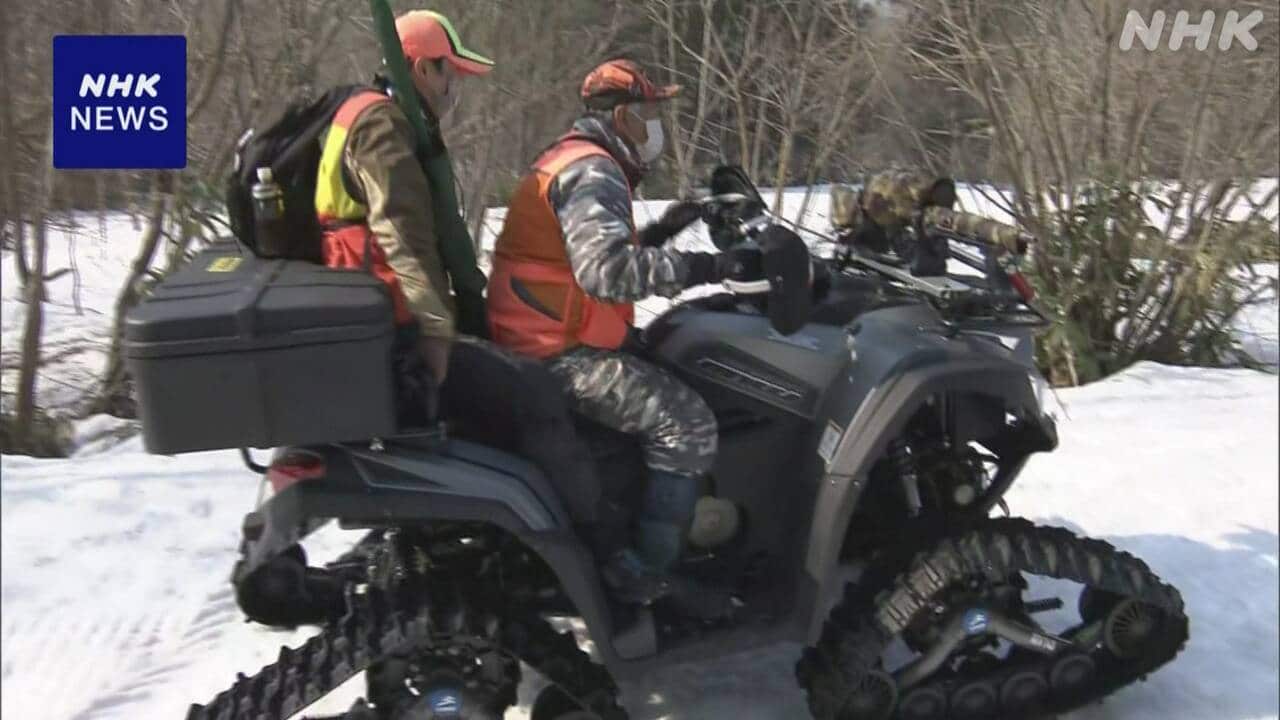
去年、新聞配達中の男性がヒグマに襲われて死亡した北海道福島町で、冬眠から目を覚ましたヒグマの人里への出没を抑える「春期管理捕獲」が始まりました。
冬眠明けのクマなどを捕獲する「春期管理捕獲」は、北海道や秋田県などの自治体で実施され、雪が残っている中、クマの足跡を追うことで比較的捕獲しやすいことから、クマの個体数管理をするとともに人への警戒心を植え付けることで人里への出没を抑えるねらいがあります。
去年7月、新聞配達中の男性がヒグマに襲われて死亡したほか、目撃情報が相次いだ北海道福島町では30日から初めて実施されました。
町内の山では猟友会のメンバーなどが地上と上空からヒグマの痕跡がないかなど確認していました。
北海道猟友会松前支部長の道下志郎さんは「クマは山奥で冬眠するが、最近では人里近くで冬眠するクマもいる。昔の常識は通用しないので、人間も古い感覚ではなく、クマの進化に対応していかなければならない」と話していました。
冬眠明けのクマなどを捕獲する「春期管理捕獲」は、北海道や秋田県などの自治体で実施され、雪が残っている中、クマの足跡を追うことで比較的捕獲しやすいことから、クマの個体数管理をするとともに人への警戒心を植え付けることで人里への出没を抑えるねらいがあります。
去年7月、新聞配達中の男性がヒグマに襲われて死亡したほか、目撃情報が相次いだ北海道福島町では30日から初めて実施されました。
町内の山では猟友会のメンバーなどが地上と上空からヒグマの痕跡がないかなど確認していました。
北海道猟友会松前支部長の道下志郎さんは「クマは山奥で冬眠するが、最近では人里近くで冬眠するクマもいる。昔の常識は通用しないので、人間も古い感覚ではなく、クマの進化に対応していかなければならない」と話していました。
Vocabulary
General
Proper noun
JLPT N2
JLPT N1
| # | 言葉 | 意味 |
|---|---|---|
| 4 | 北海道 | ほっかいどう (北海道) : Hokkaido (island, prefectural-level administrative unit) |
| 4 | 冬眠 | とうみん (冬眠) : hibernation; winter sleep; torpor |
| 4 | 捕獲 | ほかく (捕獲) : capture; seizure |
| 3 | 人里 | ひとざと (人里) : human habitation |
| 3 | 管理 | かんり (管理) : control; management (e.g. of a business) |
| 2 | 新聞配達 | しんぶんはいたつ (新聞配達) : (newspaper) carrier; newspaper (delivery) boy (girl); new |
| 2 | 襲う | おそう (襲う) : 1. to attack; to assail; to make an assault; to strike; to hunt down 2. to succeed (someone in a post, role, etc.) |
| 2 | 死亡 | しぼう (死亡) : 1. death; mortality 2. to die; to pass away |
| 2 | 福島町 | ふくしまちょう (福島町) : Fukushimachō (unclass) |
| 2 | 出没 | しゅつぼつ (出没) : making frequent appearances; appearing often; appearing and disappearing |
| 2 | 抑える | おさえる (抑える) : 1. to keep within limits (e.g. spending); to restrain (e.g. emotions); to control; to curb; to hold in check 2. to hold back (e.g. an enemy); to check; to curb; to contain; to quell; to subdue; to suppress; to repress |
| 2 | 春期 | しゅんき (春期) : spring term (e.g. school); spring period |
| 2 | 実施 | じっし (実施) : enforcement; implementation; putting into practice; carrying out; operation; working (e.g. working parameters); enactment |
| 2 | 猟友会 | りょうゆうかい (猟友会) : hunting club |
| 1 | 覚ます | さます (覚ます) : 1. to awaken; to arouse from sleep 2. to bring to one's senses; to disabuse (someone of) |
| 1 | 始まる | はじまる (始まる) : 1. to begin; to start; to commence 2. to happen (again); to begin (anew) |
| 1 | 明け | あけ (明け) : 1. dawn; daybreak 2. end; soon after something has ended |
| 1 | 秋田県 | あきたけん (秋田県) : Akita prefecture (Tōhoku area) |
| 1 | 自治体 | じちたい (自治体) : municipality; local government; self-governing body; autonomous body |
| 1 | 残る | のこる (残る) : to remain; to be left |
| 1 | 足跡 | あしあと (足跡) : 1. footprints 2. record of page visitors (e.g. in social networking sites) |
| 1 | 追う | おう (追う) : 1. to chase; to run after; to pursue; to follow after 2. to follow (a set order, a trend, etc.) |
| 1 | 比較的 | ひかくてき (比較的) : comparatively; relatively |
| 1 | 個体 | こたい (個体) : individual; specimen |
| 1 | 数 | しばしば (屡々) : often; again and again; frequently; repeatedly |
| 1 | 警戒心 | けいかいしん (警戒心) : wariness |
| 1 | 植え付ける | うえつける (植え付ける) : 1. to plant; to transplant 2. to instil (idea, feeling, etc.) |
| 1 | ねらい | ねらい (狙い) : aim |
| 1 | 目撃 | もくげき (目撃) : witnessing; observing; sighting |
| 1 | 情報 | じょうほう (情報) : 1. information; news; intelligence; advices 2. information; data contained in characters, signals, code, etc. |
| 1 | 相 | さが (性) : 1. one's nature; one's destiny 2. custom; tradition; habit; convention |
| 1 | 次ぐ | つぐ (次ぐ) : to rank next to; to come after |
| 1 | 町内 | ちょうない (町内) : neighborhood; neighbourhood; street; block; town |
| 1 | 地上 | ちじょう (地上) : 1. above ground; surface; overground 2. earth; world |
| 1 | 上空 | じょうくう (上空) : sky; the skies; high-altitude sky; upper air |
| 1 | 痕跡 | こんせき (痕跡) : trace; vestige; mark; sign; evidence |
| 1 | 確認 | かくにん (確認) : confirmation; verification; validation; review; check; affirmation; identification |
| 1 | 松前 | まさき (松前) : Masaki (place; surname; given) |
| 1 | 道下 | とうげ (道下) : Touge (place) |
| 1 | 志郎 | しろう (志郎) : Shirou (masc) |
| 1 | 山奥 | やまおく (山奥) : deep in the mountains; mountain recesses |
| 1 | 常識 | じょうしき (常識) : common sense; good sense; common knowledge; general knowledge; common practice; accepted practice; social etiquette |
| 1 | 通用 | つうよう (通用) : 1. popular use; circulation 2. to pass as; to pass for |
| 1 | 人間 | にんげん (人間) : 1. human being; human; person; man; mankind; humankind 2. character (of a person) |
| 1 | 感覚 | かんかく (感覚) : sense; sensation; feeling; intuition |
| 1 | 進化 | しんか (進化) : evolution; progress |
| 1 | 対応 | たいおう (対応) : 1. correspondence (to); equivalence 2. suitability; coordination; matching; being appropriate (for) |