京都 南丹 小学生男児の遺体遺棄事件 父親を殺人容疑で再逮捕
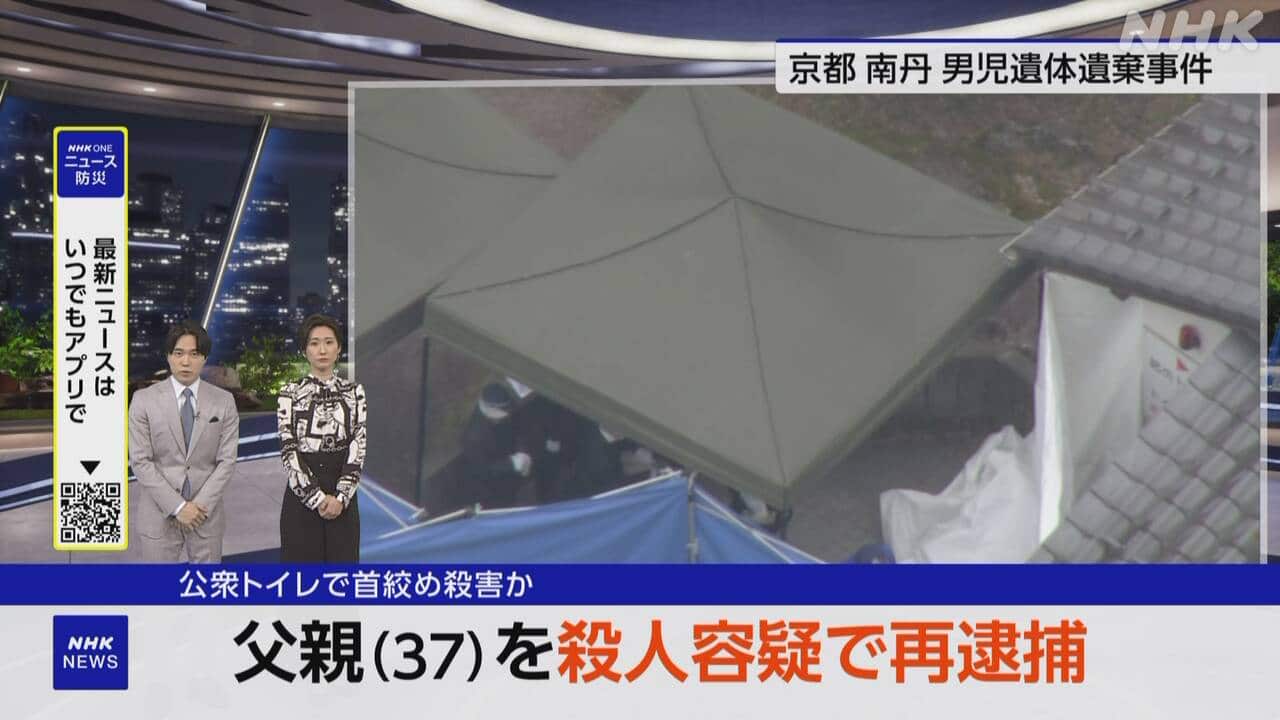
京都府南丹市で小学生の男子児童が遺体で見つかった事件で、警察は37歳の父親が、市内の公衆トイレで首を絞めて児童を殺害したとして殺人の疑いで再逮捕しました。
この事件では、4月13日に小学生の安達結希さん(当時11)が南丹市内の山林で死亡しているのが見つかり、同居する父親の安達容疑者が息子の遺体を遺棄したとして逮捕されていました。
警察は死亡したいきさつについても父親が事情を知っているとみて捜査を進め、結希さんが行方不明になったとされたことし3月23日の朝に、市内の公衆トイレで首を絞めて殺害した疑いがあることがわかったとして、6日午後、殺人の疑いで再逮捕しました。
調べによりますと、この日、自宅で朝食をとったあと小学校に向かう結希さんを父親が車で送りましたが、小学校付近では降ろさないまま市内の公衆トイレまで車で移動したとみられるということです。
警察は、自宅を出てから事件に至るまで車内でどのようなやりとりがあったのかなど、詳しく調べることにしています。
これまでに見つかったリュックサックなどの遺留品についても父親はみずからが投棄したと認めているということです。
この日は、登校の時間帯に父親が結希さんを車で小学校に送って行ったことがわかっていますが、その後の捜査で学校では降ろさずに殺害現場とされるトイレに向かったということです。
その後、翌日の3月24日にかけて▽自宅近くの山中▽通学用のリュックサックがのちに見つかった場所近く▽同じくスニーカーが見つかった別の山林に、順に遺体を動かして遺棄したとみられるということです。
さらに、3月24日の数日後には、4月13日に遺体が見つかった山林に移動させて遺棄した疑いがあるということです。
また、父親は「リュックサックや靴を捨てた」と供述し、これまでの捜索で見つかった遺留品についてみずからが投棄したと認めているということです。
通学用のリュックサックは3月29日に、スニーカーは4月12日にそれぞれ見つかっています。
この事件では、4月13日に小学生の安達結希さん(当時11)が南丹市内の山林で死亡しているのが見つかり、同居する父親の安達容疑者が息子の遺体を遺棄したとして逮捕されていました。
警察は死亡したいきさつについても父親が事情を知っているとみて捜査を進め、結希さんが行方不明になったとされたことし3月23日の朝に、市内の公衆トイレで首を絞めて殺害した疑いがあることがわかったとして、6日午後、殺人の疑いで再逮捕しました。
調べによりますと、この日、自宅で朝食をとったあと小学校に向かう結希さんを父親が車で送りましたが、小学校付近では降ろさないまま市内の公衆トイレまで車で移動したとみられるということです。
警察は、自宅を出てから事件に至るまで車内でどのようなやりとりがあったのかなど、詳しく調べることにしています。
これまでに見つかったリュックサックなどの遺留品についても父親はみずからが投棄したと認めているということです。
この日は、登校の時間帯に父親が結希さんを車で小学校に送って行ったことがわかっていますが、その後の捜査で学校では降ろさずに殺害現場とされるトイレに向かったということです。
その後、翌日の3月24日にかけて▽自宅近くの山中▽通学用のリュックサックがのちに見つかった場所近く▽同じくスニーカーが見つかった別の山林に、順に遺体を動かして遺棄したとみられるということです。
さらに、3月24日の数日後には、4月13日に遺体が見つかった山林に移動させて遺棄した疑いがあるということです。
また、父親は「リュックサックや靴を捨てた」と供述し、これまでの捜索で見つかった遺留品についてみずからが投棄したと認めているということです。
通学用のリュックサックは3月29日に、スニーカーは4月12日にそれぞれ見つかっています。
Vocabulary
General
Proper noun
JLPT N2
JLPT N1
| # | 言葉 | 意味 |
|---|---|---|
| 8 | 見つかる | みつかる (見つかる) : to be found; to be discovered |
| 7 | 父親 | ちちおや (父親) : father |
| 4 | 遺体 | いたい (遺体) : corpse; remains |
| 4 | 疑い | うたがい (疑い) : doubt; question; uncertainty; skepticism; scepticism; suspicion; distrust |
| 4 | 結希 | ゆうい (結希) : Yuui (fem) |
| 3 | 事件 | じけん (事件) : event; affair; incident; case; plot; trouble; scandal |
| 3 | 公衆トイレ | こうしゅうトイレ (公衆トイレ) : public lavatory; public restroom |
| 3 | 殺害 | さつがい (殺害) : killing; murder |
| 3 | 山林 | さんりん (山林) : 1. mountain forest; forest on a mountain; montane forest 2. mountains and forest |
| 3 | 遺棄 | いき (遺棄) : abandonment; desertion |
| 3 | 自宅 | じたく (自宅) : one's home; one's house |
| 2 | 小学生 | しょうがくせい (小学生) : elementary school student; primary school student; grade school student |
| 2 | 児童 | じどう (児童) : children; juvenile |
| 2 | 絞める | しめる (絞める) : to strangle; to constrict |
| 2 | 殺人 | さつじん (殺人) : murder; homicide; manslaughter |
| 2 | 再逮捕 | さいたいほ (再逮捕) : rearrest; recapture |
| 2 | 安達 | あたち (安達) : Atachi (unclass) |
| 2 | 死亡 | しぼう (死亡) : 1. death; mortality 2. to die; to pass away |
| 2 | 捜査 | そうさ (捜査) : search (esp. in criminal investigations); investigation; inquiry; enquiry |
| 2 | わかる | わかる (分かる) : 1. to understand; to comprehend; to grasp; to see; to get; to follow 2. to become clear; to be known; to be discovered; to be realized; to be realised; to be found out |
| 2 | 送る | おくる (送る) : 1. to send (a thing); to dispatch; to despatch; to transmit 2. to take or escort (a person somewhere); to see off (a person) |
| 2 | 降ろす | おろす (下ろす) : 1. to take down; to bring down; to lower (a hand, flag, shutter, etc.); to drop (an anchor, curtain, etc.); to let down (hair); to launch (a boat) 2. to drop off (a passenger); to let off; to unload (goods, a truck, etc.); to offload; to discharge |
| 2 | 移動 | いどう (移動) : 1. movement; transfer; migration; removal; travel 2. mobile; moving; traveling; travelling; roving |
| 2 | 遺留品 | いりゅうひん (遺留品) : lost articles |
| 2 | みずから | みずから (自ら) : 1. oneself 2. oneself; for oneself; personally; in person |
| 2 | 投棄 | とうき (投棄) : abandonment; giving up; throwing away; disposal; dumping |
| 2 | 認める | したためる (認める) : 1. to write (e.g. a letter); to draw up (a document); to take down (e.g. notes) 2. to have (lunch, dinner, etc.); to eat |
| 2 | 通学 | つうがく (通学) : commuting to school; school commute |
| 1 | 京都府 | きょうとふ (京都府) : Kyoto Prefecture |
| 1 | 男子 | だんし (男子) : youth; young man |
| 1 | 当時 | とうじ (当時) : at that time; in those days |
| 1 | 同居 | どうきょ (同居) : coexistence; living together |
| 1 | 容疑者 | ようぎしゃ (容疑者) : suspect (person) |
| 1 | 逮捕 | たいほ (逮捕) : arrest; apprehension; capture |
| 1 | いきさつ | いきさつ (経緯) : 1. details; particulars; whole story; sequence of events; chronology; circumstances; how it started; how things got this way 2. longitude and latitude |
| 1 | 事情 | じじょう (事情) : circumstances; conditions; situation; reasons; state of affairs |
| 1 | 知る | しる (知る) : 1. to be aware of; to know; to be conscious of; to cognize; to cognise 2. to notice; to feel |
| 1 | 進める | すすめる (進める) : 1. to advance; to move forward; to put (a clock, watch) forward 2. to carry forward (plans, work, etc.); to proceed with; to make progress in; to further; to advance; to hasten; to speed up |
| 1 | 行方不明 | ゆくえふめい (行方不明) : missing (of a person); lost; unaccounted for; whereabouts unknown |
| 1 | 調べ | しらべ (調べ) : 1. investigation; inspection; examination 2. tune; note; melody |
| 1 | 朝食 | ちょうしょく (朝食) : breakfast |
| 1 | 付近 | ふきん (付近) : 1. neighborhood; vicinity; environs; district 2. approaching |
| 1 | まま | うば (乳母) : wet nurse; nursing mother |
| 1 | 至る | いたる (至る) : 1. to arrive at (e.g. a decision); to reach (a stage); to attain 2. to lead to (a place); to get to |
| 1 | 車内 | しゃない (車内) : inside a car (train, bus, etc.) |
| 1 | やりとり | やりとり (やり取り) : giving and taking; exchange (of letters); arguing back and forth; (conversational) exchange |
| 1 | 詳しく | くわしく (詳しく) : in detail; fully; minutely; at length |
| 1 | 登校 | とうこう (登校) : attendance (at school); going to school |
| 1 | 時間帯 | じかんたい (時間帯) : period of time; time slot; time zone |
| 1 | その後 | そのあと (その後) : after that; afterwards; thereafter |
| 1 | 現場 | げんば (現場) : 1. actual spot; scene; scene of the crime; site; location; setting 2. shop floor; factory floor; (on) site |
| 1 | 向かう | むかう (向かう) : 1. to face 2. to go towards; to head towards |
| 1 | 翌日 | よくじつ (翌日) : next day |
| 1 | 山中 | さんちゅう (山中) : in the mountains; among the mountains |
| 1 | のち | のち (後) : 1. later; afterwards 2. future |
| 1 | 同じく | おなじく (同じく) : similarly; same (idea); same (name) |
| 1 | 順 | じゅん (順) : 1. order; turn; sorting 2. obedient; docile; submissive; meek |
| 1 | 動かす | うごかす (動かす) : 1. to move; to shift; to stir; to budge; to change position 2. to inspire; to rouse; to move (e.g. feeling); to influence |
| 1 | 捨てる | すてる (捨てる) : 1. to throw away; to cast away; to dump; to discard 2. to abandon; to desert; to leave |
| 1 | 供述 | きょうじゅつ (供述) : affidavit; deposition; testimony |
| 1 | 捜索 | そうさく (捜索) : 1. search (esp. for someone or something missing); manhunt 2. legally authorized search of a person, building, etc. |