バーレーン 謎の文明「ディルムン」古墳群で最古の王の墓発見
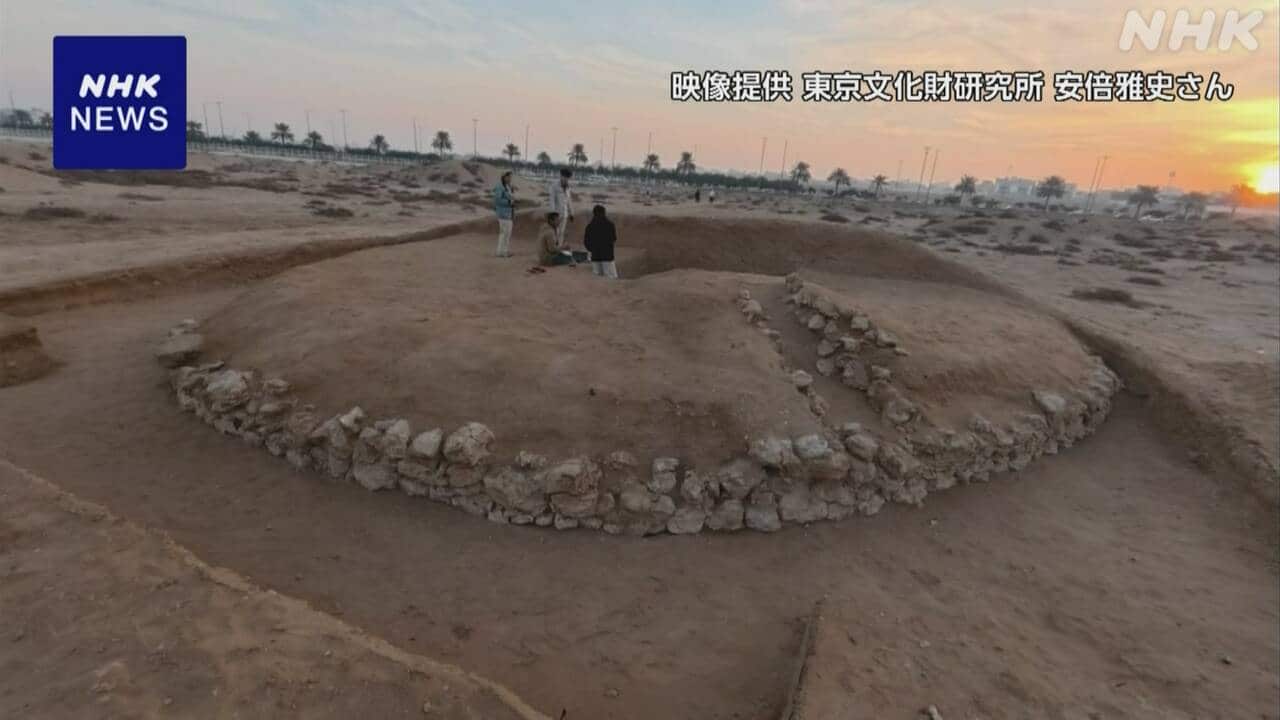
中東・バーレーンでおよそ4000年前に栄えた謎の文明「ディルムン」の古墳群で、最も古い時期のものとみられる王の墓を日本の研究グループが発見しました。埋葬された王のものとみられる骨も見つかり、研究グループは今後、DNA分析を行う予定です。
東京文化財研究所などのグループは、ことし1月から2月にかけて、バーレーンの古代文明ディルムンの、世界遺産に登録されているアアリ古墳群で発掘調査を行いました。
その結果、中央にH型に石が積み上げられた長さ4メートル20センチ、幅1メートルほどの構造物と、外側から中心部につながる幅およそ60センチの通路が発掘され、その構造から王の墓だとわかったということです。
また、墓からは埋葬された王のものとみられる大たい骨など複数の骨のほか、大量の副葬品の土器や貝殻、青銅器のかけらなどが見つかりました。
副葬品の特徴などから墓は4000年以上前のもので、これまでにディルムン文明で見つかった王の墓の中で最も古く、文明が始まった最初期のころのものと考えられるということです。
研究グループは今後、見つかった骨のDNAを分析する予定で、埋葬されている人物の目や髪の色などの特徴のほか、どの地域に起源があるかなどがわかる可能性もあるとしています。
調査を行った東京文化財研究所の安倍雅史 保存計画研究室長は、「ディルムン文明はまだ多くが謎だらけだが、調査開始から10年以上を経て最古の王墓を発掘するという国際的な成果をあげられた。骨の保存状態がよいのでDNAを分析することでさらに多くの情報が判明するのではないか」と話していました。
東京文化財研究所の安倍雅史さんはバーレーンへの攻撃があったおよそ2週間前の2月中旬まで発掘調査を行っていたといいます。
安倍さんはその前に帰国することができましたが、一緒に発掘調査を行った現地の人たちには大きな影響が出ていて、連絡を取り合っているものの、不安を募らせています。
安倍さんは「ボランティアで発掘に協力してくれたバーレーンの大学生の1人は、攻撃を受けたアメリカ軍の建物の近くに自宅があるため、避難所で生活を続けていて、とても心配だ」と話していました。
中東地域は、メソポタミア文明やペルシャ帝国のものなど、数多くの遺跡があることで知られ、古くから欧米や日本の調査隊による発掘調査が行われてきました。
現在の中東全体での発掘調査の状況について安倍さんは「イランでは2023年から日本も含めたすべての海外の調査チームの入国を禁止している。クウェートでは現在もスロバキアのチームが発掘調査を続けているが、それ以外の多くのチームは中東での調査を中止しているとみられ、地域全体の考古学研究に深刻な影響が出ている」と懸念を示しました。
安倍さんは中東各地の考古学者たちと親交があるといい、「各地にいる友人とその家族にまずは安全に過ごしてほしい。イランでは実際に世界遺産のゴレスタン宮殿が被災したし、バーレーンでも切迫した状況が続いている。考古学者たちは文化財・文化遺産を守る仕事をしているので、被害が出ないことを祈っているし、1日も早く落ち着いてほしい」と話していました。
東京文化財研究所などのグループは、ことし1月から2月にかけて、バーレーンの古代文明ディルムンの、世界遺産に登録されているアアリ古墳群で発掘調査を行いました。
その結果、中央にH型に石が積み上げられた長さ4メートル20センチ、幅1メートルほどの構造物と、外側から中心部につながる幅およそ60センチの通路が発掘され、その構造から王の墓だとわかったということです。
また、墓からは埋葬された王のものとみられる大たい骨など複数の骨のほか、大量の副葬品の土器や貝殻、青銅器のかけらなどが見つかりました。
副葬品の特徴などから墓は4000年以上前のもので、これまでにディルムン文明で見つかった王の墓の中で最も古く、文明が始まった最初期のころのものと考えられるということです。
研究グループは今後、見つかった骨のDNAを分析する予定で、埋葬されている人物の目や髪の色などの特徴のほか、どの地域に起源があるかなどがわかる可能性もあるとしています。
調査を行った東京文化財研究所の安倍雅史 保存計画研究室長は、「ディルムン文明はまだ多くが謎だらけだが、調査開始から10年以上を経て最古の王墓を発掘するという国際的な成果をあげられた。骨の保存状態がよいのでDNAを分析することでさらに多くの情報が判明するのではないか」と話していました。
東京文化財研究所の安倍雅史さんはバーレーンへの攻撃があったおよそ2週間前の2月中旬まで発掘調査を行っていたといいます。
安倍さんはその前に帰国することができましたが、一緒に発掘調査を行った現地の人たちには大きな影響が出ていて、連絡を取り合っているものの、不安を募らせています。
安倍さんは「ボランティアで発掘に協力してくれたバーレーンの大学生の1人は、攻撃を受けたアメリカ軍の建物の近くに自宅があるため、避難所で生活を続けていて、とても心配だ」と話していました。
中東地域は、メソポタミア文明やペルシャ帝国のものなど、数多くの遺跡があることで知られ、古くから欧米や日本の調査隊による発掘調査が行われてきました。
現在の中東全体での発掘調査の状況について安倍さんは「イランでは2023年から日本も含めたすべての海外の調査チームの入国を禁止している。クウェートでは現在もスロバキアのチームが発掘調査を続けているが、それ以外の多くのチームは中東での調査を中止しているとみられ、地域全体の考古学研究に深刻な影響が出ている」と懸念を示しました。
安倍さんは中東各地の考古学者たちと親交があるといい、「各地にいる友人とその家族にまずは安全に過ごしてほしい。イランでは実際に世界遺産のゴレスタン宮殿が被災したし、バーレーンでも切迫した状況が続いている。考古学者たちは文化財・文化遺産を守る仕事をしているので、被害が出ないことを祈っているし、1日も早く落ち着いてほしい」と話していました。
Vocabulary
General
Proper noun
JLPT N2
JLPT N1
| # | 言葉 | 意味 |
|---|---|---|
| 6 | 発掘調査 | はっくつちょうさ (発掘調査) : excavation (usu. archeological); dig |
| 6 | 安倍 | あばい (安倍) : Abai (surname) |
| 5 | 中東 | ちゅうとう (中東) : Middle East |
| 5 | 王 | おう (王) : 1. king; ruler; sovereign; monarch 2. tycoon; magnate; champion; master |
| 5 | 墓 | はか (墓) : gravesite; tomb |
| 5 | 骨 | こつ (骨) : 1. knack; skill; trick; secret; know-how; the ropes; hang 2. bone; skeleton |
| 5 | 調査 | ちょうさ (調査) : investigation; examination; inquiry; enquiry; survey |
| 4 | 文明 | ぶんめい (文明) : 1. civilization; civilisation; culture 2. Bunmei era (1469.4.28-1487.7.20) |
| 4 | 見つかる | みつかる (見つかる) : to be found; to be discovered |
| 4 | さん | さん : 1. Mr.; Mrs.; Miss; Ms.; -san 2. politeness marker |
| 3 | 研究グループ | けんきゅうグループ (研究グループ) : research group |
| 3 | 埋葬 | まいそう (埋葬) : burial |
| 3 | 分析 | ぶんせき (分析) : analysis |
| 3 | 東京 | とうきょう (東京) : Tokyo |
| 3 | 文化財研究所 | ぶんかざいけんきゅうじょ (文化財研究所) : National Research Institute for Cultural Properties (organization) |
| 3 | 発掘 | はっくつ (発掘) : 1. excavation; exhumation 2. discovery (e.g. new talent) |
| 3 | 地域 | ちいき (地域) : area; region |
| 3 | 考古学 | こうこがく (考古学) : archaeology; archeology |
| 2 | 謎 | なぞ (謎) : 1. riddle; puzzle; enigma; mystery 2. enigmatic; mysterious |
| 2 | 最も | もっとも (最も) : most; extremely |
| 2 | 今後 | こんご (今後) : from now on; hereafter |
| 2 | 世界遺産 | せかいいさん (世界遺産) : World Heritage (cultural, natural, etc.); World Cultural and Natural Heritage (UNESCO) |
| 2 | 幅 | はば (幅) : 1. width; breadth 2. freedom (e.g. of thought); latitude |
| 2 | 副葬品 | ふくそうひん (副葬品) : grave goods; burial accessories |
| 2 | 特徴 | とくちょう (特徴) : feature; trait; characteristic; peculiarity; distinction |
| 2 | 古く | ふるく (古く) : 1. anciently; formerly 2. old times; a long time ago |
| 2 | 雅史 | まさし (雅史) : Masashi (given) |
| 2 | 保存 | ほぞん (保存) : 1. preservation; conservation; storage; maintenance 2. saving (e.g. to disk) |
| 2 | 攻撃 | こうげき (攻撃) : 1. attack; assault; raid; onslaught; offensive 2. criticism; censure; denunciation; condemnation |
| 2 | 影響 | えいきょう (影響) : 1. influence; effect 2. to influence; to affect; to have an influence on; to impact; to have an effect on |
| 2 | 現在 | げんざい (現在) : now; current; present; present time; as of |
| 2 | 全体 | ぜんたい (全体) : whole; entirety; whatever (is the matter) |
| 2 | 状況 | じょうきょう (状況) : state of affairs (around you); situation; circumstances |
| 2 | 各地 | かくち (各地) : every place; various places |
| 1 | 栄える | さかえる (栄える) : to prosper; to flourish |
| 1 | 時期 | じき (時期) : time; season; period; phase; stage |
| 1 | 発見 | はっけん (発見) : discovery; detection; finding |
| 1 | 古代文明 | こだいぶんめい (古代文明) : ancient civilization; ancient civilisation |
| 1 | 登録 | とうろく (登録) : registration; accession; register; entry; record |
| 1 | 結果 | けっか (結果) : 1. result; consequence; outcome; effect 2. coming to fruition; bearing fruit |
| 1 | 中央 | ちゅうおう (中央) : 1. centre; center; middle; heart 2. metropolis; capital city; central government |
| 1 | 積み上げる | つみあげる (積み上げる) : 1. to pile up; to make a heap; to lay (e.g. bricks) 2. to acquire (e.g. experience); to build (a reputation) |
| 1 | 長さ | ながさ (長さ) : length |
| 1 | 構造物 | こうぞうぶつ (構造物) : structure |
| 1 | 外側 | そとがわ (外側) : exterior; outside; outer; external; lateral |
| 1 | 中心部 | ちゅうしんぶ (中心部) : central part; heart (of a city) |
| 1 | つながる | つながる (繋がる) : 1. to be tied together; to be connected to; to be linked to 2. to lead to; to be related to |
| 1 | 通路 | つうろ (通路) : passage; pathway; roadway; avenue; aisle |
| 1 | 構造 | こうぞう (構造) : structure; construction; makeup; framework; organization; pattern |
| 1 | わかる | わかる (分かる) : 1. to understand; to comprehend; to grasp; to see; to get; to follow 2. to become clear; to be known; to be discovered; to be realized; to be realised; to be found out |
| 1 | 複数 | ふくすう (複数) : plural; multiple; several |
| 1 | 大量 | たいりょう (大量) : large quantity; massive (quantity); mass (e.g. mass production, mass transit, mass destruction) |
| 1 | 土器 | どき (土器) : 1. earthenware 2. unglazed (bisque-fired) earthenware |
| 1 | 貝殻 | かいがら (貝殻) : seashell; shell |
| 1 | 青銅器 | せいどうき (青銅器) : bronze ware |
| 1 | かけら | かけら (欠片) : 1. fragment; broken piece; chip; splinter; shard 2. ounce (of truth, conscience, etc.); trace; shred; scrap |
| 1 | 始まる | はじまる (始まる) : 1. to begin; to start; to commence 2. to happen (again); to begin (anew) |
| 1 | 最 | さい (最) : 1. the most; the extreme 2. prime; conspicuous |
| 1 | 初期 | しょき (初期) : 1. early (days); initial stage 2. initial |
| 1 | 考える | かんがえる (考える) : 1. to think (about, of); to think over; to ponder; to contemplate; to reflect (on); to meditate (on) 2. to consider; to bear in mind; to allow for; to take into consideration |
| 1 | 人物 | じんぶつ (人物) : 1. person; character; figure; personage; man; woman 2. one's character; one's personality |
| 1 | 起源 | きげん (起源) : origin; beginning; source; rise |
| 1 | 可能性 | かのうせい (可能性) : potentiality; likelihood; possibility; availability |
| 1 | だらけ | だらけ : 1. full of (e.g. mistakes); riddled with 2. covered all over with (blood, mud, etc.) |
| 1 | 開始 | かいし (開始) : start; commencement; beginning; initiation |
| 1 | 経る | へる (経る) : 1. to pass; to elapse; to go by 2. to pass through; to go through |
| 1 | 最古 | さいこ (最古) : the oldest |
| 1 | 王墓 | おおはか (王墓) : Oohaka (place) |
| 1 | 国際的 | こくさいてき (国際的) : international |
| 1 | 成果 | せいか (成果) : (good) result; outcome; fruits (of one's labors); product; accomplishment |
| 1 | 状態 | じょうたい (状態) : state; condition; situation; appearance; circumstances |
| 1 | 情報 | じょうほう (情報) : 1. information; news; intelligence; advices 2. information; data contained in characters, signals, code, etc. |
| 1 | 判明 | はんめい (判明) : establishing; proving; ascertaining; identifying; confirming |
| 1 | 中旬 | ちゅうじゅん (中旬) : middle of a month; second third of a month; 11th to 20th day of a month |
| 1 | 帰国 | きこく (帰国) : return to one's country |
| 1 | 現地 | げんち (現地) : actual place; local; on-site |
| 1 | 取り合う | とりあう (取り合う) : 1. to join (hands); to take (each other's hands) 2. to scramble for; to struggle for; to fight for |
| 1 | 不安 | ふあん (不安) : anxiety; uneasiness; worry; apprehension; fear; insecurity; suspense |
| 1 | 募る | つのる (募る) : 1. to become stronger; to grow in intensity; to grow violent; to become worse 2. to invite contributions, etc.; to solicit help, participation, etc.; to recruit (e.g. soldiers) |
| 1 | 協力 | きょうりょく (協力) : cooperation; collaboration |
| 1 | アメリカ軍 | アメリカぐん (アメリカ軍) : U.S. forces; American military |
| 1 | 自宅 | じたく (自宅) : one's home; one's house |
| 1 | 避難 | ひなん (避難) : taking refuge; finding shelter; evacuation; escape; seeking safe haven |
| 1 | メソポタミア文明 | メソポタミアぶんめい (メソポタミア文明) : Mesopotamian civilization (civilisation) |
| 1 | 数多く | かずおおく (数多く) : in great numbers |
| 1 | 遺跡 | いせき (遺跡) : historic ruins (remains, relics); archeological site |
| 1 | 知る | しる (知る) : 1. to be aware of; to know; to be conscious of; to cognize; to cognise 2. to notice; to feel |
| 1 | 欧米 | おうべい (欧米) : Europe and America; the West |
| 1 | 隊 | たい (隊) : 1. party; group; crew; team; body 2. company (of troops); corps; unit; squad |
| 1 | 含める | ふくめる (含める) : 1. to include (in a group or scope) 2. to instruct; to make one understand |
| 1 | 海外 | かいがい (海外) : foreign; abroad; overseas |
| 1 | 入国 | にゅうこく (入国) : entry into a country |
| 1 | 禁止 | きんし (禁止) : prohibition; inhibition; ban |
| 1 | 中止 | ちゅうし (中止) : suspension; stoppage; discontinuance; interruption |
| 1 | 深刻 | しんこく (深刻) : serious; severe; grave; acute |
| 1 | 懸念 | けねん (懸念) : worry; fear; anxiety; concern |
| 1 | 示す | しめす (示す) : 1. to (take out and) show; to demonstrate; to tell; to exemplify; to make apparent 2. to point out (finger, clock hand, needle, etc.) |
| 1 | 親交 | しんこう (親交) : intimacy; friendship; friendly relations |
| 1 | 友人 | ゆうじん (友人) : friend |
| 1 | 過ごす | すごす (過ごす) : 1. to pass (time); to spend 2. to overdo (esp. of one's alcohol consumption); to drink (alcohol) |
| 1 | 実際 | じっさい (実際) : 1. reality; actuality; truth; fact; actual conditions 2. practice (as opposed to theory) |
| 1 | 宮殿 | きゅうでん (宮殿) : palace |
| 1 | 被災 | ひさい (被災) : being a victim of (some disaster); suffering from |
| 1 | 切迫 | せっぱく (切迫) : pressure; urgency; tension; imminence; acuteness |
| 1 | 文化財 | ぶんかざい (文化財) : cultural assets; cultural property |
| 1 | 文化遺産 | ぶんかいさん (文化遺産) : cultural heritage |
| 1 | 守る | まもる (守る) : 1. to protect; to guard; to defend 2. to keep (i.e. a promise); to abide (by the rules); to observe; to obey; to follow |
| 1 | 被害 | ひがい (被害) : (suffering) damage; injury; harm |
| 1 | 祈る | いのる (祈る) : to pray; to wish |
| 1 | 早く | はやく (早く) : 1. early; soon 2. quickly; swiftly; rapidly; fast |
| 1 | 落ち着く | おちつく (落ち着く) : 1. to calm down; to compose oneself; to regain presence of mind 2. to calm down; to settle down; to die down; to become stable; to abate |