なぜ、いまCOMOLIなのか──野口強、INO hidefumi、後藤剛範、河村海沙が披露!
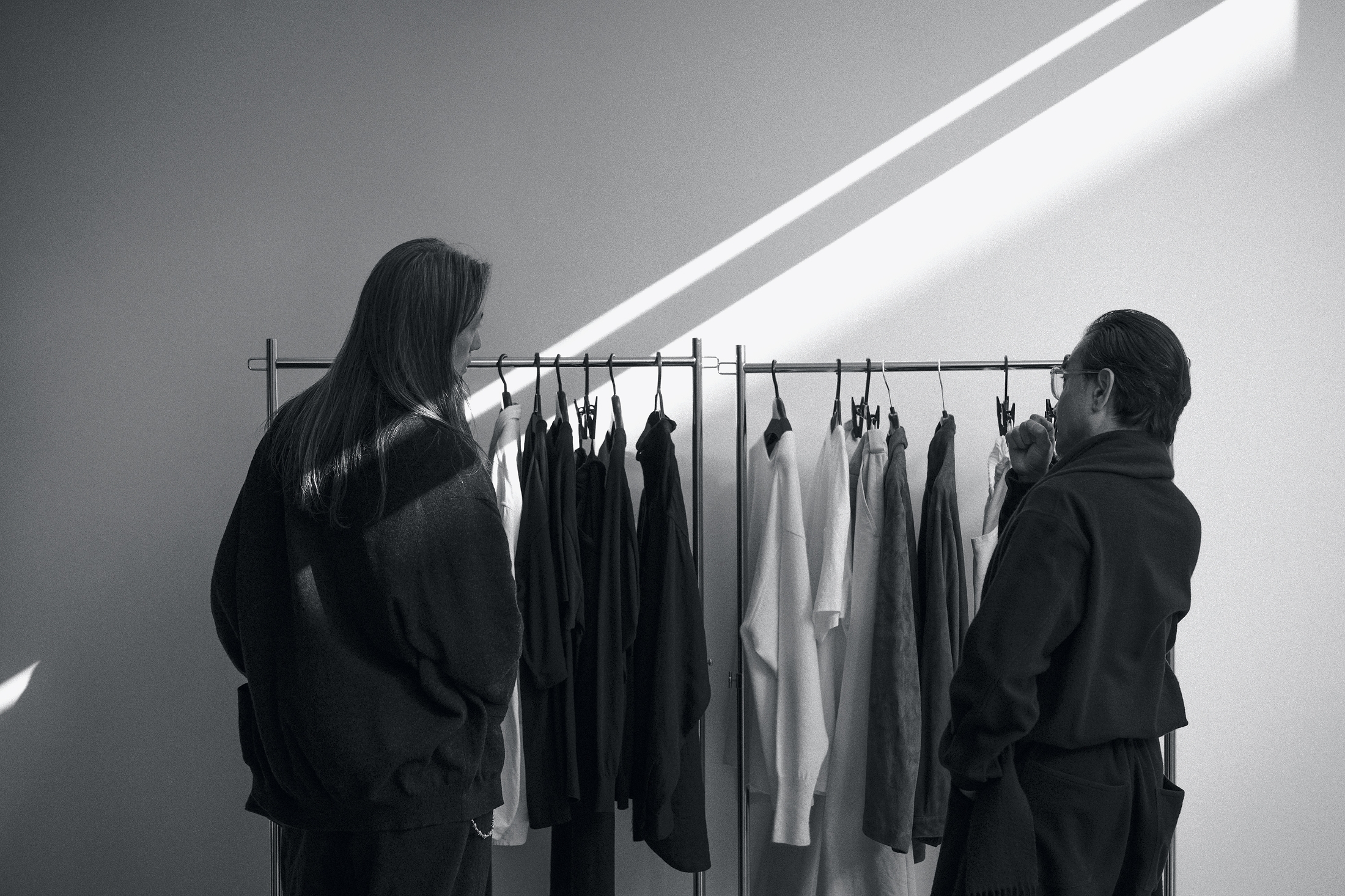
装飾や派手なデザインで主張するのではなく、削ぎ落とされた佇まいとこだわりの素材使いで、静かでありながらも独創的な力強さを放つコモリ(COMOLI)。成熟した大人の色気とスタイルを備えた4人が、貫禄たっぷりに着こなす。
目立たず、埋もれず、佇まいを整える。デザイナーの小森啓二郎とスタイリストの喜多尾祥之が語る装いの輪郭と在り方の現在地とは。 喜多尾祥之(以下、喜多尾) 10代でファッションに目覚めて以来、アメカジ、フレンチアイビー、DCブランド、ロンドンやパリのモードなど、好奇心と衝動に導かれるように、さまざまなスタイルを経験してきました。スタイリストとして仕事で服に関わるようになってからも、時代の変遷とともに多くのスタイルに接してきたわけですが、年齢を重ねるにつれ、体型や体調の変化に向き合う必要が出てきました。そうなると、流行りの服を無理して着るよりも、まずは心地よさを担保した上で、どこまで遊べるかということを気にするようになる。スタイリングの「余白」をどう作っていくかを考え始めた時に、コモリの服に触れ、「あ、これは今の自分にすごくフィットするな」と、バランスの良さを感じたのが僕の最初の印象でした。 小森啓二郎(以下、小森) 自分では所謂ファッションデザイナーという感覚はあまり無くて、今の時代にいい服と言われるものも、もとを辿れば、だいたい過去に誰かが作ったものの延長線上にあると思っていて。「もう少しこうだったらいいのに」とか「この素材がいいんじゃないか」とか「こっちのパターンでやってみたらどうだろう」とか、そういうことを考えて服を作っているだけです。服をデザインするというより、自分の中では「整えている」感覚のほうが強いです。 喜多尾 コレクションを継続して拝見してきた一人として、合点がいきます。いいと思ったアイテムが次のシーズンで絶妙にアップデートされていたり、リピートされているアイテムもあったりして。そのたびに「次は何を見せてくれるんだろう」という期待が自然と生まれてきていました。 小森 例えば自分の生活を顧みたときに、旅行や出張に一着持っていくなら、ダーク系のカシミヤを選びます。軽くて暖かくて、どんな場所にも着て行けるし、スーツケースに丸めて入れてもちゃんと元の形に戻る。そういう意味で、日常生活のなかの道具のような感覚で服を作っている部分があって。毎シーズン、「新しいものを作ってやるぞ」と思っているわけでもなく。実は1月にパリでショーをしようと考えたこともあるのですが、そこに向けて逆算すると8月に真冬のことを考えなくてはいけない。それは身体的にも感覚的にもどうしても自分には難しいんです。昼ご飯を食べている時に「夜ご飯は何が食べたい?」と聞かれて、急に夜ご飯のことを考えさせられるような感じになってしまう。 喜多尾 小森さんのなかでは、リアリティを服にどう落とし込むかが絶対なんでしょうね。服を着るモチベーションって、ある種、欲求を満たす行為です。生活の中で「こうだと助かる」とか「これがあると気持ちがアガる」とかいう実感がないと、気持ち的にもフィットしない。 小森 人を感動させたい、驚かせたいという欲求はあるので、ショーに興味がないわけではないんです。音楽のライブやスポーツのように、人が躍動する場面を生で見ることがいちばん興奮する体験でもありますから。服でそれを表現するとランウェイショーになるだろうとは思います。ただ、東京で生活している今の自分には全くタイミングが合致してないんです。そこは自分の中でもずっと問い続けているところです。 喜多尾 今はなんでもスマホで見て体験したような気になるけれど、服を着るという行為は実際に袖を通すものだから、すごくアナログな体験ですよね。なかでも素材は身体でダイレクトに感じやすいし、時間の経過や温度帯によって、一日のなかで心地よさが変化していくのも当たり前のこと。コモリの服は、そういう繊細さにハマる服でもあると思います。 ◼︎スタイルと雰囲気 小森 素材でいえば、湿度の問題って意外なほどに重要です。洋服はそもそも湿度の低い国の人たちが作ったものがベースにある。例えば英国の有名なシャツ生地にしても、織りの密度が詰まりすぎて、高温多湿の日本だと呼吸できなくて、夏に着るのはけっこう辛い。素材にこだわるというよりも、単に着て心地いいかどうかという、必然性のほうを大事にはしています。 喜多尾 そこは僕も同意します。何を着るかを考える時に、僕は温度や湿度を読むことをすごく大事にするタイプです。それが欠落すると、なんとなく調子が悪くなるというか、まずは快適であるということが担保されていないと、服は楽しめない。ことさら今の若い人たちは、世代的に様々なことを我慢しないぶん、快適であるということに対して、より敏感な気がします。 小森 着心地ももちろん大事ですけれど、服を着たときに、その人の在り方が周りからどう見えるかという部分も、いつも気にしています。どこか別の土地に行った時に、着ているものでわざわざ浮きたくない。その土地に住んでいる人のように、自然に馴染むというのが理想です。そう考えていくと、スーツケースに入れていくのは黒と白系が基本。日差しが強ければ白T、夜は黒を多めにと、その2色の配分でだいたい事足りる。例えば冬のパリにダブルのカシミヤコートを着て行けば、高級街でも気後れしないし、蚤の市にも行けるし、レストランでも対応が丁寧になる。いかに最小限でいられるかということも、常に頭のなかにあります。 喜多尾 コモリは黒とか白がベースにあって、たまにネイビーが入ってくるでしょう。僕はそのなかでダークネイビーがすごく好き。でもネイビーが多くなってしまうと、それはそれでまた雰囲気が変わっちゃいますよね。 小森 自分の好きなネイビーは再現度が難しいんです。染屋さん泣かせというか、ネイビーの色味の塩梅を見誤ると全く着たくない服になってしまう。結局、デザインにしても、なにか新しいものをやらなきゃと思う時もあるんですが、新しいデザインができたと思っても、「じゃあそれを着たいのか?」といったらそれはまた話が別で。前のシーズンと何も変わっていないのもつまらないし、かといってやりすぎると気持ち悪いし。毎日がそんな葛藤の連続です。 喜多尾 コモリの服には、男くささと同時に「照れ」のようなものがあると僕は感じています。キメすぎず、ハズしを許容しながら、ほんのりと色気が滲むような。1980〜90年代のヨウジヤマモトがコレクションで見せていた男性像の現代版ともいえる存在に見えます。 小森 見慣れない服を作りたいわけじゃなくて、最終的には、着る人が好きなように味付けしてくださいという感覚です。服を着て、その人が置かれた場所、時間、動きなどで生じるシワなどを含めて見た時に、スタイルが自然と立ち上がるような。そんな想像をしながら作っています。そこまでいって初めて、服をデザインするという行為が完成するんじゃないかと思うので。 喜多尾 「スタイル」や「雰囲気」とはまさにそういうことなんでしょうね。うまく着崩すということは、雰囲気を作ると同義です。デザイナーってやっぱり魔法使いみたいですよね。 小森 先日、新宿のゴールデン街で飲んだあとに、パーク ハイアット 東京のバーに行く機会がありました。自分の服はどちらの場所にも馴染むんです。あくまで体感ですけれど、自分が行きたい場所であれば、どこにでも馴染む服を作りたいという思いは昔から変わらないです。 喜多尾 そんな両極端の場所にちゃんとハマるというのが実にコモリらしいですよね。それが今の新宿だというのもすごくいい(笑)。 小森 そうなんです。ゴールデン街に行くと、なぜかホッとするんです(笑)。 小森啓二郎/KEIJIRO KOMORI 1976年生まれ、東京都出身。大手セレクトショップでデザイナーとして勤務後、2011年より「COMOLI」を始動。独自の審美眼とスタイルが幅広い共感を呼ぶ。www.comoli.jp 喜多尾祥之/YOSHIYUKI KITAO 1965年生まれ、東京都出身。1980年代よりスタイリストとして活躍。雑誌や広告、俳優などのビジュアルディレクションを手がける。本特集ページのスタイリングを担当。 PHOTOGRAPHS BY TARO MIZUTANI STYLED BY YOSHIYUKI KITAO HAIR STYLED & MAKE-UP BY KENICHI YAGUCHI WORDS BY SATOKO HATAKEYAMA
目立たず、埋もれず、佇まいを整える。デザイナーの小森啓二郎とスタイリストの喜多尾祥之が語る装いの輪郭と在り方の現在地とは。 喜多尾祥之(以下、喜多尾) 10代でファッションに目覚めて以来、アメカジ、フレンチアイビー、DCブランド、ロンドンやパリのモードなど、好奇心と衝動に導かれるように、さまざまなスタイルを経験してきました。スタイリストとして仕事で服に関わるようになってからも、時代の変遷とともに多くのスタイルに接してきたわけですが、年齢を重ねるにつれ、体型や体調の変化に向き合う必要が出てきました。そうなると、流行りの服を無理して着るよりも、まずは心地よさを担保した上で、どこまで遊べるかということを気にするようになる。スタイリングの「余白」をどう作っていくかを考え始めた時に、コモリの服に触れ、「あ、これは今の自分にすごくフィットするな」と、バランスの良さを感じたのが僕の最初の印象でした。 小森啓二郎(以下、小森) 自分では所謂ファッションデザイナーという感覚はあまり無くて、今の時代にいい服と言われるものも、もとを辿れば、だいたい過去に誰かが作ったものの延長線上にあると思っていて。「もう少しこうだったらいいのに」とか「この素材がいいんじゃないか」とか「こっちのパターンでやってみたらどうだろう」とか、そういうことを考えて服を作っているだけです。服をデザインするというより、自分の中では「整えている」感覚のほうが強いです。 喜多尾 コレクションを継続して拝見してきた一人として、合点がいきます。いいと思ったアイテムが次のシーズンで絶妙にアップデートされていたり、リピートされているアイテムもあったりして。そのたびに「次は何を見せてくれるんだろう」という期待が自然と生まれてきていました。 小森 例えば自分の生活を顧みたときに、旅行や出張に一着持っていくなら、ダーク系のカシミヤを選びます。軽くて暖かくて、どんな場所にも着て行けるし、スーツケースに丸めて入れてもちゃんと元の形に戻る。そういう意味で、日常生活のなかの道具のような感覚で服を作っている部分があって。毎シーズン、「新しいものを作ってやるぞ」と思っているわけでもなく。実は1月にパリでショーをしようと考えたこともあるのですが、そこに向けて逆算すると8月に真冬のことを考えなくてはいけない。それは身体的にも感覚的にもどうしても自分には難しいんです。昼ご飯を食べている時に「夜ご飯は何が食べたい?」と聞かれて、急に夜ご飯のことを考えさせられるような感じになってしまう。 喜多尾 小森さんのなかでは、リアリティを服にどう落とし込むかが絶対なんでしょうね。服を着るモチベーションって、ある種、欲求を満たす行為です。生活の中で「こうだと助かる」とか「これがあると気持ちがアガる」とかいう実感がないと、気持ち的にもフィットしない。 小森 人を感動させたい、驚かせたいという欲求はあるので、ショーに興味がないわけではないんです。音楽のライブやスポーツのように、人が躍動する場面を生で見ることがいちばん興奮する体験でもありますから。服でそれを表現するとランウェイショーになるだろうとは思います。ただ、東京で生活している今の自分には全くタイミングが合致してないんです。そこは自分の中でもずっと問い続けているところです。 喜多尾 今はなんでもスマホで見て体験したような気になるけれど、服を着るという行為は実際に袖を通すものだから、すごくアナログな体験ですよね。なかでも素材は身体でダイレクトに感じやすいし、時間の経過や温度帯によって、一日のなかで心地よさが変化していくのも当たり前のこと。コモリの服は、そういう繊細さにハマる服でもあると思います。 ◼︎スタイルと雰囲気 小森 素材でいえば、湿度の問題って意外なほどに重要です。洋服はそもそも湿度の低い国の人たちが作ったものがベースにある。例えば英国の有名なシャツ生地にしても、織りの密度が詰まりすぎて、高温多湿の日本だと呼吸できなくて、夏に着るのはけっこう辛い。素材にこだわるというよりも、単に着て心地いいかどうかという、必然性のほうを大事にはしています。 喜多尾 そこは僕も同意します。何を着るかを考える時に、僕は温度や湿度を読むことをすごく大事にするタイプです。それが欠落すると、なんとなく調子が悪くなるというか、まずは快適であるということが担保されていないと、服は楽しめない。ことさら今の若い人たちは、世代的に様々なことを我慢しないぶん、快適であるということに対して、より敏感な気がします。 小森 着心地ももちろん大事ですけれど、服を着たときに、その人の在り方が周りからどう見えるかという部分も、いつも気にしています。どこか別の土地に行った時に、着ているものでわざわざ浮きたくない。その土地に住んでいる人のように、自然に馴染むというのが理想です。そう考えていくと、スーツケースに入れていくのは黒と白系が基本。日差しが強ければ白T、夜は黒を多めにと、その2色の配分でだいたい事足りる。例えば冬のパリにダブルのカシミヤコートを着て行けば、高級街でも気後れしないし、蚤の市にも行けるし、レストランでも対応が丁寧になる。いかに最小限でいられるかということも、常に頭のなかにあります。 喜多尾 コモリは黒とか白がベースにあって、たまにネイビーが入ってくるでしょう。僕はそのなかでダークネイビーがすごく好き。でもネイビーが多くなってしまうと、それはそれでまた雰囲気が変わっちゃいますよね。 小森 自分の好きなネイビーは再現度が難しいんです。染屋さん泣かせというか、ネイビーの色味の塩梅を見誤ると全く着たくない服になってしまう。結局、デザインにしても、なにか新しいものをやらなきゃと思う時もあるんですが、新しいデザインができたと思っても、「じゃあそれを着たいのか?」といったらそれはまた話が別で。前のシーズンと何も変わっていないのもつまらないし、かといってやりすぎると気持ち悪いし。毎日がそんな葛藤の連続です。 喜多尾 コモリの服には、男くささと同時に「照れ」のようなものがあると僕は感じています。キメすぎず、ハズしを許容しながら、ほんのりと色気が滲むような。1980〜90年代のヨウジヤマモトがコレクションで見せていた男性像の現代版ともいえる存在に見えます。 小森 見慣れない服を作りたいわけじゃなくて、最終的には、着る人が好きなように味付けしてくださいという感覚です。服を着て、その人が置かれた場所、時間、動きなどで生じるシワなどを含めて見た時に、スタイルが自然と立ち上がるような。そんな想像をしながら作っています。そこまでいって初めて、服をデザインするという行為が完成するんじゃないかと思うので。 喜多尾 「スタイル」や「雰囲気」とはまさにそういうことなんでしょうね。うまく着崩すということは、雰囲気を作ると同義です。デザイナーってやっぱり魔法使いみたいですよね。 小森 先日、新宿のゴールデン街で飲んだあとに、パーク ハイアット 東京のバーに行く機会がありました。自分の服はどちらの場所にも馴染むんです。あくまで体感ですけれど、自分が行きたい場所であれば、どこにでも馴染む服を作りたいという思いは昔から変わらないです。 喜多尾 そんな両極端の場所にちゃんとハマるというのが実にコモリらしいですよね。それが今の新宿だというのもすごくいい(笑)。 小森 そうなんです。ゴールデン街に行くと、なぜかホッとするんです(笑)。 小森啓二郎/KEIJIRO KOMORI 1976年生まれ、東京都出身。大手セレクトショップでデザイナーとして勤務後、2011年より「COMOLI」を始動。独自の審美眼とスタイルが幅広い共感を呼ぶ。www.comoli.jp 喜多尾祥之/YOSHIYUKI KITAO 1965年生まれ、東京都出身。1980年代よりスタイリストとして活躍。雑誌や広告、俳優などのビジュアルディレクションを手がける。本特集ページのスタイリングを担当。 PHOTOGRAPHS BY TARO MIZUTANI STYLED BY YOSHIYUKI KITAO HAIR STYLED & MAKE-UP BY KENICHI YAGUCHI WORDS BY SATOKO HATAKEYAMA
Vocabulary
General
Proper noun
JLPT N2
JLPT N1
| # | 言葉 | 意味 |
|---|---|---|
| 13 | 小森 | こもり (小森) : Komori (place; surname) |
| 12 | 喜多尾 | きたお (喜多尾) : Kitao (surname) |
| 9 | 作る | つくる (作る) : 1. to make; to produce; to manufacture; to build; to construct 2. to prepare (food); to brew (alcohol) |
| 6 | 考える | かんがえる (考える) : 1. to think (about, of); to think over; to ponder; to contemplate; to reflect (on); to meditate (on) 2. to consider; to bear in mind; to allow for; to take into consideration |
| 5 | 素材 | そざい (素材) : 1. ingredient; (raw) material; resource 2. unprocessed timber; raw timber |
| 5 | すごく | すごく (凄く) : awfully; very; immensely |
| 5 | 感覚 | かんかく (感覚) : sense; sensation; feeling; intuition |
| 4 | 雰囲気 | ふんいき (雰囲気) : 1. atmosphere; mood; ambience; ambiance; aura; feel 2. a certain air; presence; special aura; something (about someone) |
| 3 | 啓二郎 | けいじろう (啓二郎) : Keijirou (masc) |
| 3 | 祥之 | しょうし (祥之) : Shoushi (unclass) |
| 3 | 感ずる | かんずる (感ずる) : to feel; to sense |
| 3 | 自然 | しぜん (自然) : 1. nature 2. natural; spontaneous; automatic |
| 3 | 生まれる | うまれる (生まれる) : to be born |
| 3 | って | って : 1. you said; he said; she said; they said 2. if ... then |
| 3 | 行為 | こうい (行為) : act; deed; conduct |
| 3 | 体験 | たいけん (体験) : (practical) experience; personal experience; hands-on experience; first-hand experience |
| 3 | 湿度 | しつど (湿度) : level of humidity |
| 3 | 馴染む | なじむ (馴染む) : to become familiar with; to fit in; to adapt oneself; to get used to; to grow accustomed to |
| 3 | 変わる | かわる (変わる) : 1. to change; to be transformed; to be altered; to vary 2. to move to |
| 2 | 佇まい | たたずまい (佇まい) : appearance; shape; form; atmosphere; look; feel |
| 2 | 色気 | いろけ (色気) : 1. colouring; coloring; shade of colour (color) 2. sex appeal (esp. of women); sexiness; sexual allure; seductiveness |
| 2 | 整える | ととのえる (整える) : 1. to put in order; to arrange; to tidy up; to straighten; to adjust; to fix 2. to get ready; to prepare; to arrange; to supply; to assemble; to buy |
| 2 | 在り方 | ありかた (あり方) : 1. the way something ought to be 2. the (current) state of things; how things are |
| 2 | 変化 | へんか (変化) : 1. change; variation; alteration; mutation; transition; transformation; transfiguration; metamorphosis 2. variety; diversity |
| 2 | 担保 | たんぽ (担保) : security; guarantee; collateral (e.g. mortgage) |
| 2 | 入れる | いれる (入れる) : 1. to put in; to let in; to take in; to bring in; to insert; to install (e.g. software); to set (a jewel, etc.); to ink in (e.g. tattoo) 2. to admit; to accept; to employ; to hire |
| 2 | ちゃんと | ちゃんと : 1. diligently; seriously; earnestly; reliably; steadily; legitimately 2. perfectly; properly; exactly; orderly; punctually; regularly |
| 2 | 部分 | ぶぶん (部分) : portion; section; part |
| 2 | 実 | じつ (実) : 1. truth; reality 2. sincerity; honesty; fidelity |
| 2 | 食べる | たべる (食べる) : 1. to eat 2. to live on (e.g. a salary); to live off; to subsist on |
| 2 | 夜ご飯 | よるごはん (夜ご飯) : dinner; evening meal |
| 2 | 欲求 | よっきゅう (欲求) : desire; want; will; wish; urge; craving |
| 2 | 東京 | とうきょう (東京) : Tokyo |
| 2 | 全く | まったく (全く) : 1. really; truly; entirely; completely; wholly; perfectly 2. indeed |
| 2 | 温度 | おんど (温度) : temperature |
| 2 | ハマる | はまる (嵌まる) : 1. to fit; to get into; to go into; to be fitted with (e.g. door with a window) 2. to be fit for (a job, etc.); to be suited for; to satisfy (conditions) |
| 2 | 快適 | かいてき (快適) : pleasant; agreeable; comfortable |
| 2 | 土地 | とち (土地) : 1. plot of land; lot; soil 2. locality; region; place |
| 2 | 新宿 | あらじゅく (新宿) : Arajuku (place) |
| 2 | 東京都 | とうきょうと (東京都) : Tokyo Metropolis (prefecture); Tokyo metropolitan area |
| 2 | 出身 | しゅっしん (出身) : person's origin (e.g. city, country, parentage, school) |
| 1 | 装飾 | そうしょく (装飾) : ornament; decoration |
| 1 | 派手 | はで (派手) : showy; loud; gay; flashy; gaudy |
| 1 | 主張 | しゅちょう (主張) : claim; insistence; assertion; advocacy; emphasis; contention; opinion; tenet |
| 1 | 削ぎ落とす | そぎおとす (削ぎ落とす) : to chip off; to scrape off; to prune |
| 1 | こだわり | こだわり (拘り) : 1. obsession; fixation; hangup; determination; fastidiousness; pickiness about (trait, style, etc.) 2. complaining; criticizing |
| 1 | 使い | つかい (使い) : 1. errand; mission; going as envoy 2. messenger; bearer; errand boy; errand girl |
| 1 | 独創的 | どくそうてき (独創的) : creative; original |
| 1 | 放つ | はなつ (放つ) : 1. to fire (gun, arrow, questions, etc.); to shoot; to hit (e.g. baseball); to break wind 2. to set free; to release; to let loose |
| 1 | 成熟 | せいじゅく (成熟) : maturity; ripeness |
| 1 | 備える | そなえる (備える) : 1. to furnish with; to equip with; to provide; to install 2. to prepare for; to make preparations for; to make provision for |
| 1 | 貫禄 | かんろく (貫禄) : presence; dignity |
| 1 | たっぷり | たっぷり : full; in plenty; ample |
| 1 | 目立つ | めだつ (目立つ) : to be conspicuous; to stand out |
| 1 | 埋もれる | うもれる (埋もれる) : to be buried; to be covered; to be hidden |
| 1 | 語る | かたる (語る) : 1. to talk about; to speak of; to tell; to narrate 2. to recite; to chant |
| 1 | 装い | よそおい (装い) : dress; outfit; equipment; makeup; adornment; guise; get-up |
| 1 | 輪郭 | りんかく (輪郭) : 1. contour; outline; border; silhouette 2. summary; outline; sketch |
| 1 | 現在地 | げんざいち (現在地) : present location; current location; "you are here" (on map) |
| 1 | 目覚める | めざめる (目覚める) : 1. to wake up; to awake 2. to awaken to (instinct, ability, perception, etc.); to become aware of; to become conscious of; to realize |
| 1 | 以来 | いらい (以来) : since; henceforth |
| 1 | 好奇心 | こうきしん (好奇心) : curiosity; inquisitiveness |
| 1 | 衝動 | しょうどう (衝動) : impulse; impetus; urge |
| 1 | 導く | みちびく (導く) : 1. to guide; to lead; to show the way; to conduct 2. to derive; to deduce |
| 1 | 関わる | かかわる (関わる) : 1. to be affected; to be influenced 2. to be concerned with; to have to do with |
| 1 | 変遷 | へんせん (変遷) : change; transition; vicissitudes |
| 1 | 接する | せっする (接する) : 1. to touch; to come in contact with; to border on; to adjoin; to be adjacent; to be close 2. to receive (e.g. visitor); to attend to; to serve; to take care of; to look after; to act towards; to deal with; to see |
| 1 | 年齢 | ねんれい (年齢) : age; years |
| 1 | 重ねる | かさねる (重ねる) : 1. to pile up; to heap up; to stack up; to put on top of another 2. to repeat many times over; to go through repeatedly; to accumulate |
| 1 | つれる | つれる (連れる) : to take (someone) with one; to bring along; to go with; to be accompanied by |
| 1 | 体型 | たいけい (体型) : 1. figure; body shape; build; physique; form 2. somatotype; biotype; habitus; (type of) physique |
| 1 | 体調 | たいちょう (体調) : physical condition; state of health |
| 1 | 向き合う | むきあう (向き合う) : 1. to be opposite; to face each other 2. to confront (an issue); to face |
| 1 | 流行り | はやり (流行り) : 1. fashion; fad; vogue; craze 2. prevalence (e.g. of a disease) |
| 1 | 余白 | よはく (余白) : blank space; margin; blank canvas |
| 1 | 触れる | ふれる (触れる) : 1. to touch; to feel 2. to touch (with) |
| 1 | あ | あれ (彼) : 1. that; that thing 2. that person |
| 1 | 印象 | いんしょう (印象) : impression |
| 1 | 所謂 | いわゆる (所謂) : what is called; as it is called; the so-called; so to speak |
| 1 | もと | もと (元) : 1. origin; source 2. base; basis; foundation; root |
| 1 | 辿る | たどる (辿る) : to follow (road); to pursue (course); to follow up; to follow (hyperlink) |
| 1 | 過去 | かこ (過去) : 1. the past; bygone days 2. one's past (that one would prefer remained secret) |
| 1 | もう少し | もうすこし (もう少し) : a bit more; a bit longer |
| 1 | 継続 | けいぞく (継続) : continuation |
| 1 | 合点 | がてん (合点) : consent; assent; understanding; agreement; comprehension; grasp |
| 1 | 絶妙 | ぜつみょう (絶妙) : exquisite; superb; perfect; miraculous |
| 1 | たび | たび (足袋) : tabi; Japanese socks (with split toe) |
| 1 | 期待 | きたい (期待) : 1. expectation; anticipation; hope 2. promising; rising; up-and-coming |
| 1 | 顧みる | かえりみる (顧みる) : 1. to look back on (the past); to reflect on; to reminisce about 2. to look behind (at); to turn round (and look); to look over one's shoulder |
| 1 | 出張 | しゅっちょう (出張) : business trip; official trip |
| 1 | 持つ | もつ (持つ) : 1. to hold (in one's hand); to take; to carry 2. to possess; to have; to own |
| 1 | 系 | けい (系) : 1. system; lineage; group 2. corollary |
| 1 | 選ぶ | えらぶ (選ぶ) : to choose; to select |
| 1 | 丸める | まるめる (丸める) : 1. to make round; to roll up; to curl up 2. to seduce; to cajole; to explain away |
| 1 | 日常生活 | にちじょうせいかつ (日常生活) : everyday life; daily life |
| 1 | ぞ | ぞ : adds force or indicates command |
| 1 | 逆算 | ぎゃくさん (逆算) : 1. counting backwards; calculating backwards 2. inverse operation; reverse operation |
| 1 | 真冬 | まふゆ (真冬) : midwinter |
| 1 | 昼ご飯 | ひるごはん (昼ご飯) : lunch; midday meal |
| 1 | 聞く | きく (聞く) : 1. to hear 2. to listen (e.g. to music) |
| 1 | 感じ | かんじ (感じ) : feeling; sense; impression |
| 1 | 落とし込む | おとしこむ (落とし込む) : 1. to take down in notes (meeting minutes, etc.) 2. to apply (concepts, ideas, etc. to specific processes or methods) |
| 1 | 絶対 | ぜったい (絶対) : 1. definitely; absolutely; unconditionally 2. absolute; unconditional; unmistakable |
| 1 | 種 | しゅ (種) : 1. kind; variety 2. (biological) species |
| 1 | 満たす | みたす (満たす) : 1. to satisfy (conditions, one's appetite, etc.); to meet (e.g. demands); to fulfill; to gratify 2. to fill (e.g. a cup); to pack; to supply |
| 1 | 助かる | たすかる (助かる) : 1. to be saved; to be rescued; to survive 2. to escape harm; to be spared damage |
| 1 | 実感 | じっかん (実感) : 1. real feeling; actual feeling 2. to actually feel; to have a real feeling (that ...); to experience personally |
| 1 | 感動 | かんどう (感動) : being deeply moved emotionally; excitement; passion; inspiration; deep emotion; strong impression |
| 1 | 驚く | おどろく (驚く) : to be surprised; to be astonished |
| 1 | 躍動 | やくどう (躍動) : lively motion; throb |
| 1 | 場面 | ばめん (場面) : 1. scene; setting; place (where something happens); scenario; case 2. scene (in a movie, play); shot |
| 1 | 興奮 | こうふん (興奮) : excitement; stimulation; agitation; arousal |
| 1 | 表現 | ひょうげん (表現) : 1. expression; presentation 2. representation; notation |
| 1 | ただ | ただ (只) : 1. ordinary; common; usual 2. free of charge |
| 1 | 合致 | がっち (合致) : agreement; concurrence; conformance; compliance |
| 1 | ずっと | ずっと : 1. continuously in some state (for a long time, distance); throughout; all along; the whole time; all the way 2. much (better, etc.); by far; far and away |
| 1 | 問う | とう (問う) : 1. to ask; to inquire 2. to blame (someone) for; to accuse of; to pursue (question of responsibility); to charge with |
| 1 | 実際 | じっさい (実際) : 1. reality; actuality; truth; fact; actual conditions 2. practice (as opposed to theory) |
| 1 | 袖 | そで (袖) : 1. sleeve 2. wing (of a stage, desk, gate, etc.) |
| 1 | 身体 | からだ (体) : 1. body 2. torso; trunk |
| 1 | 経過 | けいか (経過) : 1. passage (of time); elapsing; lapse 2. progress; development; course (of events) |
| 1 | 帯 | おび (帯) : 1. obi; kimono sash 2. paper wrapper on books, CDs, etc. |
| 1 | 当たり前 | あたりまえ (当たり前) : 1. natural; reasonable; obvious 2. usual; common; ordinary; commonplace; the norm |
| 1 | 繊細 | せんさい (繊細) : 1. dainty; delicate (e.g. fingers); fine; slim 2. sensitive; delicate (feelings, sense, etc.); subtle |
| 1 | 意外 | いがい (意外) : unexpected; surprising |
| 1 | 重要 | じゅうよう (重要) : important; momentous; essential; principal; major |
| 1 | そもそも | そもそも (抑) : 1. in the first place; to begin with; from the start; originally; ab initio 2. after all; anyway; actually; well, ...; ... on earth (e.g. "what on earth?"); ... in the world (e.g. "why in the world?") |
| 1 | 英国 | えいこく (英国) : United Kingdom; Britain; Great Britain |
| 1 | 生地 | きじ (生地) : 1. cloth; fabric; material; texture 2. dough; batter |
| 1 | 織り | おり (織り) : weave; weaving; woven item |
| 1 | 密度 | みつど (密度) : density |
| 1 | 詰まる | つまる (詰まる) : 1. to be packed (with); to be full (space, schedule, etc.) 2. to be blocked (road, pipe, nose, etc.); to be clogged; to be plugged up |
| 1 | 高温 | こうおん (高温) : high temperature |
| 1 | 多湿 | たしつ (多湿) : high humidity |
| 1 | 呼吸 | こきゅう (呼吸) : 1. breathing; respiration 2. knack; trick; secret (of doing something) |
| 1 | こだわる | こだわる (拘る) : 1. to fuss over; to be particular about 2. to be obsessive about; to be fixated on |
| 1 | 単に | たんに (単に) : simply; merely; only; solely |
| 1 | 心地 | ここち (心地) : 1. feeling; sensation; mood 2. sensation of doing |
| 1 | 必然性 | ひつぜんせい (必然性) : necessity; inevitability |
| 1 | 同意 | どうい (同意) : 1. agreement; consent; approval; assent 2. same opinion; same view |
| 1 | 欠落 | けつらく (欠落) : missing; lacking |
| 1 | 調子 | ちょうし (調子) : 1. tune; tone; key; pitch; time; rhythm 2. vein; mood; way; manner; style; knack |
| 1 | 楽しめる | たのしめる (楽しめる) : to be able to enjoy |
| 1 | ことさら | ことさら (殊更) : 1. intentionally; deliberately; designedly; on purpose 2. especially; particularly |
| 1 | 世代 | せだい (世代) : generation; the world; the age |
| 1 | 様々 | さまざま (様々) : various; varied; diverse; all sorts of |
| 1 | 我慢 | がまん (我慢) : 1. endurance; patience; perseverance; bearing (with something) 2. self-control; self-restraint |
| 1 | ぶん | ぶん (分) : 1. part; portion; share 2. amount; worth (as in "two days' worth"); enough (for) |
| 1 | 敏感 | びんかん (敏感) : sensitive; alert; aware; susceptible |
| 1 | 着心地 | きごこち (着心地) : (good or bad) feel when wearing something |
| 1 | わざわざ | わざわざ (態々) : 1. expressly; especially; taking the trouble (to do); going to the trouble of (doing); going out of one's way (to do) 2. intentionally; deliberately |
| 1 | 浮く | うく (浮く) : 1. to float 2. to become merry; to be cheerful |
| 1 | 住む | すむ (住む) : to live (of humans); to reside; to inhabit; to dwell; to abide |
| 1 | 理想 | りそう (理想) : ideal; ideals |
| 1 | 基本 | きほん (基本) : basics; fundamentals; basis; foundation |
| 1 | 日差し | ひざし (日差し) : sunlight; rays of the Sun |
| 1 | 多め | おおめ (多め) : somewhat larger (amount); quite a lot; a little more (than usual); a little extra |
| 1 | 配分 | はいぶん (配分) : distribution; allotment |
| 1 | 事足りる | ことたりる (事足りる) : to suffice; to serve the purpose; to be satisfied |
| 1 | 高級 | こうきゅう (高級) : 1. high class; high grade 2. high rank; seniority |
| 1 | 街 | がい (街) : ... street; ... quarter; ... district |
| 1 | 気後れ | きおくれ (気後れ) : diffidence; losing one's nerve; feeling awkward; feeling timid; being daunted |
| 1 | 蚤の市 | のみのいち (蚤の市) : flea market |
| 1 | 対応 | たいおう (対応) : 1. correspondence (to); equivalence 2. suitability; coordination; matching; being appropriate (for) |
| 1 | いかに | いかに (如何に) : 1. how; in what way 2. how (much); to what extent |
| 1 | 最小限 | さいしょうげん (最小限) : minimum; lowest; minimal; least |
| 1 | 常 | とこ (常) : constant; unchanging; eternal |
| 1 | 染屋 | そめや (染屋) : Someya (place; surname) |
| 1 | 泣かせ | なかせ (泣かせ) : annoyance (to); bane (of); constant worry (to) |
| 1 | 色味 | いろみ (色味) : shade; tone; tinge; hue; colour; color; tint |
| 1 | 塩梅 | えんばい (塩梅) : 1. seasoning; flavour; flavor 2. serving one's lord well (of a retainer) |
| 1 | 見誤る | みあやまる (見誤る) : to mistake someone for someone else; to misread; to misjudge |
| 1 | 結局 | けっきょく (結局) : 1. after all; in the end; ultimately; eventually 2. conclusion; end |
| 1 | つまる | つまる (詰まる) : 1. to be packed (with); to be full (space, schedule, etc.) 2. to be blocked (road, pipe, nose, etc.); to be clogged; to be plugged up |
| 1 | 葛藤 | かっとう (葛藤) : conflict; complication; troubles; discord |
| 1 | 連続 | れんぞく (連続) : continuation; succession; series |
| 1 | 同時 | どうじ (同時) : simultaneous; concurrent; same time; synchronous; together |
| 1 | 照れ | てれ (照れ) : abashment; bashfulness |
| 1 | のよ | のよ (乃代) : Noyo (unclass) |
| 1 | うな | うな (鰻) : eel (esp. the Japanese eel, Anguilla japonica) |
| 1 | もの | もの (者) : person |
| 1 | 許容 | きょよう (許容) : permission; allowance; acceptance; tolerance; pardon |
| 1 | ほんのり | ほんのり : slightly; faintly |
| 1 | 滲む | にじむ (滲む) : 1. to run (of liquid); to spread 2. to blur; to blot; to be blurred |
| 1 | 像 | ぞう (像) : 1. image; figure; statue; picture; portrait 2. figure; form; shape; appearance |
| 1 | 現代 | げんだい (現代) : nowadays; modern era; modern times; present-day |
| 1 | 版 | はん (版) : 1. edition; version; printing; impression; implementation (e.g. software) 2. plate; block; cast |
| 1 | いえる | いえる (言える) : 1. to be possible to say; to be able to say 2. said; have said |
| 1 | 存在 | そんざい (存在) : existence; being |
| 1 | 見える | みえる (見える) : 1. to be seen; to be in sight 2. to look; to seem; to appear |
| 1 | 最終的 | さいしゅうてき (最終的) : final; eventual; ultimate |
| 1 | 味付け | あじつけ (味付け) : seasoning; flavour; flavor |
| 1 | 動き | うごき (動き) : 1. movement; move; motion 2. trend; development; change; fluctuation |
| 1 | 生じる | しょうじる (生じる) : 1. to produce; to yield; to cause 2. to result from; to arise; to be generated |
| 1 | 含める | ふくめる (含める) : 1. to include (in a group or scope) 2. to instruct; to make one understand |
| 1 | 立ち上がる | たちあがる (立ち上がる) : 1. to stand up; to get up 2. to rise |
| 1 | 想像 | そうぞう (想像) : imagination; guess |
| 1 | 完成 | かんせい (完成) : 1. complete; completion 2. perfection; accomplishment |
| 1 | まさに | まさに (正に) : 1. exactly; surely; certainly; just 2. right then; just then; at that moment |
| 1 | うまく | うまく (上手く) : 1. skilfully; skillfully; well; aptly; cleverly 2. successfully; smoothly |
| 1 | 着崩す | きくずす (着崩す) : to wear (formal clothing) in a casual fashion |
| 1 | 同義 | どうぎ (同義) : same meaning; synonymy |
| 1 | 魔法使い | まほうつかい (魔法使い) : magician; wizard; sorcerer; witch |
| 1 | みたい | みたい : -like; sort of; similar to; resembling |
| 1 | 先日 | せんじつ (先日) : the other day; a few days ago |
| 1 | 飲む | のむ (飲む) : 1. to drink; to gulp; to swallow; to take (medicine) 2. to smoke (tobacco) |
| 1 | あくまで | あくまで (飽くまで) : 1. to the end; to the bitter end; to the last; stubbornly; persistently; consistently; to the utmost 2. after all; it must be remembered; only; purely; simply |
| 1 | 体感 | たいかん (体感) : bodily sensation; sense; experience |
| 1 | 思い | おもい (思い) : 1. thought 2. imagination; mind; heart |
| 1 | 両極端 | りょうきょくたん (両極端) : both extremes |
| 1 | らしい | らしい : 1. seeming ...; appearing ... 2. -ish; like a ...; typical of ...; appropriate for ...; becoming of ...; worthy of the name ... |
| 1 | ホッと | ほっと : 1. with a feeling of relief; with a sigh of relief 2. deeply (sigh) |
| 1 | 大手 | おおて (大手) : 1. major company; big company 2. front castle gate |
| 1 | 勤務 | きんむ (勤務) : service; duty; work |
| 1 | 始動 | しどう (始動) : starting (machine, engine, car, etc.); activation |
| 1 | 独自 | どくじ (独自) : 1. original; unique; distinctive; characteristic; peculiar 2. independent; one's own; personal |
| 1 | 審美眼 | しんびがん (審美眼) : aesthetic sense; sense of beauty; eye for the beautiful |
| 1 | 幅広い | はばひろい (幅広い) : extensive; wide; broad |
| 1 | 共感 | きょうかん (共感) : sympathy; empathy; response |
| 1 | 活躍 | かつやく (活躍) : 1. activity (esp. energetic); great efforts; conspicuous service 2. to flourish; to participate actively; to play an active role |
| 1 | 広告 | こうこく (広告) : 1. advertisement; advertising 2. announcement; notice |
| 1 | 俳優 | はいゆう (俳優) : actor; actress; player; performer |
| 1 | 手がける | てがける (手がける) : 1. to handle; to manage; to deal with; to work with; to have experience with 2. to rear; to look after |
| 1 | 特集 | とくしゅう (特集) : feature (e.g. newspaper); special edition; report |
| 1 | 担当 | たんとう (担当) : being in charge (of an area of responsibility); being responsible (for a work role, etc.) |