【Q&Aで詳しく】「こども誰でも通園制度」開始 どんな制度?
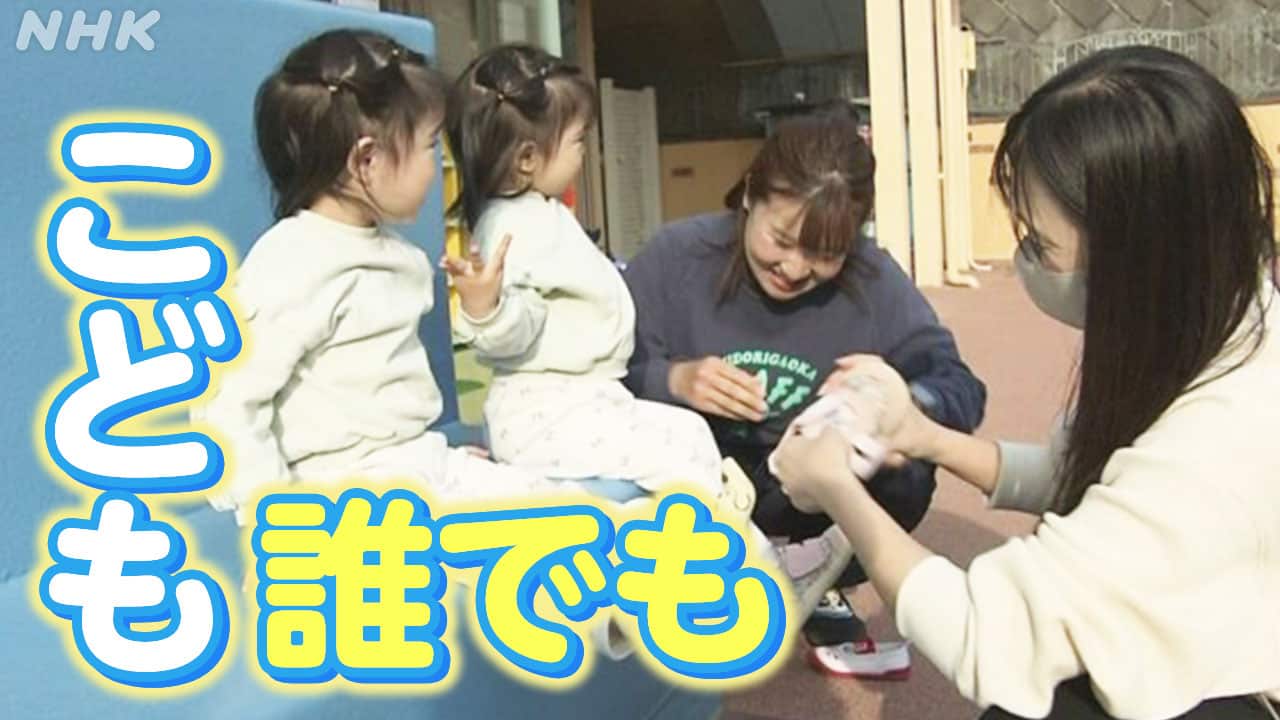
「こども誰でも通園制度」が4月から全国すべての自治体で始まりました。保護者の就労状況にかかわらず、3歳未満の子どもが保育所などを利用できる制度です。
Q.こども誰でも通園制度とはA.保護者の就労状況などにかかわらず、希望すれば月に一定時間、保育所などを利用できる制度です。ここ2年間、先行的に行われていて、一昨年度は118自治体が実施していて、昨年度の実施予定数は252自治体でした。4月からは全国すべての自治体で開始しました。利用できるのは、保育所などに通っていない生後半年から3歳未満の子どもです。
Q.なぜ、国は新たな制度を設けたの?A.国は、ほかの子どもたちとの集団生活などを通じて、家庭では得られない子どもの発達や社会性を育むこと、それに保護者の育児の悩みを解消し、孤立感を減らすことを目的としています。
Q.保育所の一時預かりとの違いは?A.保育所の一時預かりは、急な仕事や冠婚葬祭、それに育児疲れなど、家庭での保育が一時的に難しくなった場合など、主に保護者側の必要性から利用する制度です。一方、こども誰でも通園制度は、こういった明確な理由はいりません。保育所などに通っていない生後半年から3歳未満の子どもなら誰でも、どんな理由でも利用できます。
Q.利用時間に制限はあるの?A.国が定めている1人あたりの利用時間は、月10時間です。ただ、自治体によっては、独自の施策で利用時間を上乗せしている所もあります。例えば、東京・多摩市では、都の補助金を活用して月の利用時間を160時間にしています。一方で、準備が整っていない自治体があることから、国は経過措置として来年度までは、「月3時間」以上を条件に10時間未満にすることを認めています。ことし2月の国の調査では、今年度、36の自治体が利用時間を月10時間未満にする予定だとしています。
Q.どこに通えるの?A.保育所、認定こども園、小規模保育事業所、家庭的保育事業所、幼稚園、地域子育て支援拠点などです。なお、基準を満たしていれば施設の類型は問いません。
Q.利用料金は?A.施設ごとに異なりますが、1時間当たり300円が目安となります。
Q.どのように利用するの?A.まず自治体に利用申請を行います。認定を受けたら、国のシステム「こども誰でも通園制度総合支援システム」を使って、希望する保育施設での事前面談を予約します。事前面談では、安全確保や円滑な受け入れのため子どものアレルギーの情報や既往歴、家庭での生活状況などを保育施設側と共有し、施設の利用を始めます。利用予約は同じ国のシステムを使います。
こども家庭庁の「こども誰でも通園制度総合支援システム」です。利用の予約などはこちらから。※NHKのサイトを離れます。
Q.新制度ではどんな課題がありそう?A.この制度自体が保護者に十分に知られていないという指摘があり、制度の周知が課題の1つといえます。一方で、利用する希望者が多い場合は予約が取りづらくなる可能性があります。自治体は事前に利用希望者の数を予測して施設を確保していますが、想定以上の希望が出ることも予想されます。また、共働き世帯で保育の必要がある子どもが増え、保育施設側の受け入れの余裕がなくなれば、制度で利用できる枠がなくなる施設も出る可能性があります。
Q.こども誰でも通園制度とはA.保護者の就労状況などにかかわらず、希望すれば月に一定時間、保育所などを利用できる制度です。ここ2年間、先行的に行われていて、一昨年度は118自治体が実施していて、昨年度の実施予定数は252自治体でした。4月からは全国すべての自治体で開始しました。利用できるのは、保育所などに通っていない生後半年から3歳未満の子どもです。
Q.なぜ、国は新たな制度を設けたの?A.国は、ほかの子どもたちとの集団生活などを通じて、家庭では得られない子どもの発達や社会性を育むこと、それに保護者の育児の悩みを解消し、孤立感を減らすことを目的としています。
Q.保育所の一時預かりとの違いは?A.保育所の一時預かりは、急な仕事や冠婚葬祭、それに育児疲れなど、家庭での保育が一時的に難しくなった場合など、主に保護者側の必要性から利用する制度です。一方、こども誰でも通園制度は、こういった明確な理由はいりません。保育所などに通っていない生後半年から3歳未満の子どもなら誰でも、どんな理由でも利用できます。
Q.利用時間に制限はあるの?A.国が定めている1人あたりの利用時間は、月10時間です。ただ、自治体によっては、独自の施策で利用時間を上乗せしている所もあります。例えば、東京・多摩市では、都の補助金を活用して月の利用時間を160時間にしています。一方で、準備が整っていない自治体があることから、国は経過措置として来年度までは、「月3時間」以上を条件に10時間未満にすることを認めています。ことし2月の国の調査では、今年度、36の自治体が利用時間を月10時間未満にする予定だとしています。
Q.どこに通えるの?A.保育所、認定こども園、小規模保育事業所、家庭的保育事業所、幼稚園、地域子育て支援拠点などです。なお、基準を満たしていれば施設の類型は問いません。
Q.利用料金は?A.施設ごとに異なりますが、1時間当たり300円が目安となります。
Q.どのように利用するの?A.まず自治体に利用申請を行います。認定を受けたら、国のシステム「こども誰でも通園制度総合支援システム」を使って、希望する保育施設での事前面談を予約します。事前面談では、安全確保や円滑な受け入れのため子どものアレルギーの情報や既往歴、家庭での生活状況などを保育施設側と共有し、施設の利用を始めます。利用予約は同じ国のシステムを使います。
こども家庭庁の「こども誰でも通園制度総合支援システム」です。利用の予約などはこちらから。※NHKのサイトを離れます。
Q.新制度ではどんな課題がありそう?A.この制度自体が保護者に十分に知られていないという指摘があり、制度の周知が課題の1つといえます。一方で、利用する希望者が多い場合は予約が取りづらくなる可能性があります。自治体は事前に利用希望者の数を予測して施設を確保していますが、想定以上の希望が出ることも予想されます。また、共働き世帯で保育の必要がある子どもが増え、保育施設側の受け入れの余裕がなくなれば、制度で利用できる枠がなくなる施設も出る可能性があります。
Vocabulary
General
Proper noun
JLPT N2
JLPT N1
| # | 言葉 | 意味 |
|---|---|---|
| 12 | 制度 | せいど (制度) : system; institution; organization; organisation |
| 9 | 自治体 | じちたい (自治体) : municipality; local government; self-governing body; autonomous body |
| 8 | 施設 | しせつ (施設) : 1. institution; establishment; facility 2. home (for elderly, orphans, etc.) |
| 7 | 保育所 | ほいくしょ (保育所) : nursery school; nursery |
| 7 | 保育 | ほいく (保育) : nursing; nurturing; rearing; lactation; suckling |
| 6 | 子ども | こども (子供) : child |
| 5 | 通園 | つうえん (通園) : commuting to nursery school or kindergarten |
| 5 | 保護者 | ほごしゃ (保護者) : guardian; protector; patron; parent |
| 5 | 未満 | みまん (未満) : less than; under; below |
| 3 | 希望 | きぼう (希望) : hope; wish; aspiration |
| 3 | 事前 | じぜん (事前) : prior; beforehand; in advance; before the fact; ex ante |
| 2 | 全国 | ぜんこく (全国) : the whole country |
| 2 | かかわる | かかわる (関わる) : 1. to be affected; to be influenced 2. to be concerned with; to have to do with |
| 2 | 数 | しばしば (屡々) : often; again and again; frequently; repeatedly |
| 2 | 通う | かよう (通う) : 1. to go to and from (a place); to go back and forth between; to run between (e.g. bus, train, etc.); to ply between 2. to go to (school, work, etc.); to attend; to commute; to frequent |
| 2 | 生後 | せいご (生後) : post-natal; since birth |
| 2 | 半年 | はんとし (半年) : half a year; six months |
| 2 | 育児 | いくじ (育児) : childcare; child-rearing; nursing; upbringing |
| 2 | 一時 | ひととき (ひと時) : 1. a (short) time; a while; moment 2. one time (in the past); a period; former times |
| 2 | 預かる | あずかる (預かる) : 1. to look after; to take care of; to keep; to hold on to; to keep in custody 2. to be put in charge of; to be given responsibility for; to be entrusted with |
| 2 | 事業所 | じぎょうしょ (事業所) : plant; enterprise place; office |
| 2 | 総合 | そうごう (総合) : 1. synthesis; coordination; putting together; integration; composite 2. comprehensive |
| 2 | 支援 | しえん (支援) : support; backing; aid; assistance |
| 2 | 面談 | めんだん (面談) : interview |
| 2 | 受け入れ | うけいれ (受け入れ) : receiving; acceptance; reception |
| 2 | 課題 | かだい (課題) : 1. subject; theme; issue; matter 2. homework; assignment |
| 2 | 可能性 | かのうせい (可能性) : potentiality; likelihood; possibility; availability |
| 1 | 始まる | はじまる (始まる) : 1. to begin; to start; to commence 2. to happen (again); to begin (anew) |
| 1 | 年間 | ねんかん (年間) : 1. (period of) a year 2. during an era |
| 1 | 先行 | せんこう (先行) : 1. going ahead; going first 2. preceding; coming before; being ahead (e.g. of the times); occurring first; happening prior |
| 1 | 一昨 | いっさく (一昨) : one previous |
| 1 | 年度 | ねんど (年度) : 1. fiscal year (usu. April 1 to March 31 in Japan); financial year 2. academic year; school year |
| 1 | 実施 | じっし (実施) : enforcement; implementation; putting into practice; carrying out; operation; working (e.g. working parameters); enactment |
| 1 | 昨年度 | さくねんど (昨年度) : previous year (fiscal, academic, etc.) |
| 1 | 開始 | かいし (開始) : start; commencement; beginning; initiation |
| 1 | 新た | あらた (新た) : new; fresh; novel |
| 1 | 設ける | もうける (設ける) : 1. to prepare; to provide 2. to set up; to establish; to organize; to lay down (rules); to make (an excuse) |
| 1 | 子どもたち | こどもたち (子供たち) : children |
| 1 | 集団生活 | しゅうだんせいかつ (集団生活) : living in a group; communal living; community life |
| 1 | 通ずる | つうずる (通ずる) : 1. to be open (to traffic); to lead to; to communicate (with) 2. to flow (liquid, current); to pass; to get through to |
| 1 | 社会性 | しゃかいせい (社会性) : sociality |
| 1 | 育む | はぐくむ (育む) : 1. to raise; to bring up; to rear 2. to cultivate; to foster; to nurture |
| 1 | 悩み | なやみ (悩み) : trouble; troubles; worry; distress; sorrows; anguish; agony; problem |
| 1 | 解消 | かいしょう (解消) : cancellation; liquidation; resolution; reduction (e.g. of stress) |
| 1 | 孤立 | こりつ (孤立) : isolation; being alone; being friendless |
| 1 | 減らす | へらす (減らす) : to abate; to decrease; to diminish; to shorten |
| 1 | 目的 | もくてき (目的) : purpose; goal; aim; objective; intention |
| 1 | 違い | ちがい (違い) : 1. difference; distinction; discrepancy 2. mistake; error |
| 1 | 冠婚葬祭 | かんこんそうさい (冠婚葬祭) : important ceremonial occasions in family relationships |
| 1 | 疲れ | つかれ (疲れ) : tiredness; fatigue |
| 1 | 一時的 | いちじてき (一時的) : temporary |
| 1 | 主に | おもに (主に) : mainly; primarily |
| 1 | 必要性 | ひつようせい (必要性) : necessity |
| 1 | 明確 | めいかく (明確) : clear; precise; definite; distinct |
| 1 | はいる | はいる (入る) : 1. to enter; to go into 2. to break into |
| 1 | 制限 | せいげん (制限) : restriction; restraint; limitation; limit |
| 1 | 定める | さだめる (定める) : 1. to decide; to determine 2. to establish; to lay down; to prescribe; to provide; to stipulate |
| 1 | あたり | あたり (当たり) : 1. hit 2. success |
| 1 | ただ | ただ (只) : 1. ordinary; common; usual 2. free of charge |
| 1 | 独自 | どくじ (独自) : 1. original; unique; distinctive; characteristic; peculiar 2. independent; one's own; personal |
| 1 | 施策 | しさく (施策) : policy; measure |
| 1 | 上乗せ | うわのせ (上乗せ) : adding; addition; extra |
| 1 | 東京 | とうきょう (東京) : Tokyo |
| 1 | 多摩市 | たまし (多摩市) : Tama (city) (place) |
| 1 | 補助金 | ほじょきん (補助金) : assistance payment; subsidiary aid |
| 1 | 活用 | かつよう (活用) : 1. practical use; application 2. conjugation; inflection |
| 1 | 整う | ととのう (整う) : 1. to be ready; to be prepared; to be arranged 2. to be in order; to be put in order; to be well-ordered; to be well-proportioned; to be harmonious |
| 1 | 経過措置 | けいかそち (経過措置) : transitional measures |
| 1 | 来年度 | らいねんど (来年度) : next year; next fiscal year |
| 1 | 条件 | じょうけん (条件) : condition; term; requirement; qualification; prerequisite |
| 1 | 認める | したためる (認める) : 1. to write (e.g. a letter); to draw up (a document); to take down (e.g. notes) 2. to have (lunch, dinner, etc.); to eat |
| 1 | 調査 | ちょうさ (調査) : investigation; examination; inquiry; enquiry; survey |
| 1 | 今年度 | こんねんど (今年度) : this year; this fiscal year; this school year |
| 1 | 認定こども園 | にんていこどもえん (認定こども園) : certified center for early childhood education and care; ECEC; certified child center; type of combined day-care center and kindergarten |
| 1 | 小規模 | しょうきぼ (小規模) : small scale |
| 1 | 家庭的 | かていてき (家庭的) : family-oriented; familial |
| 1 | 幼稚園 | ようちえん (幼稚園) : kindergarten |
| 1 | 地域 | ちいき (地域) : area; region |
| 1 | 子育て支援 | こそだてしえん (子育て支援) : child-rearing assistance; support for young parents; child-care allowance |
| 1 | 拠点 | きょてん (拠点) : position; location; base; point; site |
| 1 | なお | なお (尚) : 1. still; yet 2. more; still more; greater; further |
| 1 | 基準 | きじゅん (基準) : standard; basis; criterion; norm; reference; datum |
| 1 | 満たす | みたす (満たす) : 1. to satisfy (conditions, one's appetite, etc.); to meet (e.g. demands); to fulfill; to gratify 2. to fill (e.g. a cup); to pack; to supply |
| 1 | 類型 | るいけい (類型) : 1. type; pattern; shape; genre; breed 2. similar type; similar pattern |
| 1 | 問う | とう (問う) : 1. to ask; to inquire 2. to blame (someone) for; to accuse of; to pursue (question of responsibility); to charge with |
| 1 | 利用料金 | りようりょうきん (利用料金) : usage charge; usage fee |
| 1 | ごと | ごと (毎) : each; every |
| 1 | 異なる | ことなる (異なる) : to differ; to vary; to disagree |
| 1 | 当たり | あたり (当たり) : 1. hit 2. success |
| 1 | 目安 | めやす (目安) : 1. criterion; standard; yardstick; reference; aim 2. rough estimate; approximation |
| 1 | 申請 | しんせい (申請) : application; request; petition |
| 1 | 認定 | にんてい (認定) : authorization; authorisation; acknowledgment; acknowledgement; certification; recognition |
| 1 | 安全確保 | あんぜんかくほ (安全確保) : maintenance of safety; safety guarantee; ensuring safety |
| 1 | 円滑 | えんかつ (円滑) : smooth; undisturbed; uninterrupted; harmonious |
| 1 | 情報 | じょうほう (情報) : 1. information; news; intelligence; advices 2. information; data contained in characters, signals, code, etc. |
| 1 | 既往歴 | きおうれき (既往歴) : case or medical history |
| 1 | 状況 | じょうきょう (状況) : state of affairs (around you); situation; circumstances |
| 1 | 共有 | きょうゆう (共有) : 1. joint ownership; co-ownership; sharing (e.g. a viewpoint) 2. sharing (files, devices on a network, posts on social media, etc.) |
| 1 | 離れる | はなれる (離れる) : 1. to be separated; to be apart; to be distant 2. to leave; to go away |
| 1 | 新制度 | しんせいど (新制度) : new system |
| 1 | 自体 | じたい (自体) : 1. itself 2. one's own body; oneself |
| 1 | 知る | しる (知る) : 1. to be aware of; to know; to be conscious of; to cognize; to cognise 2. to notice; to feel |
| 1 | 指摘 | してき (指摘) : pointing out; identification |
| 1 | 周知 | しゅうち (周知) : common knowledge; being well-known; making (something) well-known |
| 1 | 希望者 | きぼうしゃ (希望者) : applicant; candidate; person interested in doing something; person wanting to do something; interested party; volunteer |
| 1 | 取る | とる (取る) : 1. to take; to pick up; to grab; to catch 2. to pass; to hand; to give |
| 1 | 予測 | よそく (予測) : prediction; estimation |
| 1 | 確保 | かくほ (確保) : 1. securing; obtaining; ensuring; guarantee; maintaining 2. belay; belaying |
| 1 | 想定 | そうてい (想定) : hypothesis; supposition; assumption |
| 1 | 予想 | よそう (予想) : expectation; anticipation; prediction; forecast; conjecture |
| 1 | 共働き | ともばたらき (共働き) : (husband and wife) both working; dual income |
| 1 | 世帯 | せたい (世帯) : household; home; family; housekeeping |
| 1 | 増える | ふえる (増える) : to increase; to multiply |
| 1 | 余裕 | よゆう (余裕) : 1. surplus; margin; leeway; room; space; time; allowance; flexibility; scope 2. composure; placidity; complacency; calm |
| 1 | なくなる | なくなる (亡くなる) : to die |
| 1 | 枠 | わく (枠) : 1. frame; framework 2. border; box |