1週間ニュースふりかえり 北朝鮮 “後継者”は キム・ジョンウン総書記の娘? 写真で読み解く チルシル 教育
アメリカのトランプ大統領(だいとうりょう)が世界各国に課した相互(そうご)関税について、連邦(れんぽう)最高裁判所(さいばんしょ)は2月20日、“大統領にはその権限(けんげん)はない”と判断しました。
これについて、トランプ大統領は「裁判官は率直に言って国の恥(はじ)だ」と批判(ひはん)しました。
裁判で負けたのをうけて、トランプ政権(せいけん)はすぐさま、別の法律をつかって新たな関税措置(そち)を発動。
日本については、これまで幅(はば)広い品目で15%かけられていた相互関税のかわりに、10%の新たな関税が課されます。
一方、自動車と自動車部品(関税15%)や鉄鋼・アルミニウム製品(追加関税50%)は、法律がちがうため変わりありません。
さらにトランプ大統領は、新たな関税を15%に引き上げる考えを示していて、トランプ関税にふたたび世界がふり回されています。
東南アジアの国・カンボジアで日本人15人が拘束(こうそく=捕(と)らえること)されたことが、明らかになりました。15人は特殊詐欺に関わっていたとみられています。
なかでも多いのが、警察官をかたる“ニセ警察詐欺”です。その手口とは?アニメで知って被害を防ぎましょう。
▽「逮捕(たいほ)される」などの強い言葉には注意!▽警察署(しょ)の電話番号をよそおって表示させる手口も!▽警察がお金の要求をすることはない!
国の最高指導(しどう)者、キム・ジョンウン総書記は、核兵器やミサイルの開発をおし進めると強調。今後5年間にさらに強力な弾道(だんどう)ミサイルや人工知能を利用した無人攻撃(こうげき)兵器などを開発すると明らかにしました。
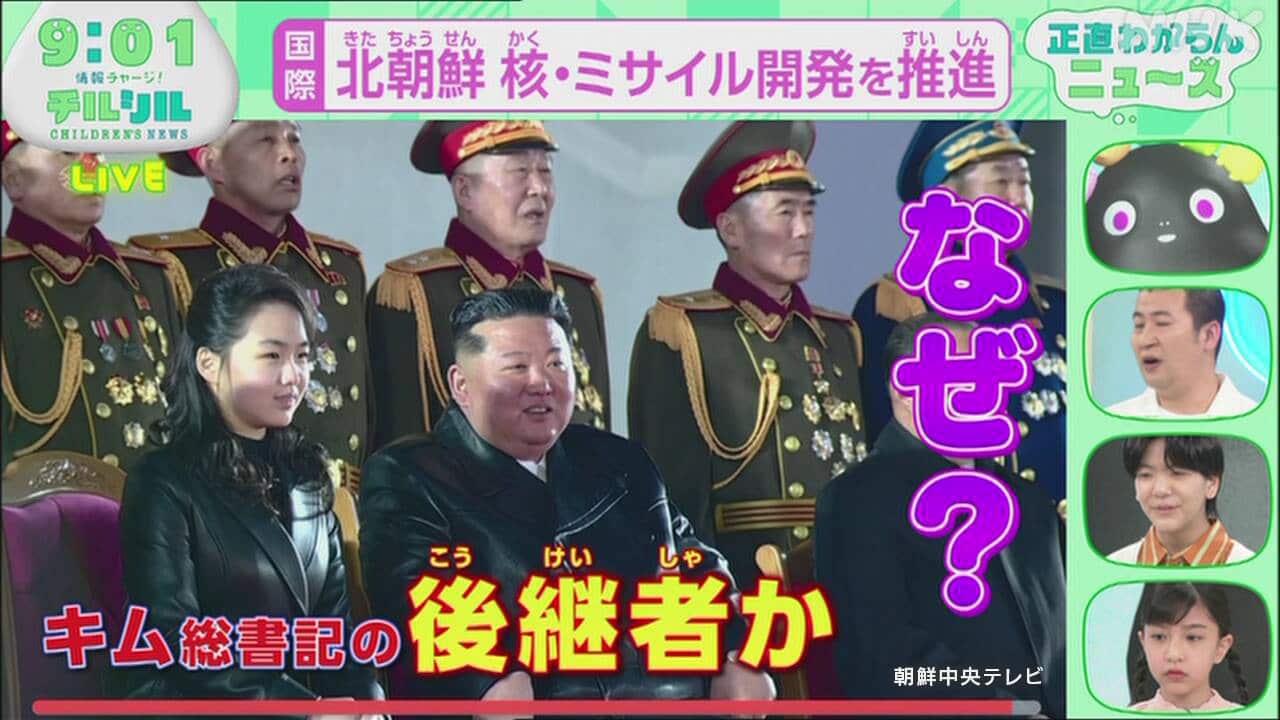
その重要な会議を記念する軍事パレードに、キム総書記と一緒に出席した女性。キム総書記とたびたび登場するこの女性は、娘(むすめ)です。
年齢は13歳(さい)とみられていますが、キム総書記の後継者(こうけいしゃ=地位や役割を引き継(つ)ぐ人)になるのではないかという見方が強まっています。
北朝鮮では国のトップ、最高指導者は絶大(ぜつだい)な権力をもっていて、国のすべてを左右します。
そのため、後継者が誰(だれ)になるかというのはとても重要ですし、各国も注目しています。
北朝鮮の最高指導者は、初代のキム・イルソン主席に始まり、代々受け継がれています。現在は3代目のキム・ジョンウン総書記。そして、4代目が娘なのではないかとみられています。
北朝鮮が公開している写真をよく見ていくと、娘が後継者ではないかと匂(にお)わせるヒントが見えてきます。
私たち「北朝鮮ウォッチャー」は、写真が公開されるたびに、なにか新たな変化がないか細かくチェックをしているんです。
後ろにあるのがミサイルで、アメリカ本土まで届くとされる北朝鮮最大のミサイルで、その発射実験に立ち会ったときのものです。
ミサイルの前にいるのが父親と手をつないでいる娘で、娘が真(ま)ん中にいるような形です。
北朝鮮がもっとも力を入れている「核・ミサイル開発」の現場が娘の初登場の舞台(ぶたい)になったということです。
去年(2025年)9月、中国・ロシア・北朝鮮のトップが一堂に会した重要な外交の場面がありました。
キム総書記が北京(ぺきん)に着いて、列車から降(お)りています。列車には同行している大臣(だいじん)クラスの幹部(かんぶ)たちがたくさん乗っているんですけれども、2番目に降りてきたのは娘なんです。幹部たちを差し置いて、娘が出てきたと。
つまり、中国・ロシアとの重要な外交の場面で娘を外交デビューさせた、それを国際社会に印象づけたということなんですね。
こうしてたびたび公の場に姿を現すようになったキム総書記の娘ですが、実は名前も年齢(ねんれい)も北朝鮮は公表していません。
キム総書記が大ファンということで、北朝鮮に招いて面会したんです。面会したときのことをこう話しています。
「2013年に生まれたという娘をだっこした!名前は『ジュエ』だと聞いた!」(※英紙「ガーディアン」に対しての証言)
この証言から、名前は「ジュエ」氏ではないか、年齢は13歳くらいではないか、とみられるようになったんです。
そんな彼女が“後継者”である可能性が大きいと考えられる、決定的な写真がこちらです。
これはことし(2026年)元日に撮(と)られたものです。キム総書記と娘が、後ろに党や軍の幹部たちを従(したが)えている写真。
大事なのは、この場所です。ピョンヤンにある宮殿(きゅうでん)なんですが、先代の最高指導者2人の遺体(いたい)が安置(あんち)されている、もっとも神聖(しんせい)な場所とされています。
つまりは、これからも一族で権力を受け継いでいく、世襲(せしゅう)の正統性(せいとうせい=正しいとされる理由)を印象づけているとも考えられるということです。
母親のとなりに立っているのは北朝鮮の首相(しゅしょう)ですが、首相よりはちょっとだけ前に立っている。
これはまさに、北朝鮮の権力構造(こうぞう)の「立ち位置」を反映(はんえい)しているんです。
まだ公(おおやけ)にされていない息子がいるんじゃないか、という指摘(してき)もあるからです。今の時点では決めつけるのは早いかな、と思います。
「核・ミサイルの開発」や「中国・ロシアとの外交」のような重要な場面に親子で登場することで、体制は揺(ゆ)るぎないとアピールしているとみられています。裏(うら)を返せば、娘が登場するところは、キム総書記がアピールしたいポイントだとみることができます。
ですので、これから北朝鮮をみていく上で、娘の動きにもぜひ注目してほしいと思います。
NHK for Scool 学校向けのさまざまなサービスを展開!動画や教材・資料など多数
これについて、トランプ大統領は「裁判官は率直に言って国の恥(はじ)だ」と批判(ひはん)しました。
裁判で負けたのをうけて、トランプ政権(せいけん)はすぐさま、別の法律をつかって新たな関税措置(そち)を発動。
日本については、これまで幅(はば)広い品目で15%かけられていた相互関税のかわりに、10%の新たな関税が課されます。
一方、自動車と自動車部品(関税15%)や鉄鋼・アルミニウム製品(追加関税50%)は、法律がちがうため変わりありません。
さらにトランプ大統領は、新たな関税を15%に引き上げる考えを示していて、トランプ関税にふたたび世界がふり回されています。
東南アジアの国・カンボジアで日本人15人が拘束(こうそく=捕(と)らえること)されたことが、明らかになりました。15人は特殊詐欺に関わっていたとみられています。
なかでも多いのが、警察官をかたる“ニセ警察詐欺”です。その手口とは?アニメで知って被害を防ぎましょう。
▽「逮捕(たいほ)される」などの強い言葉には注意!▽警察署(しょ)の電話番号をよそおって表示させる手口も!▽警察がお金の要求をすることはない!
国の最高指導(しどう)者、キム・ジョンウン総書記は、核兵器やミサイルの開発をおし進めると強調。今後5年間にさらに強力な弾道(だんどう)ミサイルや人工知能を利用した無人攻撃(こうげき)兵器などを開発すると明らかにしました。
その重要な会議を記念する軍事パレードに、キム総書記と一緒に出席した女性。キム総書記とたびたび登場するこの女性は、娘(むすめ)です。
年齢は13歳(さい)とみられていますが、キム総書記の後継者(こうけいしゃ=地位や役割を引き継(つ)ぐ人)になるのではないかという見方が強まっています。
北朝鮮では国のトップ、最高指導者は絶大(ぜつだい)な権力をもっていて、国のすべてを左右します。
そのため、後継者が誰(だれ)になるかというのはとても重要ですし、各国も注目しています。
北朝鮮の最高指導者は、初代のキム・イルソン主席に始まり、代々受け継がれています。現在は3代目のキム・ジョンウン総書記。そして、4代目が娘なのではないかとみられています。
北朝鮮が公開している写真をよく見ていくと、娘が後継者ではないかと匂(にお)わせるヒントが見えてきます。
私たち「北朝鮮ウォッチャー」は、写真が公開されるたびに、なにか新たな変化がないか細かくチェックをしているんです。
後ろにあるのがミサイルで、アメリカ本土まで届くとされる北朝鮮最大のミサイルで、その発射実験に立ち会ったときのものです。
ミサイルの前にいるのが父親と手をつないでいる娘で、娘が真(ま)ん中にいるような形です。
北朝鮮がもっとも力を入れている「核・ミサイル開発」の現場が娘の初登場の舞台(ぶたい)になったということです。
去年(2025年)9月、中国・ロシア・北朝鮮のトップが一堂に会した重要な外交の場面がありました。
キム総書記が北京(ぺきん)に着いて、列車から降(お)りています。列車には同行している大臣(だいじん)クラスの幹部(かんぶ)たちがたくさん乗っているんですけれども、2番目に降りてきたのは娘なんです。幹部たちを差し置いて、娘が出てきたと。
つまり、中国・ロシアとの重要な外交の場面で娘を外交デビューさせた、それを国際社会に印象づけたということなんですね。
こうしてたびたび公の場に姿を現すようになったキム総書記の娘ですが、実は名前も年齢(ねんれい)も北朝鮮は公表していません。
キム総書記が大ファンということで、北朝鮮に招いて面会したんです。面会したときのことをこう話しています。
「2013年に生まれたという娘をだっこした!名前は『ジュエ』だと聞いた!」(※英紙「ガーディアン」に対しての証言)
この証言から、名前は「ジュエ」氏ではないか、年齢は13歳くらいではないか、とみられるようになったんです。
そんな彼女が“後継者”である可能性が大きいと考えられる、決定的な写真がこちらです。
これはことし(2026年)元日に撮(と)られたものです。キム総書記と娘が、後ろに党や軍の幹部たちを従(したが)えている写真。
大事なのは、この場所です。ピョンヤンにある宮殿(きゅうでん)なんですが、先代の最高指導者2人の遺体(いたい)が安置(あんち)されている、もっとも神聖(しんせい)な場所とされています。
つまりは、これからも一族で権力を受け継いでいく、世襲(せしゅう)の正統性(せいとうせい=正しいとされる理由)を印象づけているとも考えられるということです。
母親のとなりに立っているのは北朝鮮の首相(しゅしょう)ですが、首相よりはちょっとだけ前に立っている。
これはまさに、北朝鮮の権力構造(こうぞう)の「立ち位置」を反映(はんえい)しているんです。
まだ公(おおやけ)にされていない息子がいるんじゃないか、という指摘(してき)もあるからです。今の時点では決めつけるのは早いかな、と思います。
「核・ミサイルの開発」や「中国・ロシアとの外交」のような重要な場面に親子で登場することで、体制は揺(ゆ)るぎないとアピールしているとみられています。裏(うら)を返せば、娘が登場するところは、キム総書記がアピールしたいポイントだとみることができます。
ですので、これから北朝鮮をみていく上で、娘の動きにもぜひ注目してほしいと思います。
NHK for Scool 学校向けのさまざまなサービスを展開!動画や教材・資料など多数
Vocabulary
General
Proper noun
JLPT N2
JLPT N1
| # | 言葉 | 意味 |
|---|---|---|
| 12 | 北朝鮮 | きたちょうせん (北朝鮮) : North Korea |
| 10 | 総書記 | そうしょき (総書記) : secretary-general; general secretary (esp. of Communist parties of North Korea and China) |
| 7 | 関税 | かんぜい (関税) : tariff (import tax); duty; customs |
| 5 | 重要 | じゅうよう (重要) : important; momentous; essential; principal; major |
| 4 | 新た | あらた (新た) : new; fresh; novel |
| 4 | 後継者 | こうけいしゃ (後継者) : successor |
| 4 | 外交 | がいこう (外交) : 1. diplomacy 2. selling (e.g. door-to-door); canvassing |
| 3 | 開発 | かいはつ (開発) : development; exploitation |
| 3 | 登場 | とうじょう (登場) : 1. entry (on stage); appearance (on screen) 2. entrance; introduction (into a market) |
| 3 | 最高指導者 | さいこうしどうしゃ (最高指導者) : supreme leader; ultimate leader |
| 3 | 権力 | けんりょく (権力) : (political) power; authority; influence |
| 3 | 中国 | ちゅうごく (中国) : 1. China 2. Chūgoku region of western Honshu (incl. Okayama, Hiroshima, Shimane, Tottori and Yamaguchi prefectures) |
| 3 | 場面 | ばめん (場面) : 1. scene; setting; place (where something happens); scenario; case 2. scene (in a movie, play); shot |
| 2 | 明らか | あきらか (明らか) : 1. clear; obvious; evident; plain; definite 2. bright; light |
| 2 | 手口 | てぐち (手口) : modus operandi; criminal technique; trick |
| 2 | たびたび | たびたび (度々) : often; again and again; over and over again; repeatedly; frequently |
| 2 | 年齢 | ねんれい (年齢) : age; years |
| 2 | 注目 | ちゅうもく (注目) : notice; attention; observation |
| 2 | 受け継ぐ | うけつぐ (受け継ぐ) : to inherit; to succeed; to take over |
| 2 | 代目 | だいめ (代目) : counter for generations |
| 2 | 公開 | こうかい (公開) : opening to the public; making available to the public; putting on display; exhibiting; showing (play, movie, etc.); holding (interview, etc.); open; public |
| 2 | 核 | かく (核) : 1. stone (of a fruit); pit; pip 2. core (of an organization, team, etc.); nucleus; heart |
| 2 | 列車 | れっしゃ (列車) : train; railway train |
| 2 | 降りる | おりる (降りる) : 1. to descend (e.g. a mountain); to go down; to come down 2. to alight (e.g. from bus); to get off; to disembark; to dismount |
| 2 | 幹部 | かんぶ (幹部) : management; (executive) staff; leaders; leadership; top brass; upper echelons |
| 2 | つまり | つまり (詰まり) : 1. that is to say; that is; in other words; I mean; that (this, it) means 2. in short; in brief; to sum up; ultimately; in the end; in the long run; when all is said and done; what it all comes down to; when you get right down to it; basically |
| 2 | 印象 | いんしょう (印象) : impression |
| 2 | 面会 | めんかい (面会) : meeting (face-to-face); seeing; visit; interview |
| 2 | 証言 | しょうげん (証言) : testimony; (verbal) evidence |
| 2 | 考える | かんがえる (考える) : 1. to think (about, of); to think over; to ponder; to contemplate; to reflect (on); to meditate (on) 2. to consider; to bear in mind; to allow for; to take into consideration |
| 2 | 立つ | たつ (立つ) : 1. to stand; to rise; to stand up 2. to find oneself (e.g. in a difficult position) |
| 2 | 首相 | しゅしょう (首相) : prime minister; chancellor (Germany, Austria, etc.); premier |
| 1 | とうりょう | とうりょう (棟梁) : 1. central figure; pillar (e.g. of the nation); mainstay; chief support; leader 2. chief; boss; leader; head |
| 1 | 世界各国 | せかいかっこく (世界各国) : countries all over the world; all the countries of the world |
| 1 | 課する | かする (課する) : to levy; to charge; to assess; to impose; to assign |
| 1 | 大統領 | だいとうりょう (大統領) : 1. president (of a nation) 2. big man; boss; buddy; mate |
| 1 | 判断 | はんだん (判断) : 1. judgment; judgement; decision; conclusion; adjudication 2. divination |
| 1 | 裁判官 | さいばんかん (裁判官) : judge |
| 1 | 率直 | そっちょく (率直) : frank; candid; straightforward; openhearted; direct; outspoken |
| 1 | 裁判 | さいばん (裁判) : trial; judgement; judgment |
| 1 | 負ける | まける (負ける) : 1. to lose; to be defeated 2. to succumb; to give in; to surrender; to yield |
| 1 | うける | うける (受ける) : 1. to receive; to get 2. to catch (e.g. a ball) |
| 1 | すぐさま | すぐさま (直ぐさま) : immediately; promptly |
| 1 | つかる | つかる (浸かる) : 1. to be submerged; to be soaked 2. to be pickled; to be well seasoned |
| 1 | 発動 | はつどう (発動) : 1. putting into operation 2. invocation |
| 1 | 品目 | ひんもく (品目) : item; commodity; list of articles |
| 1 | 相互 | そうご (相互) : mutual; reciprocal |
| 1 | 課す | かす (課す) : to levy; to charge; to assess; to impose; to assign |
| 1 | 自動車部品 | じどうしゃぶひん (自動車部品) : automobile component; automobile part |
| 1 | 鉄鋼 | てっこう (鉄鋼) : iron and steel |
| 1 | 製品 | せいひん (製品) : manufactured goods; finished goods; product |
| 1 | 追加 | ついか (追加) : addition; supplement; appending; appendix |
| 1 | 変わり | かわり (変わり) : 1. change; alteration 2. difference; distinction |
| 1 | 引き上げる | ひきあげる (引き上げる) : 1. to pull up; to drag up; to lift up 2. to increase; to raise (e.g. taxes) |
| 1 | 考え | かんがえ (考え) : 1. thinking; thought; view; opinion; concept 2. idea; notion; imagination |
| 1 | 示す | しめす (示す) : 1. to (take out and) show; to demonstrate; to tell; to exemplify; to make apparent 2. to point out (finger, clock hand, needle, etc.) |
| 1 | ふたたび | ふたたび (再び) : again; once more; a second time |
| 1 | 東南アジア | とうなんアジア (東南アジア) : Southeast Asia |
| 1 | 日本人 | にほんじん (日本人) : Japanese person; Japanese people |
| 1 | 拘束 | こうそく (拘束) : restriction; restraint; binding; constraint |
| 1 | こうそく | こうそく (光速) : speed of light |
| 1 | 捕らえる | とらえる (捉える) : 1. to catch; to capture; to seize; to arrest; to grab; to catch hold of 2. to grasp (e.g. meaning); to perceive; to capture (e.g. features) |
| 1 | 特殊詐欺 | とくしゅさぎ (特殊詐欺) : variant of bank-transfer fraud |
| 1 | 関わる | かかわる (関わる) : 1. to be affected; to be influenced 2. to be concerned with; to have to do with |
| 1 | 警察官 | けいさつかん (警察官) : police officer; policeman; policewoman |
| 1 | かたる | かたる (語る) : 1. to talk about; to speak of; to tell; to narrate 2. to recite; to chant |
| 1 | 詐欺 | さぎ (詐欺) : fraud; swindle; graft; cheating; trick; scam |
| 1 | 知る | しる (知る) : 1. to be aware of; to know; to be conscious of; to cognize; to cognise 2. to notice; to feel |
| 1 | 被害 | ひがい (被害) : (suffering) damage; injury; harm |
| 1 | 防ぐ | ふせぐ (防ぐ) : 1. to defend against; to protect against 2. to prevent; to avert; to avoid |
| 1 | 電話番号 | でんわばんごう (電話番号) : telephone number |
| 1 | よそおう | よそおう (装う) : 1. to dress (oneself in); to attire oneself in; to adorn; to decorate 2. to pretend; to feign; to affect; to disguise oneself as |
| 1 | 表示 | ひょうじ (表示) : 1. indication; expression; showing; manifestation; demonstration 2. display; displaying |
| 1 | 要求 | ようきゅう (要求) : demand; firm request; requisition; requirement; desire |
| 1 | 最高 | さいこう (最高) : 1. most; highest; maximum; uppermost; supreme 2. best; wonderful; finest |
| 1 | 指導 | しどう (指導) : 1. guidance; leadership; instruction; direction; coaching 2. shido (disciplinary action for a minor infringement of the rules of judo) |
| 1 | 核兵器 | かくへいき (核兵器) : nuclear weapon |
| 1 | 強調 | きょうちょう (強調) : emphasis; highlight; stress; stressed point |
| 1 | 今後 | こんご (今後) : from now on; hereafter |
| 1 | 年間 | ねんかん (年間) : 1. (period of) a year 2. during an era |
| 1 | 強力 | きょうりょく (強力) : powerful; strong |
| 1 | 人工知能 | じんこうちのう (人工知能) : artificial intelligence; AI |
| 1 | 無人 | むじん (無人) : 1. unmanned; uninhabited; unattended; deserted 2. shorthandedness; lack of help |
| 1 | 兵器 | へいき (兵器) : arms; weapon; ordnance |
| 1 | 記念 | きねん (記念) : commemoration; celebration; honoring the memory of something; turning something into a memento; memory |
| 1 | けいしゃ | けいしゃ (傾斜) : inclination; slant; slope; bevel; list; dip; tilt; lean |
| 1 | 地位 | ちい (地位) : (social) position; status |
| 1 | 役割 | やくわり (役割) : part; assigning (allotment of) parts; role; duties |
| 1 | 引き継ぐ | ひきつぐ (引き継ぐ) : to take over; to hand over |
| 1 | 見方 | みかた (見方) : 1. viewpoint; point of view 2. way of understanding; way of appreciating; how to look at something (e.g. noh, train schedule) |
| 1 | 強まる | つよまる (強まる) : to get strong; to gain strength |
| 1 | 左右 | さゆう (左右) : 1. left and right; right and left 2. (asserting) control; influence; domination |
| 1 | 各国 | かっこく (各国) : 1. each nation 2. many nations; many countries |
| 1 | 初代 | しょだい (初代) : first generation; founder |
| 1 | 主席 | しゅせき (主席) : 1. head; chief 2. chairman; governor; president |
| 1 | 始まる | はじまる (始まる) : 1. to begin; to start; to commence 2. to happen (again); to begin (anew) |
| 1 | 代々 | だいだい (代々) : for generations; hereditary; generation after generation |
| 1 | 現在 | げんざい (現在) : now; current; present; present time; as of |
| 1 | 匂う | におう (匂う) : 1. to be fragrant; to smell (good) 2. to stink; to smell (bad) |
| 1 | 見える | みえる (見える) : 1. to be seen; to be in sight 2. to look; to seem; to appear |
| 1 | 私たち | わたしたち (私たち) : we; us |
| 1 | たび | たび (足袋) : tabi; Japanese socks (with split toe) |
| 1 | 変化 | へんか (変化) : 1. change; variation; alteration; mutation; transition; transformation; transfiguration; metamorphosis 2. variety; diversity |
| 1 | 細かく | こまかく (細かく) : minutely; finely |
| 1 | 本土 | ほんど (本土) : 1. mainland; the country proper 2. native country; country where one was born |
| 1 | 届く | とどく (届く) : 1. to reach; to touch; to get to; to carry (of sound) 2. to be delivered; to arrive |
| 1 | 最大 | さいだい (最大) : biggest; greatest; largest; maximum |
| 1 | 発射 | はっしゃ (発射) : 1. firing (esp. a rocket or missile); launching; shooting; discharge; catapult 2. ejaculation |
| 1 | 実験 | じっけん (実験) : experiment |
| 1 | 立ち会う | たちあう (立ち会う) : to be present (esp. during a birth); to be witness to |
| 1 | 父親 | ちちおや (父親) : father |
| 1 | つなぐ | つなぐ (繋ぐ) : 1. to connect; to link together 2. to tie; to fasten; to restrain |
| 1 | 入れる | いれる (入れる) : 1. to put in; to let in; to take in; to bring in; to insert; to install (e.g. software); to set (a jewel, etc.); to ink in (e.g. tattoo) 2. to admit; to accept; to employ; to hire |
| 1 | 現場 | げんば (現場) : 1. actual spot; scene; scene of the crime; site; location; setting 2. shop floor; factory floor; (on) site |
| 1 | 初登場 | はつとうじょう (初登場) : debut; first appearance |
| 1 | 一堂 | いちどう (一堂) : 1. one building (hall, temple, shrine, room) 2. same room; same place; same building |
| 1 | 会する | かいする (会する) : 1. to meet; to assemble; to gather 2. to encounter; to run into |
| 1 | 北京 | ペキン (北京) : Beijing (China); Peking |
| 1 | 着く | つく (着く) : 1. to arrive at; to reach 2. to sit on; to sit at (e.g. the table) |
| 1 | 同行 | どうぎょう (同行) : fellow pilgrim; fellow practicer of austerities |
| 1 | 乗る | のる (乗る) : 1. to get on (train, plane, bus, ship, etc.); to get in; to board; to take; to embark 2. to get on (e.g. a footstool); to step on; to jump on; to sit on; to mount |
| 1 | 番目 | ばんめ (番目) : 1. indicates position in a sequence 2. divisions of a kabuki performance |
| 1 | 差し置く | さしおく (差し置く) : to leave as is; to let alone; to disregard |
| 1 | 国際社会 | こくさいしゃかい (国際社会) : international community; international society; the world |
| 1 | 姿 | すがた (姿) : 1. figure; form; shape 2. appearance; dress; guise |
| 1 | 現す | あらわす (表す) : 1. to represent; to signify; to stand for 2. to reveal; to show; to display |
| 1 | 実 | じつ (実) : 1. truth; reality 2. sincerity; honesty; fidelity |
| 1 | 公表 | こうひょう (公表) : official announcement; proclamation |
| 1 | 招く | まねく (招く) : 1. to invite; to ask 2. to beckon; to wave someone in; to gesture to |
| 1 | 生まれる | うまれる (生まれる) : to be born |
| 1 | だっこ | だっこ (抱っこ) : hug; carrying in one's arms (a baby, pet, doll, etc.) |
| 1 | 聞く | きく (聞く) : 1. to hear 2. to listen (e.g. to music) |
| 1 | 英紙 | えいし (英紙) : British newspaper |
| 1 | 氏 | うじ (氏) : 1. family name; lineage; birth 2. clan |
| 1 | 可能性 | かのうせい (可能性) : potentiality; likelihood; possibility; availability |
| 1 | 決定的 | けっていてき (決定的) : definite; final; decisive; conclusive |
| 1 | 元日 | がんじつ (元日) : New Year's Day |
| 1 | 撮る | とる (撮る) : 1. to take (a photo) 2. to record (video, audio, etc.); to make (a film) |
| 1 | 党 | とう (党) : 1. party (political) 2. person who is fond of; fan of |
| 1 | 軍 | ぐん (軍) : 1. army; armed forces; troops 2. military authorities |
| 1 | 従える | したがえる (従える) : 1. to be accompanied by; to be attended by; to take along (someone) 2. to conquer; to subjugate; to subdue |
| 1 | 宮殿 | きゅうでん (宮殿) : palace |
| 1 | 先代 | せんだい (先代) : 1. previous generation (e.g. one's parents); family predecessor 2. predecessor |
| 1 | 一族 | いちぞく (一族) : 1. family; relatives; dependents 2. household |
| 1 | せいとう | せいとう (政党) : political party |
| 1 | 母親 | ははおや (母親) : mother |
| 1 | しゅしょう | しゅしょう (主将) : 1. commander-in-chief; supreme commander 2. captain (of a team) |
| 1 | まさに | まさに (正に) : 1. exactly; surely; certainly; just 2. right then; just then; at that moment |
| 1 | 立ち位置 | たちいち (立ち位置) : 1. position (where one is standing); place where one stands 2. position; stance; standpoint; status; role |
| 1 | 時点 | じてん (時点) : point in time; occasion |
| 1 | 決めつける | きめつける (決め付ける) : 1. to fix upon (one-sidedly); to (ignore somebody's position and) arbitrarily decide something is the case 2. to scold; to take (a person) to task |
| 1 | 親子 | おやこ (親子) : parent and child |
| 1 | 体制 | たいせい (体制) : order; system; structure; set-up; organization; organisation |
| 1 | 返す | かえす (返す) : 1. to return (something); to restore; to put back 2. to turn over; to turn upside down; to overturn |
| 1 | 動き | うごき (動き) : 1. movement; move; motion 2. trend; development; change; fluctuation |
| 1 | 向け | むけ (向け) : intended for ...; oriented towards ...; aimed at ... |
| 1 | 展開 | てんかい (展開) : 1. development; evolution; progression; unfolding; (plot) twist 2. expansion; spreading out; extending; deployment; building up |
| 1 | 動画 | どうが (動画) : 1. video; movie; moving picture 2. animation; animated cartoon |
| 1 | 教材 | きょうざい (教材) : teaching materials |
| 1 | 資料 | しりょう (資料) : materials; data; document |
| 1 | 多数 | たすう (多数) : 1. large number (of); many 2. majority |