自転車 青切符 4月1日開始 ながらスマホなど違反取り締まり 歩道通行は 反則金の額一覧 気をつけること
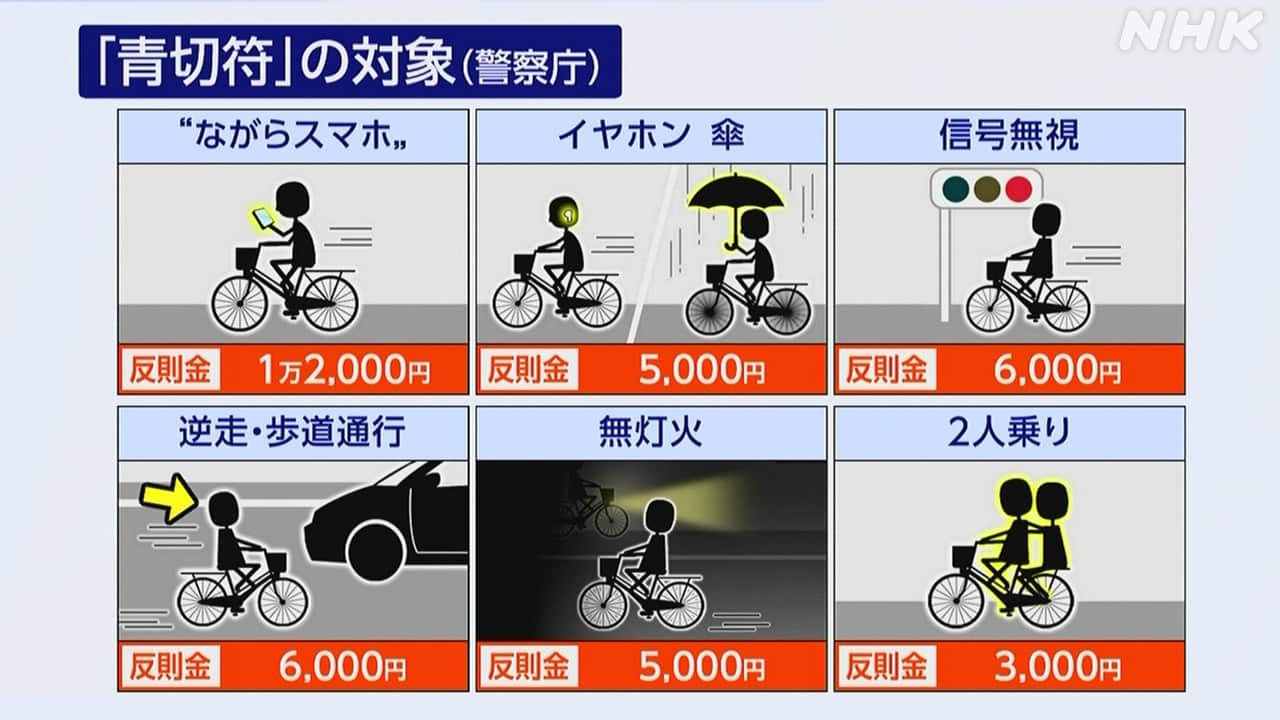
▽傘を差しながらの自転車の運転▽スマホを使用しながらの「ながらスマホ」▽信号無視…
こうした自転車の交通違反に対して反則金の納付を通告する、いわゆる「青切符」による取り締まりが4月1日から始まります。
青切符制度は16歳以上を対象に、自転車の交通違反に対し反則金の納付を通告するものです。自転車が関連する事故が高止まりしていることなどを受けて導入されました。
「ながらスマホ」や信号無視、逆走や歩道通行など113種類の交通違反が取り締まりの対象になり、反則金の額が定められています。
<“ながらスマホ”>スマートフォンなどを使用し、通話したり画面を見たりしながら自転車を運転する、いわゆる「ながらスマホ」は最も高額の1万2000円
<傘・イヤホン>傘を差したり、両耳にイヤホンをつけて音楽を聴いたりしながら運転するのは5000円
警察庁によりますと、自転車の交通違反に対し基本的には現場で指導・警告を実施しますが、警察官の警告に従わずに違反行為を続けた場合は青切符による取り締まりの対象となります。また交通事故に直結するような危険な行為をした場合なども、指導・警告を経ずに青切符の対象になるということです。
警察庁は違反を確認したらすぐに青切符を交付するというわけではなく、個別の状況に応じての判断になるとしたうえで「ルールを理解して、これまで以上に安全・安心に自転車を利用してほしい」と呼びかけています。
<※刑事手続き移行のケースは?>一方、酒酔い運転や酒気帯び運転、あおり運転のほか、交通違反によって事故を起こしたときは、これまでどおり「赤切符」が交付され、刑事手続きがとられます。青切符で定められた期日に反則金を納めなかった場合も、刑事手続きに移行するということです。
警察庁はホームページでルールブックを公開し、自転車の歩道通行について基本的な考え方を示しています。
<歩道通行が可能なケース>「自転車は車道通行が原則」としたうえで、次のケースで歩道通行が認められるとしています。
▽道路標識や道路標示で歩道を通行することができるとされているとき▽13歳未満や70歳以上、一定の身体障害がある人が運転するとき▽道路工事や連続した駐車車両などのため、車道の左側の通行が難しいとき▽著しく自動車の交通量が多いとか、車道の幅が狭いといった自転車で車道を通行するとかえって事故の危険があり、歩道を通行することがやむをえないと認められるとき
<遵守が必要な交通ルール>歩道を通行する場合でも次の交通ルールを守らなければならないとしています。
▽歩道の中央から車道寄りをすぐに停止できる「徐行」の速度で進行すること▽自転車の進行が歩行者の通行を妨げるような場合は一時停止すること▽歩道に自転車が通行できる「自転車通行指定部分」が設けられている場合であっても「徐行」での通行を原則とすること
警察庁は「単に自転車で歩道を走行しただけでは基本的には取り締まらない」としている一方、「悪質・危険」な違反は青切符による取り締まりの対象になるとしていて、スピードを出して歩道を通行し、歩行者を驚かせて立ち止まらせた場合などを挙げています。
「ながらスマホ」は青切符による取り締まりの対象です。街なかでよく見かけるスマホを自転車のハンドルに固定した状態での走行についても、じっと見ている場合は違反と判断される可能性があります。
個別の状況によるため「何秒」という数値は決まっていませんが、画面に集中せず視界が開けていることが重要になります。
イヤホンをしながらの自転車の運転について、両耳にイヤホンをして周りの音が聞こえない状態での運転は青切符による取り締まりの対象となります。
一方、イヤホンを片耳にしているときや、骨伝導タイプのイヤホンなど耳を完全にはふさがない場合は、安全な運転に必要な音や声が聞こえているかぎりは違反にはならないとしています。
周りの音がきちんと聞こえているかどうかがポイントで、現場で警察官に声をかけられたときに聞こえていない場合は違反と判断される可能性もあるということです。
小学生を乗せていた場合も、それだけで違反になることは基本的にはないということですが、バランスが崩れた状態で運転し、事故につながりかねないなど危険な運転と判断されれば青切符による取り締まりの対象になる可能性もあります。
車やバイクが車道を走る自転車を追い抜く際、4月からは十分な間隔を保つか、間隔を保つことができない狭い道などでは安全な速度で走行することが義務づけられます。
法律に具体的な距離や速度については盛り込まれていませんが、警察庁は目安として十分な間隔については「少なくとも1メートル程度」としたほか、間隔を保つことができない場合のスピードについては「時速20キロから30キロ程度」としました。
車が自転車を追い抜こうとして自転車の右側面と接触する事故が目立つということで、違反した場合は3か月以下の拘禁刑か5万円以下の罰金が科される可能性もあります。
警察庁によりますと、自転車が関連する事故は去年1年間で6万7470件と高止まりしていて、このうち自転車に法令違反が認められたケースは7割に上りました。
また、自転車と歩行者の事故は3269件と、統計を取り始めた2006年以降で最も多くなりました。このうち56%余り(1851件)は衝突した場所が歩道や横断歩道でした。
自転車の取り締まりをめぐっては、これまでいわゆる「赤切符」による刑事手続きがとられ、交通違反をした人が裁判で有罪になると、いわゆる「前科」がつきました。
しかし、自転車の交通違反の検挙が近年急増する中で、こうした手続きは時間や労力がかかるため、手続きを迅速に進めて事故の抑止を図ろうと今回青切符が導入されました。
青切符が交付されても、違反を認め指定された期間内に反則金を納めれば、取り調べや裁判を受けるために出頭する必要はなく「前科」もつきません。
こうした自転車の交通違反に対して反則金の納付を通告する、いわゆる「青切符」による取り締まりが4月1日から始まります。
青切符制度は16歳以上を対象に、自転車の交通違反に対し反則金の納付を通告するものです。自転車が関連する事故が高止まりしていることなどを受けて導入されました。
「ながらスマホ」や信号無視、逆走や歩道通行など113種類の交通違反が取り締まりの対象になり、反則金の額が定められています。
<“ながらスマホ”>スマートフォンなどを使用し、通話したり画面を見たりしながら自転車を運転する、いわゆる「ながらスマホ」は最も高額の1万2000円
<傘・イヤホン>傘を差したり、両耳にイヤホンをつけて音楽を聴いたりしながら運転するのは5000円
警察庁によりますと、自転車の交通違反に対し基本的には現場で指導・警告を実施しますが、警察官の警告に従わずに違反行為を続けた場合は青切符による取り締まりの対象となります。また交通事故に直結するような危険な行為をした場合なども、指導・警告を経ずに青切符の対象になるということです。
警察庁は違反を確認したらすぐに青切符を交付するというわけではなく、個別の状況に応じての判断になるとしたうえで「ルールを理解して、これまで以上に安全・安心に自転車を利用してほしい」と呼びかけています。
<※刑事手続き移行のケースは?>一方、酒酔い運転や酒気帯び運転、あおり運転のほか、交通違反によって事故を起こしたときは、これまでどおり「赤切符」が交付され、刑事手続きがとられます。青切符で定められた期日に反則金を納めなかった場合も、刑事手続きに移行するということです。
警察庁はホームページでルールブックを公開し、自転車の歩道通行について基本的な考え方を示しています。
<歩道通行が可能なケース>「自転車は車道通行が原則」としたうえで、次のケースで歩道通行が認められるとしています。
▽道路標識や道路標示で歩道を通行することができるとされているとき▽13歳未満や70歳以上、一定の身体障害がある人が運転するとき▽道路工事や連続した駐車車両などのため、車道の左側の通行が難しいとき▽著しく自動車の交通量が多いとか、車道の幅が狭いといった自転車で車道を通行するとかえって事故の危険があり、歩道を通行することがやむをえないと認められるとき
<遵守が必要な交通ルール>歩道を通行する場合でも次の交通ルールを守らなければならないとしています。
▽歩道の中央から車道寄りをすぐに停止できる「徐行」の速度で進行すること▽自転車の進行が歩行者の通行を妨げるような場合は一時停止すること▽歩道に自転車が通行できる「自転車通行指定部分」が設けられている場合であっても「徐行」での通行を原則とすること
警察庁は「単に自転車で歩道を走行しただけでは基本的には取り締まらない」としている一方、「悪質・危険」な違反は青切符による取り締まりの対象になるとしていて、スピードを出して歩道を通行し、歩行者を驚かせて立ち止まらせた場合などを挙げています。
「ながらスマホ」は青切符による取り締まりの対象です。街なかでよく見かけるスマホを自転車のハンドルに固定した状態での走行についても、じっと見ている場合は違反と判断される可能性があります。
個別の状況によるため「何秒」という数値は決まっていませんが、画面に集中せず視界が開けていることが重要になります。
イヤホンをしながらの自転車の運転について、両耳にイヤホンをして周りの音が聞こえない状態での運転は青切符による取り締まりの対象となります。
一方、イヤホンを片耳にしているときや、骨伝導タイプのイヤホンなど耳を完全にはふさがない場合は、安全な運転に必要な音や声が聞こえているかぎりは違反にはならないとしています。
周りの音がきちんと聞こえているかどうかがポイントで、現場で警察官に声をかけられたときに聞こえていない場合は違反と判断される可能性もあるということです。
小学生を乗せていた場合も、それだけで違反になることは基本的にはないということですが、バランスが崩れた状態で運転し、事故につながりかねないなど危険な運転と判断されれば青切符による取り締まりの対象になる可能性もあります。
車やバイクが車道を走る自転車を追い抜く際、4月からは十分な間隔を保つか、間隔を保つことができない狭い道などでは安全な速度で走行することが義務づけられます。
法律に具体的な距離や速度については盛り込まれていませんが、警察庁は目安として十分な間隔については「少なくとも1メートル程度」としたほか、間隔を保つことができない場合のスピードについては「時速20キロから30キロ程度」としました。
車が自転車を追い抜こうとして自転車の右側面と接触する事故が目立つということで、違反した場合は3か月以下の拘禁刑か5万円以下の罰金が科される可能性もあります。
警察庁によりますと、自転車が関連する事故は去年1年間で6万7470件と高止まりしていて、このうち自転車に法令違反が認められたケースは7割に上りました。
また、自転車と歩行者の事故は3269件と、統計を取り始めた2006年以降で最も多くなりました。このうち56%余り(1851件)は衝突した場所が歩道や横断歩道でした。
自転車の取り締まりをめぐっては、これまでいわゆる「赤切符」による刑事手続きがとられ、交通違反をした人が裁判で有罪になると、いわゆる「前科」がつきました。
しかし、自転車の交通違反の検挙が近年急増する中で、こうした手続きは時間や労力がかかるため、手続きを迅速に進めて事故の抑止を図ろうと今回青切符が導入されました。
青切符が交付されても、違反を認め指定された期間内に反則金を納めれば、取り調べや裁判を受けるために出頭する必要はなく「前科」もつきません。
Vocabulary
General
Proper noun
JLPT N2
JLPT N1
| # | 言葉 | 意味 |
|---|---|---|
| 15 | 通行 | つうこう (通行) : 1. passage (of people, traffic); passing 2. common usage |
| 12 | 青切符 | あおきっぷ (青切符) : 1. blue traffic violation ticket (designating a minor violation) 2. second-class ticket |
| 12 | 歩道 | ほどう (歩道) : footpath; walkway; sidewalk |
| 10 | 違反 | いはん (違反) : violation; offense; offence; breach; transgression; infringement; contravention |
| 8 | 取り締まり | とりしまり (取り締まり) : control; management; supervision |
| 8 | 対象 | たいしょう (対象) : target; object (of worship, study, etc.); subject (of taxation, etc.) |
| 7 | 交通違反 | こうつういはん (交通違反) : traffic violation |
| 6 | 警察庁 | けいさつちょう (警察庁) : National Police Agency |
| 6 | 手続き | てつづき (手続き) : procedure; process; proceedings; formalities |
| 5 | 反則金 | はんそくきん (反則金) : fine |
| 5 | 車道 | しゃどう (車道) : roadway |
| 4 | いわゆる | いわゆる (所謂) : what is called; as it is called; the so-called; so to speak |
| 4 | 基本的 | きほんてき (基本的) : fundamental; basic |
| 4 | 判断 | はんだん (判断) : 1. judgment; judgement; decision; conclusion; adjudication 2. divination |
| 4 | 刑事 | けいじ (刑事) : 1. (police) detective 2. criminal matter |
| 4 | 認める | したためる (認める) : 1. to write (e.g. a letter); to draw up (a document); to take down (e.g. notes) 2. to have (lunch, dinner, etc.); to eat |
| 4 | 可能性 | かのうせい (可能性) : potentiality; likelihood; possibility; availability |
| 4 | 聞こえる | きこえる (聞こえる) : 1. to be heard; to be audible 2. to be said to be; to be reputed |
| 4 | 間隔 | かんかく (間隔) : 1. space; interval 2. space character; whitespace |
| 3 | 警告 | けいこく (警告) : warning; advice |
| 3 | 交付 | こうふ (交付) : delivery; issuance; handing over; granting |
| 3 | 速度 | そくど (速度) : 1. speed; velocity; pace; rate 2. velocity |
| 3 | 歩行者 | ほこうしゃ (歩行者) : pedestrian; walker |
| 3 | 走行 | そうこう (走行) : 1. running (of a car, bus, etc.); traveling; travelling 2. running (of a program) |
| 3 | 状態 | じょうたい (状態) : state; condition; situation; appearance; circumstances |
| 3 | 保つ | たもつ (保つ) : 1. to keep; to preserve; to hold; to retain; to maintain; to sustain 2. to last; to endure; to keep well (food); to wear well; to be durable |
| 3 | 件 | くだん (件) : 1. the aforementioned; the said; (man, incident, etc.) in question; the above-mentioned; the aforesaid 2. the usual |
| 2 | 差す | さす (差す) : 1. to shine 2. to be visible |
| 2 | 使用 | しよう (使用) : use; application; employment; utilization; utilisation |
| 2 | 信号無視 | しんごうむし (信号無視) : ignoring a traffic light; red-light violation; running a red light; jaywalking |
| 2 | 納付 | のうふ (納付) : payment; supply |
| 2 | 通告 | つうこく (通告) : announcement; notice |
| 2 | 関連 | かんれん (関連) : relation; connection; relevance |
| 2 | 高止まり | たかどまり (高止まり) : continuing at a high level; remaining high |
| 2 | 導入 | どうにゅう (導入) : introduction; bringing in; leading in; installation |
| 2 | 定める | さだめる (定める) : 1. to decide; to determine 2. to establish; to lay down; to prescribe; to provide; to stipulate |
| 2 | 画面 | がめん (画面) : 1. screen (of a TV, computer, etc.) 2. image (on a screen); picture; scene |
| 2 | 最も | もっとも (最も) : most; extremely |
| 2 | 両耳 | りょうみみ (両耳) : both ears |
| 2 | 現場 | げんば (現場) : 1. actual spot; scene; scene of the crime; site; location; setting 2. shop floor; factory floor; (on) site |
| 2 | 指導 | しどう (指導) : 1. guidance; leadership; instruction; direction; coaching 2. shido (disciplinary action for a minor infringement of the rules of judo) |
| 2 | 警察官 | けいさつかん (警察官) : police officer; policeman; policewoman |
| 2 | 行為 | こうい (行為) : act; deed; conduct |
| 2 | 個別 | こべつ (個別) : individual; separate; personal; case-by-case |
| 2 | 状況 | じょうきょう (状況) : state of affairs (around you); situation; circumstances |
| 2 | 移行 | いこう (移行) : switching over to; migration; transition |
| 2 | 赤切符 | あかぎっぷ (赤切符) : 1. red traffic violation ticket (designating a serious violation) 2. third-class ticket |
| 2 | 納める | おさめる (収める) : 1. to dedicate; to make an offering; to pay (fees) 2. to supply |
| 2 | 原則 | げんそく (原則) : 1. principle; general rule 2. as a rule; in principle; in general |
| 2 | 徐行 | じょこう (徐行) : going slowly |
| 2 | 進行 | しんこう (進行) : 1. moving forward (e.g. vehicle); onward movement 2. advance (work, procedure, etc.); advancement; progress |
| 2 | 指定 | してい (指定) : designation; specification; assignment; appointment; pointing at |
| 2 | 追い抜く | おいぬく (追い抜く) : 1. to pass (a car); to overtake 2. to surpass; to outstrip; to outdistance; to outsail |
| 2 | 程度 | ていど (程度) : degree; amount; grade; standard; of the order of (following a number); about; approximately |
| 2 | 裁判 | さいばん (裁判) : trial; judgement; judgment |
| 2 | 前科 | ぜんか (前科) : previous conviction; criminal record; previous offense; previous offence |
| 1 | 始まる | はじまる (始まる) : 1. to begin; to start; to commence 2. to happen (again); to begin (anew) |
| 1 | 制度 | せいど (制度) : system; institution; organization; organisation |
| 1 | 逆走 | ぎゃくそう (逆走) : 1. going in the opposite direction 2. going against the wind |
| 1 | 種類 | しゅるい (種類) : 1. variety; kind; type; category 2. counter for kinds, species, etc. |
| 1 | 額 | がく (額) : 1. (picture) frame; framed picture 2. amount (esp. of money); sum |
| 1 | 通話 | つうわ (通話) : 1. telephone call; speaking over the telephone; (Internet) voice call 2. counter for telephone calls of a set duration |
| 1 | 高額 | こうがく (高額) : large sum (money) |
| 1 | 聴く | きく (聞く) : 1. to hear 2. to listen (e.g. to music) |
| 1 | ながら運転 | ながらうんてん (ながら運転) : distracted driving |
| 1 | 実施 | じっし (実施) : enforcement; implementation; putting into practice; carrying out; operation; working (e.g. working parameters); enactment |
| 1 | 従う | したがう (従う) : 1. to obey (an order, law, etc.); to abide by (a rule, custom, etc.); to follow; to observe; to conform to; to yield to 2. to follow (a person); to accompany; to go with |
| 1 | 交通事故 | こうつうじこ (交通事故) : traffic accident |
| 1 | 直結 | ちょっけつ (直結) : direct connection; direct link |
| 1 | 経る | へる (経る) : 1. to pass; to elapse; to go by 2. to pass through; to go through |
| 1 | 確認 | かくにん (確認) : confirmation; verification; validation; review; check; affirmation; identification |
| 1 | 応ずる | おうずる (応ずる) : 1. to answer; to respond; to meet 2. to satisfy; to accept |
| 1 | 理解 | りかい (理解) : understanding; comprehension; appreciation; sympathy |
| 1 | 呼びかける | よびかける (呼びかける) : 1. to call out to; to hail; to address 2. to appeal |
| 1 | 酒気帯び運転 | しゅきおびうんてん (酒気帯び運転) : drunk driving; driving under the influence (of alcohol); DUI; legal category based on blood alcohol content |
| 1 | あおり運転 | あおりうんてん (あおり運転) : road rage; tailgating |
| 1 | 起こす | おこす (起こす) : 1. to raise; to raise up; to set up; to pick up 2. to wake; to wake up; to waken; to awaken |
| 1 | どおり | どおり (通り) : 1. in accordance with; following 2. roughly; about |
| 1 | 期日 | きじつ (期日) : fixed date; settlement date |
| 1 | 公開 | こうかい (公開) : opening to the public; making available to the public; putting on display; exhibiting; showing (play, movie, etc.); holding (interview, etc.); open; public |
| 1 | 考え方 | かんがえかた (考え方) : way of thinking |
| 1 | 示す | しめす (示す) : 1. to (take out and) show; to demonstrate; to tell; to exemplify; to make apparent 2. to point out (finger, clock hand, needle, etc.) |
| 1 | 可能 | かのう (可能) : possible; potential; practicable; feasible |
| 1 | 道路標識 | どうろひょうしき (道路標識) : road sign; signpost |
| 1 | 道路標示 | どうろひょうじ (道路標示) : traffic sign painted on the road |
| 1 | 未満 | みまん (未満) : less than; under; below |
| 1 | 一定 | いってい (一定) : fixed; settled; constant; definite; uniform; regularized; regularised; defined; standardized; standardised; certain; prescribed |
| 1 | 身体障害 | しんたいしょうがい (身体障害) : (physical) handicap |
| 1 | 道路 | どうろ (道路) : road; highway |
| 1 | 工事 | こうじ (工事) : construction work |
| 1 | 連続 | れんぞく (連続) : continuation; succession; series |
| 1 | 駐車 | ちゅうしゃ (駐車) : parking (e.g. car) |
| 1 | 車両 | しゃりょう (車両) : rolling stock; railroad cars; wheeled vehicles |
| 1 | 左側 | ひだりがわ (左側) : left side; left-hand side |
| 1 | 著しく | いちじるしく (著しく) : considerably; remarkably; strikingly |
| 1 | 交通量 | こうつうりょう (交通量) : traffic; traffic volume |
| 1 | 幅 | はば (幅) : 1. width; breadth 2. freedom (e.g. of thought); latitude |
| 1 | かえって | かえって (却って) : on the contrary; rather; all the more; instead |
| 1 | 遵守 | じゅんしゅ (遵守) : observance (of laws, rules, etc.); adherence; obeying; following; abiding by; compliance |
| 1 | 守る | まもる (守る) : 1. to protect; to guard; to defend 2. to keep (i.e. a promise); to abide (by the rules); to observe; to obey; to follow |
| 1 | 中央 | ちゅうおう (中央) : 1. centre; center; middle; heart 2. metropolis; capital city; central government |
| 1 | 停止 | ていし (停止) : 1. stoppage; coming to a stop; halt; standstill 2. ceasing (movement, activity, etc.); suspension (of operations); interruption (e.g. of electricity supply); cutting off |
| 1 | 妨げる | さまたげる (妨げる) : to disturb; to prevent; to obstruct; to hinder |
| 1 | 一時停止 | いちじていし (一時停止) : 1. suspension; pause; temporary halt; moratorium 2. stopping (at an intersection, railway crossing, etc.) |
| 1 | 部分 | ぶぶん (部分) : portion; section; part |
| 1 | 設ける | もうける (設ける) : 1. to prepare; to provide 2. to set up; to establish; to organize; to lay down (rules); to make (an excuse) |
| 1 | 単に | たんに (単に) : simply; merely; only; solely |
| 1 | 取り締まる | とりしまる (取り締まる) : 1. to manage; to control; to supervise; to oversee; to command 2. to crack down on; to keep under strict control; to enforce; to regulate |
| 1 | 悪質 | あくしつ (悪質) : 1. malicious; vicious; malignant; underhanded 2. shoddy; inferior; poor-quality; second-rate |
| 1 | 驚く | おどろく (驚く) : to be surprised; to be astonished |
| 1 | 立ち止まる | たちどまる (立ち止まる) : to stop (in one's tracks); to come to a stop; to halt; to pause; to stand still |
| 1 | 見かける | みかける (見かける) : to (happen to) see; to notice; to catch sight of |
| 1 | 自転 | じてん (自転) : rotation (usu. on an axis); turning; spin |
| 1 | 固定 | こてい (固定) : 1. fixing (in place); being fixed (in place); securing; anchoring; fastening down 2. fixing (e.g. salary, capital); keeping the same |
| 1 | じっと | じっと (凝乎と) : 1. motionlessly (e.g. stand, wait); (be) still 2. fixedly (e.g. gaze, stare); intently (e.g. listen, think) |
| 1 | 秒 | びょう (秒) : 1. second (unit of time) 2. arc second |
| 1 | 数値 | すうち (数値) : 1. numerical value; numerics 2. reading (on a meter, etc.) |
| 1 | 決まる | きまる (決まる) : 1. to be decided; to be settled; to be fixed; to be arranged 2. to be unchanging; to be the same (as always); to be fixed; to be set |
| 1 | 集中 | しゅうちゅう (集中) : 1. concentration; focusing; convergence; centralization; integration; gathering together 2. within a collection of works |
| 1 | 視界 | しかい (視界) : field of vision; visibility; view; visual field; (one's) ken |
| 1 | 開ける | あける (開ける) : 1. to open (a door, etc.); to unwrap (e.g. parcel, package); to unlock 2. to open (for business, etc.) |
| 1 | 重要 | じゅうよう (重要) : important; momentous; essential; principal; major |
| 1 | 片耳 | かたみみ (片耳) : one ear |
| 1 | 骨伝導 | こつでんどう (骨伝導) : bone conduction; osteophony |
| 1 | 完全 | かんぜん (完全) : perfect; complete |
| 1 | ふさぐ | ふさぐ (塞ぐ) : 1. to stop up; to close up; to block (up); to plug up; to shut up; to cover (ears, eyes, etc.); to close (eyes, mouth) 2. to stand in the way; to obstruct |
| 1 | かぎり | かぎり (限り) : 1. limit; limits; bounds 2. degree; extent; scope |
| 1 | きちんと | きちんと : 1. properly; accurately; exactly; precisely; regularly 2. neatly; tidily; orderly |
| 1 | 小学生 | しょうがくせい (小学生) : elementary school student; primary school student; grade school student |
| 1 | 乗せる | のせる (乗せる) : 1. to place on (something) 2. to give (someone) a ride; to give a lift; to pick up; to help on board |
| 1 | 崩れる | くずれる (崩れる) : 1. to collapse; to crumble 2. to get out of shape; to lose one's shape; to become disorganized; to become untidy |
| 1 | つながる | つながる (繋がる) : 1. to be tied together; to be connected to; to be linked to 2. to lead to; to be related to |
| 1 | かね | おはぐろ (お歯黒) : 1. tooth blackening 2. tooth-blackening dye |
| 1 | 際 | きわ (際) : 1. edge; brink; verge; side 2. time; moment of |
| 1 | 義務 | ぎむ (義務) : duty; obligation; responsibility |
| 1 | 具体的 | ぐたいてき (具体的) : concrete; definite; specific; material; substantial |
| 1 | 距離 | きょり (距離) : distance; range |
| 1 | 盛り込む | もりこむ (盛り込む) : 1. to incorporate; to include 2. to fill (a vessel) with |
| 1 | 目安 | めやす (目安) : 1. criterion; standard; yardstick; reference; aim 2. rough estimate; approximation |
| 1 | 時速 | じそく (時速) : speed (per hour) |
| 1 | 右側 | みぎがわ (右側) : right side; right-hand side |
| 1 | 面 | おもて (面) : 1. face 2. surface |
| 1 | 接触 | せっしょく (接触) : touch; contact |
| 1 | 目立つ | めだつ (目立つ) : to be conspicuous; to stand out |
| 1 | 罰金 | ばっきん (罰金) : fine; penalty |
| 1 | 科す | かす (科す) : to inflict; to impose (a fine, etc.) |
| 1 | 年間 | ねんかん (年間) : 1. (period of) a year 2. during an era |
| 1 | 法令 | ほうれい (法令) : laws and ordinances; acts (of parliament, congress, etc.) |
| 1 | 割 | わり (割り) : 1. rate; ratio; proportion; percentage 2. profit |
| 1 | 上る | あがる (上がる) : 1. to rise; to go up; to come up; to ascend; to be raised 2. to enter (esp. from outdoors); to come in; to go in |
| 1 | 統計 | とうけい (統計) : statistics |
| 1 | 取る | とる (取る) : 1. to take; to pick up; to grab; to catch 2. to pass; to hand; to give |
| 1 | 以降 | いこう (以降) : on and after; as from; hereafter; thereafter; since |
| 1 | 余り | あまり (余り) : 1. remainder; remnant; rest; balance; surplus; remains (of a meal); leftovers 2. (not) very; (not) much |
| 1 | 衝突 | しょうとつ (衝突) : 1. collision; crash; running into 2. conflict; quarrel; clashing |
| 1 | 横断歩道 | おうだんほどう (横断歩道) : pedestrian crossing; crosswalk |
| 1 | めぐる | めぐる (巡る) : 1. to go around 2. to return |
| 1 | 有罪 | ゆうざい (有罪) : guilt; culpability |
| 1 | 検挙 | けんきょ (検挙) : arrest; roundup |
| 1 | 近年 | きんねん (近年) : recent years |
| 1 | 急増 | きゅうぞう (急増) : rapid increase; proliferation; surge; explosion |
| 1 | 労力 | ろうりょく (労力) : labour; labor; effort; toil; trouble |
| 1 | 迅速 | じんそく (迅速) : quick; fast; rapid; swift; prompt; streamlined; expedited; expeditious |
| 1 | 進める | すすめる (進める) : 1. to advance; to move forward; to put (a clock, watch) forward 2. to carry forward (plans, work, etc.); to proceed with; to make progress in; to further; to advance; to hasten; to speed up |
| 1 | 抑止 | よくし (抑止) : check; checkmate; stave off; control; restraint; inhibit; deterrent; deterrence |
| 1 | 図る | はかる (図る) : 1. to plan; to attempt; to devise 2. to plot; to conspire; to scheme |
| 1 | 取り調べ | とりしらべ (取り調べ) : investigation (e.g. by police or prosecutors); examination; inquiry; enquiry |
| 1 | 出頭 | しゅっとう (出頭) : 1. appearance; presence; attendance 2. surrender (e.g. to the police); turning oneself in |