イラン“ペゼシュキアン大統領など政府側と革命防衛隊の軍部で対立か”【専門家 分析】
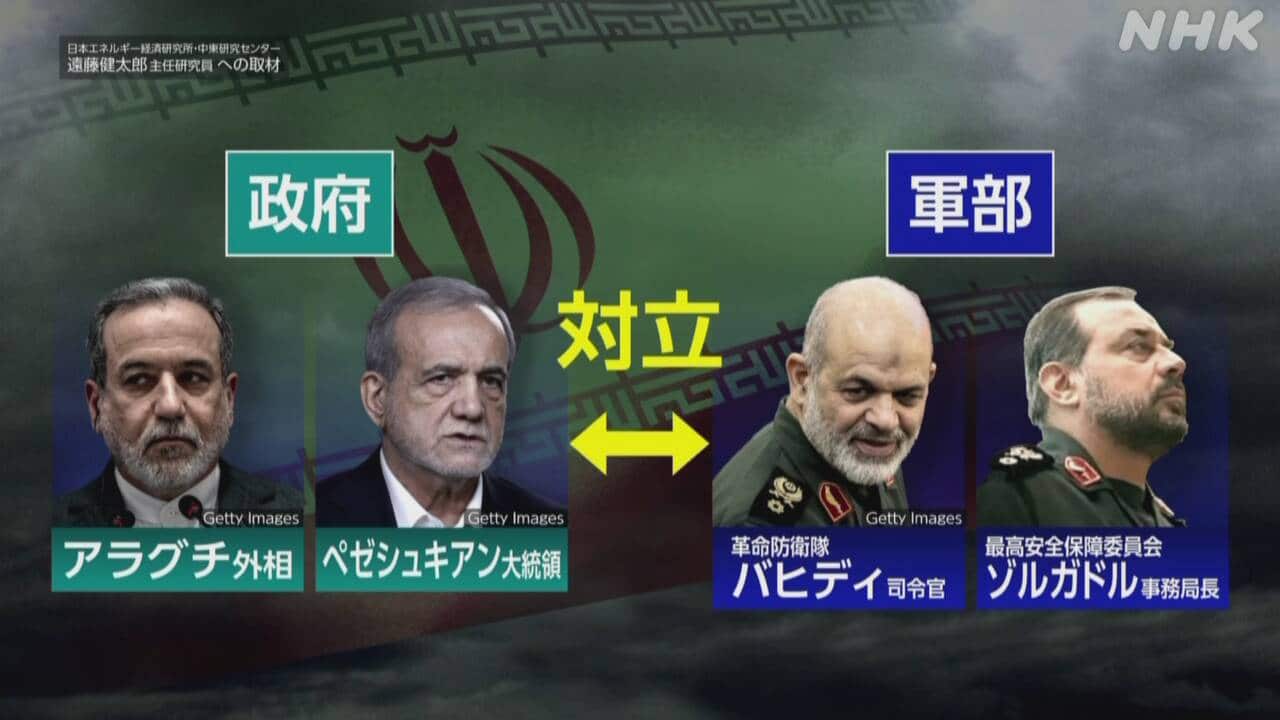
イランの体制をめぐり、アメリカのトランプ大統領が「深刻な分裂状態にある」と主張していることについて、専門家はどう分析しているのでしょうか?
イラン情勢に詳しい日本エネルギー経済研究所・中東研究センターの遠藤健太郎主任研究員は「ペゼシュキアン大統領やアラグチ外相をはじめとする政府側と、革命防衛隊を中心とする軍部の間で、ある種の対立や不和が生じているというのは、おそらく正しい見方だ」と指摘しました。
政府と軍部の関係については「停戦中だがイランは広義の意味での戦時下にあり、革命防衛隊の発言権が強まっている」としたうえで、両者の間ではアメリカとの武力衝突をいつ、どのような形で終わらせるかが対立の焦点になっていると分析しています。
政府側については「アメリカとの停戦を維持して和平に持ち込み、戦争の長期化を避けたいという思惑がある。アラブ諸国や、日本を含めた中東地域にエネルギーを依存する国々からの反発が強まっているため、この状態がいつまでも続くのはまずいといった政治的な判断が働いていると思う」と指摘しました。
一方の軍部側は「この戦争に自分たちは勝っている、もっとできるんだと思っている可能性がある。今の停戦期間中だけでなく終戦後もホルムズ海峡におけるグリップを維持したいというのが革命防衛隊が一番譲れないところだと思う」と指摘しています。
軍部側では革命防衛隊トップのバヒディ司令官が最も影響力があり、国防や外交を統括する最高安全保障委員会の事務局長で革命防衛隊出身のゾルガドル氏や最高指導者の軍事顧問を務めるレザイ氏が中心人物としてあげられるとしています。
アメリカとの対面協議でイランの代表団を率いた、イラン議会のガリバフ議長については、政府寄りではあるものの革命防衛隊の出身であることから「大統領や外相に比べれば革命防衛隊と話ができる人物で軍部の間を取り持つような役割になる」との見方を示しました。
その上で、今後の展開については「政府側が革命防衛隊を中心とする保守強硬勢力に押し切られてしまうという可能性もある。もちろん政府側が、革命防衛隊をなんとか抑えて、とりあえず2回目の協議だけは行う方向でまとまる可能性も捨てきれない」としています。
イラン情勢に詳しい日本エネルギー経済研究所・中東研究センターの遠藤健太郎主任研究員は「ペゼシュキアン大統領やアラグチ外相をはじめとする政府側と、革命防衛隊を中心とする軍部の間で、ある種の対立や不和が生じているというのは、おそらく正しい見方だ」と指摘しました。
政府と軍部の関係については「停戦中だがイランは広義の意味での戦時下にあり、革命防衛隊の発言権が強まっている」としたうえで、両者の間ではアメリカとの武力衝突をいつ、どのような形で終わらせるかが対立の焦点になっていると分析しています。
政府側については「アメリカとの停戦を維持して和平に持ち込み、戦争の長期化を避けたいという思惑がある。アラブ諸国や、日本を含めた中東地域にエネルギーを依存する国々からの反発が強まっているため、この状態がいつまでも続くのはまずいといった政治的な判断が働いていると思う」と指摘しました。
一方の軍部側は「この戦争に自分たちは勝っている、もっとできるんだと思っている可能性がある。今の停戦期間中だけでなく終戦後もホルムズ海峡におけるグリップを維持したいというのが革命防衛隊が一番譲れないところだと思う」と指摘しています。
軍部側では革命防衛隊トップのバヒディ司令官が最も影響力があり、国防や外交を統括する最高安全保障委員会の事務局長で革命防衛隊出身のゾルガドル氏や最高指導者の軍事顧問を務めるレザイ氏が中心人物としてあげられるとしています。
アメリカとの対面協議でイランの代表団を率いた、イラン議会のガリバフ議長については、政府寄りではあるものの革命防衛隊の出身であることから「大統領や外相に比べれば革命防衛隊と話ができる人物で軍部の間を取り持つような役割になる」との見方を示しました。
その上で、今後の展開については「政府側が革命防衛隊を中心とする保守強硬勢力に押し切られてしまうという可能性もある。もちろん政府側が、革命防衛隊をなんとか抑えて、とりあえず2回目の協議だけは行う方向でまとまる可能性も捨てきれない」としています。
Vocabulary
General
Proper noun
JLPT N2
JLPT N1
| # | 言葉 | 意味 |
|---|---|---|
| 9 | 革命 | かくめい (革命) : 1. revolution 2. 58th year of the sexagenary cycle (in Onmyōdō) |
| 6 | 政府 | せいふ (政府) : government; administration |
| 5 | 軍部 | ぐんぶ (軍部) : military authorities; army circles |
| 3 | 指摘 | してき (指摘) : pointing out; identification |
| 3 | 停戦 | ていせん (停戦) : armistice; ceasefire |
| 3 | 可能性 | かのうせい (可能性) : potentiality; likelihood; possibility; availability |
| 2 | 状態 | じょうたい (状態) : state; condition; situation; appearance; circumstances |
| 2 | 分析 | ぶんせき (分析) : analysis |
| 2 | 中東 | ちゅうとう (中東) : Middle East |
| 2 | 大統領 | だいとうりょう (大統領) : 1. president (of a nation) 2. big man; boss; buddy; mate |
| 2 | 外相 | がいしょう (外相) : Foreign Minister |
| 2 | 中心 | ちゅうしん (中心) : 1. center; centre; middle; heart; core; focus; pivot; emphasis; balance 2. -centered; -centred; -focused; -oriented; centered on; focused on |
| 2 | 対立 | たいりつ (対立) : confrontation; opposition; antagonism |
| 2 | 見方 | みかた (見方) : 1. viewpoint; point of view 2. way of understanding; way of appreciating; how to look at something (e.g. noh, train schedule) |
| 2 | 強まる | つよまる (強まる) : to get strong; to gain strength |
| 2 | 維持 | いじ (維持) : maintenance; preservation; improvement |
| 2 | 出身 | しゅっしん (出身) : person's origin (e.g. city, country, parentage, school) |
| 2 | 氏 | うじ (氏) : 1. family name; lineage; birth 2. clan |
| 2 | 協議 | きょうぎ (協議) : conference; consultation; discussion; negotiation |
| 1 | 体制 | たいせい (体制) : order; system; structure; set-up; organization; organisation |
| 1 | めぐる | めぐる (巡る) : 1. to go around 2. to return |
| 1 | 深刻 | しんこく (深刻) : serious; severe; grave; acute |
| 1 | 分裂 | ぶんれつ (分裂) : split; division; break up |
| 1 | 主張 | しゅちょう (主張) : claim; insistence; assertion; advocacy; emphasis; contention; opinion; tenet |
| 1 | 専門家 | せんもんか (専門家) : specialist; expert; professional; authority; pundit |
| 1 | 情勢 | じょうせい (情勢) : state of things; state of affairs; condition; situation; circumstances |
| 1 | 詳しい | くわしい (詳しい) : 1. detailed; full; minute 2. knowing very well; knowledgeable (about); well-acquainted (with); well-informed (about); familiar (with) |
| 1 | 研究所 | けんきゅうしょ (研究所) : research establishment; research institute; laboratory |
| 1 | 遠藤 | えとう (遠藤) : Etou (surname) |
| 1 | 健太郎 | けんたろう (健太郎) : Kentarou (masc) |
| 1 | 種 | しゅ (種) : 1. kind; variety 2. (biological) species |
| 1 | 不和 | ふわ (不和) : friction; discord; trouble; dissension; disagreement |
| 1 | 生ずる | しょうずる (生ずる) : 1. to produce; to yield; to cause 2. to result from; to arise; to be generated |
| 1 | おそらく | おそらく (恐らく) : perhaps; likely; probably; I dare say |
| 1 | 広義 | こうぎ (広義) : wide sense (e.g. of a word); broad sense |
| 1 | 戦時下 | せんじか (戦時下) : in times of war |
| 1 | 発言権 | はつげんけん (発言権) : right to speak |
| 1 | 両者 | りょうしゃ (両者) : pair; the two; both persons; both things |
| 1 | 武力衝突 | ぶりょくしょうとつ (武力衝突) : military conflict; armed conflict |
| 1 | 焦点 | しょうてん (焦点) : focus (e.g. photographic); focal point |
| 1 | 和平 | わへい (和平) : peace |
| 1 | 持ち込む | もちこむ (持ち込む) : 1. to take something into ...; to bring in; to carry in 2. to lodge (a complaint); to file (a plan); to bring (a proposal); to commence negotiations |
| 1 | 長期化 | ちょうきか (長期化) : lengthening |
| 1 | 避ける | さける (避ける) : 1. to avoid (physical contact with) 2. to avoid (situation) |
| 1 | 思惑 | おもわく (思惑) : 1. expectation; anticipation; prediction; forecast; calculations 2. purpose; intention; motive; ulterior motive |
| 1 | アラブ諸国 | アラブしょこく (アラブ諸国) : Arab countries; Arab states |
| 1 | 含める | ふくめる (含める) : 1. to include (in a group or scope) 2. to instruct; to make one understand |
| 1 | 地域 | ちいき (地域) : area; region |
| 1 | 依存 | いぞん (依存) : dependence; reliance |
| 1 | 国々 | くにぐに (国々) : countries |
| 1 | 反発 | はんぱつ (反発) : 1. opposition; rebellion; revolt; resistance; backlash; refusal 2. rebounding; recoiling; repulsion |
| 1 | 政治的 | せいじてき (政治的) : political |
| 1 | 判断 | はんだん (判断) : 1. judgment; judgement; decision; conclusion; adjudication 2. divination |
| 1 | 働く | はたらく (働く) : 1. to work; to labor; to labour 2. to function; to operate; to be effective; to work (i.e. ... works); to come into play |
| 1 | 自分 | じぶん (自分) : 1. myself; yourself; oneself; himself; herself 2. I; me |
| 1 | たち | やかた (館) : 1. mansion; palace; manor house; castle 2. nobleman; noblewoman; dignitary |
| 1 | 勝つ | かつ (勝つ) : to win; to gain victory |
| 1 | 期間中 | きかんちゅう (期間中) : during; for the duration of |
| 1 | 終戦 | しゅうせん (終戦) : end of war; cessation of hostilities |
| 1 | ホルムズ海峡 | ホルムズかいきょう (ホルムズ海峡) : Strait of Hormuz (place) |
| 1 | 一番 | いちばん (一番) : 1. number one; first; first place 2. best; most |
| 1 | 司令官 | しれいかん (司令官) : commandant; commanding officer; general |
| 1 | 最も | もっとも (最も) : most; extremely |
| 1 | 影響力 | えいきょうりょく (影響力) : influence; clout; leverage |
| 1 | 国防 | こくぼう (国防) : national defence; national defense |
| 1 | 外交 | がいこう (外交) : 1. diplomacy 2. selling (e.g. door-to-door); canvassing |
| 1 | 統括 | とうかつ (統括) : 1. unification; bringing together; generalization 2. control; supervision |
| 1 | 最高 | さいこう (最高) : 1. most; highest; maximum; uppermost; supreme 2. best; wonderful; finest |
| 1 | 安全保障 | あんぜんほしょう (安全保障) : security guarantee (e.g. military security, network security, etc.) |
| 1 | 委員会 | いいんかい (委員会) : committee; commission; board; panel; committee meeting |
| 1 | 事務局長 | じむきょくちょう (事務局長) : secretary-general; director-general; executive director; executive secretary |
| 1 | 最高指導者 | さいこうしどうしゃ (最高指導者) : supreme leader; ultimate leader |
| 1 | 軍事顧問 | ぐんじこもん (軍事顧問) : military adviser; military advisor |
| 1 | 務める | つとめる (勤める) : 1. to work (for); to be employed (at); to serve (in) 2. to serve (as); to act (as); to fill (the position of); to play the role (of) |
| 1 | 中心人物 | ちゅうしんじんぶつ (中心人物) : leader; central personage |
| 1 | 対面 | たいめん (対面) : 1. meeting face-to-face; seeing in person 2. facing (each other); opposing (traffic, etc.); confronting |
| 1 | 代表団 | だいひょうだん (代表団) : delegation |
| 1 | 率いる | ひきいる (率いる) : to lead; to spearhead (a group); to command (troops) |
| 1 | 議会 | ぎかい (議会) : congress; parliament; diet; legislative assembly |
| 1 | 議長 | ぎちょう (議長) : chair; chairman; chairperson; speaker (of an assembly); president (of a council, senate, etc.) |
| 1 | 寄り | より (寄り) : 1. pushing back one's opponent while locked in close quarters 2. having a tendency towards; being close to |
| 1 | 比べる | くらべる (比べる) : 1. to compare; to make a comparison 2. to compete; to vie |
| 1 | 人物 | じんぶつ (人物) : 1. person; character; figure; personage; man; woman 2. one's character; one's personality |
| 1 | 取り持つ | とりもつ (取り持つ) : 1. to act as a go-between (for); to mediate; to arrange 2. to entertain (guests); to treat; to receive |
| 1 | 役割 | やくわり (役割) : part; assigning (allotment of) parts; role; duties |
| 1 | 示す | しめす (示す) : 1. to (take out and) show; to demonstrate; to tell; to exemplify; to make apparent 2. to point out (finger, clock hand, needle, etc.) |
| 1 | 今後 | こんご (今後) : from now on; hereafter |
| 1 | 展開 | てんかい (展開) : 1. development; evolution; progression; unfolding; (plot) twist 2. expansion; spreading out; extending; deployment; building up |
| 1 | 保守 | ほしゅ (保守) : 1. maintenance 2. conservatism; conservativeness; conservation |
| 1 | 強硬 | きょうこう (強硬) : firm; strong; unbending; unyielding; uncompromising; stubborn; tough; hard-line |
| 1 | 勢力 | せいりょく (勢力) : influence; power; might; strength; potency; force; energy |
| 1 | 押し切る | おしきる (押し切る) : 1. to overcome (opposition); to push past; to force one's way 2. to press and cut |
| 1 | 抑える | おさえる (抑える) : 1. to keep within limits (e.g. spending); to restrain (e.g. emotions); to control; to curb; to hold in check 2. to hold back (e.g. an enemy); to check; to curb; to contain; to quell; to subdue; to suppress; to repress |
| 1 | とりあえず | とりあえず (取りあえず) : 1. first of all; at once; right away 2. for now; for the time being |
| 1 | 方向 | ほうこう (方向) : 1. direction; orientation; bearing; way 2. course (e.g. of action) |
| 1 | まとまる | まとまる (纏まる) : 1. to find resolution; to be settled; to be agreed on; to be completed 2. to be collected; to be assembled; to be brought together |
| 1 | 捨てる | すてる (捨てる) : 1. to throw away; to cast away; to dump; to discard 2. to abandon; to desert; to leave |