グーグル、AIで都市型鉄砲水を最大24時間前に予測
Googleは3月12日(米国時間)、AIを活用して公開情報から過去の洪水データを構築する手法「Groundsource」を発表した。都市部で短時間に発生する洪水「鉄砲水(フラッシュフラッド)」を対象にした予測モデルの開発に活用する。
同手法は、公開されている報告や記録をAIで分析し、災害発生に関する高品質なデータとして整理するもの。Geminiを用いて数十年分の公開レポートを解析し、150カ国以上で発生した260万件以上の洪水事例を特定した。
さらにGoogle Mapsを用いて各事例の地理的範囲を特定し、都市部の鉄砲水に焦点を当てたデータセットを構築。このデータを用いて新たなAIモデルを学習させることで、都市型鉄砲水を最大24時間前に予測する取り組みを進めている。
同社はこれまで、自然災害に関する早期警戒情報を提供してきた。一方、都市部の鉄砲水は短時間で発生することが多く、精度の高い過去データが不足していたため、AIによる予測モデルの開発が困難だった。Groundsourceは公開情報を整理し、このデータ不足の解消を図る。
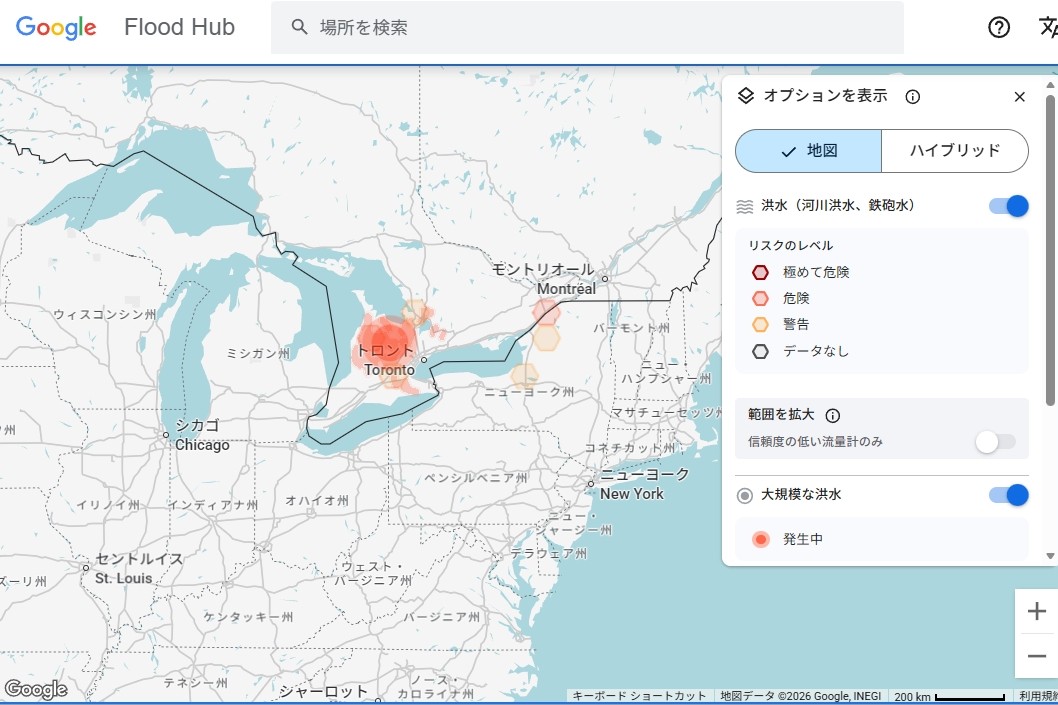
同モデルによる都市型鉄砲水の予測は、Googleが提供する洪水情報サイト「Flood Hub」で利用可能。Flood Hubではこれまで河川洪水の予測情報を提供しており、150カ国以上で約20億人を対象とした洪水予測に対応している。
また、都市型鉄砲水のモデルとデータセットは、「Google Earth AI」の一部として公開する。研究者やパートナーが利用できるベンチマークとして提供し、都市部の災害予測研究の拡張を目指す。
Googleは3月12日(米国時間)、AIを活用して公開情報から過去の洪水データを構築する手法「Groundsource」を発表した。都市部で短時間に発生する洪水「鉄砲水(フラッシュフラッド)」を対象にした予測モデルの開発に活用する。 同手法は、公開されている報告や記録をAIで分析し、災害発生に関する高品質なデータとして整理するもの。Geminiを用いて数十年分の公開レポートを解析し、150カ国以上で発生した260万件以上の洪水事例を特定した。 さらにGoogle Mapsを用いて各事例の地理的範囲を特定し、都市部の鉄砲水に焦点を当てたデータセットを構築。このデータを用いて新たなAIモデルを学習させることで、都市型鉄砲水を最大24時間前に予測する取り組みを進めている。 同社はこれまで、自然災害に関する早期警戒情報を提供してきた。一方、都市部の鉄砲水は短時間で発生することが多く、精度の高い過去データが不足していたため、AIによる予測モデルの開発が困難だった。Groundsourceは公開情報を整理し、このデータ不足の解消を図る。 同モデルによる都市型鉄砲水の予測は、Googleが提供する洪水情報サイト「Flood Hub」で利用可能。Flood Hubではこれまで河川洪水の予測情報を提供しており、150カ国以上で約20億人を対象とした洪水予測に対応している。 また、都市型鉄砲水のモデルとデータセットは、「Google Earth AI」の一部として公開する。研究者やパートナーが利用できるベンチマークとして提供し、都市部の災害予測研究の拡張を目指す。
Googleは3月12日(米国時間)、AIを活用して公開情報から過去の洪水データを構築する手法「Groundsource」を発表した。都市部で短時間に発生する洪水「鉄砲水(フラッシュフラッド)」を対象にした予測モデルの開発に活用する。 同手法は、公開されている報告や記録をAIで分析し、災害発生に関する高品質なデータとして整理するもの。Geminiを用いて数十年分の公開レポートを解析し、150カ国以上で発生した260万件以上の洪水事例を特定した。 さらにGoogle Mapsを用いて各事例の地理的範囲を特定し、都市部の鉄砲水に焦点を当てたデータセットを構築。このデータを用いて新たなAIモデルを学習させることで、都市型鉄砲水を最大24時間前に予測する取り組みを進めている。 同社はこれまで、自然災害に関する早期警戒情報を提供してきた。一方、都市部の鉄砲水は短時間で発生することが多く、精度の高い過去データが不足していたため、AIによる予測モデルの開発が困難だった。Groundsourceは公開情報を整理し、このデータ不足の解消を図る。 同モデルによる都市型鉄砲水の予測は、Googleが提供する洪水情報サイト「Flood Hub」で利用可能。Flood Hubではこれまで河川洪水の予測情報を提供しており、150カ国以上で約20億人を対象とした洪水予測に対応している。 また、都市型鉄砲水のモデルとデータセットは、「Google Earth AI」の一部として公開する。研究者やパートナーが利用できるベンチマークとして提供し、都市部の災害予測研究の拡張を目指す。
Vocabulary
General
Proper noun
JLPT N2
JLPT N1
| # | 言葉 | 意味 |
|---|---|---|
| 14 | 予測 | よそく (予測) : prediction; estimation |
| 12 | 洪水 | こうずい (洪水) : flood; flooding |
| 12 | 鉄砲水 | てっぽうみず (鉄砲水) : flash flood |
| 8 | 都市部 | としぶ (都市部) : urban area; urban district |
| 8 | 提供 | ていきょう (提供) : 1. offer; tender; providing; supplying; making available; donating (blood, organs, etc.) 2. sponsoring (a TV program) |
| 6 | 発生 | はっせい (発生) : 1. outbreak; spring forth; occurrence; incidence 2. generation (e.g. of power or heat); genesis; origin |
| 6 | 公開 | こうかい (公開) : opening to the public; making available to the public; putting on display; exhibiting; showing (play, movie, etc.); holding (interview, etc.); open; public |
| 6 | 用いる | もちいる (用いる) : to use; to make use of; to utilize; to utilise |
| 6 | 都市型 | としがた (都市型) : urban-type; urban |
| 6 | 情報 | じょうほう (情報) : 1. information; news; intelligence; advices 2. information; data contained in characters, signals, code, etc. |
| 4 | 活用 | かつよう (活用) : 1. practical use; application 2. conjugation; inflection |
| 4 | 過去 | かこ (過去) : 1. the past; bygone days 2. one's past (that one would prefer remained secret) |
| 4 | 構築 | こうちく (構築) : construction; building; putting up; erecting; creation; formulation; architecture (systems, agreement, etc.) |
| 4 | 手法 | しゅほう (手法) : technique; method |
| 4 | 短時間 | たんじかん (短時間) : short time |
| 4 | 対象 | たいしょう (対象) : target; object (of worship, study, etc.); subject (of taxation, etc.) |
| 4 | 開発 | かいはつ (開発) : development; exploitation |
| 4 | 関する | かんする (関する) : to concern; to be related |
| 4 | 整理 | せいり (整理) : 1. sorting; arrangement; organization; putting in order; adjustment; regulation 2. liquidation; settlement; consolidation; clearance (e.g. debt); paying off |
| 4 | カ国 | かこく (カ国) : counter for countries |
| 4 | 事例 | じれい (事例) : example; precedent; case |
| 4 | 特定 | とくてい (特定) : 1. specific; particular; designated; special 2. specifying; designating; identifying; pinpointing |
| 4 | 不足 | ふそく (不足) : 1. insufficiency; deficiency; shortage; lack; scarcity; deficit 2. dissatisfaction; discontent; complaint |
| 2 | 米国 | べいこく (米国) : (United States of) America; USA; US |
| 2 | 時間 | じかん (時間) : 1. time 2. hour |
| 2 | 発表 | はっぴょう (発表) : announcement; publication; presenting; statement; communique; making known; breaking (news story); expressing (one's opinion); releasing; unveiling |
| 2 | 報告 | ほうこく (報告) : report; information |
| 2 | 記録 | きろく (記録) : 1. record; minutes; document 2. record (e.g. in sports); results; score |
| 2 | 分析 | ぶんせき (分析) : analysis |
| 2 | 高品質 | こうひんしつ (高品質) : high quality |
| 2 | 解析 | かいせき (解析) : 1. analysis; analytical study 2. parsing; parse |
| 2 | 件 | くだん (件) : 1. the aforementioned; the said; (man, incident, etc.) in question; the above-mentioned; the aforesaid 2. the usual |
| 2 | 各 | かく (各) : each; every; all |
| 2 | 地理的 | ちりてき (地理的) : geographic |
| 2 | 範囲 | はんい (範囲) : extent; scope; sphere; range; span |
| 2 | 焦点 | しょうてん (焦点) : focus (e.g. photographic); focal point |
| 2 | 当てる | あてる (当てる) : 1. to hit 2. to expose |
| 2 | 新た | あらた (新た) : new; fresh; novel |
| 2 | 学習 | がくしゅう (学習) : study; learning; tutorial |
| 2 | 最大 | さいだい (最大) : biggest; greatest; largest; maximum |
| 2 | 取り組み | とりくみ (取り組み) : 1. bout (in sports, etc.); match 2. effort; initiative; dealing with; grappling with; wrestling with |
| 2 | 進める | すすめる (進める) : 1. to advance; to move forward; to put (a clock, watch) forward 2. to carry forward (plans, work, etc.); to proceed with; to make progress in; to further; to advance; to hasten; to speed up |
| 2 | 同社 | どうしゃ (同社) : the same firm |
| 2 | 自然災害 | しぜんさいがい (自然災害) : natural disaster |
| 2 | 早期 | そうき (早期) : early stage |
| 2 | 警戒 | けいかい (警戒) : vigilance; caution; alertness; precaution; being on guard |
| 2 | 精度 | せいど (精度) : precision; accuracy |
| 2 | 困難 | こんなん (困難) : 1. difficulty; hardship; trouble; distress 2. infeasibility; inability (to carry out) |
| 2 | 解消 | かいしょう (解消) : cancellation; liquidation; resolution; reduction (e.g. of stress) |
| 2 | 図る | はかる (図る) : 1. to plan; to attempt; to devise 2. to plot; to conspire; to scheme |
| 2 | 利用可能 | りようかのう (利用可能) : available; usable (e.g. bandwidth) |
| 2 | 河川 | かせん (河川) : rivers |
| 2 | 対応 | たいおう (対応) : 1. correspondence (to); equivalence 2. suitability; coordination; matching; being appropriate (for) |
| 2 | 一部 | いちぶ (一部) : 1. one part; one portion; one section; some 2. one copy (e.g. of a document) |
| 2 | 研究者 | けんきゅうしゃ (研究者) : researcher |
| 2 | 災害 | さいがい (災害) : calamity; disaster; misfortune |
| 2 | 拡張 | かくちょう (拡張) : 1. expansion; extension; enlargement 2. escape; ESC |
| 2 | 目指す | めざす (目指す) : 1. to aim at (for, to do, to become); to try for; to have an eye on 2. to go toward; to head for |