牧野復興相 除染土再生利用へ活用方法洗い出し進める 日曜討論
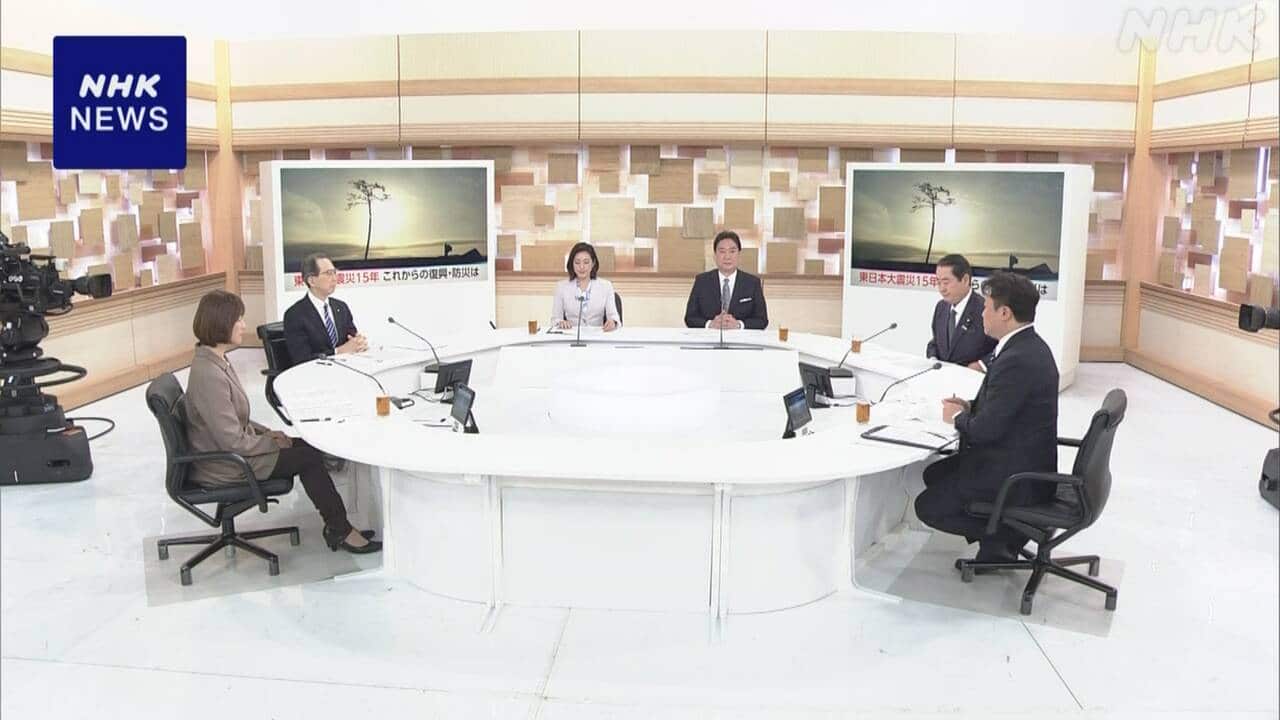
東日本大震災と東京電力福島第一原子力発電所の事故の発生から、今月11日で15年となるのを前に、牧野復興大臣は、NHKの日曜討論で、福島県内に保管されている除染で取り除かれた土の再生利用に向けて活用方法の洗い出しを進める考えを示しました。
この中で、牧野復興大臣は、福島県内の中間貯蔵施設で保管されている除染で取り除かれた土の扱いについて「県外での最終処分は国の責任であり、法律に明示されているので、必ず実行しないといけない」と述べました。
そのうえで、放射性物質の濃度が低い土の再生利用について「まず国の機関で先駆的な事例として実践していく。それと並行して、どういうものに利活用できるか『復興再生土』の扱いの洗い出しをしていかなければならない」と述べました。
また、「帰還困難区域」のうち、除染やインフラ整備を進めて避難指示を解除する「特定帰還居住区域」での住民の帰還について「新年度=8年度から第1弾の皆さんが帰還されることになる。働く場をつくり、新しく移住した方たちが営農してもらえるような仕組みもつくっていかなければならない」と述べました。
福島県の内堀知事はNHKの日曜討論で「岩手や宮城と異なり、復興のスタートラインに立ったばかりの地域や、新たな課題に直面している地域がある。帰還する人の状況や移住をどう増やすか全体で考えて進める必要がある。原発事故後の除染で出た除去土壌などの県外最終処分は法律で定められた国の責務で、期限としている2045年3月までの具体的な工程表を速やかに明示し、最終処分に取り組んでほしい」と述べました。
宮城県の村井知事はNHKの日曜討論で「被災地からは『非常にさみしくなっている』という声が聞かれるが、日本全体が少子高齢化の中で、被災地だけに人が集まるようにするのは難しく、交流人口でカバーする施策で補っていくしか方法はない。被災者の心のケアは、誰かが責任を持ってやるということではなく、市町村、NPO、そして都道府県、みんなで一緒になってサポートしていくことが何より重要なのではないか」と述べました。
岩手県の達増知事はNHKの日曜討論で「沿岸市町村の人口減少もかなり進んでいるが、人の移動をポジティブに生かしていく工夫を展開し、住民の転出元と転出先が共存共栄できるようにしていきたい。被災者の心のケアについては時間がたつほど複雑さや困難さが増していて、相談件数は15年たっても減少せず、高止まりしている状況で、行政に対するニーズはある」と述べました。
この中で、牧野復興大臣は、福島県内の中間貯蔵施設で保管されている除染で取り除かれた土の扱いについて「県外での最終処分は国の責任であり、法律に明示されているので、必ず実行しないといけない」と述べました。
そのうえで、放射性物質の濃度が低い土の再生利用について「まず国の機関で先駆的な事例として実践していく。それと並行して、どういうものに利活用できるか『復興再生土』の扱いの洗い出しをしていかなければならない」と述べました。
また、「帰還困難区域」のうち、除染やインフラ整備を進めて避難指示を解除する「特定帰還居住区域」での住民の帰還について「新年度=8年度から第1弾の皆さんが帰還されることになる。働く場をつくり、新しく移住した方たちが営農してもらえるような仕組みもつくっていかなければならない」と述べました。
福島県の内堀知事はNHKの日曜討論で「岩手や宮城と異なり、復興のスタートラインに立ったばかりの地域や、新たな課題に直面している地域がある。帰還する人の状況や移住をどう増やすか全体で考えて進める必要がある。原発事故後の除染で出た除去土壌などの県外最終処分は法律で定められた国の責務で、期限としている2045年3月までの具体的な工程表を速やかに明示し、最終処分に取り組んでほしい」と述べました。
宮城県の村井知事はNHKの日曜討論で「被災地からは『非常にさみしくなっている』という声が聞かれるが、日本全体が少子高齢化の中で、被災地だけに人が集まるようにするのは難しく、交流人口でカバーする施策で補っていくしか方法はない。被災者の心のケアは、誰かが責任を持ってやるということではなく、市町村、NPO、そして都道府県、みんなで一緒になってサポートしていくことが何より重要なのではないか」と述べました。
岩手県の達増知事はNHKの日曜討論で「沿岸市町村の人口減少もかなり進んでいるが、人の移動をポジティブに生かしていく工夫を展開し、住民の転出元と転出先が共存共栄できるようにしていきたい。被災者の心のケアについては時間がたつほど複雑さや困難さが増していて、相談件数は15年たっても減少せず、高止まりしている状況で、行政に対するニーズはある」と述べました。
Vocabulary
General
Proper noun
JLPT N2
JLPT N1
| # | 言葉 | 意味 |
|---|---|---|
| 6 | 述べる | のべる (述べる) : to state; to express; to mention |
| 5 | 帰還 | きかん (帰還) : 1. repatriation; return 2. (electrical) feedback |
| 4 | 日曜 | にちよう (日曜) : Sunday |
| 4 | 討論 | とうろん (討論) : debate; discussion |
| 4 | 除染 | じょせん (除染) : decontamination (e.g. from chemical or radioactive contamination) |
| 3 | 福島県 | ふくしまけん (福島県) : Fukushima prefecture (Tōhoku area) |
| 3 | 再生 | さいせい (再生) : 1. resuscitation; regeneration; restoration to life 2. reformation; rehabilitation |
| 3 | 進める | すすめる (進める) : 1. to advance; to move forward; to put (a clock, watch) forward 2. to carry forward (plans, work, etc.); to proceed with; to make progress in; to further; to advance; to hasten; to speed up |
| 3 | 最終 | さいしゅう (最終) : last; final; closing |
| 3 | 処分 | しょぶん (処分) : 1. disposal; throwing away; selling off 2. dealing with (a problem); measure |
| 3 | 知事 | ちじ (知事) : prefectural governor |
| 2 | 牧野 | ぼくや (牧野) : pasture land; ranch |
| 2 | 復興大臣 | ふっこうだいじん (復興大臣) : Minister for Reconstruction |
| 2 | 保管 | ほかん (保管) : charge; custody; safekeeping; deposit; storage |
| 2 | 取り除く | とりのぞく (取り除く) : to remove; to deinstall; to take away; to set apart |
| 2 | 方法 | ほうほう (方法) : method; process; manner; way; means; technique |
| 2 | 洗い出し | あらいだし (洗い出し) : 1. exposure by washing away; washing out; washout 2. exposed aggregate (finish); exposed aggregate concrete |
| 2 | 扱い | あつかい (扱い) : treatment; service |
| 2 | 県外 | けんがい (県外) : outside the prefecture |
| 2 | 明示 | めいじ (明示) : elucidation; explicit statement; specification |
| 2 | 復興 | ふっこう (復興) : revival; reconstruction; restoration; rebuilding; recovery; renaissance |
| 2 | 困難 | こんなん (困難) : 1. difficulty; hardship; trouble; distress 2. infeasibility; inability (to carry out) |
| 2 | 区域 | くいき (区域) : 1. limits; boundary; domain; zone; sphere; territory 2. area (e.g. in programming languages) |
| 2 | 住民 | じゅうみん (住民) : inhabitant; resident; citizen; population |
| 2 | つくる | つくる (作る) : 1. to make; to produce; to manufacture; to build; to construct 2. to prepare (food); to brew (alcohol) |
| 2 | 移住 | いじゅう (移住) : migration; immigration |
| 2 | 地域 | ちいき (地域) : area; region |
| 2 | 状況 | じょうきょう (状況) : state of affairs (around you); situation; circumstances |
| 2 | 全体 | ぜんたい (全体) : whole; entirety; whatever (is the matter) |
| 2 | 被災地 | ひさいち (被災地) : area struck (by some disaster); location of a disaster |
| 2 | 被災者 | ひさいしゃ (被災者) : victim of (a disaster) |
| 2 | 心のケア | こころのケア (心のケア) : emotional care; emotional support; caring for somebody's mental well-being |
| 2 | 市町村 | しちょうそん (市町村) : cities, towns and villages; municipalities |
| 1 | 東日本大震災 | ひがしにほんだいしんさい (東日本大震災) : Great East Japan earthquake (March 11, 2011); Tōhoku earthquake; Tohoku earthquake; Sendai earthquake |
| 1 | 東京電力 | とうきょうでんりょく (東京電力) : Tokyo Electric Power (company) |
| 1 | 福島第一原子力発電所 | ふくしまだいいちげんしりょくはつでんしょ (福島第一原子力発電所) : Fukushima I Nuclear Power Plant (place) |
| 1 | 発生 | はっせい (発生) : 1. outbreak; spring forth; occurrence; incidence 2. generation (e.g. of power or heat); genesis; origin |
| 1 | 活用 | かつよう (活用) : 1. practical use; application 2. conjugation; inflection |
| 1 | 考え | かんがえ (考え) : 1. thinking; thought; view; opinion; concept 2. idea; notion; imagination |
| 1 | 示す | しめす (示す) : 1. to (take out and) show; to demonstrate; to tell; to exemplify; to make apparent 2. to point out (finger, clock hand, needle, etc.) |
| 1 | 中間貯蔵 | ちゅうかんちょぞう (中間貯蔵) : interim storage (of radioactive waste); temporary storage |
| 1 | 施設 | しせつ (施設) : 1. institution; establishment; facility 2. home (for elderly, orphans, etc.) |
| 1 | 実行 | じっこう (実行) : execution (e.g. of a plan); carrying out; practice; action; implementation; fulfillment; realization |
| 1 | 放射性物質 | ほうしゃせいぶっしつ (放射性物質) : radioactive material |
| 1 | 濃度 | のうど (濃度) : 1. concentration; thickness; density 2. cardinality |
| 1 | 機関 | からくり (絡繰り) : 1. mechanism; machinery; contrivance; device 2. trick; dodge |
| 1 | 先駆 | せんく (先駆) : 1. forerunner; precursor; pioneer; leader 2. outrider; outriding |
| 1 | 事例 | じれい (事例) : example; precedent; case |
| 1 | 実践 | じっせん (実践) : 1. practice; putting into practice; implementation 2. praxis (philosophy) |
| 1 | 並行 | へいこう (並行) : 1. going side-by-side; going abreast 2. running concurrently; occurring at the same time; keeping pace with |
| 1 | どういう | どういう (どう言う) : somehow; how; in what way; why; what kind of |
| 1 | 利活用 | りかつよう (利活用) : use and application |
| 1 | 整備 | せいび (整備) : 1. maintenance; servicing 2. putting in place; establishment; development; preparation; provision; outfitting |
| 1 | 避難指示 | ひなんしじ (避難指示) : evacuation order; evacuation notice |
| 1 | 解除 | かいじょ (解除) : cancellation; rescinding; release; calling off; lifting (sanctions); delisting |
| 1 | 特定 | とくてい (特定) : 1. specific; particular; designated; special 2. specifying; designating; identifying; pinpointing |
| 1 | 居住 | きょじゅう (居住) : residence; abode; dwelling |
| 1 | 年度 | ねんど (年度) : 1. fiscal year (usu. April 1 to March 31 in Japan); financial year 2. academic year; school year |
| 1 | 第 | だい (第) : prefix for forming ordinal numbers |
| 1 | 弾 | たま (玉) : 1. ball; sphere; globe; orb 2. bead (of sweat, dew, etc.); drop; droplet |
| 1 | 新しく | あたらしく (新しく) : newly; new; anew |
| 1 | 営農 | えいのう (営農) : farming; agriculture |
| 1 | 仕組み | しくみ (仕組み) : 1. structure; construction; arrangement; contrivance; mechanism; workings 2. plan; plot; contrivance |
| 1 | 内堀 | うちぼり (内堀) : inner moat; moat within the castle walls |
| 1 | 岩手 | いわて (岩手) : Iwate (prefecture) |
| 1 | 宮城 | きゅうじょう (宮城) : Imperial Palace (esp. from 1888 to 1946) |
| 1 | 異なる | ことなる (異なる) : to differ; to vary; to disagree |
| 1 | 立つ | たつ (立つ) : 1. to stand; to rise; to stand up 2. to find oneself (e.g. in a difficult position) |
| 1 | 新た | あらた (新た) : new; fresh; novel |
| 1 | 課題 | かだい (課題) : 1. subject; theme; issue; matter 2. homework; assignment |
| 1 | 直面 | ちょくめん (直面) : 1. confrontation 2. to face; to confront; to encounter |
| 1 | 増やす | ふやす (増やす) : to increase; to add to; to augment |
| 1 | 考える | かんがえる (考える) : 1. to think (about, of); to think over; to ponder; to contemplate; to reflect (on); to meditate (on) 2. to consider; to bear in mind; to allow for; to take into consideration |
| 1 | 原発 | げんぱつ (原発) : 1. nuclear power plant; nuclear power generation 2. primary (e.g. primary immunodeficiency syndrome) |
| 1 | 除去 | じょきょ (除去) : removal; getting rid of |
| 1 | 土壌 | どじょう (土壌) : 1. soil 2. breeding ground; fertile ground (for); foundation (for the development of ...) |
| 1 | 定める | さだめる (定める) : 1. to decide; to determine 2. to establish; to lay down; to prescribe; to provide; to stipulate |
| 1 | 責務 | せきむ (責務) : duty; obligation |
| 1 | 期限 | きげん (期限) : 1. term; period; time frame 2. time limit; deadline; cutoff (date) |
| 1 | 具体的 | ぐたいてき (具体的) : concrete; definite; specific; material; substantial |
| 1 | 工程表 | こうていひょう (工程表) : work schedule; progress schedule; process chart |
| 1 | 速やか | すみやか (速やか) : quick; speedy; prompt; rapid; swift |
| 1 | 取り組む | とりくむ (取り組む) : 1. to grapple with; to wrestle with; to engage in a bout; to be matched against 2. to tackle (e.g. a problem); to come to grips with; to work hard on |
| 1 | 宮城県 | みやぎけん (宮城県) : Miyagi prefecture (Tōhoku area) |
| 1 | 村井 | むらい (村井) : Murai (place; surname) |
| 1 | 非常 | ひじょう (非常) : 1. emergency 2. extraordinary; unusual |
| 1 | 聞く | きく (聞く) : 1. to hear 2. to listen (e.g. to music) |
| 1 | 少子高齢化 | しょうしこうれいか (少子高齢化) : decreasing birthrate and aging population; aging population combined with the diminishing number of children; declining birthrate and a growing proportion of elderly people; dwindling birthrate and an aging population; low birthrate and longevity |
| 1 | 集まる | あつまる (集まる) : to gather; to collect; to assemble |
| 1 | 交流人口 | こうりゅうじんこう (交流人口) : nonresident population |
| 1 | 施策 | しさく (施策) : policy; measure |
| 1 | 補う | おぎなう (補う) : to supplement; to make up for; to compensate for; to cover (a shortage, loss, etc.); to fill (e.g. a vacancy) |
| 1 | 責任 | せきにん (責任) : 1. duty; responsibility (incl. supervision of staff) 2. liability; onus |
| 1 | 持つ | もつ (持つ) : 1. to hold (in one's hand); to take; to carry 2. to possess; to have; to own |
| 1 | 都道府県 | とどうふけん (都道府県) : prefectures (of Japan); largest administrative divisions of Japan: Tokyo-to, Osaka-fu, Kyoto-fu, Hokkaido and the remaining prefectures |
| 1 | 重要 | じゅうよう (重要) : important; momentous; essential; principal; major |
| 1 | 岩手県 | いわてけん (岩手県) : Iwate prefecture (Tōhoku area) |
| 1 | 達増 | たっそ (達増) : Tasso (surname) |
| 1 | 沿岸 | えんがん (沿岸) : coast; shore; littoral |
| 1 | 人口減少 | じんこうげんしょう (人口減少) : depopulation; falling population; decrease in population; population decline |
| 1 | かなり | かなり (可也) : considerably; fairly; quite |
| 1 | 進む | すすむ (進む) : 1. to advance; to go forward 2. to precede; to go ahead (of) |
| 1 | 移動 | いどう (移動) : 1. movement; transfer; migration; removal; travel 2. mobile; moving; traveling; travelling; roving |
| 1 | 生かす | いかす (生かす) : 1. to make (the best) use of; to put to good use; to leverage (skills, attributes, experience, etc.); to capitalise on (experience, etc.) 2. to let live; to keep alive |
| 1 | 工夫 | くふう (工夫) : 1. devising (a way); contriving; figuring out; coming up with; working out; inventing 2. device; design; idea; plan; invention |
| 1 | 展開 | てんかい (展開) : 1. development; evolution; progression; unfolding; (plot) twist 2. expansion; spreading out; extending; deployment; building up |
| 1 | 転出先 | てんしゅつさき (転出先) : new address |
| 1 | 共存共栄 | きょうそんきょうえい (共存共栄) : co-existence and co-prosperity |
| 1 | 増す | ます (増す) : to increase; to grow |
| 1 | 件数 | けんすう (件数) : number of events (e.g. accidents, crimes, meetings, housing starts, hits on a web page) |
| 1 | たつ | たつ (起つ) : to rise up; to initiate (political) action |
| 1 | 減少 | げんしょう (減少) : decrease; reduction; decline |
| 1 | 高止まり | たかどまり (高止まり) : continuing at a high level; remaining high |
| 1 | 行政 | ぎょうせい (行政) : administration; governance; the authorities; authority |